Table of Contents
Houseplant pests can show up even when your plants seem healthy.
Aphids, mealybugs, whiteflies, spider mites, scale, and fungus gnats are among the pests you’re most likely to find indoors, and the best way to deal with them depends on which one you have.
Start by identifying the pest, then move an infested plant away from your other houseplants while you treat it. Choose a treatment that targets the pest without putting unnecessary stress on your plant.
1. Get Rid of Aphids
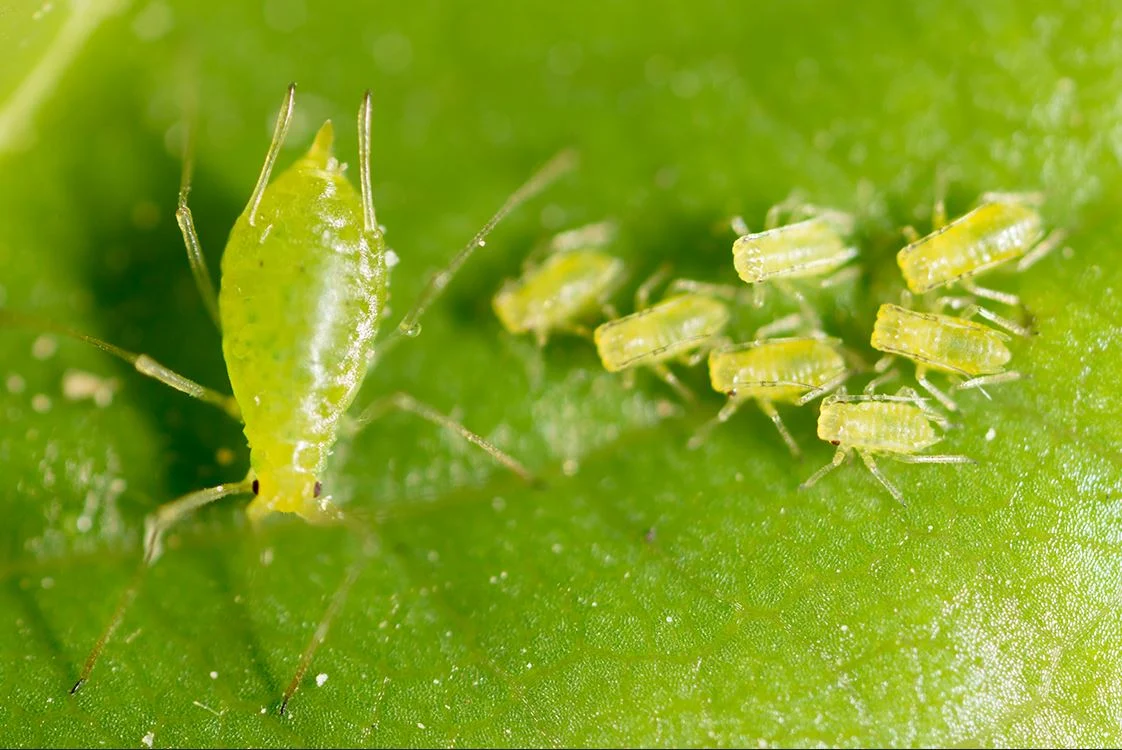
Aphids are tiny, soft-bodied insects that often gather on new growth and the undersides of leaves. They feed on plant sap, which can leave leaves distorted or yellow and new growth stunted. They also produce a sticky substance called honeydew.
For a small infestation, spray the plant with a strong stream of water to knock the aphids off. If you still see them afterward, insecticidal soap can provide additional control when used according to the label.
Check the plant again over the following days and repeat treatment if needed. Avoid overwatering and excessive fertilization, which can encourage the tender new growth aphids favor.
2. Get Rid of Mealybugs
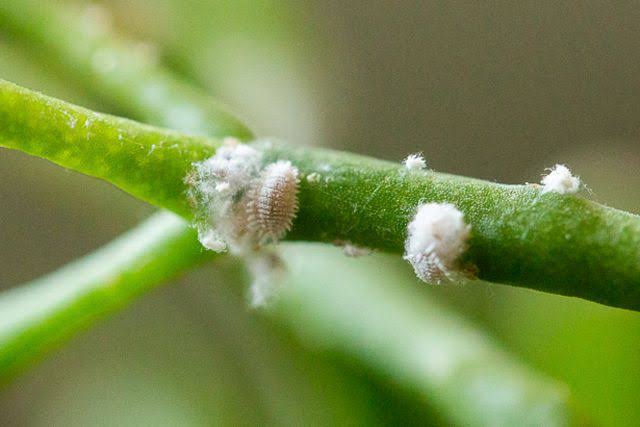
Mealybugs are easy to spot when they gather into white, cottony clusters. Look for them on stems, leaves, and especially where leaves meet the stem. Some species can also infest roots, making them much harder to find.
For a light infestation, dab individual mealybugs with a cotton swab dipped in 70 percent isopropyl alcohol. Keep the alcohol on the insects rather than the foliage, and test a small area first because alcohol can damage leaves.
You can also wash the plant or use an insecticidal soap or horticultural oil labeled for the plant. Check leaf joints and other protected spots regularly so you can catch any mealybugs you missed the first time.
3. Get Rid of Whiteflies
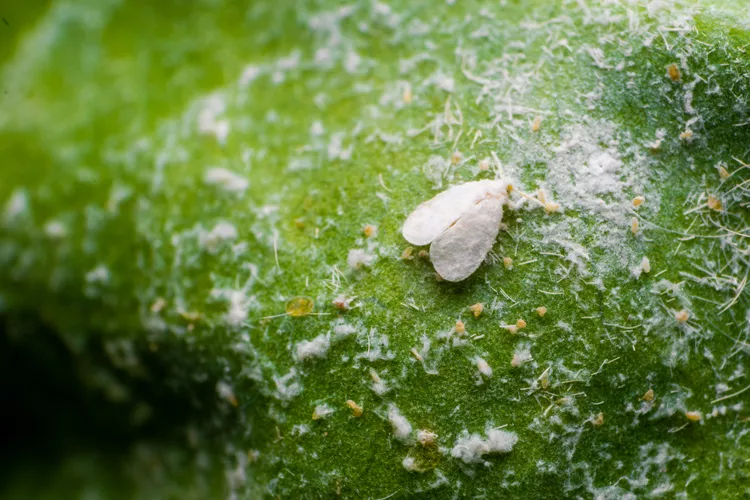
Whiteflies are tiny, winged insects that often fly up from a plant when you disturb it. The younger stages stay on the undersides of leaves, where they feed on plant sap and can cause yellowing and poor growth.
Yellow sticky traps can help catch adult whiteflies and bring their numbers down, but they won’t eliminate the younger insects on the plant. For those, insecticidal soap or horticultural oil can provide additional control. Make sure treatment reaches the undersides of the leaves.
Keep an eye on the plant afterward because several life stages can be present at the same time.
4. Get Rid of Spider Mites
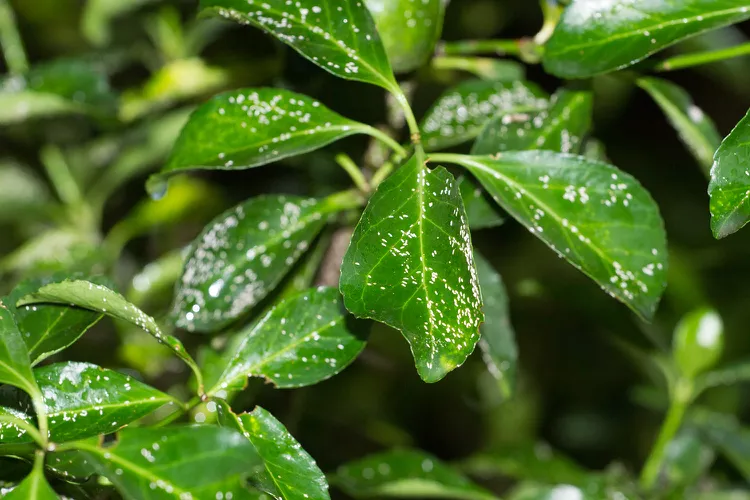
Spider mites are so small that you may notice their damage before you see the mites themselves. Look for tiny pale speckles, bronzing or graying leaves, and fine webbing, particularly on the undersides of leaves.
Start by washing the plant thoroughly with a strong spray of water, making sure to reach the undersides of the leaves. Repeating this over several weeks can help bring a spider mite population down. Horticultural oil can provide additional control when appropriate for the plant.
Spider mites are more likely to become a problem in hot, dry conditions, so check the plant’s growing environment as you treat the infestation.
5. Get Rid of Scale
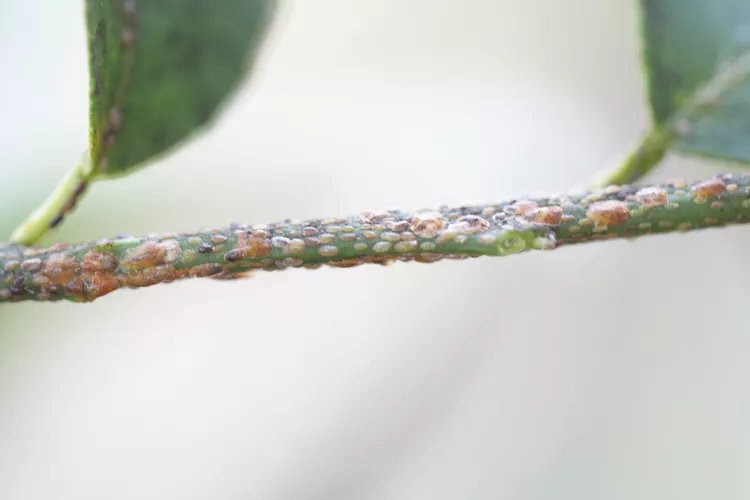
Scale insects look like small bumps attached to stems, leaves, and other parts of the plant. Their coloring can make them surprisingly easy to overlook, but a heavy infestation can weaken a plant and cause yellowing or wilting.
For a light infestation, rub or scrape the insects off the plant. You can also use a cotton swab dipped in 70 percent isopropyl alcohol on individual scale insects, but test a small area first to make sure the plant doesn’t react badly.
Horticultural oil can also be effective against scale. Check the plant regularly for new insects, and prune badly infested stems if necessary.
6. Get Rid of Fungus Gnats
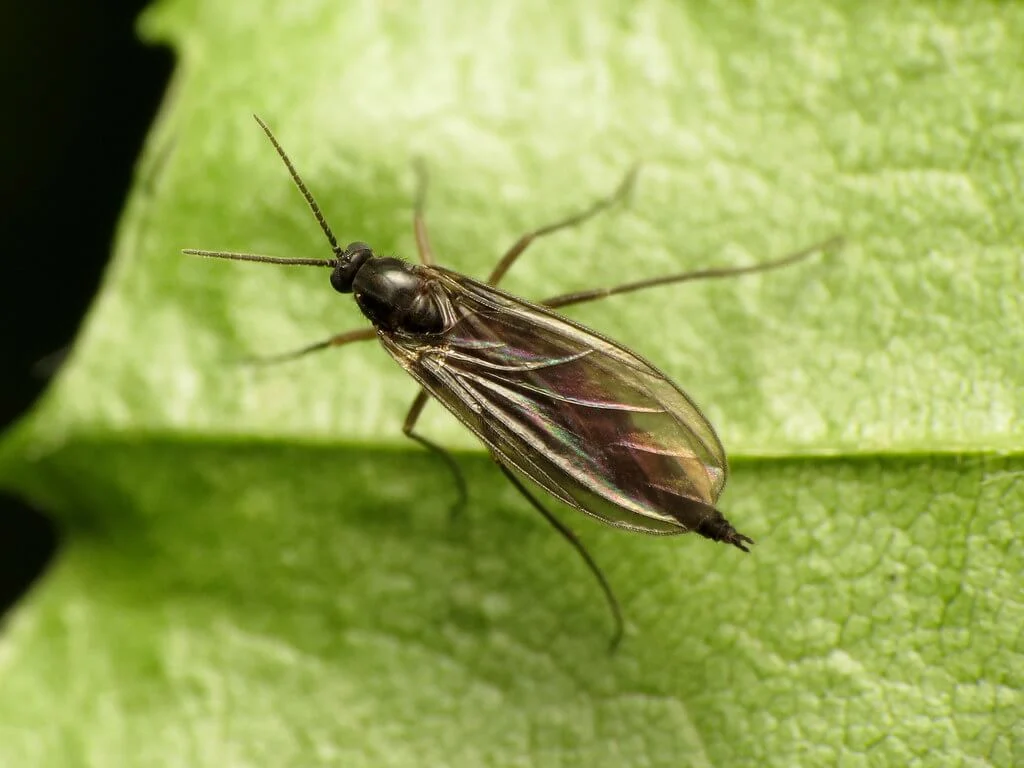
Fungus gnats are the tiny, dark flies you may notice flying around or hopping across the soil of your houseplants. Their larvae develop in the potting mix and feed mainly on fungi and decaying organic matter, though they can also feed on root hairs.
The most important step is to let the soil surface dry between waterings when appropriate for the plant. Make sure the pot drains well, too. Yellow sticky traps can help catch adult gnats, but they won’t eliminate the larvae in the soil.
If fungus gnats persist after you adjust your watering habits, a soil treatment containing Bacillus thuringiensis subspecies israelensis (Bti) can help target the larvae. Continue using sticky traps to catch adults while you address the problem in the soil.