Table of Contents
Growing a thriving indoor garden does not depend entirely on natural window exposure. Many popular houseplants grow well under artificial light sources, which can provide more environmental consistency than outdoor weather shifts.
Success under grow lights requires matching a variety’s natural habitat with a suitable light setup. Use the intensity, distance, and duration guidelines below as practical starting points, adjusting them based on your specific light fixture’s output and your plant’s growth.
These are starting points rather than fixed rules; the right schedule depends on your fixture’s output, distance from the foliage, and whether the plant also receives natural light.
1. Golden Pothos (Epipremnum aureum)
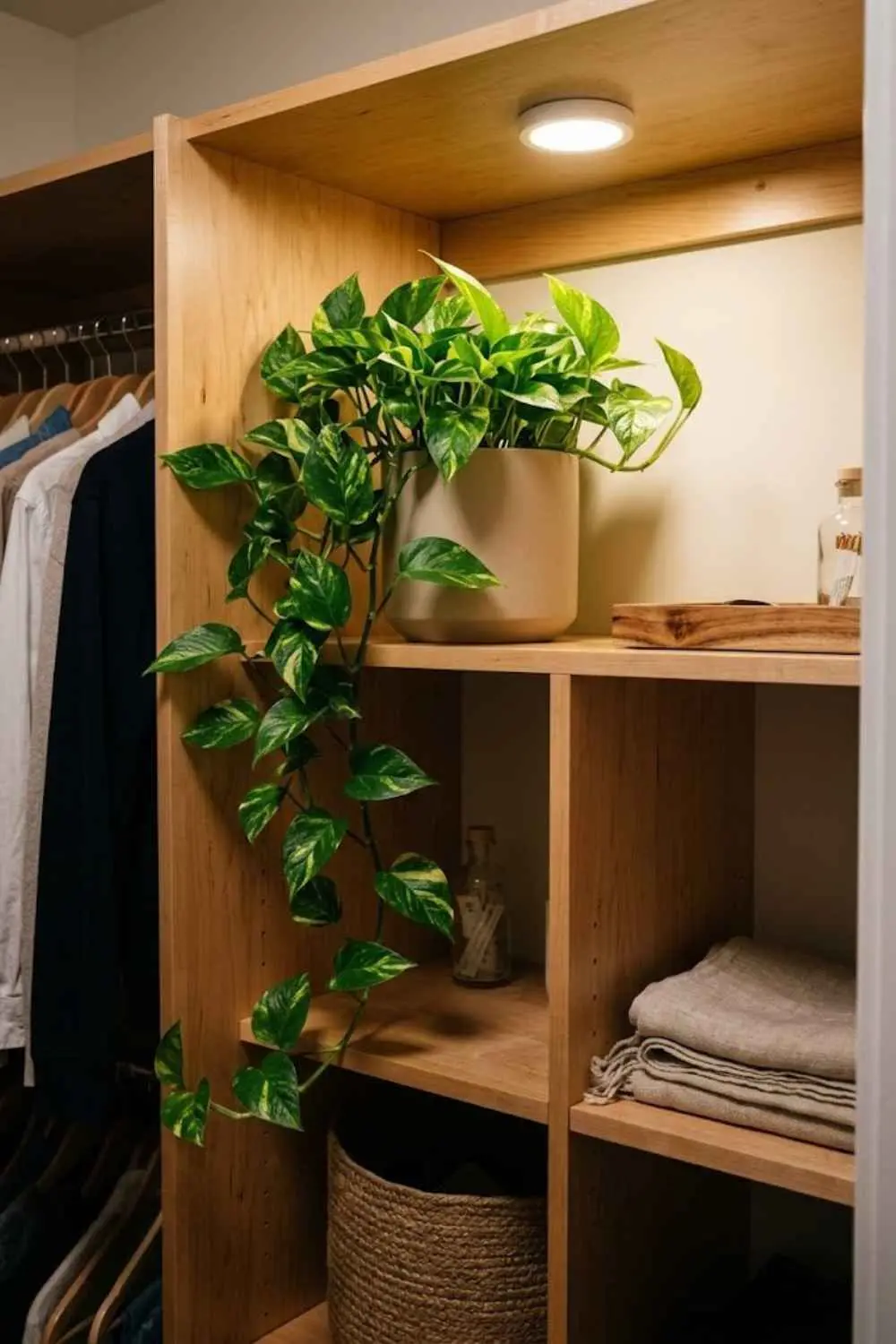
Because this trailing vine naturally grows beneath tropical rainforest canopies, it tolerates consistent, moderate artificial setups well. Utilizing a regular grow light encourages fuller vines with tighter leaf spacing along the runners.
Watch for the development of vibrant foliage and closer nodes, which is a sign that the plant is getting enough light to support more compact growth.
- Light Intensity: Medium
- Suggested Starting Distance: 12 to 18 inches from foliage
- Suggested Grow-Light Duration: 6 to 8 hours
2. Heartleaf Philodendron (Philodendron hederaceum)
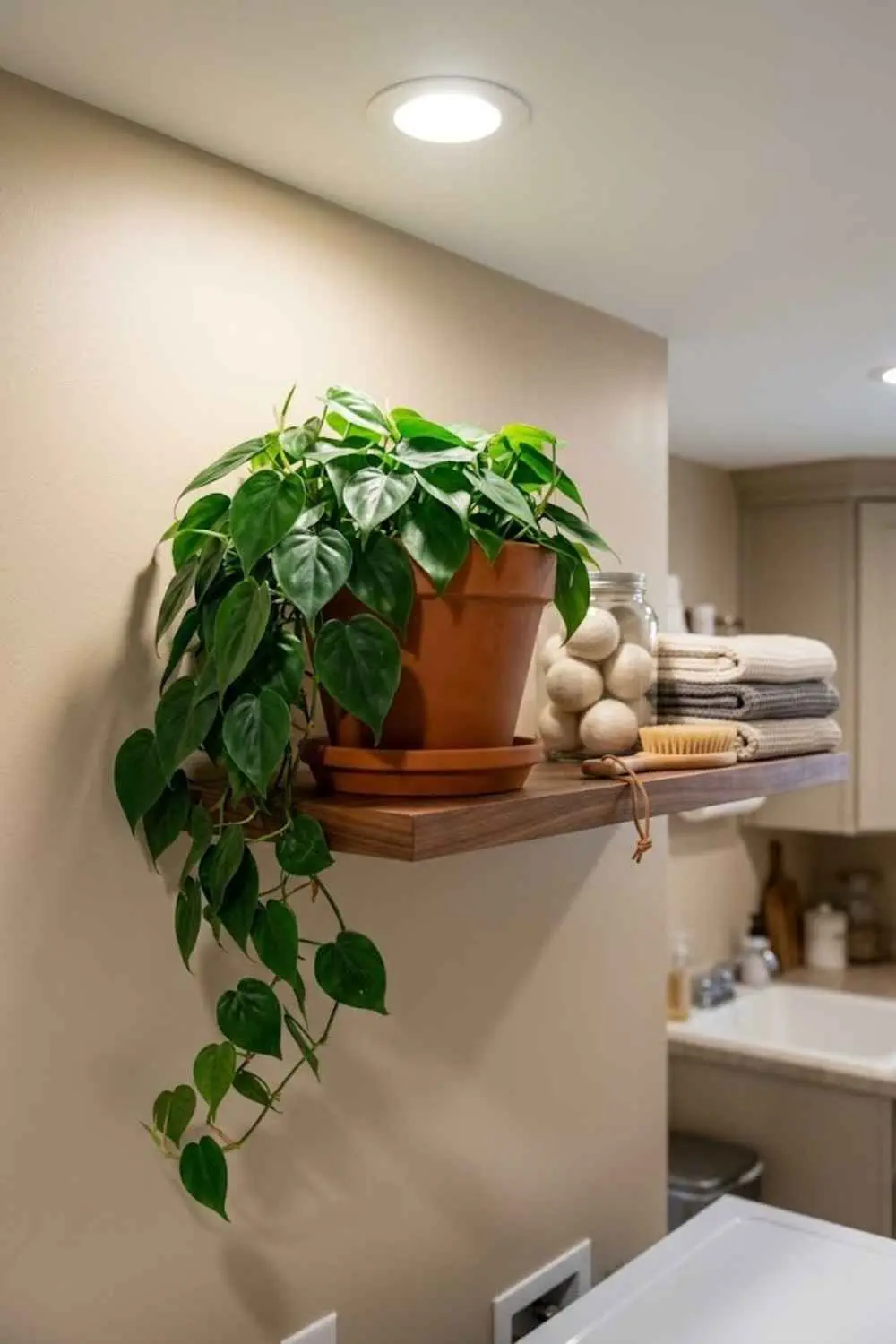
Artificial light can help heartleaf philodendron maintain denser growth indoors, especially when a window isn’t providing enough consistent light.
Place the fixture at a safe starting distance to avoid leaf burn, as the foliage is relatively thin. In proper lighting conditions, new growth emerges denser and less leggy rather than becoming sparse.
- Light Intensity: Medium
- Suggested Starting Distance: 18 to 24 inches from foliage
- Suggested Grow-Light Duration: 8 to 10 hours
3. Prayer Plants (Calathea and Maranta)
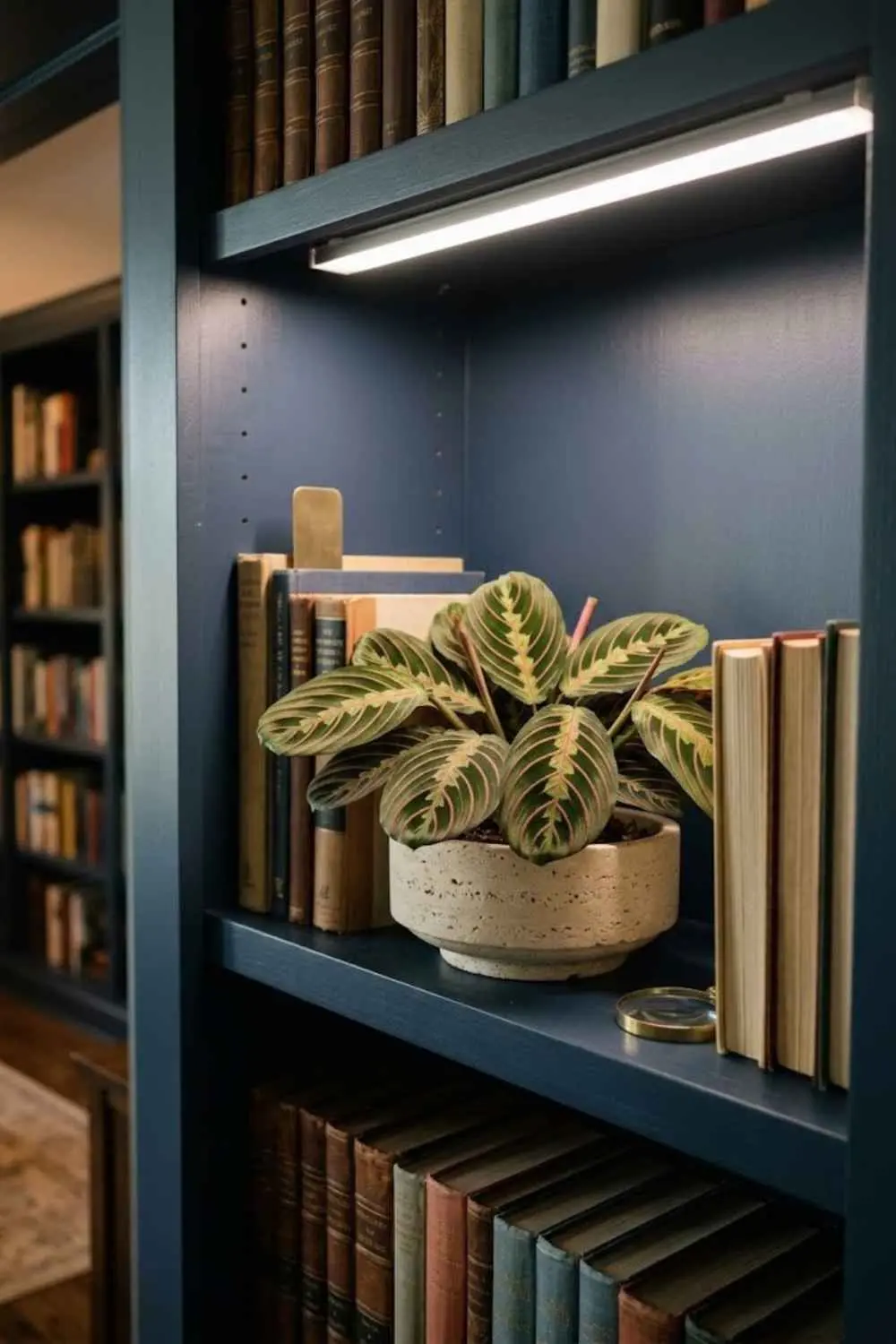
These tropical varieties thrive on the forest floor and are highly sensitive to excessive brightness, prioritizing light consistency over intensity.
Keep the light fixture positioned well above the canopy to maintain a soft, indirect environment. If the foliage shows signs of stress, move the fixture farther away and reassess your overall setup.
- Light Intensity: Low to Medium
- Suggested Starting Distance: 24 inches above foliage
- Suggested Grow-Light Duration: 6 to 8 hours
4. ZZ Plant (Zamioculcas zamiifolia)
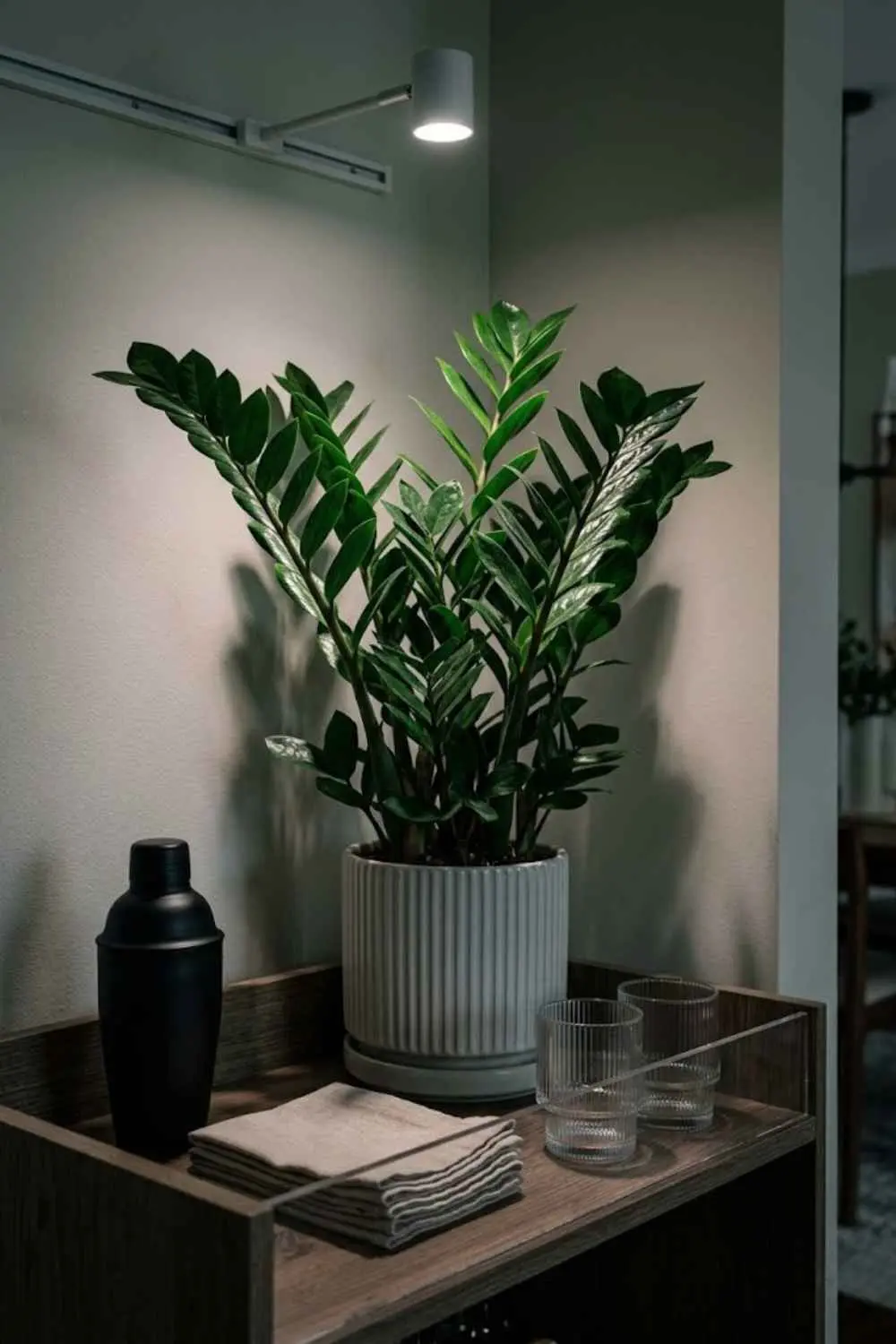
Native to East African dry forests, this hardy species stores energy in underground rhizomes, allowing it to tolerate lower indoor light thresholds well. Because its natural baseline is shaded, it maintains its dark, glossy appearance under relatively low-intensity artificial light.
Keep the fixture at a safe distance to prevent the tender tips of the upright stalks from burning under close LED setups.
- Light Intensity: Low to Medium
- Suggested Starting Distance: 18 to 24 inches from foliage
- Suggested Grow-Light Duration: 6 to 8 hours
5. Snake Plant (Dracaena trifasciata)
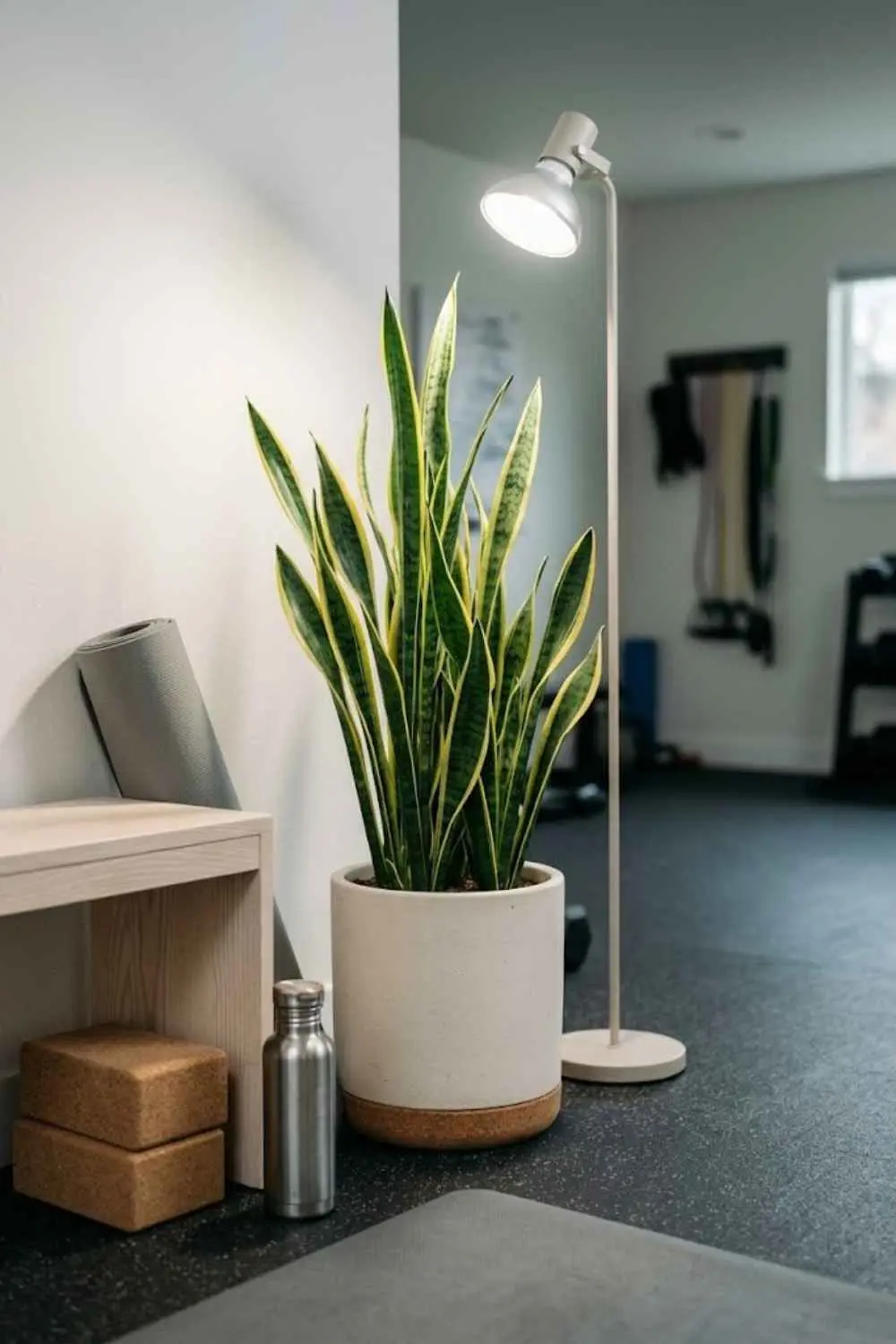
While frequently mischaracterized as a zero-light plant, the snake plant grows most efficiently under bright, indirect parameters. However, it performs reliably even under low-to-medium intensity.
Maintain a clear distance between the tall, vertical leaves and the light fixture to avoid bleaching the distinct patterns.
- Light Intensity: Low to Medium (or High if acclimated)
- Suggested Starting Distance: 18 to 24 inches from foliage
- Suggested Grow-Light Duration: 8 to 10 hours
6. Monstera Deliciosa (Swiss Cheese Plant)
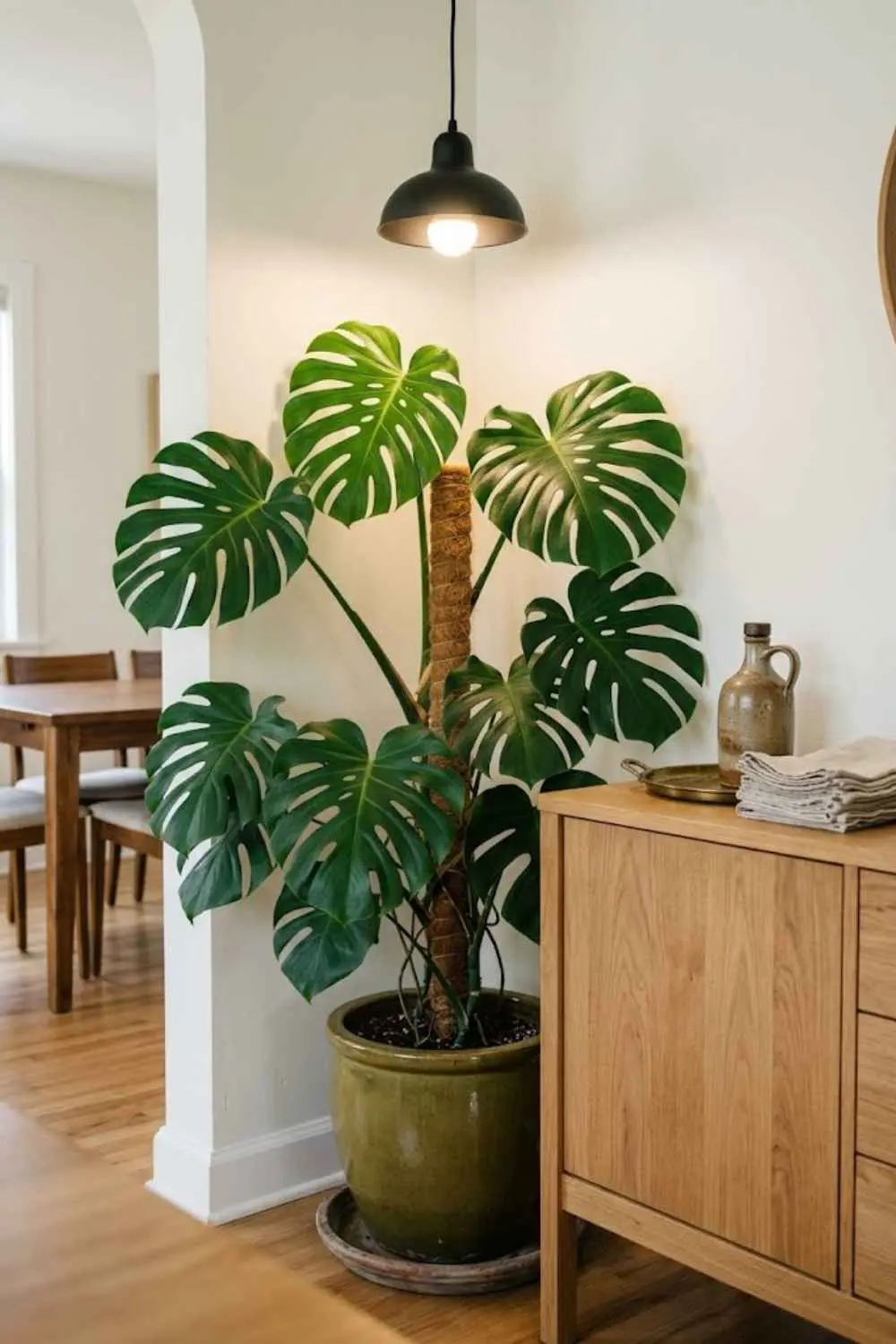
In its natural habitat, Monstera climbs vigorously up tree trunks to reach filtered sun, meaning it thrives under bright, overhead artificial setups. Providing sufficient intensity supports larger, more mature growth and better-developed fenestrations over time.
Avoid shifting the fixture too close to the foliage, as excessive intensity can bleach or scorch the large green leaves.
- Light Intensity: Medium to Bright
- Suggested Starting Distance: 12 to 18 inches above foliage
- Suggested Grow-Light Duration: 8 to 10 hours
7. Wax Plant (Hoya carnosa)
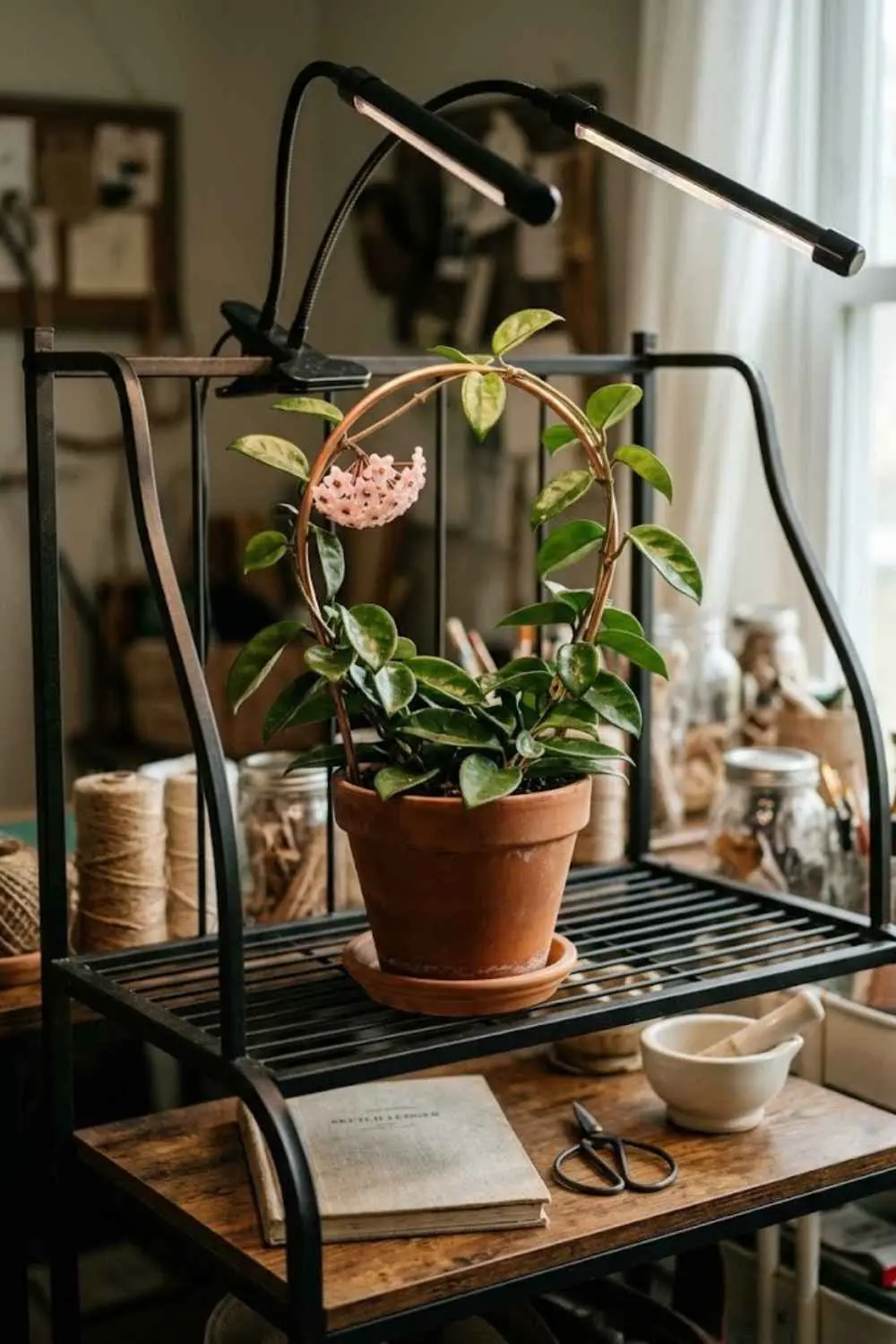
Hoyas respond exceptionally well to artificial lighting setups, which can offer the steady brightness that supports flowering indoors.
Their thick, succulent-like leaves tolerate bright exposure well, but the proximity must still be managed. Consistent bright light supports indoor flowering when other growing conditions are right, though placing the fixture too close can still stress the vines.
- Light Intensity: Bright
- Suggested Starting Distance: 8 to 12 inches from foliage
- Suggested Grow-Light Duration: 8 to 10 hours
8. Velvet-Leaf Anthuriums (Anthurium foliage varieties)
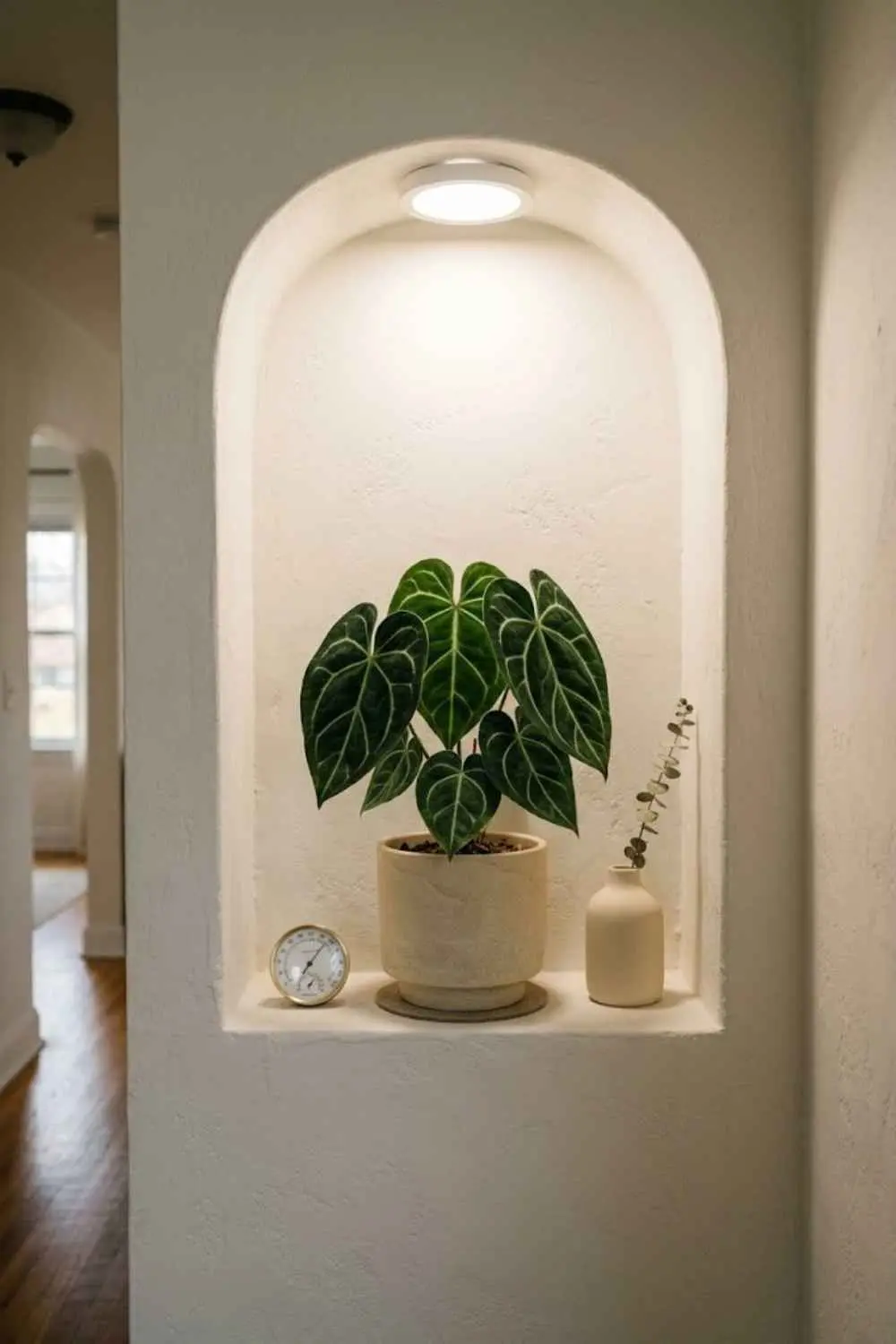
Hailing from shaded rainforests, velvet-leaf anthuriums benefit from a controlled, consistent light setup indoors.
Keep the fixture at a safe distance, and pull it back immediately if new leaves unfurl with crispy or browned edges.
- Light Intensity: Medium to Bright
- Suggested Starting Distance: 12 to 18 inches from foliage
- Suggested Grow-Light Duration: 8 to 10 hours
9. Arrowhead Vine (Syngonium podophyllum)
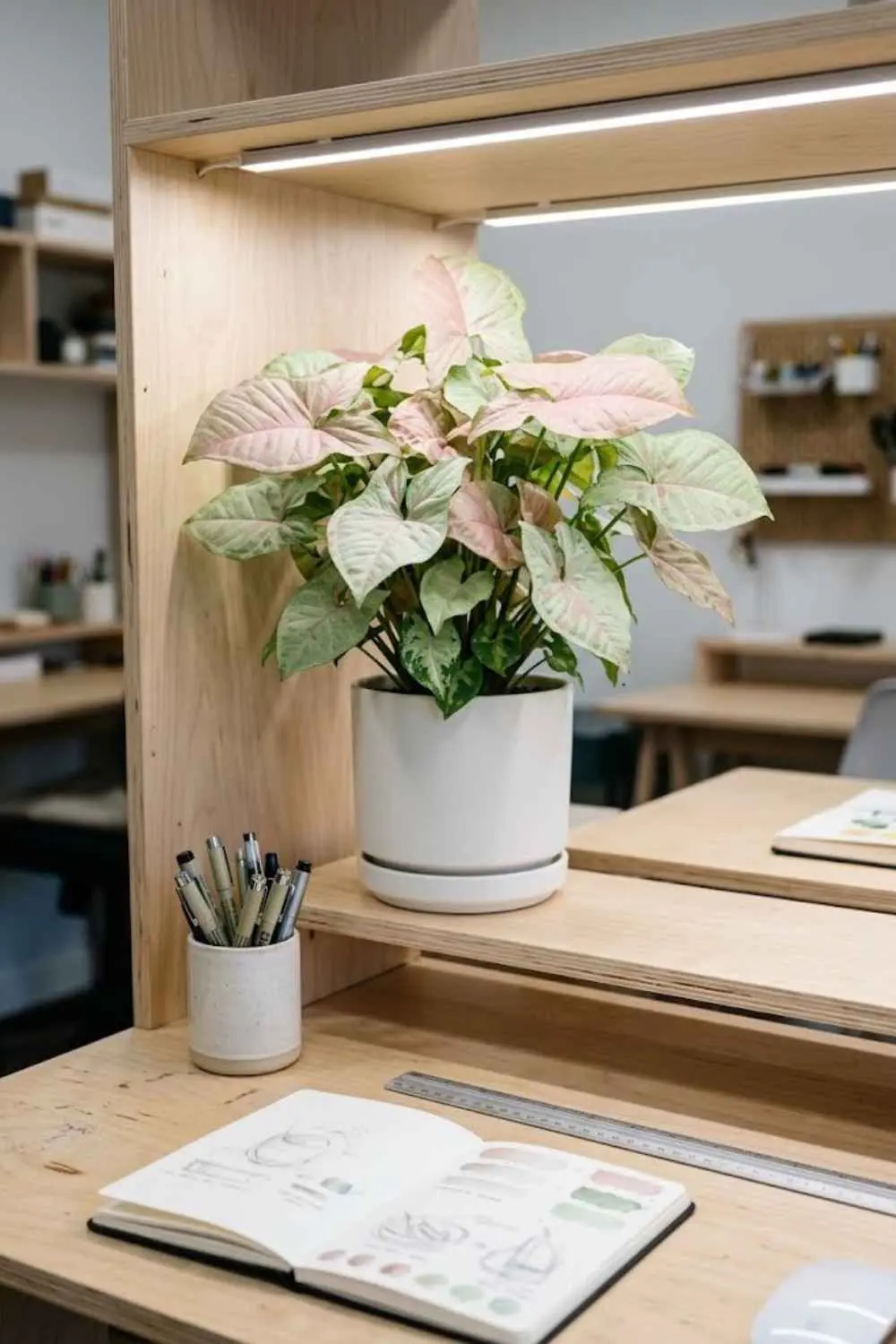
Syngonium grows easily under artificial lighting, frequently producing larger, more vividly patterned leaves under grow lights than in natural low light. The consistent output prevents lopsided growth as the stems begin to climb.
Variegated cultivars require brighter light to maintain their white or pink coloring, but they must be monitored to prevent leaf burn.
- Light Intensity: Medium (Brighter for variegated varieties)
- Suggested Starting Distance: 12 to 18 inches from foliage
- Suggested Grow-Light Duration: 8 to 10 hours
10. Echeveria
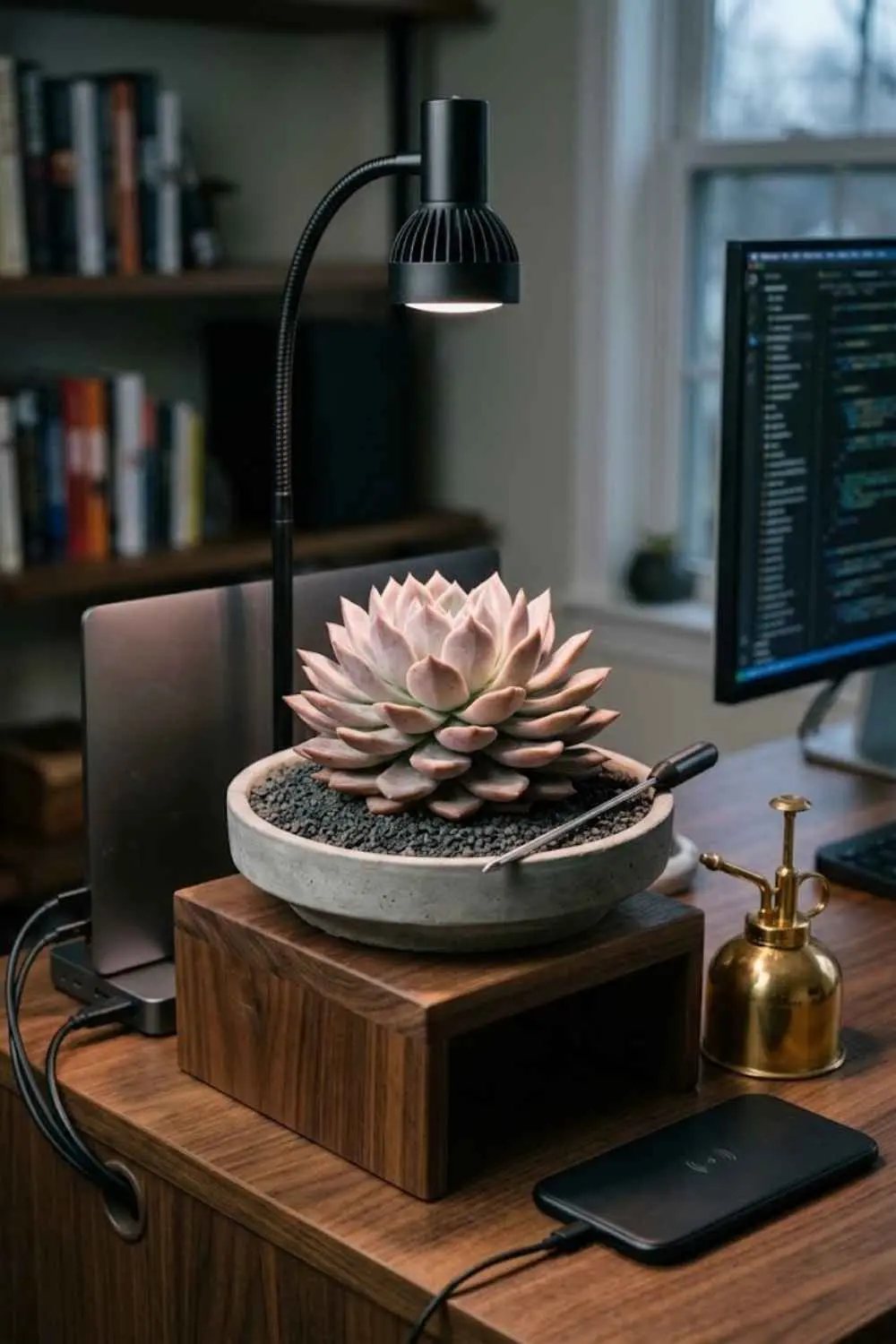
Unlike the tropical understory plants on this list, this rosette succulent requires high-intensity light to maintain its compact form and vibrant leaf margins.
In low-light rooms, Echeveria usually needs a dedicated grow light to stay compact. If the light is insufficient, the rosette will rapidly stretch outward and lose its characteristic coloration.
- Light Intensity: High
- Suggested Starting Distance: 6 to 12 inches from foliage
- Suggested Grow-Light Duration: 10 to 14 hours
Quick Light Selector
- Best for Extended High-Intensity Setups: Echeveria (requires a bright grow light setup to maintain its tight shape).
- Best for Gentle Grow-Light Setups: Prayer Plants and Velvet-Leaf Anthuriums (both prefer moderate, indirect conditions and consistent exposure).
- Most Tolerant of Shaded Placements: ZZ Plant and Pothos (both thrive under lower-intensity bulbs with standard durations).
- Best for Encouraging Blooms: Hoya (consistent bright light supports indoor flowering when other care needs are met).
FAQs
What type of light spectrum do indoor plants actually need?
A quality full-spectrum or balanced LED grow light is a simple, all-purpose choice for households.
These setups deliver a blend of wavelengths that support both foliage development and flowering across most indoor species without needing complicated technical configurations.
How do I know if my grow light is too close or too weak?
Your plants will show visible structural cues.
Pale leaves, leggy stretching between nodes, or completely stalled growth indicate the light is too weak or too far away. Conversely, crispy margins or bleached spots can mean the intensity is too high.
Can I leave my grow lights on 24 hours a day to speed up growth?
No. Most indoor plants benefit from a daily dark period rather than continuous light.
Use a timer to give your plants a consistent light-and-dark cycle, as non-stop exposure can disrupt their development and weaken the plant over time.
Conclusion
Utilizing artificial lighting shifts indoor gardening from a seasonal struggle to a predictable, year-round operation.
Because different varieties require slightly different intensity and duration parameters, success follows the same basic principles of watching for leaf signs and adjusting bulb proximity.
With a reliable full-spectrum fixture and a consistent timer, even a windowless room can support a surprisingly wide range of houseplants.