
Table of Contents
If you’ve ever bought a flowering plant—only to watch it stop blooming the moment you bring it home—you’re not alone.
Here’s the real secret: the best indoor bloomers don’t flower nonstop. They bloom in cycles. You get a wave of color, a breather, then another round when your light and routine stay steady.
This is a curated shortlist of repeat bloomers that look genuinely beautiful in real homes—no greenhouse, no complicated gadgets, no high-maintenance energy. Just smart placement and simple habits you can actually keep.
1. Phalaenopsis Orchid (Moth Orchid)
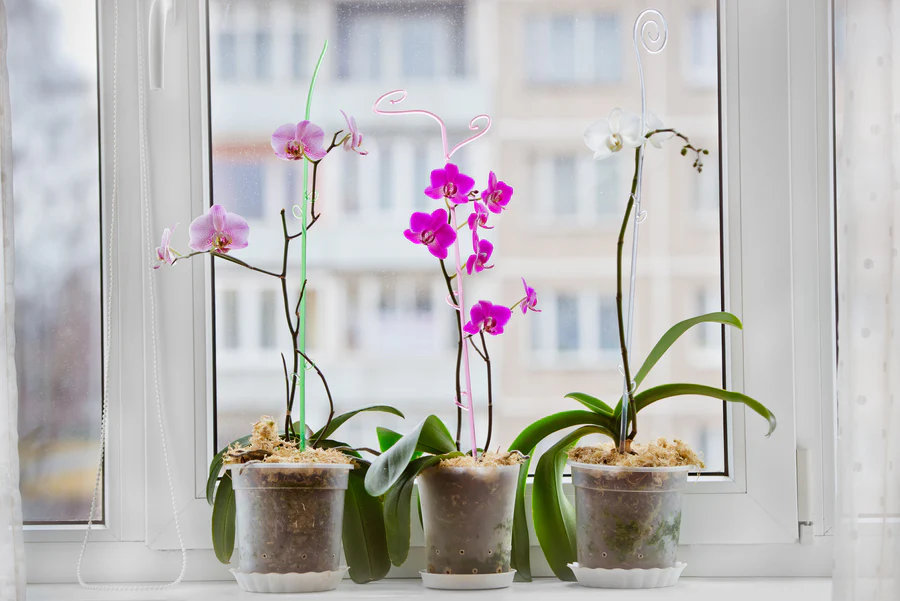
A moth orchid reads like effortless polish—arching stems of blooms that can stay open for weeks (sometimes months) and make a nightstand or console feel instantly finished.
Place it right near a bright window with indirect light—an east window is ideal, or a few feet back from a sunny south window behind a sheer curtain. Water lightly when the roots look silvery, and keep the pot airy so the roots don’t sit wet.
After the blooms fade, it typically rests. With steady light and a calm routine, it can flower again—so you get color returning through the year, just in chapters.
2. Anthurium
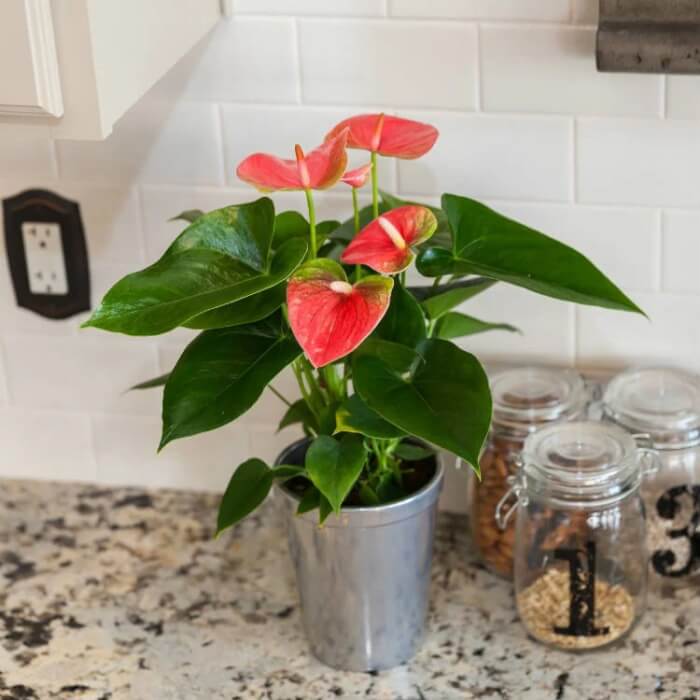
Anthurium brings that glossy, modern look: deep green leaves with waxy red, pink, or white spathes that show up in repeating cycles and last long enough to feel like “living decor.”
It’s happiest in bright, indirect light on a kitchen shelf or near a bathroom window, where humidity runs a little higher. Keep the mix lightly moist (not soggy), and it tends to keep producing blooms when the light is right.
If your home gets dry in winter, simply moving it closer to a more humid room can keep the leaves looking fresh and less crispy.
3. Crown-of-Thorns (Euphorbia milii)
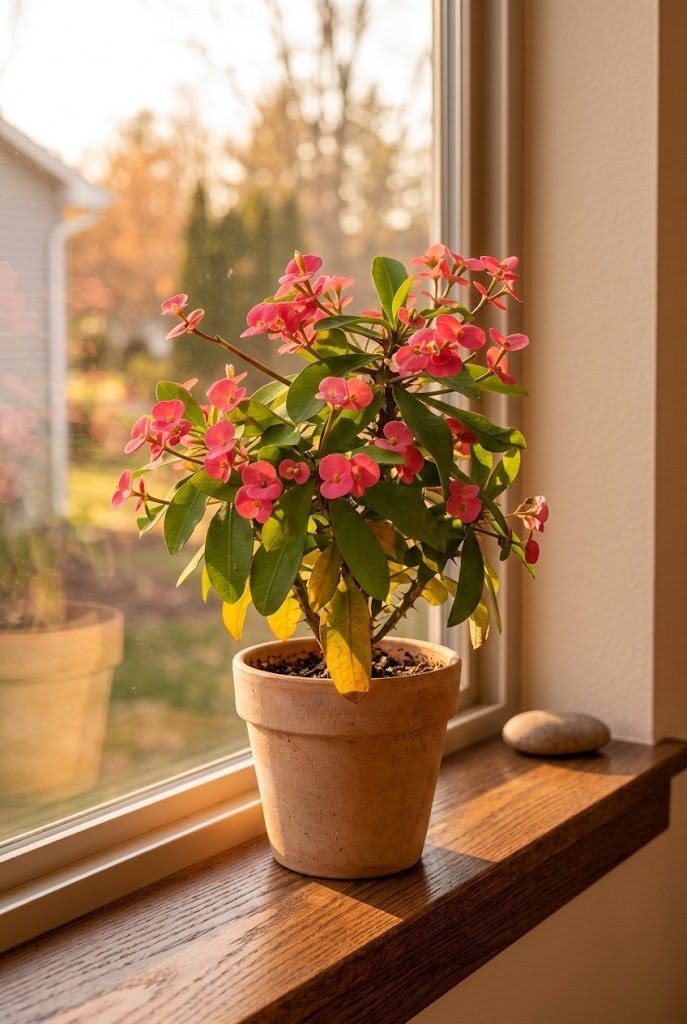
This one blooms like it has a secret agenda—in the best way. In a sunny window, crown-of-thorns throws out tiny flowers so often it feels like it never really stops.
Give it a south- or west-facing windowsill where it gets real sun, and let the soil dry out between waterings. It’s one of the most forgiving picks on this list if you’re busy or forgetful.
It is thorny, and the sap can irritate skin—so it’s best kept out of kid-and-pet traffic zones.
4. African Violet (Saintpaulia)
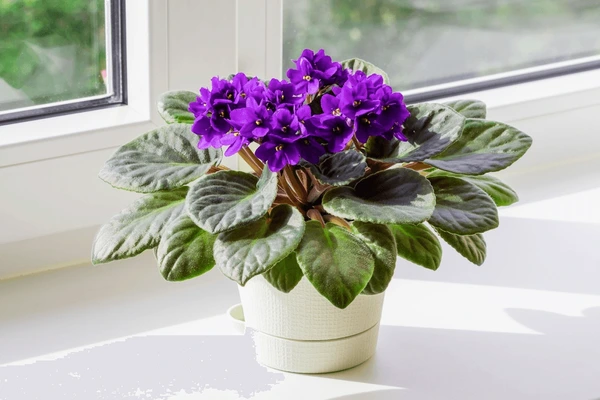
African violets are small but generous—soft leaves, bright little blooms, and a habit of flowering again and again when they like their spot.
They do best close to a bright window without direct sun, or under a simple counter light if your space runs dim. Water carefully (bottom-watering works well) and avoid splashing the leaves, which can leave spotting.
One on a side table looks charming. A few grouped together looks like a tiny indoor collection—lots of color, almost no footprint.
5. Streptocarpus (Cape Primrose)
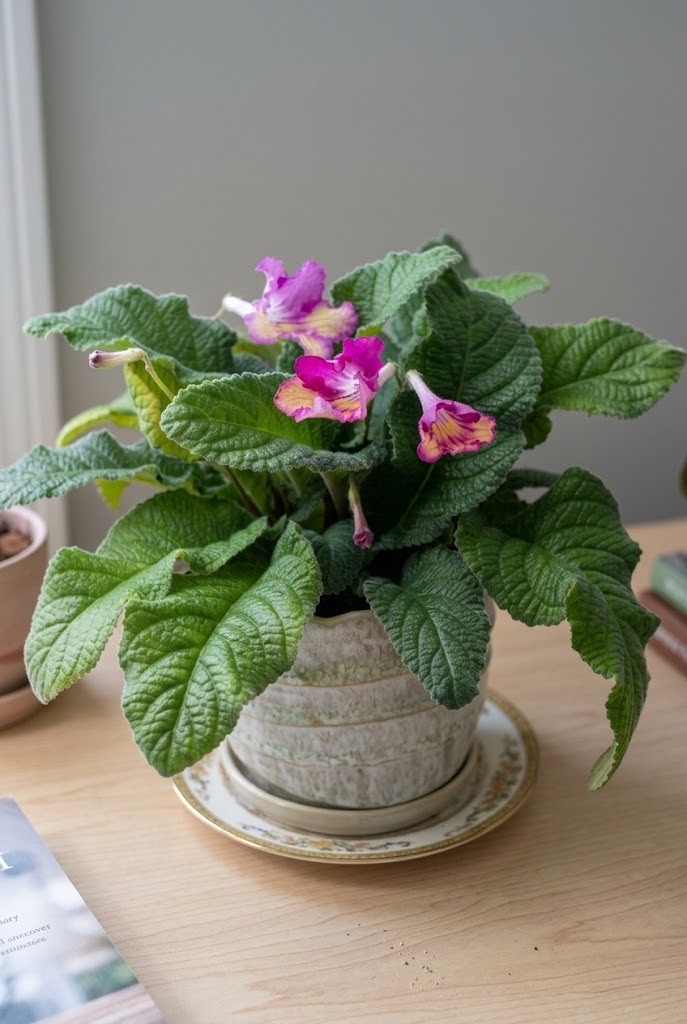
Streptocarpus looks like a little bouquet that decided to live in a pot—soft leaves low to the soil, with fluttery blooms rising above on thin stems.
It’s a great fit for bright, indirect light on a desk or narrow shelf near a window. Keep the soil lightly moist (not wet), and it tends to bloom in waves when it’s comfortable.
The main make-or-break is soggy soil—use a pot with drainage, and let the top layer dry just slightly before you water again.
6. Lipstick Plant (Aeschynanthus)
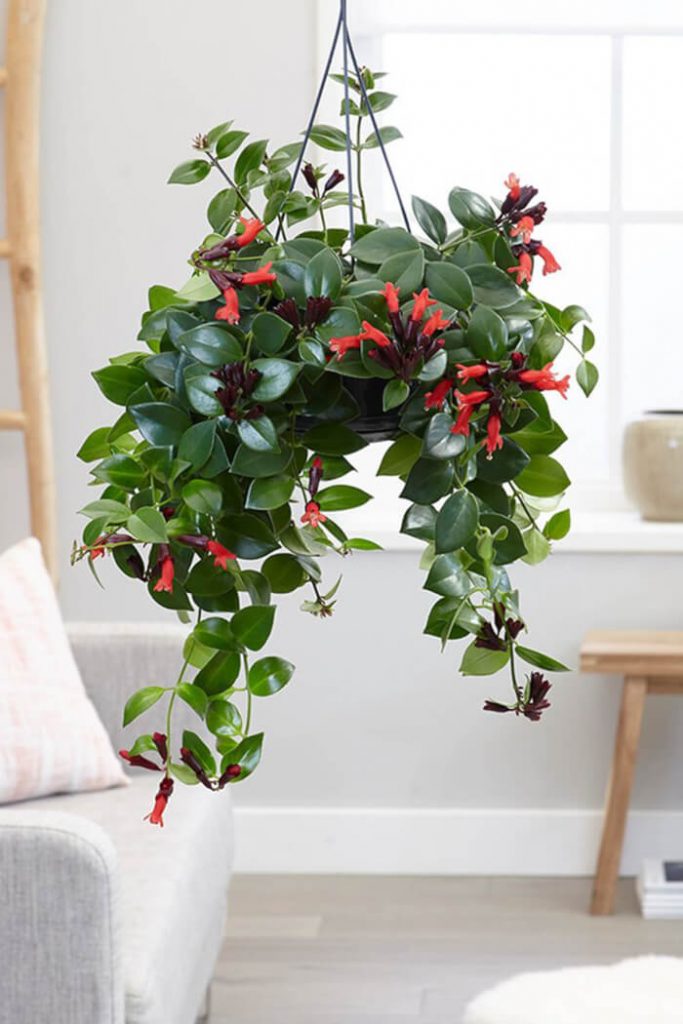
A happy lipstick plant reads like living styling—glossy leaves, trailing stems, and red tubes that pop out like tiny lipsticks in a playful, dramatic burst.
It shines in a hanging planter by a bright window (or on top of a bookcase where the vines can spill). Keep the mix lightly moist, but don’t keep it constantly wet—this plant likes a little breathing room between waterings.
If it’s getting leggy, a quick pinch at the tips encourages branching, which usually means a fuller look and more bloom moments later.
7. Begonia (Wax Begonia or Begonia maculata)
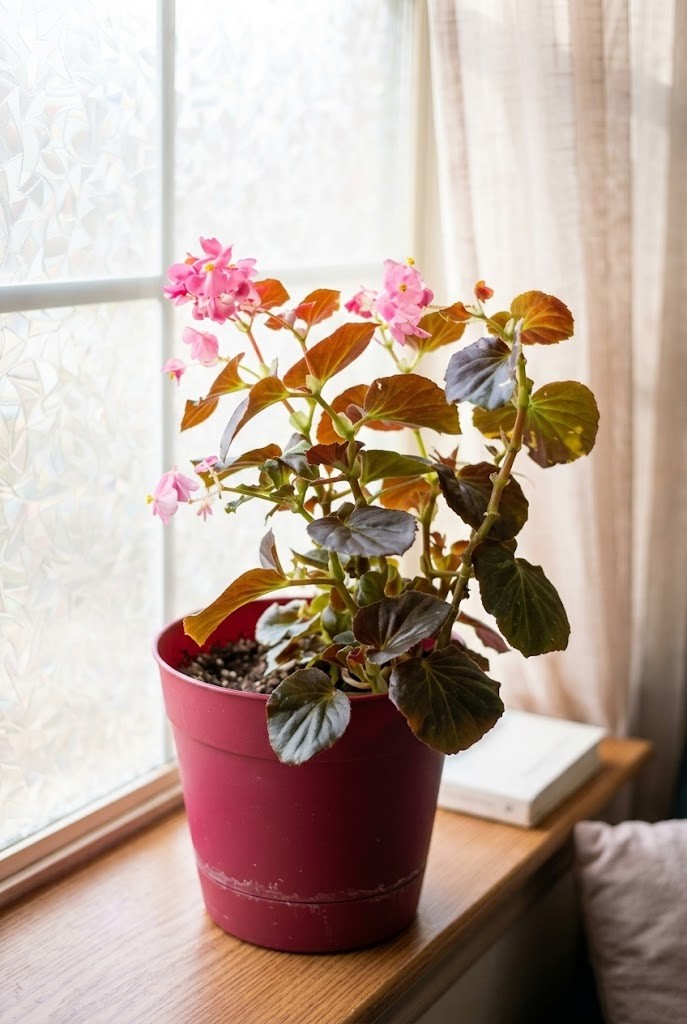
Begonias bring a “best of both worlds” look: flowers that return in cycles plus foliage that still looks special when the plant isn’t in full bloom.
For the easiest indoor wins, keep it in bright, filtered light on a windowsill or a shelf a foot back from the glass. Let the top inch of soil dry before watering again—steady moisture is good, but soggy soil is where begonias start sulking fast.
If you’re choosing a type, wax begonias are usually the most forgiving, while polka-dot begonia (Begonia maculata) is more of a statement plant that rewards consistency.
8. Purple Shamrock (Oxalis triangularis)
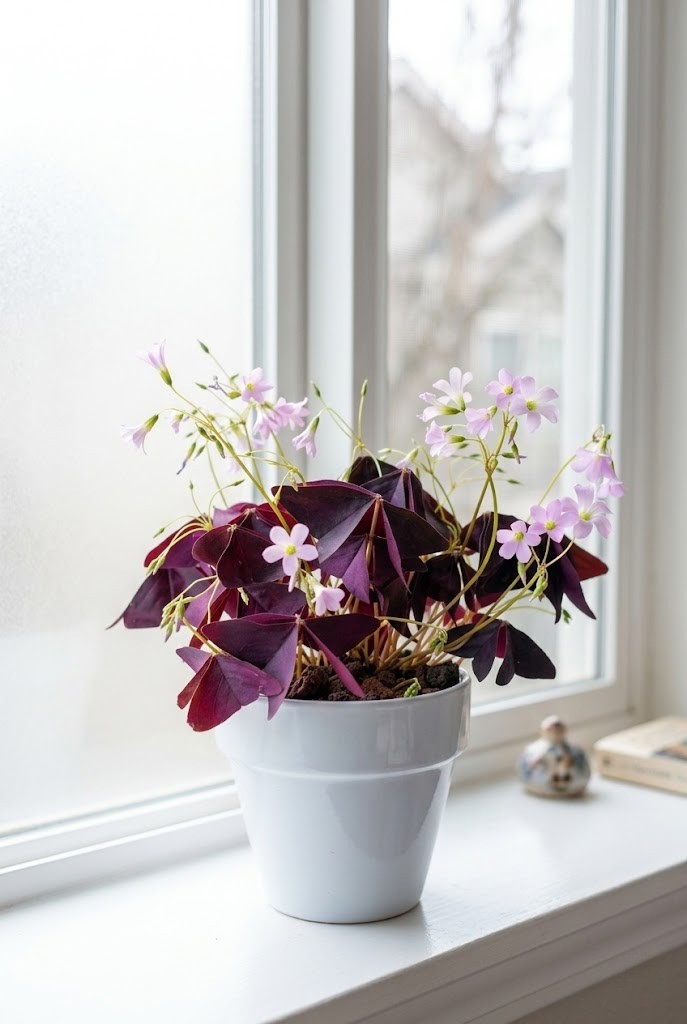
Purple shamrock is one of those plants that looks styled even when you do nothing—deep purple, butterfly-like leaves that open in the day and fold up at night, plus small white or pink blooms that pop up in frequent cycles.
Give it bright, indirect light on a windowsill or desk, and water when the soil feels lightly dry. It grows from little bulbs, so if it takes a short nap (dormancy), don’t panic—it often returns looking fresh, like it hit a reset button.
It’s compact, forgiving, and ridiculously photogenic in everyday spaces.
9. Hoya (Wax Plant)
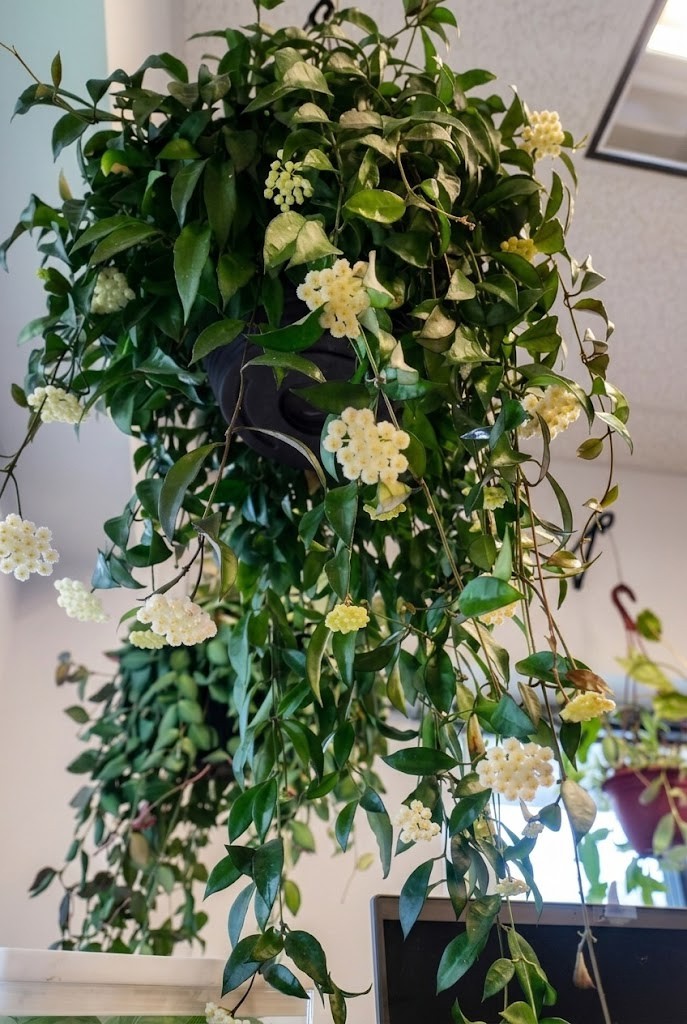
A hoya looks clean and sculptural—thick, waxy leaves on trailing vines, with clusters of starry blooms that feel almost unreal up close.
The key is placement: give it your brightest indoor spot with indirect light, like near an east window or a few feet back from a sunny south window. Once it’s established, it can bloom in waves and return to flowering again with steady light and a consistent routine.
Two “don’ts” matter most: don’t keep the pot wet, and don’t constantly move it around. Hoyas like to settle in—and they tend to reward stability.
10. Peace Lily (Spathiphyllum)

Peace lilies are the definition of calm—arched glossy leaves and clean white spathes that appear in cycles when the light is right.
Most people miss the placement. Peace lilies don’t bloom their best in dark corners—put yours in bright, indirect light, like near a window with a sheer curtain or on a bathroom-adjacent shelf that gets daytime glow. Water when the top inch dries out, and it’ll stay perky instead of droopy and dramatic.
If you have pets that nibble plants, keep it out of reach—peace lily can be toxic if ingested.
Conclusion
“Blooms all year” doesn’t mean nonstop flowers. It means you’ll see color returning through the seasons—as long as the plant is getting the light it needs.
If your home is bright, you’ll have the easiest time with orchids, hoyas, lipstick plants, and crown-of-thorns near a sunny window. If your light is softer, African violets, oxalis, and peace lilies can still deliver repeat blooms—just closer to the window than you might expect.
Pick the one you can picture where you’ll actually notice it every day. That’s usually the plant that keeps performing.
FAQs
1. Do these plants really bloom all year indoors?
They can bloom in repeating cycles throughout the year when the light is right. It’s not nonstop, but you’ll see fresh color return again and again—especially with African violets, anthuriums, oxalis, orchids, and hoyas once established.
2. What’s the biggest factor for getting indoor plants to bloom?
Light. Most blooming houseplants need brighter indoor light than people expect to form buds. Watering and humidity help, but if the light is too low, plants usually stay leafy.
3. Which plants are best for beginners who want reliable indoor flowers?
African violet, purple shamrock (oxalis), peace lily (in brighter indirect light), and anthurium are forgiving picks. If you want long-lasting blooms more than frequent reblooming, start with a Phalaenopsis orchid.