Table of Contents
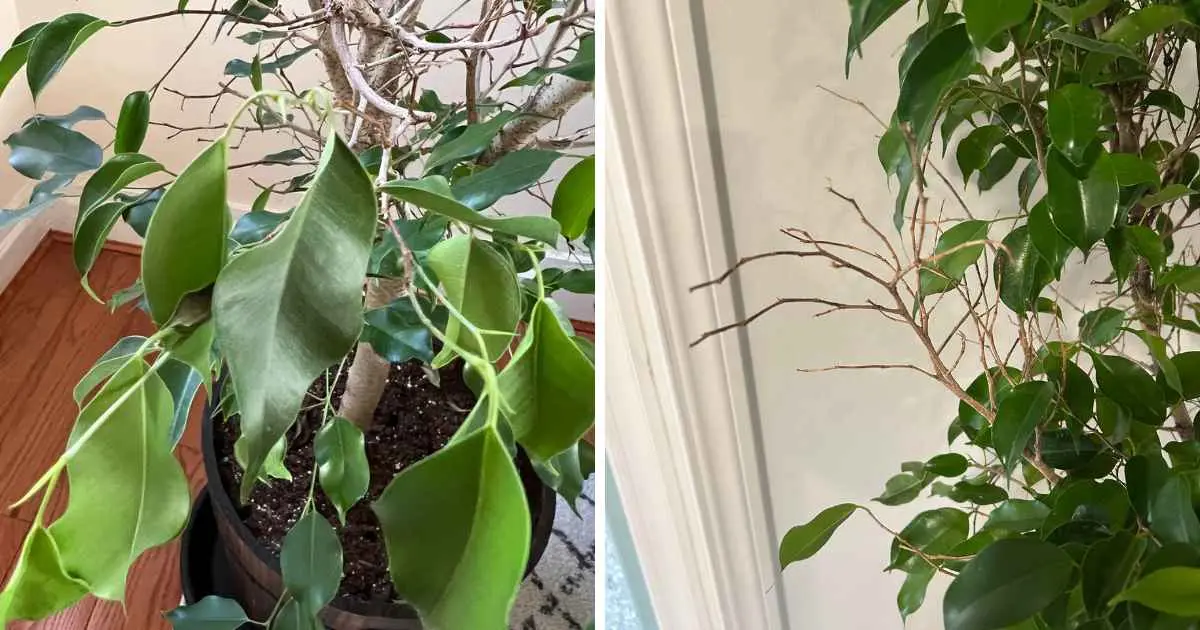
Few indoor plants test a gardener’s patience quite like Ficus benjamina. It is notorious for shedding foliage at the slightest provocation, often leaving a ring of yellowing leaves around its container.
This drop is usually a natural defense mechanism rather than a sign that your tree is dying. The weeping fig thrives on environmental consistency.
When its surroundings change or its roots face stress, discarding leaves is simply how the plant conserves energy. Pinpointing the exact trigger requires looking past the fallen foliage to examine recent changes in your care routine or indoor climate.
Credit: Reddit
1. Sudden Changes in Location
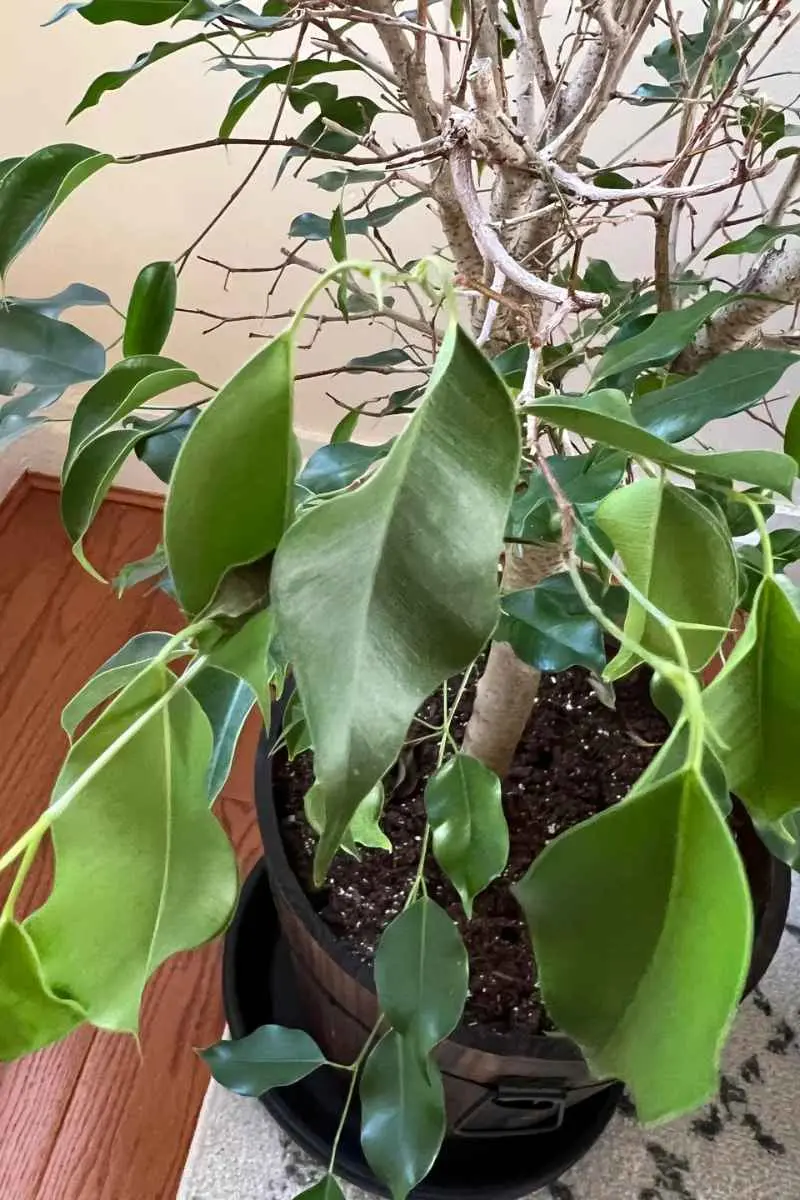
Bringing a new Ficus home from the nursery or moving an established plant across the room almost always triggers a stress response. Weeping figs adapt their foliage to the specific angle and intensity of the light they receive.
When you alter that position, those leaves struggle to process the new lighting. The plant sheds them to clear space for fresh growth optimized for the new location.
To fix this, select a permanent spot with bright, indirect light and leave the plant there. If you must relocate it, transition it over two weeks by moving it a few feet at a time. Expect some initial shedding, but avoid moving the plant a second time out of panic, as this only compounds the shock.
2. Watering Extremes: Waterlogged Soil or Chronic Drought
Both overwatering and under-watering cause a weeping fig to drop leaves, but the plant flags each issue differently.
When the soil remains continuously wet, oxygen cannot reach the roots, leading to decay. Damaged roots can no longer absorb water efficiently, leaving the upper canopy to starve.
If the soil has become dense and muddy, simply letting it dry won’t solve the problem; you may need to clear the drainage holes or repot the tree into a fresh, well-aerated mix with perlite.
Conversely, if you forget to water, the plant will shed leaves to minimize moisture loss. Look at the fallen leaves: waterlogged leaves drop while soft and pliable, whereas drought-stressed leaves curl, develop crispy edges, and feel brittle before falling.
If the soil has completely dried out and shrunk away from the pot sides, submerge the base in water for 15 minutes to rehydrate the root ball thoroughly.
3. Chronic Light Insufficiency
Credit: Reddit
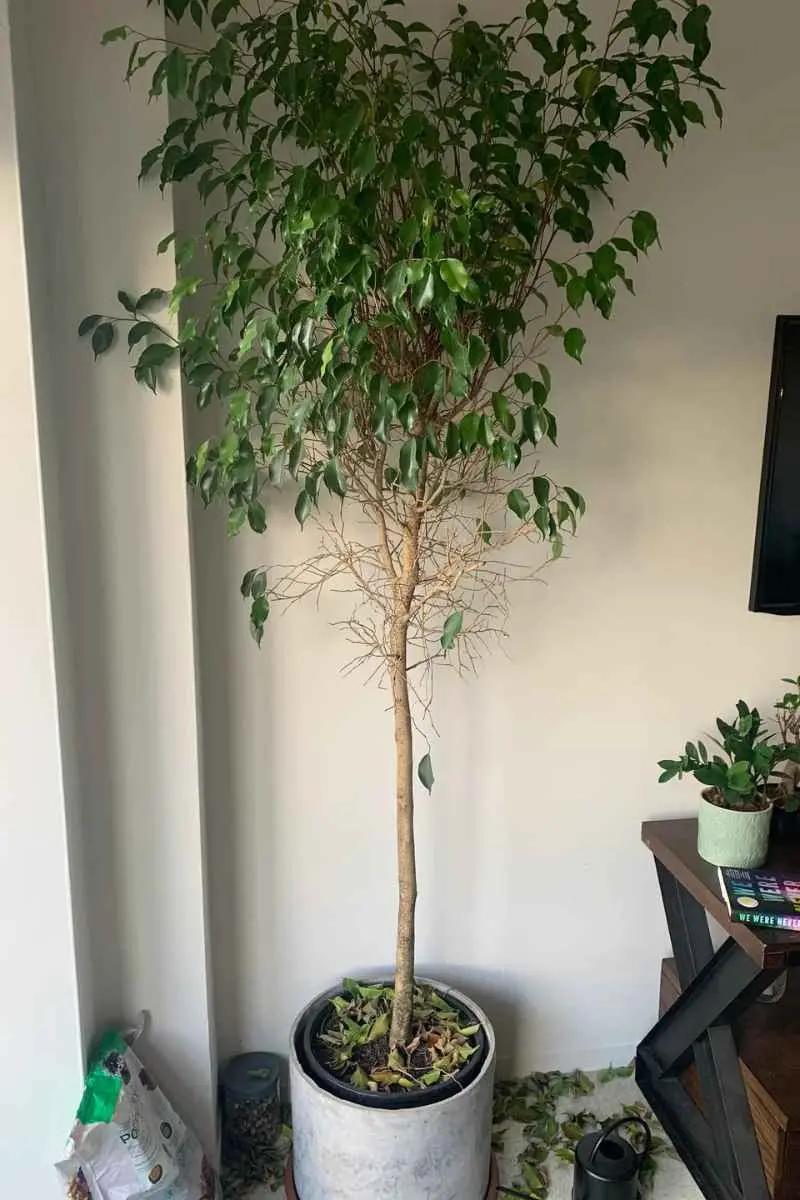
When a weeping fig is placed too far from a window, the leaf drop is slow but steady, typically starting from the interior branches and working outward.
The plant is simply conserving resources: it selectively discards its inner foliage because those leaves don’t receive enough light to justify the energy it takes to keep them alive.
To reverse this thinning, move the tree closer to an east- or west-facing window for ample bright, indirect light.
In dimly lit rooms, position a dedicated LED grow light 12–18 inches above the canopy for 12 hours a day to provide the necessary energy baseline to stop the decline.
4. Sudden Temperature Changes
When a Ficus drops perfectly healthy, vibrant green leaves without any prior yellowing, an invisible air current is usually to blame. Weeping figs detest sudden temperature shifts.
A direct blast from an air conditioning vent, a nearby radiator, or a drafty winter window triggers an immediate leaf drop.
Signs that a draft is the primary culprit include leaf drop occurring predominantly on the side facing the vent or window, while the protected side of the canopy remains full.
Adjust your layout by moving the tree just a few feet away from these forced-air currents into a stable, shielded zone.
5. Sap-Sucking Pest Infestations
An unchecked pest problem is a less obvious trigger for sudden defoliation. Weeping figs are particularly susceptible to spider mites and scale insects.
Spider mites leave fine webbing and yellow speckles on the undersides of leaves, while scale insects appear as small brown bumps on stems and often leave a sticky residue known as honeydew.
If you spot these physical signs, isolate the tree immediately.
Wash the canopy thoroughly with a gentle stream of lukewarm water to knock down the pest population, then treat the entire plant with insecticidal soap or organic neem oil, paying close attention to the branch junctions.
6. Winter Light and Watering Changes
Adjust your care routine as growth slows for winter. If your tree starts dropping leaves every autumn right as the heating season begins, your summer care routine likely no longer matches the plant’s slower winter metabolism.
Even perfectly watered plants may shed a small number of older leaves each autumn as daylight hours dwindle and light levels decline naturally.
However, continuing to water at summer volumes during this transition will compound the problem, suffocating the roots and triggering a heavy winter shed.
Scale back your watering frequency as winter approaches, allowing the soil to dry out deeper in the pot than you would during the spring, and stop all fertilizer applications until spring.
FAQs
Will the bare branches on my weeping fig grow new leaves?
Yes, if the branches are still alive. Gently scratch the bark of a bare twig with your fingernail.
If you see green underneath and the branch bends without snapping, it will eventually push new buds. If it snaps cleanly and looks brown inside, the twig is dead and should be pruned away.
How long does it take for a Ficus to stop dropping leaves after fixing the problem?
Shedding will not stop instantly; the plant must finish shedding leaves that have already begun the separation process.
You will typically see the drop slow down over a few weeks as the plant settles into its corrected environment, followed by new bud development.
Should I fertilize my Ficus to help it recover from leaf loss?
No. Feeding a stressed plant can burn its remaining roots and accelerate leaf drop.
Hold off on all fertilizers until the shedding has completely stopped and you see active, healthy new leaf growth.