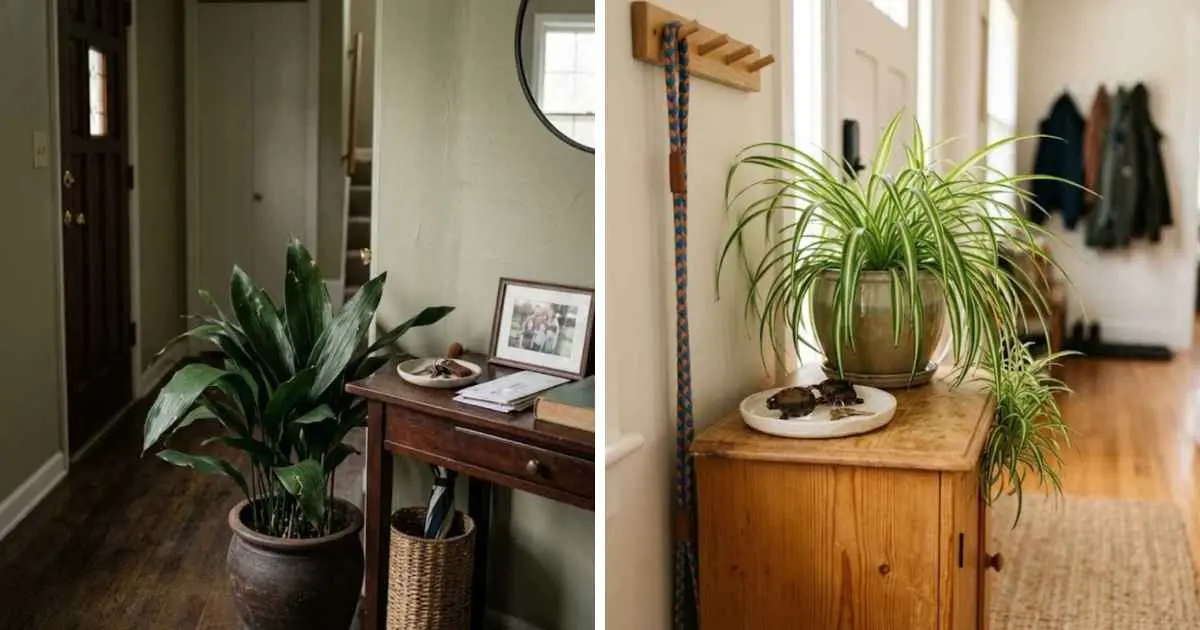
Table of Contents
The transitional space between the outside world and your living room is the hardest working zone in the house. It handles dropped keys, muddy shoes, and constant foot traffic.
Adding a plant here softens the stark lines of a front door and makes coming home feel more welcoming.
However, entryways are tough on living things. They face sudden drafts every time the door opens and usually suffer from a chronic lack of natural light.
To keep a plant alive here, you need varieties that offer a warm visual presence without requiring greenhouse conditions. Here are the plants that actually work at the front door.
1. Cast Iron Plant (Aspidistra elatior)
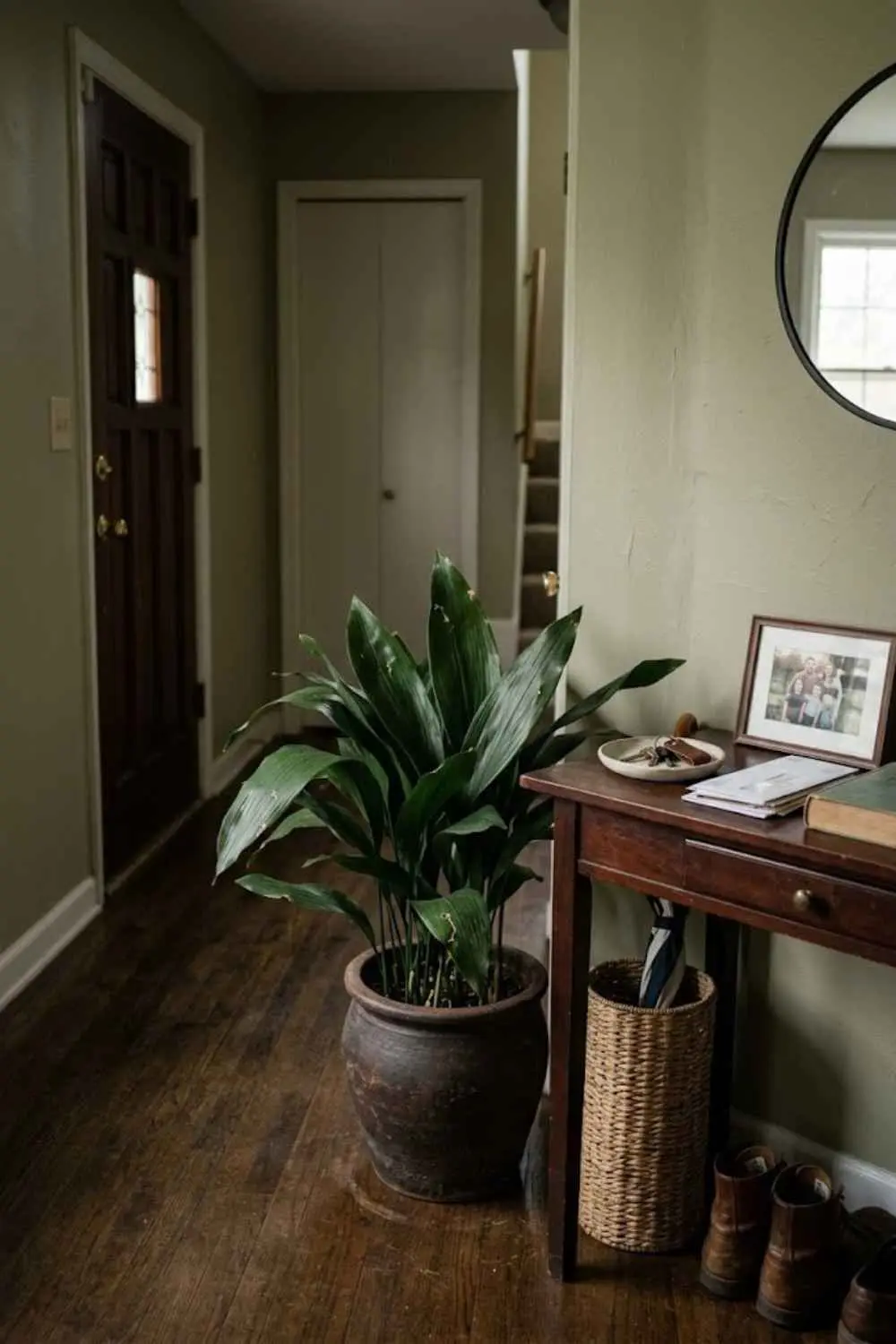
If your entryway is a dim, narrow corridor that gets chilly in the winter, start here. The Cast Iron Plant earned its reputation by handling dark corners and sudden cold drafts without losing its shape.
Its broad, deep green leaves fill empty floor space next to a console table without looking messy. Because it grows slowly, it typically maintains its neat look for years without outgrowing its pot.
Keep in mind that its slow growth means what you buy is generally what you get—it is best not to purchase a small starter plant expecting a massive floor statement by next season. The wide leaves are also dust magnets, so give them a quick wipe with a damp cloth every month to keep them looking fresh.
Light: Low light tolerant • Water: Low watering • Pets: Pet friendly • Habit: Upright growth habit
2. Snake Plant (Sansevieria trifasciata)
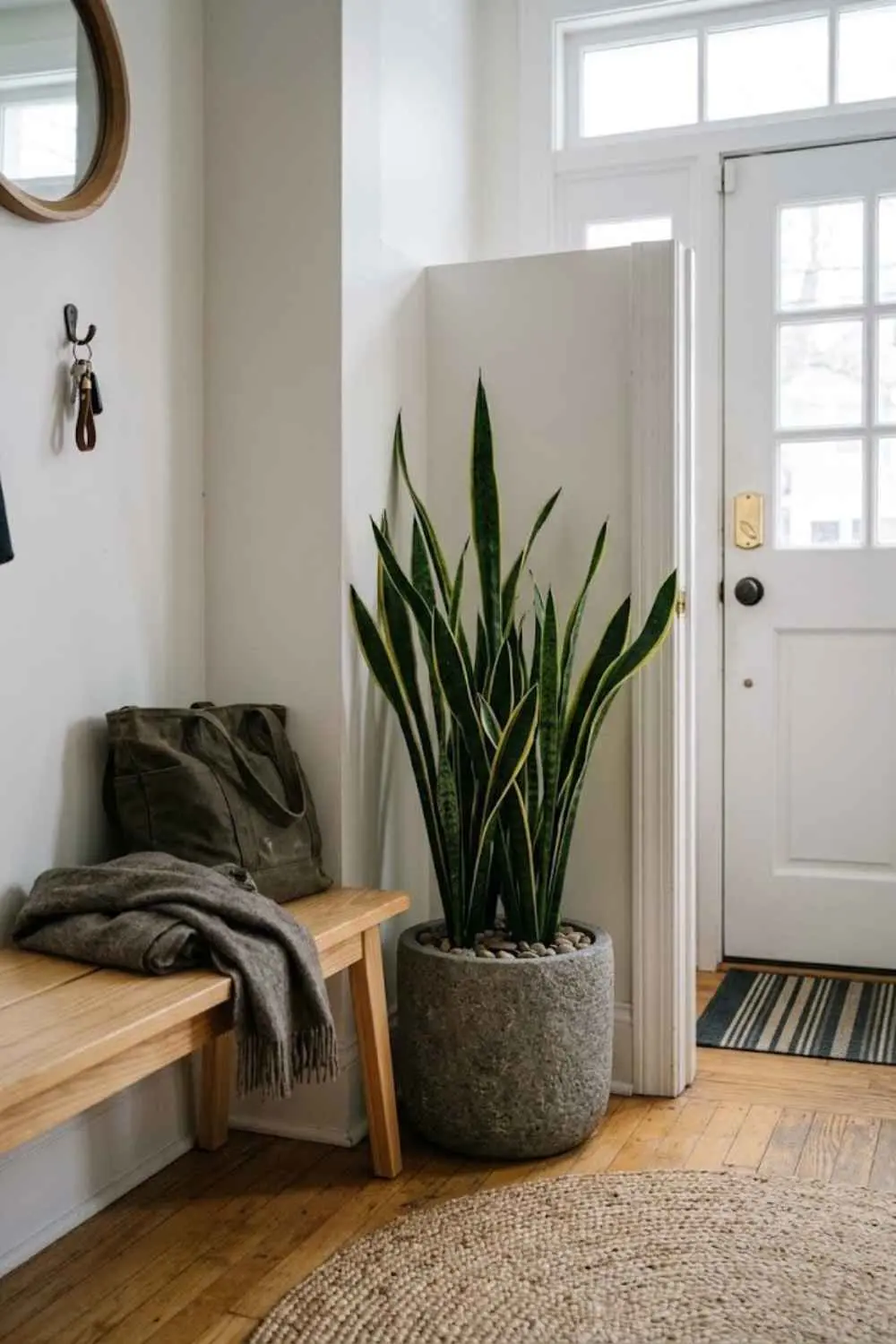
A vertical design strategy is a great approach when decorating small foyers with limited floor space. The sword-like leaves of the Snake Plant grow straight up, providing a splash of green that slips easily into tight corners or directly behind an entryway bench without blocking traffic.
Don’t buy into the myth that it thrives in pitch darkness; in a windowless hall, it will typically stall and stop growing. Because dark entryways stay damp longer, limit watering to once a month to keep the roots healthy.
Light: Low light tolerant • Water: Very low watering • Pets: Pet toxic • Habit: Strictly upright grower
3. Kentia Palm (Howea forsteriana)
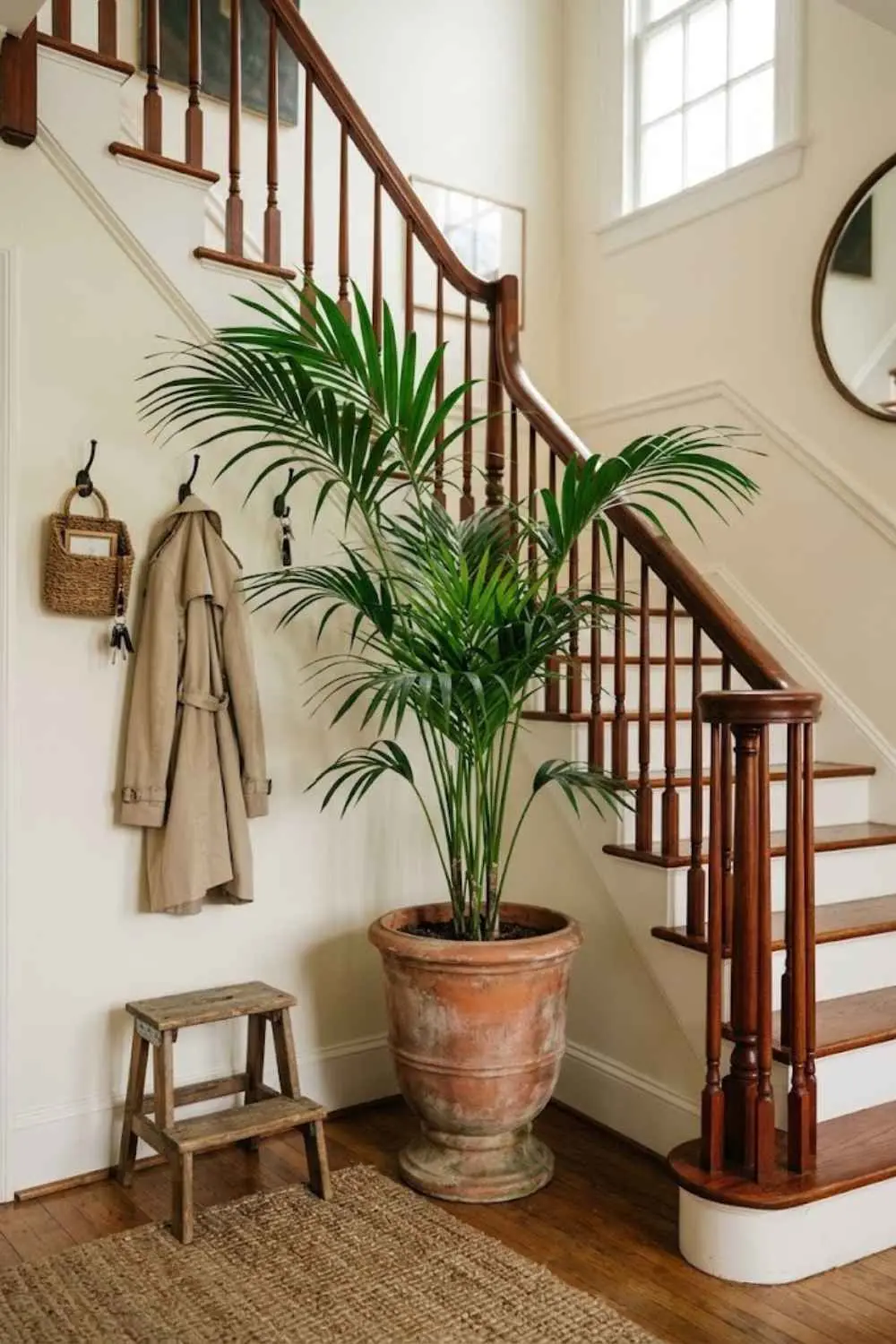
To add classic height the moment the front door opens, a Kentia Palm is a classic choice. Unlike finicky tropical palms, the Kentia handles low interior light and cold drafts well.
Its long, slender stems arch gracefully at the top, softening the hard angles of door frames and staircases while making low ceilings feel taller.
This is an investment piece. Kentias grow slowly and are priced accordingly, so buy the size your space requires from the start. Once placed, it is best to leave it there—it can dislike being moved around or brushed against by heavy coats.
Light: Medium indirect light • Water: Moderate watering • Pets: Pet friendly • Habit: Tall, arching grower
4. ZZ Plant (Zamioculcas zamiifolia)
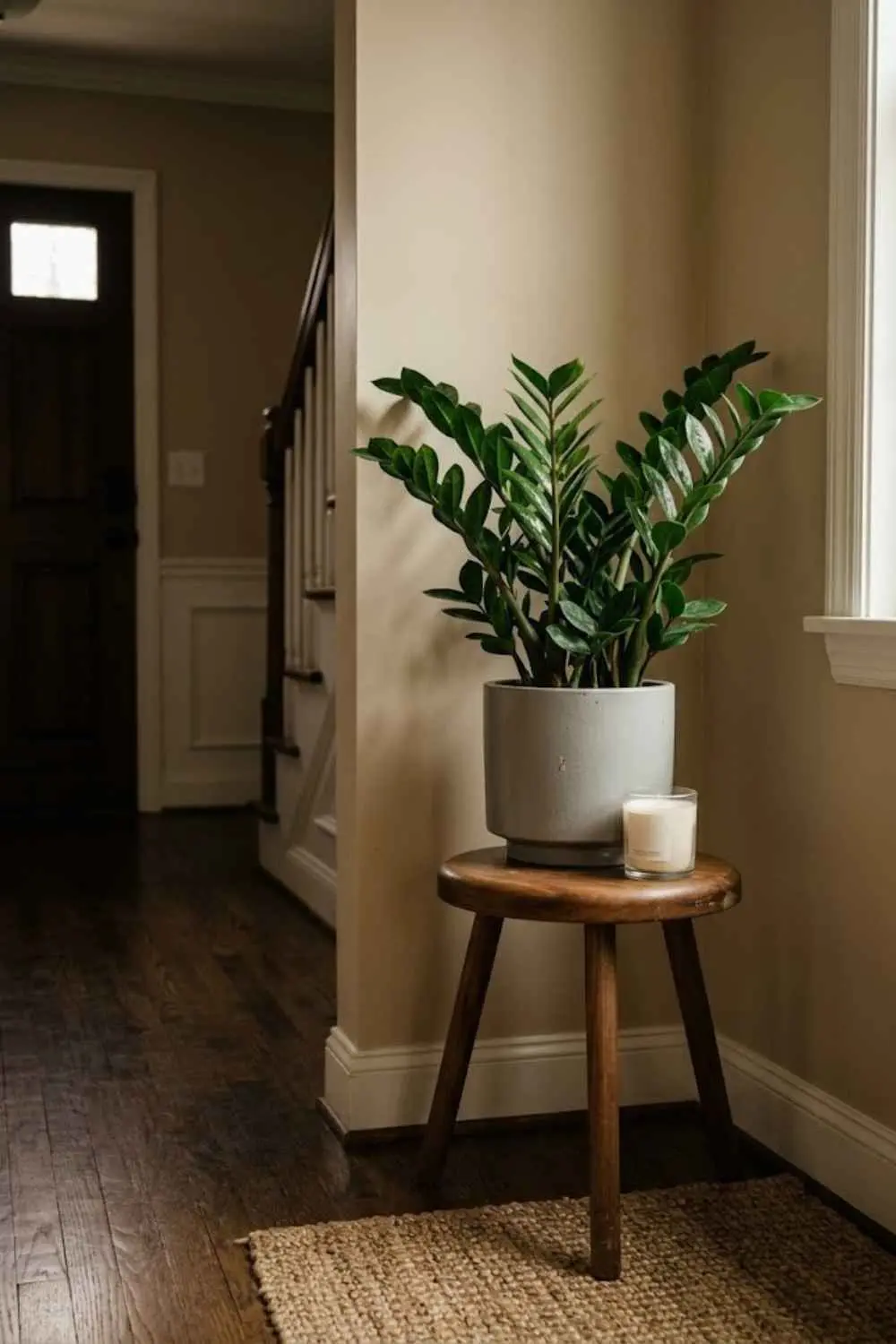
For busy households and erratic schedules, the ZZ Plant is a great companion for a dim hallway corner. Its thick, naturally waxy leaflets reflect ambient light, making dark foyers feel brighter.
It stores water efficiently beneath the soil, meaning it generally handles dry indoor air and long stretches of forgetfulness. Its organized, vase-shaped form looks particularly sharp sitting on a low accent stool or cabinet.
Just keep your watering in check: treating it too frequently can quickly cause the stems to yellow.
Light: Low light tolerant • Water: Very low watering • Pets: Pet toxic • Habit: Upright, vase-shaped grower
5. Pothos (Epipremnum aureum)
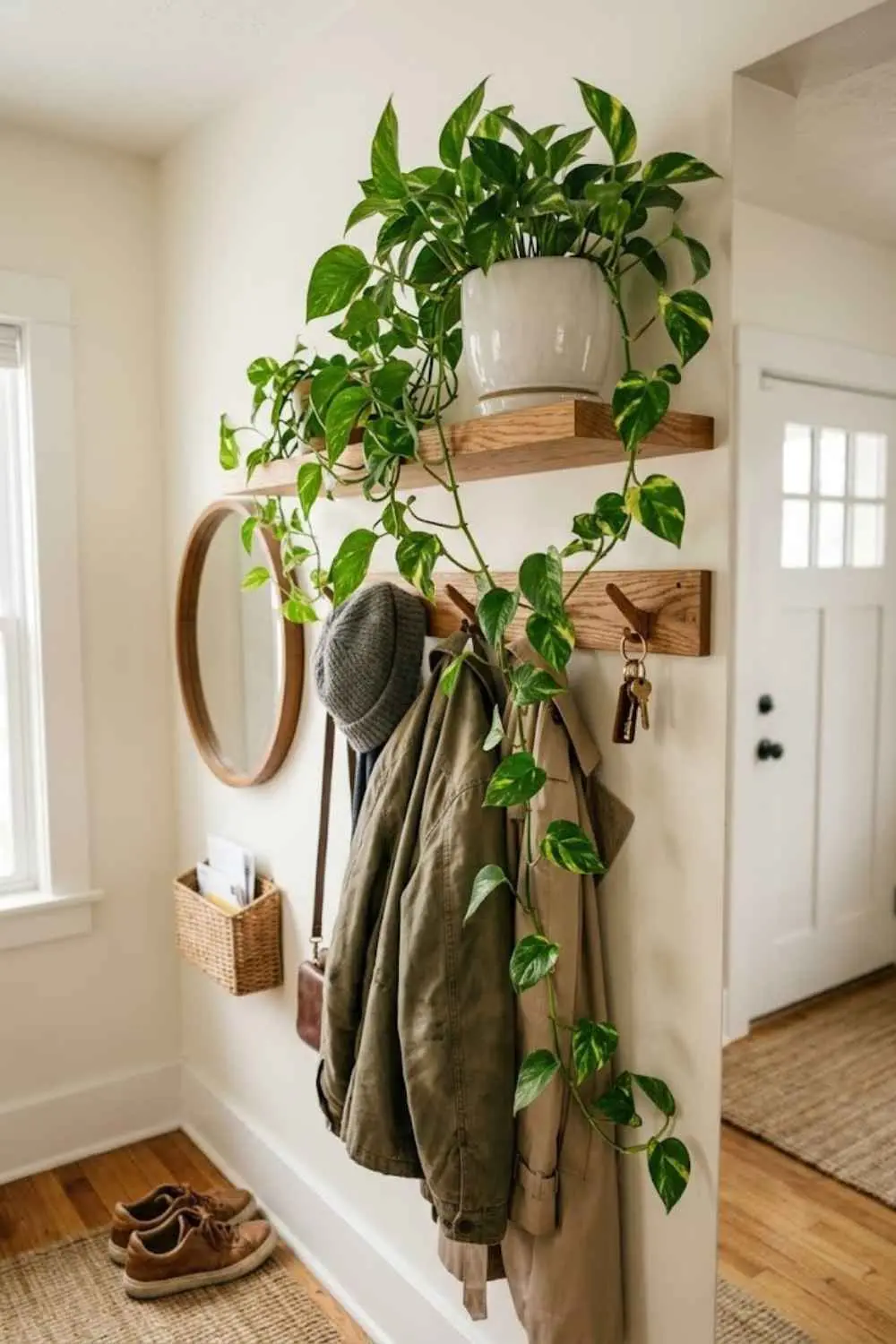
When floor space is non-existent, look to your walls and shelves. The Pothos is a highly adaptable vine that cascades neatly from a floating shelf, a coat rack, or a hanging basket.
It generally tells you when it needs a drink by letting its heart-shaped leaves wilt slightly. Stick to solid green varieties if your entry has no windows, as variegated types will typically lose their white or yellow patterns anyway to absorb more light.
Expect to trim the vines occasionally to prevent them from becoming thin and leggy.
Light: Low light tolerant • Water: Moderate watering • Pets: Pet toxic • Habit: Trailing vine habit
6. Monstera Deliciosa
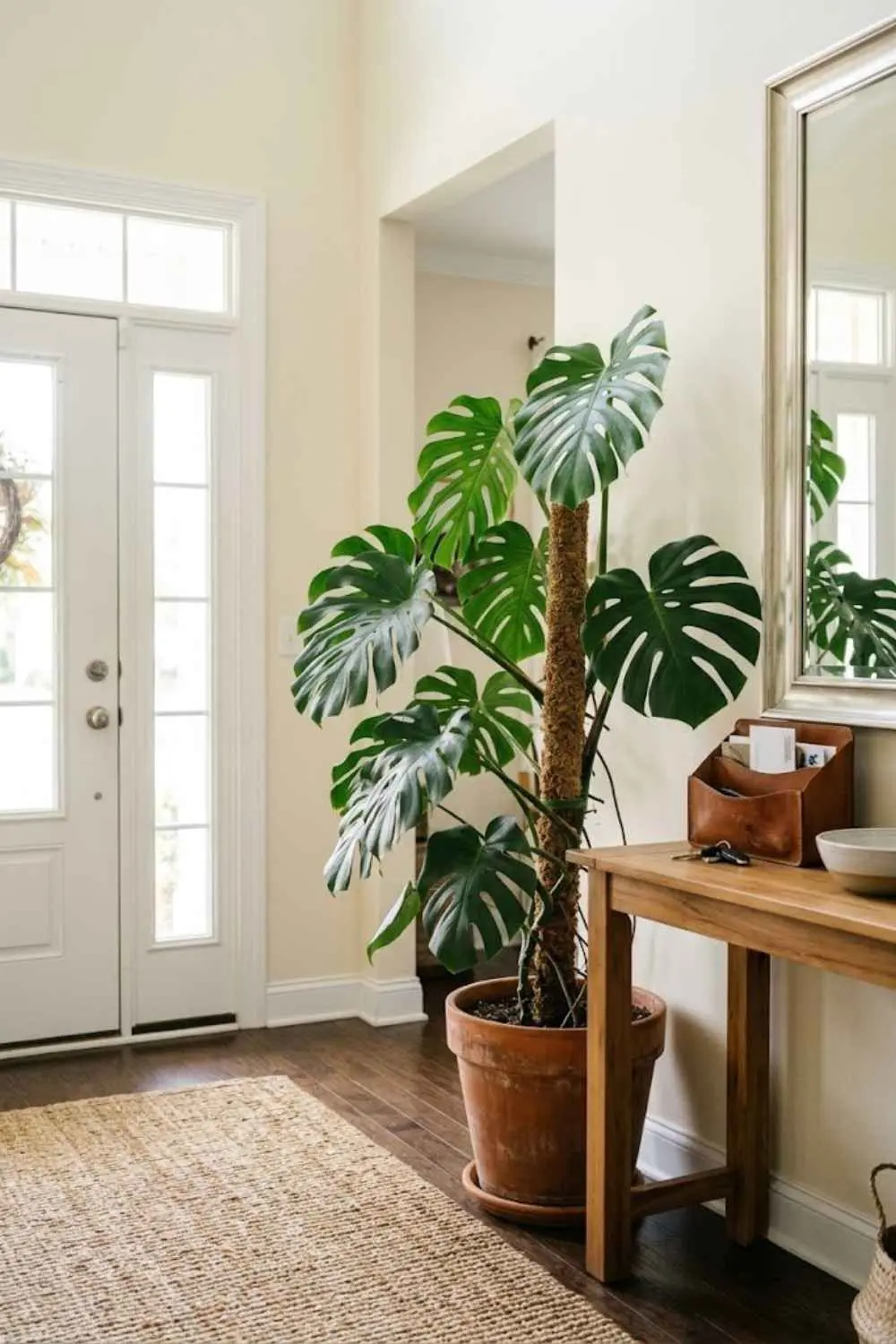
A Monstera usually needs a wide, bright foyer with a glass-paneled door or large sidelights to truly thrive. If you have the light, its massive split leaves command attention and set a warm welcome home tone for the rest of the house.
This plant takes up a lot of room. It grows outward rather than just upward, meaning it can quickly crowd a narrow hallway if not secured to a sturdy stake.
In a dark entry, the iconic leaf splits generally won’t develop, leaving you with a sparse, leggy plant.
Light: Bright indirect light required • Water: Moderate watering • Pets: Pet toxic • Habit: Sprawling grower
7. Bird of Paradise (Strelitzia nicolai)
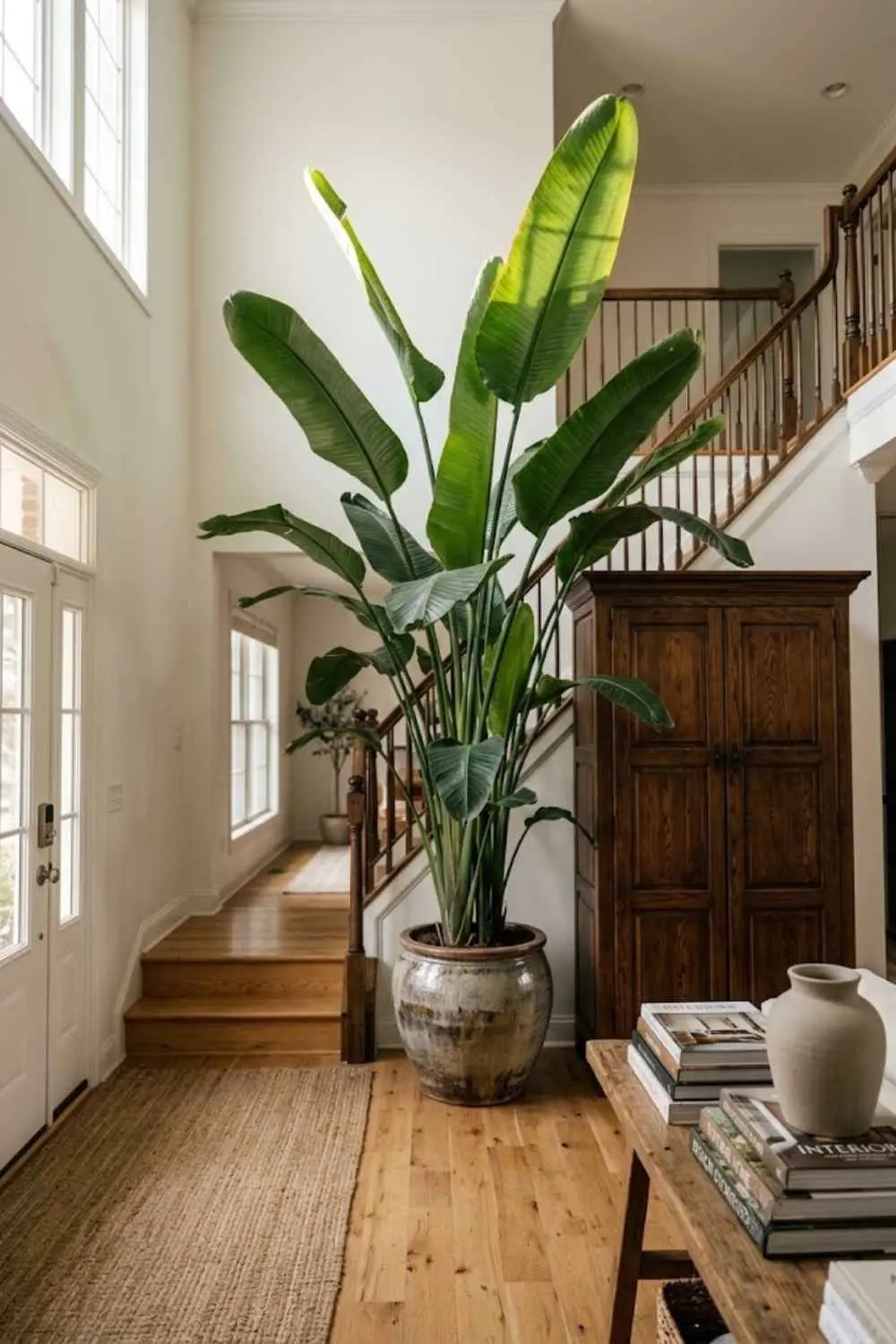
Double-height entrance halls and grand foyers can feel cavernous without greenery that matches their vertical proportions. The oversized, paddle-shaped leaves of the Bird of Paradise add lovely height, bringing life to otherwise empty vertical space without crowding floor traffic.
Without consistent bright light, however, the heavy stems may weaken and lean heavily toward the nearest window or door glass.
The large leaves also split naturally along their seams as they age—a natural response to the winter air currents that rush in when the door opens.
Light: Bright light required • Water: Moderate watering • Pets: Pet toxic • Habit: Tall, upright grower
8. Parlor Palm (Chamaedorea elegans)
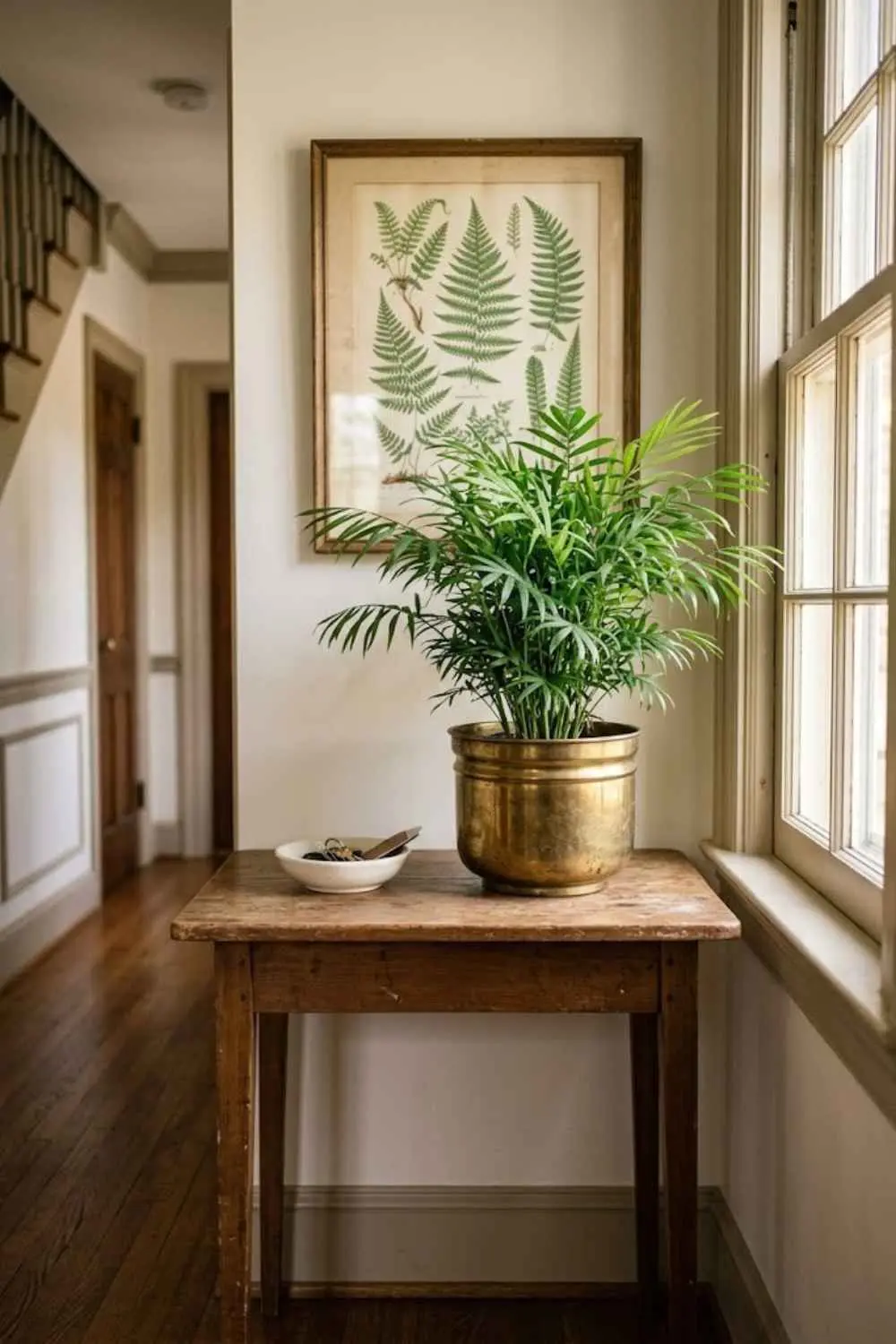
The Parlor Palm offers a softer, more traditional look for smaller homes. It features feathery fronds that clump together into a compact, bushy shape, making it ideal for a console tabletop or sitting right next to your coat rack.
It prefers the slightly cooler temperatures often found right by the front door. Because it grows slowly, select the exact size you need at the nursery.
Keep it away from active heating vents during the winter, as dry, artificial air can cause the delicate leaf tips to turn brown and crispy.
Light: Low to medium indirect light • Water: Moderate watering • Pets: Pet friendly • Habit: Compact, bushy grower
9. Chinese Evergreen (Aglaonema)
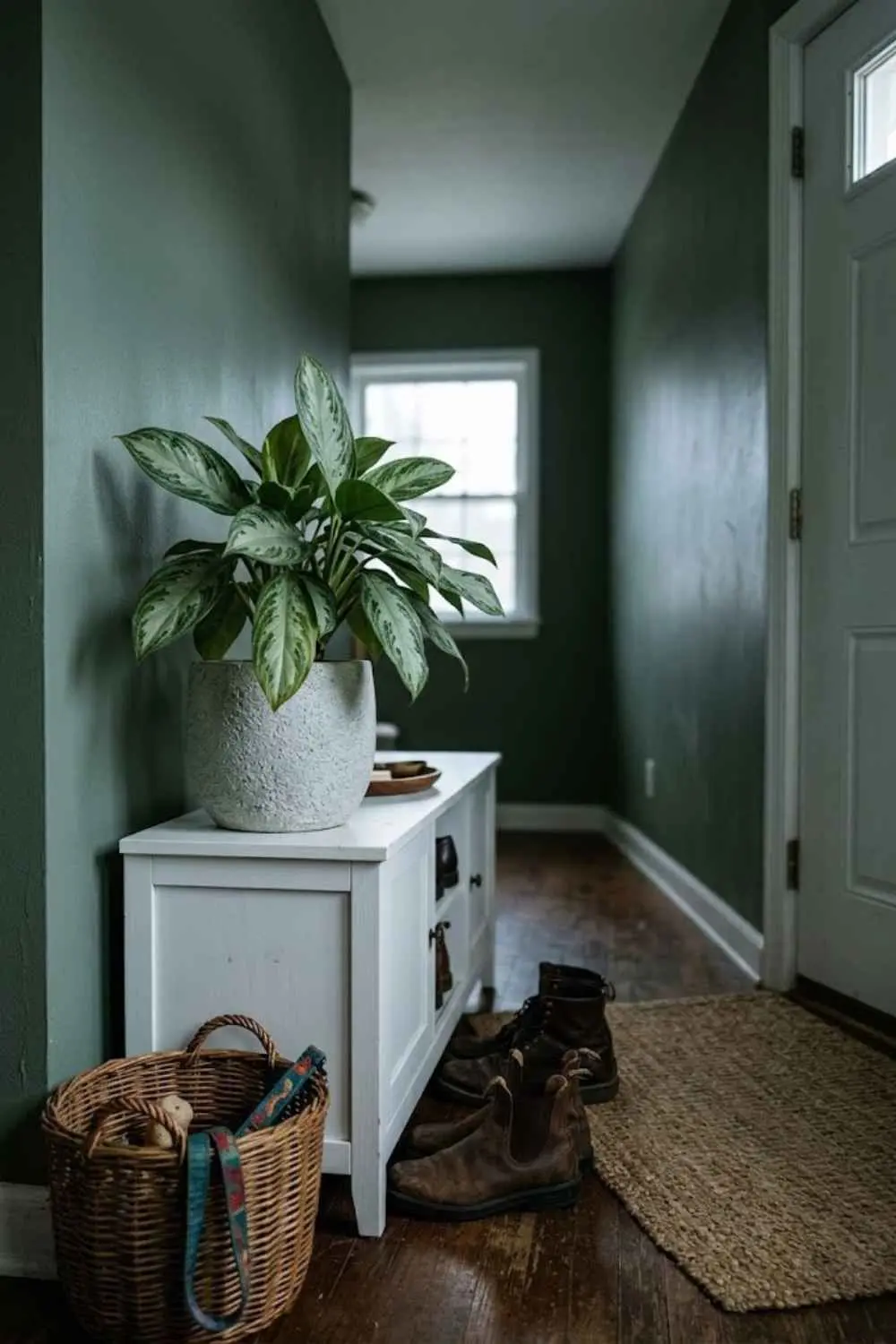
The Chinese Evergreen is an excellent choice for adding reliable color to a dark entryway without dealing with the hassle of flowering plants. Available in patterns ranging from deep silver to pale cream, its lance-shaped leaves brighten up dull corners while easily tolerating the dry air common in entry hallways.
While it adapts well to low light, keep in mind that highly colorful varieties typically need a bit more light to maintain their contrast.
In a completely dark hallway, pink or red patterns may gradually fade back to standard green.
Light: Low light tolerant • Water: Moderate watering • Pets: Pet toxic • Habit: Bushy, mounding grower
10. Dragon Tree (Dracaena marginata)
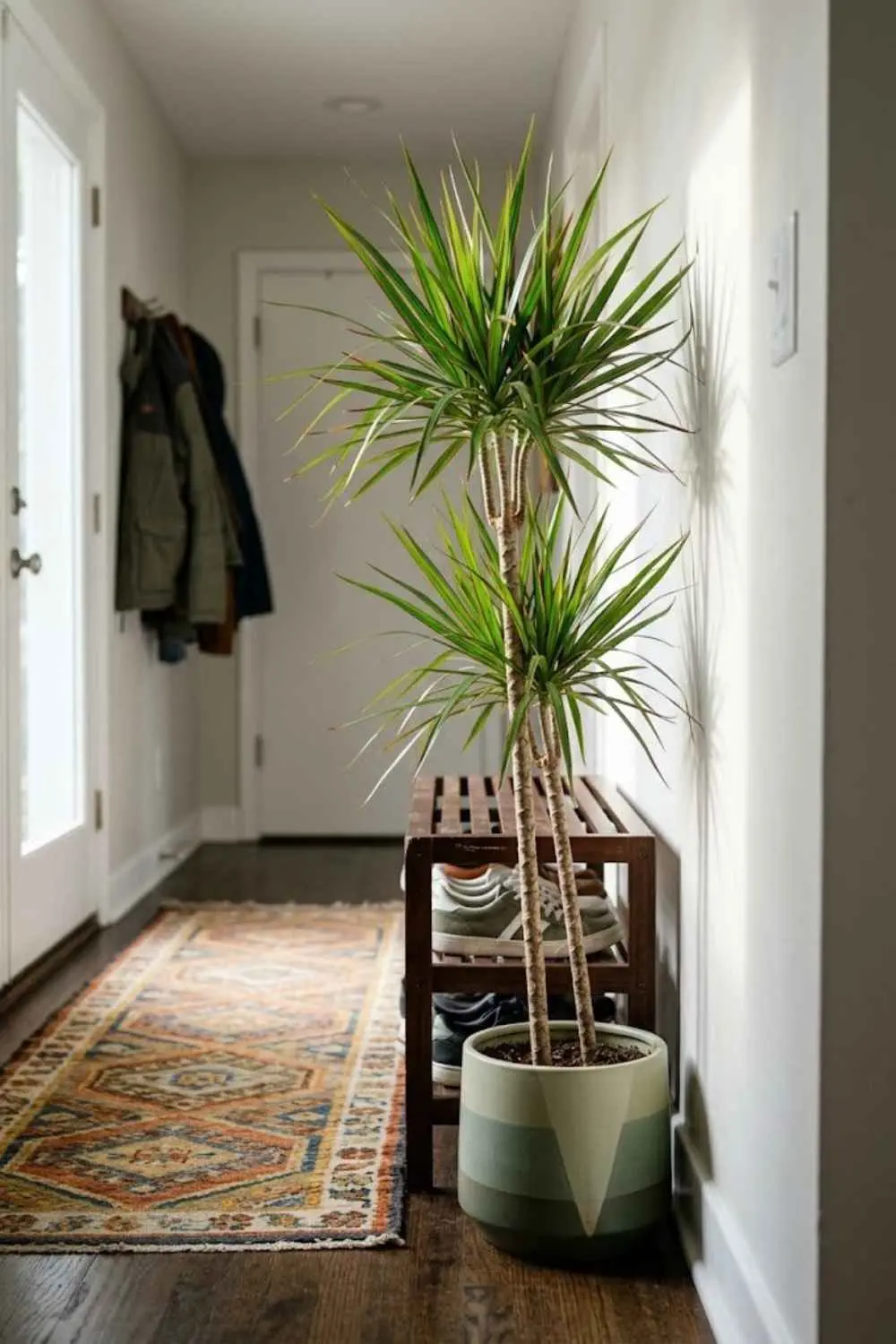
When you need vertical height but cannot spare the horizontal space for a bulky bush, the Dragon Tree adds height without taking over the room. It features slender, woody canes topped with clusters of narrow, ribbon-like leaves, offering a light and airy mid-century look.
The thin trunk allows the base to slide neatly behind a storage bench or shoe rack without obstructing the walking lane.
It can be sensitive to tap water chemicals, which often manifest as small brown tips on the leaves, and it will drop its lowest leaves naturally as it grows taller.
Light: Medium indirect light • Water: Low watering • Pets: Pet toxic • Habit: Tall, cane grower
11. Rubber Tree (Ficus elastica)
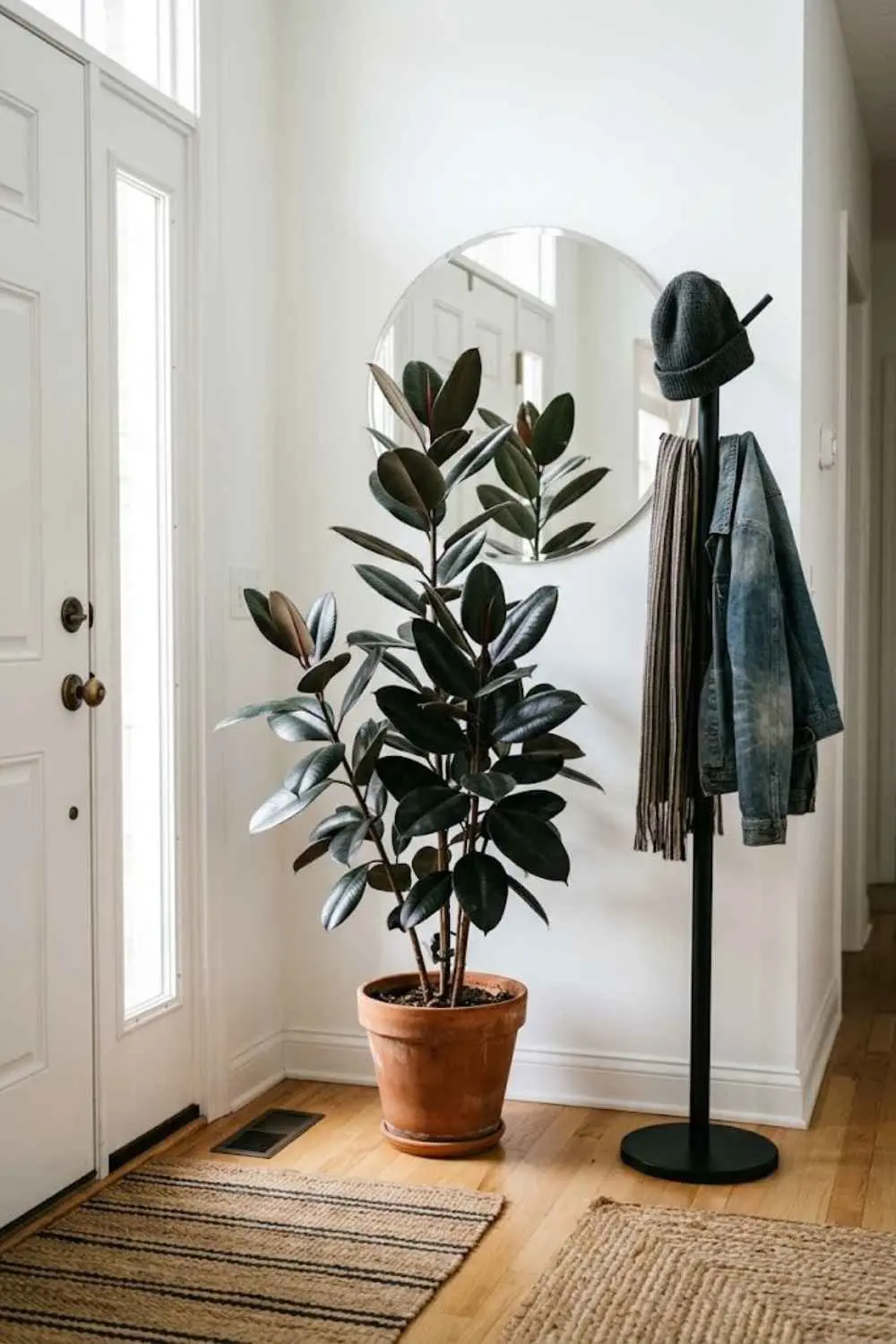
Neutral or white entry walls benefit from a splash of deep color, which is where the near-black leathery foliage of the Burgundy Rubber Tree excels. It offers a stately presence next to your coat rack or entryway mirror but holds its branches tightly upward, keeping out of the path of incoming guests.
Be warned that most ficus varieties are sensitive to sudden environmental changes; if it sits directly in a freezing winter draft every time the front door opens, it may drop its lowest leaves, creating a bare lower trunk.
Light: Bright indirect light preferred • Water: Moderate watering • Pets: Pet toxic • Habit: Upright, tree-like grower
12. Spider Plant (Chlorophytum comosum)
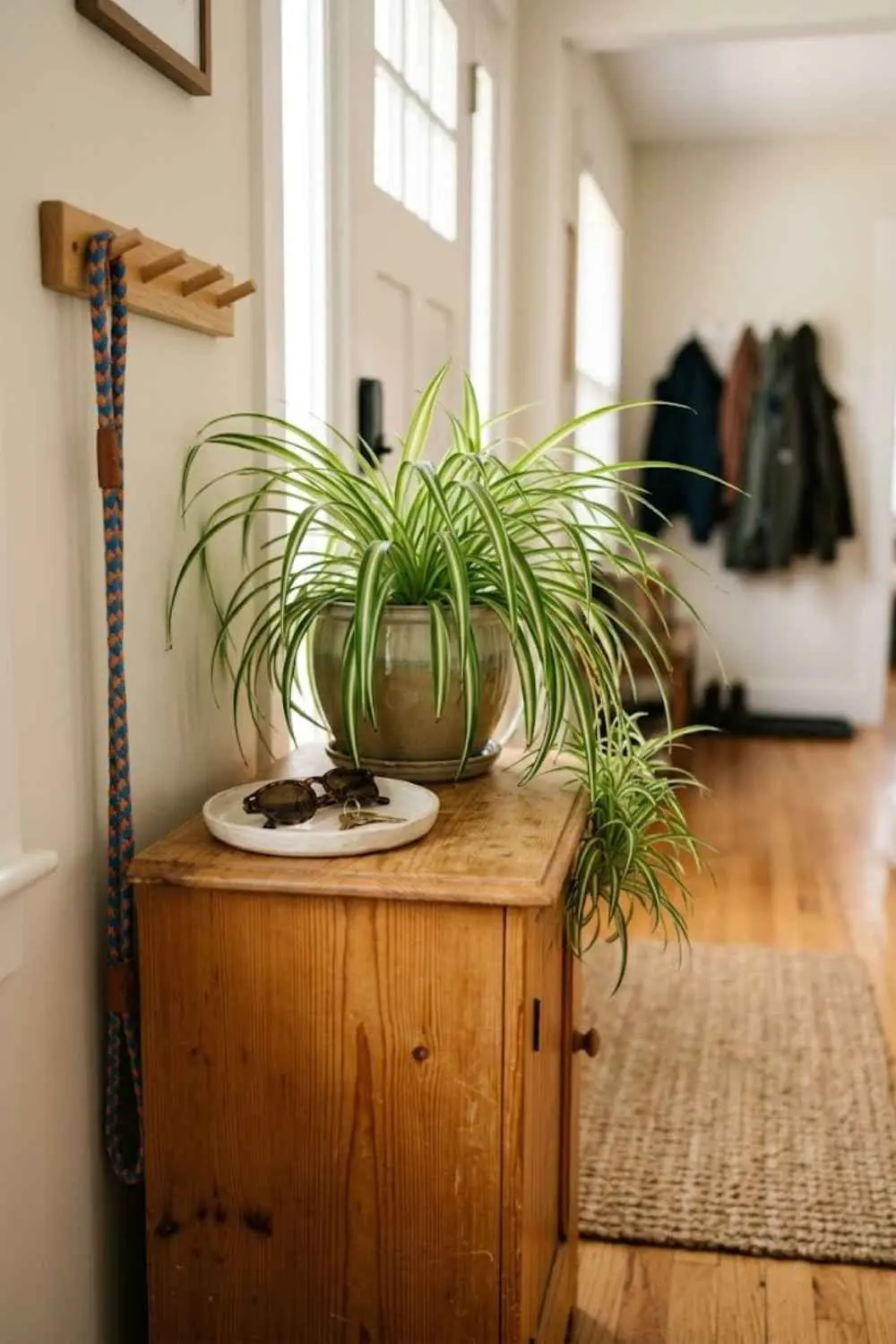
The Spider Plant adds a casual charm to a home’s entrance. Its long, arching, grassy leaves create a soft fountain effect that lightens up heavy wooden furniture. It works exceptionally well sitting on top of an entry cabinet or on a tiered plant stand.
As it matures, it sends out runners with miniature plantlets that hang down naturally.
While it is completely safe for dogs, cats often find the leaves attractive to chew on, so keep it elevated if you have a feline greeting you at the door.
Light: Medium indirect light • Water: Moderate watering • Pets: Pet friendly • Habit: Arching, cascading grower
Quick Plant Picker
Best for dark corners
Cast Iron Plant (1) • ZZ Plant (4) • Chinese Evergreen (9)
Best for narrow hallways
Snake Plant (2) • Dragon Tree (10)
Best for dramatic scale
Kentia Palm (3) • Bird of Paradise (7) • Monstera Deliciosa (6)
Best for elevated shelves
Pothos (5) • Spider Plant (12)
Best for pet-friendly greetings
Cast Iron Plant (1) • Kentia Palm (3) • Parlor Palm (8) • Spider Plant (12)
FAQs
How do I prevent my entryway plants from leaning toward the glass on the door?
Entryway plants usually receive light from only one direction. To keep your plants growing straight and symmetrical, simply give the pot a quarter-turn every time you give it water.
What should I do with my entryway plants during freezing winter months?
If your front door opens directly into a freezing climate, pull cold-sensitive plants like the Rubber Tree or Monstera a few feet back from the immediate door frame. Tougher choices like the Cast Iron Plant can handle those brief temperature dips much better.
Conclusion
Ultimately, a thriving entryway plant relies much more on an honest look at your foyer’s lighting than a rigid watering schedule.
Before you head to the nursery, take a few days to notice where the daylight falls throughout the day and check the doorframe for chilly drafts.
By aligning the actual microclimate of your entrance with a plant built to withstand it, you turn a high-traffic zone into a beautiful space that reliably welcomes you home.