Table of Contents
That empty corner next to the sofa or at the end of the hallway always looks like it is missing something. You want the height of a tall indoor tree, but a north-facing window or a shaded layout makes plant shopping feel like a gamble.
While no large tree truly prefers dark rooms, a few resilient varieties tolerate lower light by slowing their growth and using less water.
Bringing a tree into a dimmer room is about choosing varieties structurally built to manage a lower energy budget. Here are eight practical options that tolerate indoor shade better than most.
1. Kentia Palm (Howea forsteriana)
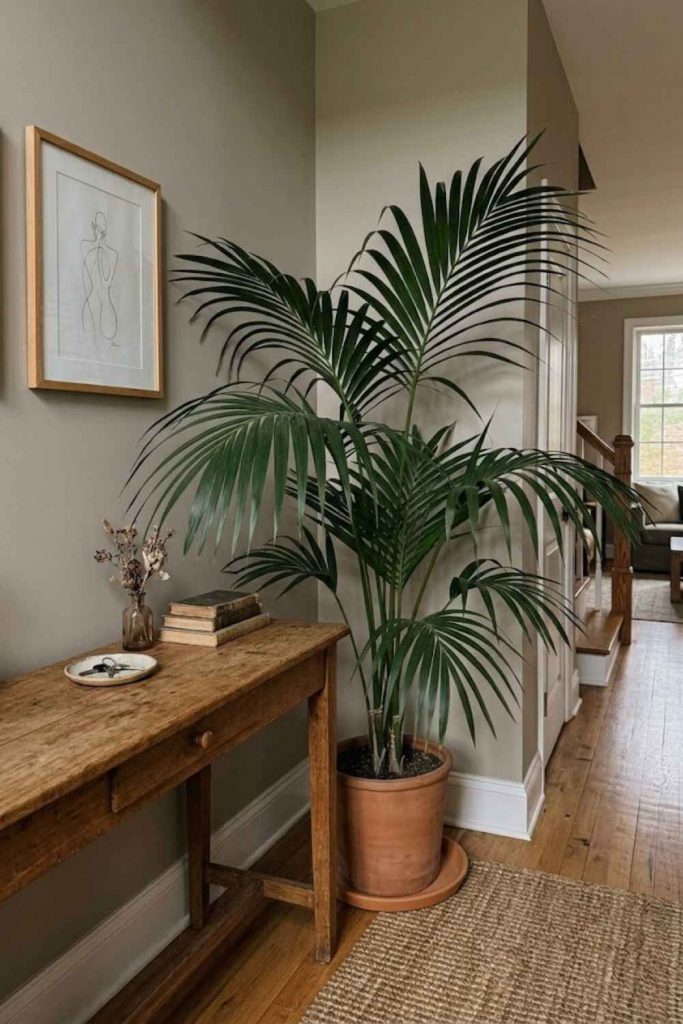
The Kentia palm is an upscale, architectural tree that needs room to spread from day one. Squeezing it tight against a corner wall will bend and permanently damage the lower fronds. If you can give it space, however, it rewards you by tolerating lower light better than many popular indoor palms.
Unlike finicky Majesty palms that demand constant humidity, the Kentia arches its slender fronds outward horizontally, giving you a green canopy without blocking your walkways. Because it grows at a glacial pace, it preserves its shape for years without requiring regular pruning.
Low to medium indirect light • Low to moderate watering • Pet safe • Arching, feathered habit
2. Dracaena Lisa (Dracaena deremensis ‘Lisa’)
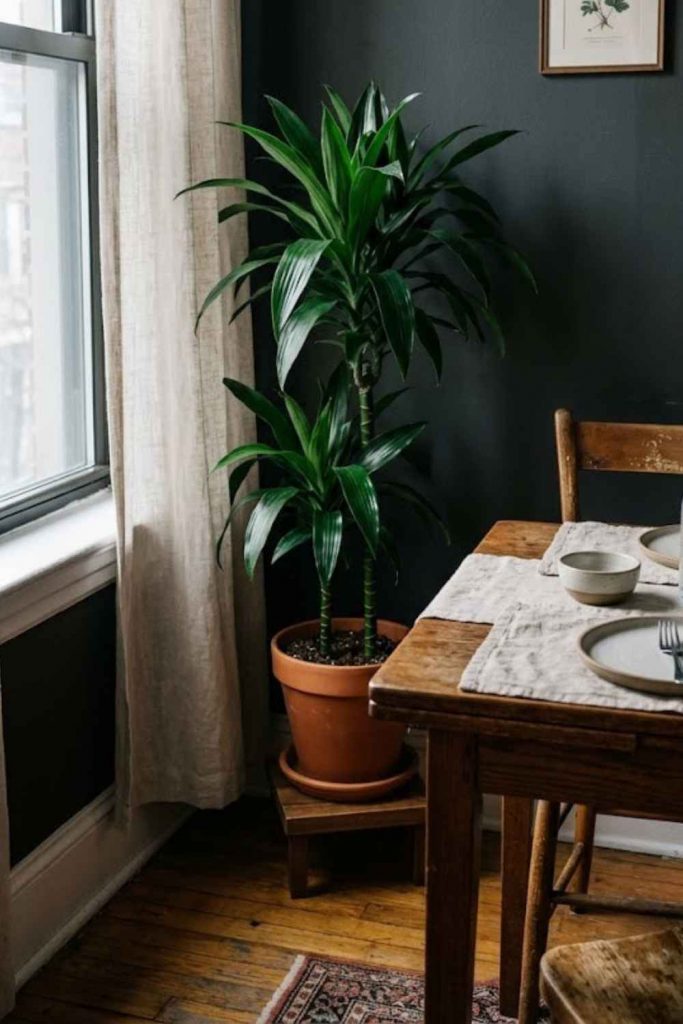
Floor space is at an extreme premium in tight layouts, which is where the Dracaena Lisa shines. It grows strictly straight up rather than flexing outward, dropping deep green, glossy leaves downward like a compact fountain along dark canes.
Its columnar silhouette works well in narrow layouts. It is also highly forgiving if your schedule keeps you away from home for extended periods. It is exceptionally efficient with moisture and prefers its soil to dry out completely. Just keep it away from direct heating vents to avoid crisp, brown leaf tips.
Low to medium indirect light • Low watering • Pet toxic • Narrow, columnar silhouette
3. Money Tree (Pachira aquatica)
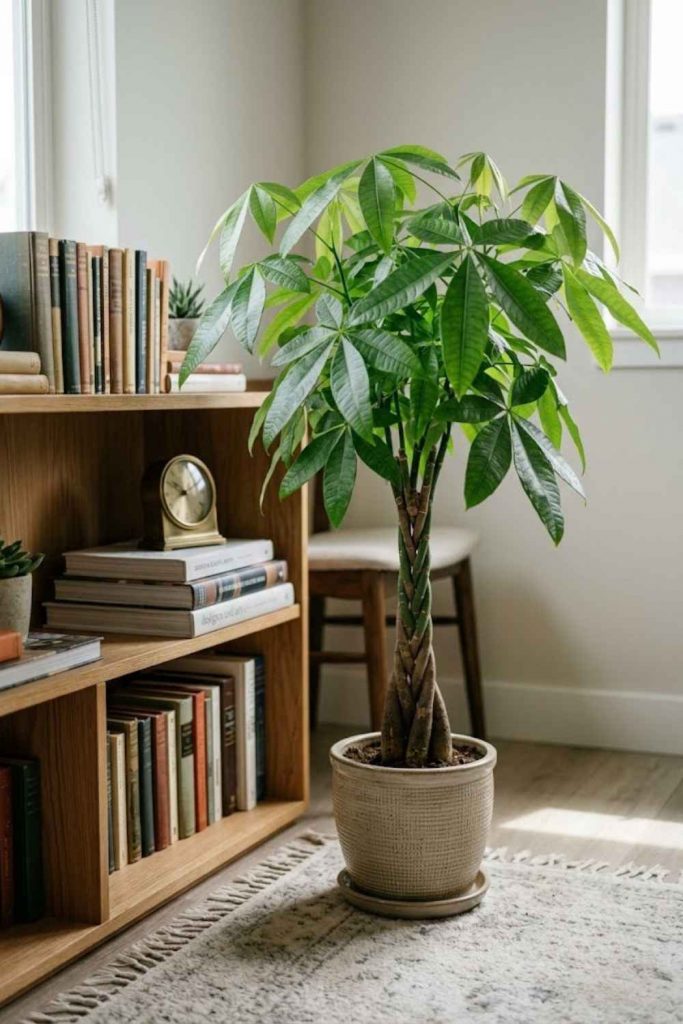
Do not water this tree on a strict calendar schedule. Because the thick, braided central trunk of the Money Tree stores water like a reservoir, the plant drinks incredibly slowly in low light.
Chronic overwatering can quickly lead to root rot. Aside from that single watering rule, this is a massive favorite for grounding a room’s design. It delivers a true, hand-shaped “big tree” canopy without requiring bright, all-day light.
Low to medium indirect light • Low to moderate watering • Pet safe • Braided trunk, umbrella canopy
4. Parlor Palm (Chamaedorea elegans)
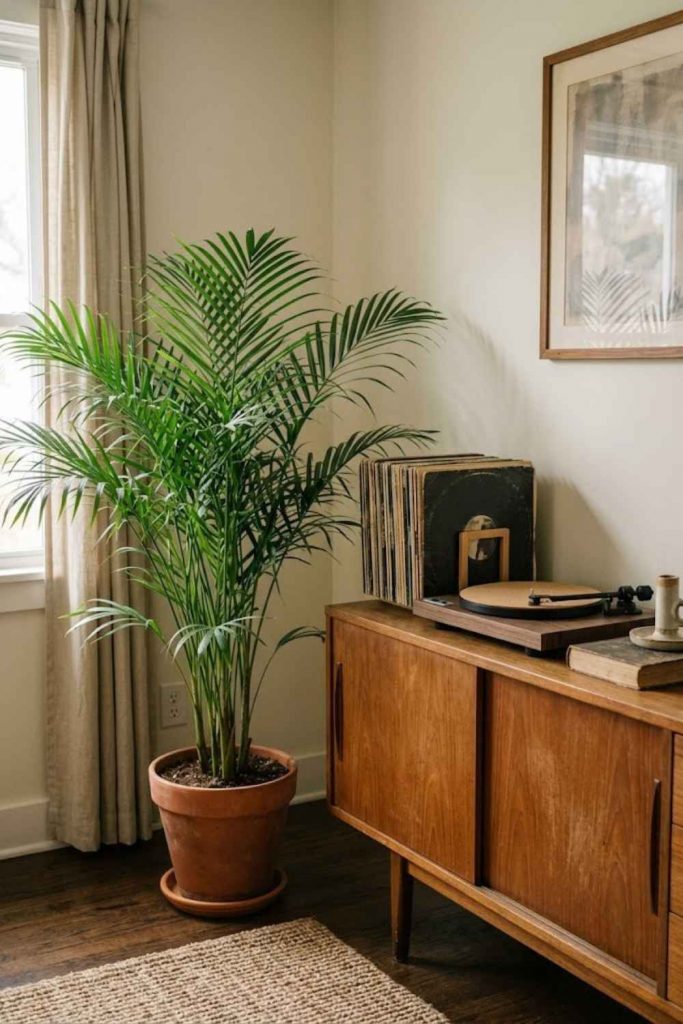
Reaching up to six feet tall indoors, the Parlor Palm owes its name to the era when it was kept alive in dark, drafty front rooms. That historical resilience makes it a great modern tool for softening spaces dominated by hard furniture lines, minimalist decor, or sharp angles.
Its fine, delicate texture brings an instantly relaxed, vintage look to quiet rooms. It handles dry indoor air better than most, but it will protest with yellowing fronds if the soil stays wet at the bottom of the pot.
Low to medium indirect light • Moderate watering • Pet safe • Soft, upright fronds
5. Lady Palm (Rhapis excelsa)
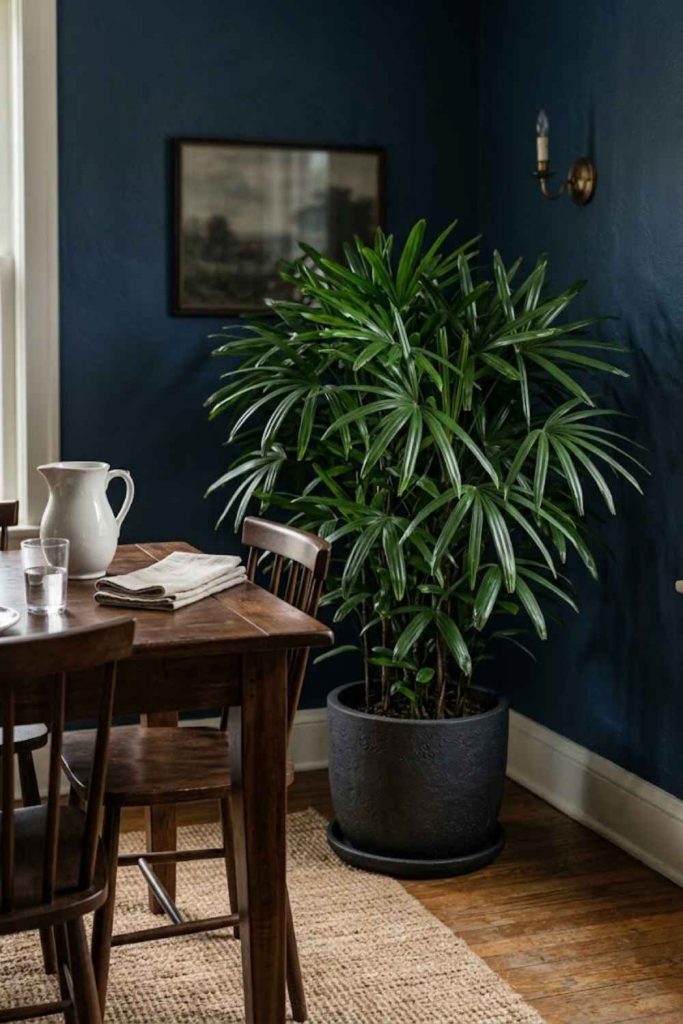
Highly tailored, neat, and distinctly structured, the Lady Palm looks exceptionally sophisticated in formal dining rooms or home offices. It fills a corner completely from top to bottom with glossy, fan-shaped fronds that split into finger-like segments.
Unlike the dracaenas on this list, it demands consistent soil moisture. If the soil gets bone-dry, the leaf tips turn crisp and brown. Water when the top 2–3 inches of soil feel dry, and avoid letting the soil stay soggy for extended periods in low light.
Low to medium indirect light • Moderate watering (slower in low light) • Pet safe • Dense, clumping habit
6. Corn Plant (Dracaena fragrans)
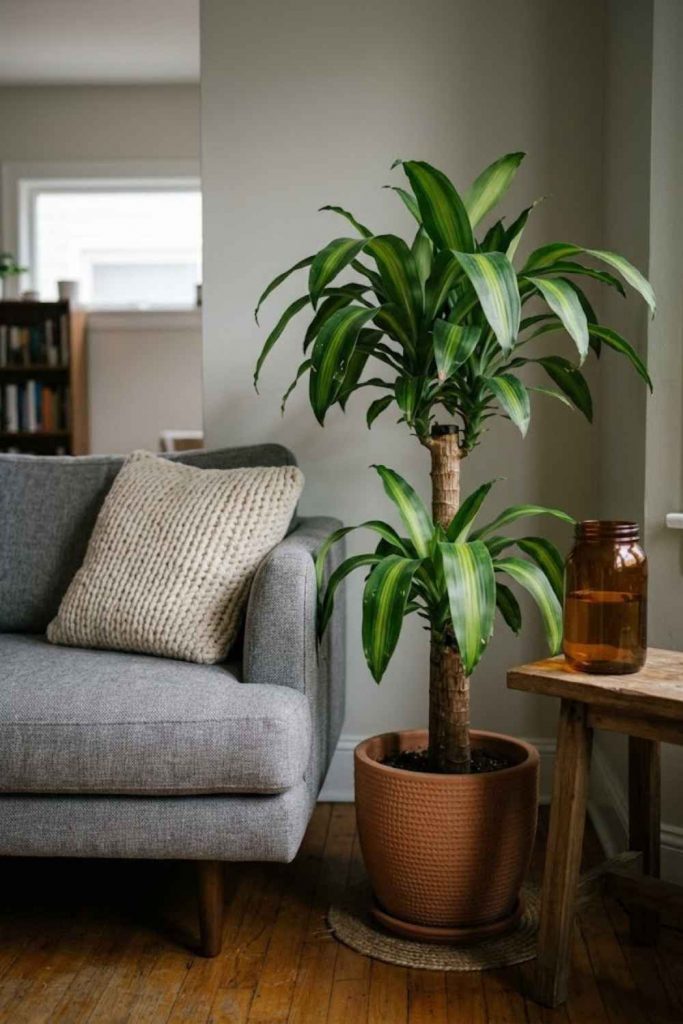
One of the most forgiving indoor trees you can grow. If you have zero confidence in your gardening skills, start here.
The Corn Plant features a thick, woody central cane topped by wide, arching rosettes of foliage. It thrives on neglect, ignores dry indoor air, and only asks that you use filtered water or rainwater to prevent brown edges caused by minerals in tap water.
Low to medium indirect light • Low watering • Pet toxic • Sturdy, upright canes
7. Dracaena Tarzan (Dracaena ‘Tarzan’)
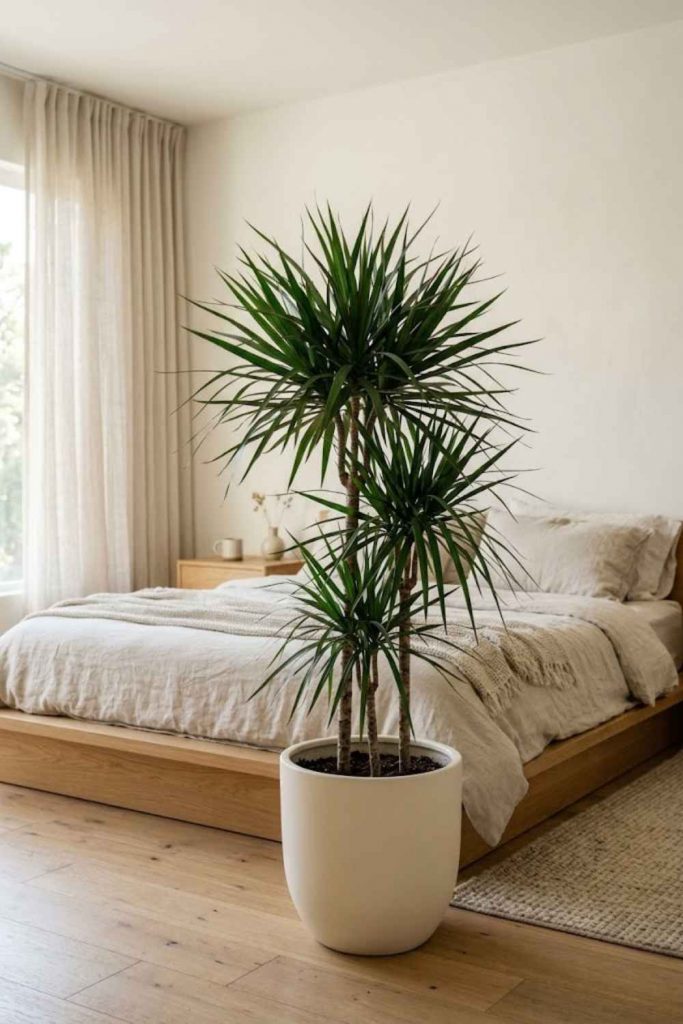
Unlike sensitive weeping figs that drop their leaves in a panic when stressed by layout moves, Dracaena Tarzan tolerates minor drafts and environmental changes better than many ficus species.
The Tarzan variety features thick, spiky rosettes of dark green leaves with deep purple edges balanced on architectural, branching trunks. It holds its form well in low light, making it a reliable investment piece for anyone looking to add a dramatic element to a quiet space.
Low to medium indirect light • Low watering • Pet toxic • Branching, architectural form
8. Umbrella Tree (Schefflera actinophylla ‘Amate’)
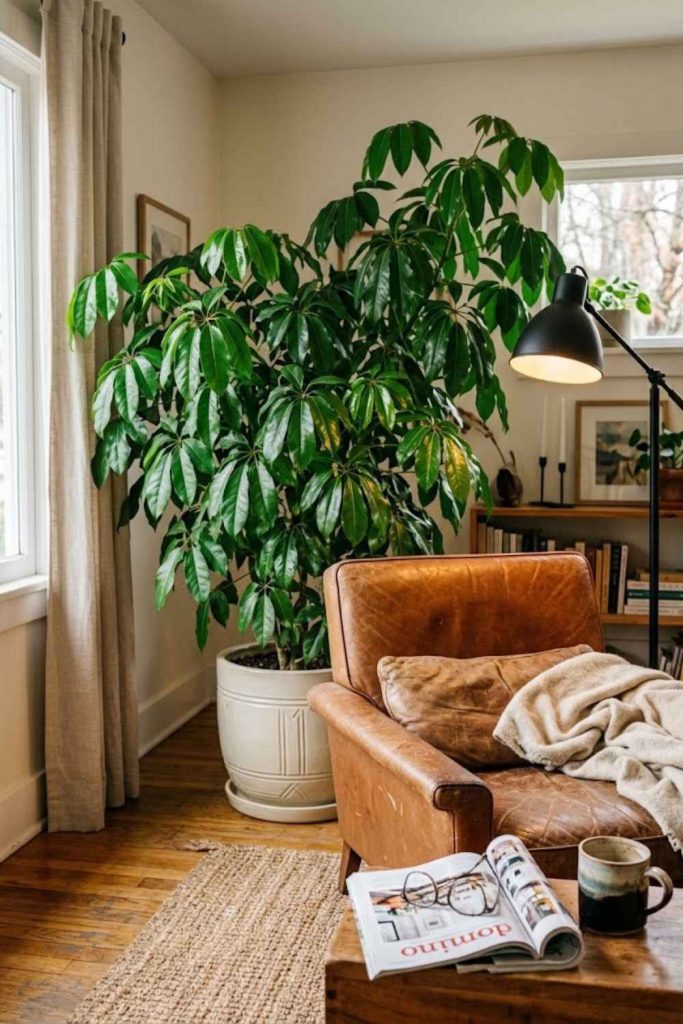
The ‘Amate’ cultivar is heavily favored for its superior indoor adaptation compared to standard umbrella plants, which easily get leggy and stretch toward windows in dark rooms. It features thicker, glossier leaves that resist disease and hold their color beautifully under lower light conditions.
It gives you the classic, lush canopy of a traditional tree but handles dry indoor air much better. Just check the undersides of the leaves for spider mites during the winter when indoor heating runs dry.
Low to medium indirect light • Low to moderate watering • Pet toxic • Multi-stemmed, upright tree
Quick Plant Picker
Find the perfect green companion for your specific layout and lifestyle needs:
- For the Darkest Usable Corners: Dracaena Lisa or Corn Plant
- For Homes with Cats & Dogs: Kentia Palm, Lady Palm, or Money Tree
- For Narrow, Tight Spaces: Dracaena Lisa
- For a Striking, Modern Look: Dracaena Tarzan
- For Forgetful Waterers: Corn Plant or Dracaena Tarzan
- For Chilly or Drafty Rooms: Lady Palm or Kentia Palm
- For a Lush, Full Canopy: Umbrella Tree ‘Amate’ or Money Tree
FAQs
Can a tree survive in a room with no windows?
No. Plants cannot survive indefinitely without a light source. If a room has zero windows, you will need a dedicated grow light bulb to keep any of these options alive.
How do I know if my corner is “low light” or just a black hole?
Try the shadow test at noon. Hold your hand up against the wall. If you can see a soft outline of your hand, it is low light. If there is no shadow at all, the spot is too dark.
Why is it so easy to overwater a plant in a dark room?
Because trees in dim spaces grow very slowly, meaning they barely drink. The soil stays wet for much longer than it would in a sunny window, so you have to water half as often.
Can I move my tree around to change up the room layout?
Try not to. Shaded trees work hard to adjust their leaves to one specific spot. Moving them to a new corner usually triggers a stress response, causing them to drop leaves.
Conclusion
Choosing a large indoor tree for a shaded corner is all about working with your home’s natural environment instead of fighting it. When you position your new tree, give it a few weeks to adjust to the lower energy levels of the room.
Because plants in low light process water much more slowly, always double-check the soil moisture deep inside the pot before watering. By matching the right silhouette to your shaded spot, you can turn a forgotten corner into a thriving anchor for the entire room.