Table of Contents
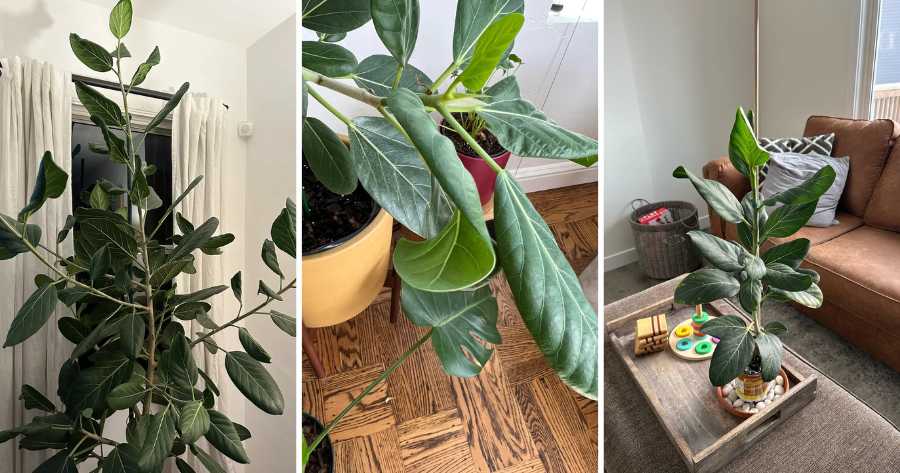
Few things trigger houseplant anxiety faster than watching a structural Ficus Audrey lose its clean lines.
When the leaves cup, roll, or curl inward, the tree is simply trying to reduce its moisture loss.
To fix the issue, you have to look closer than a generic care label. The way the foliage curls provides important clues about what is causing the problem.
Before reaching for the watering can, check three critical clues: the leaf texture, the moisture level deep in the soil, and where the curling starts.
1. Underwatering: Leaves Are Crispy and Soil Is Bone-Dry
Credit: Reddit – @plantpilates
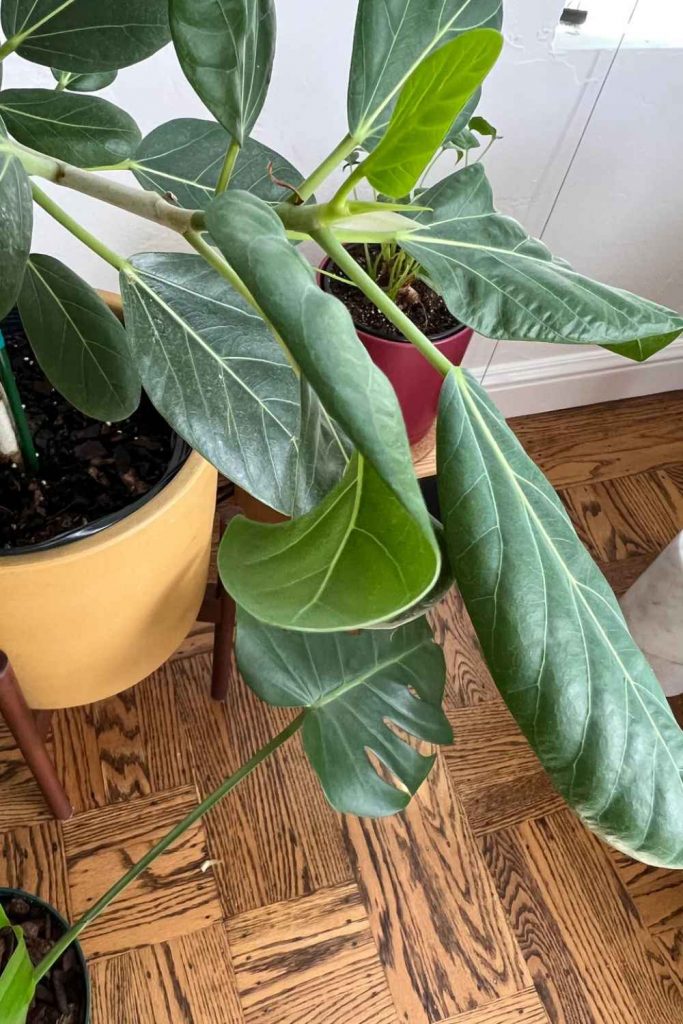
If the curled leaves feel papery and thin while the soil is completely dry, underwatering is often the most likely cause.
You will notice the lower leaves starting to sag, and the whole tree will look noticeably deflated, losing its usual leather-like firmness.
Bone-dry soil often repels water, and repeated cycles of drying out completely can make the problem worse, preventing water from reaching the center of the root ball during normal watering.
To fix this, do not just pour a single cup of water over the top. Bottom-water the pot for 30–45 minutes until the soil is evenly moist, then let excess water drain completely. The leaves should begin to recover within a few days.
2. Overwatering: Leaves Feel Soft and Soil Stays Soggy
Credit: reddit – @sashapup27
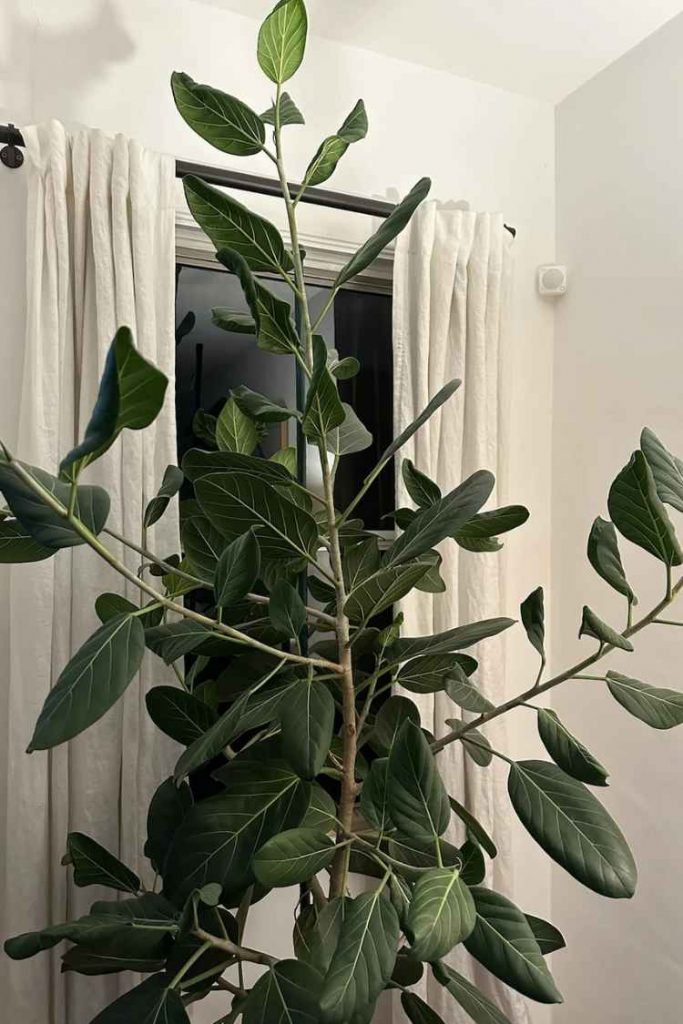
If the curled leaves feel soft, limp, and rubbery rather than crisp while the soil stays wet for weeks, the tree is suffering from overwatering.
The lower leaves will turn a pale yellow and drop off, while the remaining foliage may develop soft, dark brown spots starting from the center of the leaf. This happens because drowning roots cannot draw up oxygen, causing the upper canopy to starve.
If the soil is wet but the plant otherwise looks stable, stop watering immediately and let it dry thoroughly.
If the foliage continues to decline or the soil smells sour, inspect the roots for rot. Slide the tree out of its pot to check the root system.
Healthy roots are firm and light tan, while rotted roots are soft, black, and have a distinctly sour smell. Trim away any decayed sections with sterilized shears, then repot the tree into a clean container using a chunky mix of standard potting soil heavily amended with perlite and orchid bark.
3. Spider Mites: Leaves Are Puckered with Fine Webbing
If the leaves look puckered and curl erratically rather than rolling in a uniform shape, check the undersides of the leaves and stem joints for tiny spider mites.
Look closely for fine, dust-like webbing and tiny, moving pale dots where the leaf stem meets the main branch. Their feeding leaves behind a faint, stippled pattern of yellow or silver dots across the green surface before the foliage distorts.
To treat an infestation, take the plant to the shower and gently spray down the undersides of the leaves with lukewarm water to physically dislodge the pests.
Once dry, spray the entire tree with an organic insecticidal soap or diluted neem oil, paying strict attention to the stem joints. Repeat this treatment every seven days for three consecutive weeks until the infestation is under control.
4. Low Humidity: Leaves Have Brittle Tips and Tan Edges
If the soil is consistently damp but the edges of the leaves are rolling inward, dry air and low ambient humidity are the main culprits.
The leaf margins will crisp and curl tight, particularly on the upper canopy closest to the ceiling. This stress frequently happens when indoor heating kicks on, dropping relative household humidity below 30% and parching the velvet foliage.
Move the tree at least five feet away from active heating vents, radiators, or fans that accelerate moisture loss.
Instead of daily misting—which leaves sitting water droplets on the velvet hairs and invites fungal infections—raise the local humidity safely. Group the Ficus audrey with other houseplants to share moisture, or run a small humidifier nearby to maintain a stable 40% to 60% humidity range.
5. Direct Sun: Leaves Develop Bleached Patches
Credit: garden.org
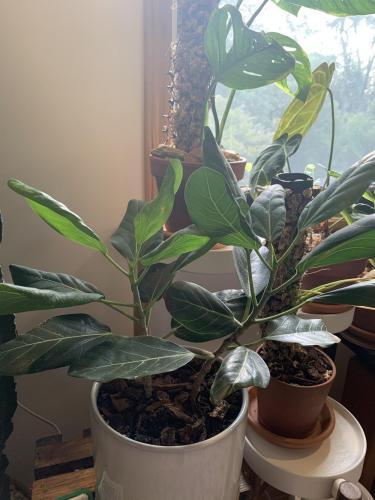
If the leaves facing the window pane are curling inward and developing bleached, faded, or crisp tan patches, the tree is getting too much direct sun.
Intense afternoon sun through a south- or west-facing window will quickly burn the velvet foliage, especially after the plant is moved from a lower-light location. The shaded side of the tree usually remains flat and normal.
To correct this, move the pot back a few feet from southern or western windows, or hang a sheer curtain to filter the intense rays. This allows the plant to receive high-quality indirect light without the heat strain that warps the leaf tissue.
6. Cold Drafts: Leaves Curl Downward and Ripple
If only the leaves closest to a window or exterior door are curling, cold drafts are the likely culprit.
Sudden cold winter air causes the foliage facing the draft source to ripple and roll inward at the margins over the span of just a few cold days.
The fix is purely mechanical: move the tree away from chilly window glass, entryways, or exterior doors during winter storms. Maintain a consistent room temperature between 65°F and 85°F, and avoid exposing the plant to conditions below 55°F.
How to Prevent Ficus Audrey Leaves From Curling
Once your tree stabilizes, establish these preventive habits to keep the foliage flat and healthy:
Check the soil moisture deep inside the pot with your finger or a chopstick before adding water to maintain a consistent routine.
Keep the ambient indoor humidity levels stable and ideally above 40%, especially when winter heating is active.
Keep the tree in a bright location safely away from heating vents, air conditioners, and sudden cold drafts.
Inspect the leaf undersides and stem joints every few weeks to catch early signs of spider mite webbing before an infestation spreads.
FAQs
Why are only my new Ficus Audrey leaves curling?
New leaves naturally emerge from their protective sheaths with a slight inward curl.
If they stay curled as they mature, it usually indicates low humidity or a mild pest issue like spider mites hiding in the tight growth tips. Ensure the ambient humidity is above 40% and check the new folds for tiny pests.
Will permanently warped leaves ever flatten out?
If the curl was caused by temporary underwatering, the leaves will snap back within a few days of a deep soak.
However, leaves damaged by severe root rot, sun scorch, or heavy pest scarring may remain permanently warped. Leave them on the tree if they are still green, as they generate energy for recovery, and wait until spring to prune them for aesthetics.
Should I fertilize my tree while it is recovering from leaf curl?
No. Never apply fertilizer to a stressed plant or a recovering root system.
The mineral salts in fertilizer will instantly burn weak root hairs, compounding the damage. Wait until the curling stops and you see healthy, flat new leaves emerging before resuming half-strength feeding.