Table of Contents
Standard mass-market Ficus Ginseng often lacks the refined character of traditional bonsai.
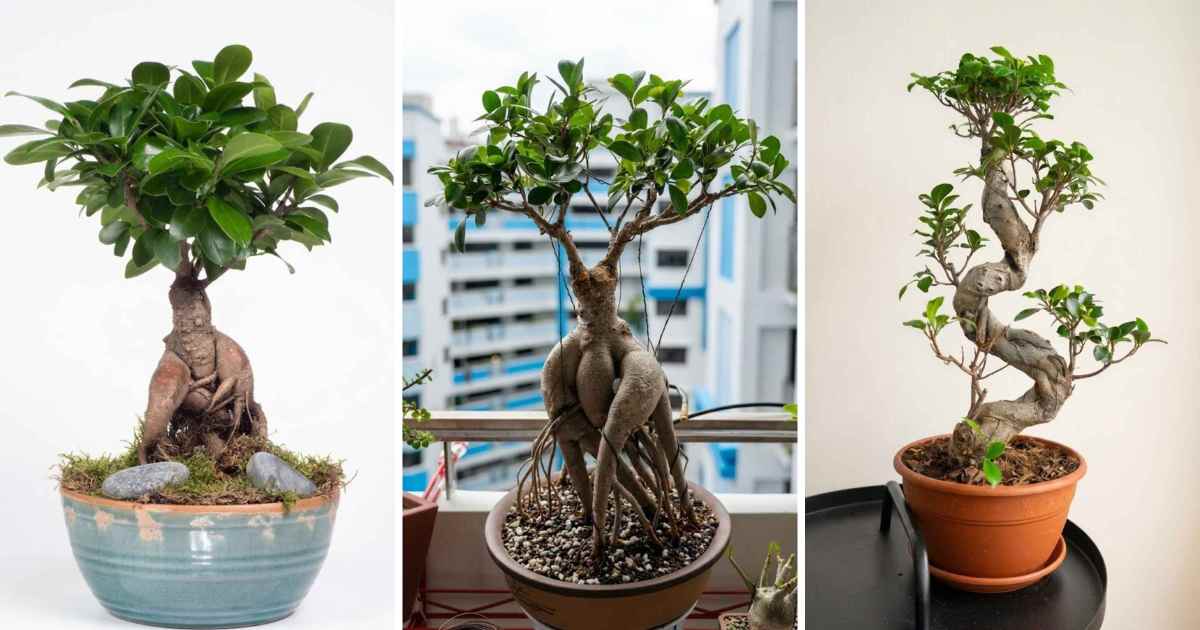
This curated collection showcases 10 distinct structural ideas, proving how strategic pruning, branch leveling, and rock integration reveal the true architectural lines of this resilient species.
1. The Compact Umbrella
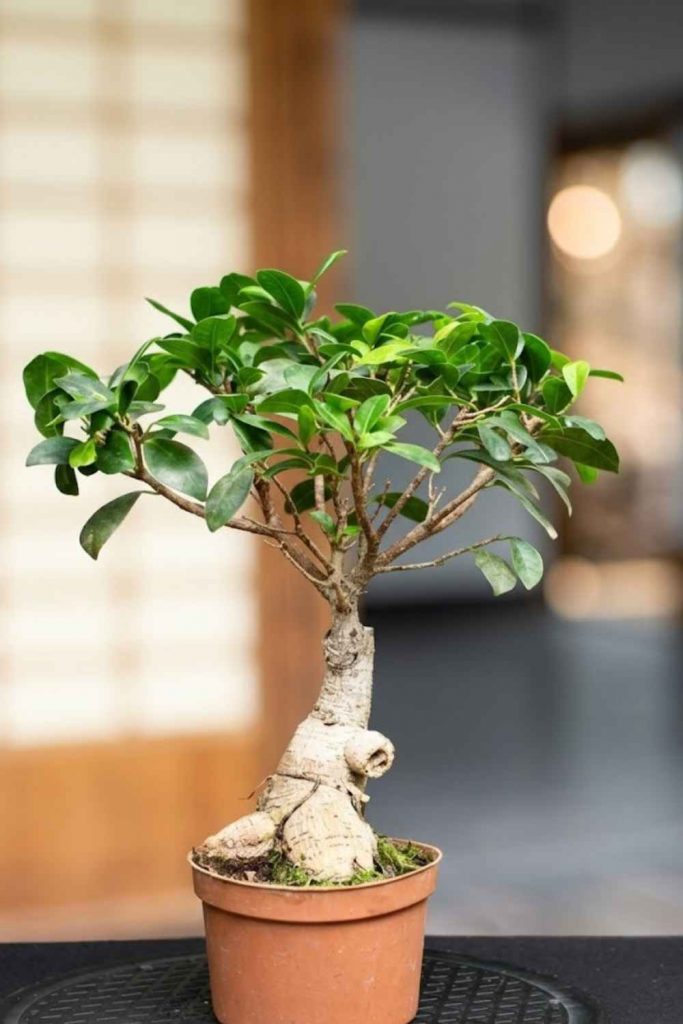
Shortening the vertical axis transforms this stocky specimen. By shaping the broom-style canopy directly above a rugged central knot, the heavy terracotta base achieves a more balanced proportion.
2. The Asymmetric Drop Shoot
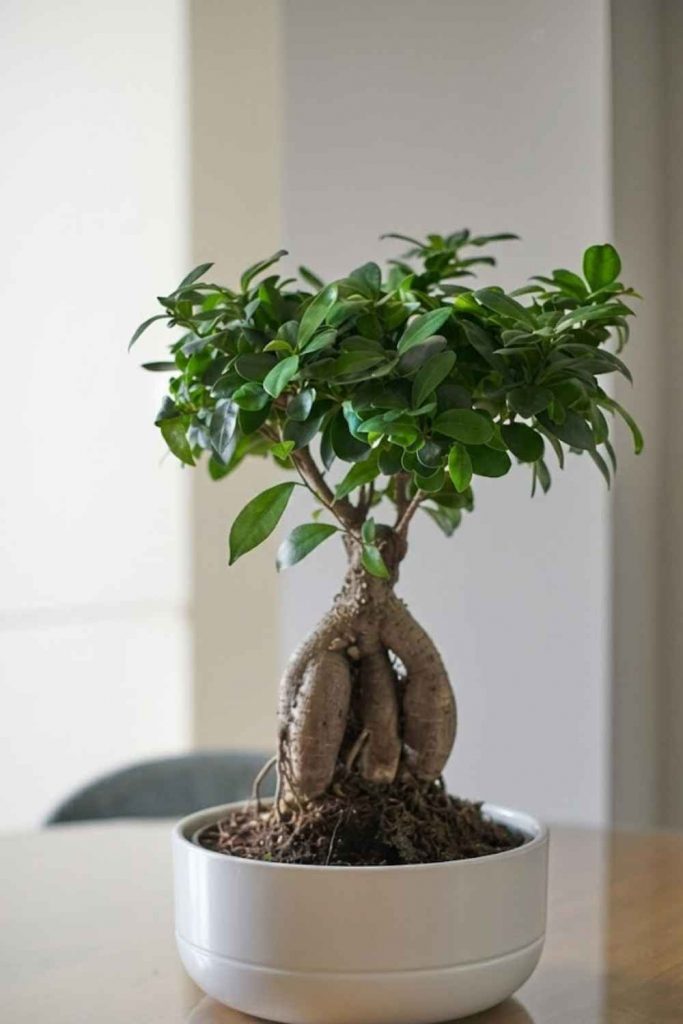
A single low branch breaks from the main crown to draw the eye down toward the ribbed root system, creating a sense of intentional asymmetry that gives the white ceramic setup a more tailored look.
3. The Arching Negative Space
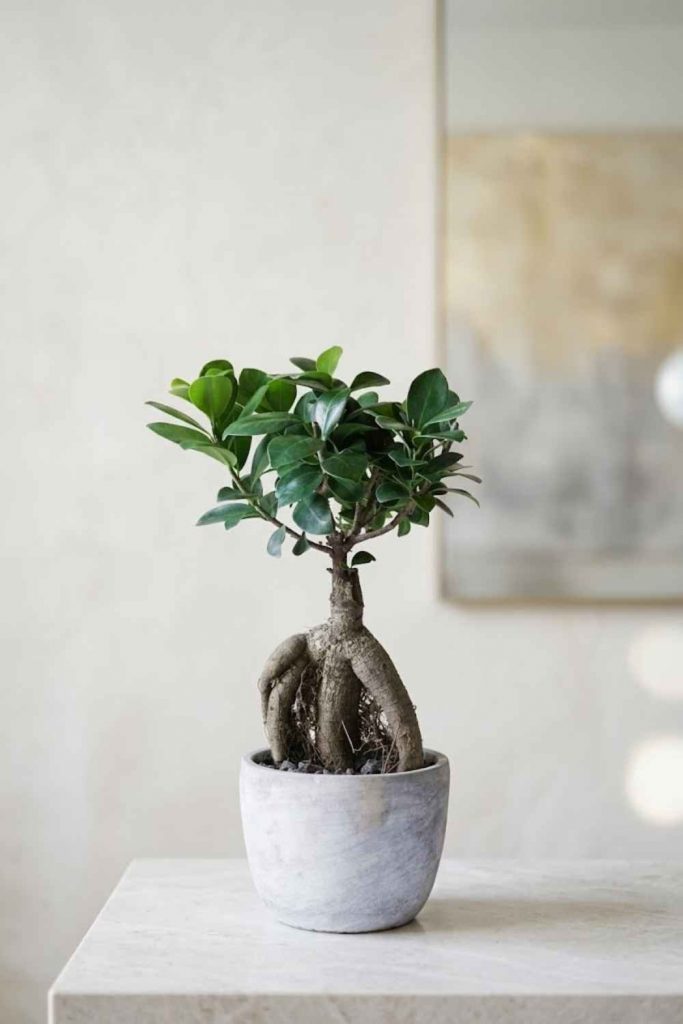
Open space becomes the focal point here. Resting a compact canopy above a high, hollow split-root archway relieves the typical bulkiness of the species, creating a lighter shape inside the matte clay pot.
4. The Twin Pillar Horizon
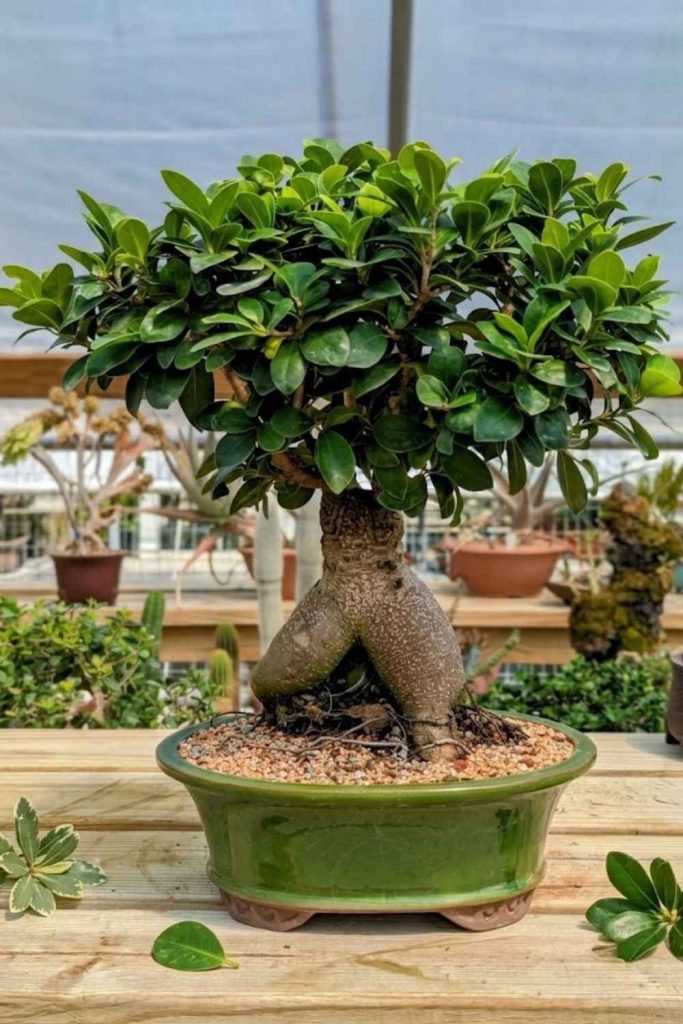
Two thick pillar roots anchor this green glazed pot, locked in place by a flat-bottomed dome canopy. Serving as a clean visual horizon line, the straight lower edge of the foliage helps balance the wide base.
5. The Tiered Zig-Zag
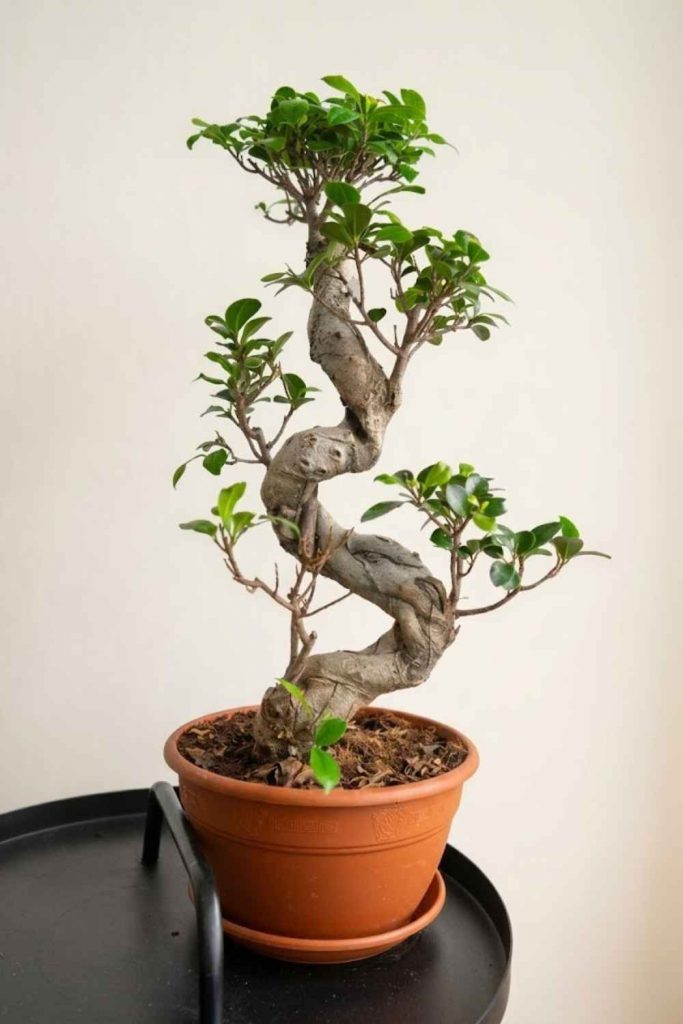
Square trunk bends dictate the rhythm of these distinct foliage tiers. This careful layering isolates each leaf cloud over the patterned terracotta container, highlighting the geometric angles of the wood instead of crowding the trunk.
6. The Serpentine Twin Trunk
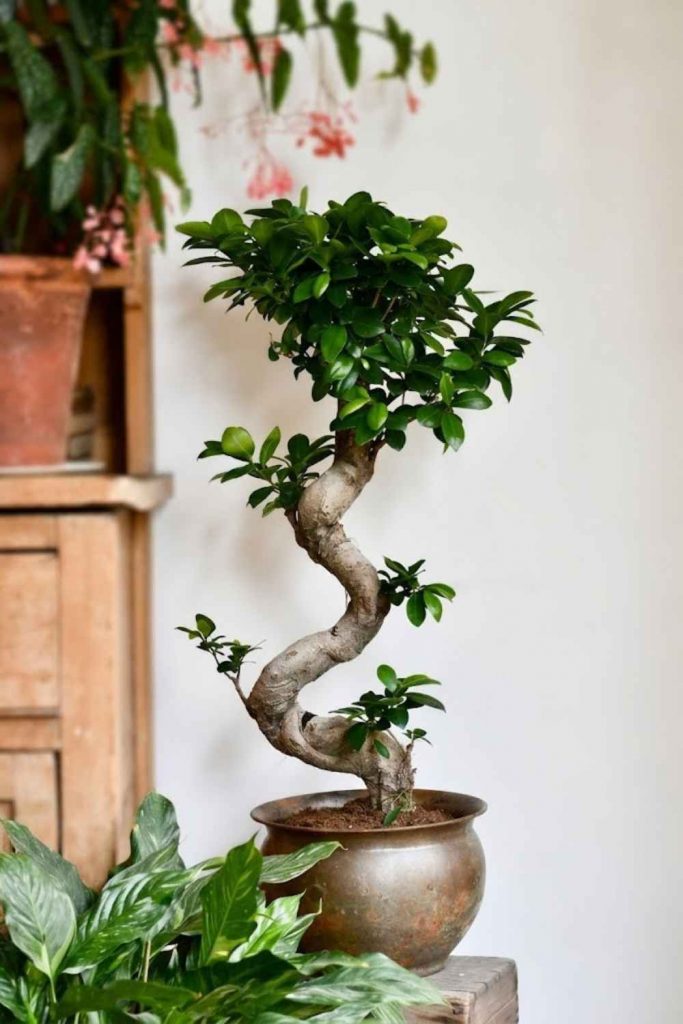
A natural sense of scale emerges from the first bend of this S-curve trunk. By allowing a miniature secondary shoot to rise beside the main leader inside a weathered bronze vessel, the display suggests a traditional parent-and-child dynamic.
7. The Low-Slung Asymmetric
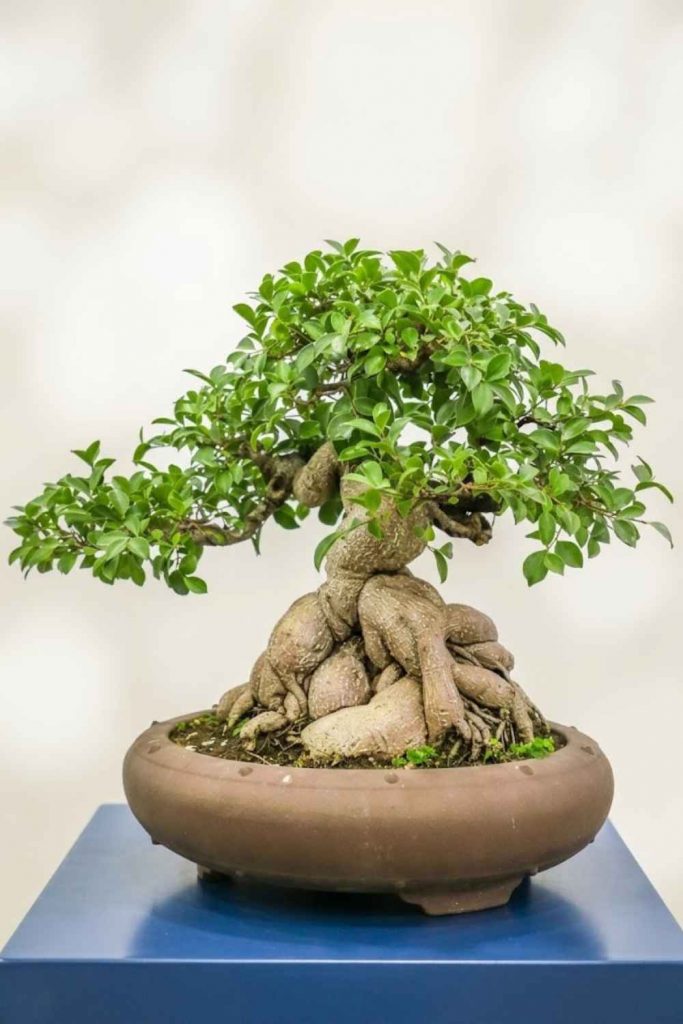
To balance a massive, braided network of exposed roots, a single major branch trails low toward the lip of the thick clay pot. This foliage position bridges the container and the crown, unifying the stocky form.
8. The Tension-Wired Canopy
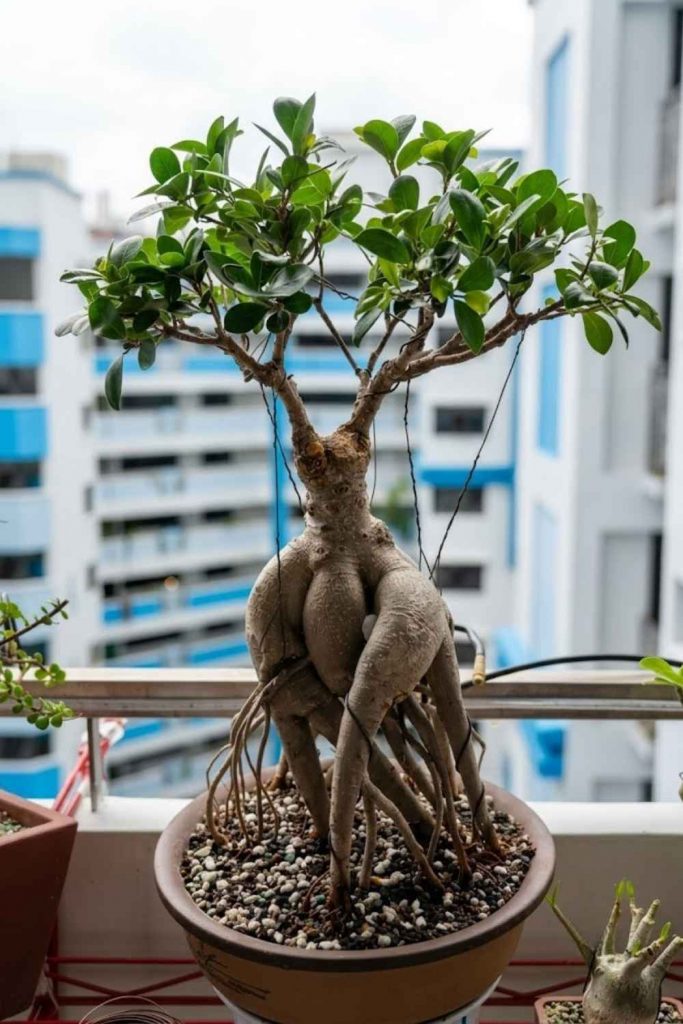
This composition relies on compressed geometry. Flat horizontal planes of foliage stretch wide across a Y-shaped trunk, suggesting the weathering of wild ridge trees against a graphic black-and-white pebble mix.
9. The Mossy Seated Landscape
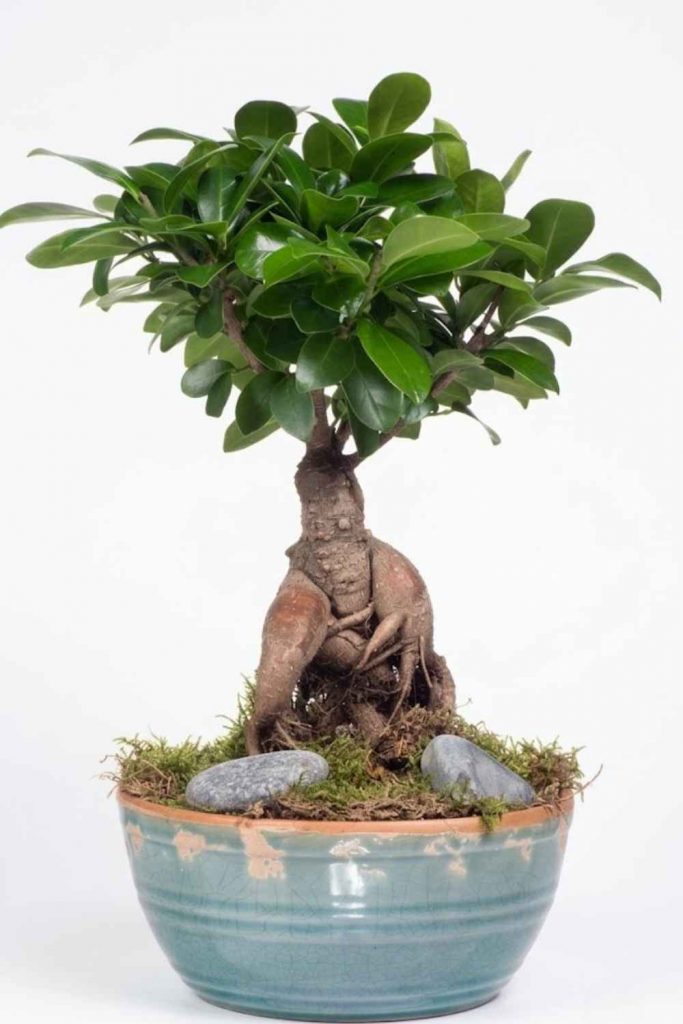
A crossed-root base sits quietly on a bed of forest moss and rough stones. Housed inside a crackle-glaze ceramic bowl, these raw textures frame the seated posture as a quiet miniature landscape.
10. The Root-Over-Rock

Credit: Pinterest
Perching the main root ball directly on the summit of a steep stone helps correct a proportions flaw. Long feeder roots run down the rock face in clean parallel lines, using the verticality of the stone to suggest a mountain environment.