
Table of Contents
A Ficus Ginseng rarely grows into a full, bushy bonsai on its own. Without regular shaping, it develops long, bare branches with leaves clustered only at the tips.
The difference between a sparse plant and a dense, sculpted canopy comes down to a few simple pruning and light techniques that influence how the tree responds to growth.
This guide shows how to trigger back-budding and encourage branching so your Ficus gradually develops a fuller, more balanced form.
1. Prune Deliberately Above the Leaf Scars
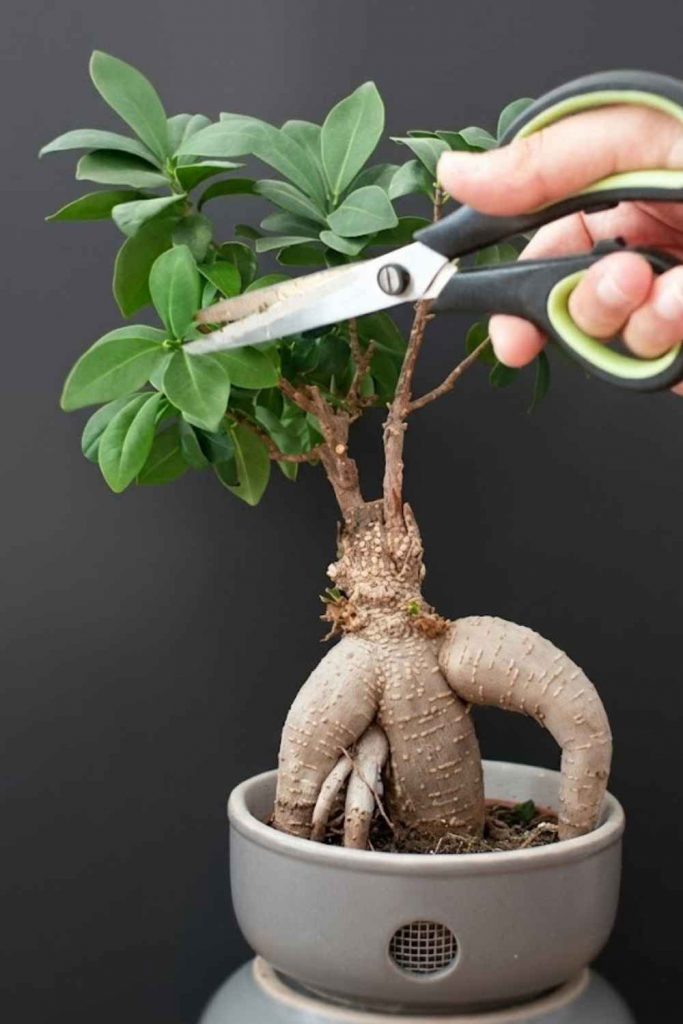
Ficus Ginseng naturally pours energy into the ends of its branches, leaving the inner sections bare.
To force branching lower down, prune back into the current season’s growth, leaving only two or three leaves on a stem. Look for the tiny ridges where old leaves used to sit—the leaf scars.
Make a clean, 45-degree cut a quarter-inch above a scar that points outward, away from the trunk. The dormant bud directly beneath your cut will become the new leader, expanding the canopy outward instead of crowding the center.
2. Balance the Canopy with Strategic Defoliation
Large leaves at the top of your Ficus act like umbrellas, shading out lower branches until they weaken and drop.
Snip away these oversized top leaves at their stalks, but leave the smaller, lower foliage intact. This immediate infusion of sunlight triggers dormant buds on the bare inner wood to break.
The tree responds with a fresh flush of smaller leaves, tightening the entire canopy by mid-summer.
3. Move Outdoors to Break the Indoor Light Barrier
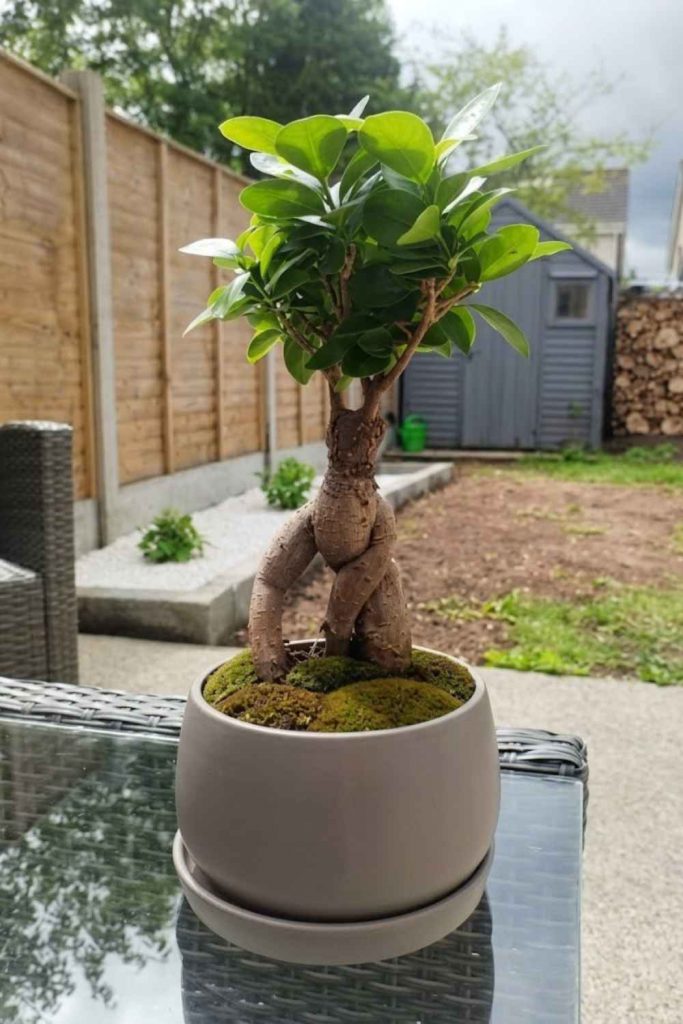
A bright windowsill looks sufficient, but window glass filters out the raw light intensity a Ficus needs to stay compact. Without enough light, the spaces between new leaves grow long.
Once nighttime temperatures consistently stay above 60°F, move your tree outdoors into dappled morning shade.
The natural air movement and unfiltered ambient light stimulate rapid back-budding along the main branches, a result indoor lighting rarely matches.
4. Feed for Compact Structure, Not Fast Growth
Standard fertilizers often trigger rapid, watery stem elongation. To maintain a tight aesthetic, switch to a balanced organic formula like a 5-5-5.
Feed your Ficus at half-strength every two weeks during the spring and summer instead of giving it a heavy monthly dose. This steady nutrient stream keeps new stems short and stiff, ensuring every fresh branch is packed with foliage.
5. Let Root Confinement Set the Tone
The growth above the soil mirrors what happens beneath it. Planting a Ficus Ginseng in a large container gives roots room to run, which translates into wild top growth.
Keeping the tree in a traditional, shallow bonsai pot gently bounds the root system.
This boundary slows down vertical stretching and encourages a fibrous root mat, making the canopy easier to shape and keep proportional.
6. Prioritize Air Humidity Over Damp Soil
A soggy pot chokes the roots of a Ficus, causing sudden leaf drop. Allow the top half-inch of the soil to dry completely before watering thoroughly.
To satisfy the plant’s tropical nature, focus on the air instead.
Group your plants together to create a natural microclimate, or run a small humidifier nearby to keep the room above 50% humidity. This protects delicate outer twigs from drying out.
7. Rotate a Quarter-Turn Every Week
A Ficus leans toward its light source, packing on foliage on the side facing the window while abandoning the back. If left unturned during the spring growth spurt, the shaded side of the tree will soon drop its inner twigs.
Get into the habit of giving the pot a 90-degree turn every single week.
Consistent light keeps the internal branches active on all four sides, preserving a balanced, 360-degree dome of green.
FAQs
When is the best time of year to prune heavily for thickness?
Stick to late spring or early summer. The tree is entering its peak growing season and will bounce back with fresh buds within a few weeks.
Avoid heavy cutting in the winter when recovery is sluggish.
Can a grow light help keep the canopy full during winter?
Yes. A full-spectrum LED grow light placed 6 to 12 inches above the canopy on a 12-hour timer will stop the winter leaf-drop caused by shorter days.
How do I know if a branch is leggy enough to cut back?
If you see more than two inches of bare wood between the trunk and the first cluster of leaves, the branch is losing its proportion. Cut it back to the nearest two leaves to push growth back toward the center.