Table of Contents
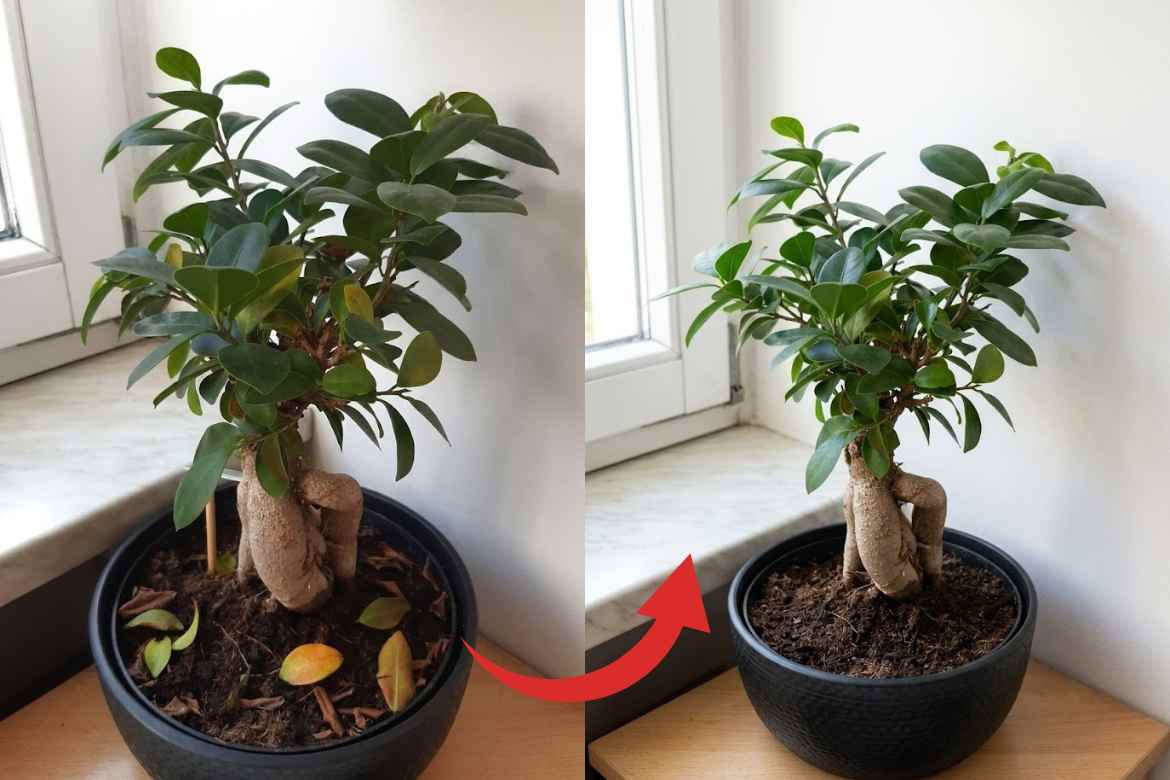
Watching a healthy Ficus ginseng suddenly lose its leaves is incredibly disheartening. You think you did everything by the book, yet the plant responds by dropping its foliage.
Unlike tougher, slow-moving indoor plants, this tropical native is genetically wired to shed leaves the moment its environment or care routine fluctuates. It is a natural survival mechanism, but left unchecked, it can leave you with sparse, bare branches.
When a Ficus experiences stress, it sends clear visual signals through the changing texture and color of its foliage. Halting the leaf drop requires decoding these subtle distress calls and shifting toward a more predictable, stabilizing routine.
1. Perfectly Green, Healthy Leaves Falling Overnight
Credit: Reddit – @meowtaz264
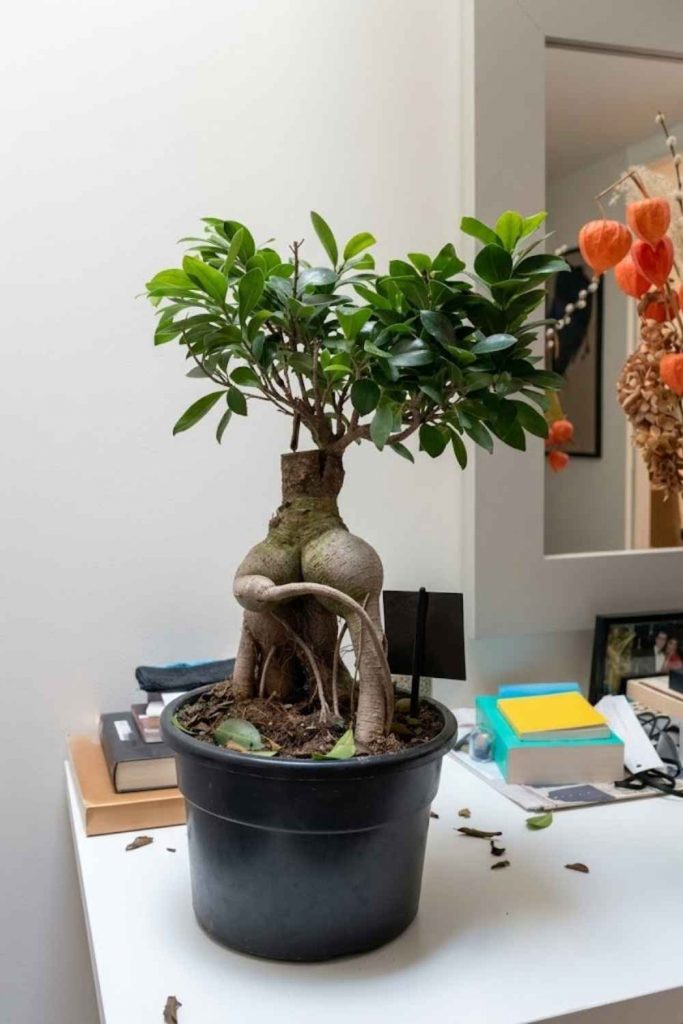
When a Ficus drops leaves that are still crisp and vibrant green, it is usually a classic reaction to immediate environmental shock. The most common trigger is shifting the pot too frequently.
Ficus trees respond best to consistent conditions. Moving the pot to a new room, changing corners, or even rotating it too aggressively forces the plant to adapt to a different light pattern. To adapt, the tree often sheds older foliage to budget its energy for new growth tailored to the new spot.
Finding one permanent location that receives four to six hours of bright, indirect sunlight is usually the best approach. Once the tree is placed, try to stop moving or rotating the pot entirely.
It is completely normal for the shedding to continue for a week or two while the plant recalibrates; introducing absolute consistency is the best way to help the plant settle into stable conditions.
2. Yellowing Lower Leaves and Limp, Drooping Branches
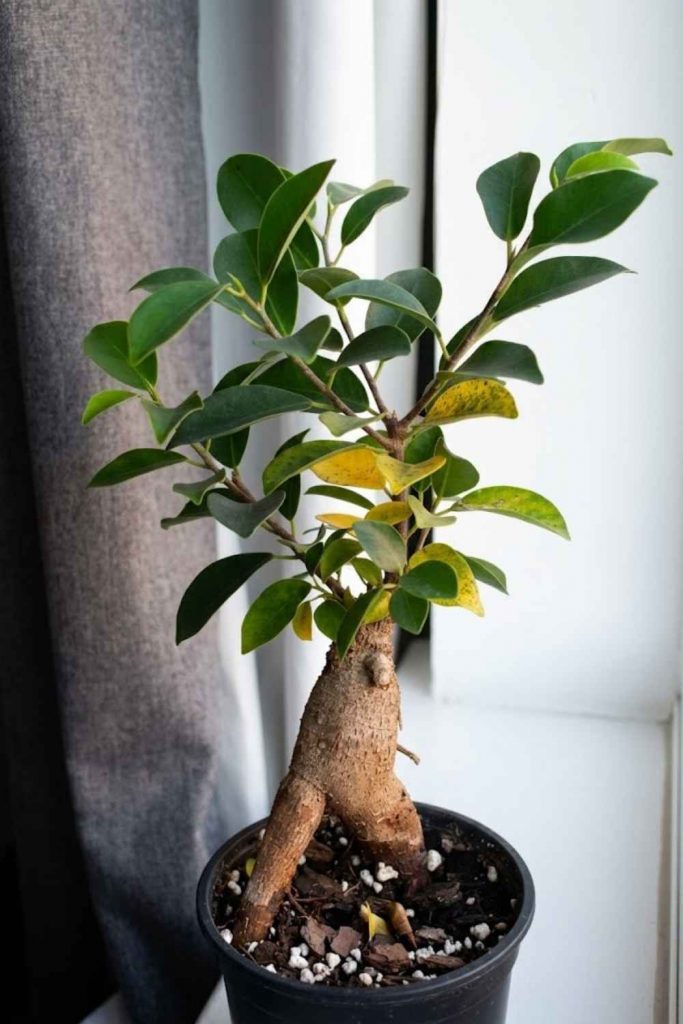
Yellow leaves concentrated near the bottom of the canopy often indicate that the root system is struggling. While leaf loss can happen naturally with age, widespread yellowing coupled with limp branches typically points to watering on a rigid calendar schedule.
Pouring water every few days without checking the medium is a common pitfall. Ficus ginseng features thick, water-storing trunks that tolerate brief dryness much better than saturated, wet soil.
Ditching the calendar and pressing a wooden chopstick into the top inch of soil daily helps establish a healthier rhythm. It is usually best to water only when that top inch feels completely dry to the touch.
When you do water, flushing the soil thoroughly until moisture escapes the drainage holes ensures deep hydration, provided the collection saucer is emptied fifteen minutes later so the roots never sit in stagnant water.
3. Sparse Inner Foliage with Stretched, Pale New Growth
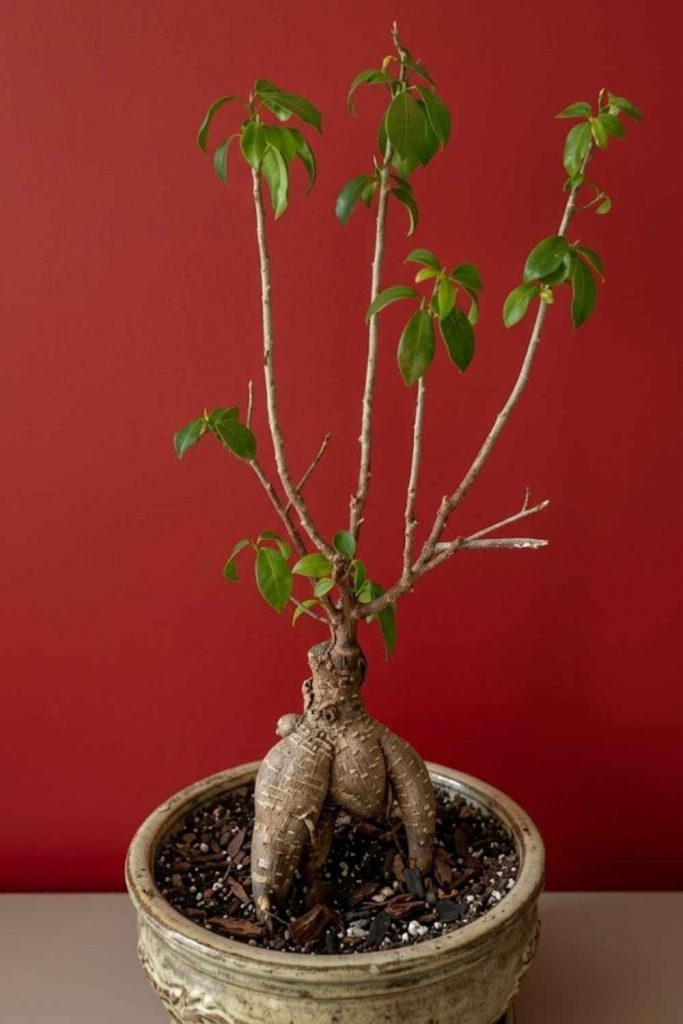
Bare inner branches coupled with weak, leggy growth generally suggest deep interior darkness. Tucking a Ficus onto a dark bookshelf or far from a window starves it of the vital energy needed to support a full canopy.
The tree cannot generate enough food through photosynthesis to maintain dense growth, so it systematically sacrifices its inner foliage to push thin branches outward toward the nearest light source.
Positioning your bonsai within three feet of an east- or west-facing window can quickly turn things around. If your space lacks strong natural exposures, supplementary lighting can help bridge the gap.
Suspending a 15-watt LED grow light roughly twelve inches directly above the canopy and running it on a timer for 12 hours a day offers an efficient alternative.
4. Crispy, Curled Leaf Edges That Drop Suddenly
Brittle, burnt-looking leaf margins that drop suddenly often point to thermal stress caused by invisible drafts and temperature spikes. Ficus ginseng thrives best in stable temperatures between 60°F and 75°F.
Sudden blasts of dry heat from a radiator or icy drafts from an unsealed window shock the delicate foliage, sometimes causing the leaf cell walls to collapse overnight.
Checking the immediate perimeter of your plant is an easy way to prevent this issue. Keeping the pot away from air conditioning vents, radiators, and drafty front doorways generally keeps the canopy safe.
If the tree sits near a winter window, applying simple weatherstripping to block nighttime chills helps ensure the ambient temperature stays safely above 55°F.
5. Soil That Remains Soggy for Over a Week
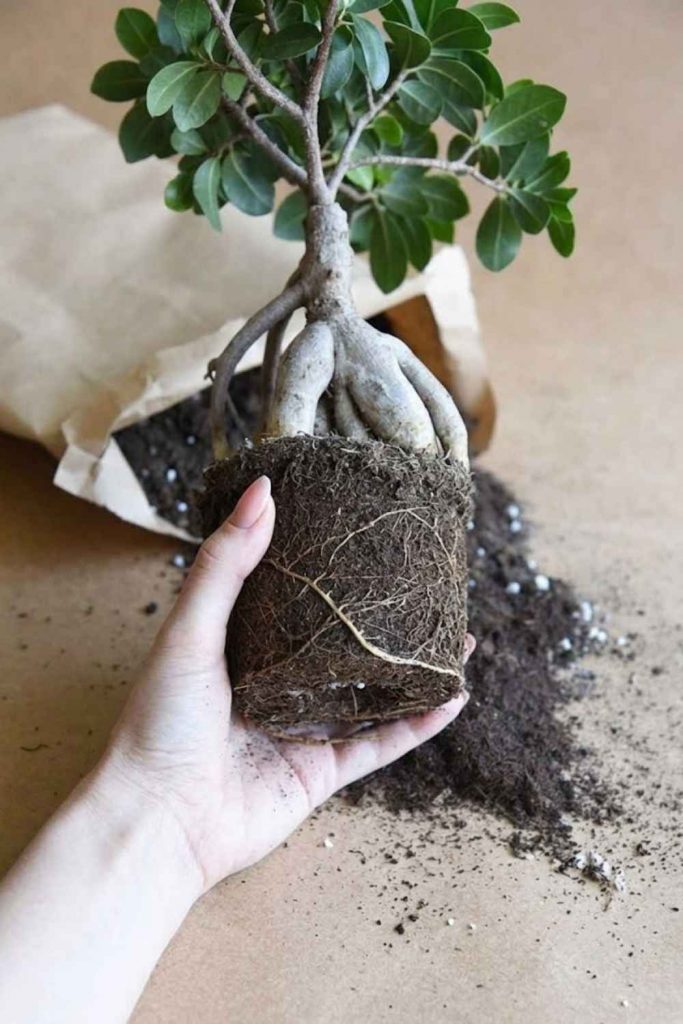
Sometimes the issue isn’t how often you pour water, but how long the soil traps moisture around the roots. If the potting medium remains muddy five days after watering, the roots may be staying too wet for too long.
Ordinary commercial mixes often retain too much moisture and pack down too tightly for a containerized bonsai, meaning root health may begin to decline under the dense mud.
An early spring soil upgrade is highly beneficial for long-term recovery. Repotting the tree into a fast-draining, airy medium—such as 1 part standard potting soil blended with 1 part coarse perlite or pumice—keeps the roots healthy.
Before refilling, it is always a good idea to verify that the bonsai pot has wide, completely unblocked drainage holes at the base.
6. Dried Leaf Tips and Dull, Matte Foliage Across the Canopy
Dull foliage and dry, paper-like tips are frequently triggered by a sharp drop in indoor humidity. When indoor heating kicks on during cooler months, the air dries out quickly.
Traditional methods like pebble trays or misting often prove too weak because the moisture dissipates immediately into the room. To protect its core from losing vital moisture through transpiration, the tree is forced to drop leaves to reduce its overall surface area.
Running a small ultrasonic humidifier near the tree is the most effective way to maintain a stable environment between 40% and 60% humidity.
Alternatively, grouping your Ficus closely with other moisture-loving houseplants creates a natural, shared microclimate. As the plants collectively transpire, they raise the moisture levels in their immediate air space much better than a standalone tray.
7. Scorched Leaf Margins on an Already Ailing Tree
Scorched, dark edges on a tree that is already losing leaves often signal root burn from well-intentioned over-fertilizing. When a plant looks sick, the human instinct is to feed it, but pumping nutrients into a stressed tree may add additional stress.
Dormant or damaged roots cannot absorb the minerals, causing fertilizer salts to accumulate in the soil and worsen the problem by burning the fragile root tips.
Halting all fertilizer applications during an active leaf-drop episode or throughout the winter rest period is critical for root stabilization. Feeding is safest resumed only when the tree has completely stabilized in the spring.
Using a balanced liquid houseplant fertilizer diluted to half strength, and applying it only to damp soil, prevents accidental mineral shock.
FAQs
Will the bare branches ever grow leaves back?
Yes, but only if the wood remains viable. You can check this by gently scratching the bark of a bare stem with your fingernail.
If you see green underneath, the branch is alive and will eventually push new buds once the environment stabilizes. If it is dry, brittle, and brown inside, that specific branch has died and can be safely pruned away.
How long until the leaf drop stops after making corrections?
Expect a natural lag time of about two to three weeks. Plants operate on slow chemical timelines, so the dropping response triggered by past stress will usually carry through to completion.
Maintaining absolute consistency during this stabilization window is key; changing your routine too quickly out of panic will only re-start the stress cycle.
Should I trim the remaining damaged leaves off my tree?
It is usually best to leave them alone if they retain any green color. Even a damaged or partially yellowed leaf continues to conduct photosynthesis, providing vital energy that helps the root system recover.
Allow the tree to shed them naturally whenever it is ready to replace them with fresh growth.