Table of Contents
Having houseplants in a home with cats is not always harmless. Many popular indoor plants are toxic to felines, and the risk often goes unnoticed until a curious bite becomes a real problem.
A pet-friendly home does not have to feel plant-free. These indoor plants are safe for cats, easy to maintain, and adaptable enough for real everyday living spaces.
1. Parlor Palm (Chamaedorea elegans)
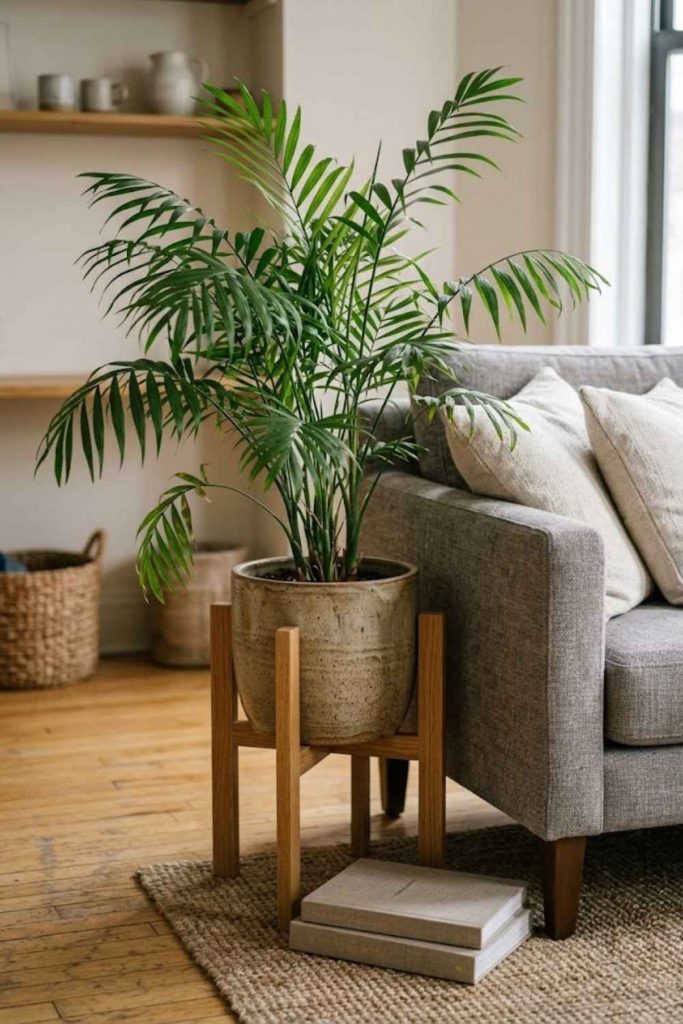
This slow-growing palm tops out around four feet indoors, making it a good choice for empty corners, apartment living rooms, or beside media consoles where larger palms would feel overwhelming.
Unlike fussier majesty palms, it tolerates lower light surprisingly well and prefers the soil to dry slightly between waterings. Missing a week occasionally is rarely a disaster.
Cats love swatting the soft fronds, but the foliage itself is non-toxic.
Styling Note: Raising the plant slightly on a stand helps protect the lower leaves from constant chewing and keeps the shape looking fuller over time.
2. Spider Plant (Chlorophytum comosum)
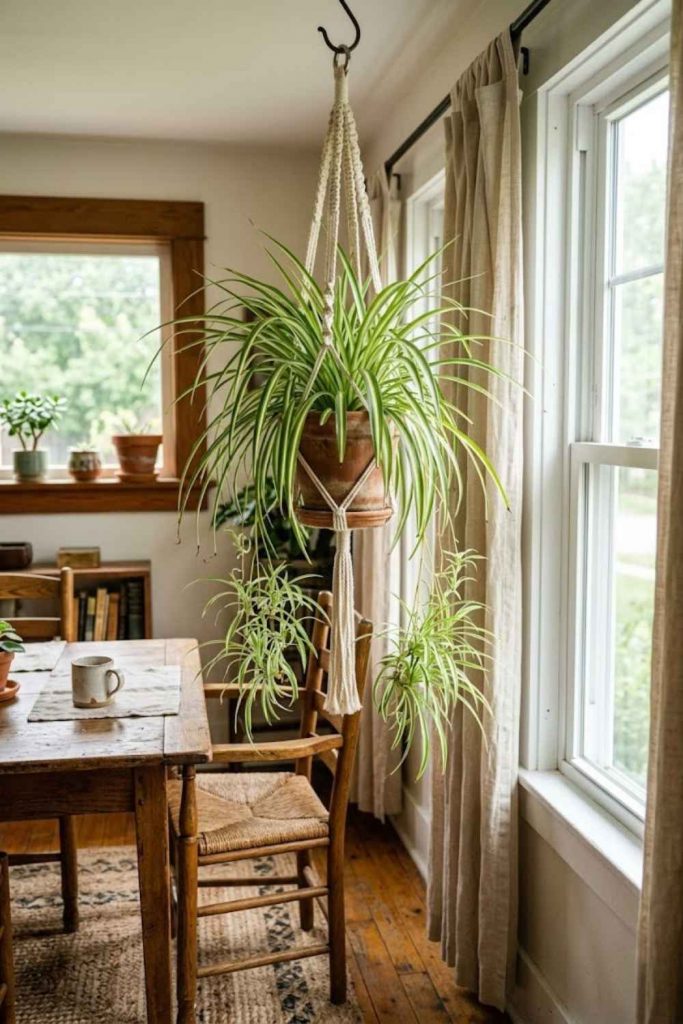
Spider plants are one of the easiest hanging plants for beginners. The arching leaves and dangling baby plantlets soften shelves and bookcases without feeling visually heavy.
They also adapt well to inconsistent care. Thick roots store water efficiently, helping the plant bounce back from occasional neglect or lower light conditions.
Many cats are unusually fascinated by spider plants, especially the dangling babies, so hanging baskets generally work better than low shelves.
3. Cast Iron Plant (Aspidistra elatior)
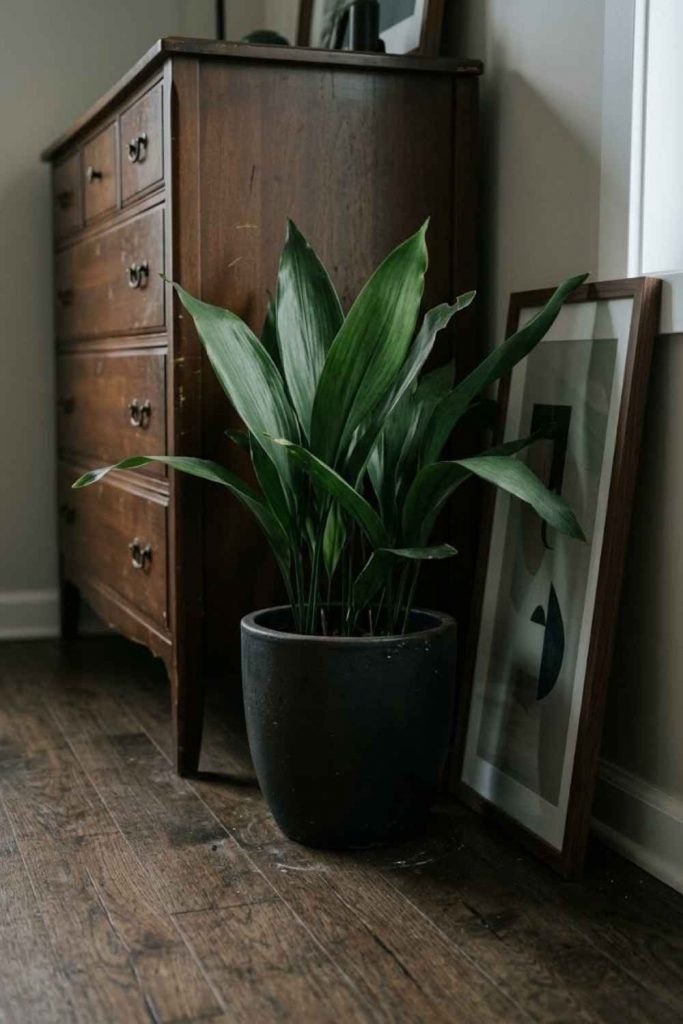
For darker hallways, bedrooms, or overlooked corners, few plants are easier than the Cast Iron Plant. The upright, paddle-shaped leaves add clean structure without demanding much attention.
It tolerates dry indoor air, fluctuating temperatures, and irregular watering better than most tropical houseplants. Most cats also lose interest quickly because the leaves feel thick and leathery rather than soft or grassy.
4. Boston Fern (Nephrolepis exaltata)
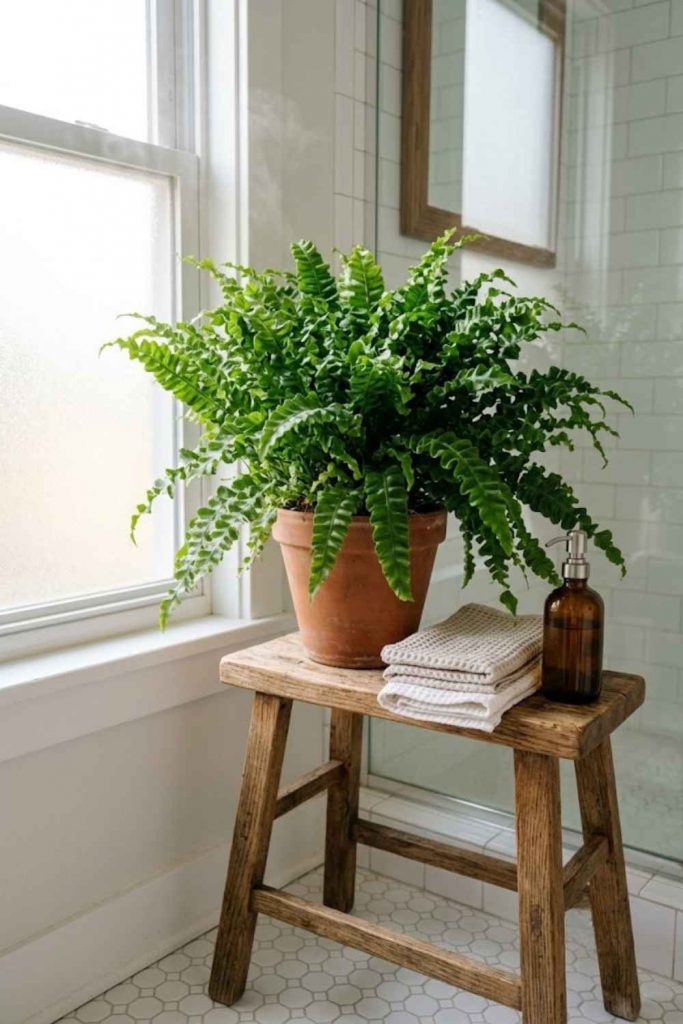
Boston ferns bring softness and movement into kitchens, bathrooms, and brighter corners that need a little volume. The ruffled fronds create a relaxed, layered look that works especially well in hanging baskets.
They are not quite as forgiving as some other plants on this list, though. Dry air and heating vents can quickly lead to browning or shedding, so they tend to perform best in naturally humid rooms.
Because the fronds are completely pet-safe, occasional cat curiosity is usually more annoying than dangerous.
5. Baby Rubber Plant (Peperomia obtusifolia)
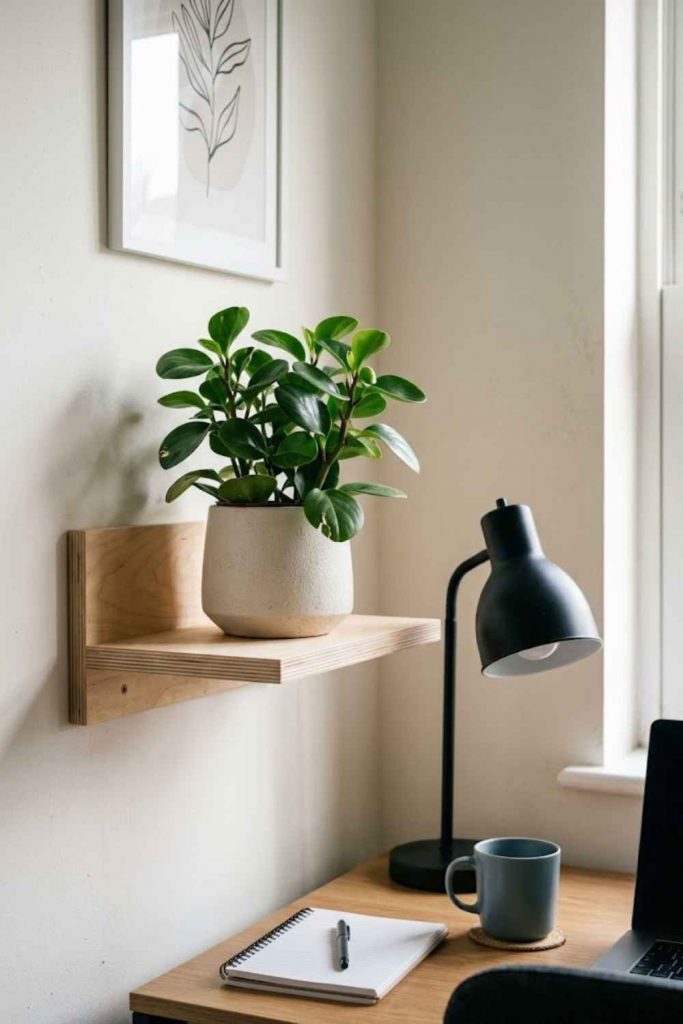
Compact and low-maintenance, this peperomia fits easily onto desks, floating shelves, or smaller apartment windowsills. The thick, glossy leaves reflect light nicely and give the plant a cleaner, more sculptural look than softer trailing varieties.
It prefers to dry out between waterings and generally handles indoor conditions without much fuss. Since the leaves are firm and upright, most cats tend to ignore it.
6. Haworthia (Zebra Haworthia)
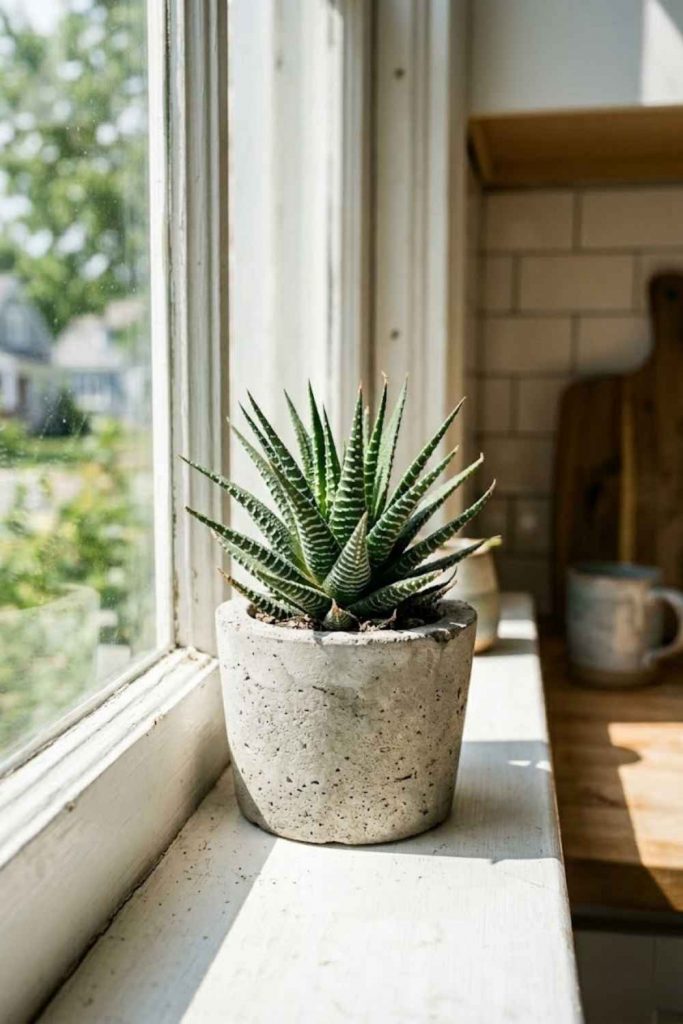
If you like the sharp look of aloe vera but want something pet-safe, haworthia is one of the easiest substitutes. The dark green leaves feature raised white stripes that give the plant a more graphic, architectural feel.
It needs bright light but very little maintenance beyond occasional watering. Because the pots are usually small and lightweight, heavier ceramic planters help keep curious cats from knocking them over too easily.
7. Money Tree (Pachira aquatica)
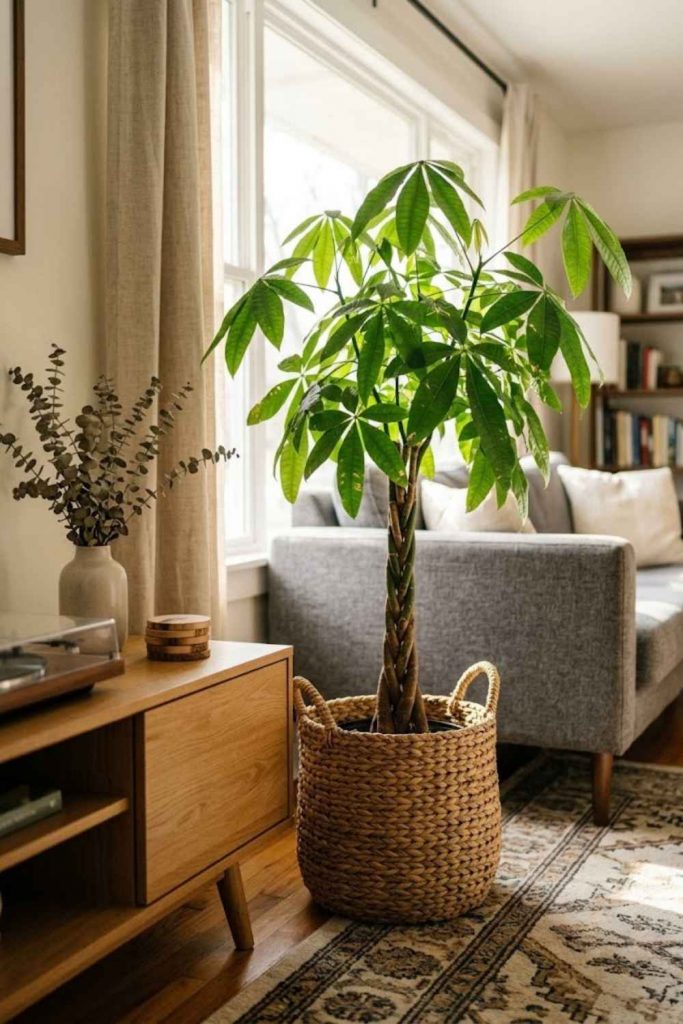
With its braided trunk and hand-shaped leaves, the Money Tree adds height and structure without dominating smaller rooms. It works especially well in bright living rooms or near windows with filtered light.
The biggest issue is usually overwatering rather than neglect. Letting the soil dry partway between waterings helps prevent root problems.
Scratching Warning: Some cats become interested in the exposed braided trunk, especially younger kittens. A heavier outer basket or planter can help discourage scratching and tipping.
Conclusion
The easiest pet-safe plants are usually the ones that match both your lighting conditions and your habits.
- For darker rooms or inconsistent watering, start with the Cast Iron Plant.
- If you want softer trailing greenery, Spider Plants and Boston Ferns add movement without introducing toxicity concerns.
- For desks, shelves, and smaller spaces, Peperomia and Haworthia offer a cleaner, lower-maintenance option that most cats ignore entirely.