Table of Contents
If you’re tired of dealing with soil spills, fungus gnats, and messy repotting, there’s a simpler way.
Many indoor plants don’t actually need soil to grow. With just water and light, they can stay clean, healthy, and surprisingly low-maintenance.
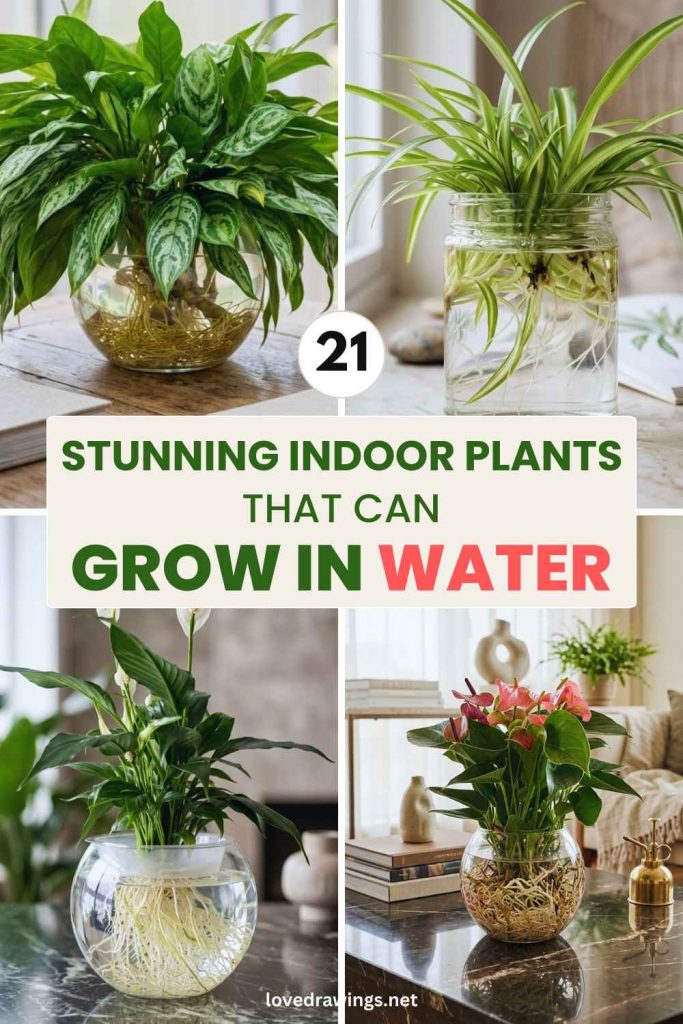
These 21 indoor plants thrive in water — no soil, no mess, and no extra hassle.
1. Pothos (Epipremnum aureum)
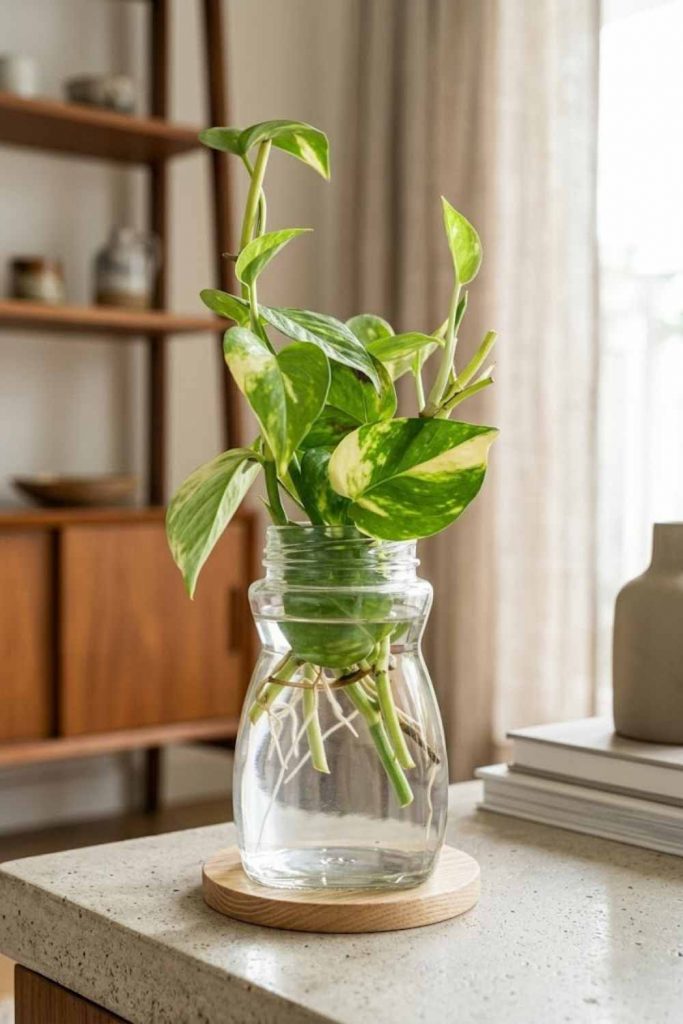
Pothos adapts to water environments almost instantly. It is the premier choice for beginners.
Its cascading vines produce striking white root systems. These look stunning through clear glass vessels.
This plant continues to filter indoor air toxins effectively even without a soil medium.
- Pro Tip: Keep only the stems and nodes submerged. Foliage left underwater will rot rapidly.
2. Lucky Bamboo (Dracaena sanderiana)
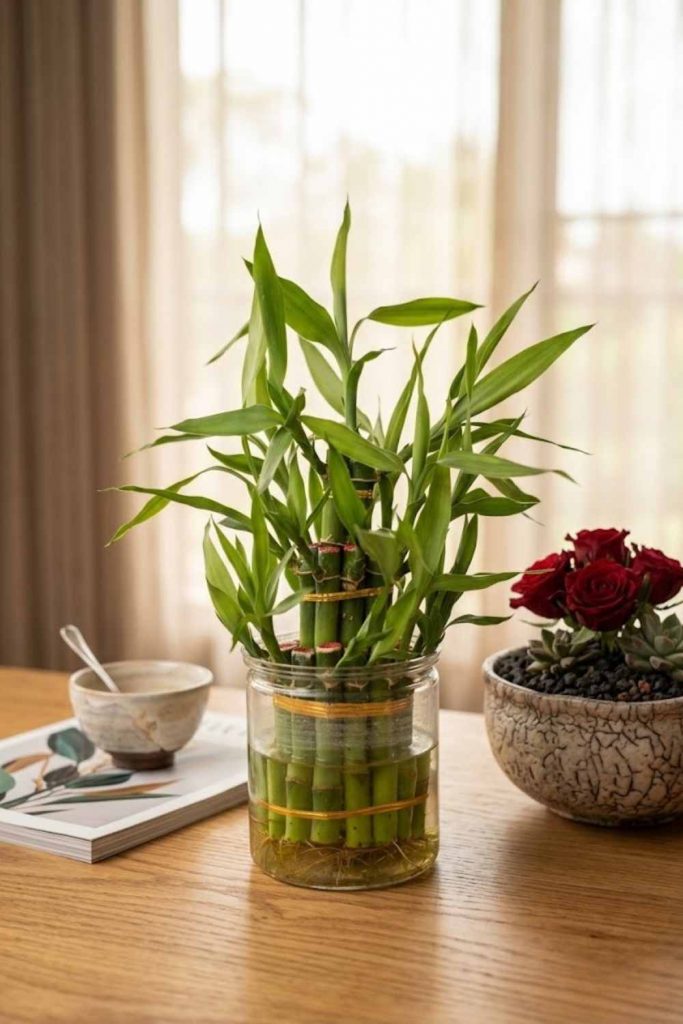
This architectural staple lives for years in just a few inches of water.
Its segmented stem structure tolerates mineral fluctuations well.
Use river stones to anchor the stalks. This provides a stable surface for the roots to grip.
- Fail-Safe: Use distilled or filtered water. Chlorine and fluoride in tap water cause leaf burn.
3. Spider Plant (Chlorophytum comosum)
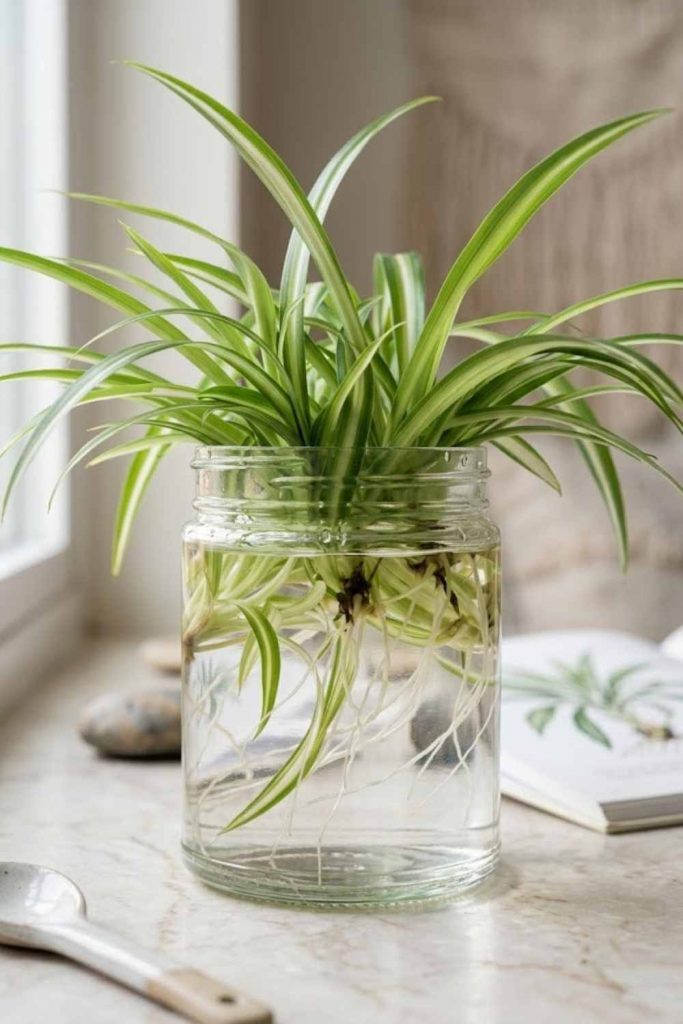
Spider plants create visual interest with arching variegated leaves.
The dangling “plantlets” come pre-equipped with root initials.
This ensures a near-perfect success rate when transitioning to water. Place them in narrow-necked bottles to keep foliage dry.
4. Heartleaf Philodendron
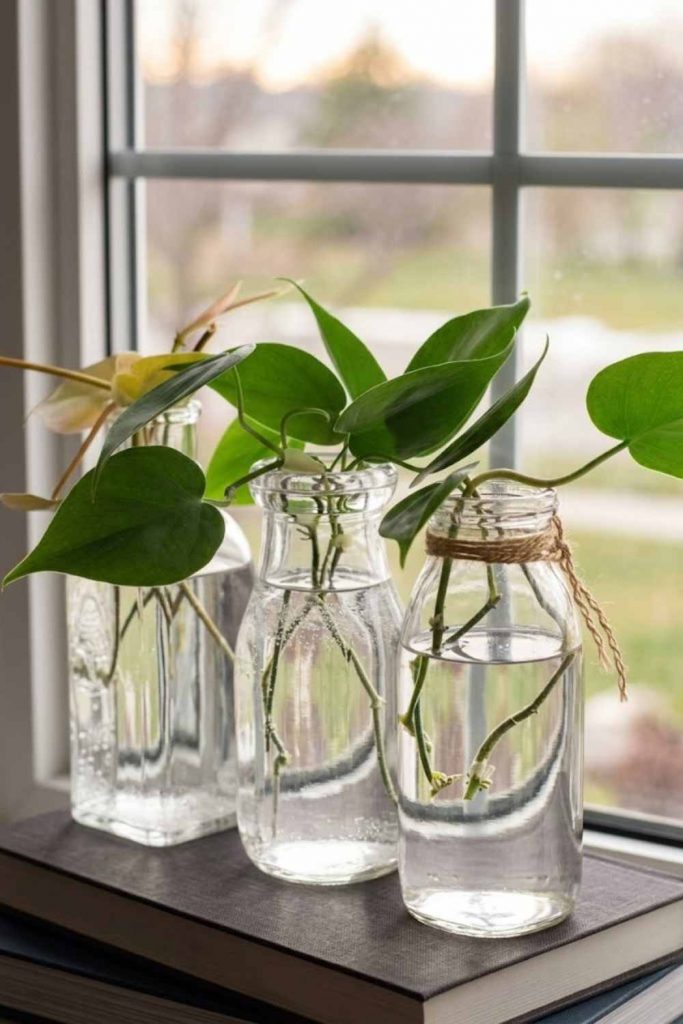
The romantic, heart-shaped foliage is perfect for styling high shelves.
It roots quickly and survives in lower-oxygen water longer than other vining species.
Its soft silhouette provides an immediate sense of calm to stressful workspaces.
- Pro Tip: Rinse roots under running water periodically to remove bacterial biofilm.
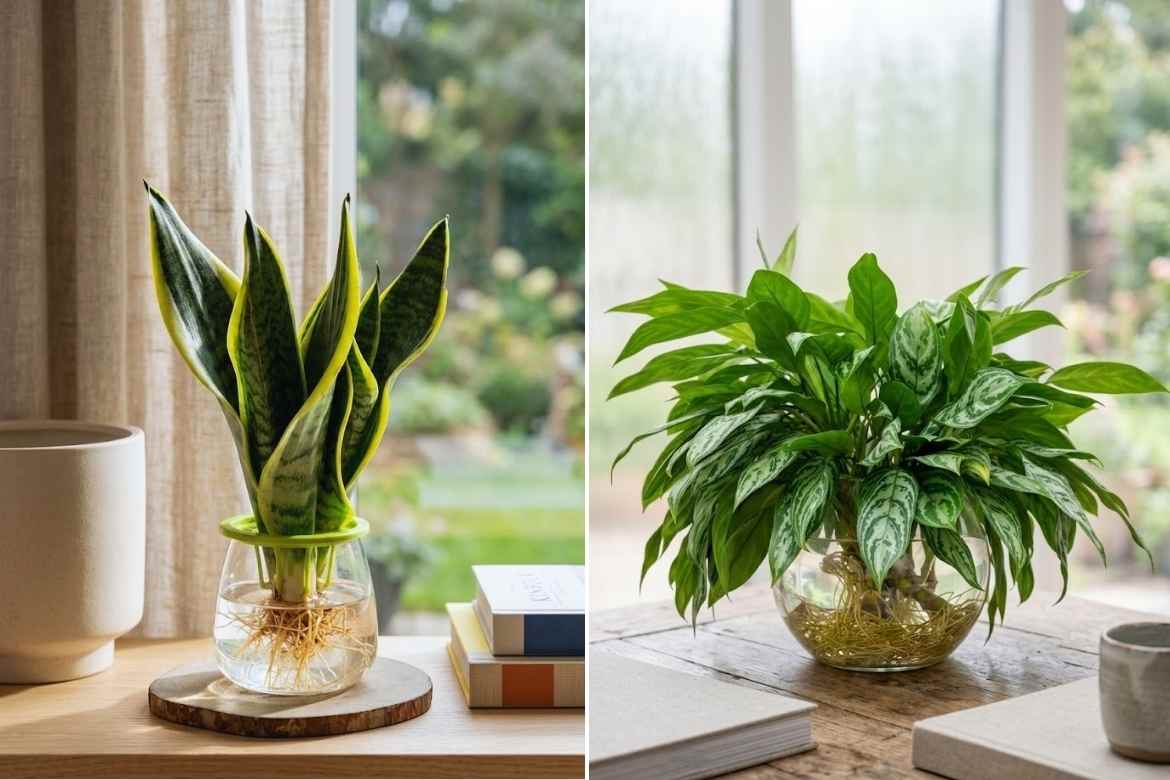
5. Snake Plant (Dracaena trifasciata)
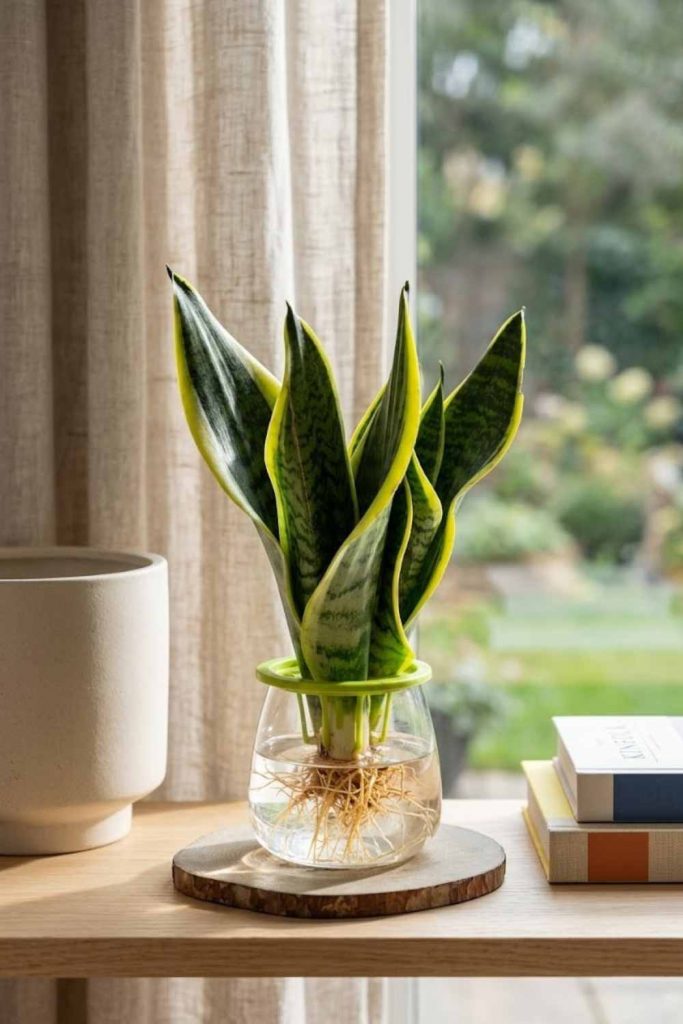
Snake plants offer bold vertical lines for modern interior designs.
A healthy leaf cutting taken from the base can root in a tall, weighted vase.
This is an ideal bedroom plant. It continues to release oxygen at night, even in water.
- Fail-Safe: Practice patience. Snake plant cuttings can take up to two months to root.
6. Monstera Adansonii
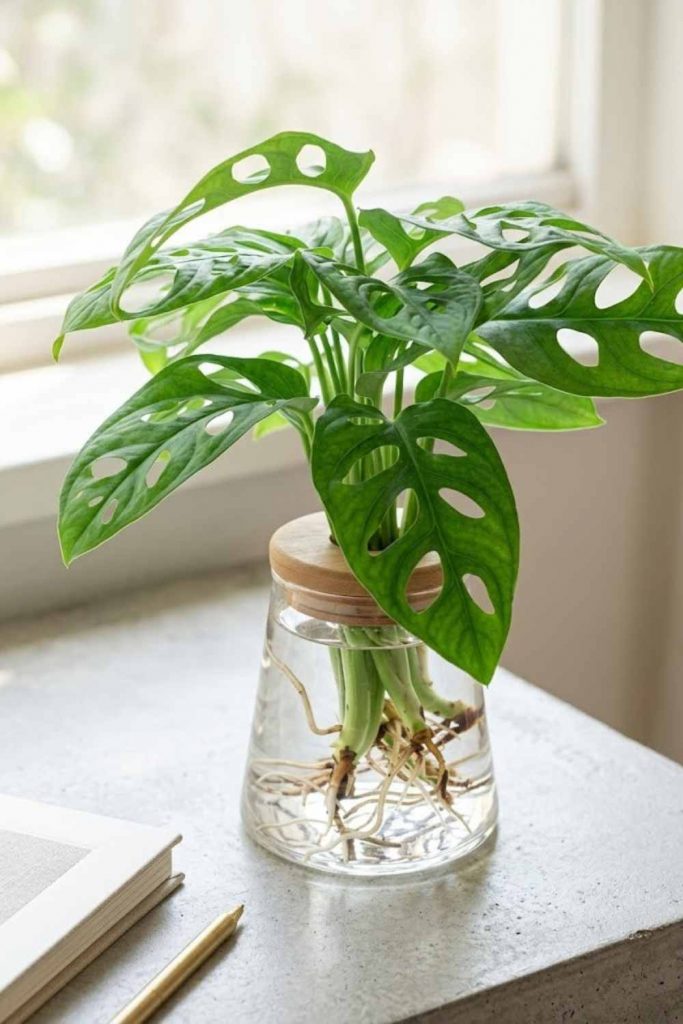
The “Swiss Cheese Vine” makes a graphic statement with its natural leaf perforations.
Its roots grow vigorously and tend to coil around the bottom of the jar.
This creates a high-end, sophisticated look for any aquatic plant collection.
7. Coleus
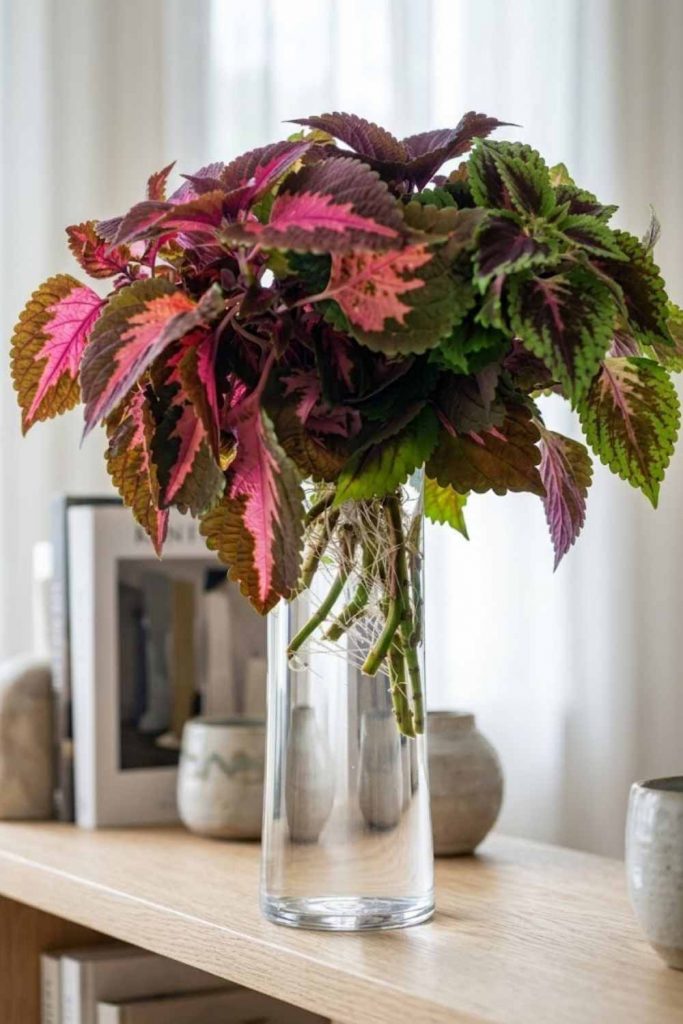
Coleus provides an explosion of neon pink and deep burgundy without the need for flowers.
It is among the fastest-rooting species available. You will often see new growth within 24 to 48 hours.
The contrast between vibrant foliage and white roots in clear glass creates a powerful focal point.
- Pro Tip: Pinch off flower spikes immediately. This forces the plant to focus energy on leaf vibrancy.
8. Chinese Evergreen (Aglaonema)
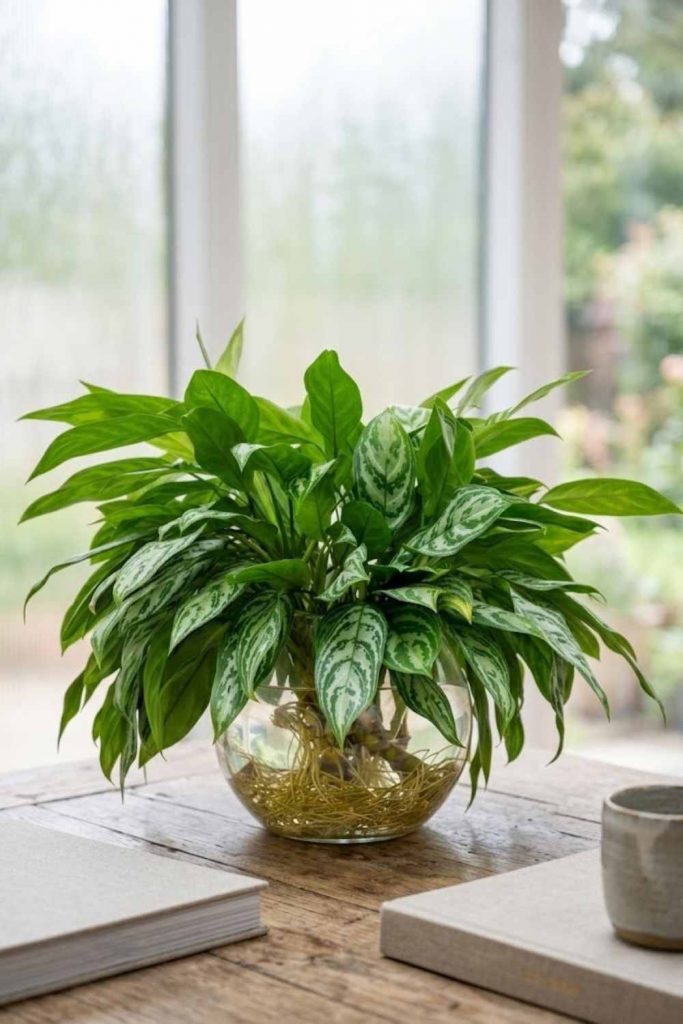
Aglaonema varieties are elegant choices for low-light corners.
Their thick leaves and intricate patterns tolerate artificial office lighting with ease.
They grow slowly, maintaining a beautiful structure for long periods without pruning.
9. Wandering Dude (Tradescantia zebrina)
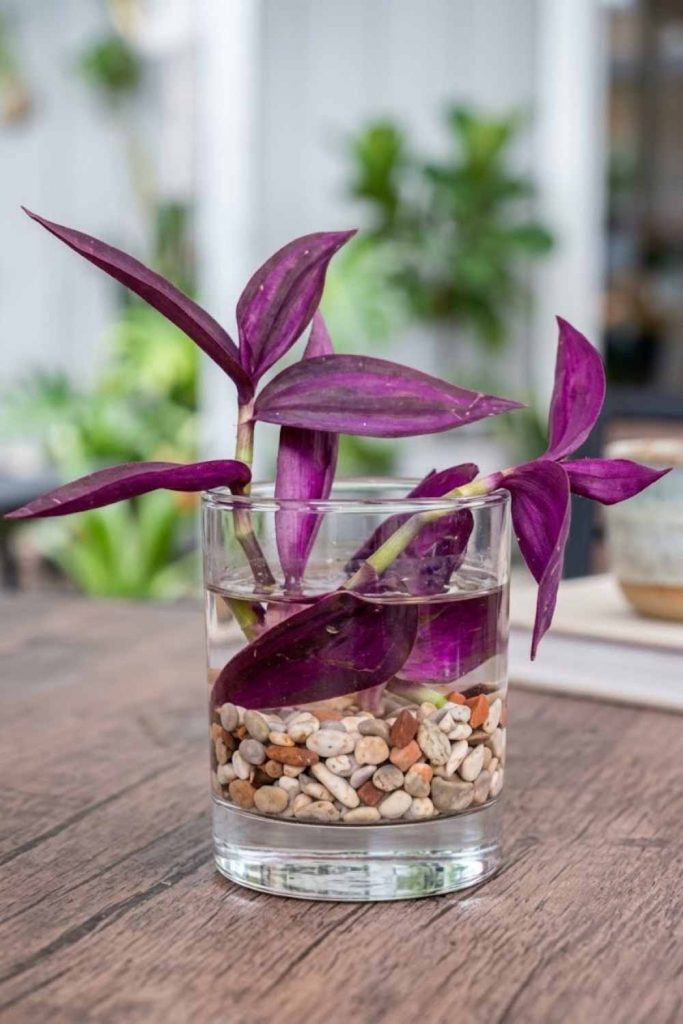
Featuring shimmering silver stripes and deep purple undersides, this plant is visually captivating.
In water, it grows at an incredible pace. It can form a dense cluster of foliage in just a few weeks.
Its ease of propagation allows you to fill multiple vessels from a single mother plant.
- Fail-Safe: Handle with care during water changes. The stems are brittle and snap easily.
10. English Ivy
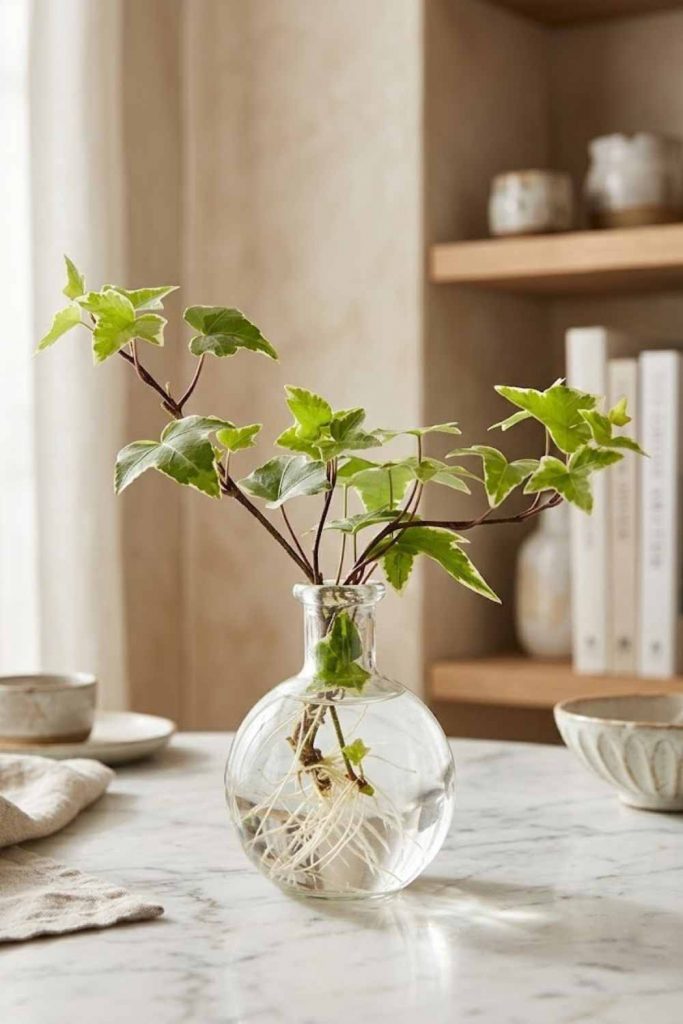
English Ivy brings the classic charm of a European garden into the modern home.
The delicate vines winding through glass cylinders create an aesthetic that is both rustic and refined.
Water-grown ivy tends to produce smaller, tighter leaves for a more delicate appearance.
11. Peace Lily (Spathiphyllum) — The Living Hydrometer
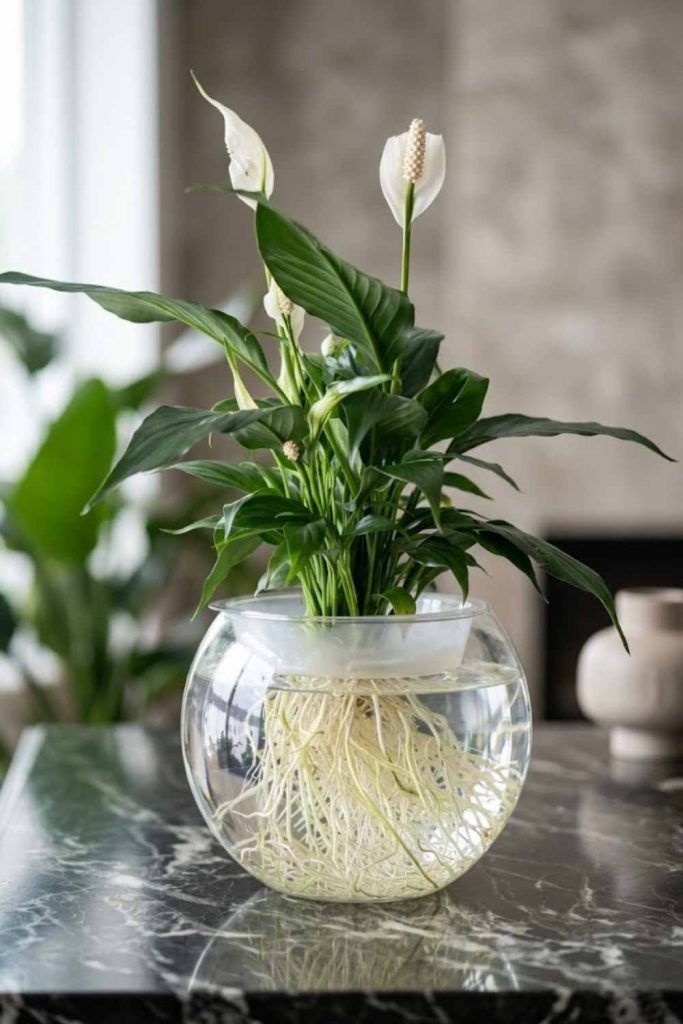
The Peace Lily is a rare botanical that adapts perfectly to having its “feet” fully submerged.
Success lies in keeping the crown—where the leaves emerge—completely dry. Use a net pot or stones to suspend it.
Allowing the crown to sit in water leads to irreversible center rot.
This plant acts as a living oxygen sensor for your home. Dramatically drooping leaves signal that the water is depleted of oxygen.
Refreshing the water revives the plant. It will stand upright again within hours.
- Fail-Safe: Maintain a consistent water level at the roots. Sudden shifts cause leaf yellowing.
12. Arrowhead Vine (Syngonium)
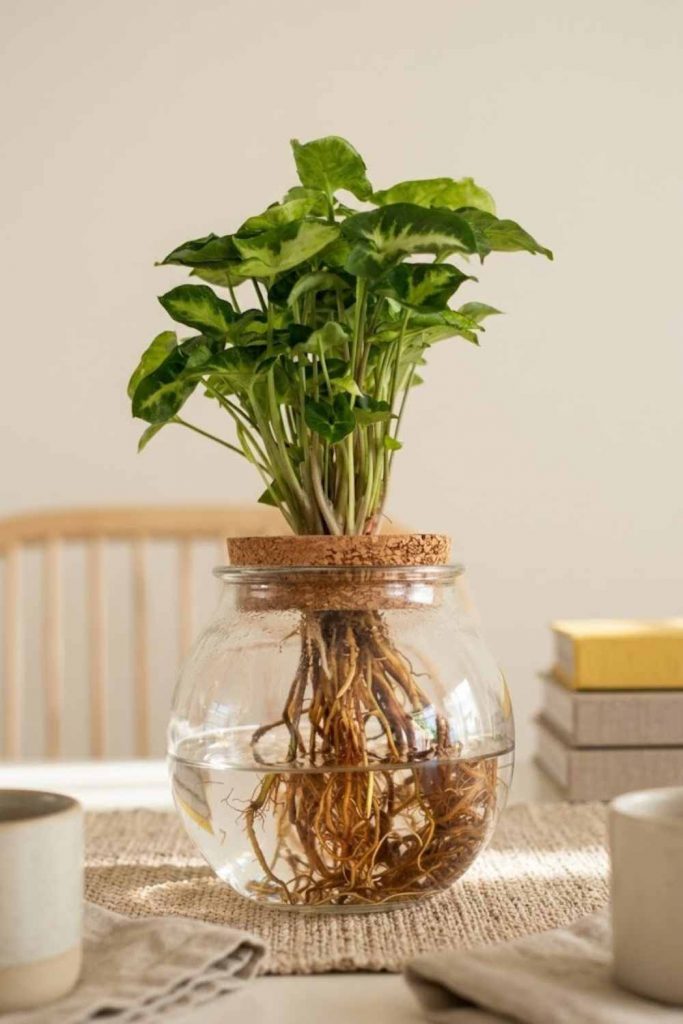
This species transitions beautifully from soil to water without shedding leaves.
Its leaf shape evolves interestingly over time. It moves from simple spades to complex multi-lobed forms.
Water-grown Syngonium maintains sharper variegation when placed in bright, indirect light.
13. Angel Wing Begonia
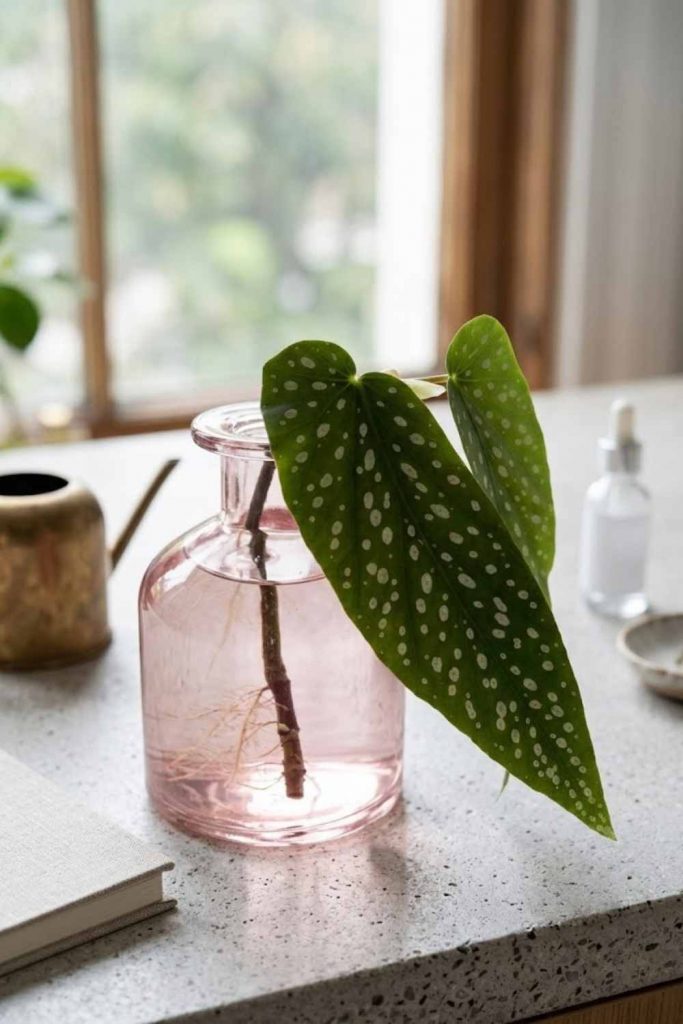
The Angel Wing Begonia features metallic silver spots and deep red undersides.
They are resilient in water and can even produce delicate flower clusters.
Their succulent stems store energy well, keeping them turgid between maintenance sessions.
- Pro Tip: Never allow water to touch the leaf surfaces. High humidity on foliage causes powdery mildew.
14. Monstera Deliciosa — The Minimalist Statement
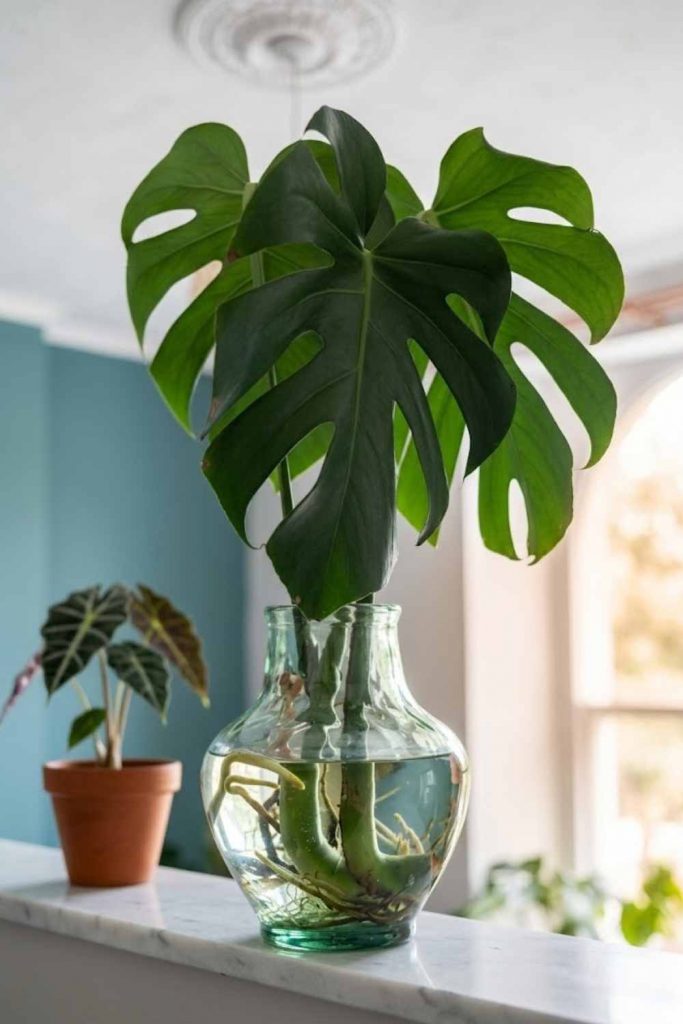
A single Monstera Deliciosa leaf in a large glass vessel is the definition of minimalist luxury.
In editorial circles, this is the perfect living alternative to expensive sculpture.
A standalone cutting can survive in water for several months.
Growing Monstera in water lets you observe its aerial roots as they develop into a strong, sculptural network.
Over time, the intricate root network creates an architectural look with incredible depth.
This is the optimal choice for integrating nature into modern architectural spaces.
- Pro Tip: Wipe leaves with a damp cloth weekly. Clean surfaces maintain the plant’s signature shine.
15. Fiddle Leaf Fig (Ficus lyrata)
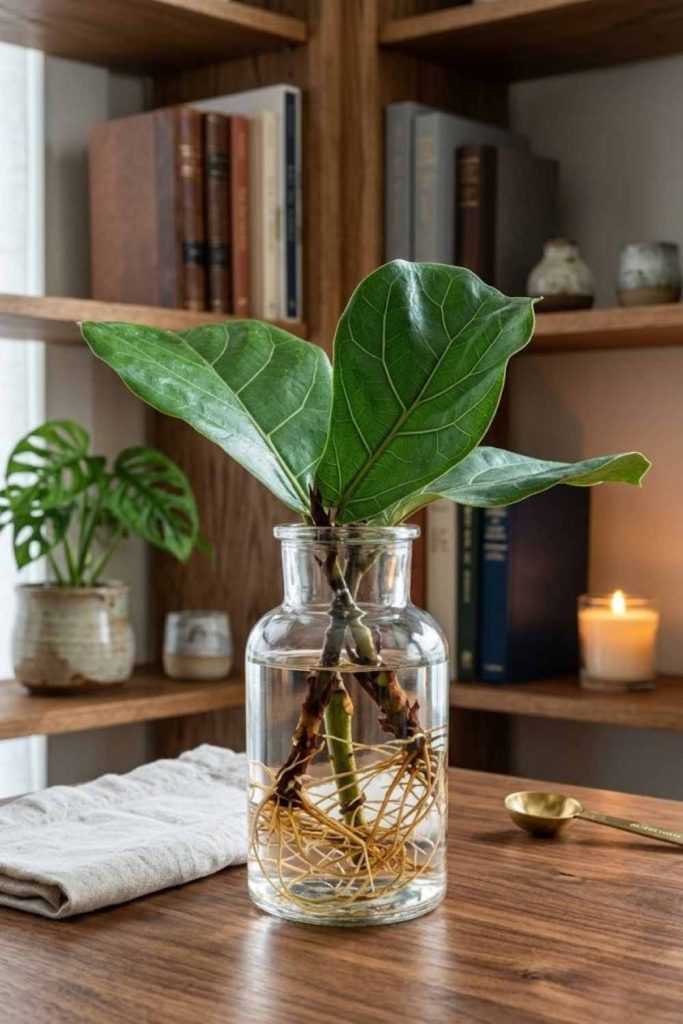
Fiddle Leaf Figs thrive in water, eliminating the risk of root rot from overwatering.
A branch cutting in a large carafe maintains the beauty of its iconic waxy leaves indefinitely.
This is an excellent way to propagate and preserve a piece of a prized mother plant.
16. Prayer Plant (Maranta)
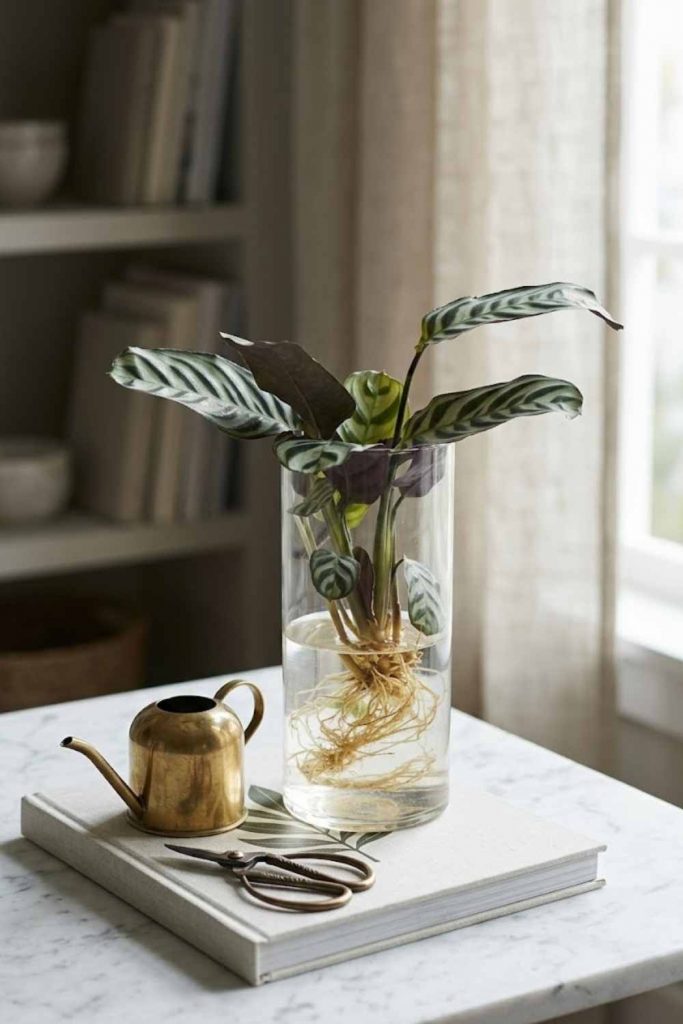
The hand-painted patterns on Maranta leaves are breathtaking.
Their ability to fold upward at night adds a dynamic element to your decor.
Growing them in water allows for a clear view of this mechanical movement and their fine root systems.
- Fail-Safe: Use filtered water or rainwater. Leaf edges will turn brown if exposed to hard minerals.
17. Aluminum Plant (Pilea cadierei)
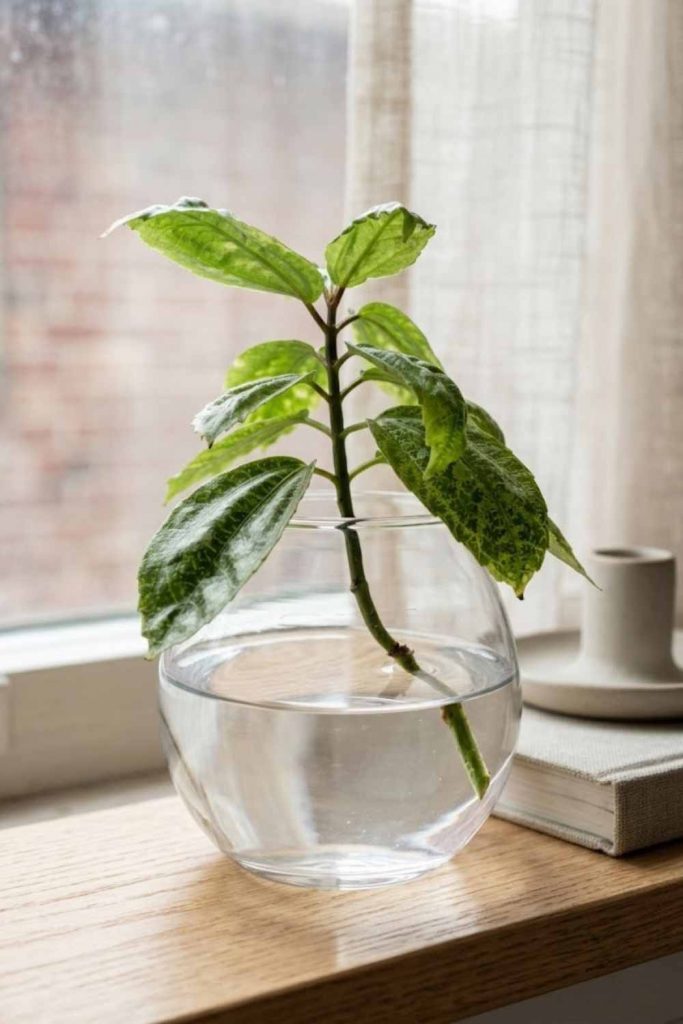
Silver patches on green leaves create a metallic shimmer under sunlight.
This plant maintains a compact, bushy habit. It is ideal for desks or small shelving units.
Its love for high humidity ensures it remains stable in a water-only environment year-round.
18. Polka Dot Plant (Hypoestes)
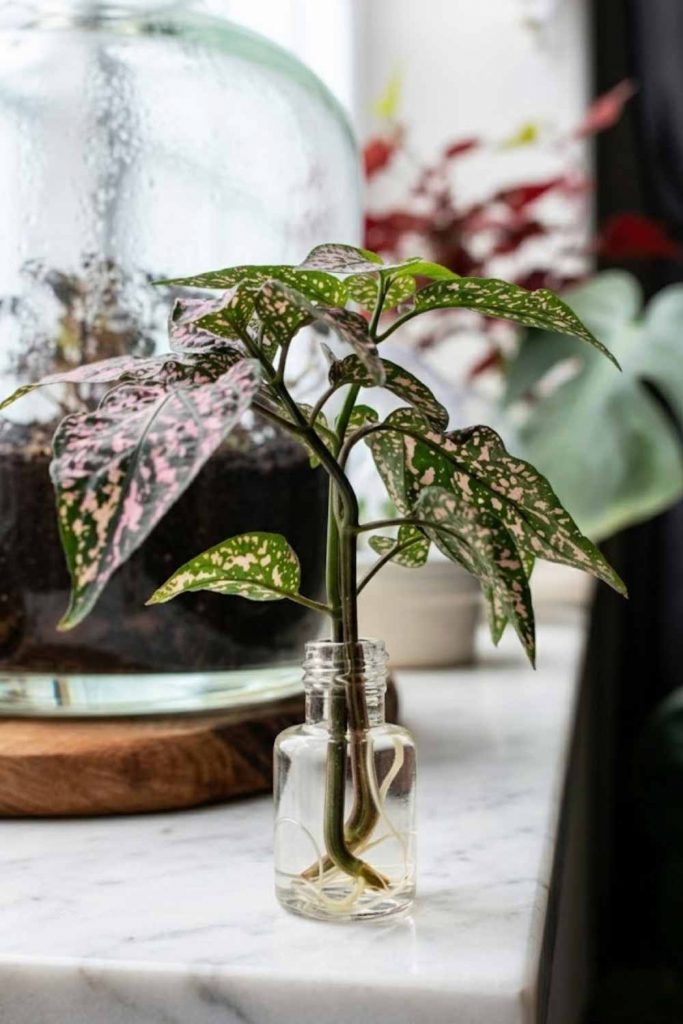
Pink, white, or red spotted leaves add a whimsical energy to any room.
They flourish in small jars or laboratory-style test tubes for a modern “science-chic” look.
They tend to grow tall. Regular pinching is required to keep them bushy and full.
- Light: Position in a bright spot. This prevents the colorful spots from fading to plain green.
19. Rubber Plant (Ficus elastica)
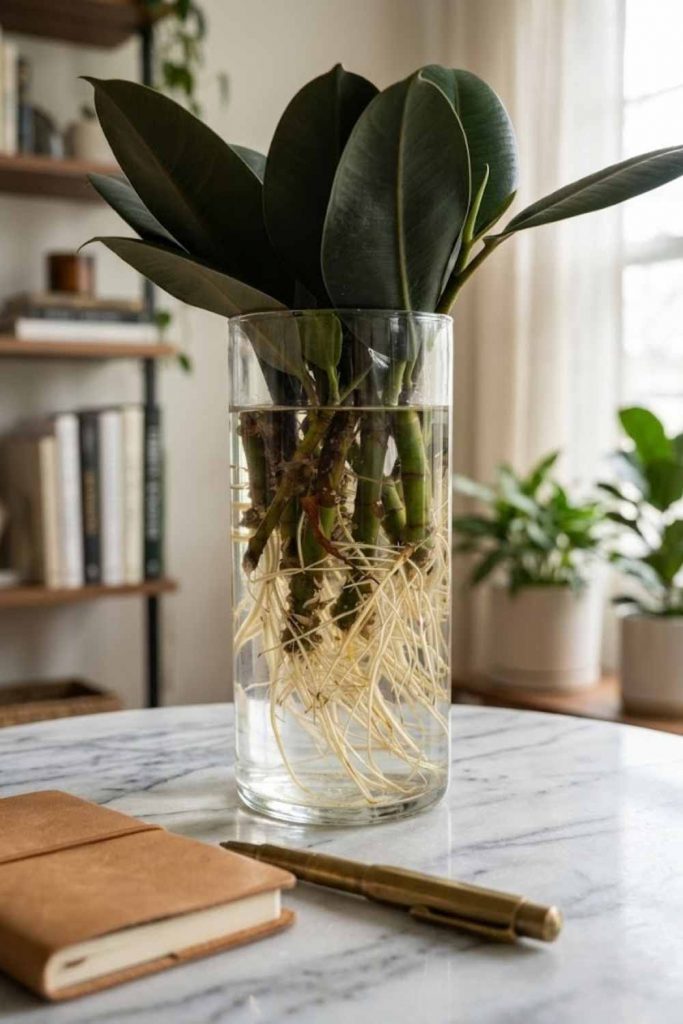
The Rubber Plant offers a strong, upright presence with thick, glossy leaves.
A short cutting creates a sturdy structure that represents resilience.
Its root system in water is robust. It anchors the plant firmly without needing excessive support.
20. Anthurium
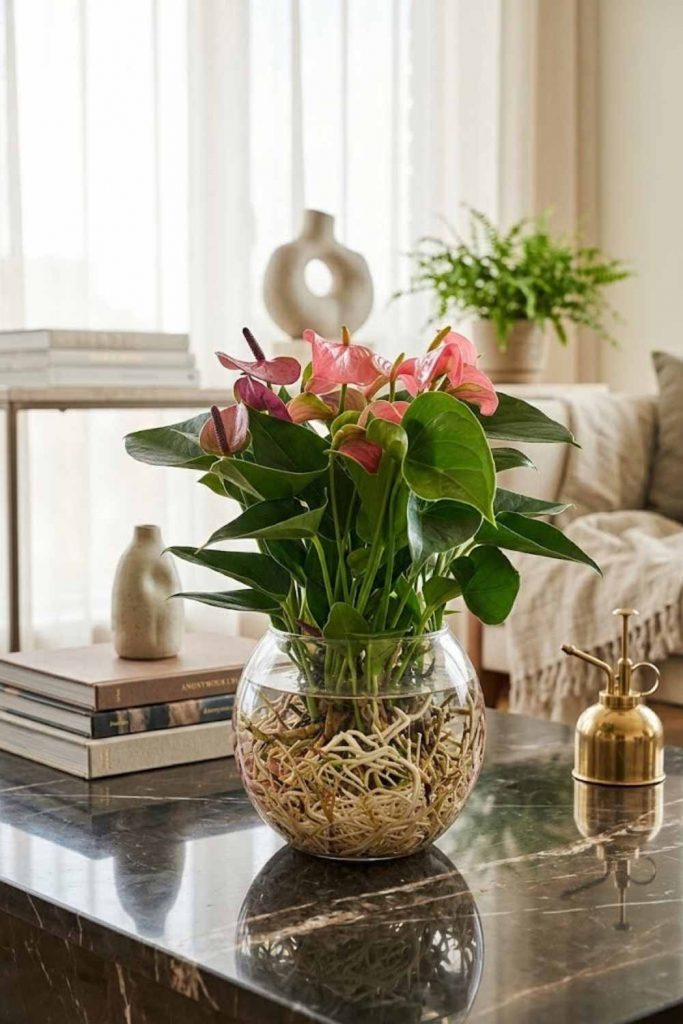
Anthurium is a rare water-dweller that produces vibrant, long-lasting blooms.
The waxy spathes stay fresh for weeks when grown hydroponically.
The thick, fleshy roots add an extra layer of visual texture when exposed in glass.
21. Rosemary
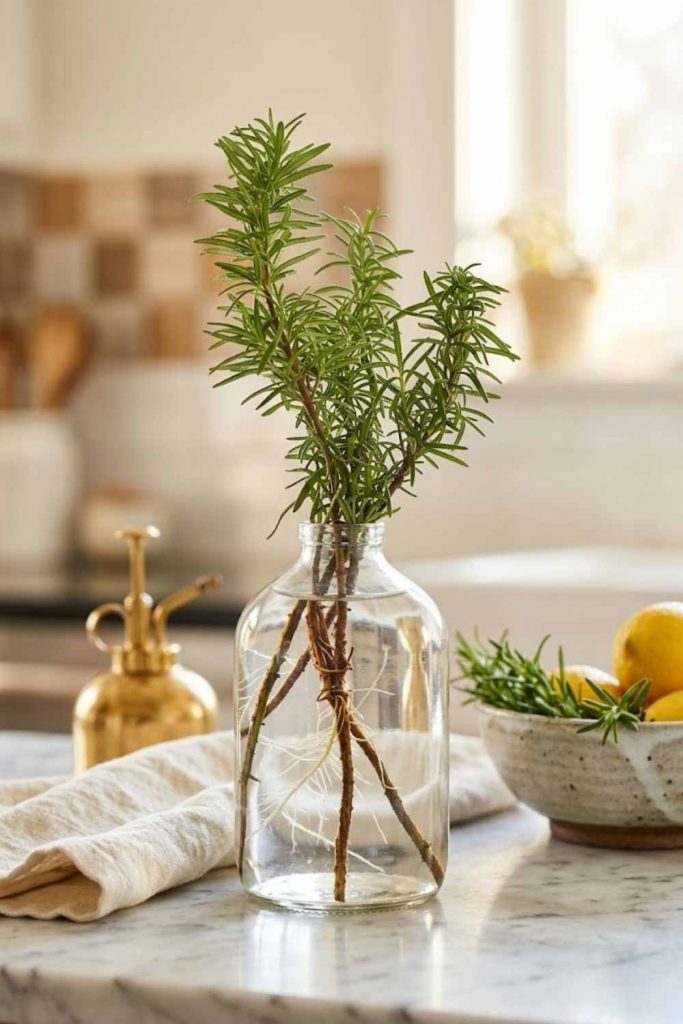
Growing Rosemary in a kitchen windowsill jar provides an instant supply of fresh herbs.
It greens the space while releasing a natural herbal fragrance.
Water-grown Rosemary grows more slowly, but the oils in the leaves are often more concentrated.
- Fail-Safe: Choose woody, mature stems. Soft, green new growth is prone to rotting.
Essential Maintenance
- Hygiene: Change the water every 1-2 weeks. Rinse the vessel and roots if water becomes cloudy.
- Nutrition: Add one drop of liquid hydroponic fertilizer once a month.
- Oxygen: Refreshing the water is critical to keep the root system breathing.
Conclusion
Growing plants in water is a lifestyle philosophy centered on transparency and simplicity.
By stripping away the mess of soil, you reveal the raw beauty of a plant’s life cycle.
Start with a single clear vessel. This presence of aquatic greenery will refine your home’s aesthetic and provide a sense of stillness.
Cherish the small changes in your plants—they are the heartbeat of nature within your home.