Table of Contents
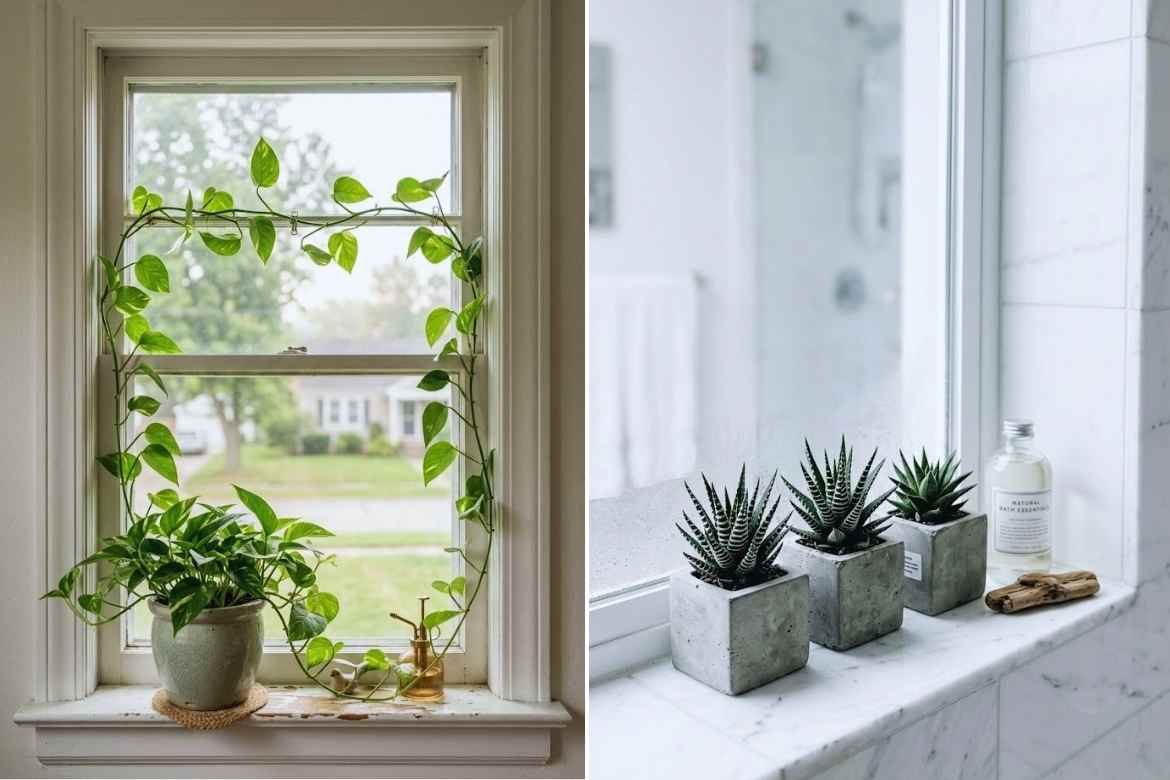
The windowsill is one of the toughest spots in your home.
Summer sun can scorch leaves through glass, while winter cold seeps in overnight. It’s a small space with big swings — and not every plant can handle it.
Success here isn’t about choosing something pretty. It’s about picking plants that can take the heat, the cold, and everything in between.
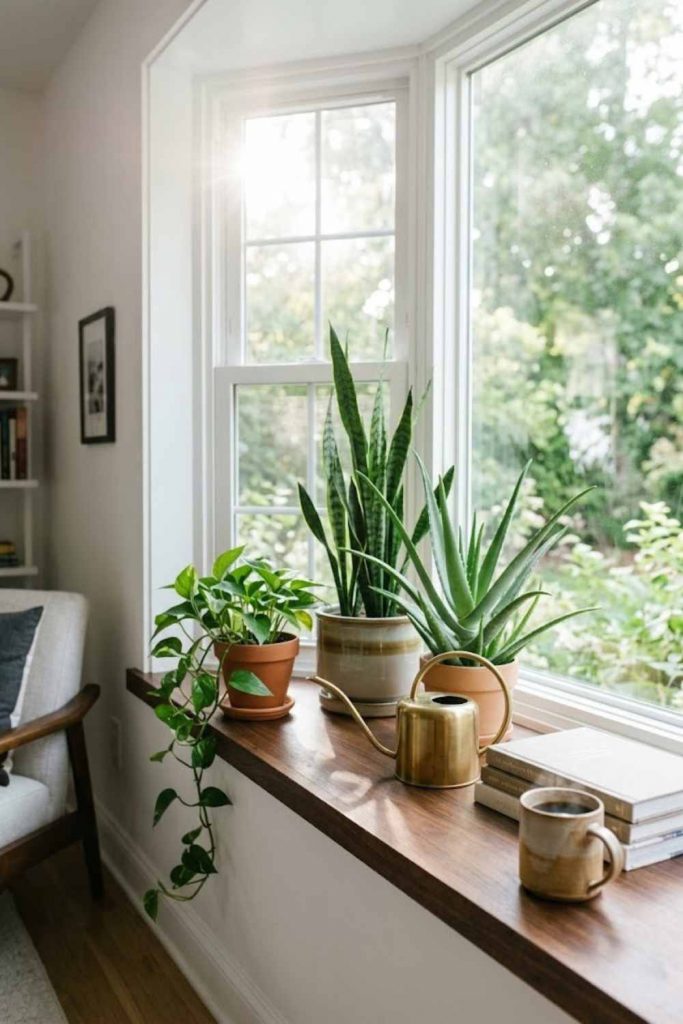
#1 — Pothos (Epipremnum aureum)
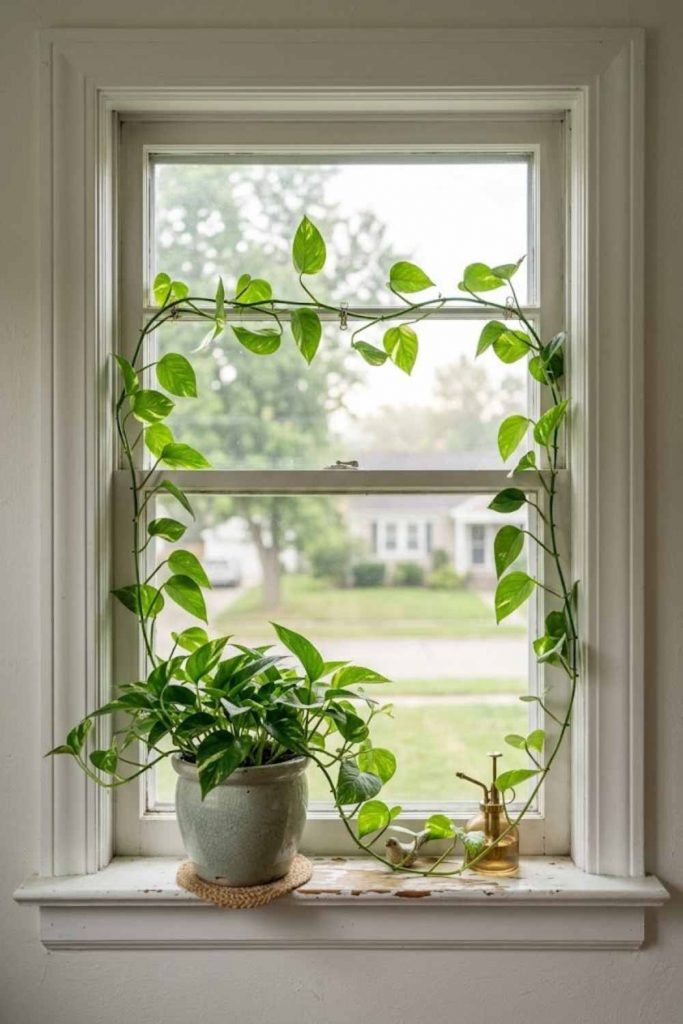
Pothos is the specific solution for softening the hard, industrial lines of a window frame without the commitment of a permanent trellis. It acts as a safety net for beginners because it communicates through the glass; when the soil is dry, the leaves wilt dramatically, then snap back to a crisp, waxy texture within hours of a soak.
The vines can be guided along the ledge to create a waterfall effect, making even a North-facing window feel lush. If it starts to look thin or “leggy,” just snip the ends—it’s the most forgiving plant for learning how to prune.
Pro Tip: If a vine gets too long, snip it off and put the cut end in a glass of water on the same windowsill. In a few weeks, you’ll have roots and a brand-new plant for free.
- Light: Low to bright indirect light
- Water: Every 1–2 weeks; let soil dry out between waterings
#2 — Snake Plant (Sansevieria trifasciata)
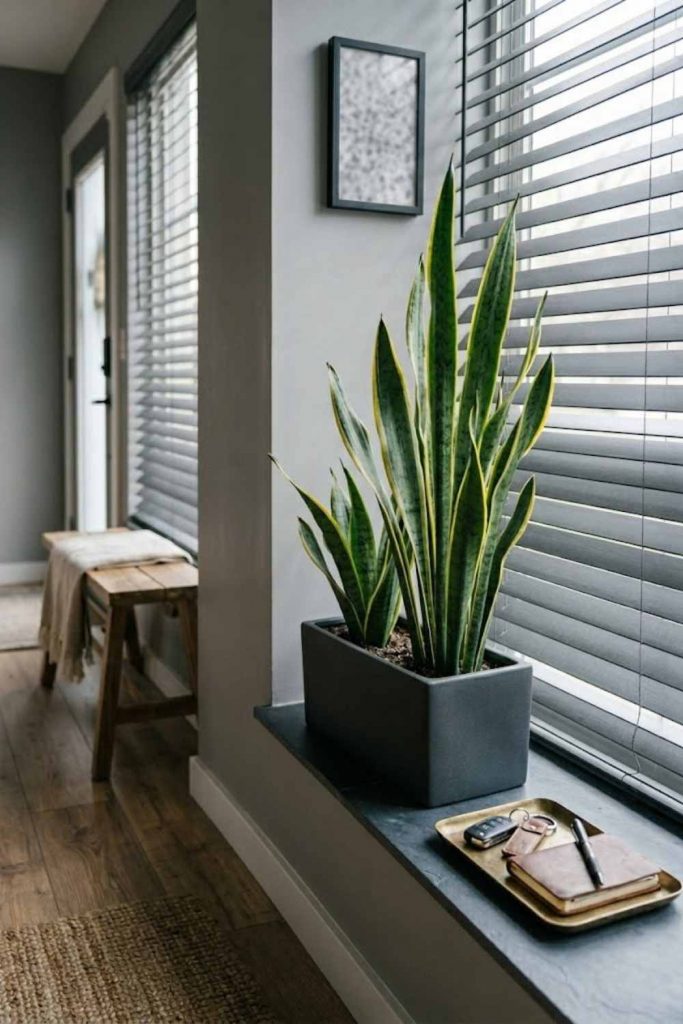
This is for the slim 4-inch sills where nothing else fits. Because it grows in tight, vertical swords, the Snake Plant won’t get tangled in your blinds or crowded against the pane.
It is the only species that truly ignores the temperature swings of a drafty windowpane. Use a heavy ceramic pot; its verticality makes it top-heavy, and a sturdy weight prevents it from toppling over when you open the window for a breeze.
- Light: Any light level; handles low light to full sun
- Water: Every 3–4 weeks; only when soil is bone-dry
#3 — Aloe Vera (Aloe barbadensis miller)
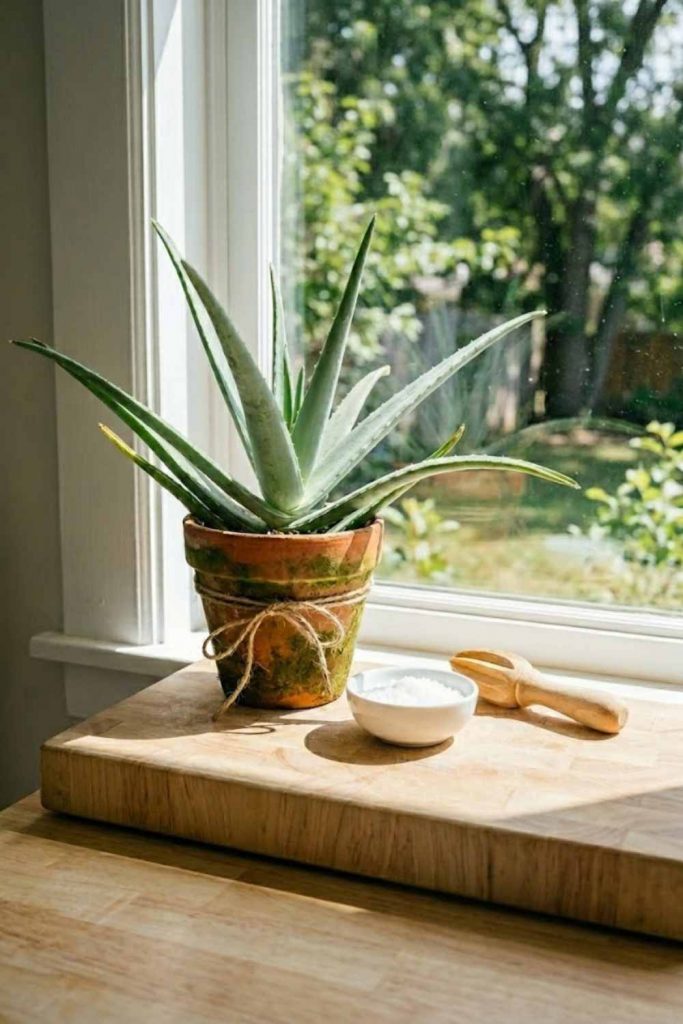
Aloe treats the intense, baking heat of a South-facing window like a desert vacation. It belongs on a kitchen sill where the sun is harshest, doubling as a functional tool for minor steam burns or splashes.
It thrives in the “greenhouse effect” that would scorch other foliage, provided it is kept in a terracotta pot to wick away moisture. During winter, ensure the water-filled leaves don’t touch the frozen glass, as the “cold bite” from the pane can turn the foliage to mush.
- Light: At least 6 hours of direct sun
- Water: Every 3 weeks; deep but infrequent
#4 — ZZ Plant (Zamioculcas zamiifolia)
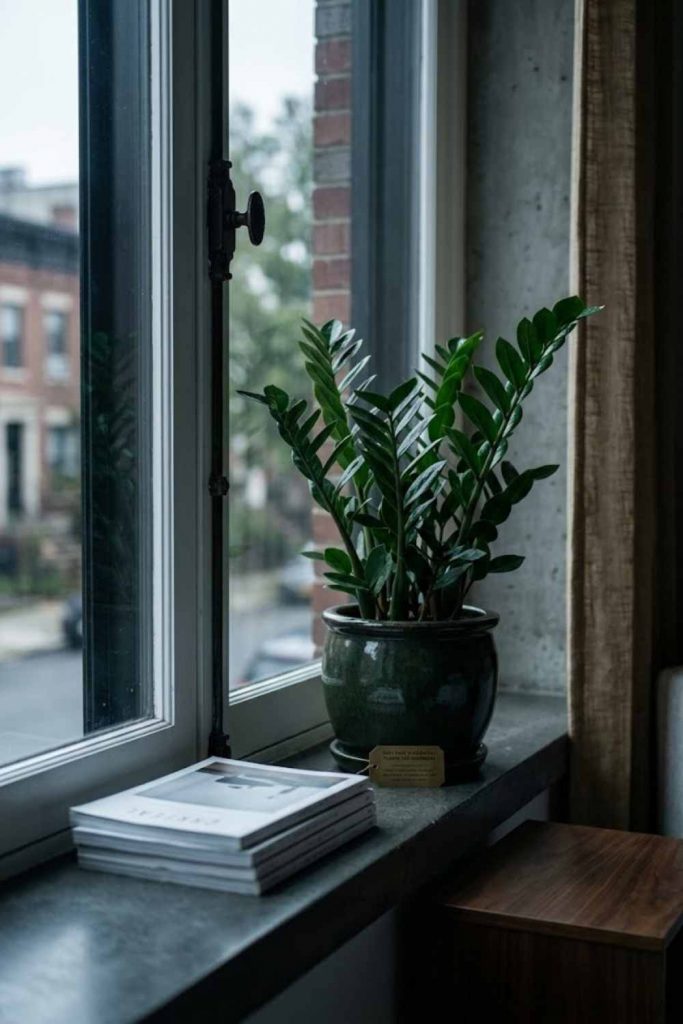
The ZZ plant is the choice for “difficult” windows—the basement sills or North-facing ledges that rarely see direct sun. Its leaves are naturally glossy, acting as tiny mirrors that catch minimal light and reflect it deeper into a dim room.
It is the ultimate “set-it-and-forget-it” survivor, storing water in potato-like bulbs under the soil. It grows so slowly that you won’t have to worry about the mess of repotting it for years.
- Light: Low to medium indirect light
- Water: Once a month; allow soil to dry completely
#5 — Spider Plant (Chlorophytum comosum)
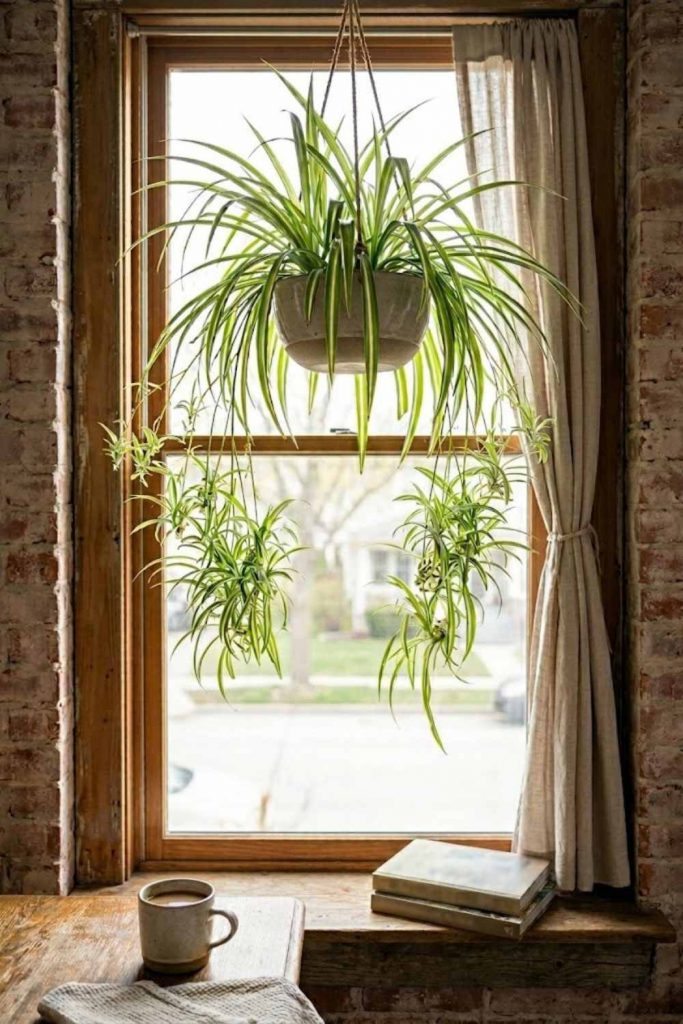
If your window looks directly onto a street, the Spider Plant creates a natural privacy curtain. As it matures, it sends out “babies” on long, arching stems that hang down to filter the view without blocking the sun.
It is a safe, non-toxic bet for households with curious cats. If the leaf tips turn brown, it is likely reacting to fluoride in municipal tap water; switching to filtered water is the only “trick” a beginner needs to keep this one pristine.
- Light: Bright indirect light
- Water: Weekly; keep soil slightly moist but not soggy
#6 — Jade Plant (Crassula ovata)
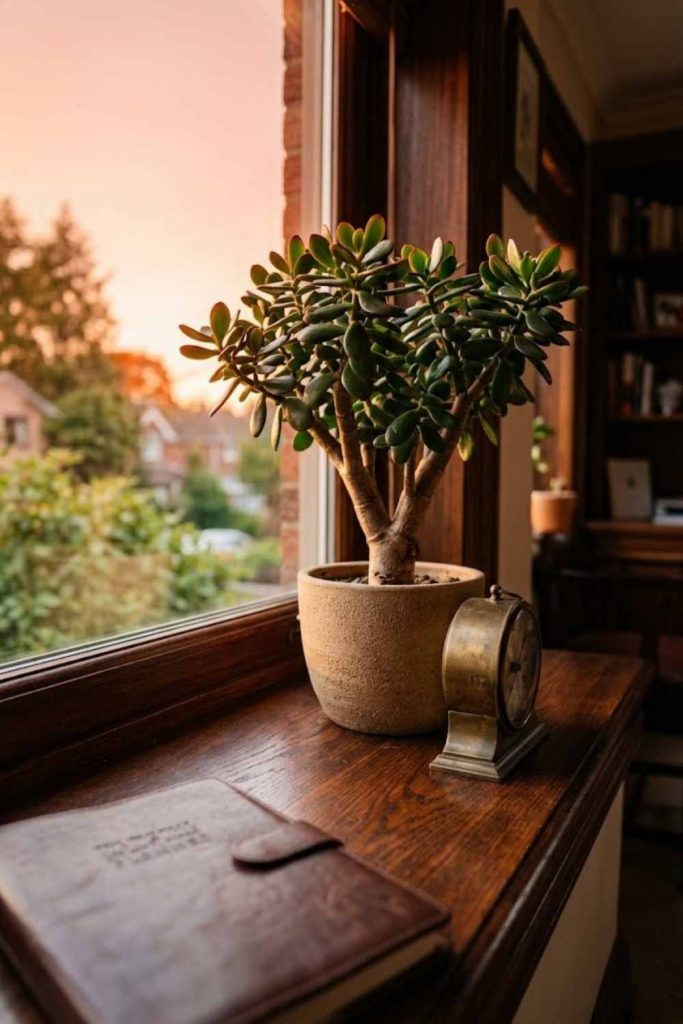
Jade adds a sense of permanence to a home office workspace without the fuss of a tree. It behaves like a sturdy miniature, storing moisture in its thick trunk for weeks of neglect.
The only rule for success on a ledge is to rotate the pot a quarter-turn every week; otherwise, the plant will lean too heavily toward the glass and eventually topple its own pot.
- Light: Bright, direct light
- Water: When the top inch of soil is dry
#7 — African Violet (Saintpaulia)
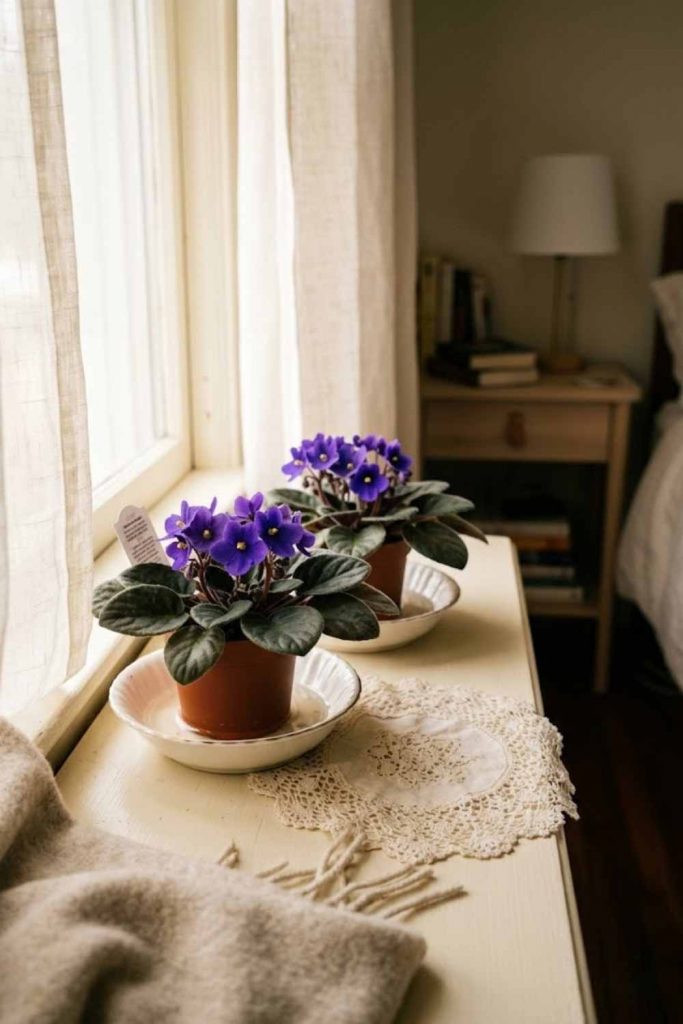
Most flowering plants bloom once and then look like a pile of sticks, but the African Violet provides soft color almost year-round. It stays low-profile, meaning it adds a pop of purple or pink to a bedroom sill without blocking your view outside.
The fuzzy leaves are sensitive to cold water—which causes permanent brown spotting—so the secret to success is “bottom watering“: simply fill the saucer and let the plant drink for 20 minutes before dumping the excess.
- Light: Bright indirect light; avoid direct midday sun
- Water: Bottom-water; keep soil consistently moist
#8 — Peperomia Obtusifolia (Peperomia obtusifolia)
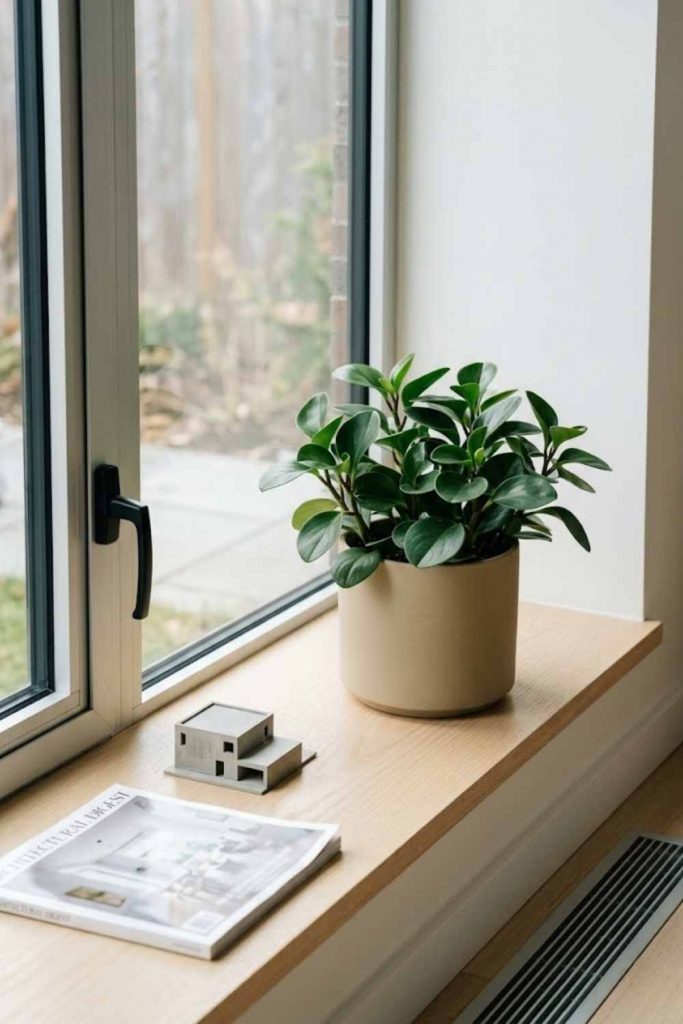
If your window leaks a winter chill or sits right next to a dry AC vent, the Peperomia thrives where ferns shrivel. Its thick, rubbery leaves handle dry, moving air and temperature shifts with ease.
It is completely pet-safe and prefers to be “root-bound,” so you rarely have to worry about the stress or mess of repotting.
- Light: Medium to bright indirect light
- Water: Every 1–2 weeks; allow soil to dry significantly
#9 — Haworthia (Haworthiopsis attenuata)
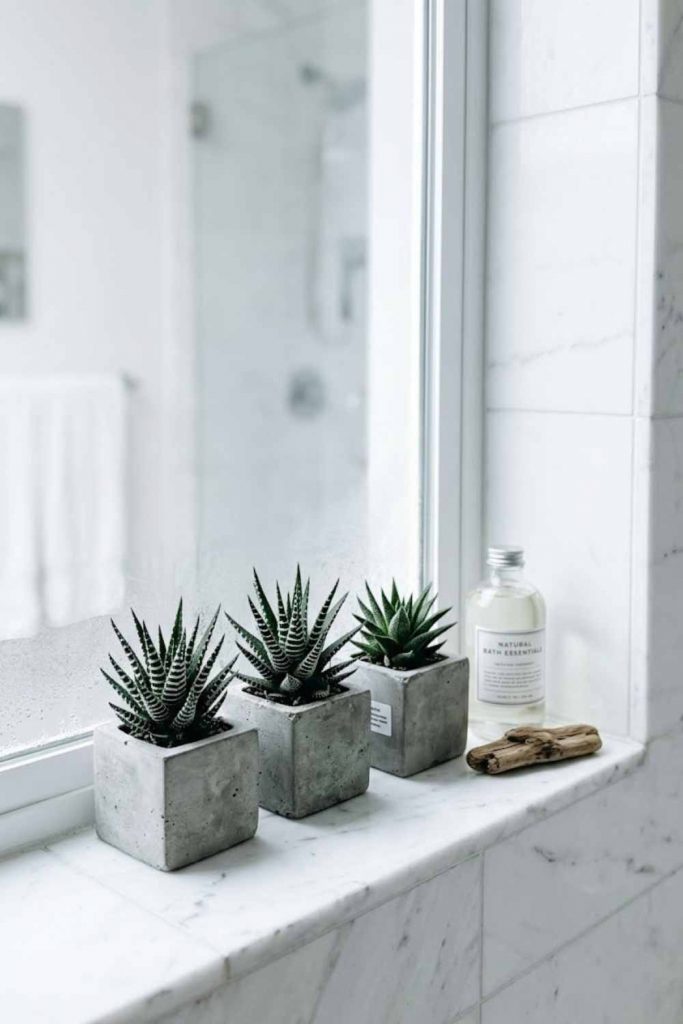
For the tiny corner of a bathroom windowsill where space is non-existent. It stays compact, keeps its geometric shape even when light is imperfect, and requires zero management beyond an occasional soak.
To avoid rot, water the soil around the base, never into the center of the plant.
- Light: Bright indirect light to partial sun
- Water: Once every 3 weeks; avoid the plant center
#10 — Lucky Bamboo (Dracaena sanderiana)
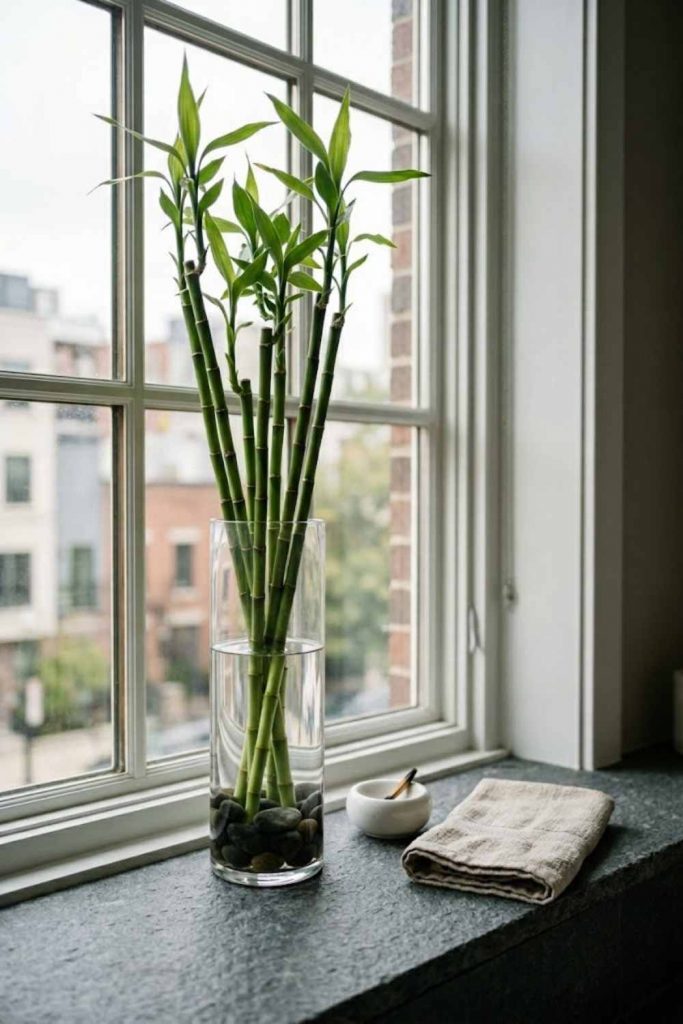
The cleanest choice for a professional’s windowsill. Grown in water and pebbles, it eliminates soil-mess and pests entirely.
Its slender shape allows it to fit into the narrowest gaps between window frames where a traditional pot wouldn’t stand. Just keep the roots submerged and change the water every two weeks to keep the display fresh.
- Light: Low to medium indirect light
- Water: Keep roots submerged; change water every 2 weeks
Conclusion
Success on a windowsill depends on matching the plant to the direction of the glass. A shadowy North-facing window is the natural habitat for a Snake Plant or ZZ Plant.
If you have a blazing South-facing sill that gets baked in the afternoon, the Aloe and Jade will thrive where others would scorch. For tight spaces or curious pets, Haworthia and Spider Plants offer high visual impact with a very small, safe footprint.