Table of Contents
The mirror is a wall of fog, the air feels heavy with steam, and your towel is taking just a bit too long to dry. While the exhaust fan is the primary tool for circulation, certain greenery actually prefers these damp conditions, turning a stagnant room into a much more intentional retreat.
These 11 varieties don’t just tolerate moisture; they seem to settle into it, helping the space feel a little lighter and more refined.
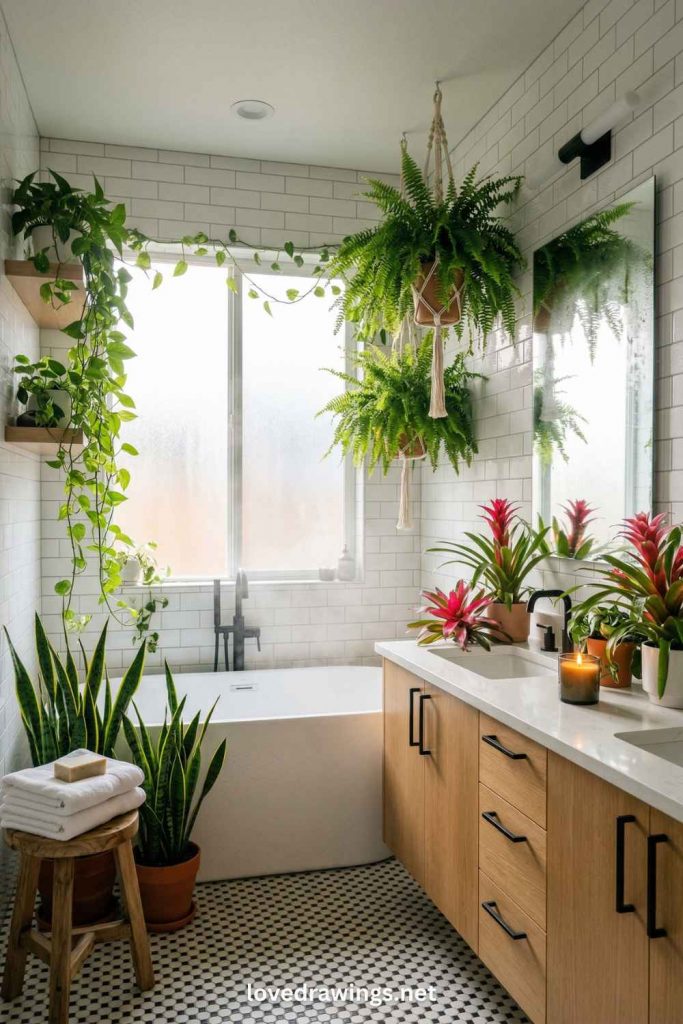
11 Bathroom Plants That Love Humidity
#1 — Air Plant (Tillandsia)
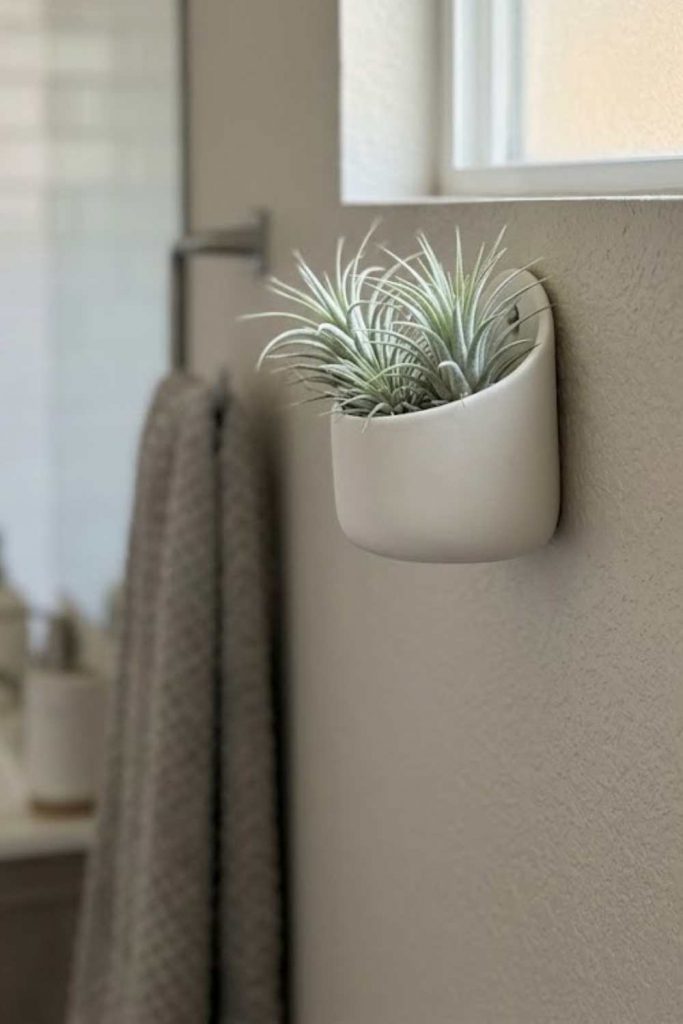
If your bathroom layout leaves no room for bulky pots, the Air Plant is the only guest that doesn’t require any real estate. These soil-free epiphytes gather much of the moisture they need directly from the ambient steam of your morning routine, making them a remarkably clean addition to a damp room.
A 20-minute soak in a bowl of water every two weeks keeps them plump, provided you give them a good shake afterward to prevent water from sitting in their silver-green cores.
#2 — Bromeliads
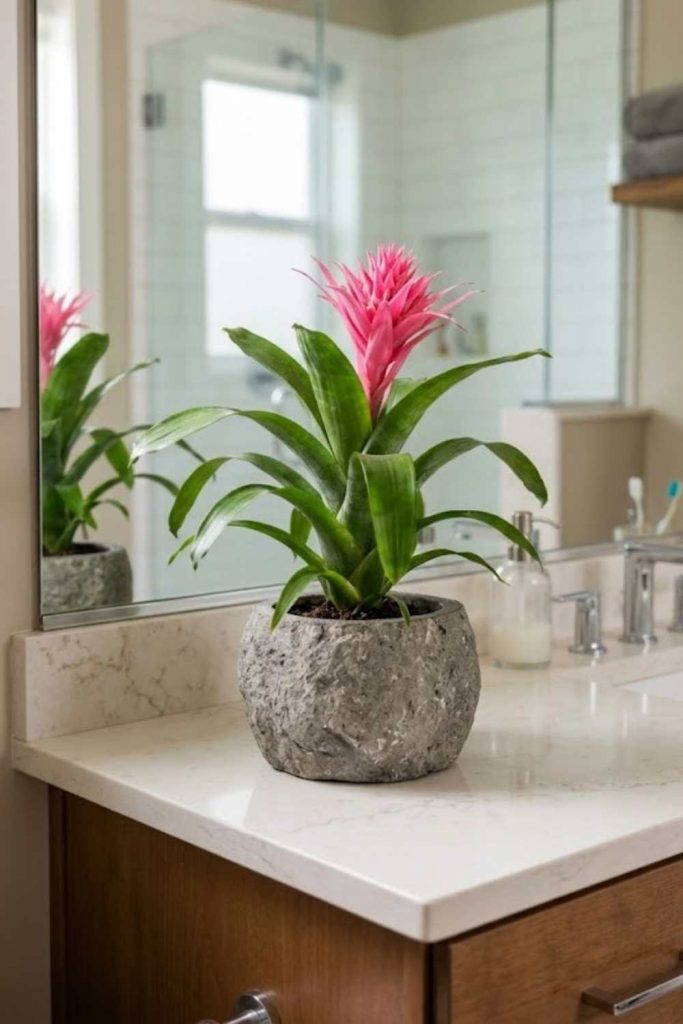
A Bromeliad introduces a bold, sculptural shape to a room that often feels too sterile or “all-white.” They are naturally adapted to bask in ambient steam rather than sitting in saturated soil, which is why they seem to stay vibrant for weeks in a bright corner near the tub.
To keep the center of the plant healthy, let the exhaust fan run for a few extra minutes after your shower so water doesn’t sit stagnant in their central “cup.”
#3 — Staghorn Fern (Platycerium)
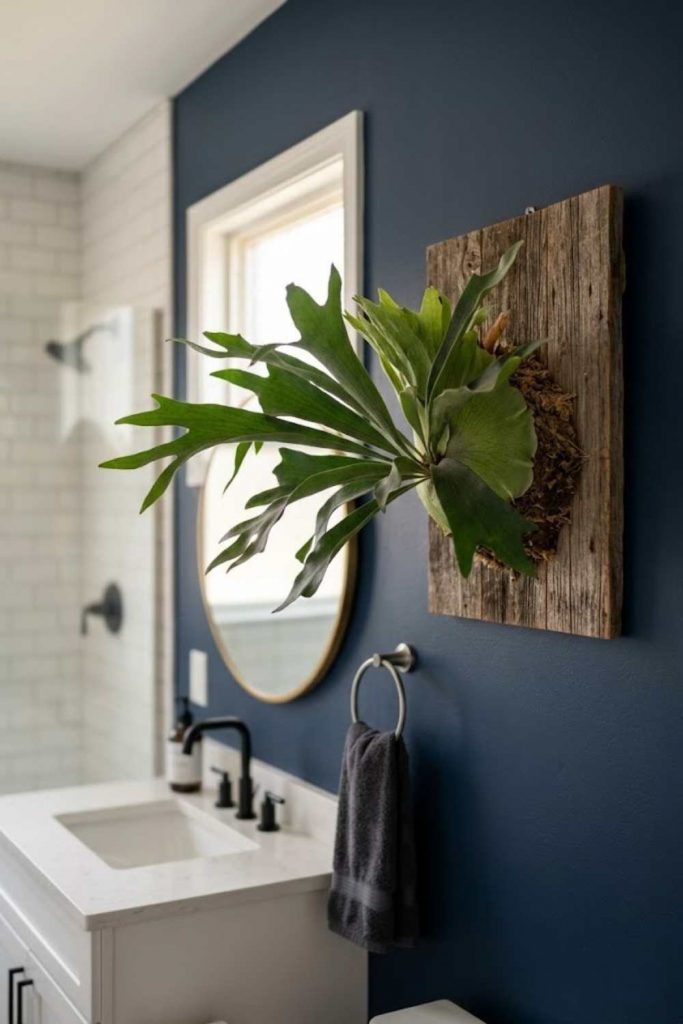
The Staghorn Fern acts as a living sculpture for blank walls that can’t fit a traditional shelf. These ferns are traditionally mounted on wooden boards with a bit of moss, allowing their wide, antler-like fronds to lean into the bathroom’s humidity.
They are entirely pet-safe and create a lush focal point in a master suite, though you should ensure your wall mount is sturdy enough to handle the plant’s weight as it matures.
#4 — Snake Plant (Dracaena trifasciata)
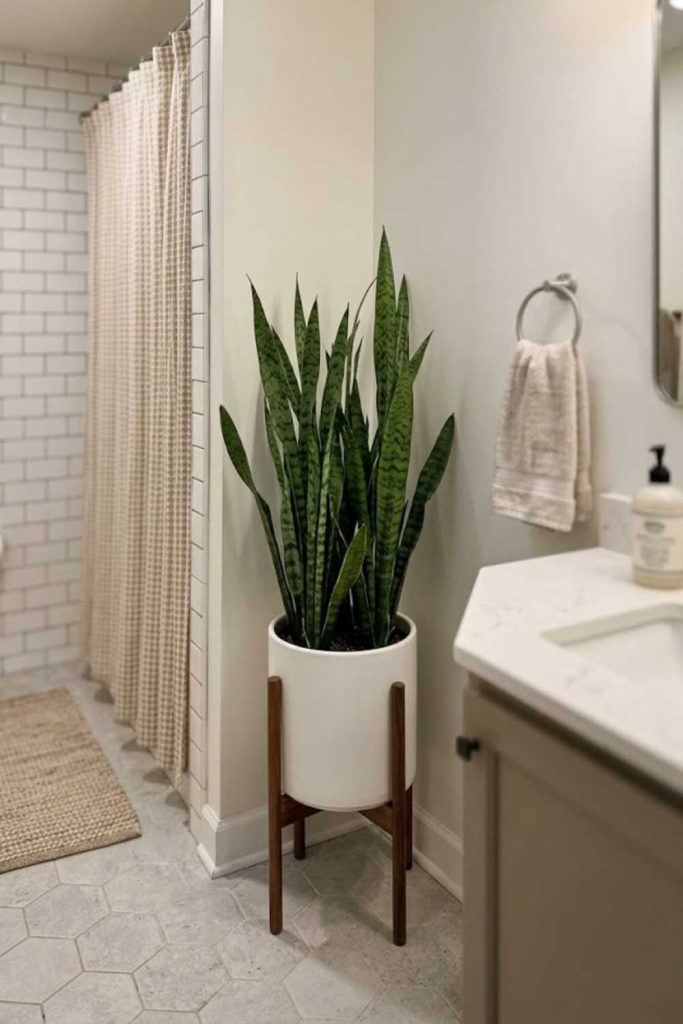
In windowless “half-baths” that often feel heavy or stagnant, the Snake Plant is a resilient anchor. Its upright, sword-like spears take up very little floor space and seem to handle the low-light conditions better than almost anything else in the indoor garden.
It is a forgiving choice for a busy household; you only need to reach for the watering can when the soil feels like a dry cracker, usually every three weeks.
#5 — Peace Lily (Spathiphyllum)
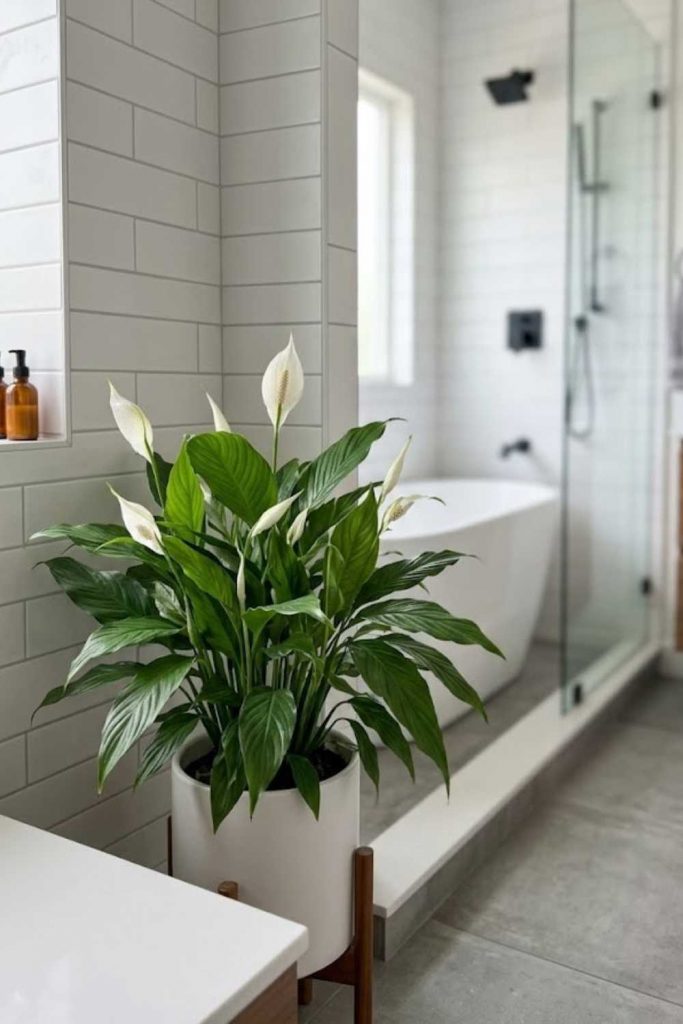
The Peace Lily is often used to soften the hard, cold lines of a tiled bathroom with its deep green foliage and serene white blooms. It is a plant that truly leans into the warmth of a steamy environment, looking its best when the air is soft and humid.
It is famously communicative—when it’s thirsty, the leaves will droop in a dramatic “faint,” making it easy to keep on a schedule as long as it stays out of reach of curious pets.
#6 — Boston Fern (Nephrolepis exaltata)
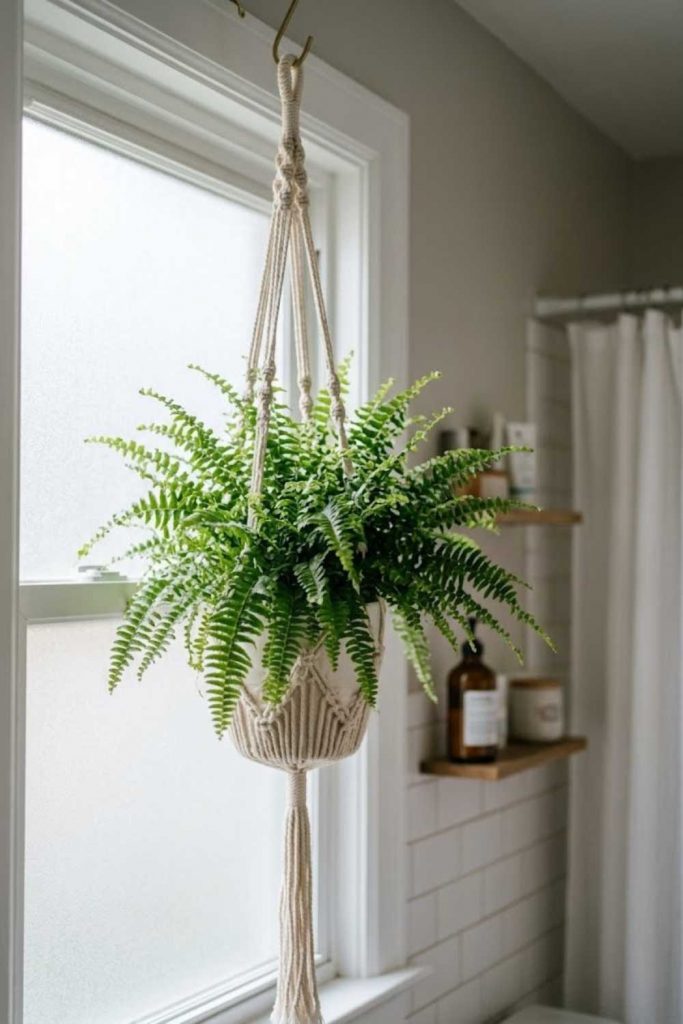
A classic choice for damp corners, the Boston Fern thrives on the consistent moisture of a family bathroom. Its lacy, arching fronds bring an untamed vibe to the room, making it a natural fit for a hanging basket where it can spill over the sides.
This fern is 100% pet-safe, which is a relief since its dangling leaves are nearly impossible for cats to ignore. A quick misting during dry winter months helps prevent those delicate fronds from turning crispy.
#7 — Orchid (Orchidaceae)
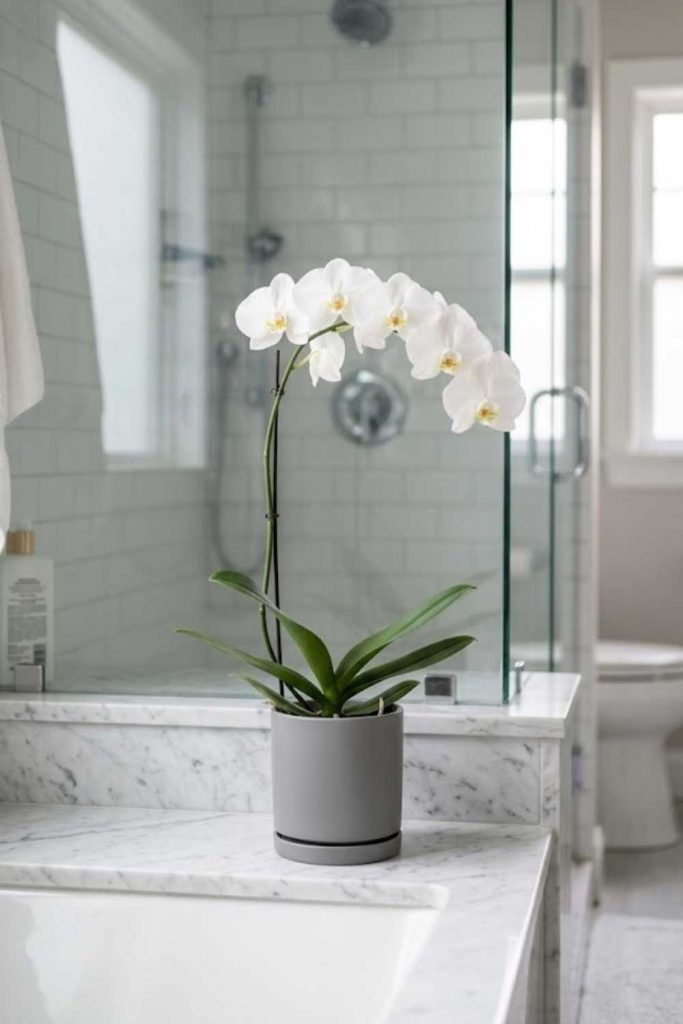
An Orchid on a bathtub ledge or vanity instantly makes the room feel like a high-end retreat. These tropical beauties seem to benefit from the high humidity, which helps their spectacular flowers stay fresh for much longer than they would in a dry living room.
They prefer their roots to stay airy and should be kept in a specialized bark mix rather than soil to ensure they don’t sit in stagnant water.
#8 — Golden Pothos (Epipremnum aureum)
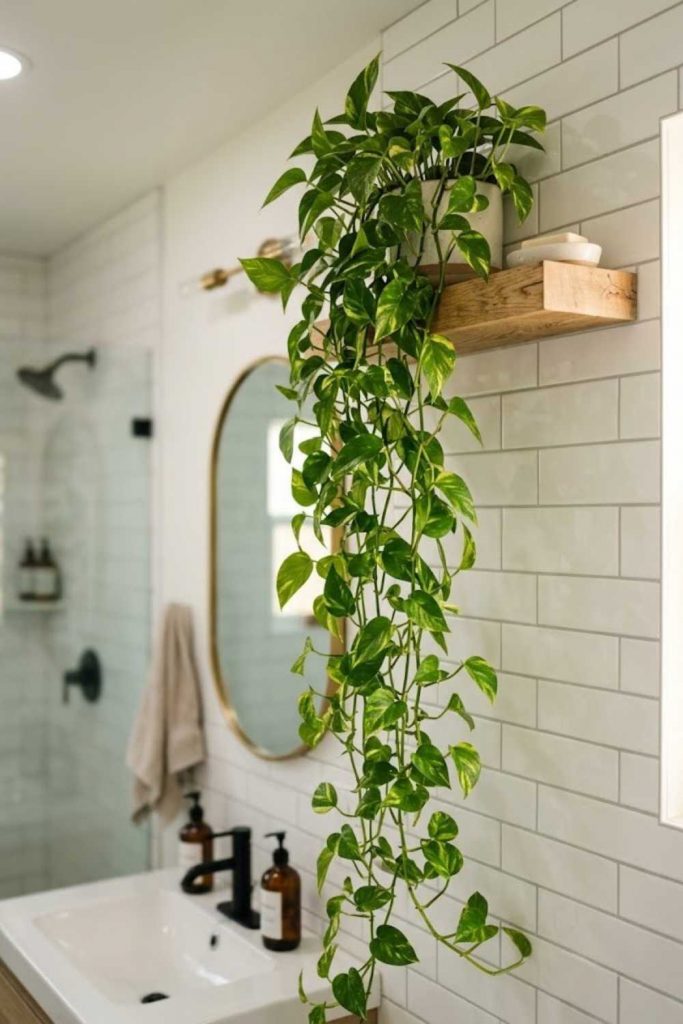
The Pothos is the go-to choice for adding vertical greenery, whether you want vines trailing from a high shelf or wrapped around a curtain rod. It handles fluctuating humidity with ease and is notoriously difficult to kill, making it a staple for low-light bathrooms.
Just be mindful that the trailing vines are toxic to pets, so keep them high enough to stay out of reach of nibbling teeth.
#9 — Spider Plant (Chlorophytum comosum)
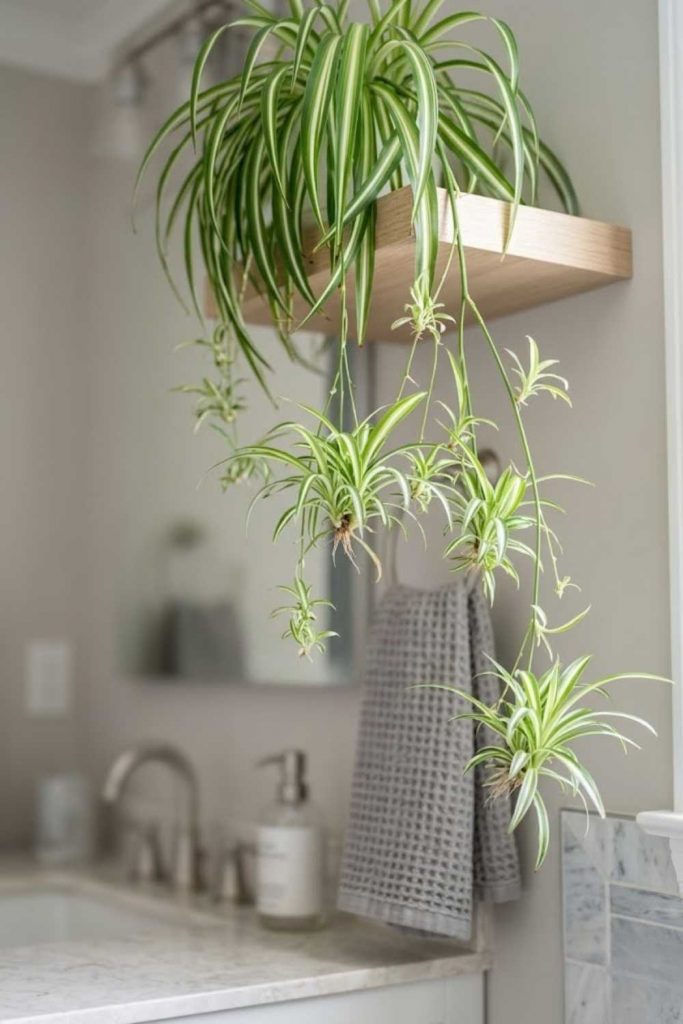
A Spider Plant seems to flourish in that heavy, post-shower air, using its long, variegated leaves to interact with the humidity. It’s a rewarding choice for a hanging basket, as it will eventually send out “pups”—tiny baby plants that dangle from the mother like living ornaments.
It is non-toxic and safe for pet owners, though hanging it high keeps those dangling babies away from jumping cats.
#10 — ZZ Plant (Zamioculcas zamiifolia)
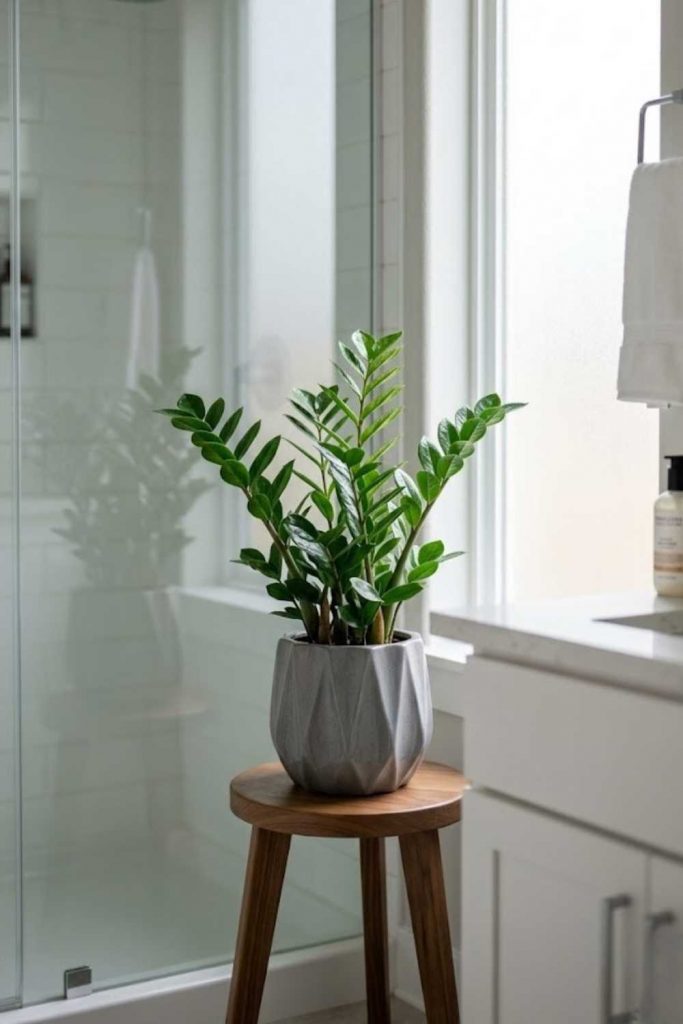
The ZZ Plant is a sturdy answer for those who want a tropical look but rarely remember to water. While it is famous for being drought-tolerant, it handles bathroom humidity beautifully, which keeps its waxy, glossy leaves looking polished.
It is a slow grower that stays compact, making it a reliable fit for a stool beside the shower or a crowded countertop.
#11 — Spiderwort (Tradescantia zebrina)
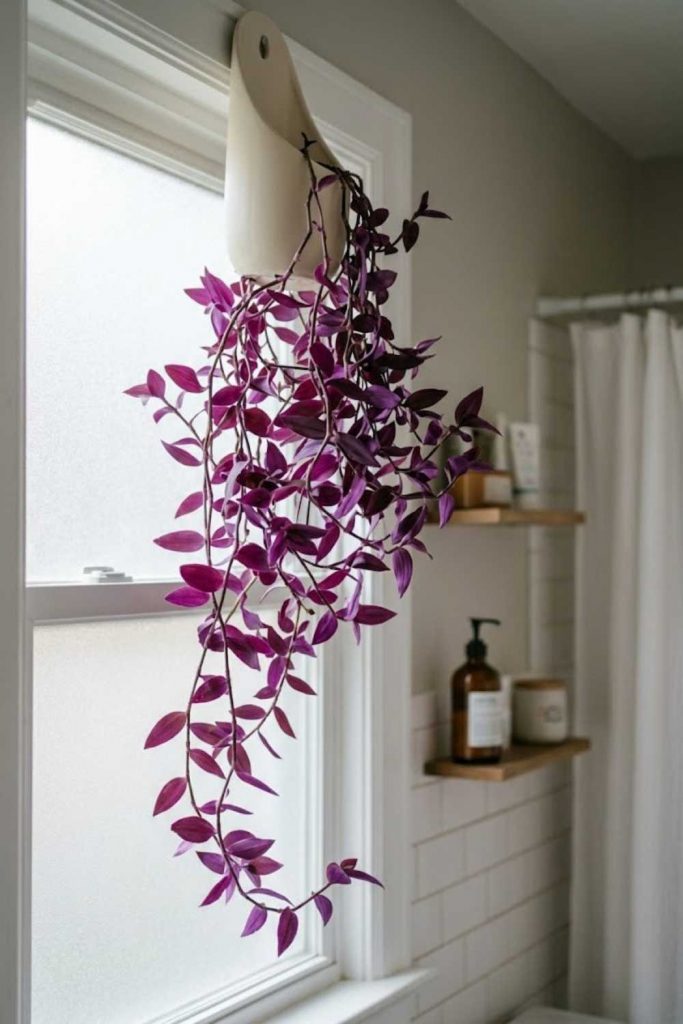
If your bathroom feels a bit monotonous, the Spiderwort brings an explosive pop of purple and silver to the space. These trailing vines grow rapidly in humid conditions and look incredible spilling out of a wall-mounted planter near the ceiling.
Because the sap can be a mild irritant to pets, it is best kept strictly out of reach in a high-hanging basket or shelf.
Conclusion
Choosing the right bathroom plant is a balance between your available light and your household routine. If you have curious pets and a bright window, the Boston Fern and Spider Plant are reliable, safe-to-chew additions.
For those with a modern, windowless layout and a busy schedule, the Snake Plant and ZZ Plant remain the go-to choices for low-maintenance greenery. By matching these varieties to your specific layout, you aren’t just decorating—you’re creating a living system that thrives on the very humidity that usually feels like a chore, keeping your home feeling refined and fresh.