Table of Contents
You bring your ficus home, set it in the “perfect” living room corner… and for a week, it looks incredible.
Then the leaves start dropping.
Not in one dramatic collapse. More like a slow shedding that makes the tree look thinner every time you walk past it.
If you’re trying to grow a ficus tree indoors, placement is everything. This list will help you decide which indoor ficus tree fits your space—and where to put it so it stays full instead of dropping leaves.
#1 — Fiddle Leaf Fig (Ficus lyrata)
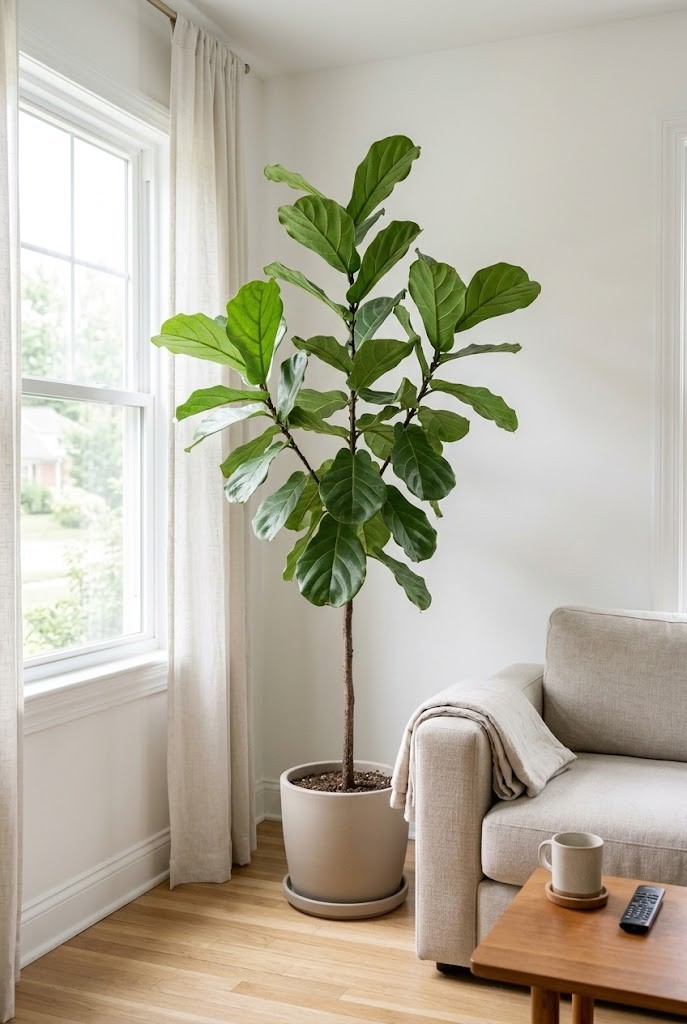
In a real home, a fiddle leaf fig looks like a clean, sculptural tree. One upright trunk, big leaves, and the room suddenly feels finished.
Place it like a statement piece: behind a low sofa, beside a media console, or near a reading chair. Keep it close enough to a bright window that it can actually “see” the light.
If it’s thinning, it’s usually parked too deep in the room. Keep it away from HVAC blasts and cold drafts. And don’t shuffle it around once it’s happy.
#2 — Ficus Audrey (Ficus benghalensis)
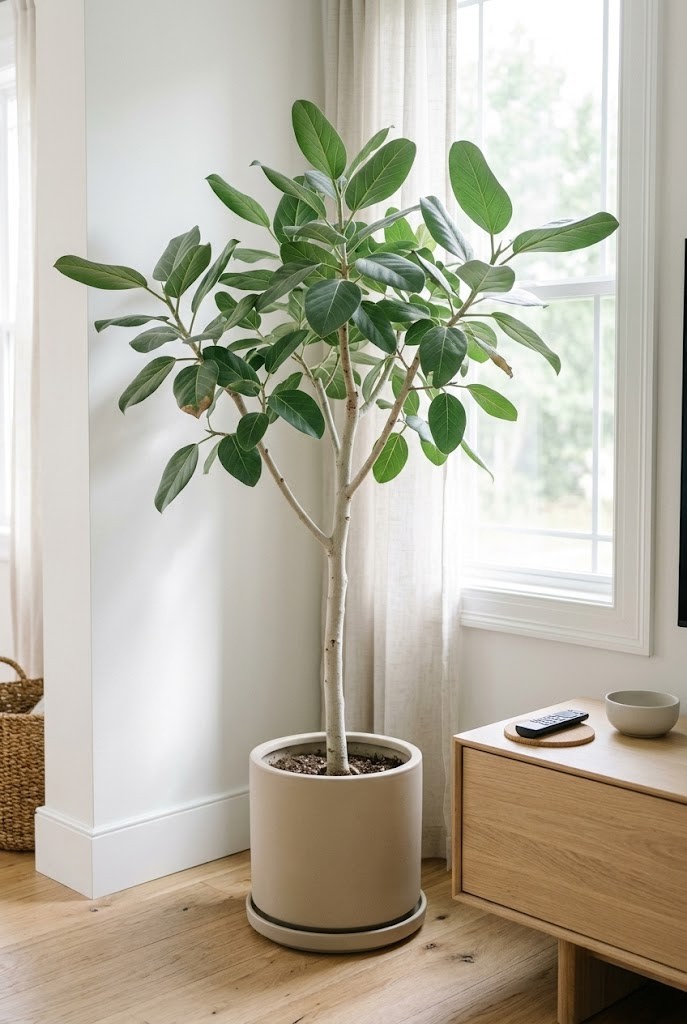
Audrey reads softer and more minimal than a fiddle leaf. Matte leaves, a pale trunk, and a calm, tailored silhouette.
It works beautifully beside a console or in a bright living room corner where the light is steady and indirect. Think “near the window,” not “in the far corner.”
If Audrey starts shedding, check placement first. Too dim, too drafty, or too much moving is usually the culprit.
Related: How to Grow and Care for Ficus Audrey
#3 — Rubber Tree (Ficus elastica)
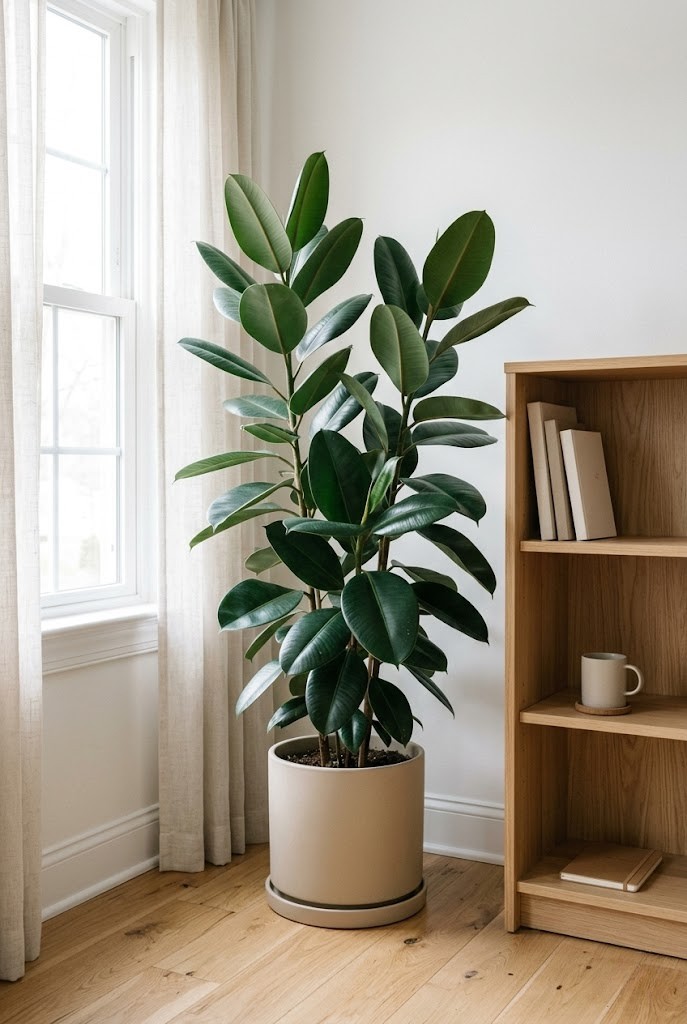
Rubber tree has a glossy, architectural look. Upright growth, thick leaves, and it catches window light beautifully.
It’s ideal when you want a tall plant without a wide canopy. Slide it beside a credenza, tuck it near a bookshelf, or anchor a home office corner.
For a fuller look, keep it on the brighter side of your room. If you rotate it, do a gentle quarter-turn every week or two. Skip constant spinning.
#4 — Weeping Fig (Ficus benjamina)
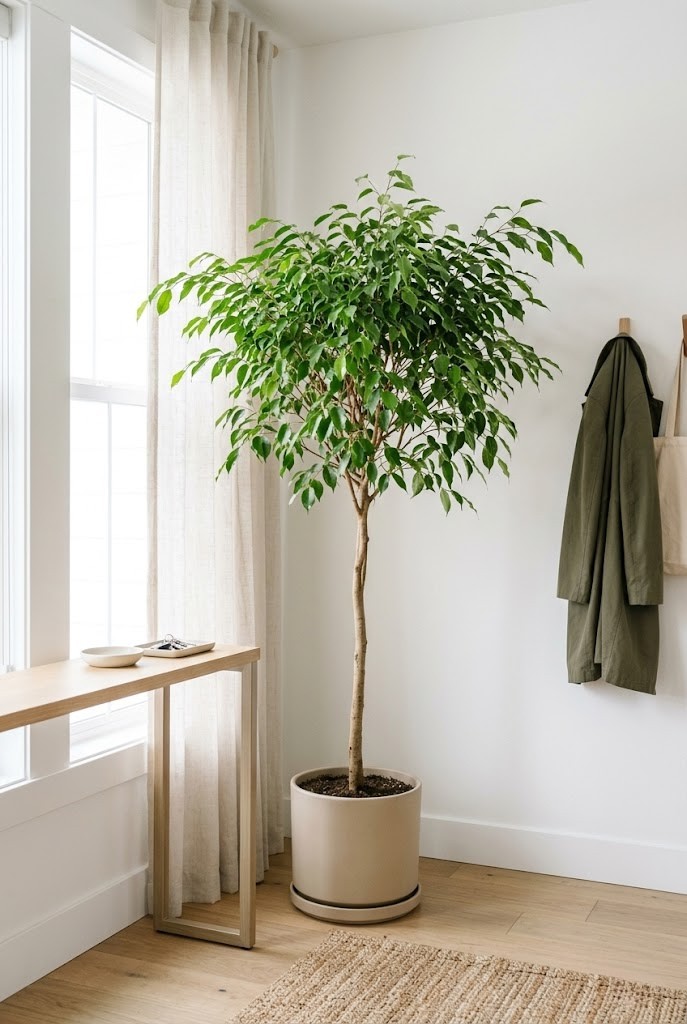
This is the classic indoor tree shape: woody stems with an airy canopy that feels like a small living room tree.
It’s gorgeous near a bright window in a living room or entryway. But it’s also the ficus most likely to complain if you keep moving it.
If you want it full, choose its long-term home from day one. Stable light, stable temperature, and no constant relocating makes all the difference.
Related: 10 Essential Tips for Growing a Healthy Weeping Fig Indoors
#5 — Ficus Alii (Ficus maclellandii)
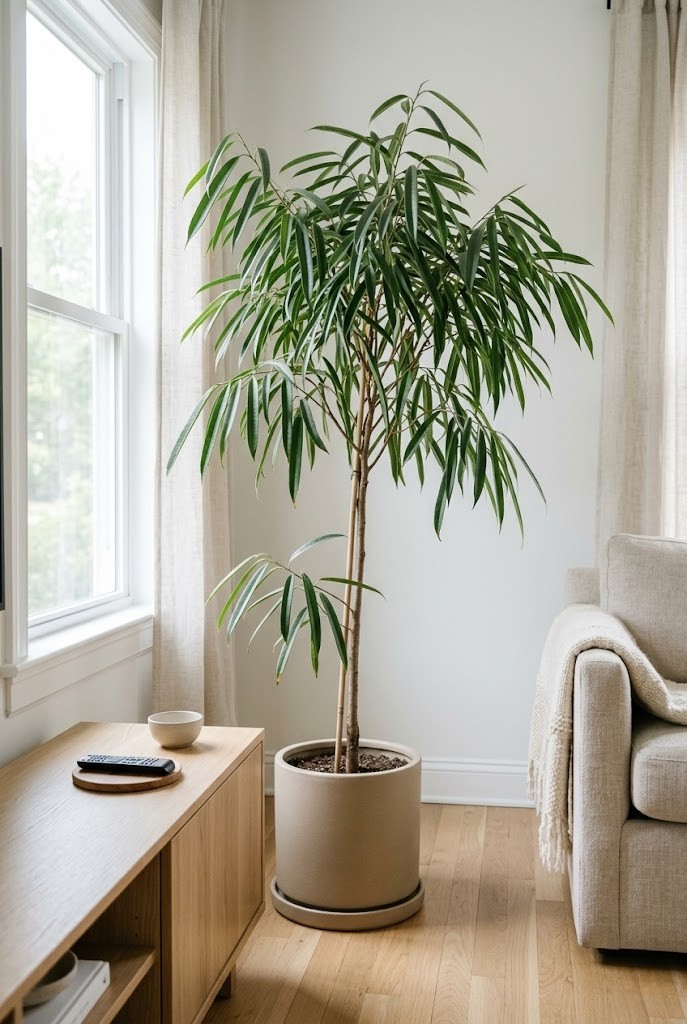
Alii looks airy and modern. Long, narrow leaves give you a softer tree feel without the broad-leaf drama.
It’s a great fit for slim spaces: next to a TV console, beside a desk, or in a bedroom corner where you want height that doesn’t crowd the room.
To prevent thinning, keep it in steady bright, indirect light. Avoid placing it right by a frequently opened exterior door. Drafts and temperature swings can trigger leaf drop.
Related: How to Grow and Care for Ficus Alii
#6 — Ficus Microcarpa ‘Moclame’ (Indian Laurel Fig)
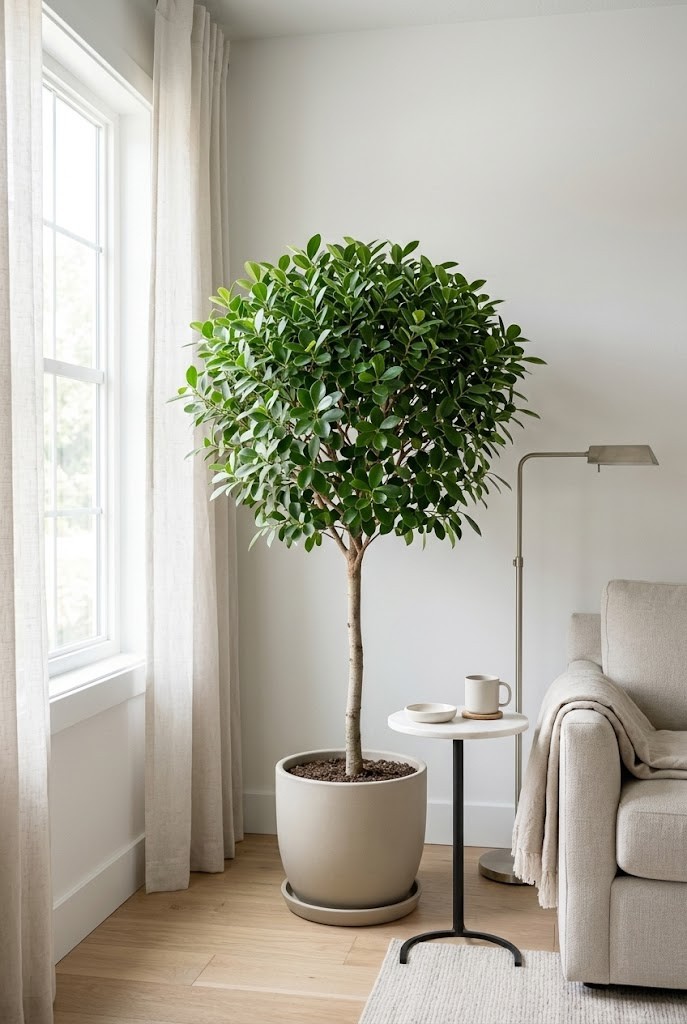
Moclame has a rounder, denser canopy. It reads more “tiny indoor shade tree” than “statement sculpture.”
It looks great beside a sofa, near a bay window, or in a bright corner that needs fullness. Visually, it fills space fast without looking spiky.
If it starts shedding, ask one simple question: is it too far from the window? Fuller-canopy ficus often thin out when they’re treated like deep-corner plants.
#7 — Ficus Ginseng (Ficus microcarpa ‘Ginseng’)
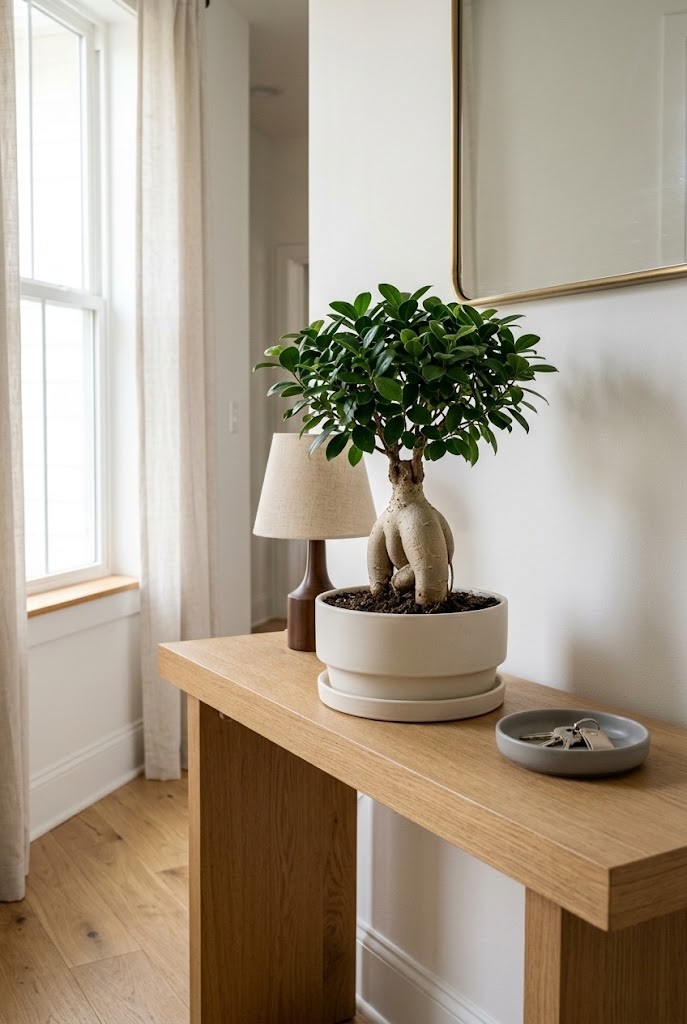
This one is all about the trunk: a thick, sculptural base with a compact canopy on top. It looks like a mini tree on display.
It looks best on a console, countertop, or sturdy side table near a window. It’s not a floor tree, but it gives you that tree form in a small footprint.
Give it strong light and resist the urge to keep moving it around the house. Big changes in light are what make it look sparse over time.
Related: Ficus Ginseng Bonsai Care Guide
#8 — Ficus Triangularis (Ficus triangularis)
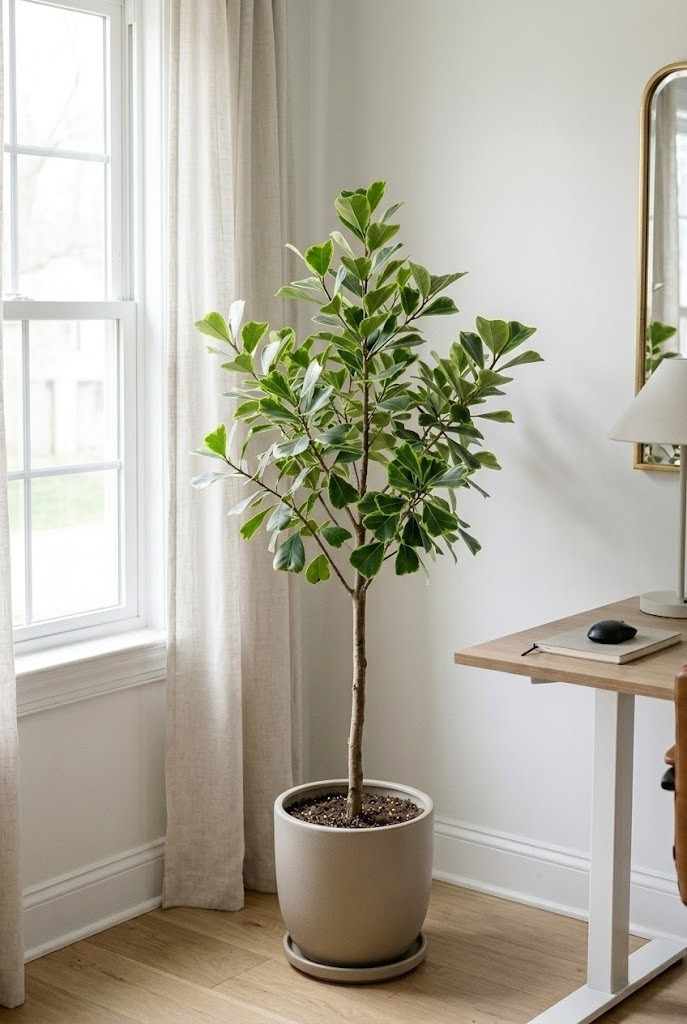
Triangularis is a conversation piece: small, geometric leaves that make the whole plant feel crisp and graphic.
It’s a smart pick for a bright home office, near a dining room sideboard, or by a bedroom window where you’ll notice the shape up close.
If it’s sitting in dim light, it won’t just stretch. It may drop older leaves and look thin. Keep it bright, and it stays much fuller.
#9 — Variegated Rubber Tree (Ficus elastica ‘Tineke’)
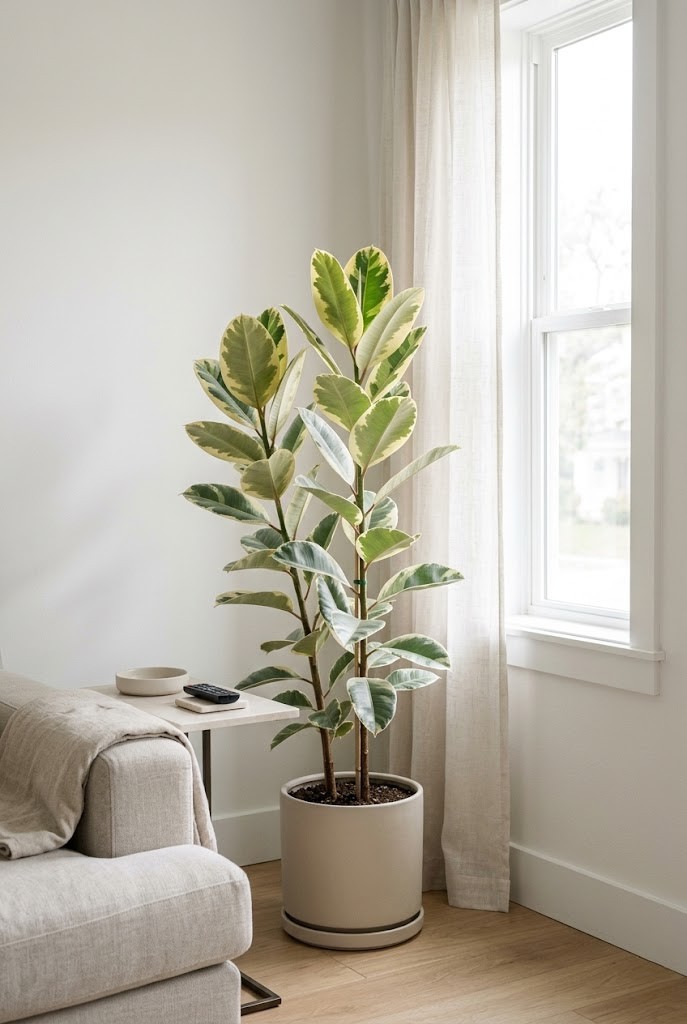
Tineke has the rubber tree structure, but with creamy variegation that makes it feel lighter and extra styled.
It looks especially good in airy rooms—white walls, light wood, linen textures—where the leaf pattern pops. Place it close to a bright window so the variegation stays crisp.
If that window gets hot direct sun (often south- or west-facing in the US), filter the light with a sheer curtain. Variegated leaves can scorch faster than solid green.
A Quick Reality Check: The Placement Rules That Prevent Leaf Drop
If a ficus is dropping leaves, it’s usually reacting to change. It’s not being “random.”
The most common triggers:
- Light that’s too weak (especially when the tree sits deep in the room)
- Temperature swings and drafts (HVAC vents, exterior doors, cold windows)
- Frequent moving or sudden re-orienting (even rotating too often)
One extra factor people miss: winter heat. Indoor heaters can dry the air fast, and ficus may shed when humidity drops. If leaf drop spikes in winter, a small humidifier near (not on) the plant can help.
Treat your ficus like furniture. Pick the best bright spot you have, keep conditions stable, and make changes slowly.
A Quick Note If You Have Pets
Many ficus varieties can be irritating or toxic to cats and dogs if chewed.
If you have a curious pet, place trees out of reach, sweep up fallen leaves, and check a trusted safety list (like ASPCA) before you buy.
When in doubt, choose a plant you can confidently keep inaccessible.
If you want the easiest win, choose a ficus that matches your real light. Place it closer to the window than you think, keep it away from drafts, and leave it alone long enough to settle.
Save this list for your next plant run. Pick one spot, commit to it for two weeks, and you’ll usually see the difference.
Found this helpful? Save it for later!