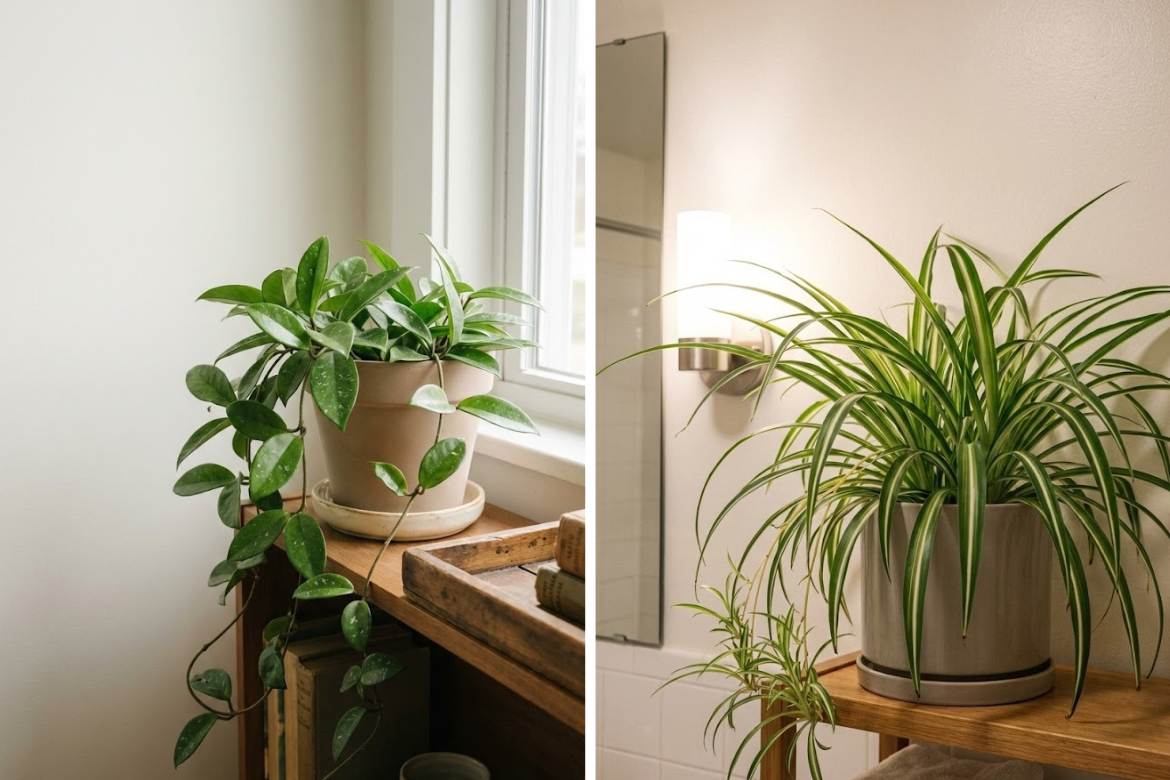
Table of Contents
These houseplants are almost impossible to kill — even if you forget to water them.
If you’ve ever watched a plant slowly die and wondered what you did wrong, you’re not alone. Most beginners struggle simply because they start with the wrong plants.
Here are 15 easy houseplants that thrive in real homes — no green thumb required.
#1 — Snake Plant (Dracaena trifasciata)
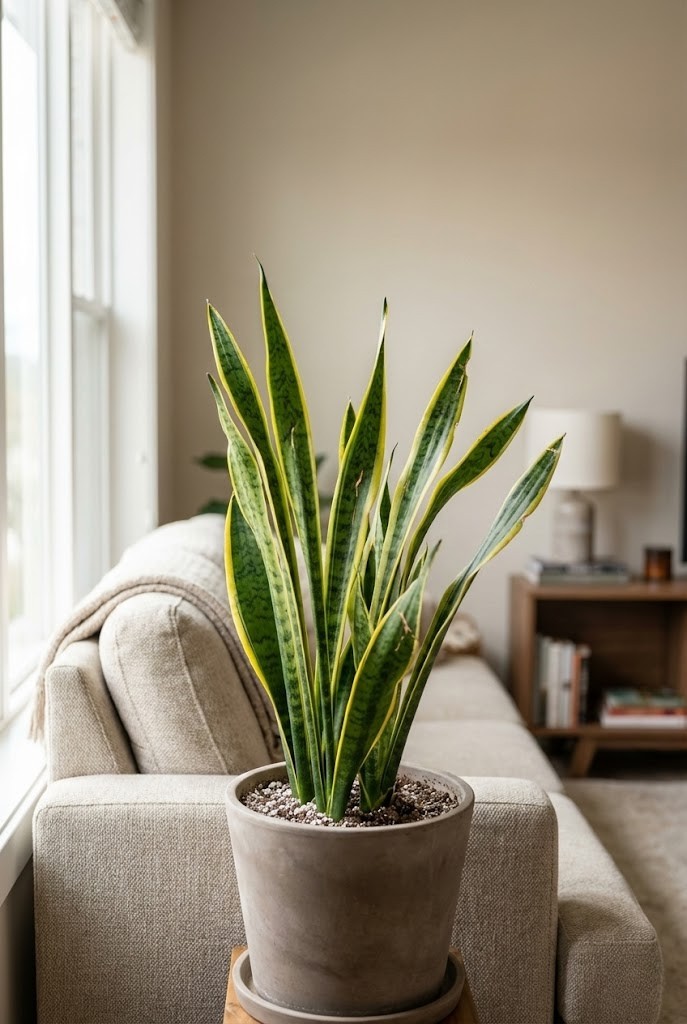
Snake plant works especially well in homes where the light is not great and watering does not always happen on time. The upright leaves bring in structure quickly, so a room can look more settled with very little effort.
It is easy to keep looking good because it handles low light well and does not mind being left alone for a while. In most homes, the bigger risk is watering it too often, not forgetting it.
- Quick care: Low to medium light; let the soil dry out fully between waterings.
#2 — ZZ Plant (Zamioculcas zamiifolia)
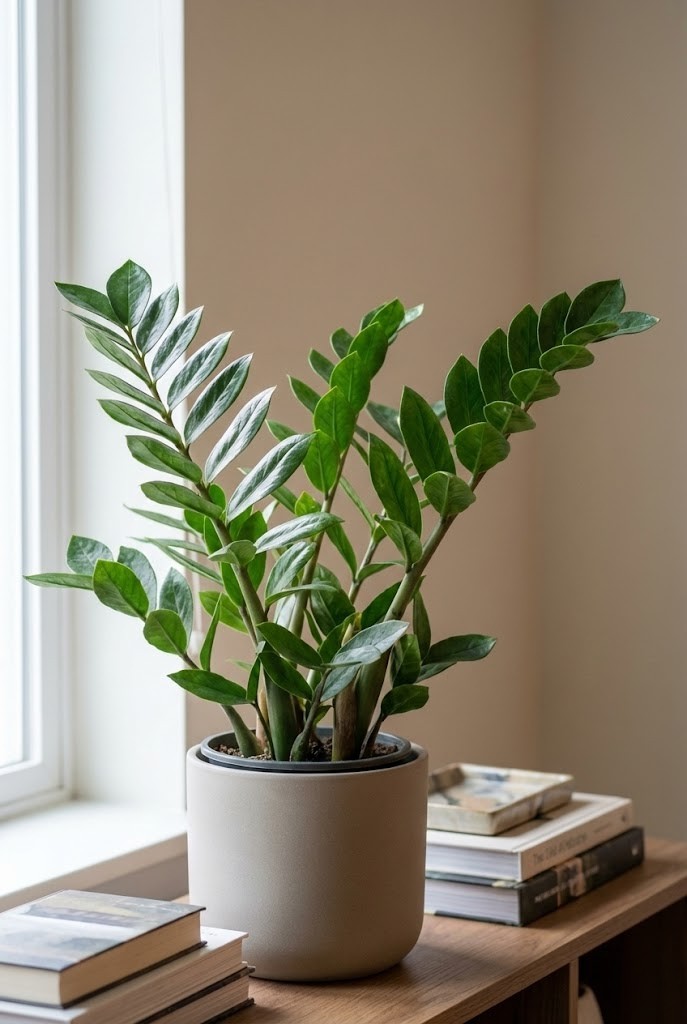
ZZ plant is a good fit for busy routines because it stays glossy and pulled together without much input. It has a cleaner, more polished look than a lot of low-effort plants, which helps it sit easily in bedrooms, offices, and living rooms.
It also asks very little once it settles in. Growth is slow, the shape stays tidy, and it usually handles a missed watering better than too much attention.
- Quick care: Low to medium light; let the soil dry out fully between waterings.
#3 — Cast Iron Plant (Aspidistra elatior)
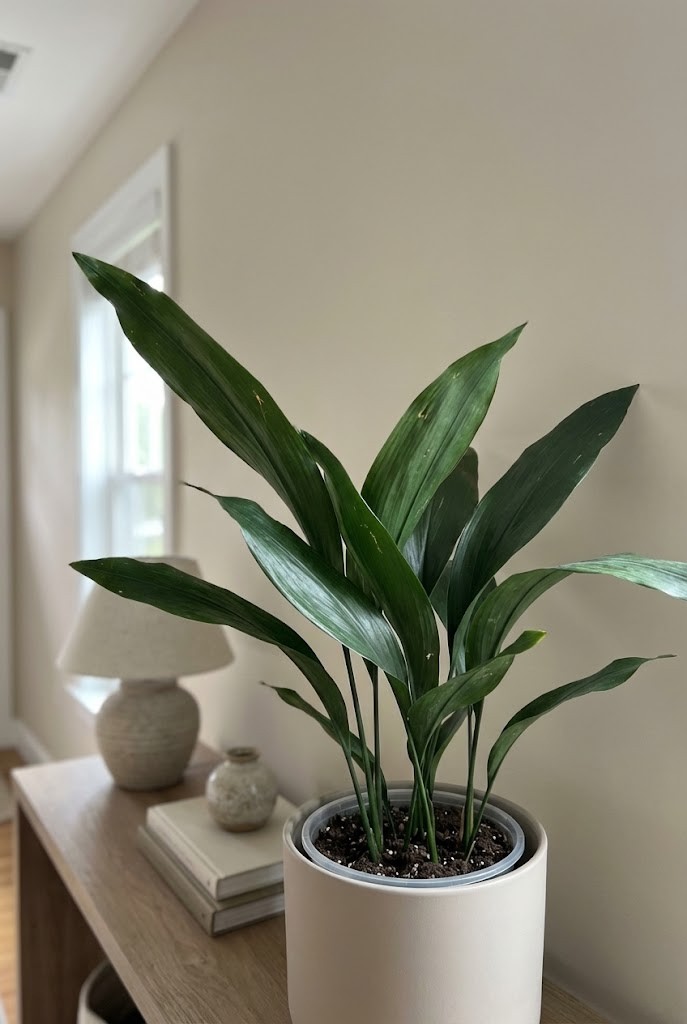
Some homes are simply dim, and cast iron plant is one of the few that tends to take that in stride. The look is quieter than some of the other plants here, but it holds up well where fussier plants often start looking tired.
This one makes sense if you care more about reliability than fast growth or dramatic change. Just remember that tough does not mean wet soil — it still does better when the potting mix dries down a bit between waterings.
Quick care: Low to medium light; water when the soil feels dry a few inches down.
#4 — Chinese Evergreen (Aglaonema)
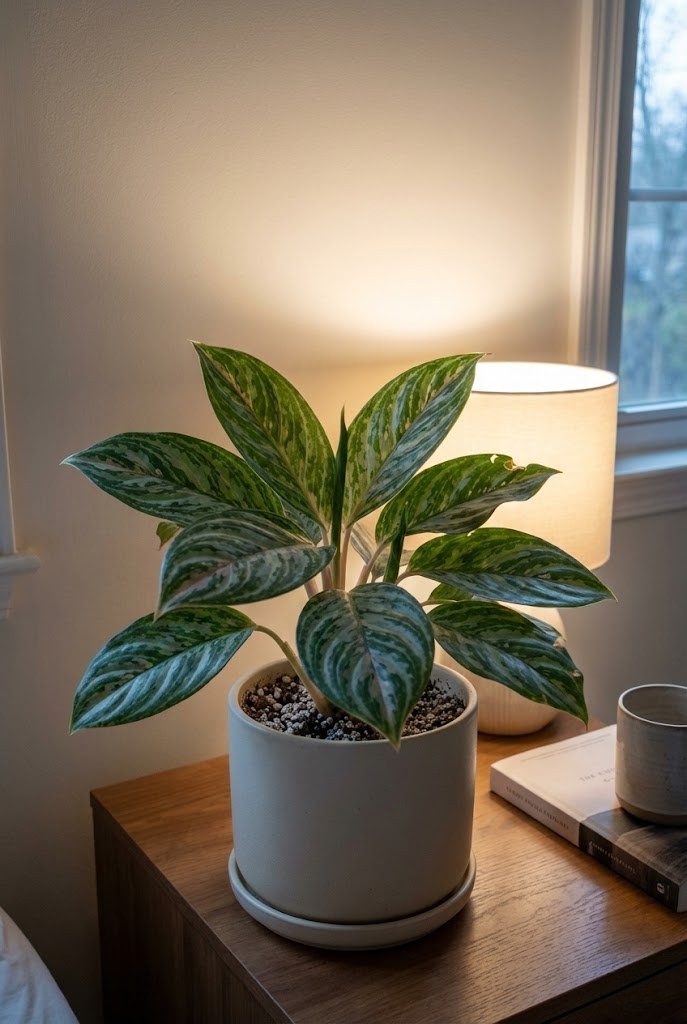
Chinese evergreen is a good one when you want a plant to look full without taking over the room. Even a smaller plant has enough leafiness to make a bedroom corner, dresser, or side table feel less bare.
It also handles average indoor conditions without much fuss, especially if the light is soft rather than strong. Keep it out of direct sun, and turn the pot now and then if it starts leaning toward the window.
- Quick care: Medium to lower light; water when the top inch feels dry.
#5 — Janet Craig Dracaena (Dracaena fragrans ‘Janet Craig’)
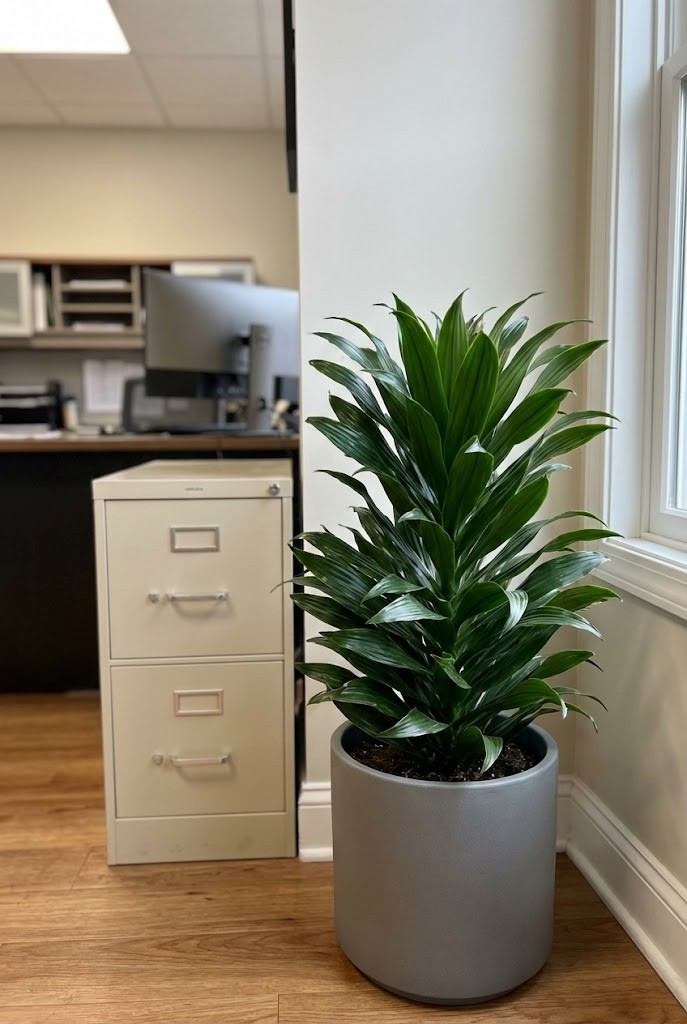
Janet Craig adds height in a very undemanding way, which is useful when a room needs some structure but not another project. It has a steadier, simpler look than showier floor plants, so it fits easily into real homes.
This is a good one for busy households that want a taller plant without a fussy routine. Just check the soil before watering, because it does better with a little drying out than with constant attention.
- Quick care: Low to medium light; water when the soil feels dry a few inches down.
#6 — Golden Pothos (Epipremnum aureum)
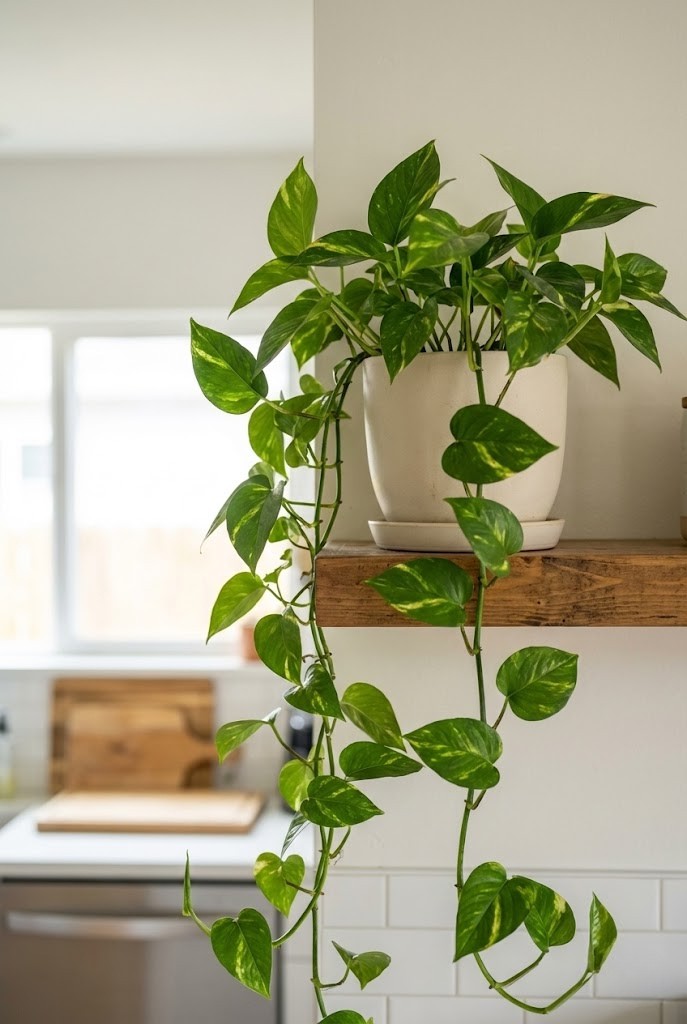
Golden pothos makes a space look better quickly, and it does not ask for much while it does it. A shelf, cabinet top, or bare edge starts to feel looser and more alive as the vines begin to trail.
It is one of the easiest plants to grow if you want visible payoff without a complicated routine. Brighter indirect light keeps it fuller, and a light trim now and then helps it stay lush instead of getting long and sparse.
- Quick care: Medium to bright, indirect light; water when the top inch feels dry.
#7 — Heartleaf Philodendron (Philodendron hederaceum)
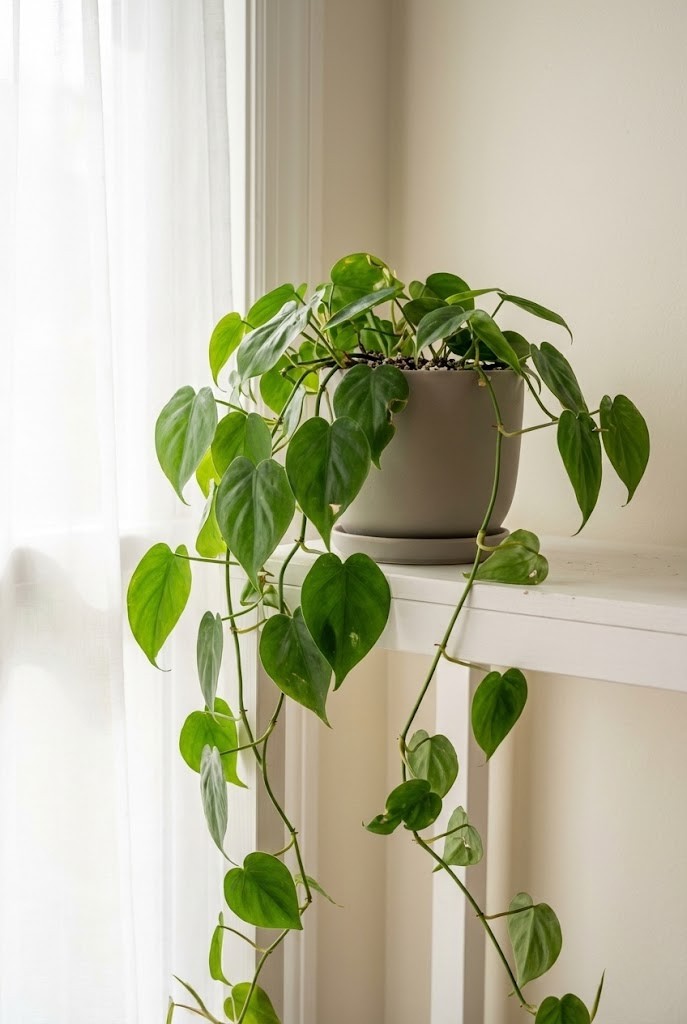
Heartleaf philodendron has an easier, looser look than pothos. The vines fall softly instead of making a big statement, which makes it a nice fit for shelves, cabinets, or quieter corners that need a little life.
Care is simple as long as the light is steady and indirect. Let the soil dry slightly between waterings, and trim it back once in a while if you want it to stay fuller instead of running long.
- Quick care: Medium to bright, indirect light; water when the top inch feels dry.
#8 — Spider Plant (Chlorophytum comosum)
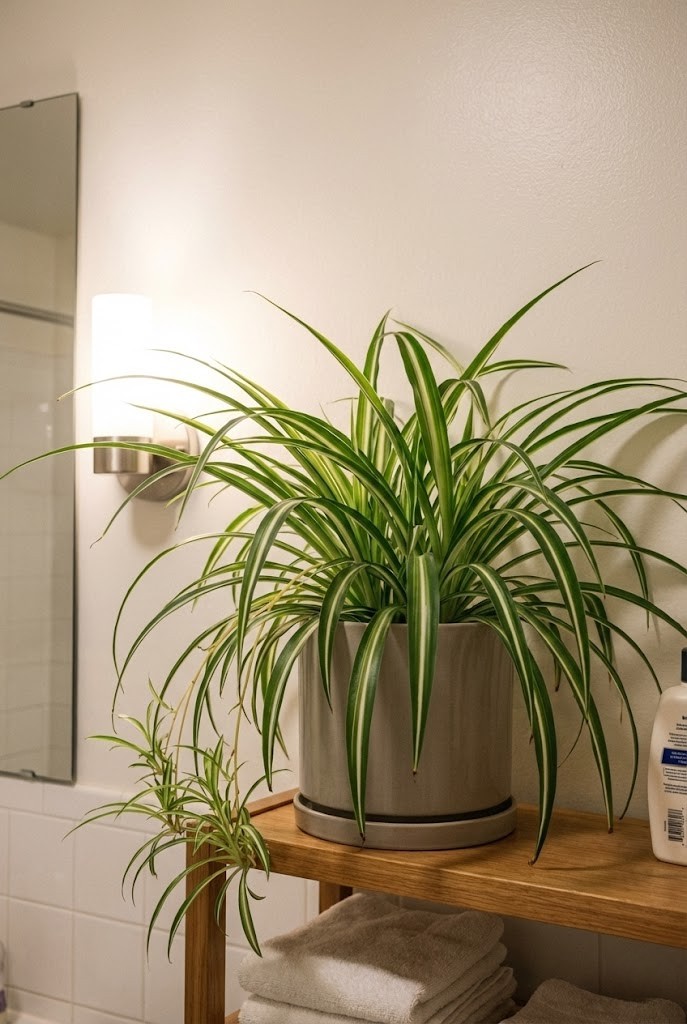
Spider plant feels lively early on, which is part of why beginners tend to enjoy it so much. The arching leaves already have good movement, and once the baby offshoots start showing up, the whole plant starts to feel generous in a way some easy plants never quite do.
It is forgiving in the way many people need: not perfect, just responsive. Keep it in medium to bright indirect light, water when the top inch feels dry, and do not overreact to a few brown tips here and there.
- Quick care: Medium to bright, indirect light; water when the top inch feels dry.
#9 — Baby Rubber Plant (Peperomia obtusifolia)
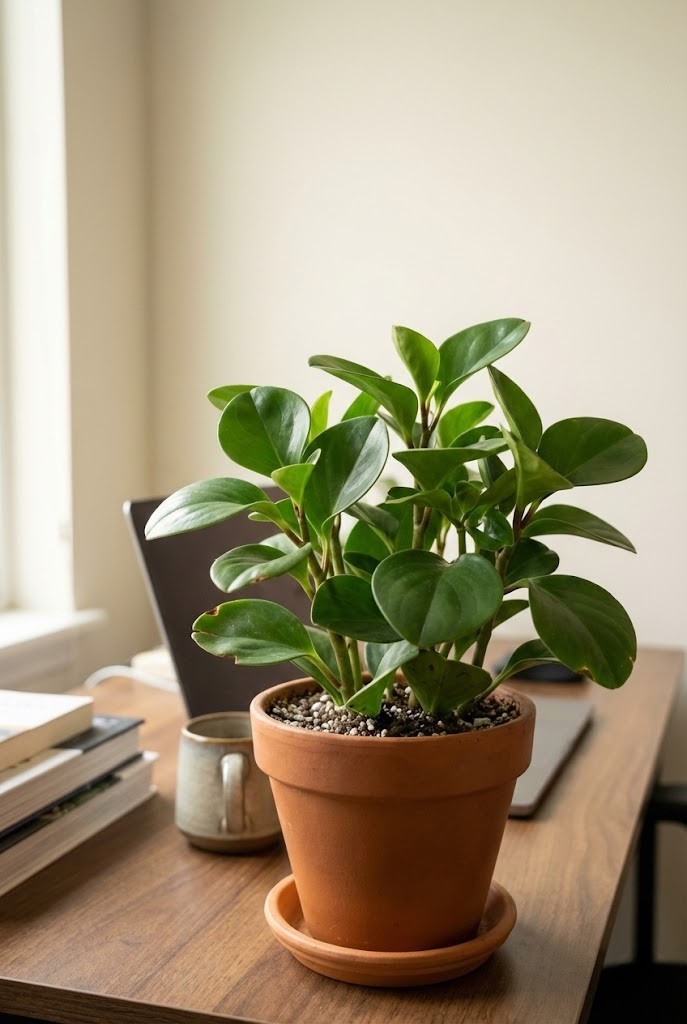
Baby rubber plant stays neat in a way a lot of easy houseplants do not, which makes it especially good for desks, dressers, and smaller surfaces. The thick leaves keep it looking tidy and a little polished, even when the plant itself is still fairly small.
It is also a good fit for people who do not want trailing vines or loose growth to manage. Give it decent indirect light, let the soil dry slightly between waterings, and keep it in a snug pot so it stays compact.
- Quick care: Medium to bright, indirect light; let the soil dry slightly between waterings.
#10 — Peace Lily (Spathiphyllum)
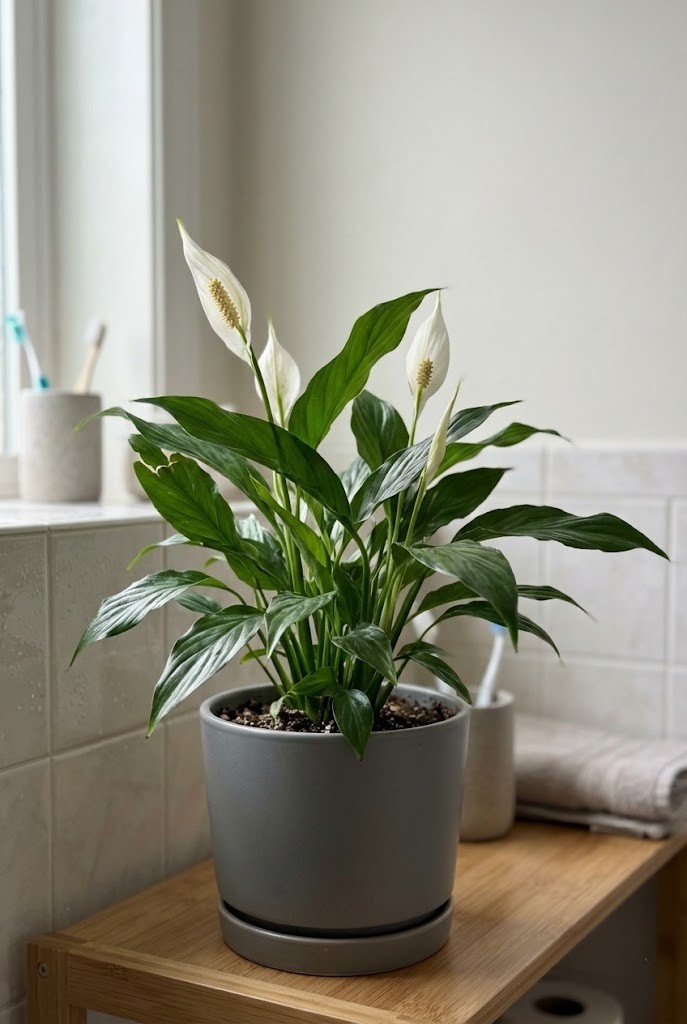
Peace lily is one of the easier plants to live with if you like clear signals instead of guessing when to water. The leaves stay glossy and tidy, and when the plant gets thirsty, it usually tells you pretty plainly, which makes it a confidence-building plant for beginners.
Bright indirect light helps it look its best, and the main thing to avoid is wet soil that never gets a chance to breathe. You do not need perfect instincts here, just a willingness to pay attention when the plant starts to soften.
- Quick care: Bright, indirect light; water when the top inch feels dry.
#11 — Parlor Palm (Chamaedorea elegans)
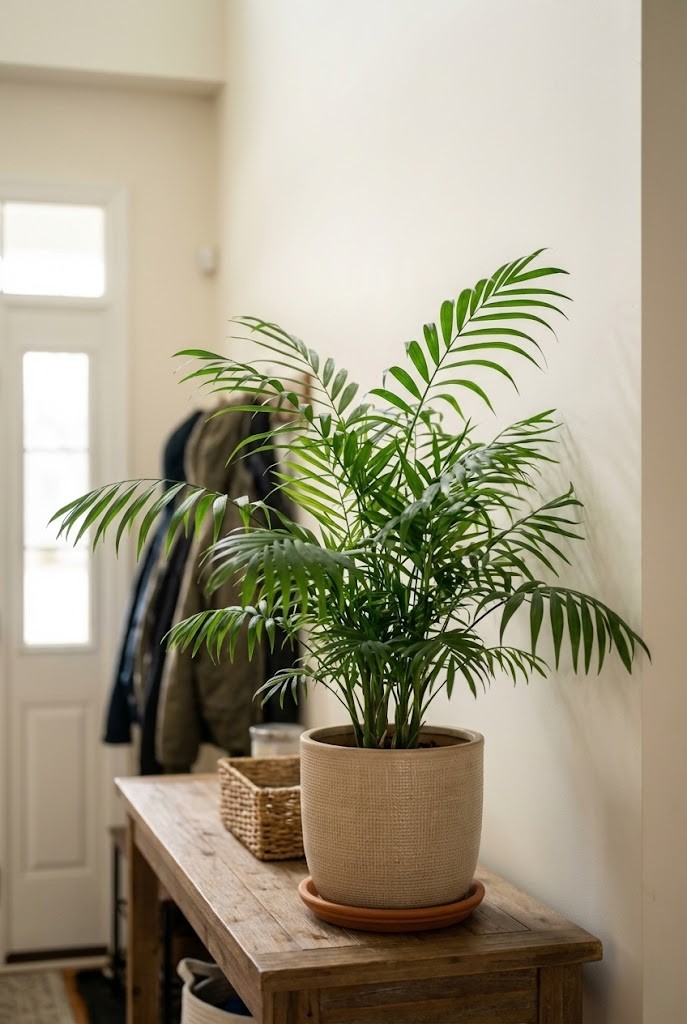
Parlor palm works well when a room feels a little stiff and needs something softer. The fronds are light enough to change the feel of a space without making the plant the whole point.
It is also easier to live with than most people expect from a palm. Growth is slow, the size stays manageable, and it usually does best when you leave it out of harsh sun and do not keep the soil wet.
- Quick care: Medium to bright, indirect light; water when the top inch feels dry.
#12 — Hoya (Hoya carnosa)
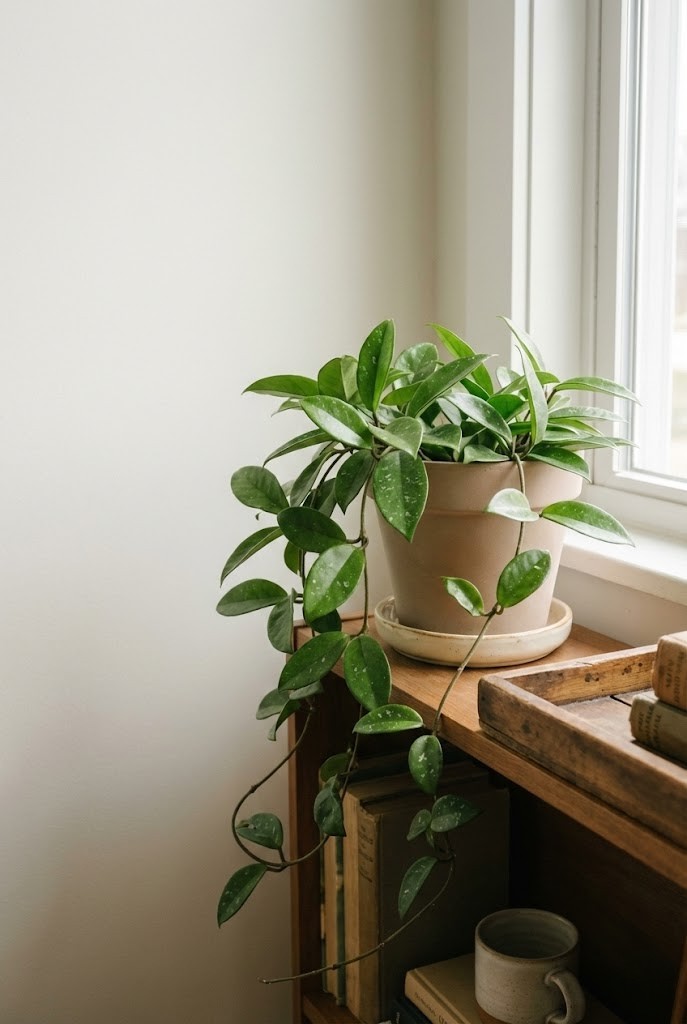
Hoya has a neater look than a lot of trailing plants, which is part of why people keep it around for years. The leaves stay firm, the vines stay fairly orderly, and the whole plant feels a little more collected without being difficult.
It is happiest in brighter indirect light and usually does better with restraint than with too much care. Let the soil dry slightly between waterings, and resist the urge to keep checking on it.
- Quick care: Bright, indirect light; let the soil dry slightly between waterings.
#13 — Aloe Vera (Aloe barbadensis)
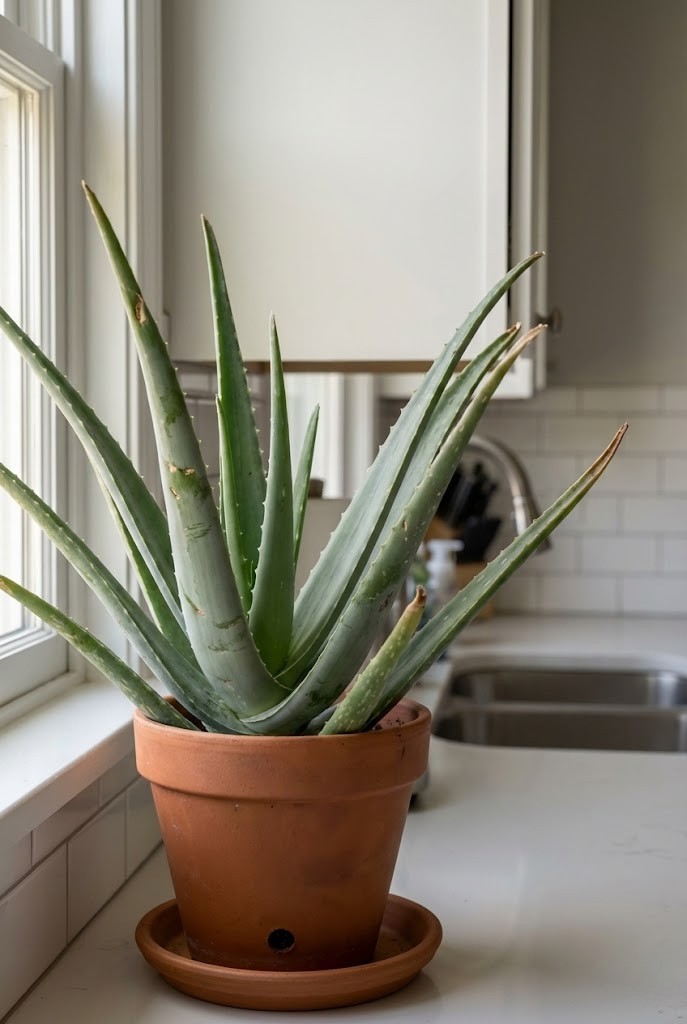
Aloe does best where the light is strong and the watering is not, which makes it a very easy plant for bright homes. The shape is clean and sculptural on its own, so even one pot can make a sunny shelf or kitchen counter feel more finished.
The main thing is giving it enough light to actually stay happy. If the spot is bright and the soil gets to dry out fully between waterings, aloe is about as low-maintenance as it looks.
- Quick care: Bright light; let the soil dry out fully between waterings.
#14 — Ponytail Palm (Beaucarnea recurvata)
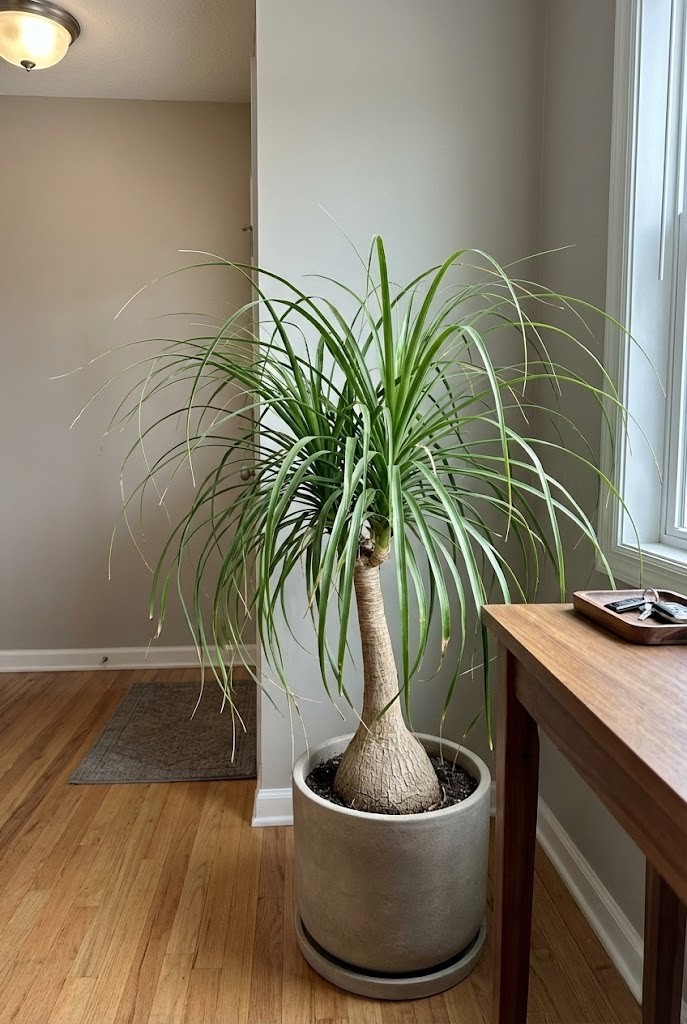
Ponytail palm catches your eye first, but it fits real life well too because it handles missed waterings better than a lot of plants with this much personality. The swollen base stores moisture, and that is exactly why it tends to suit people who are a little inconsistent.
It is a good pick for bright homes that want something a little more playful. Just make sure the pot drains well, because the easier mistake here is keeping it too wet, not letting it go a little dry.
- Quick care: Bright light; let the soil dry out fully between waterings.
#15 — Rubber Plant ‘Burgundy’ (Ficus elastica)
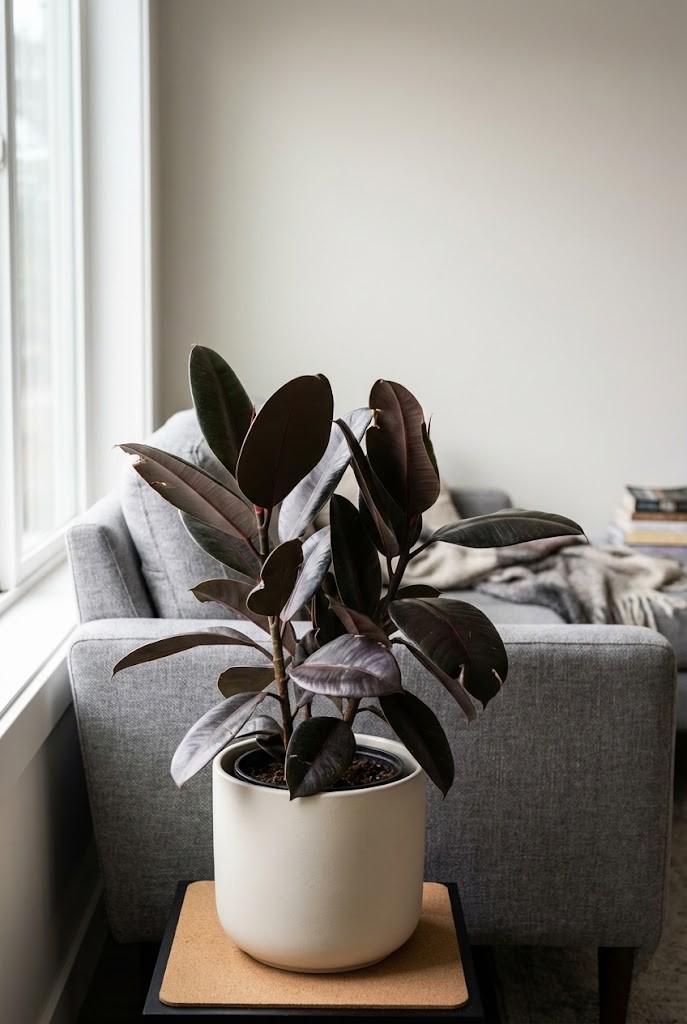
Rubber plant changes the feel of a bright room quickly. The dark, weighty leaves make a space look more finished without needing a complicated care routine.
It does want a better spot than the truly low-light survivors on this list, but once the light is right, the upkeep is simple. Keep it in one place, let the top of the soil dry before watering again, and it usually holds its shape beautifully.
- Quick care: Bright, indirect light; water when the top two inches feel dry.
A Quick Note if You Live With Pets
Many easy houseplants are not pet-safe, including snake plant, ZZ plant, Chinese evergreen, Janet Craig dracaena, pothos, heartleaf philodendron, peace lily, and rubber plant.
If your cat or dog likes to chew leaves, double-check each plant before bringing it home. You may need to keep some picks out of reach, skip trailing vines, or start with a pet-safe list instead.
A Quick Way to Choose the Right One
If your home stays fairly dim, start with snake plant, ZZ plant, or cast iron plant. They are the easiest wins when light is average and watering is not always consistent.
If you want a plant that grows faster or makes a room feel softer sooner, choose pothos, heartleaf philodendron, or spider plant. If you prefer something tidier and more contained, baby rubber plant, Chinese evergreen, or Janet Craig are easier to live with.
For brighter spots, aloe, ponytail palm, and rubber plant make more sense. The best easy houseplant is usually the one that fits your light and your routine, not the one that sounds best in theory.