Table of Contents
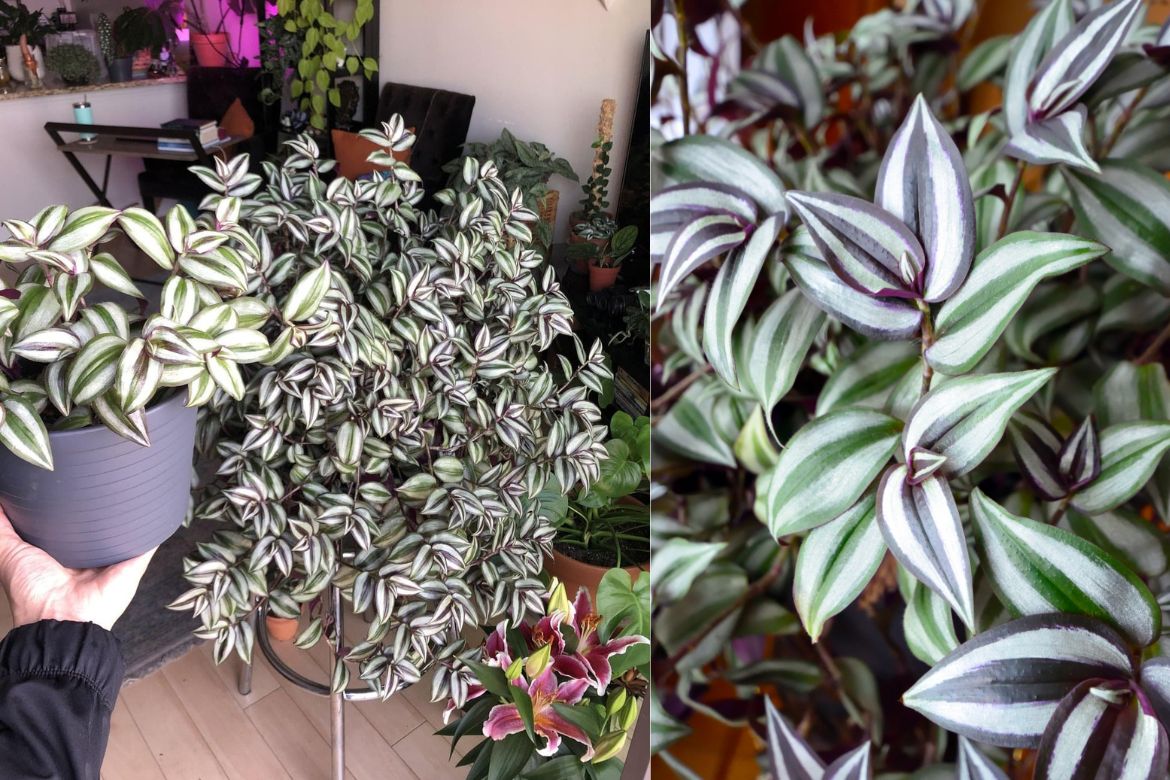
Wandering Jew (Tradescantia) looks stunning when you first bring it home—full vines, bold purple tones, and clean stripes.
But within weeks, most plants turn stretchy and thin. Vines grow long and bare. Leaves only appear at the tips. Colors fade. And the whole pot starts to look tired.
This isn’t your fault. Tradescantia is simply a fast grower, and without a few key techniques, it will always get leggy indoors.
The good news?
Once you understand how it reacts to light, pruning, watering, and humidity, you can turn even the most stretched-out plant into a bushy, vibrant showpiece.
Below are 8 grower-level secrets that keep Wandering Jew compact, full, and richly colored year-round.
Secret #1: The “Bright-But-Filtered” Light Formula
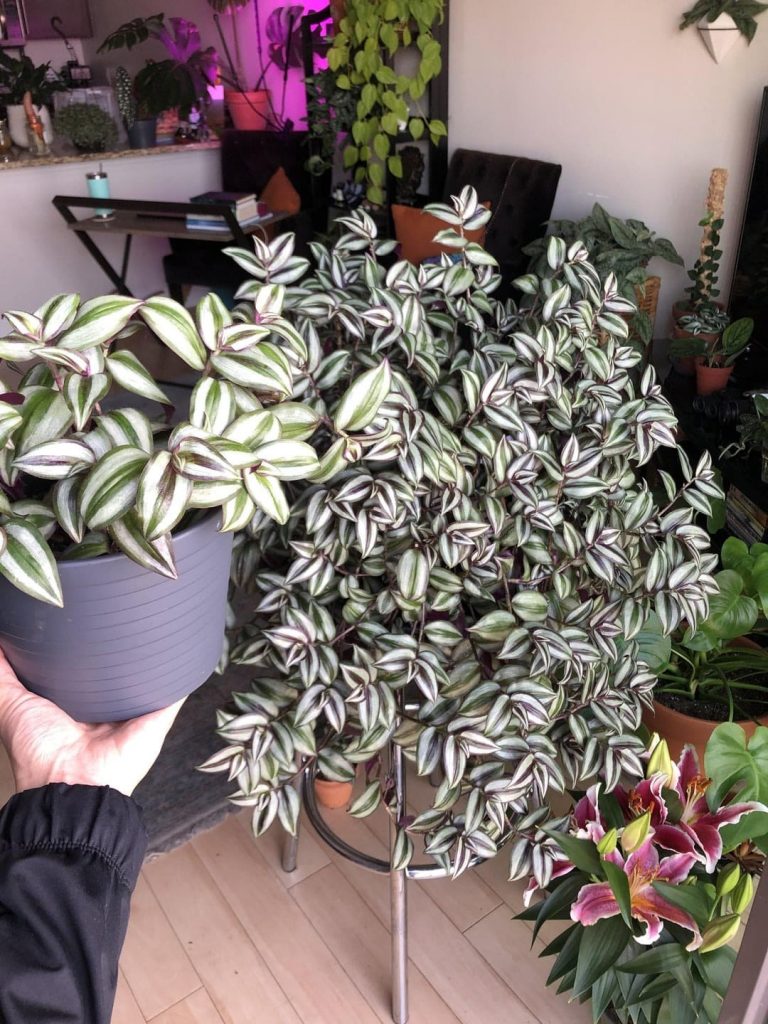
Light is the single biggest factor that determines whether your Wandering Jew becomes bushy or turns into a long, stretched vine. Tradescantia naturally increases the distance between its leaf nodes when light levels are low—resulting in that classic “leggy” look. The fix is simple: give it bright, indirect light, consistently.
The best indoor spots are:
- East-facing windows with gentle morning sun
- South windows with sheer curtains to soften the intensity
- A bright room where the plant never receives harsh, direct midday rays
If your plant’s stripes are fading or the vines are leaning dramatically toward the window, it’s telling you the light is too weak.
Grow Light Hack (highly effective)
If natural light is limited, a 20W full-spectrum LED grow light placed 10–12 inches above the plant works wonders. Keep it on for 10–12 hours a day to maintain compact growth and vibrant coloring.
Weekly Rotation = Even, Full Growth
Tradescantia naturally leans toward the strongest light source. Rotate the pot ¼ turn every week, and you’ll prevent the plant from becoming lopsided or sparse on the back side.
With the right light intensity, you’ll see shorter internodes, richer color, and noticeably denser foliage within a few weeks.
Secret #2: The 70/20/10 Soil Mix for Thick, Compact Vines

Wandering Jew grows fast, which means it needs a soil mix that holds enough moisture to support rapid growth—but never stays wet long enough to cause rot. The ideal balance is a blend that’s light, airy, and quick-draining, yet still moisture-retentive.
A proven formula is the 70/20/10 mix:
✔ 70% Peat or Coco Coir
This creates a soft, moisture-holding base that Tradescantia roots love. Coco coir is especially effective because it resists compaction and keeps oxygen flowing through the root zone.
✔ 20% Perlite
Perlite guarantees drainage. It prevents the soil from becoming dense or waterlogged—two things that lead to mushy stems and root rot.
✔ 10% Fine Orchid Bark or Pine Bark
This adds structure and boosts airflow. As the bark slowly breaks down, it improves nutrient availability and contributes to overall soil health.
Bonus Growth Booster
Mix in 1–2 tablespoons of worm castings to strengthen root development and enhance leaf pigmentation, especially purples and silvers.
A well-balanced soil mix helps the plant maintain shorter internodes, thicker vines, and fuller growth—even if watering isn’t perfectly consistent.
Secret #3: Watering with the “Top-2cm Dry Rule”
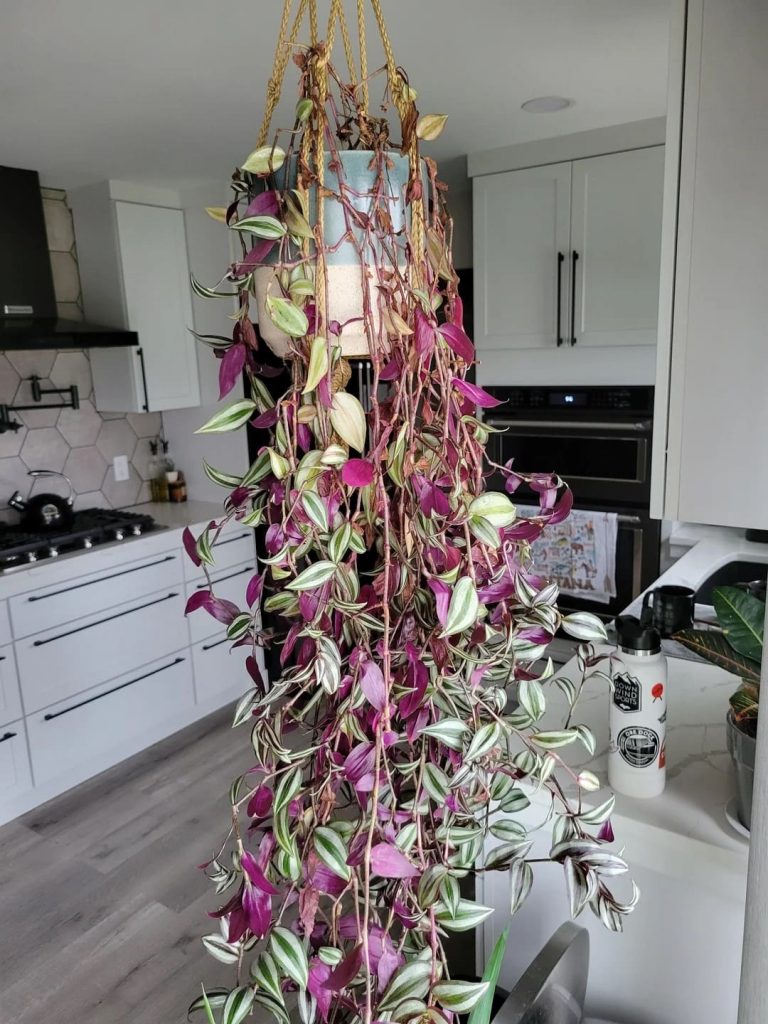
Watering is one of the most common reasons a Wandering Jew becomes weak or leggy. This plant likes steady, moderate moisture—never soaking wet, never bone dry.
The simplest method is the Top-2cm Dry Rule:
Press your finger into the soil, and if the top ¾ inch (2 cm) feels dry, water.
If it still feels damp, wait.
This prevents overwatering (which causes mushy stems) and underwatering (which leads to crispy leaves and weak vines).
Quick Seasonal Guide
- Spring/Summer: Water more often as growth speeds up.
- Fall/Winter: Reduce frequency to avoid soggy soil.
Pro Tip
For fuller, healthier vines, use bottom watering occasionally. It hydrates roots evenly without leaving moisture around the stems.
Consistent, moderate watering = stronger vines, better color, and much bushier growth.
Secret #4: The “Two-Node Pruning Method” for Maximum Branching
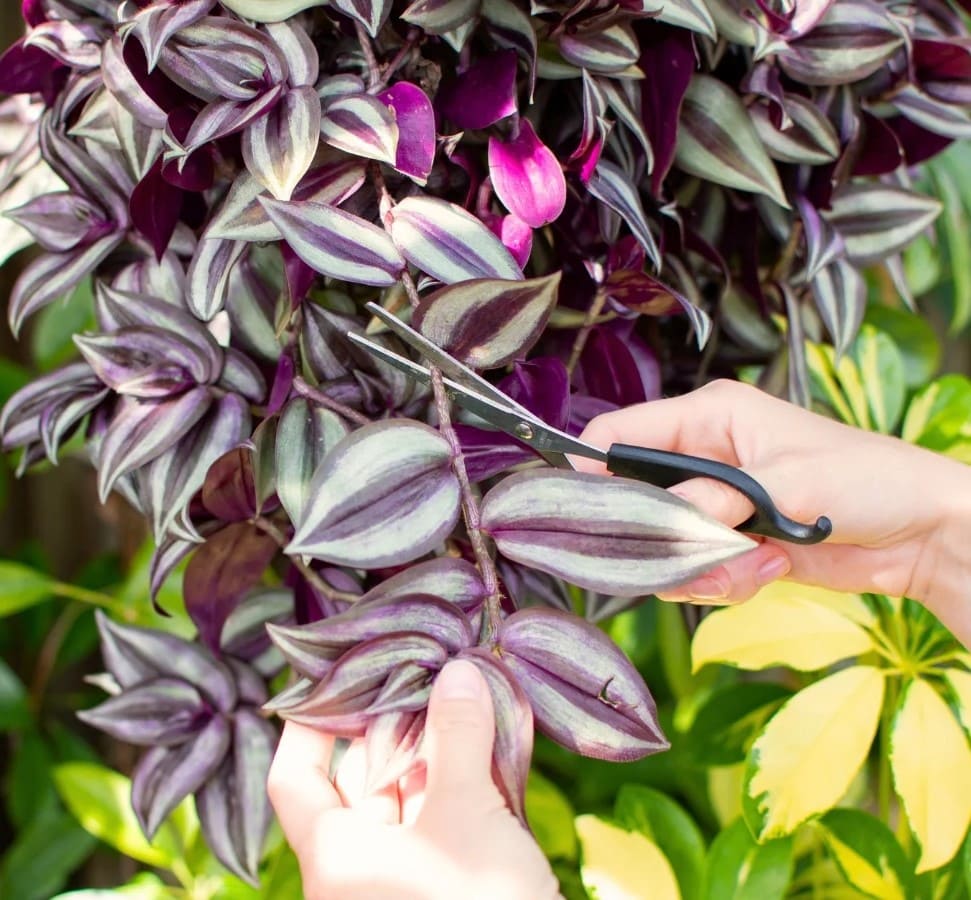
Pinching is the easiest and most effective way to keep a Wandering Jew full and compact. Instead of letting vines grow long and thin, regularly pinch the growing tips to activate branching.
How to Do It
Using your fingers, gently remove the soft tip of each vine—about the top 1–2 nodes.
This instantly signals the plant to wake up dormant buds below the pinch point, producing multiple new side shoots instead of one long stem.
When to Pinch
- Best season: Spring and summer
- Frequency: Every 2–3 weeks to maintain shape
- For a full reset: Do a harder pinch/prune in early spring
What You’ll See
Within 1–2 weeks, new branches appear and quickly thicken the plant, eliminating bare or stretched growth.
Secret #5: Micro-Dose Fertilizing (¼ Strength Every 30 Days)
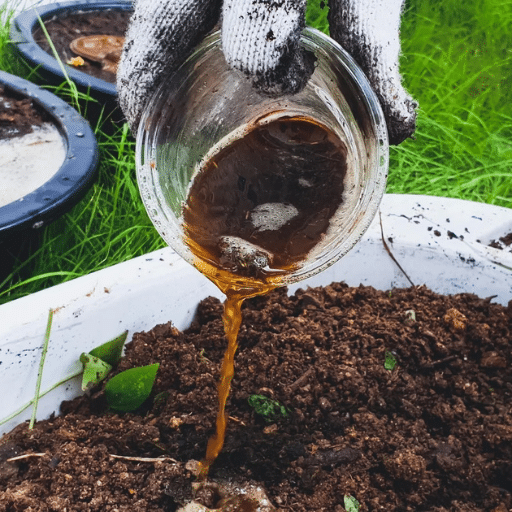
Wandering Jew grows fast, but heavy feeding can backfire—causing weak, leggy vines or even root burn. The safest and most effective method is to use a balanced liquid fertilizer and apply it in small, controlled doses.
How to Feed Correctly
Choose a balanced liquid fertilizer (such as 10-10-10) and dilute it to ¼ strength. Apply it once every 30 days during spring and summer to support steady, compact growth and rich coloring.
When to Stop
Avoid fertilizing in fall and winter, when the plant naturally slows down and doesn’t need extra nutrients.
Pro Tip
A small dose of seaweed or kelp extract once a month helps deepen purple tones and improve overall vigor.
Micro-dosing keeps Tradescantia healthy, colorful, and bushy without the risks of overfeeding.
Secret #6: Replanting Cuttings Back Into the Pot (“Pot Densifying”)
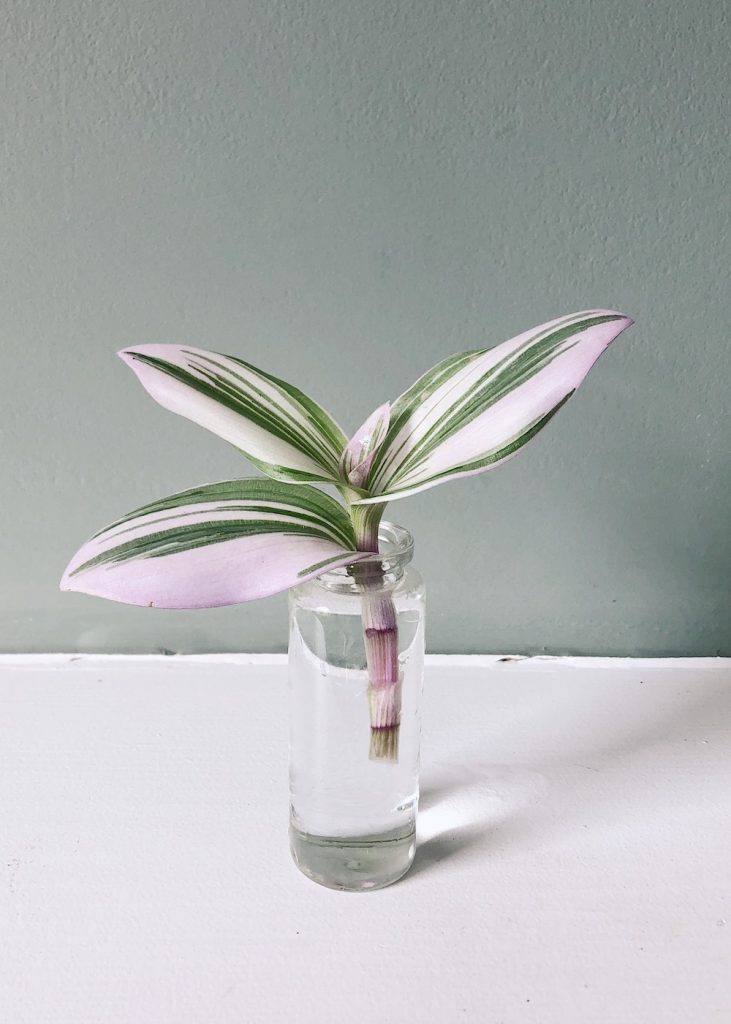
If your Wandering Jew looks thin or bare at the base, this secret will completely change it. Tradescantia is incredibly easy to propagate, and one of the fastest ways to make the plant look instantly fuller is to replant your cuttings back into the same pot—a technique growers call pot densifying.
How to Do It
- Take tip cuttings during regular pruning.
- Root them in water for 5–10 days, until you see short white roots.
- Plant them directly back into the original pot, spacing them around the edges and center.
As the new vines grow, they fill gaps, cover bare stems, and create a thick, layered look that a single plant can’t achieve on its own.
Why It Works
Adding multiple rooted cuttings increases “node density” at the soil line, which is the key to achieving that lush, overstuffed appearance Tradescantia is known for.
How Often
Repeat the process once a month to keep your pot looking full year-round.
This simple technique can transform even a tired, leggy plant into a dense, vibrant showpiece.
Secret #7: Humidity Stacking for Deep Purple & Brighter Stripes
Tradescantia is a tropical plant, and its foliage looks best when humidity stays moderate. While it can survive in dry indoor air, low humidity often leads to crispy leaf edges, dull color, and slower growth. To keep vines bushy and leaves richly colored, aim for 50–60% humidity.
Humidity Stacking: Simple Ways to Boost Moisture Naturally
You don’t need a humidifier to help your plant thrive. Try these easy methods:
- Group plants together — they create a shared microclimate.
- Use a pebble tray — set the pot above a tray of water (not touching the water).
- Place the plant near a humidifier — close enough to benefit, but not in the direct mist.
These techniques gently raise humidity around the plant without overdoing it.
Signs Your Plant Needs More Humidity
- Crispy tips along the leaves
- New growth coming in small or pale
- Faded purple tones
Boosting humidity helps Tradescantia maintain plump leaves, strong vines, and deeper, more vibrant stripes.
Secret #8: The Seasonal Reset (Your Plant’s Annual Rejuvenation Ritual)
Even with perfect care, Tradescantia naturally tends to stretch over time. That’s why experienced growers use a yearly Seasonal Reset—a simple routine that refreshes the plant, boosts growth, and restores fullness from the base up.
🌱 Spring Reset (Most Important Step)
This is the plant’s strongest growth period.
Do the following once a year:
- Hard prune the plant by 30–40%.
- Remove the top inch of old soil and refresh with new mix.
- Replant fresh cuttings back into the pot to fill any bare areas.
- Move the plant to its brightest “filtered light” spot.
Within a few weeks, you’ll see lots of compact new growth.
🌞 Summer Boost
- Light trims every 2–3 weeks
- Monthly micro-dose fertilizing
- Keep humidity slightly higher
🍂 Fall Wind-Down
- Reduce watering frequency
- Stop fertilizing
❄ Winter Rest
- Allow soil to dry out more between waterings
- Protect from drafts and cold air
Following this cycle keeps Wandering Jew healthy, full, and vibrant year after year—without ever letting it turn stringy or tired.
Troubleshooting: Quick Fix Table for Common Problems
Even with good care, Tradescantia can show signs of stress. Use this quick reference to diagnose issues fast and fix them before the plant becomes leggy or weak.
Common Problems & Fast Fixes
| Problem | Likely Cause | Quick Fix |
| Long, stretched vines | Low light | Move closer to bright window or add 20W grow light |
| Faded stripes / dull color | Insufficient light | Increase brightness; avoid deep shade |
| Bare stems at the base | Lack of pruning or old growth | Replant fresh cuttings back into the pot |
| Soft, mushy stems | Overwatering | Let soil dry, switch to 70/20/10 mix, prune damaged parts |
| Crispy leaf edges | Low humidity | Use pebble tray or group plants |
| Weak, floppy vines | Underwatering or poor soil | Water consistently; improve soil aeration |
A quick adjustment in light, pruning, or watering usually restores the plant’s health within days. Tradescantia responds fast—making it easy to recover even if problems appear suddenly.
Conclusion
Keeping a Wandering Jew full, colorful, and compact isn’t about luck—it’s about consistency. Once you understand how fast this plant grows and how it responds to light, pruning, humidity, and propagation, maintaining a bushy shape becomes surprisingly easy.
Here’s the simple formula to remember:
- Light: Bright, filtered light or a 20W grow light
- Soil: 70/20/10 mix (peat/coir + perlite + bark)
- Water: Top 2 cm dry before watering
- Pruning: Two-node method every 2–3 weeks
- Fertilizer: ¼ strength once a month (spring/summer)
- Propagation: Add rooted cuttings back into the pot
- Humidity: Maintain 50–60% for vibrant color
- Seasonal Reset: Hard prune and refresh in spring
Follow these principles, and even a tired, leggy Tradescantia can transform into a lush, cascading showpiece—one that stays beautiful all year long.
❓FAQ
1. Why is my Wandering Jew getting leggy?
Low light is the most common reason. Move the plant to a brighter spot, prune the vines, and replant cuttings to thicken the base.
2. How often should I prune Tradescantia?
Light trims every 2–3 weeks during spring and summer help maintain compact growth. Hard pruning once a year (spring) keeps the plant full and healthy.
3. Why are the stripes on my plant fading?
Tradescantia loses variegation when light is too weak. Provide bright, indirect light or use a grow light for 10–12 hours daily.
4. Can Wandering Jew live in a bathroom?
Yes, if the space receives bright indirect light. Humidity is great for the plant, but low light bathrooms will cause stretching.
5. What pot size works best?
A slightly snug pot encourages fuller growth. Too much extra soil can trap moisture and lead to rot.