Table of Contents
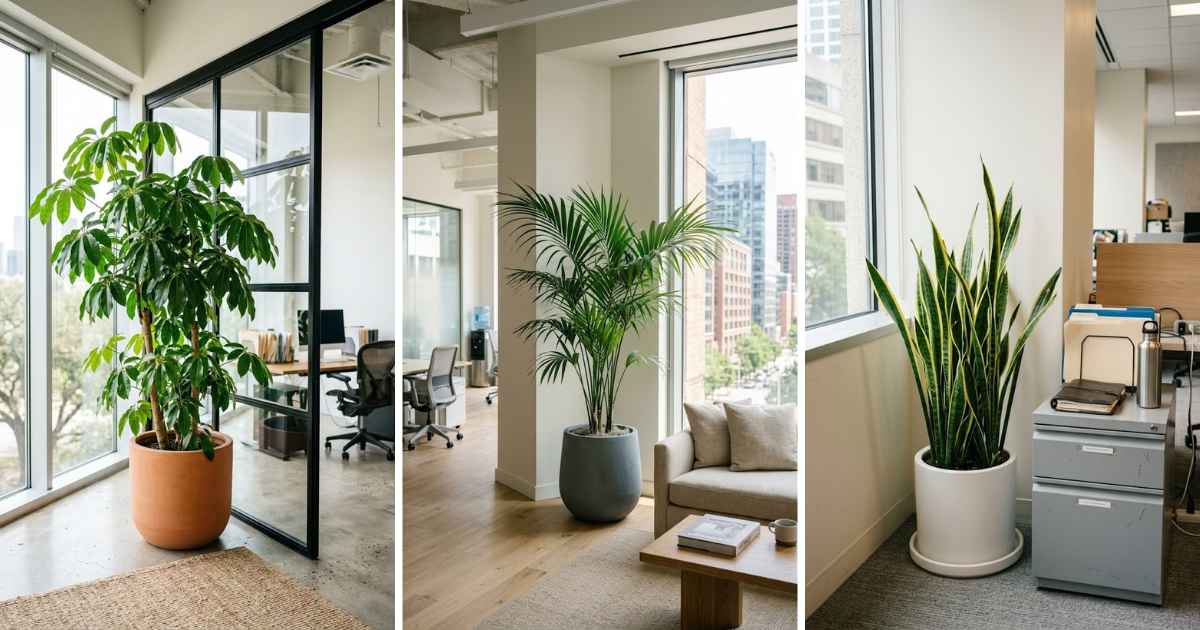
Blank walls, fluorescent lighting, and rows of monitors can make an office feel surprisingly flat.
A tall indoor plant softens that almost instantly, bringing height, texture, and a little life into corners that otherwise feel purely functional.
The challenge is finding plants that can survive real office conditions. Dry HVAC air, inconsistent watering, long weekends, and uneven lighting eliminate a surprising number of popular houseplants. These tall indoor plants deliver strong visual impact while remaining remarkably forgiving in everyday workspaces.
1. Snake Plant ‘Laurentii’ (Sansevieria trifasciata)
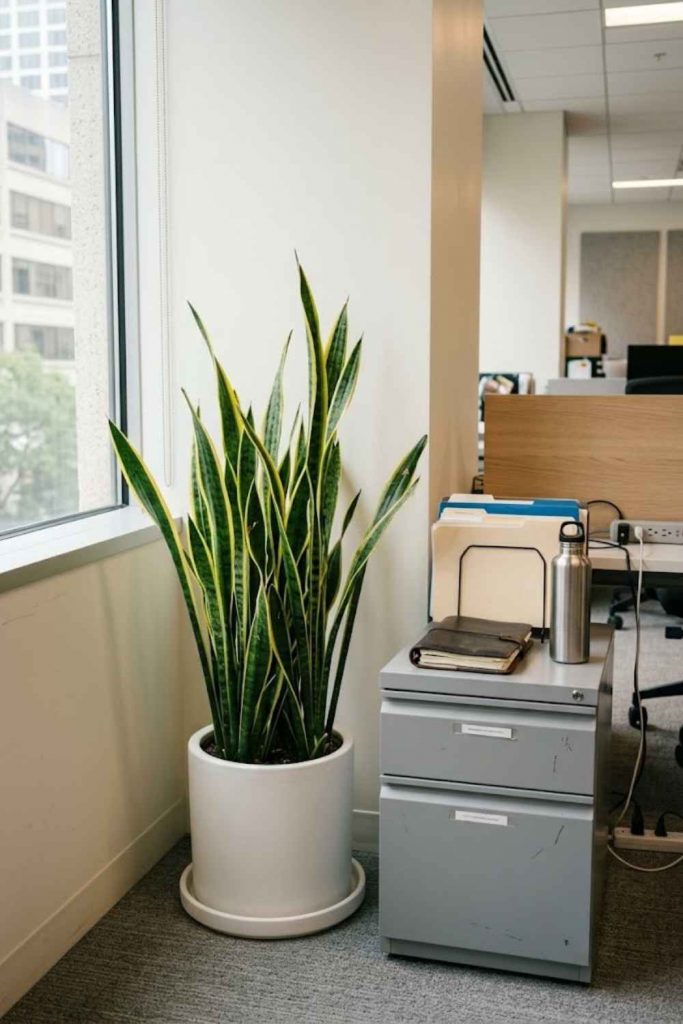
Few office plants create vertical structure as efficiently as a mature snake plant. The stiff, upright leaves add height without taking over valuable floor space, making it ideal for narrow corners, compact desks, or spaces beside filing cabinets.
It is also one of the easiest plants to keep alive in an office setting. The thick leaves store water extremely well, so occasional neglect rarely causes major problems. In fact, overwatering is usually a bigger risk than underwatering.
One overlooked detail: snake plants often look better when slightly root-bound. Moving them into oversized containers too quickly can leave the soil wet for too long.
Low to bright indirect light • Low watering • Pet toxic • Structural upright grower
2. ZZ Plant (Zamioculcas zamiifolia)
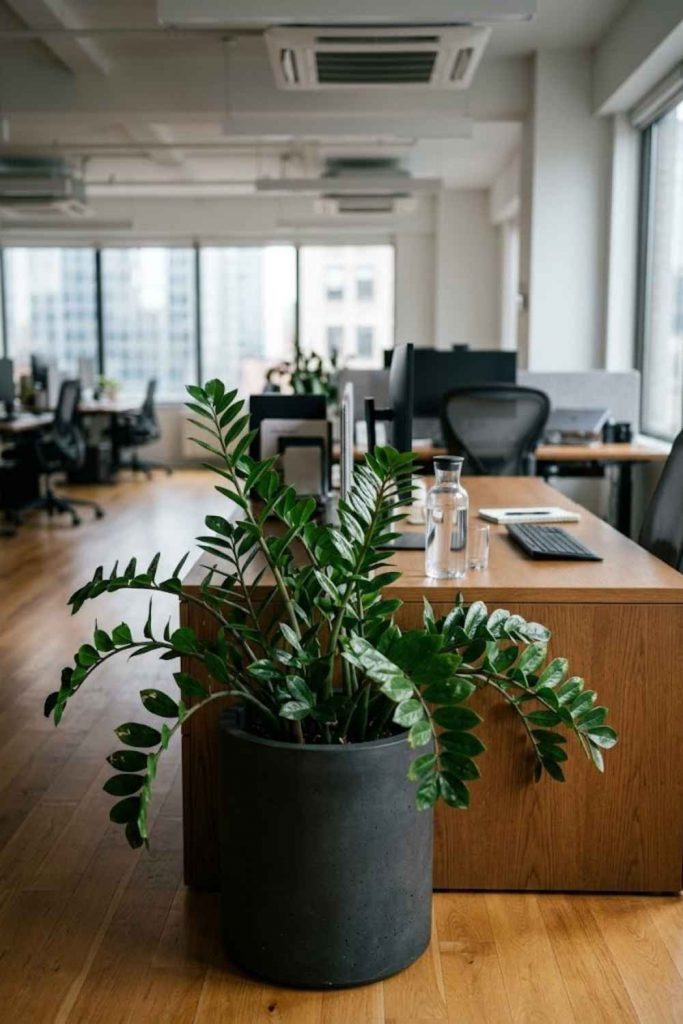
The ZZ plant thrives in the exact kind of conditions that defeat more delicate houseplants.
Its glossy leaves reflect overhead light beautifully, which helps darker offices feel less dull and closed-in. Beneath the soil, thick potato-like rhizomes store water for long periods, allowing the plant to tolerate missed waterings surprisingly well.
Growth is slow, but that becomes an advantage in offices where you do not want a plant constantly outgrowing its corner or brushing against nearby desks. Dust tends to collect on the broad leaves over time, though, so an occasional wipe-down helps preserve the deep green shine.
Low to bright indirect light • Low watering • Pet toxic • Arching vertical grower
3. Cast Iron Plant (Aspidistra elatior)
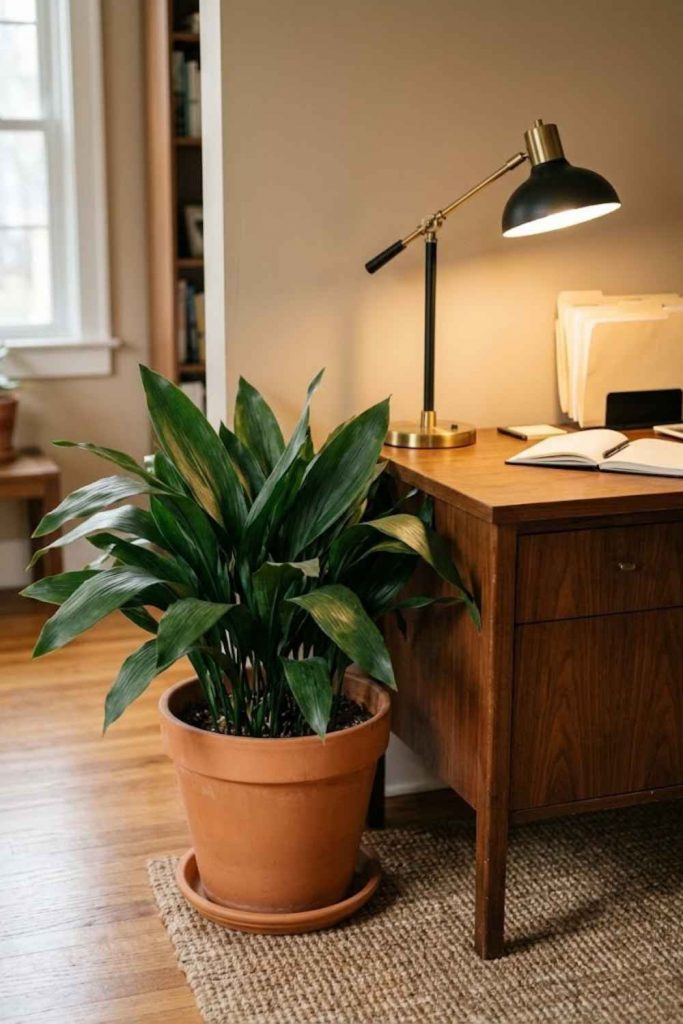
Some plants merely tolerate office conditions. Cast Iron Plant practically ignores them.
Low light, drafty hallways, dry winter heat, and inconsistent schedules rarely seem to bother it much. The broad, deep-green leaves also bring a quieter, more grounded look than glossy tropical plants, which makes it especially fitting for traditional offices or darker workspaces.
Because the foliage rises densely from the base, it works surprisingly well for softening awkward corners or partially hiding visible cables beneath desks. The tradeoff is patience. This plant grows extremely slowly, so larger specimens are worth the investment if you want immediate height.
Low to moderate light • Moderate watering • Pet safe • Bushy upright grower
4. Dragon Tree (Dracaena marginata)
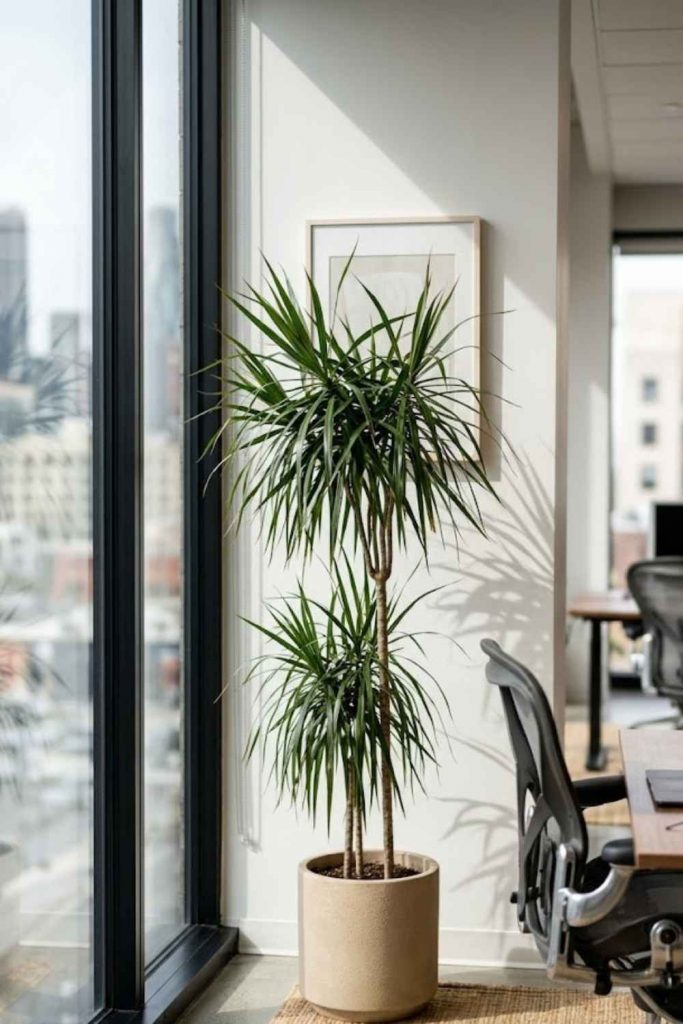
For offices that lean modern or minimalist, Dragon Tree adds height without visual heaviness.
The thin trunks and narrow, red-edged foliage feel clean and sculptural, especially beside windows or tucked behind office chairs. Unlike broader tropical plants, it keeps a relatively narrow footprint while still drawing the eye upward.
It also handles dry indoor air well, which explains why it appears so often in commercial office buildings and hotel lobbies. Brown leaf tips are common over time, especially with mineral-heavy tap water or strong heating vents, but they are usually cosmetic rather than serious.
Bright indirect light • Low watering • Pet toxic • Sculptural upright grower
5. Corn Plant (Dracaena fragrans)
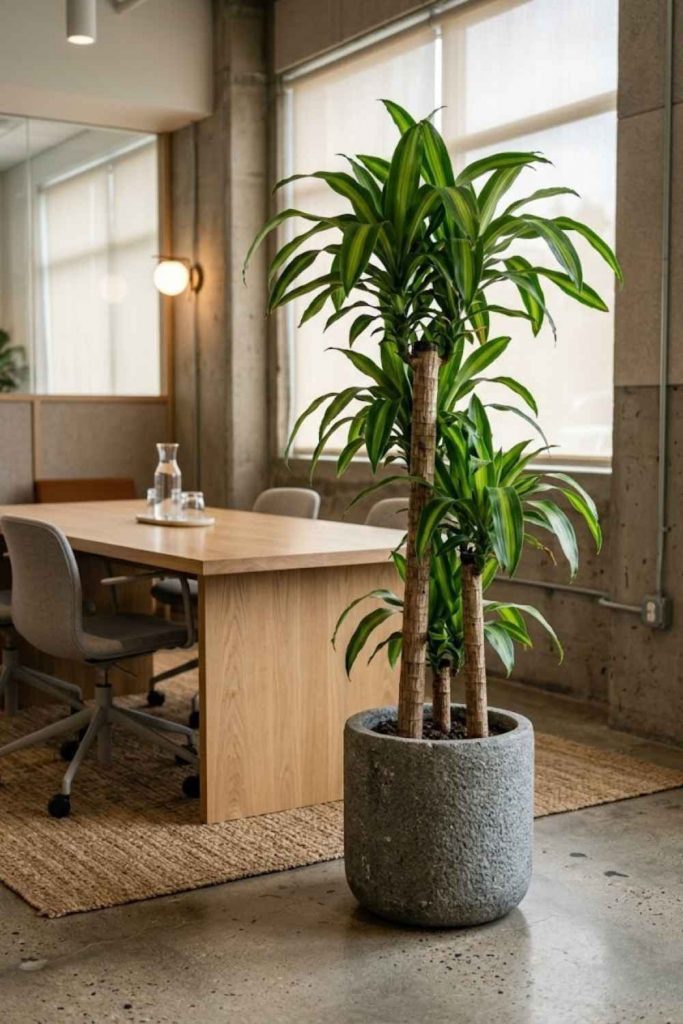
Corn plants have a softer, more relaxed presence than sharper architectural plants like snake plants or dracaenas.
The thick canes and arching striped leaves help break up rigid office furniture, making cubicles and conference rooms feel a little less sterile. It also adapts well to irregular watering schedules as long as the soil is allowed to dry partially between waterings.
Over time, the lower leaves naturally yellow and fall away as the trunk matures. That gradual process is normal and actually helps the plant develop a taller, cleaner silhouette.
Moderate to bright indirect light • Moderate watering • Pet toxic • Cane-forming grower
6. Kentia Palm (Howea forsteriana)
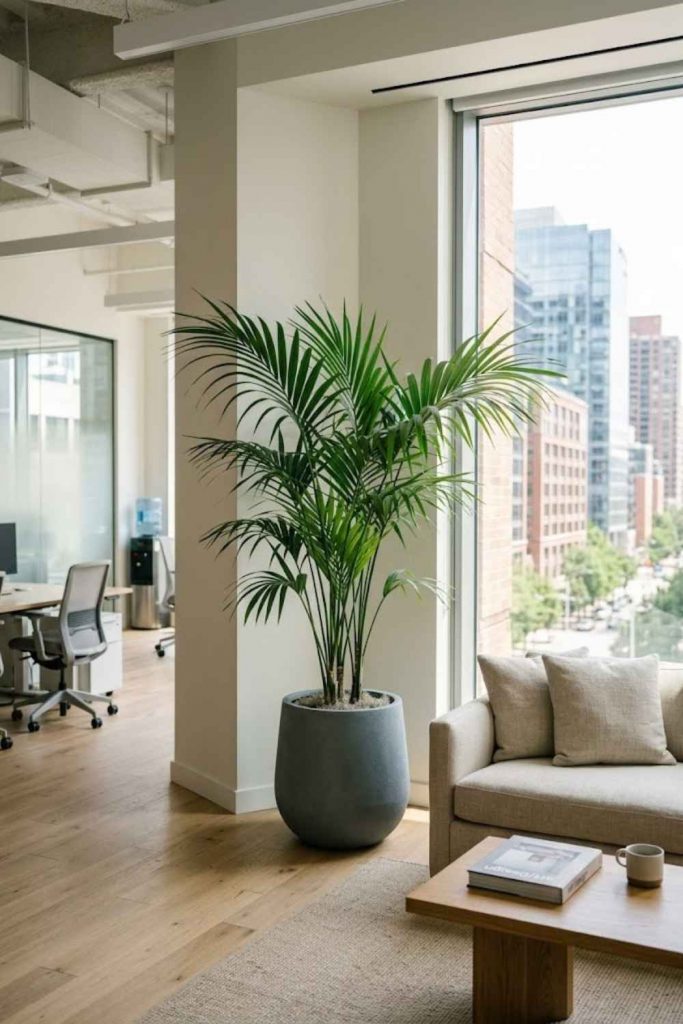
Kentia Palm has a way of making an office feel more relaxed without overwhelming the room visually.
The long, feathered fronds arch upward gracefully, bringing softness into spaces dominated by straight desk lines and hard surfaces. Unlike fussier palms, it tolerates lower indoor humidity and moderate light surprisingly well.
It is especially effective in larger corners where a room needs height but not dense foliage. Kentias are usually more expensive than many common office plants, but they also age exceptionally well indoors when left undisturbed.
Moderate to bright indirect light • Moderate watering • Pet safe • Airy arching grower
7. Lady Palm (Rhapis excelsa)
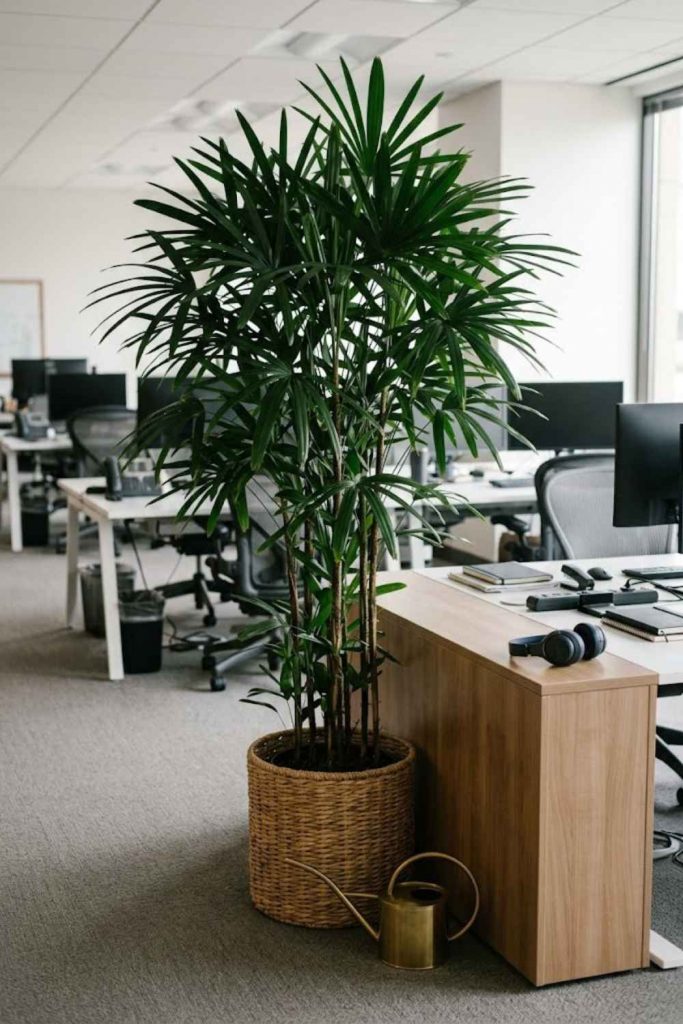
Lady Palm feels structured in a calmer, more tailored way than sprawling tropical palms.
The upright bamboo-like stems and fan-shaped leaves create a subtle screen effect, which works particularly well in open office layouts or between desks. It also adapts surprisingly well to fluorescent lighting and conditioned indoor air.
Unlike drought-tolerant plants like snake plants or ZZ plants, though, Lady Palm prefers more consistent moisture. It suits someone who does not mind checking the soil weekly. Its slower growth habit helps maintain that clean, upright shape for years.
Moderate to bright indirect light • Consistent moderate watering • Pet safe • Multi-stemmed upright grower
8. Ponytail Palm (Beaucarnea recurvata)
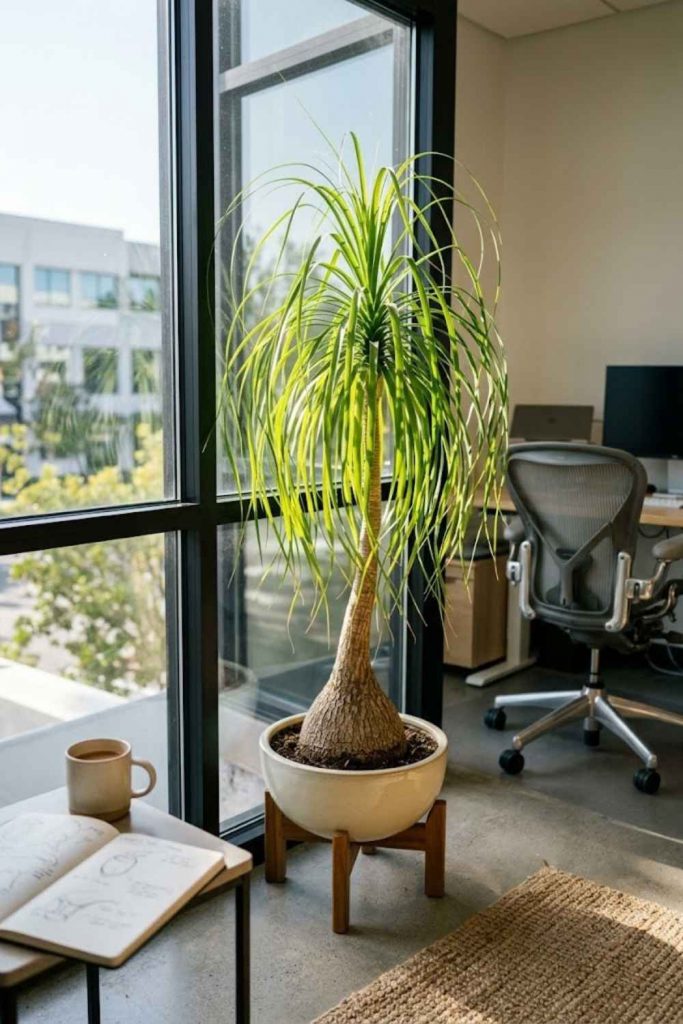
Ponytail Palm brings a little personality into offices that otherwise feel overly corporate.
The swollen trunk stores water like a reservoir, while the long curling leaves spill outward almost like a fountain. It tolerates missed waterings extremely well and actually prefers drying out between drinks.
Because the leaves arch outward dramatically, placement matters more here than with tighter upright plants. Near sunny windows or slightly elevated on a plant stand usually works best. It is one of the few tall office plants that feels playful without looking messy.
Bright direct to indirect light • Low watering • Pet safe • Fountain-like upright grower
9. Parlor Palm (Chamaedorea elegans)
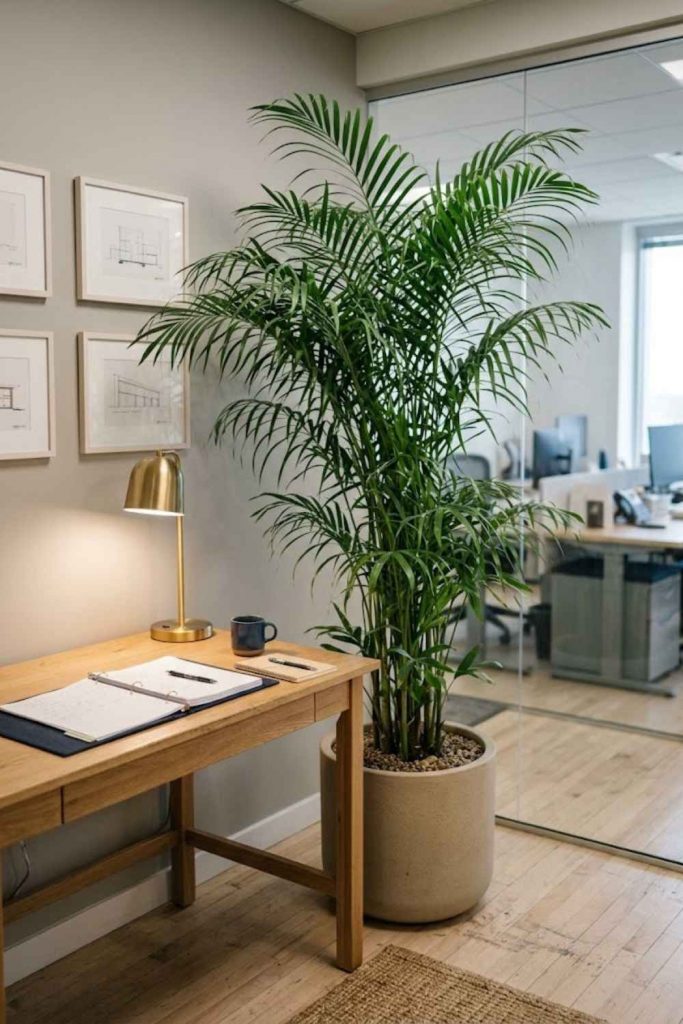
Parlor Palm has remained popular for well over a century because it tolerates dim indoor conditions so reliably.
A mature specimen creates a soft canopy of delicate fronds that immediately makes a workspace feel calmer and less rigid. Compared to larger statement palms, it also keeps a fairly compact root system, allowing it to stay in the same planter comfortably for years.
The fronds are softer and more delicate than they appear, though, so harsh chemical leaf shines are best avoided.
Low to moderate light • Moderate watering • Pet safe • Cluster upright grower
10. Umbrella Tree (Schefflera amate)
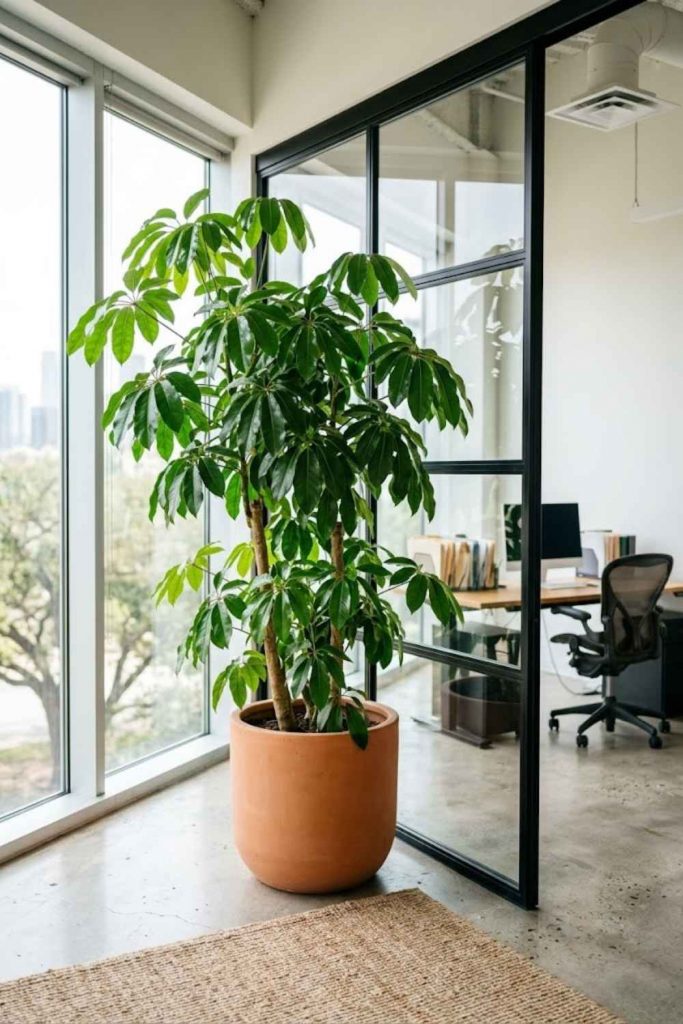
If an office has enough natural light, Umbrella Tree quickly becomes one of the most impactful plants in the room.
The glossy leaf clusters spread outward in broad layers, helping large empty corners feel fuller and more finished. It grows faster than many plants on this list, which makes it useful when you want height relatively quickly.
It also tolerates dry indoor air better than many other large glossy-leaf tropicals. Low light is the main limitation. In darker corners, the stems gradually stretch and thin out searching for brighter conditions.
Bright indirect light • Moderate watering • Pet toxic • Full upright grower
11. Rubber Tree (Ficus elastica)
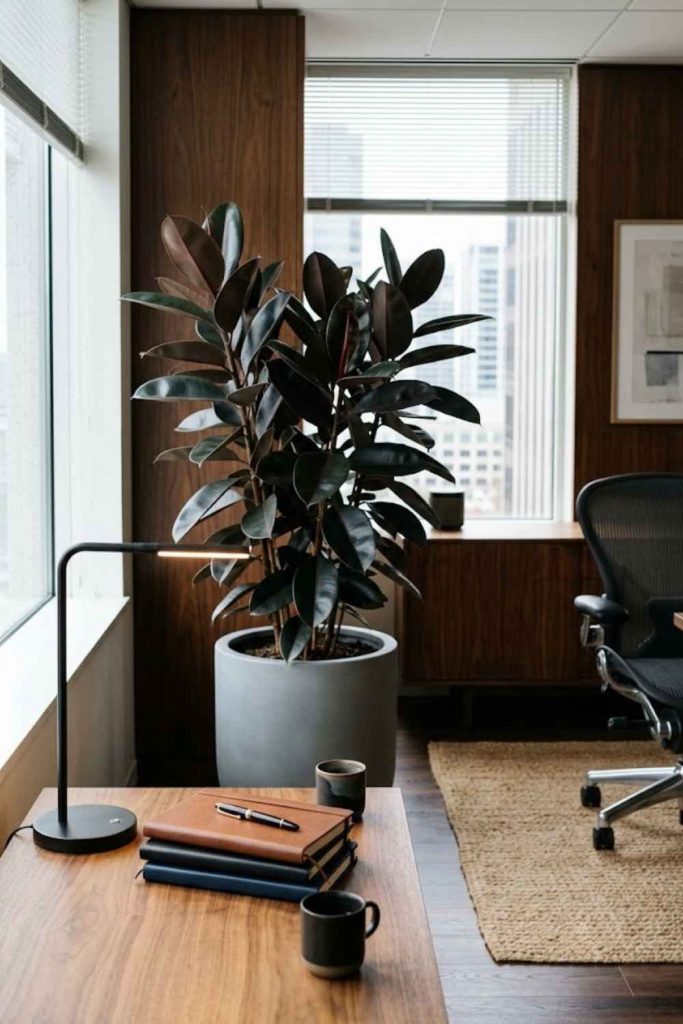
Rubber Tree brings a heavier, moodier presence than softer palms or airy dracaenas.
The large, leathery leaves almost function like living sculpture in bright office spaces, especially darker burgundy varieties paired with wood furniture or minimalist interiors. Despite the dramatic appearance, it is far easier to manage than notoriously temperamental fiddle leaf figs.
It does prefer stability, though. Constantly relocating the plant around the office usually leads to leaf drop and stress. Once it settles into a bright permanent spot, it tends to become one of the most dependable large indoor plants you can own.
Bright indirect light • Moderate watering • Pet toxic • Bold upright grower
Quick Plant Picker
Not sure which plant actually fits your workspace? These editor favorites work especially well for specific office setups.
Best for windowless offices
- Snake Plant (1) — Strong vertical shape with almost no light demands
- ZZ Plant (2) — Glossy foliage that still looks good under overhead lighting
- Cast Iron Plant (3) — One of the toughest options for dim corners
Best for pet-friendly offices
- Cast Iron Plant (3)
- Kentia Palm (6)
- Lady Palm (7)
- Ponytail Palm (8)
- Parlor Palm (9)
Best for hiding cables and power strips
- Cast Iron Plant (3) — Dense foliage helps soften clutter near the floor
- Lady Palm (7) — Bushier growth works well beside desks and office equipment
Best for low-maintenance owners
- ZZ Plant (2)
- Ponytail Palm (8)
Best for modern video-call backgrounds
- Dragon Tree (4) — Clean, sculptural lines
- Rubber Tree (11) — Bold foliage with a moodier, modern feel
Best for creating separation in open offices
- Umbrella Tree (10) — Broad canopy helps soften large open layouts
Choosing the Right Tall Plant for Your Office
The best office plant is usually the one that matches the reality of your workspace — not the one that looks best in a showroom photo.
A drought-tolerant snake plant may thrive where a humidity-loving palm struggles, while a bright corner near a window can easily support something taller and more dramatic.
The right tall plant changes more than just an empty corner. It softens harsh lighting, breaks up rows of hard office surfaces, and makes a workspace feel noticeably calmer to spend time in every day. Even one resilient floor plant can make a home office or corporate workspace feel far less mechanical — and far more lived in.