Table of Contents
Decorating a long, narrow hallway is a challenging interior task.
These transition zones handle constant foot traffic within a very limited footprint, and a splash of green keeps a long stretch of blank drywall from feeling sterile. However, tight quarters mean your choices have to be precise.
Unlike entryways, which often receive ambient light from a front door, interior hallways are frequently windowless. Air movement is minimal, and floor space is practically nonexistent.
To keep a plant alive here, you need upright varieties that don’t mind standing in the dark. Here are the plants that actually work in interior corridors.
1. Snake Plant (Sansevieria trifasciata)
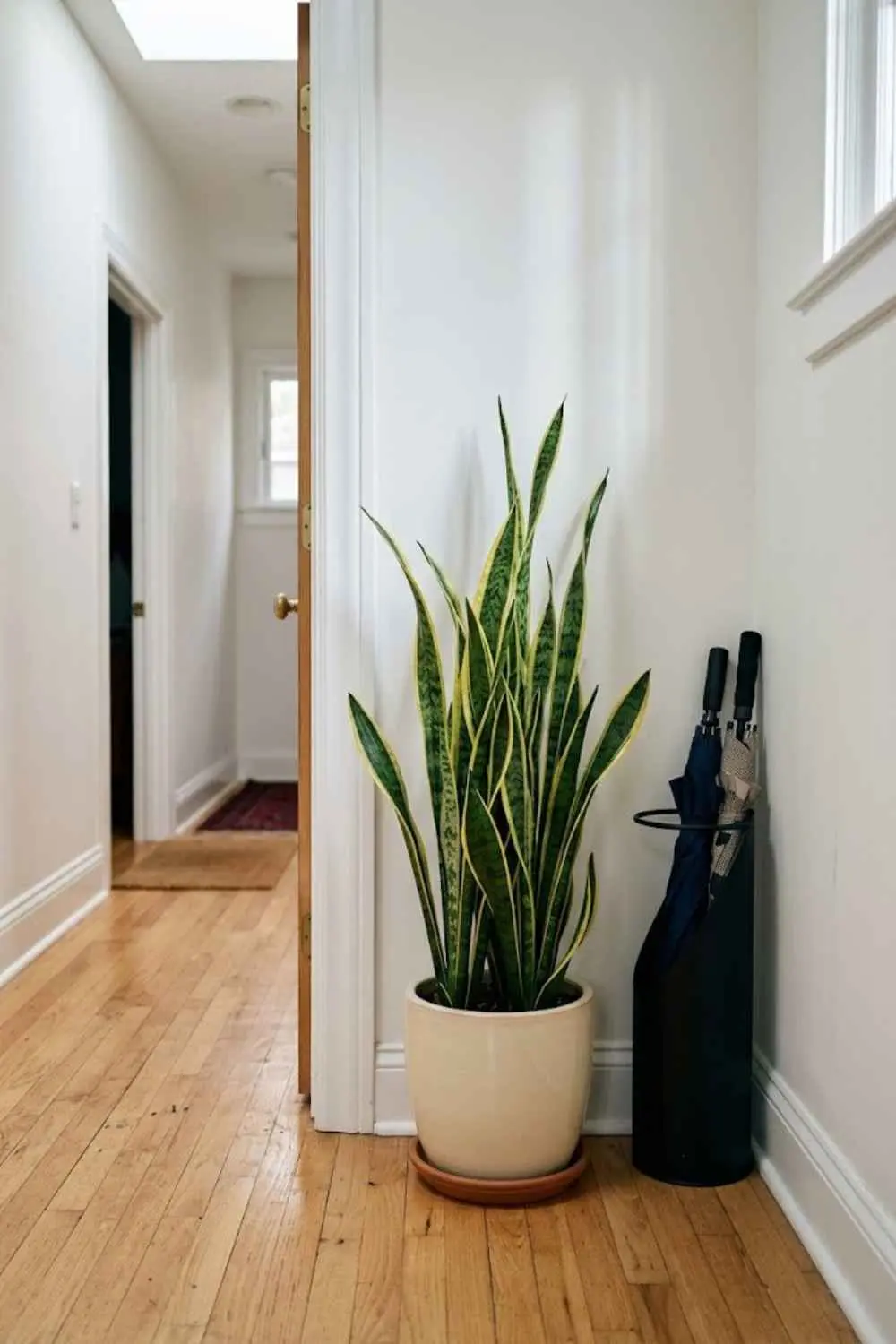
When hallway width is tight, look for plants that grow straight up. The sword-like leaves of the Snake Plant provide a distinct upright line that slips flat against a baseboard or right behind a door frame without extending into the walking lane.
It handles dry indoor air well and requires very little maintenance. In a windowless hall, this species will typically stall its growth, safely holding its size and shape for months.
Because dark corridors stay damp longer, limit watering to once a month to keep the roots healthy.
Light: Low light tolerant • Water: Very low watering • Pets: Pet toxic • Habit: Strictly upright grower
2. ZZ Plant (Zamioculcas zamiifolia)
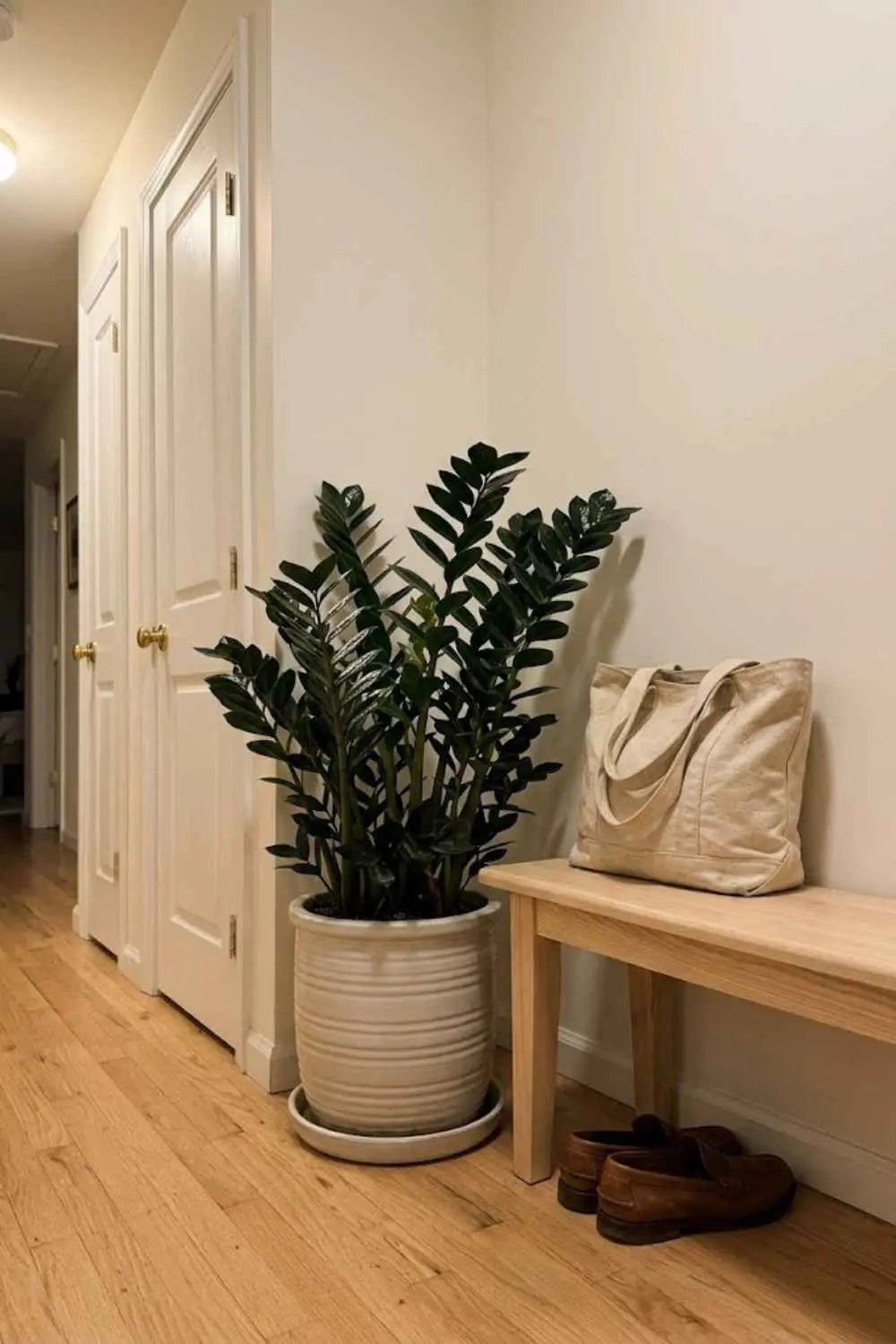
The upright, vase-shaped structure of the ZZ Plant makes it an excellent floor choice next to a narrow bench or tucked tightly into a corner. Its thick stems grow in an organized cluster that stays close to the center of the pot rather than sprawling outward.
The naturally glossy leaflets reflect ambient overhead light, helping brighten visually dark hallways.
It thrives on neglect, which is ideal for a space you only walk through—just stretch the time between waterings since dark hallway soil dries slowly.
Light: Low light tolerant • Water: Very low watering • Pets: Pet toxic • Habit: Upright, vase-shaped grower
3. Dragon Tree (Dracaena marginata)
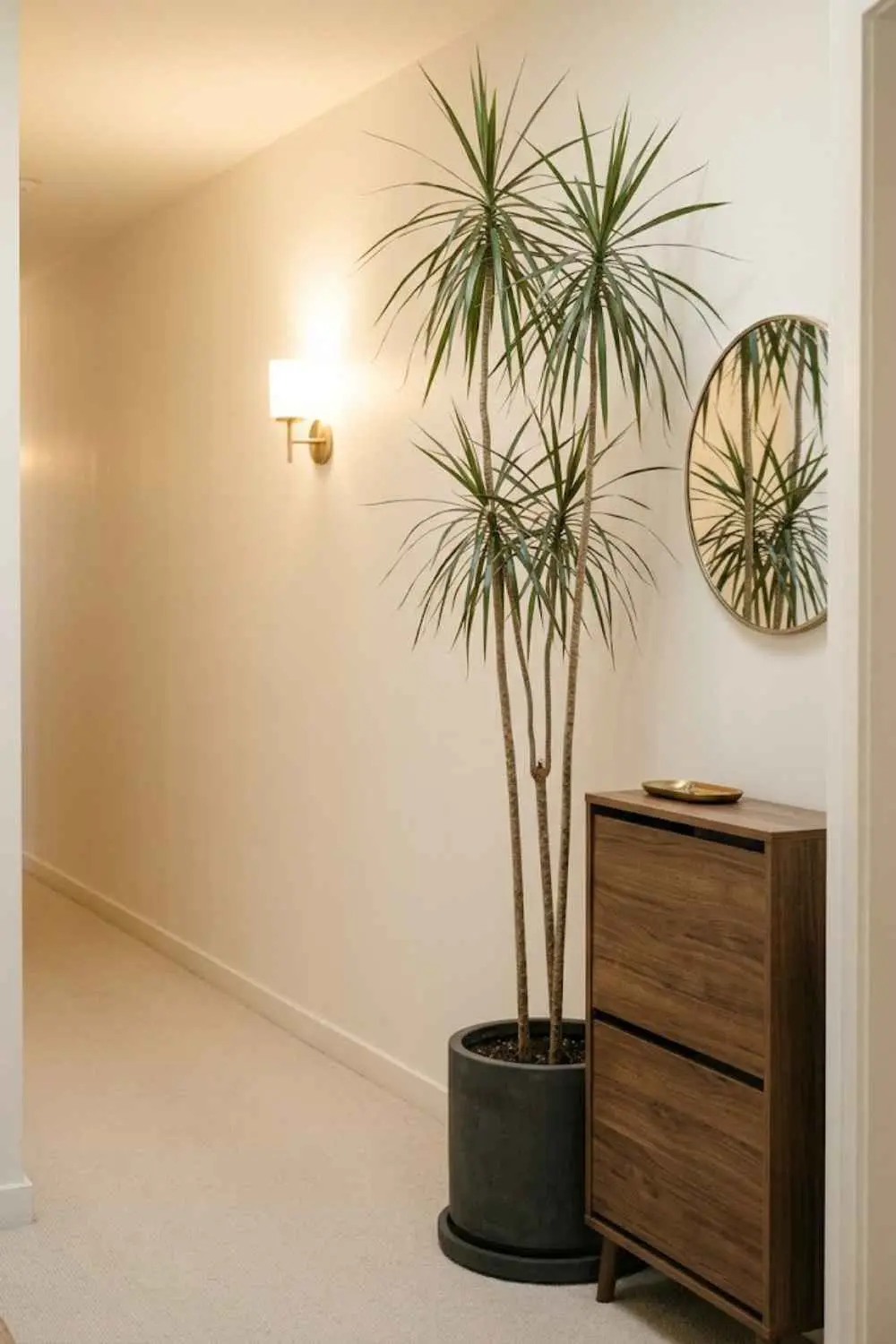
If you need height to break up a long stretch of drywall but cannot afford a bulky indoor tree, this slender option fills the gap without the bulk. The Dragon Tree features thin, woody canes topped with clusters of narrow leaves, offering a light and airy mid-century look.
Because the lower portion of the trunk is completely bare, the base can slide neatly behind a slim hallway shoe rack without obstructing foot traffic.
It drops its lowest leaves naturally as it grows taller, which keeps its profile slim and prevents it from crowding the path.
Light: Medium indirect light • Water: Low watering • Pets: Pet toxic • Habit: Tall, cane grower
4. Cast Iron Plant (Aspidistra elatior)
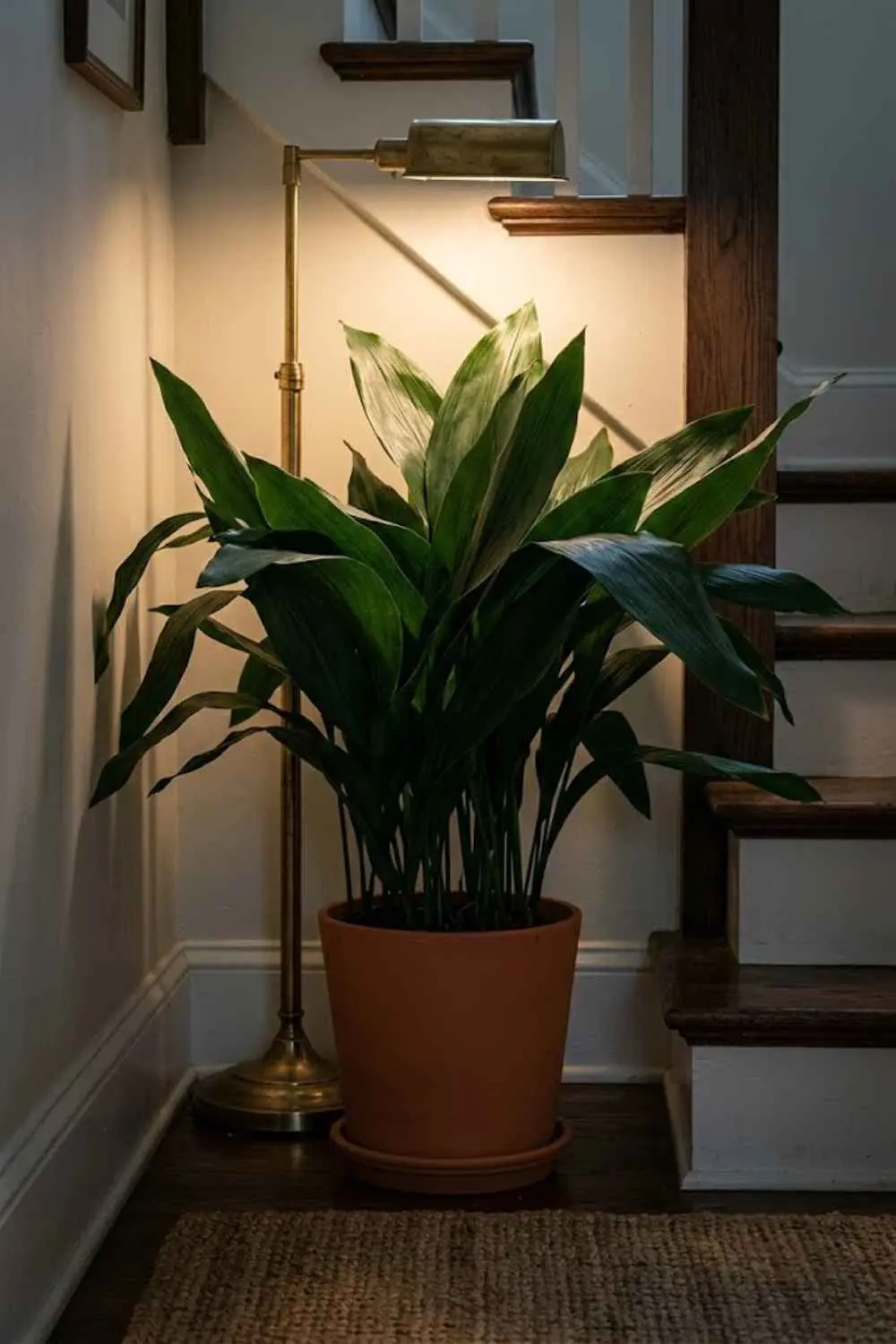
The Cast Iron Plant earned its reputation by handling dark corners and drafts without losing its rich color or dropping leaves.
Its tough foliage rises directly from the soil on individual stems, creating a tidy profile that sits flush against the wall. If you prefer broader leaves over the sharp, vertical lines of a Snake Plant, this is a safe option for a dim corridor corner.
Because it grows slowly, it won’t outgrow its corner anytime soon.
Light: Low light tolerant • Water: Low watering • Pets: Pet friendly • Habit: Upright growth habit
5. Pothos (Epipremnum aureum)
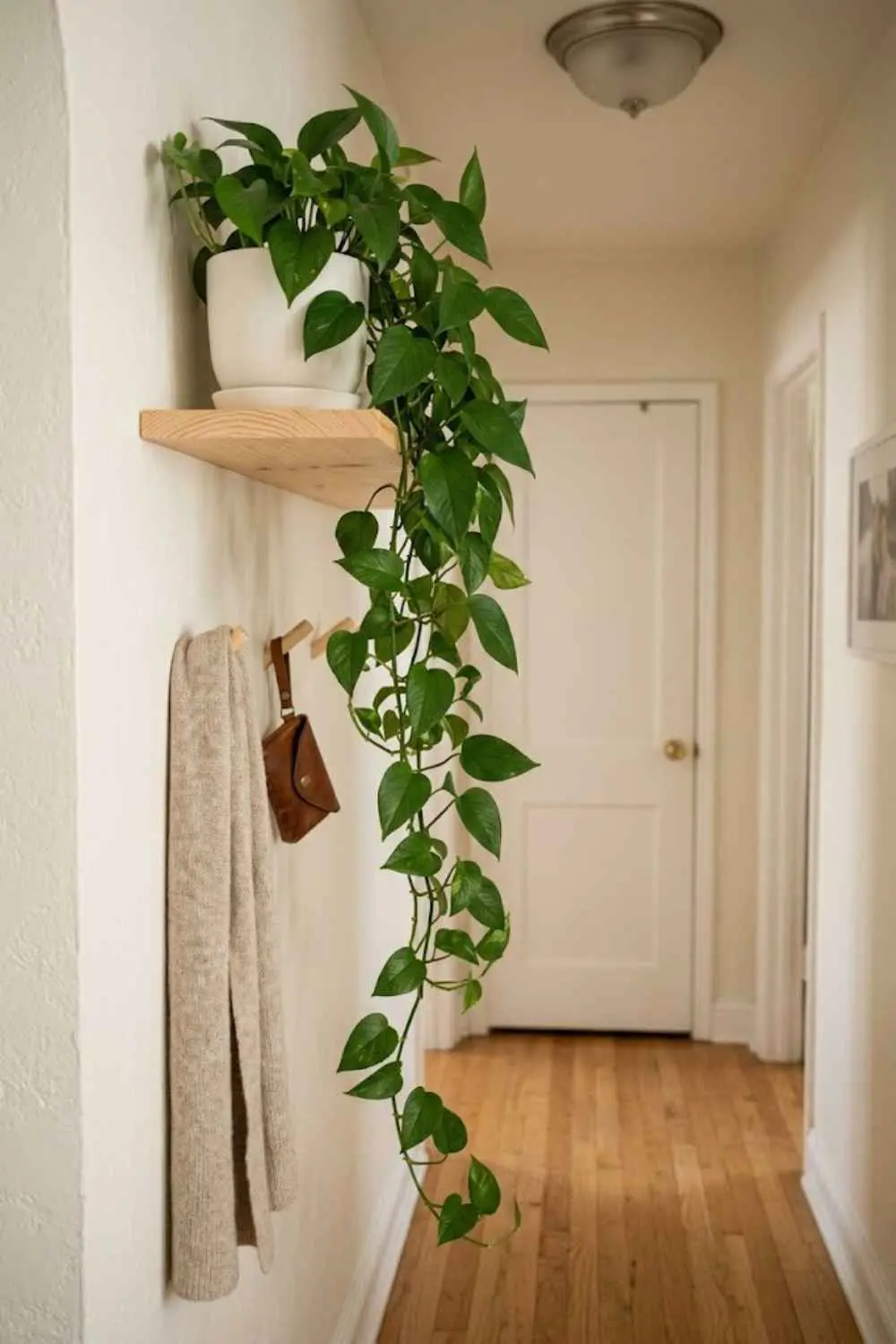
When floor space is non-existent, look to your walls and floating shelves. The Pothos is a highly adaptable vine that cascades neatly from a shallow corner bracket or the top of a coat rack, giving you a dense look without the horizontal bulk of a potted bush.
It handles lower light levels well, though it is best to stick to solid green varieties like the Jade Pothos. Variegated types typically lose their white or yellow patterns anyway to absorb more light in dim halls.
To keep the vines from trailing onto the floor, simply trim the ends once a year to keep the growth compact.
Light: Low light tolerant • Water: Moderate watering • Pets: Pet toxic • Habit: Trailing vine habit
6. Mistletoe Cactus (Rhipsalis baccifera)
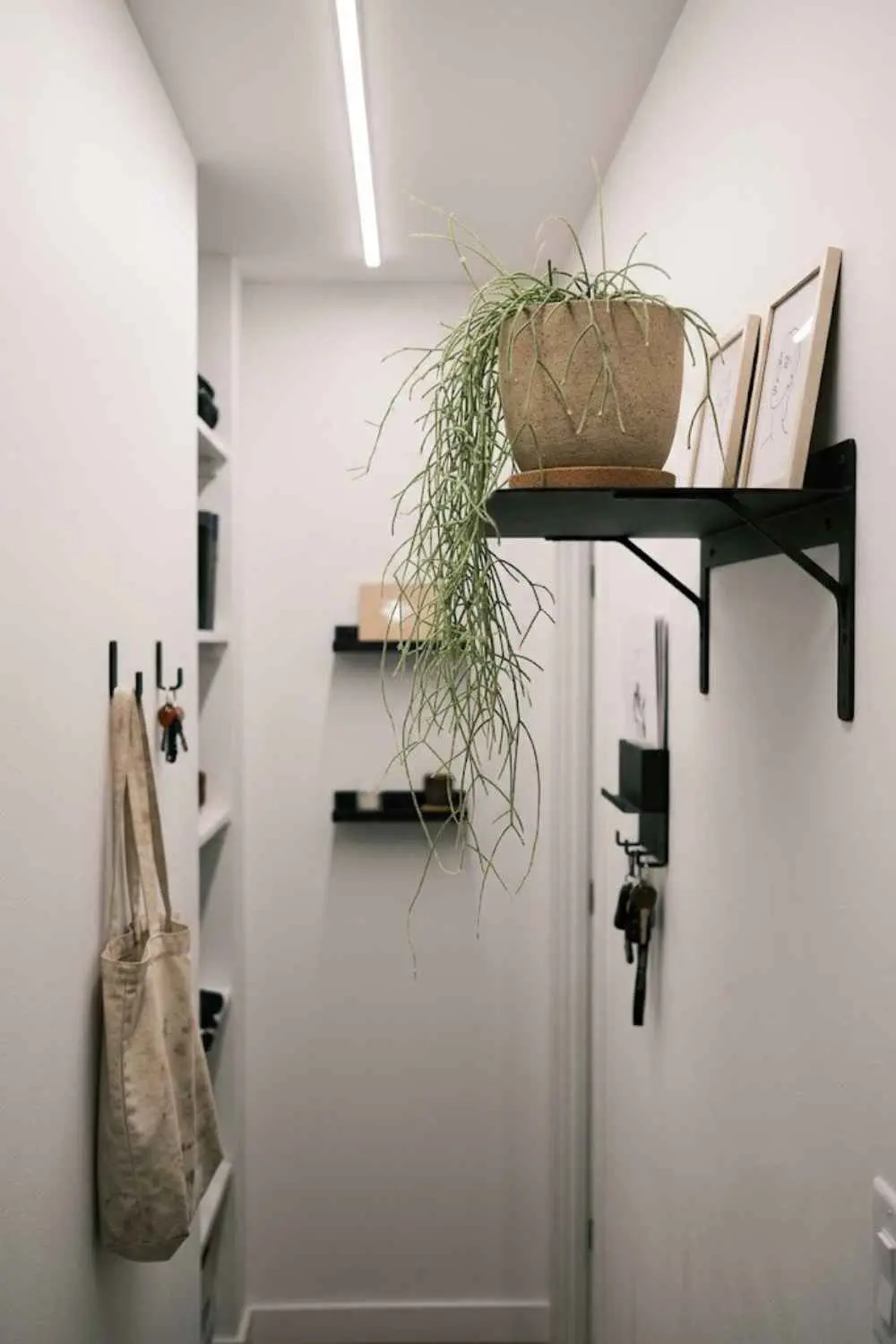
Unlike most desert cacti, this jungle variety handles low indoor light much better. It features thin, cord-like green stems that trail softly over the edge of a wall-mounted planter or a high floating shelf.
It requires almost zero horizontal room, giving your walls a splash of green without getting in the way.
It is highly drought-tolerant and handles dry indoor air without the crispy tips common to tropical ferns.
Light: Low to medium indirect light • Water: Low watering • Pets: Pet friendly • Habit: Trailing, hair-like stems
7. Spider Plant (Chlorophytum comosum)
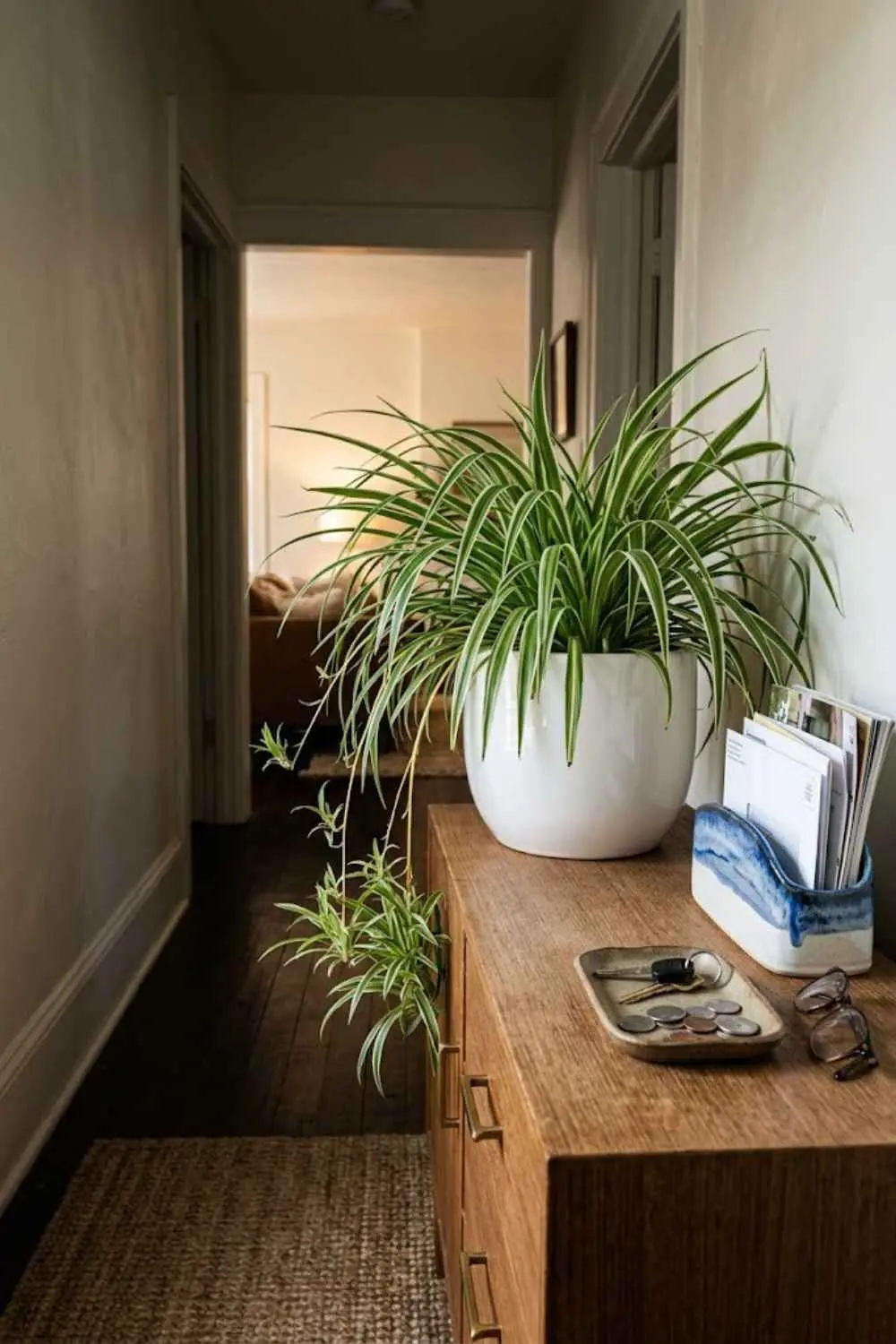
The Spider Plant adds a casual charm to a home’s hallways, working beautifully on top of a storage cabinet or a tiered plant stand. Its long, arching, grassy leaves create a soft fountain effect that lightens up heavy wooden furniture.
As it matures, it sends out runners with miniature plantlets that hang down naturally.
While it is completely safe for dogs, cats often find the leaves attractive to chew on, so keep it elevated if you have a feline roaming the house.
Light: Medium indirect light • Water: Moderate watering • Pets: Pet friendly • Habit: Arching, cascading grower
8. Chinese Evergreen (Aglaonema)
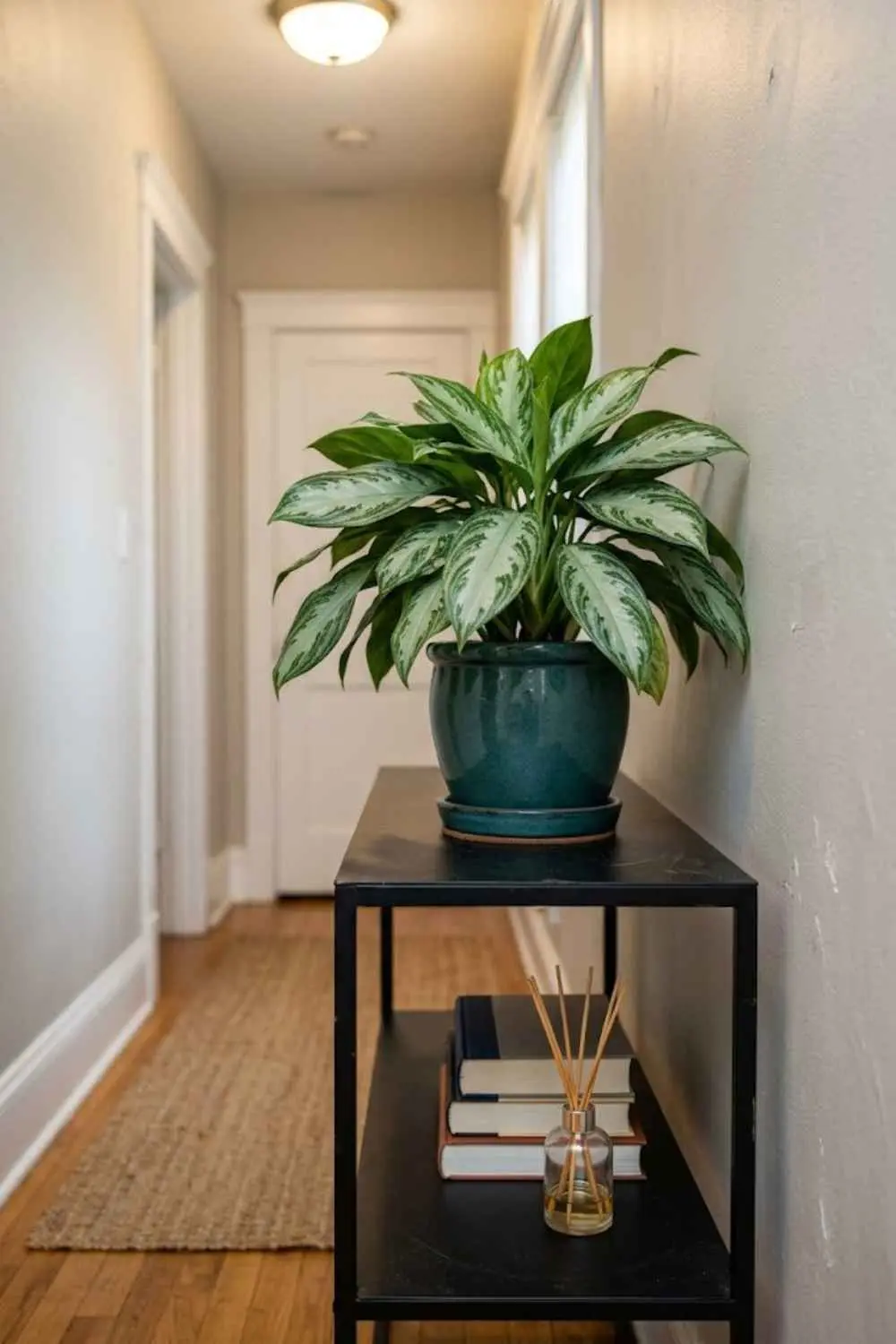
The Chinese Evergreen is a reliable choice for shallow console tables or radiator covers. Available in patterns ranging from deep silver to pale cream, its lance-shaped leaves brighten up dull corridors while easily tolerating dry indoor air.
It grows in a tight clump that expands slowly, making it simple to keep within a tight space.
Stick to the silver or green variegated types for dark hallways, as the brightly colored pink varieties require more natural light to maintain their contrast.
Light: Low light tolerant • Water: Moderate watering • Pets: Pet toxic • Habit: Bushy, mounding grower
9. Parlor Palm (Chamaedorea elegans)
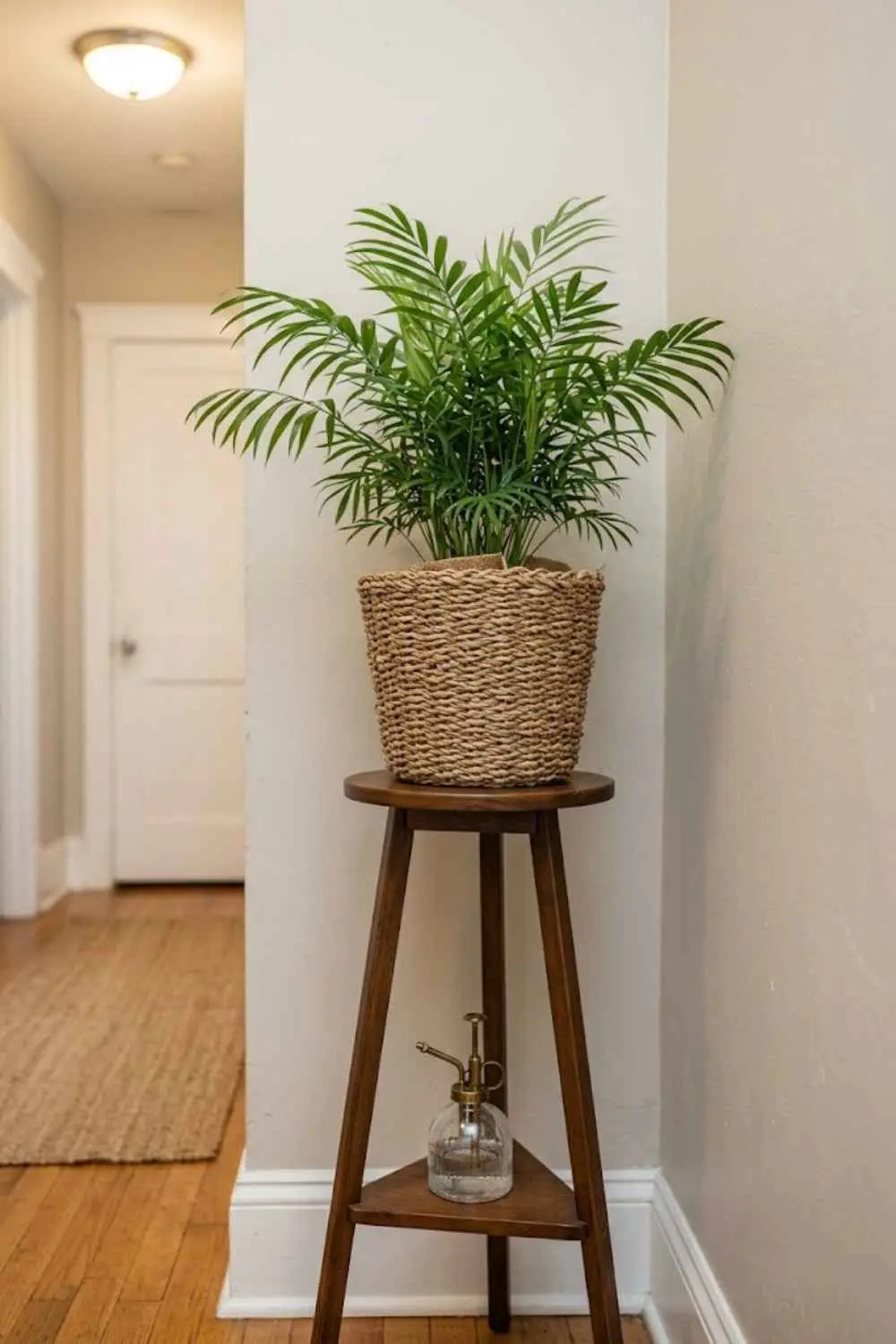
The Parlor Palm offers the lush, feathered look of a tropical palm in a highly compact, tabletop size. It features soft fronds that clump together tightly into a neat bush, allowing it to sit safely on a small corner pedestal or a narrow shelf without extending branches into the walking lane.
It is much more tolerant of low interior light than larger palm varieties.
Because it grows slowly, select the exact size your hallway requires at the nursery, and keep it clear of direct heating vents to avoid dry leaf tips.
Light: Low to medium indirect light • Water: Moderate watering • Pets: Pet friendly • Habit: Compact, bushy grower
10. Ponytail Palm (Beaucarnea recurvata)
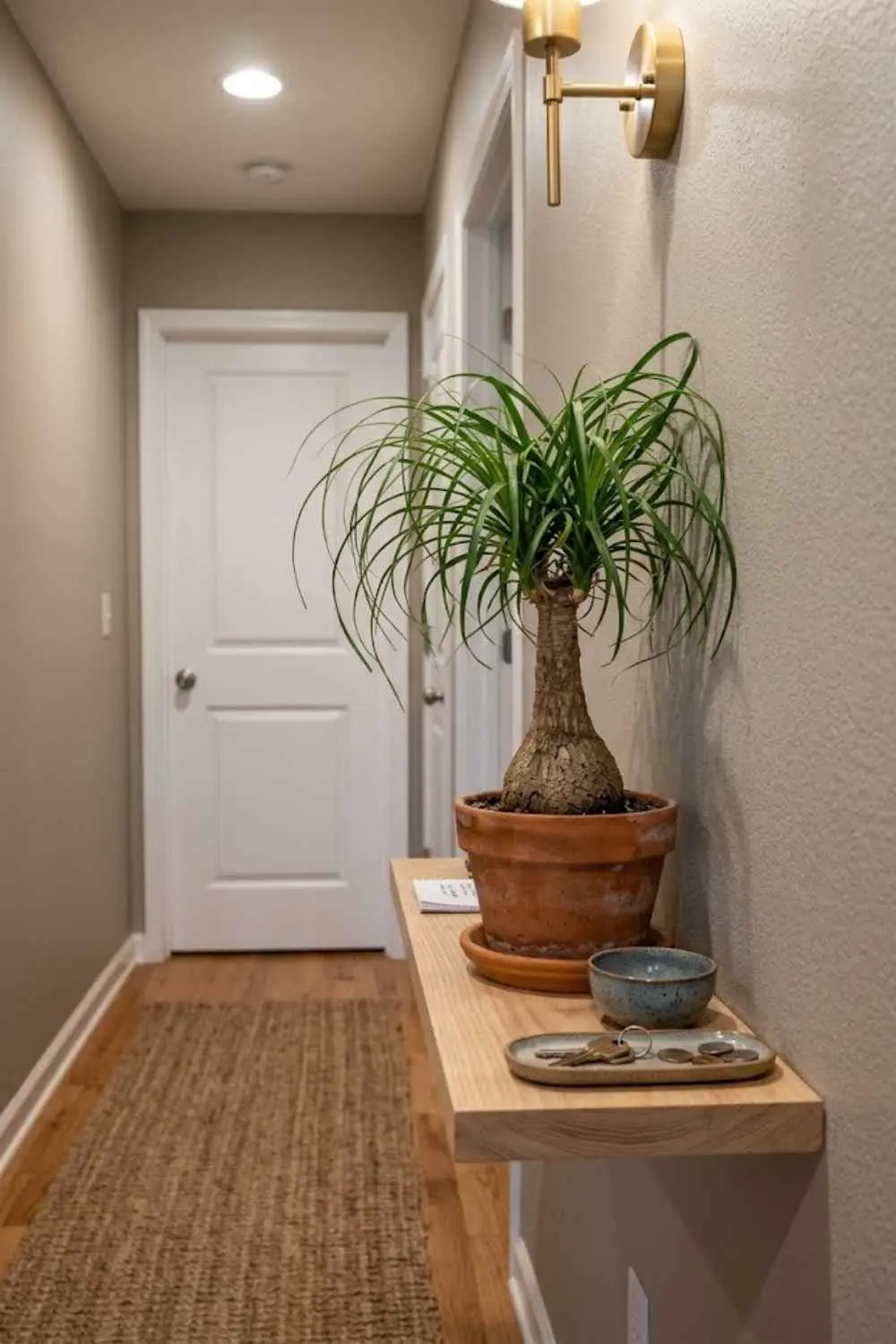
Despite its name, this is a member of the agave family and brings an eccentric, upright look to a narrow console. It features a bulbous trunk topped with a canopy of narrow leaves that cascade downward like a green fountain.
The true benefit for hallways is its resilience; it stores water efficiently in its swollen base, allowing it to handle long stretches of forgetfulness in areas of the house you only walk through.
Because it keeps its width entirely out of the traffic lane, it works best in hallways that receive at least some ambient indirect daylight.
Light: Medium to bright indirect light • Water: Low watering • Pets: Pet friendly • Habit: Upright, weeping canopy
Quick Hallway Picker
Best for zero floor space (Shelves/Walls)
Pothos (5) • Mistletoe Cactus (6) • Spider Plant (7)
Best for windowless, ultra-dark halls
Snake Plant (1) • ZZ Plant (2) • Cast Iron Plant (4) • Chinese Evergreen (8)
Best for adding vertical height
Dragon Tree (3) • Snake Plant (1) • Ponytail Palm (10)
Best for narrow console tables
ZZ Plant (2) • Parlor Palm (9) • Chinese Evergreen (8)
Best for pet-friendly hallways
Cast Iron Plant (4) • Parlor Palm (9) • Ponytail Palm (10) • Mistletoe Cactus (6)
FAQs
Can hallway plants survive on artificial ceiling lights alone?
Tough varieties like the Snake Plant, ZZ Plant, and Cast Iron Plant can tolerate standard home lighting for long periods, but their growth will stall. For completely windowless hallways, consider replacing a standard ceiling bulb with a full-spectrum LED grow bulb to keep your plants healthy over the long term.
How do I prevent my hallway plants from getting damaged by people walking past?
Stick to vertical growers or elevated trailing vines on shelves. If you are placing a floor plant like a Dragon Tree or a large Snake Plant, anchor it in a heavy, wide-based pot so it won’t easily tip over if brushed by a heavy coat or a stray bag.
Conclusion
Decorating a narrow hallway successfully comes down to prioritizing physical traffic flow over aesthetic aspiration.
Before choosing a plant, take a few days to notice where the daylight falls throughout the day and see exactly which corners are prone to bumps from bags or laundry baskets.
Matching the strict spatial limitations and low-light realities of your corridor with a vertical or elevated plant ensures your green addition remains a welcoming accent rather than an obstacle.