Table of Contents
A windowless office does not have to feel sterile or lifeless.
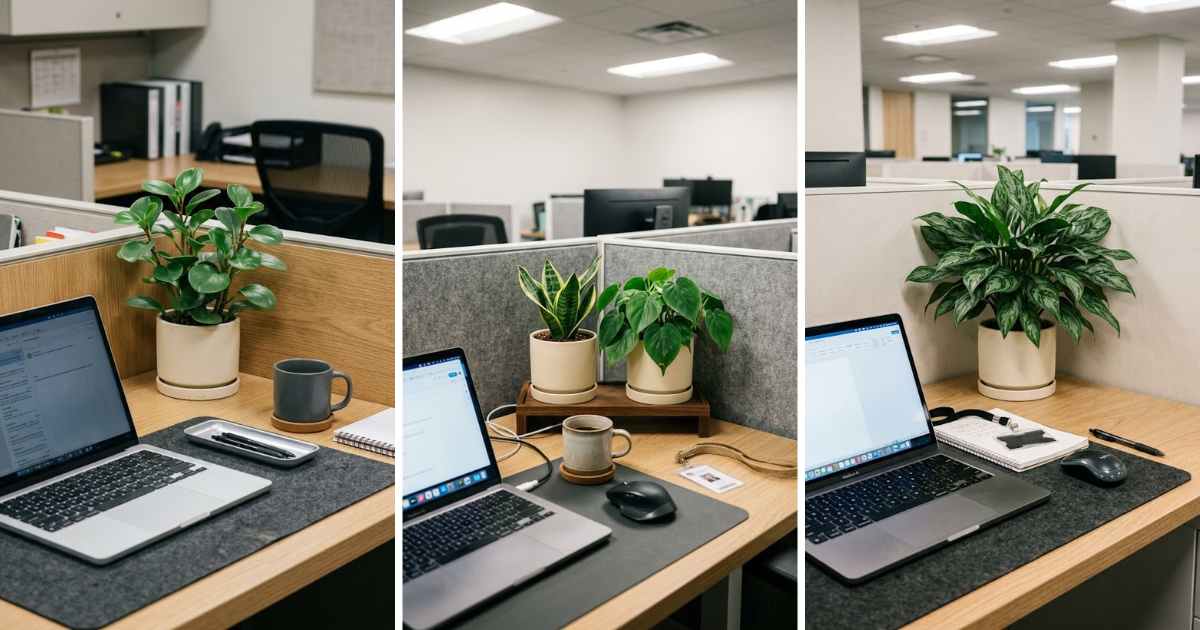
The right greenery can soften harsh fluorescent lighting, break up blank cubicle walls, and make long workdays feel less mechanical.
The trick is choosing plants naturally adapted to shaded forest floors and low-light interiors rather than forcing sun-loving varieties to survive under office LEDs.
These resilient plants tolerate dry indoor air, inconsistent watering, and long weekends away from your desk surprisingly well.
1. Snake Plant (Sansevieria trifasciata)
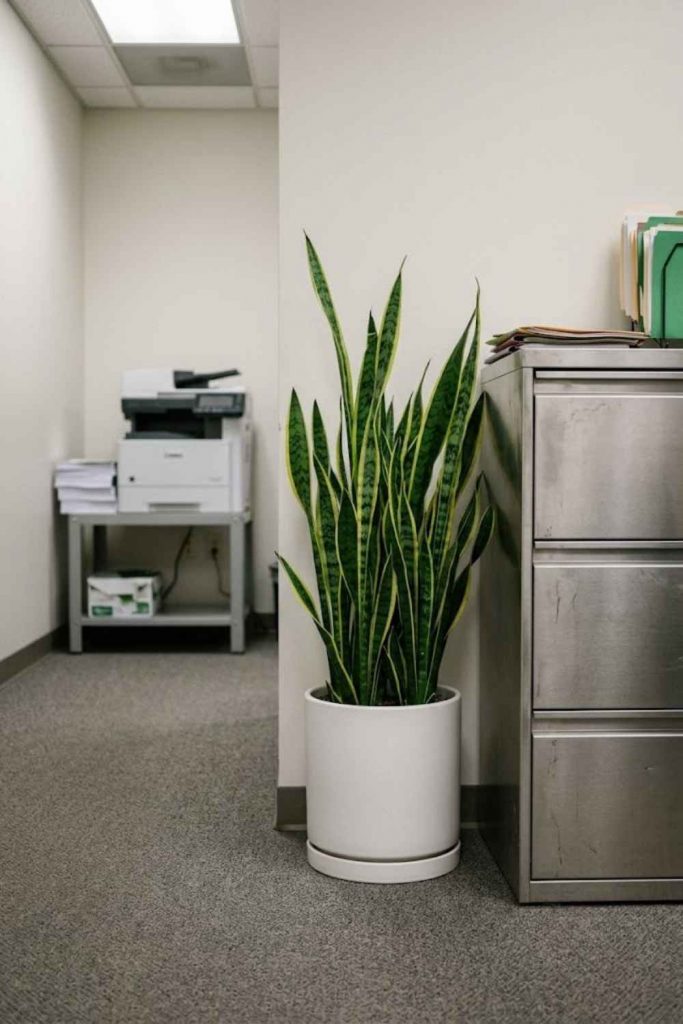
If you need to fill an empty floor corner beside a filing cabinet or printer station, a tall snake plant adds architectural height without eating up valuable square footage. The stiff, upright leaves create a clean silhouette that fits naturally into modern office layouts.
It handles conditioned office air remarkably well and actually prefers dry soil. The biggest mistake people make is watering it too often, especially in low-light rooms where the potting mix dries slowly. Let the soil go completely dry before watering again.
Low artificial light • Infrequent watering • Pet toxic • Tall upright grower
2. ZZ Plant (Zamioculcas zamiifolia)
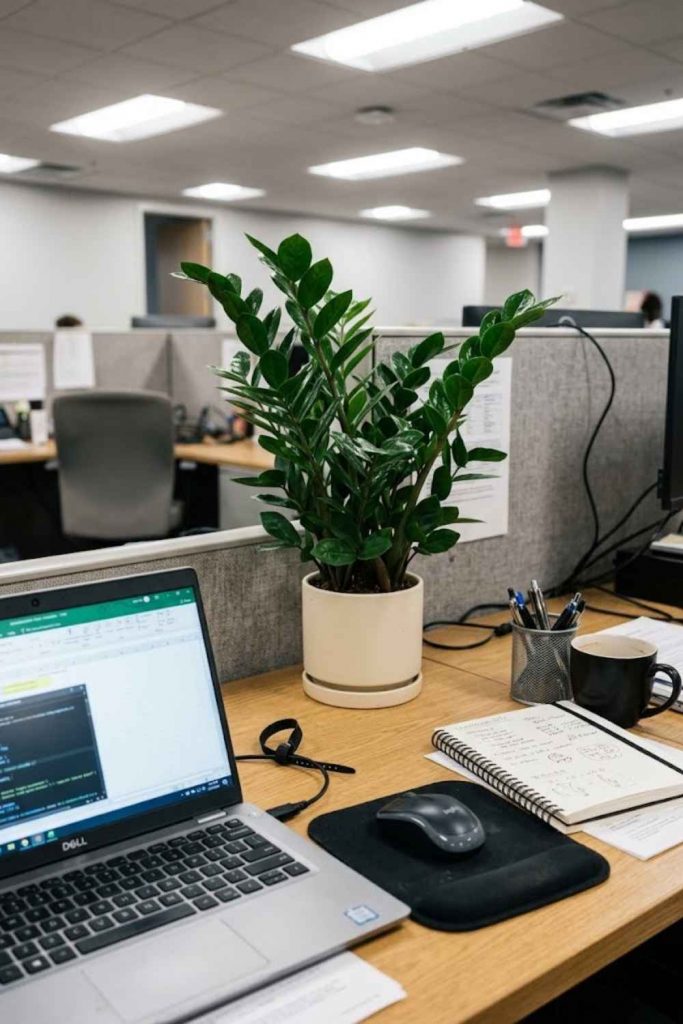
The glossy, dark green stems of the ZZ plant almost look polished under fluorescent lights, which helps dull office corners feel more intentional. Its underground rhizomes store water efficiently, allowing the plant to shrug off missed waterings and extended office closures.
Because it grows slowly in low light, even a compact tabletop specimen stays manageable for years. Just avoid soggy soil — in windowless offices, overwatering causes far more damage than neglect.
Low artificial light • Infrequent watering • Pet toxic • Upright structural grower
3. Golden Pothos (Epipremnum aureum)
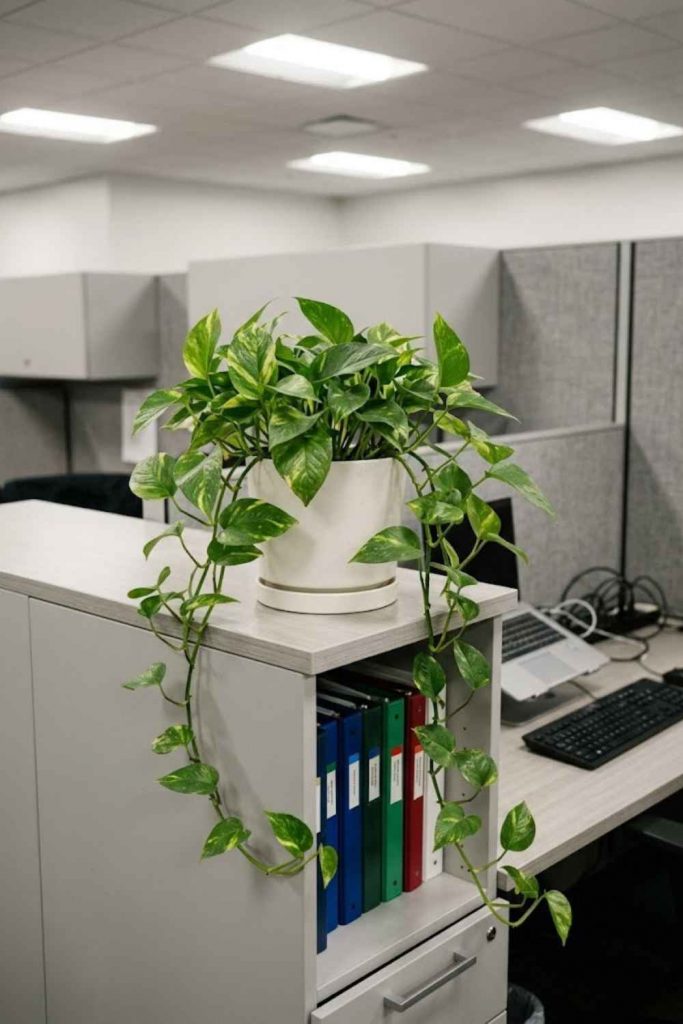
Golden pothos adds softness where office furniture tends to feel rigid and boxy. Place it on top of a cabinet or shelf and let the vines drape naturally downward to break up harsh cubicle lines.
It communicates clearly when thirsty: the leaves droop slightly, then recover quickly after watering. In very dim offices, the vines may stretch and lose some variegation, but occasional trimming keeps the plant dense and tidy.
Low artificial light • Moderate watering • Pet toxic • Trailing vine
4. Cast Iron Plant (Aspidistra elatior)
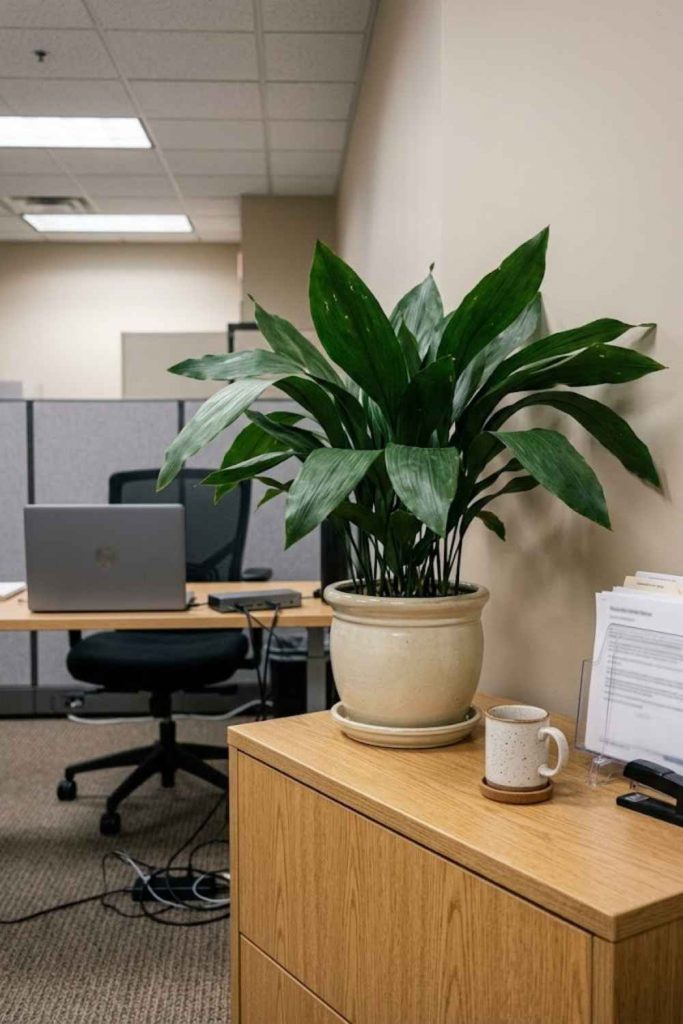
Few plants tolerate workplace abuse better than the cast iron plant. Drafts, stale office air, inconsistent care, and dim lighting barely faze it. The broad, matte-green leaves bring a calm, grounded texture that works especially well beside dark office furniture or large monitors.
It grows outward more than upward, so it works best on a side table or credenza rather than a crowded desktop. Growth is slow, but that also means minimal maintenance long term.
Low artificial light • Moderate watering • Pet safe • Broad outward grower
5. Parlor Palm (Chamaedorea elegans)
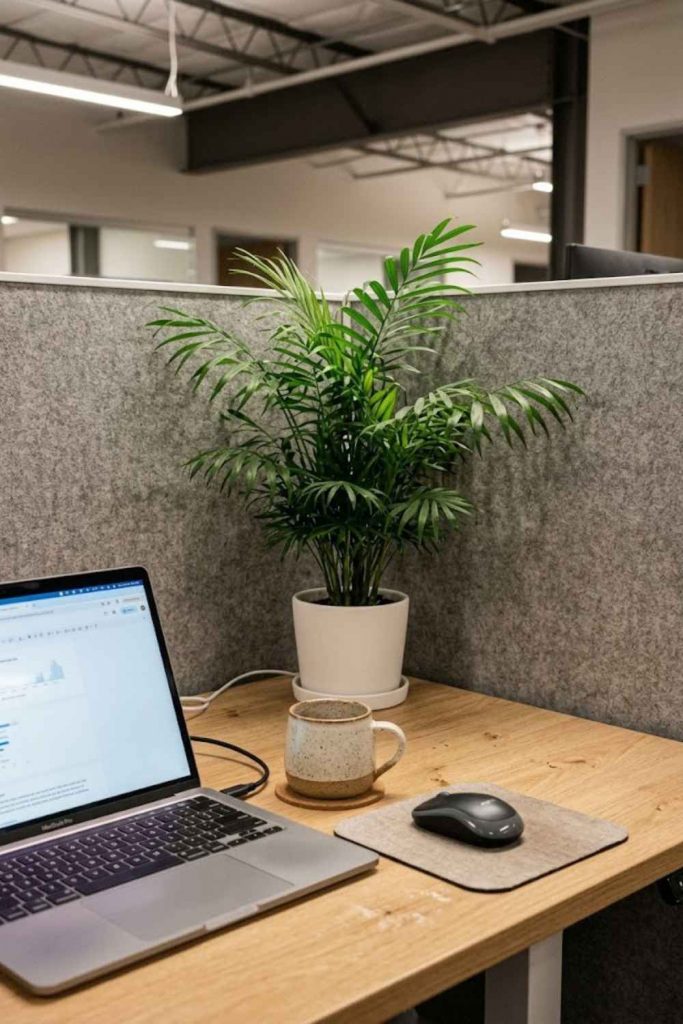
The parlor palm brings a lighter, softer texture into spaces dominated by plastic, metal, and fluorescent glare. Its feathery fronds catch subtle airflow from office vents, adding a bit of movement to otherwise static rooms.
Unlike fussier tropical palms, this one adapts surprisingly well to standard climate-controlled offices. Just do not expect rapid growth under artificial lighting — buying the size you actually want is usually smarter than waiting years for it to fill out.
Low artificial light • Moderate watering • Pet safe • Upright feathery grower
6. Chinese Evergreen (Aglaonema)
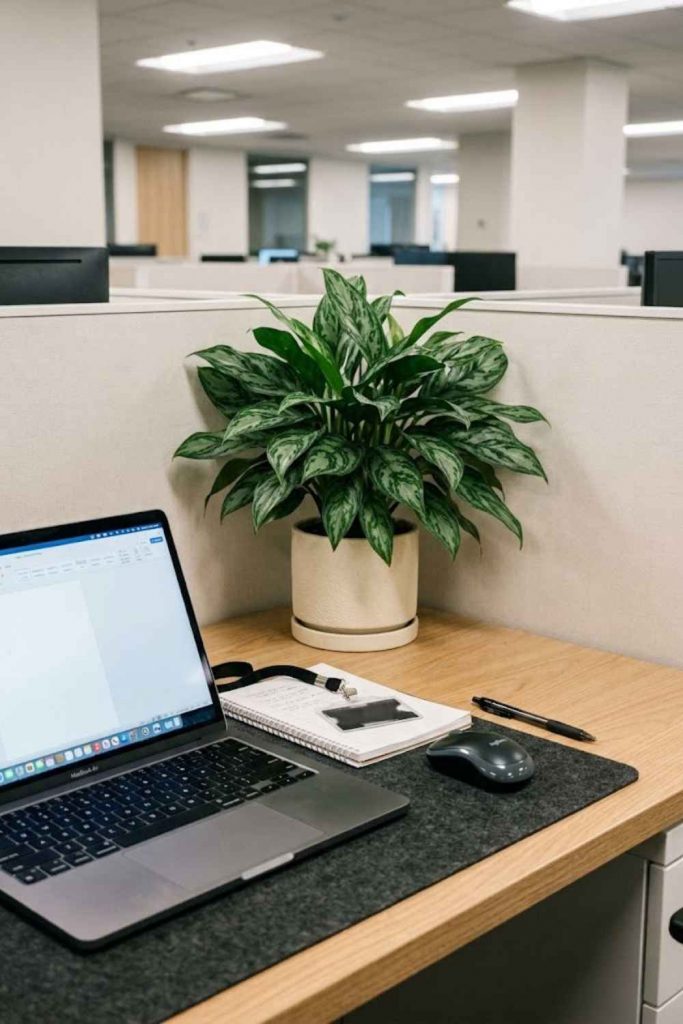
If your office feels visually flat, Chinese evergreen introduces subtle silver and green patterning without demanding direct sunlight. It stays compact and bushy rather than sprawling across your workspace.
Stick with darker green varieties for true no-window offices. Bright pink or red cultivars often fade under fluorescent-only lighting. Keep it away from aggressive air-conditioning vents, which can shock the foliage and cause browning edges.
Low artificial light • Moderate watering • Pet toxic • Compact bushy grower
7. Heartleaf Philodendron (Philodendron hederaceum)
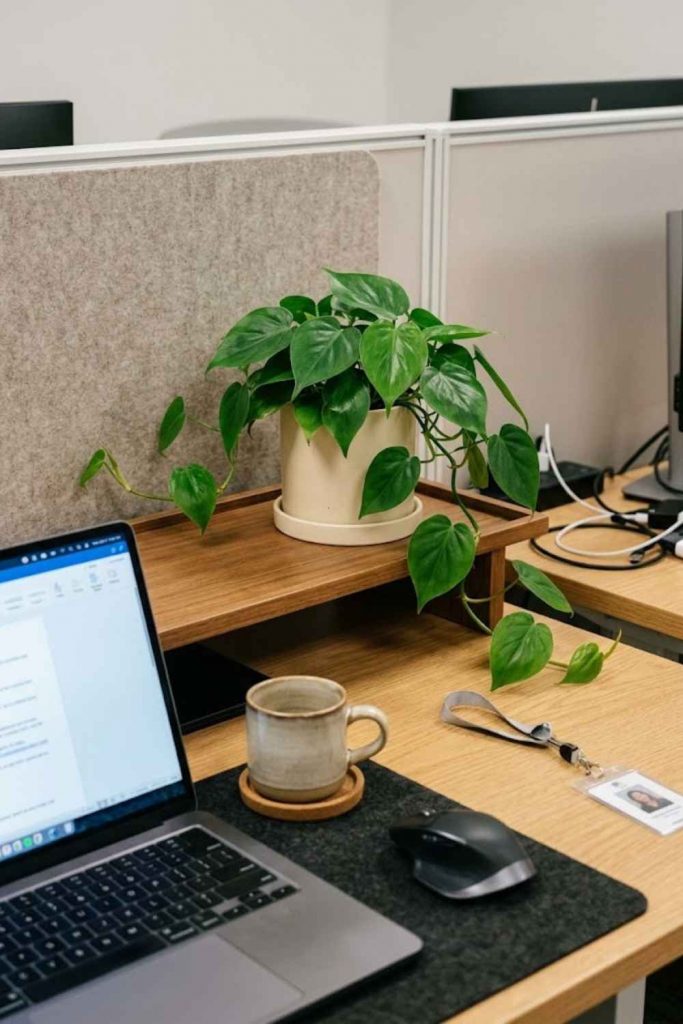
The heartleaf philodendron creates a softer, more relaxed atmosphere than many upright office plants. Its trailing emerald vines work beautifully on top of filing cabinets, shelves, or cubicle dividers.
It tolerates low light better than many trailing species, though growth slows noticeably in darker offices. If the vines become too long or sparse, pinching the tips encourages fuller growth near the base.
Low artificial light • Moderate watering • Pet toxic • Trailing vine
8. Spider Plant (Chlorophytum comosum)
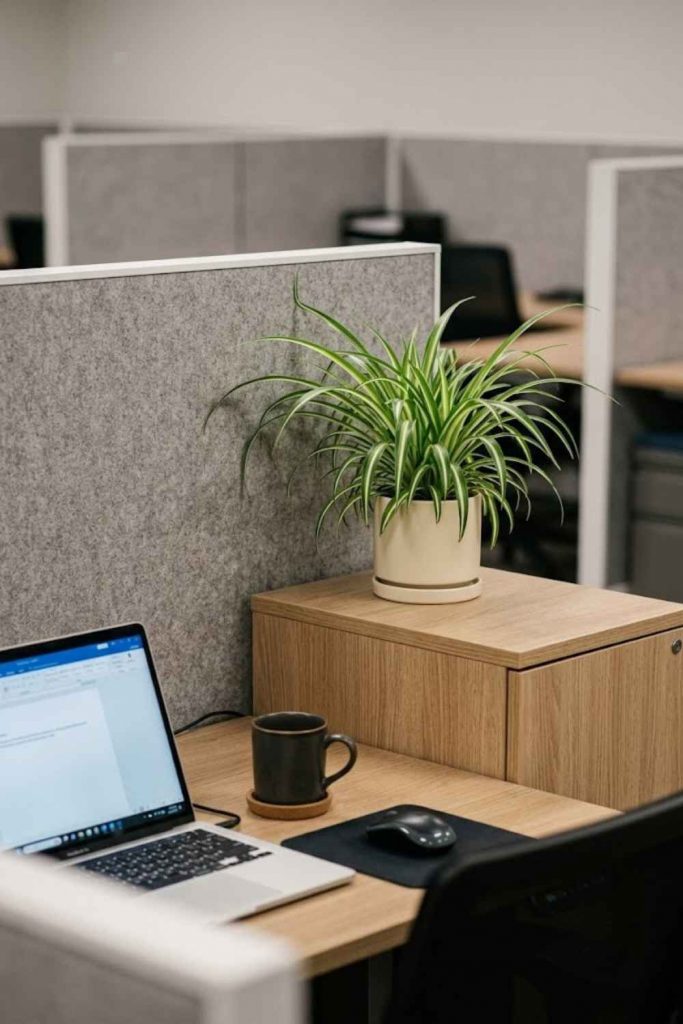
Spider plants bring a casual, energetic feel to office spaces with their arching leaves and fountain-like shape. They work especially well elevated on shelves or desk organizers where the foliage can spill naturally over the sides.
Mature plants eventually produce dangling baby plantlets that coworkers inevitably ask about. Brown leaf tips are fairly common in offices with heavily chlorinated tap water, so letting water sit overnight before using it can help reduce mineral stress.
Low artificial light • Moderate watering • Pet safe • Arching cascading grower
9. Baby Rubber Plant (Peperomia obtusifolia)
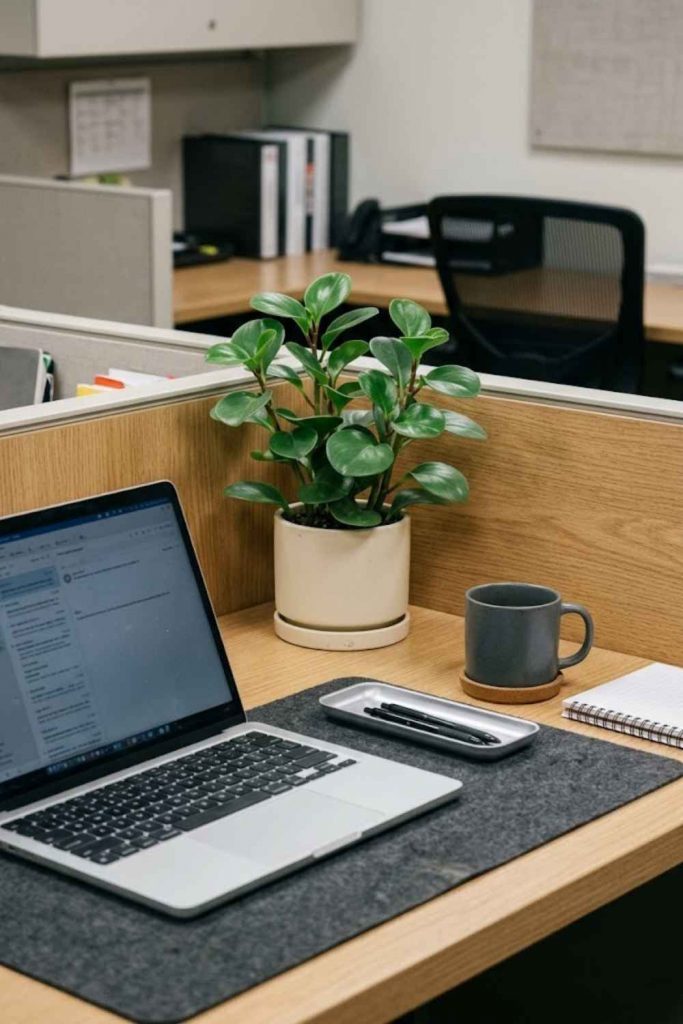
For crowded desks with limited space, the baby rubber plant is one of the easiest low-maintenance options available. The thick, paddle-shaped leaves retain moisture efficiently, helping the plant tolerate dry office air and occasional neglect.
Its compact, mounding shape stays neat beside keyboards, monitors, and paperwork trays without sprawling into your workspace. Under office lighting, it grows slowly and predictably, which is exactly what most desks need.
Low artificial light • Infrequent watering • Pet safe • Compact mounding grower
Quick Plant Picker
Best for chronic under-waterers
ZZ Plant • Snake Plant
Best for crowded desks
Baby Rubber Plant • Chinese Evergreen
Best for empty office corners
Snake Plant • Cast Iron Plant
Best for shelves and cabinets
Golden Pothos • Heartleaf Philodendron
Best for pet-friendly offices
Parlor Palm • Cast Iron Plant • Spider Plant
Best for adding texture and movement
Parlor Palm • Spider Plant • Golden Pothos
Conclusion
No-window offices are challenging, but they are not impossible for houseplants. The key is working with the conditions you actually have instead of fighting them. Low-light plants grow more slowly, drink less water, and rely heavily on consistent overhead lighting rather than sunlight.
Start with one durable plant that matches your desk layout and watering habits. Once you see how little maintenance many of these varieties actually require, adding greenery to a windowless workspace becomes surprisingly easy.