Table of Contents
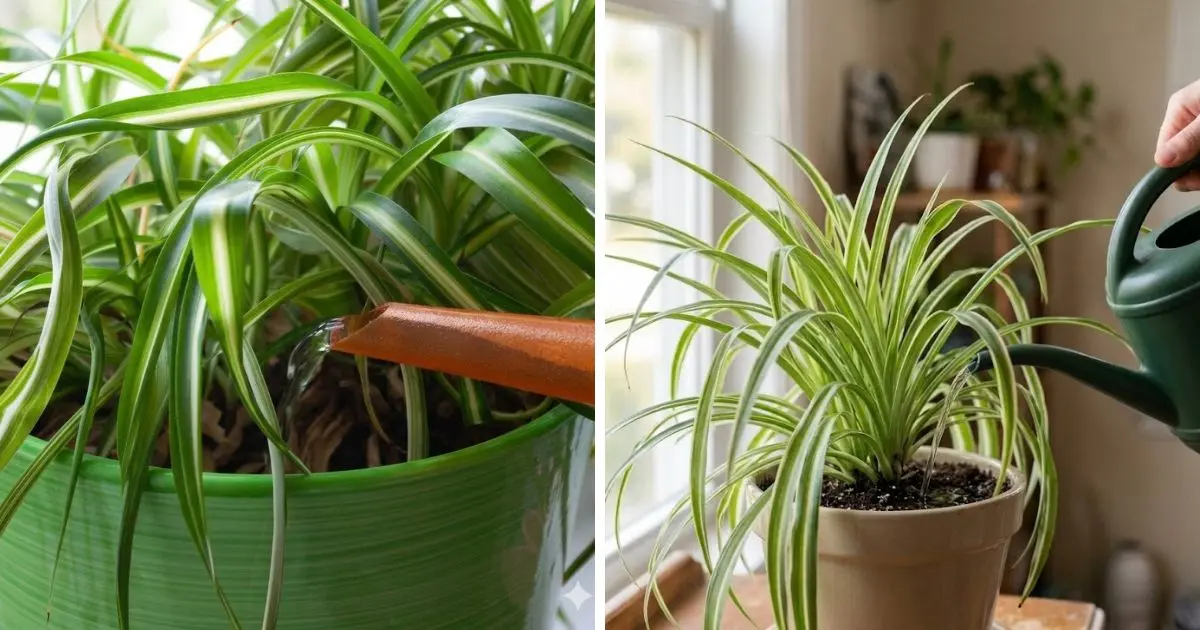
Spider plants are forgiving houseplants, but they still need the right balance of moisture to look their best.
Instead of sticking to a rigid watering schedule, pay attention to the soil, your plant’s growing conditions, and the signs it gives you.
1. Check the Soil Before You Water
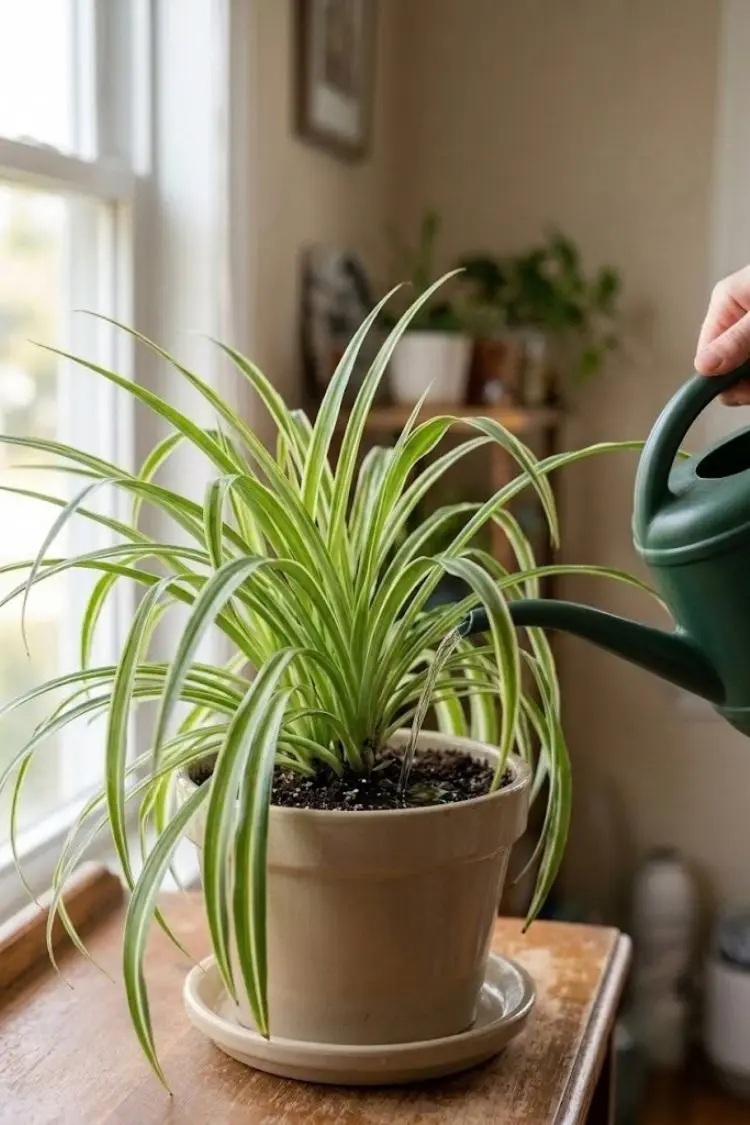
The best time to water a spider plant depends more on how dry the soil is than on the calendar. Check the top 1 to 2 inches of soil with your finger. If it feels dry, it’s time to water; if it’s still moist, wait a little longer.
How quickly the soil dries depends on light, temperature, humidity, and the potting mix. A spider plant in a warm, bright spot may need water more often than one growing in a cooler, darker location.
2. Water Thoroughly, Then Let It Drain
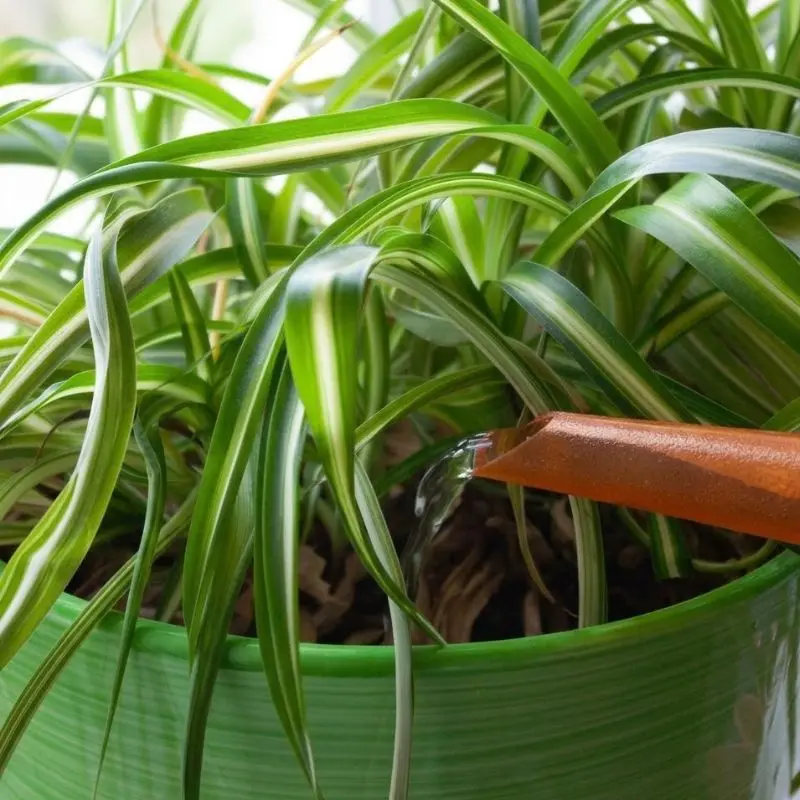
When your spider plant needs water, give it a thorough drink rather than just wetting the surface. Water until some excess runs through the drainage hole, then let the pot drain completely.
Use a pot with drainage holes, and empty excess water from the saucer or outer pot. Spider plants can tolerate a little over- or underwatering, but they don’t like sitting in water for long periods.
3. Adjust Watering as Conditions Change
Your spider plant won’t necessarily need the same amount of water year-round. During active growth in spring and summer, the soil may dry out faster. In winter, when growth slows, you’ll generally need to water less often.
So instead of watering on the same day every week, check the soil first and adjust as needed.
4. Watch the Soil and Leaves for Clues
Check the soil along with the leaves when you’re trying to figure out whether your spider plant needs water. If the top 1 to 2 inches feel dry, pale or dull leaves, wilting, or crisp brown leaves can point to underwatering.
If the soil is still wet, don’t assume a wilted plant needs more water. Yellowing or soft leaves, along with soil that stays wet longer than usual, can signal overwatering.
Brown tips aren’t always a watering problem, either. Dry air, too much sunlight, and fluoride in tap water can also contribute to browning.
5. Check Your Water if Brown Tips Persist
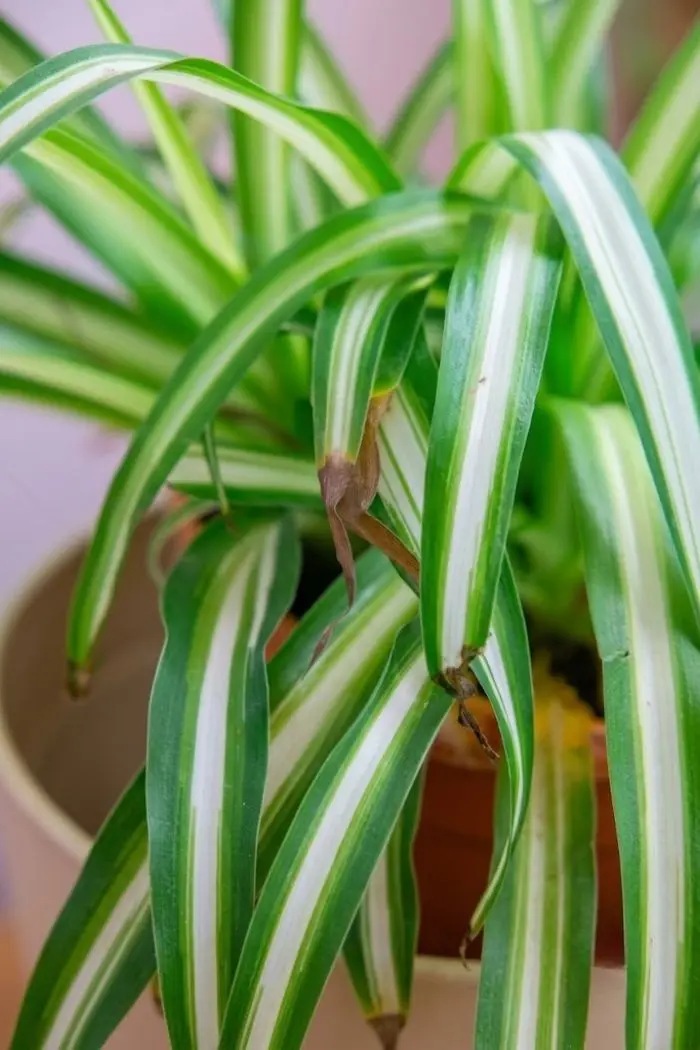
If your spider plant keeps developing brown tips even though you’re watering it properly, your tap water may be part of the problem. Spider plants can be sensitive to fluoride, which can cause brown tips.
If water quality seems to be contributing to the problem, try rainwater, distilled water, or filtered water instead. You don’t need to switch water sources at the first brown tip. Several growing conditions can cause browning, but persistent symptoms make water quality worth checking.
6. Don’t Let the Soil Stay Soggy
Let the soil dry slightly between waterings rather than watering again while it’s still wet. If the soil stays soggy for days, the problem may be poor drainage, a pot that’s too large, or a potting mix that holds too much moisture.
Spider plants prefer soil that is lightly moist, not constantly saturated. Persistent wetness can stress the roots and increase the risk of root problems.
FAQs
How often should you water a spider plant?
There isn’t one schedule that works for every spider plant.
About once a week can be a useful starting point, but check the top inch or two of soil first and adjust based on light, temperature, season, and how quickly the soil dries.
Can you bottom-water a spider plant?
Yes. Spider plants can be watered from the top or bottom.
Bottom watering can be especially useful when the soil is very dry, but don’t leave the pot sitting in water for an extended period. Once the soil is thoroughly moistened, pour off any remaining water.
What kind of water is best for a spider plant?
Spider plants can be sensitive to fluoride in tap water.
If your plant keeps developing brown tips even with good watering and growing conditions, try rainwater, distilled water, or filtered water instead.