Table of Contents
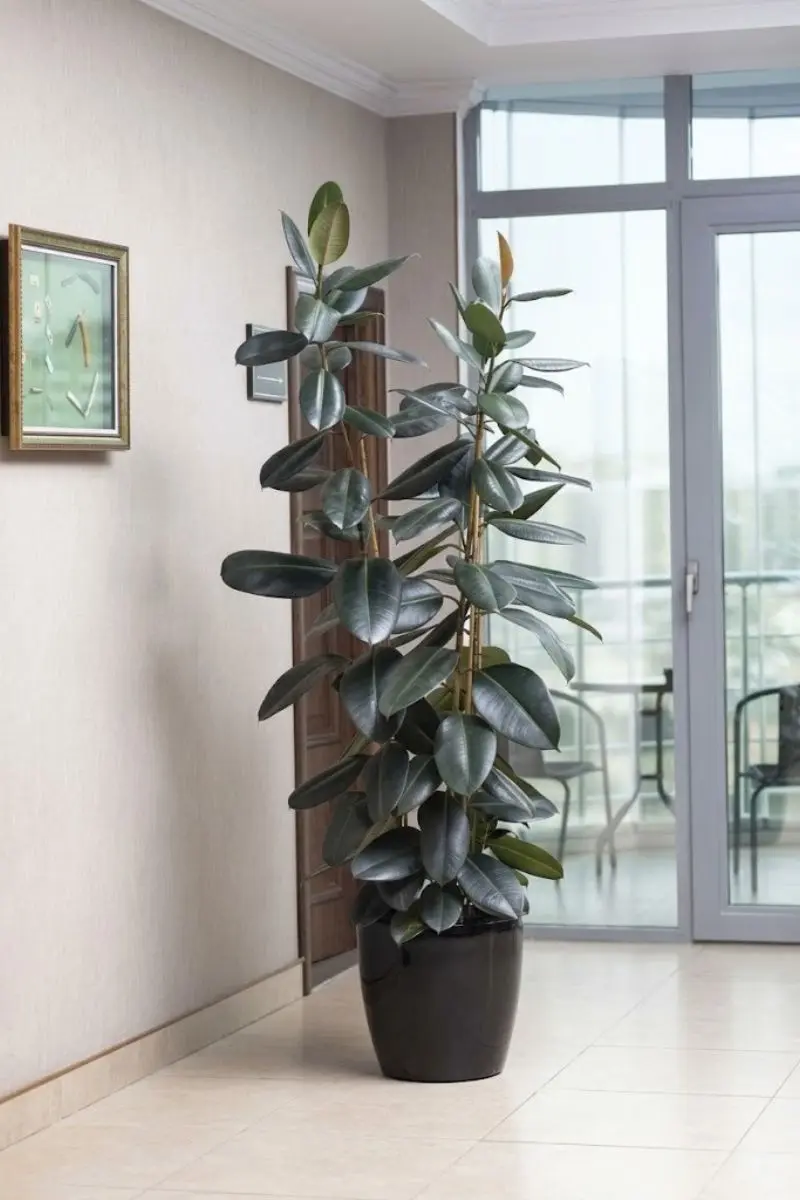
The Rubber Plant (Ficus elastica) is a classic choice for adding height and rich, waxy color to indoor spaces.
Known for its broad, leather-like leaves and strong upright habit, this tropical native is remarkably adaptable.
While it has the potential to reach heights between six and ten feet indoors, managing its size is highly achievable with the right care.
Plant Snapshot
- Common Name: Rubber plant, rubber tree
- Botanical Name: Ficus elastica
- Plant Type: Broadleaf evergreen
- Mature Size: 6–10 feet tall, up to 3 feet wide indoors
- Light Needs: Bright, indirect light
- Water Needs: Moderate; water when the top few inches of soil feel dry
- Soil Preference: Rich, loamy, fast-draining potting mix
- Toxicity: Toxic to dogs and cats if ingested; sap may irritate skin
What Matters Most for Success
Long-term success with an indoor rubber plant relies on three factors: bright indirect light, careful watering discipline, and protection from drafts.
While this tree is resilient enough to survive minor neglect, it reacts poorly to waterlogged soil and sudden environmental shifts. Striking the right balance is the most effective way to prevent lower-leaf drop and keep your tree looking full.
Light Requirements
Rubber plants thrive in bright, indirect sunlight. Place your plant within a few feet of an east-facing window for soft morning sun, or slightly back from a south- or west-facing window protected by a sheer curtain to avoid harsh afternoon rays.
While it accommodates medium shade, low light slows growth, shrinks new leaves, and causes variegated varieties like ‘Tineke’ to lose their creamy, high-contrast patterns. Rotate the pot a quarter-turn monthly to ensure straight, even upward growth toward the light.
Watch the leaves for cues. Insufficient light leads to a dull appearance, leggy stems, and leaf drop. Conversely, direct, unshaded midday sun will scorch the foliage, leaving crisp, faded patches on the surface.
Watering
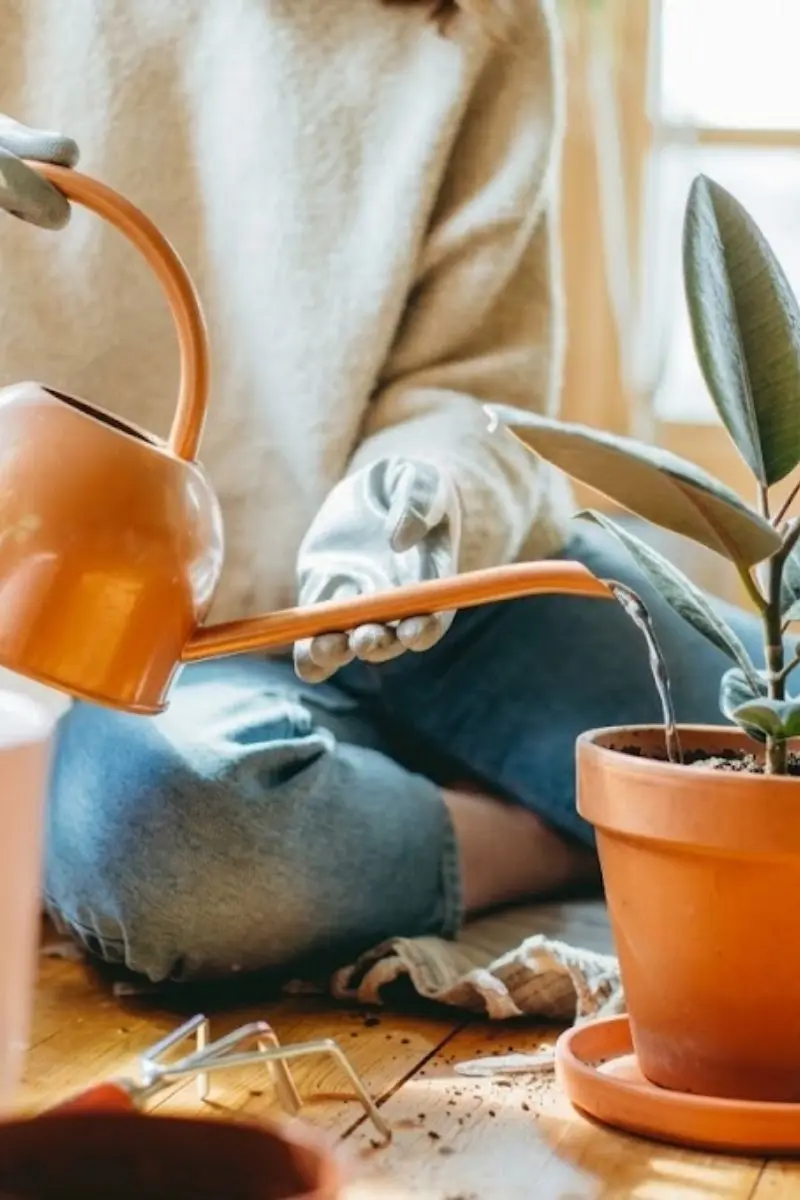
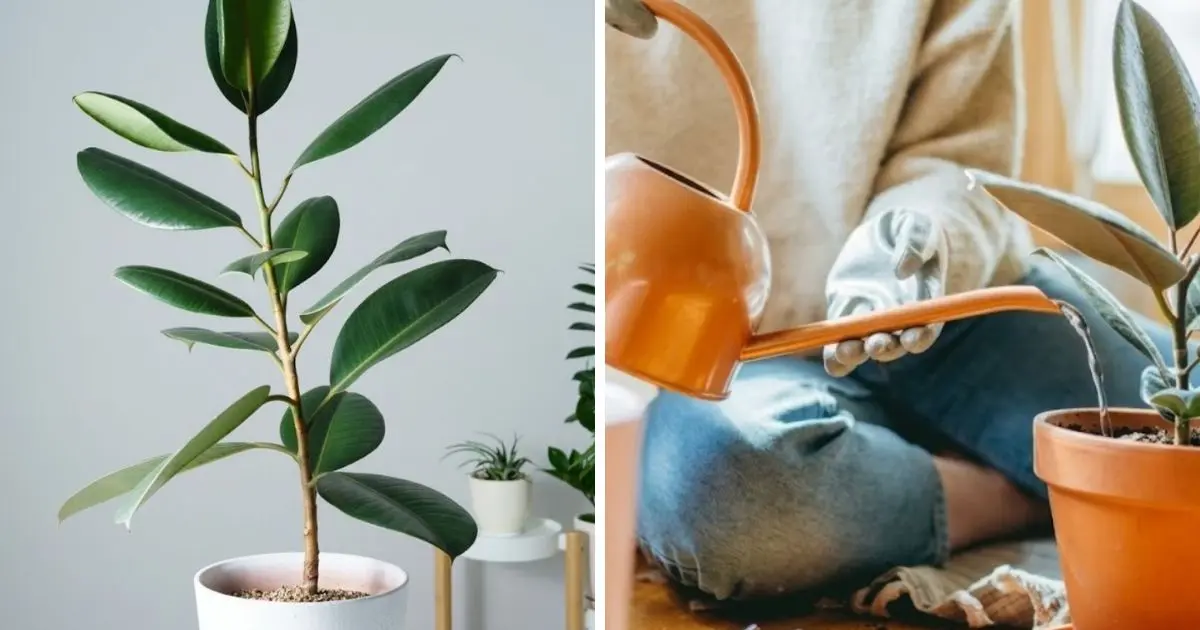
Water thoroughly when the top two to three inches of soil feel dry, allowing moisture to drain freely from the pot. Always empty the saucer after watering to prevent the roots from sitting in stagnant, waterlogged soil.
Reduce watering in winter as growth slows, allowing the soil to dry somewhat more between waterings. The plant drinks steadily during active spring and summer growth, but its metabolism slows significantly during the dark winter months.
The foliage provides instant feedback. An underwatered plant will display curling leaves as it tries to conserve moisture. Overwatering produces a far more dangerous response: lower leaves turn a sickly yellow, then brown, and drop off while still soft and pliable.
Soil and Potting Mix
Rubber plant roots require a loose, fast-draining potting mix. Standard potting soils tend to compact over time, suffocating the root system and retaining too much moisture.
Use a rich, loamy houseplant mix augmented generously with ingredients like perlite, pumice, or orchid bark to create healthy air pockets.
Your container choice directly impacts soil moisture. Always use a pot with functional drainage holes. Heavy ceramic or terracotta containers are ideal because they provide the necessary weight to keep a tall, top-heavy tree from tipping over.
Keep in mind that terracotta naturally wicks away moisture, meaning the soil will dry out faster than it would in plastic or glazed ceramic.
Temperature and Humidity
Rubber plants do well in consistent indoor temperatures between 65°F and 80°F. While they adapt well to average indoor conditions, they are highly sensitive to sudden thermal shocks and cold drafts.
Keep your specimen safely away from exterior doors, drafty windows, and the direct path of heating vents. Exposure to temperatures below 55°F can cause rapid yellowing and sudden leaf drop.
Rubber plants prefer a moderate humidity level between 40 and 50 percent. If dry winter heating drops your indoor humidity below this threshold, group your plants together to create a humid microclimate, or run a small humidifier nearby.
Fertilizing
Rubber plants require regular feeding, but only when they are actively building new tissue. Apply a balanced liquid houseplant fertilizer diluted to half-strength every two to four weeks during active spring and summer growth.
Stop fertilizing entirely in autumn and winter. Adding nutrients during dormancy leads to salt accumulation in the soil, which burns roots and crisps leaf margins. In lower-light conditions, fertilize once a month at half strength.
Pruning and Maintenance
Left alone, a rubber plant will grow toward the ceiling as a single, towering pole. Late spring or early summer is the best time to prune to manage its height or encourage a bushier, multi-branched form.
Cut back lateral side shoots or remove the crown just above a growth node; the plant will respond by pushing out new shoots from that point. To encourage new growth on a bare section, make a small notch at the node where a leaf previously fell.
Always wear gardening gloves when pruning. Ficus elastica secretes a thick, milky latex sap when damaged that can heavily irritate skin and stain surfaces. Keep a damp cloth handy to dab the stem wound until it seals naturally.
For routine care, wipe the large leaves with a damp cloth every few weeks to clear away dust and optimize light absorption.
Repotting
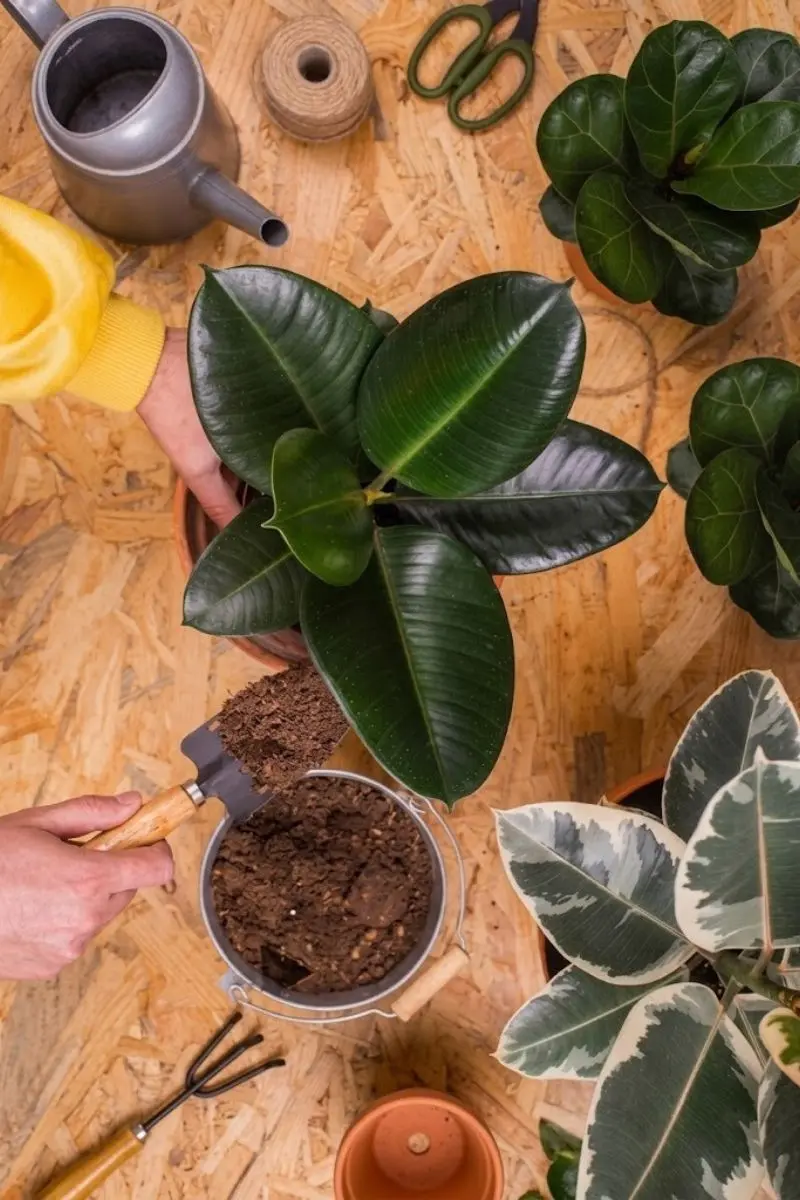
Young trees may require repotting every year, while mature specimens can go two to three years between transitions. Move the plant in early spring, just as its dormant period ends.
You will know it is time when roots fill the pot surface or push through the bottom drainage holes.
Select a new container that is no more than two to three inches larger in diameter than the old one. Oversized containers hold excessive soil and water, heavily increasing the risk of root rot.
Common Problems
Yellowing and Leaf Drop
- Cause: Cold drafts, sudden relocation, or incorrect soil moisture.
- Symptoms: Lower leaves turn yellow before dropping, or healthy green leaves suddenly fall from the plant.
- Solution: Shield the plant from sudden temperature drops. Check the soil before watering again and allow the upper layer to dry if it is still wet.
Leaf Spot
- Cause: Fungal or bacterial pathogens, often encouraged by prolonged moisture on foliage and poor air circulation.
- Symptoms: Brown or dark spots that may enlarge over time.
- Solution: Remove badly affected leaves, improve air circulation, and avoid keeping the foliage wet.
Sap-Sucking Pests
- Cause: Mealybugs, scale insects, or thrips drawn to the plant’s rich sap.
- Symptoms: Cottony white tufts in leaf joints or hard, waxy brown bumps along the stems.
- Solution: Wipe the insects off using a cotton swab dipped in rubbing alcohol, or treat the plant with an appropriate insecticidal soap according to the product label.
Seasonal Care Notes
- Spring & Summer: This is the active expansion phase. Increase watering frequency as the soil dries faster, wipe the leaves regularly to prevent dust buildup, and fertilize every two to four weeks.
- Autumn & Winter: Taper your watering frequency and stop fertilizing entirely as daylight hours decrease. Keep the plant strictly shielded from cold window glass and dry heating vents.
FAQs
Why are the leaves on my rubber plant curling?
Leaf curling is a defense mechanism; the plant is trying to conserve moisture. It usually indicates that the tree needs more frequent watering, or that it is experiencing extreme temperature swings in its current location.
What are the main benefits of growing a rubber plant indoors?
Rubber plants add height, bold foliage, and year-round greenery to indoor spaces. Their upright growth habit also makes them useful as statement plants in bright rooms.
Can I move my indoor rubber plant outside for the summer?
Yes, once evening temperatures are consistently above 55°F. Gradually acclimate it to outdoor conditions, starting in deep shade and increasing light exposure slowly to prevent leaf scorch.
Are all indoor rubber plant varieties identical in care?
While their basic needs are the same, variegated varieties like ‘Tineke’ and ‘Ruby’ require higher light intensity than solid green varieties to maintain their colorful foliage patterns.
What should I do if my plant develops root rot?
Act quickly. Remove the plant from its pot, trim away any decaying, mushy roots, and repot the tree into fresh, well-draining soil.