Table of Contents
Overwatering is one of the most common ways to accidentally hurt a houseplant.
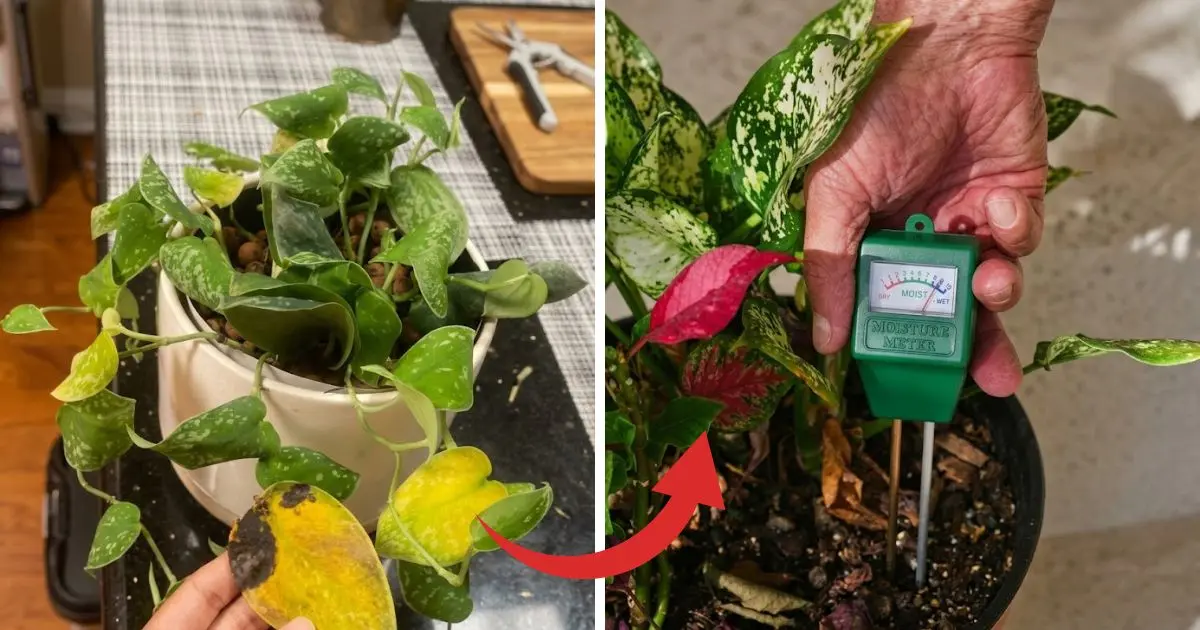
The tricky part is that a plant struggling with too much water can sometimes look like one that needs more. Wilting, yellowing leaves, and leaf drop can all have multiple causes, so it’s important to check the soil before reaching for the watering can.
Preventing overwatering isn’t about keeping your plants dry. It’s about learning when they actually need water and making sure excess moisture can drain away.
1. Check the Soil First
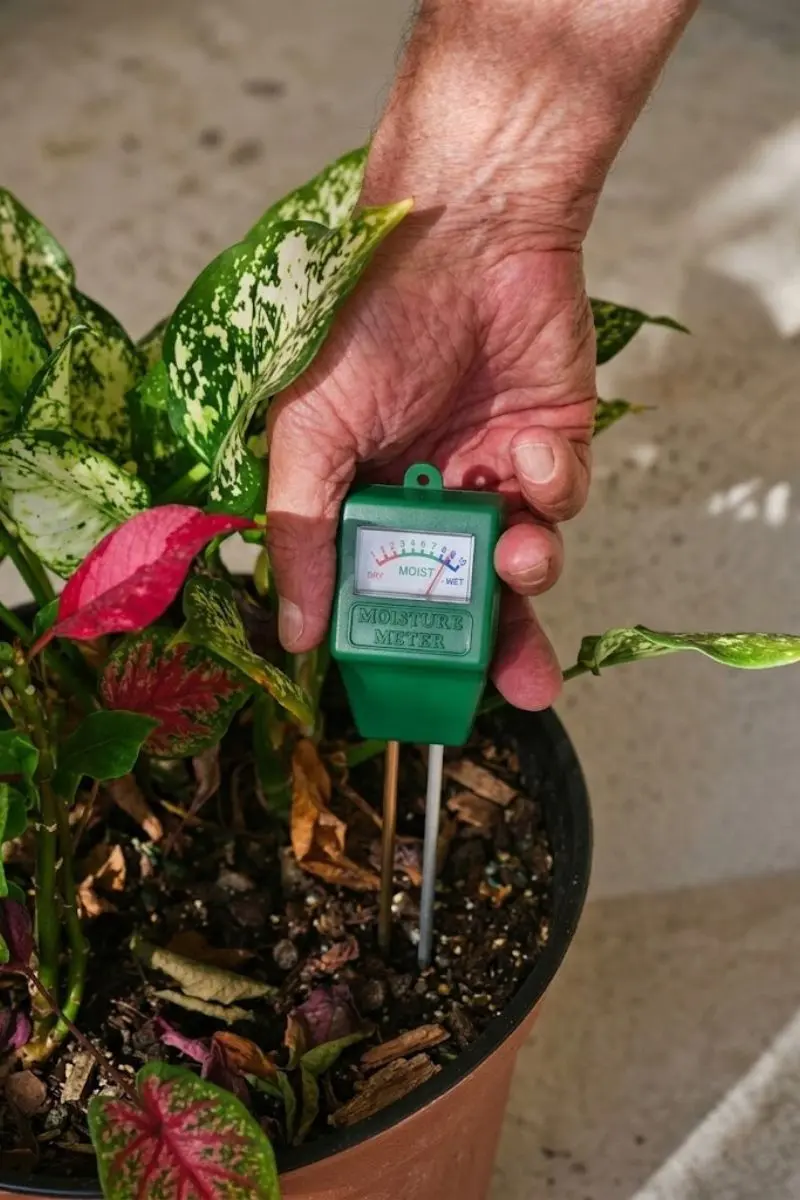
Don’t water your houseplants simply because it’s been a certain number of days since you last watered. Check the potting mix first.
For many houseplants, check the potting mix a couple of inches below the surface. If it still feels moist, wait before watering.
The exact moisture level your plant prefers will vary by species, so learn whether it likes consistently moist soil or needs the mix to dry somewhat between waterings.
2. Know When Your Plant Needs Water
Don’t assume every houseplant should dry out the same way. A succulent, for example, generally needs more time between waterings than a tropical foliage plant that prefers consistently moist soil.
Your plant’s specific needs should guide how you interpret what you find when you check the soil. What feels dry enough for one plant may still be too dry—or too wet—for another.
3. Adjust for Changing Conditions
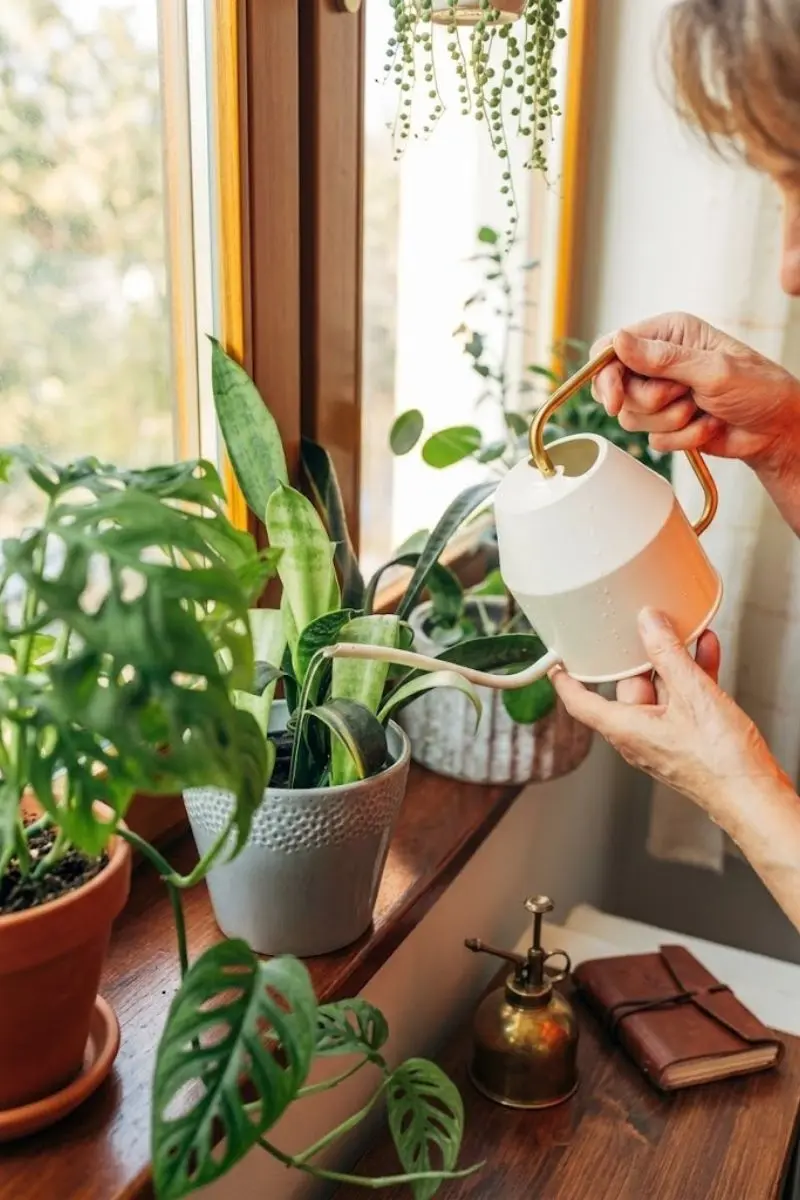
A watering routine that works at one time of year may not work at another. Changes in light, temperature, humidity, and growth can all affect how quickly potting mix dries.
A plant in a warm, bright spot may need water sooner than the same plant in a cooler, dimmer room. When growth slows, watering needs can change, too.
Keep checking the soil instead of assuming your plant needs water at the same interval year-round.
4. Water Thoroughly
When your plant does need water, water thoroughly until water begins to drain from the drainage hole. Then let the excess water drain away before returning the plant to its usual spot.
The important part is allowing excess water to drain rather than letting the plant sit in it.
5. Use a Pot With Drainage
A drainage hole gives excess water somewhere to go. Without adequate drainage, potting mix can stay waterlogged for too long.
If you love a decorative pot without drainage, use it as a cachepot instead. Keep your plant in a nursery pot with drainage holes, and empty any water that collects in the outer container after watering.
6. Avoid Oversized Pots
A larger container isn’t always better for your plant. When a small root system is surrounded by a lot of extra potting mix, that mix can stay wet longer than the plant needs.
When it’s time to repot, choose a container that’s generally 1 to 2 inches larger in diameter than the current pot.
7. Choose the Right Potting Mix
Potting mix affects how long moisture stays around the roots. Choose a mix based on your plant’s needs instead of assuming one type works for every houseplant.
Many cacti and succulents, for example, need a fast-draining mix. Other houseplants do better with a mix that holds some moisture while still allowing excess water to move through the pot.
8. Watch for Overwatering
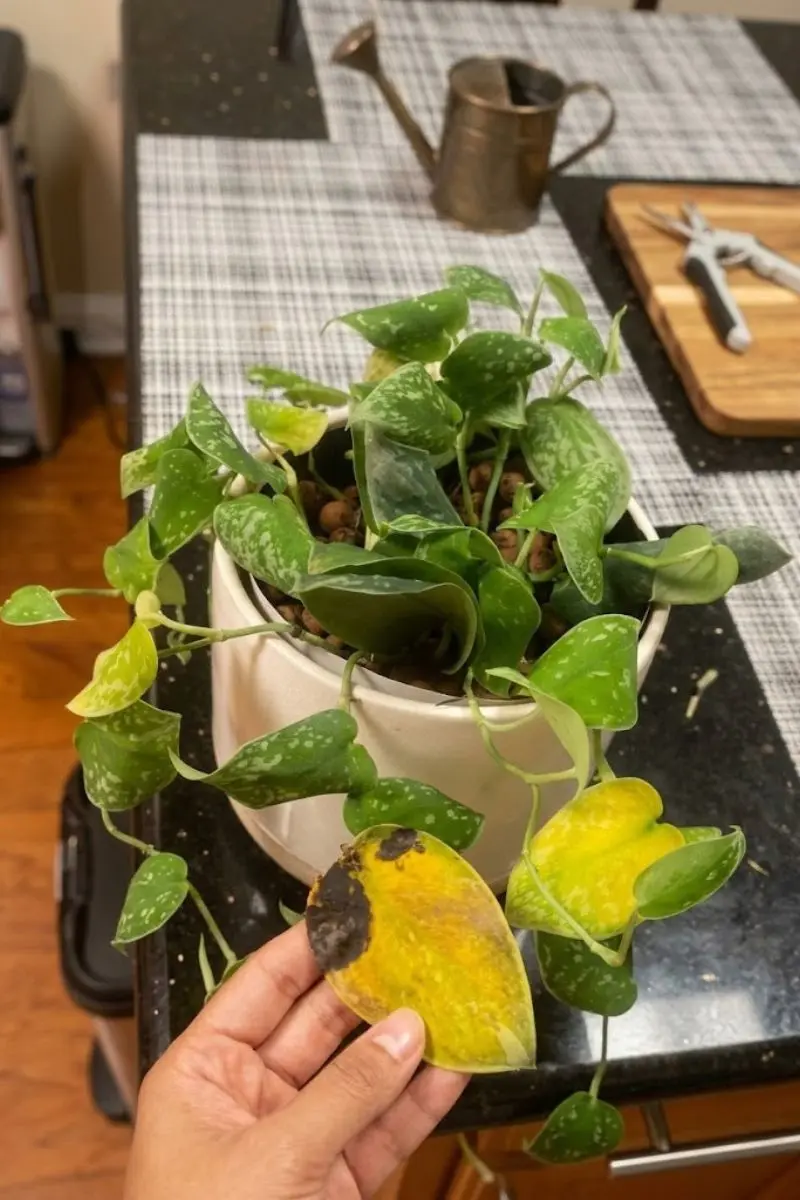
Yellowing leaves, leaf drop, wilting despite wet soil, stem rot, and dark or mushy roots can all point to overwatering. But these symptoms can have other causes, too, so check the soil and growing conditions before assuming excess water is the problem.
If your plant repeatedly stays wet for too long, look beyond your watering routine. A pot that’s too large, poor drainage, or a potting mix that holds too much moisture can all contribute.
Conclusion
Preventing overwatering isn’t about watering less.
It’s about paying attention to when your plant actually needs water, then giving it a thorough drink and letting excess moisture drain away. Once you stop watering by the calendar, it’s much easier to keep your houseplants properly hydrated.