Table of Contents
Keeping houseplants healthy doesn’t have to mean following a complicated routine.
Give your plants the conditions they need, pay attention to changes in their growth, and make a few simple care tasks part of your routine.
1. Give Your Plant the Right Amount of Light
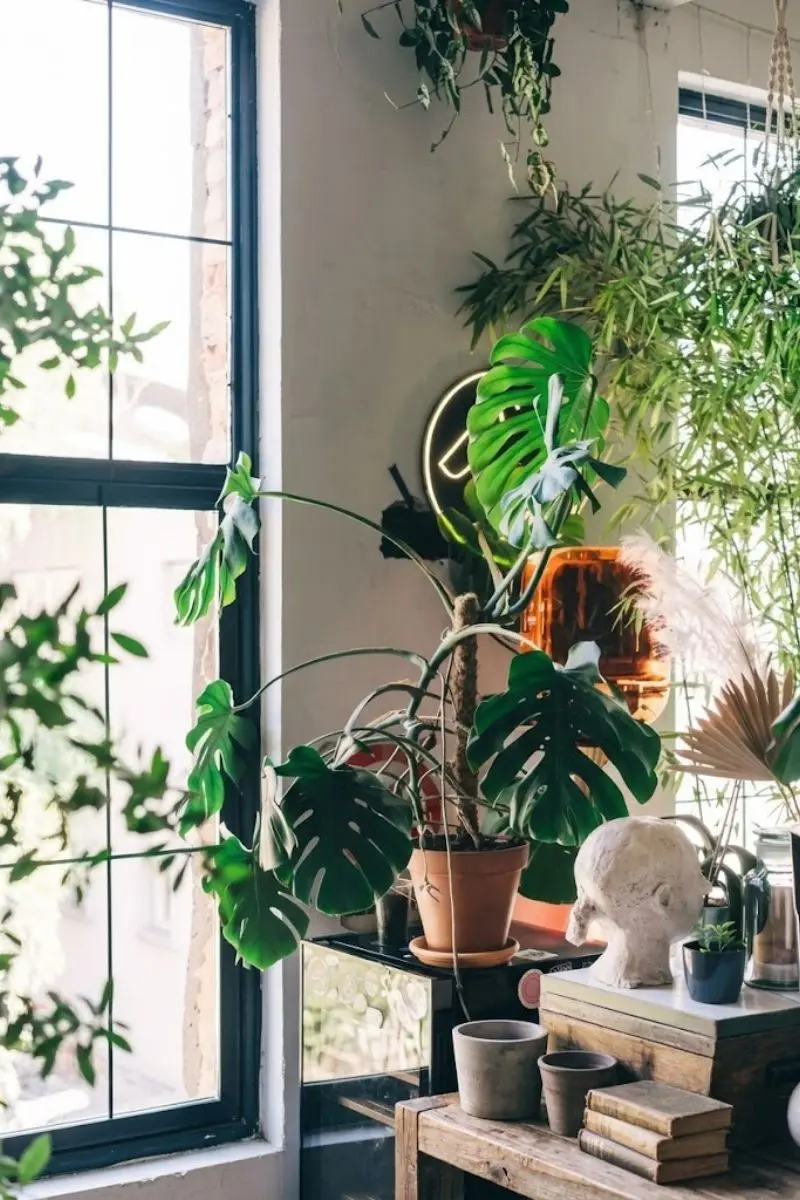
Start with the light. Different houseplants have different needs, so the best spot for one plant may be completely wrong for another.
Pay attention to how much natural light the spot gets throughout the day. A plant that doesn’t get enough light may develop weak, stretched growth, while too much intense sunlight can damage some foliage.
Choose a spot based on the plant’s needs rather than simply where it looks best.
2. Check the Soil Before You Water
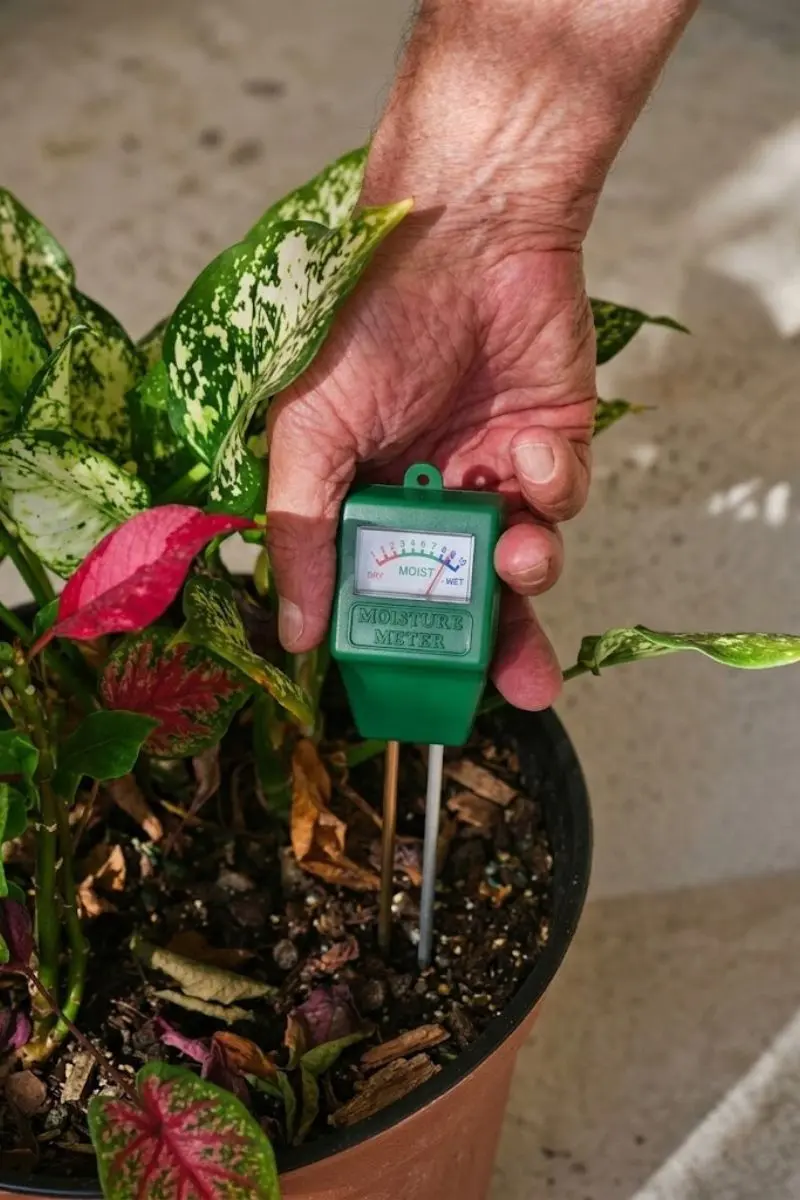
Don’t water your houseplants simply because it’s watering day. Check the potting mix first.
For many houseplants, it’s time to water when the surface of the mix has dried. When you do, water thoroughly until some drains from the bottom of the pot, then empty any water left in the saucer.
How often you need to water will depend on the plant, pot size, temperature, light, and time of year.
3. Feed Plants During Active Growth
Houseplants use nutrients as they grow, so feeding can help support healthy new growth.
Most houseplants benefit from fertilizer during their active growing season. Follow the directions on the fertilizer label, and don’t apply it to completely dry soil, which can damage roots.
Plants growing slowly in low light generally need less fertilizer than plants putting out lots of new growth.
4. Prune Leggy Growth to Encourage a Fuller Shape
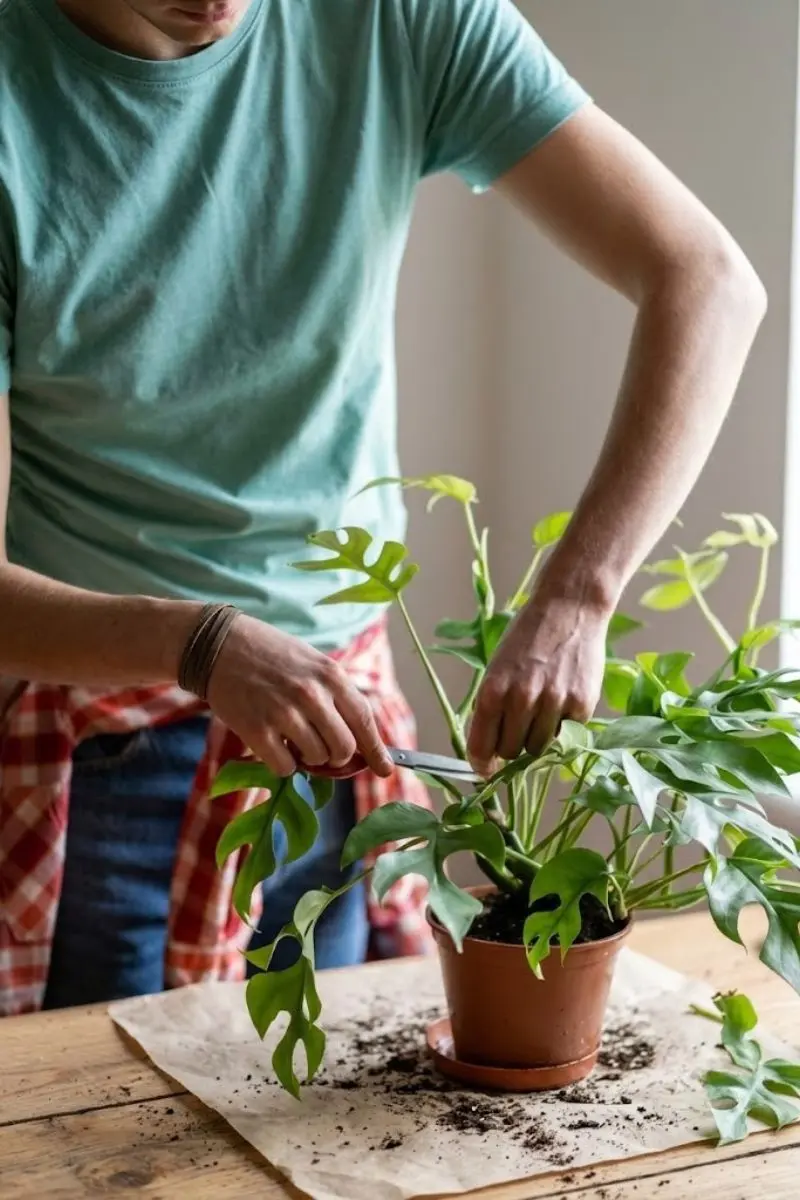
If a houseplant is getting long, sparse stems, pruning can help give it a fuller appearance.
For plants that respond well to pruning, cut just above a leaf node. New growth can develop below the cut, helping create a bushier shape.
The best time and method depend on the plant, so don’t treat pruning as a one-size-fits-all chore.
5. Pin Long, Flexible Stems to the Soil
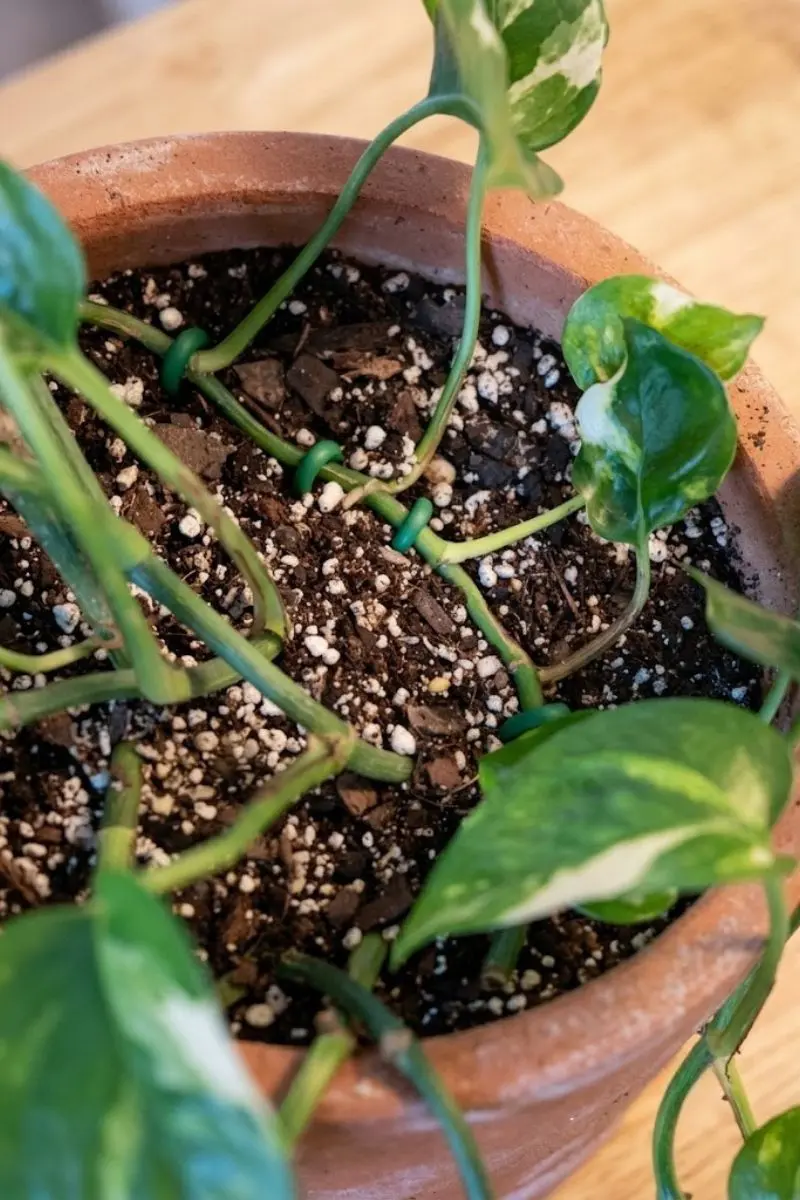
A trailing plant can look sparse around the base of its pot as its stems grow outward. If the plant can root from its nodes, you can use those stems to encourage fuller growth.
Lay a long, flexible stem across the surface of the potting mix and gently secure a node against the soil. Given the right conditions, that node can form roots while the stem remains attached to the parent plant.
This works best with plants that naturally root along their stems. Don’t force stiff or brittle stems into contact with the soil.
6. Clear Away Dead Leaves and Plant Debris
Remove fallen leaves and other dead plant material from the surface of the potting mix as you notice it.
A clean soil surface makes it easier to spot pests and other problems, while decaying debris can contribute to conditions that favor some pests and diseases.
7. Rotate Plants for More Even Growth
Plants growing beside a window naturally lean toward their light source. Over time, that can leave a plant noticeably fuller on one side.
Rotate your plants occasionally so different sides receive light. There’s no need to stick to a strict schedule.
If a plant keeps stretching toward the window, though, rotating it won’t solve the underlying problem. Check whether it’s getting enough light for its needs.
8. Keep Air Moving Around Your Plants
Good airflow helps prevent stagnant, humid conditions that can encourage some fungal problems.
Avoid packing plants so tightly together that air can’t move around their leaves.
When the weather allows, opening a window can improve ventilation, while a fan can help circulate air in a room where airflow is limited. Avoid directing a strong stream of air at plants that are sensitive to drafts.
9. Keep Dust From Building Up on Leaves
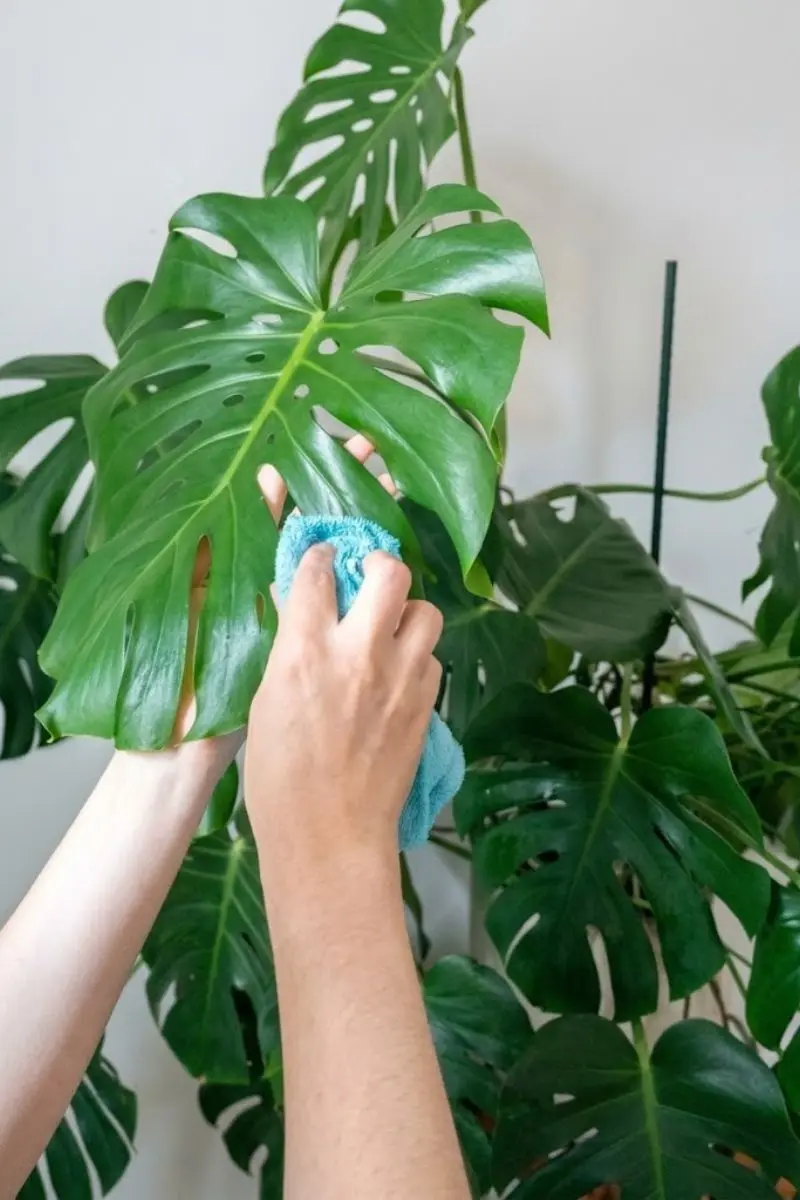
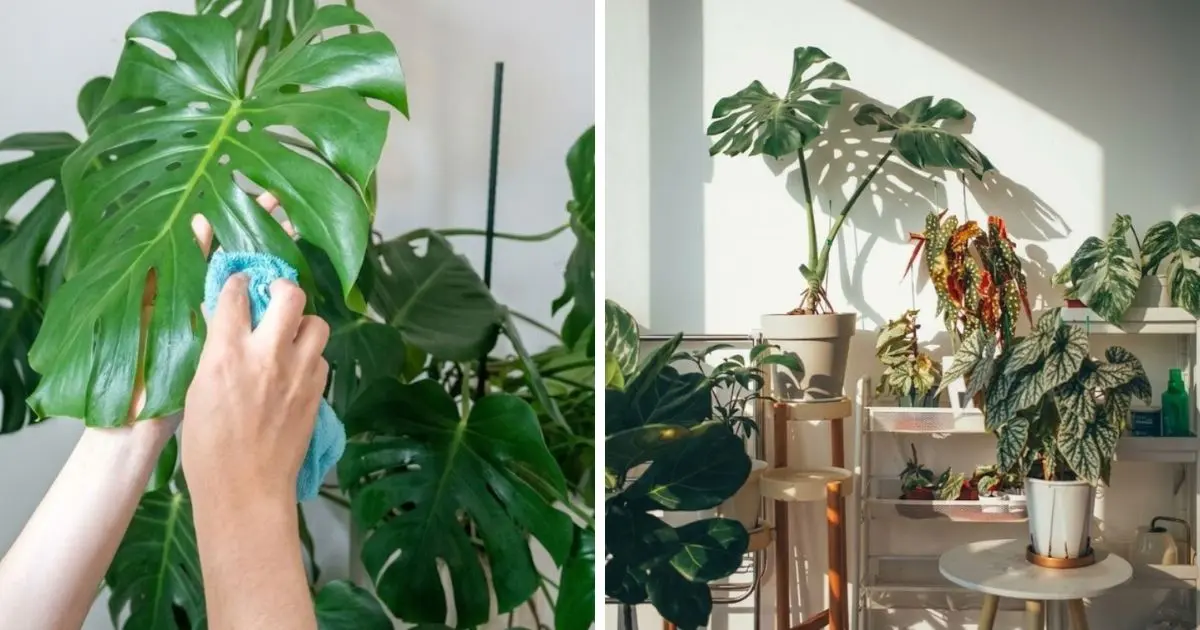
Large, smooth leaves can collect a surprising amount of dust. Every so often, gently wipe them with a soft, damp cloth.
Clean leaves can receive light more effectively, and wiping them gives you a chance to look closely for pests, discoloration, or other changes.
10. Watch for Signs Your Plant Needs Repotting
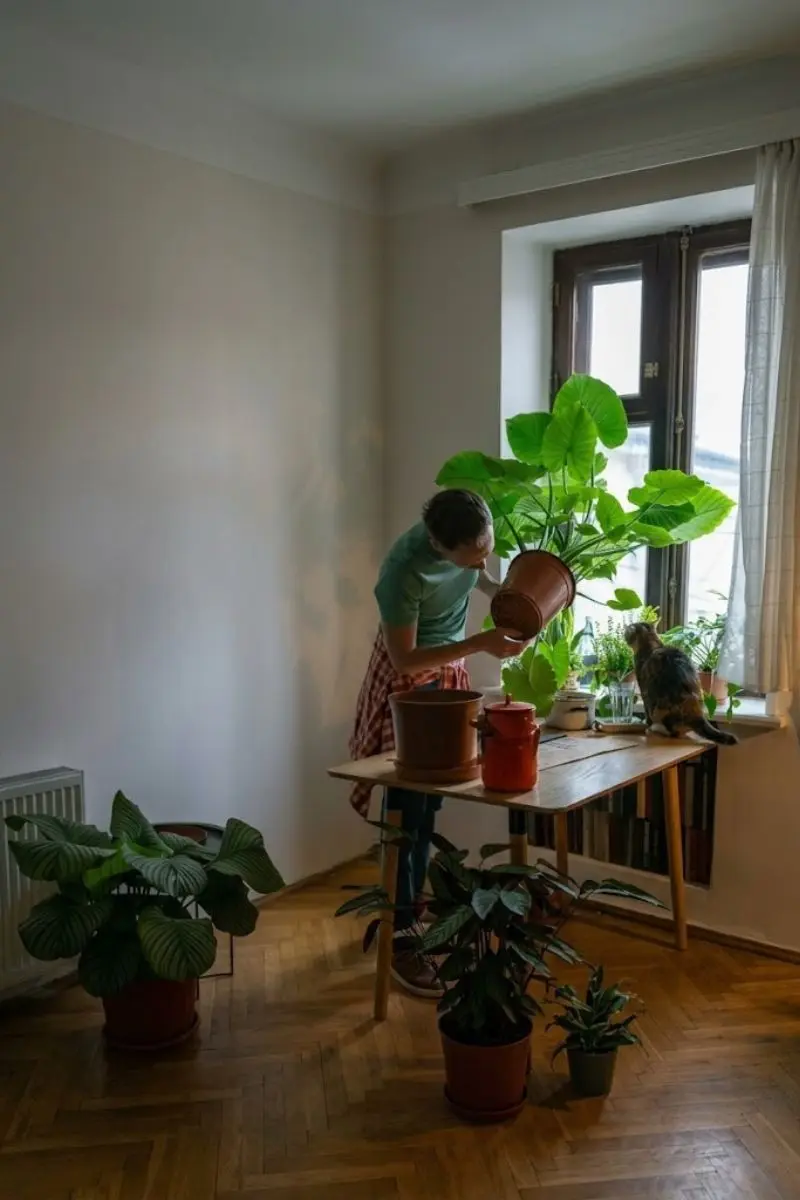
A houseplant doesn’t automatically need a larger pot every year. Instead, look for signs that its current container or potting mix is no longer working well.
Roots circling densely around the root ball or growing through the drainage holes can indicate that a plant has outgrown its container. Poor or deteriorating potting mix can also be a reason to repot.
When you do, move the plant into a container only modestly larger than its current one rather than jumping to a much bigger pot. Spring is generally a good time for repotting as plants begin active growth.