Table of Contents
The kitchen is the functional heart of the home, making it a natural spot for a splash of green. A well-placed plant can instantly soften the hard surfaces of stone countertops and stainless steel appliances.
However, kitchens are environmentally challenging spaces for indoor plants. Cooking oils atomize into the air and settle as a sticky film on leaves, while ovens and dishwashers create sudden heat spikes and rapid cooling cycles.
To survive here, a plant needs smooth, thick foliage that wipes clean easily. It also needs to tolerate changing temperatures while fitting comfortably into limited kitchen space.
Here are the plants that actually handle the realities of a working kitchen.
1. Aloe Vera (Aloe barbadensis)
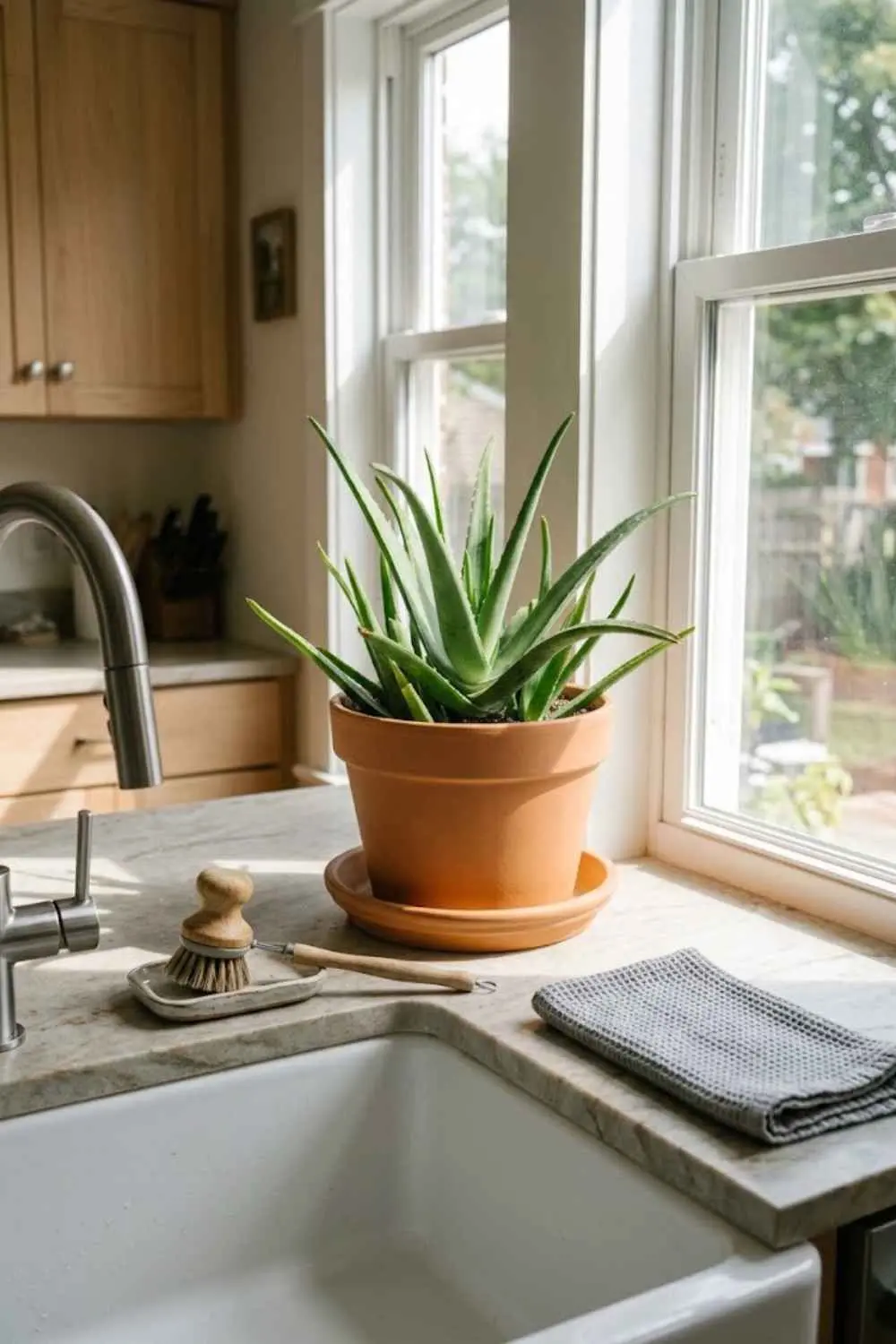
The classic kitchen windowsill choice is Aloe Vera, and for good reason. This succulent thrives in the bright, direct sunlight found right behind a kitchen sink, storing water inside its fleshy leaves to handle dry indoor air and periods of neglect.
Many people keep Aloe Vera in the kitchen because its gel is traditionally used for minor skin irritation.
Because mature Aloe leaves get top-heavy as they fill with moisture, ensure you house it in a heavy, wide-based pot so it won’t easily tip over if accidentally brushed by a stray dish towel during cleanup.
Light: Bright direct light preferred • Water: Very low watering • Pets: Pet toxic • Habit: Upright, fleshy rosettes
2. Snake Plant (Sansevieria trifasciata)
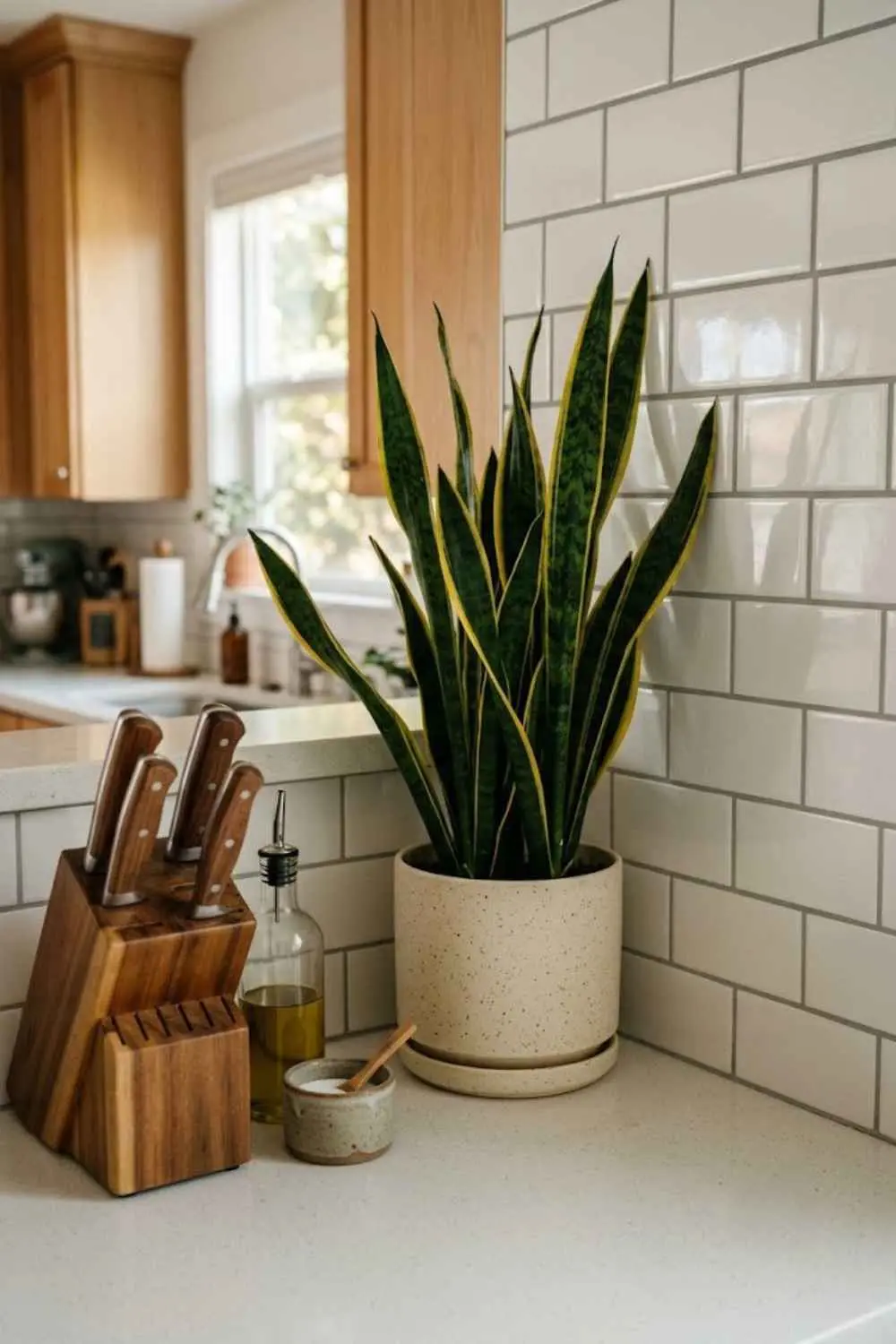
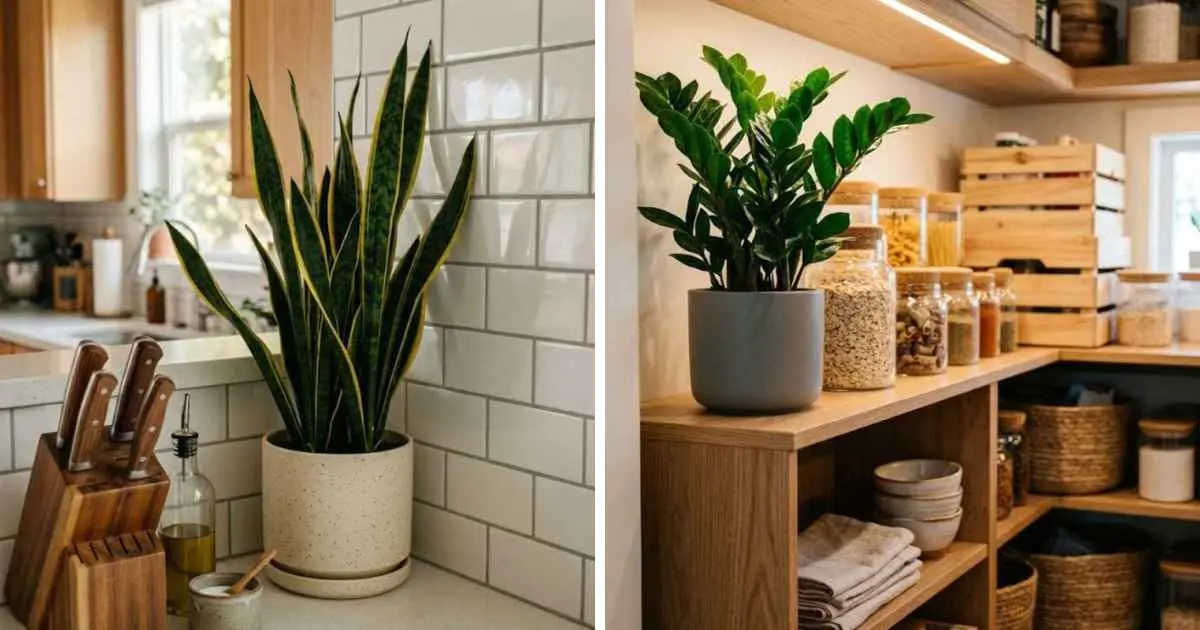
Countertop space is always at a premium, which is why the strictly vertical growth of a small Snake Plant works so well. Its stiff leaves grow straight up, staying completely out of the way of cutting boards and small appliances next to the stove.
It requires very little maintenance and easily handles kitchens with erratic cooking schedules.
Because growth slows significantly in lower light, it needs much less water—stretch the time between waterings to once a month to prevent root rot.
Light: Low light tolerant • Water: Very low watering • Pets: Pet toxic • Habit: Strictly upright grower
3. ZZ Plant (Zamioculcas zamiifolia)
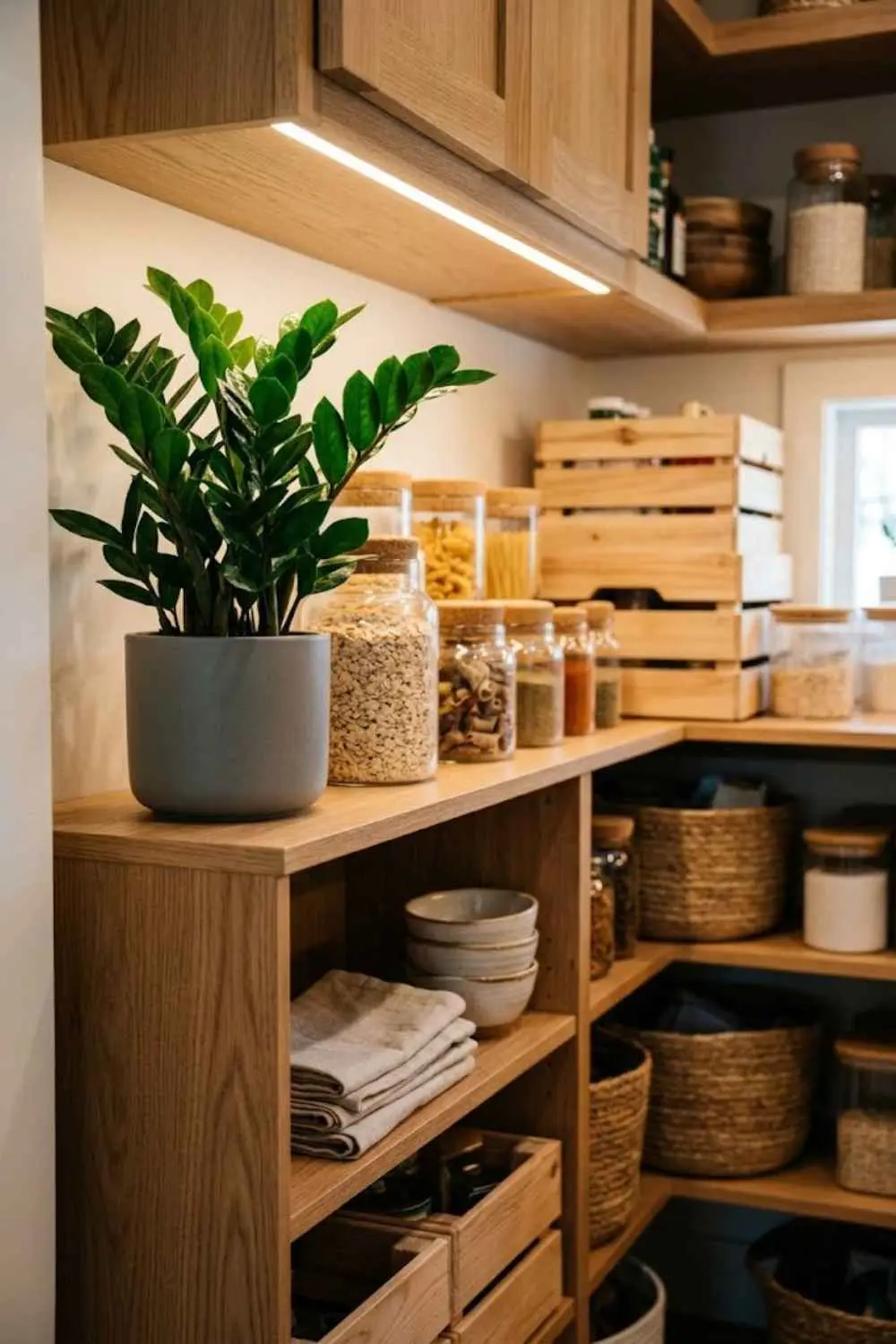
Open pantry shelves or a baker’s rack benefit from organized upright growers. The ZZ Plant features thick stems that mound upward in a tight cluster close to the pot, ensuring it won’t sprawl into nearby ingredient jars or spices while softening the structured look of open shelving.
The naturally glossy leaflets reflect ambient overhead light, making darker work areas feel less stark.
It stores water beneath the soil efficiently, allowing it to handle long stretches of forgetfulness while you focus on cooking.
Light: Low light tolerant • Water: Very low watering • Pets: Pet toxic • Habit: Upright, vase-shaped grower
4. Chinese Evergreen (Aglaonema)
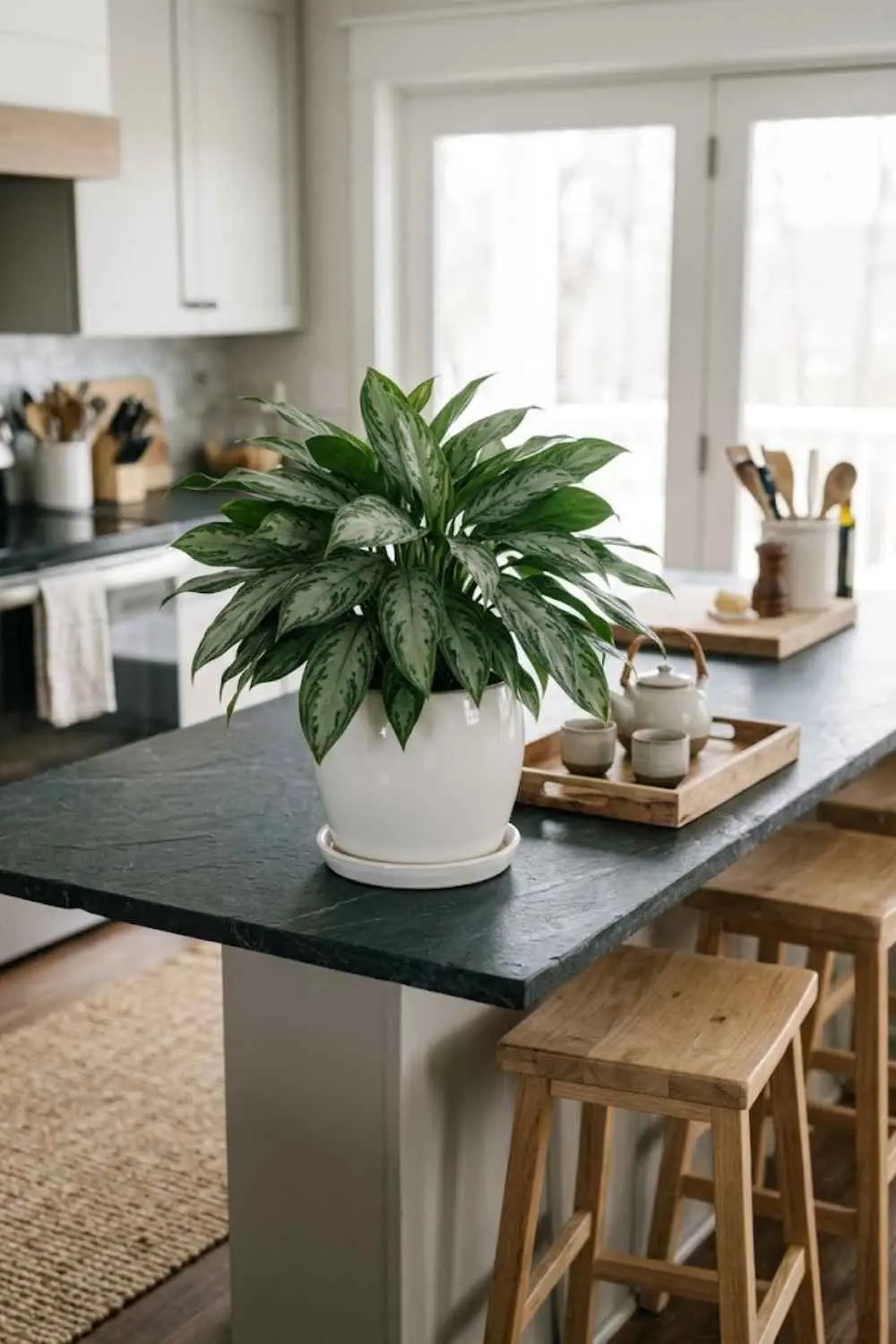
An island counter or a breakfast bar located far from windows requires shade-loving varieties that do not mind temperature shifts.
The Chinese Evergreen fits this profile perfectly, featuring tough, lance-shaped leaves that tolerate the higher humidity often found in kitchens, along with the normal temperature fluctuations of an active cooking space.
Its smooth foliage is particularly easy to wipe clean when cooking residue builds up, keeping maintenance to a minimum.
Light: Low light tolerant • Water: Moderate watering • Pets: Pet toxic • Habit: Bushy, mounding grower
5. Pothos (Epipremnum aureum)
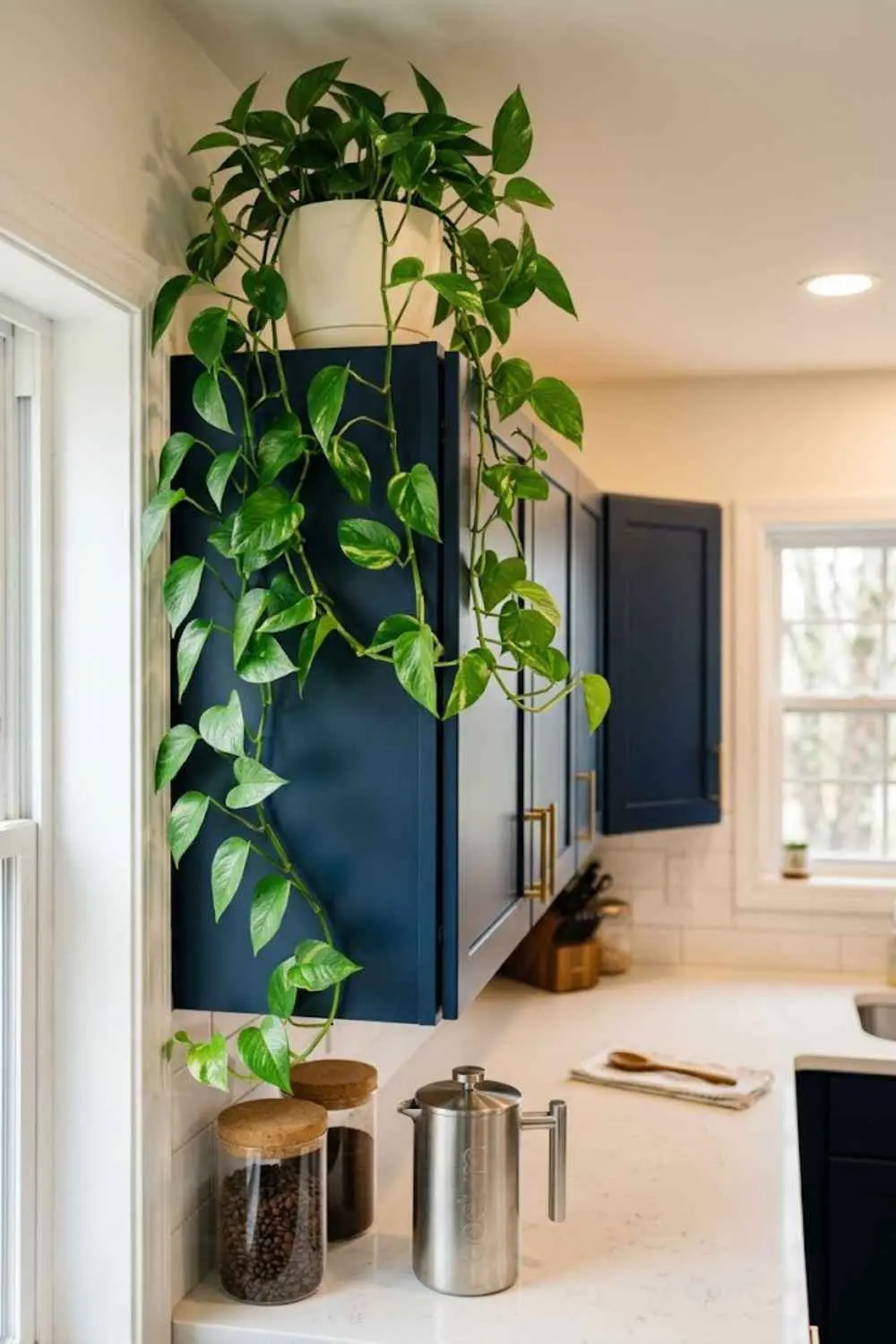
The empty void on top of upper kitchen cabinets is an ideal home for this vine. It cascades neatly over the edge of your cabinetry without getting in your way, tolerating the warm air that collects near the ceiling and occasional kitchen steam.
Place it along upper cabinets away from direct stove heat; its smooth, slightly waxy leaves wipe clean easily whenever cooking grease builds up.
Light: Low to medium indirect • Water: Moderate watering • Pets: Pet toxic • Habit: Trailing vine habit
6. Wax Plant (Hoya carnosa)
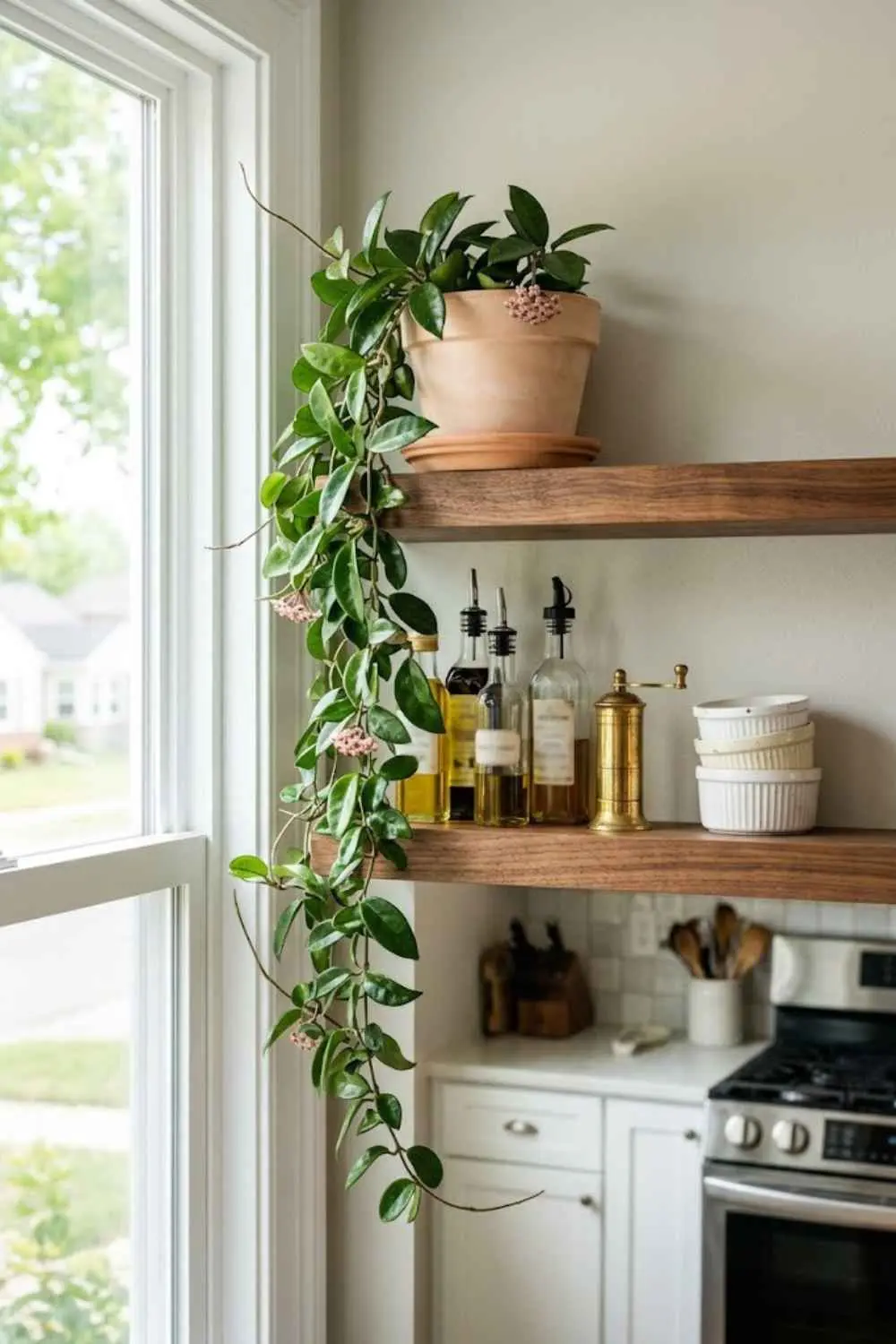
High windows or bright open shelves require trailing options that don’t mind ambient heat. The Hoya showcases thick, leathery leaves that are unbothered by dry indoor warmth or occasional steam from a nearby stovetop.
The thick waxy leaves are easy to wipe clean whenever grease begins to accumulate, helping prevent greasy residue from dulling the foliage.
Light: Medium to bright indirect • Water: Low watering • Pets: Pet friendly • Habit: Trailing / climbing vine
7. Spider Plant (Chlorophytum comosum)
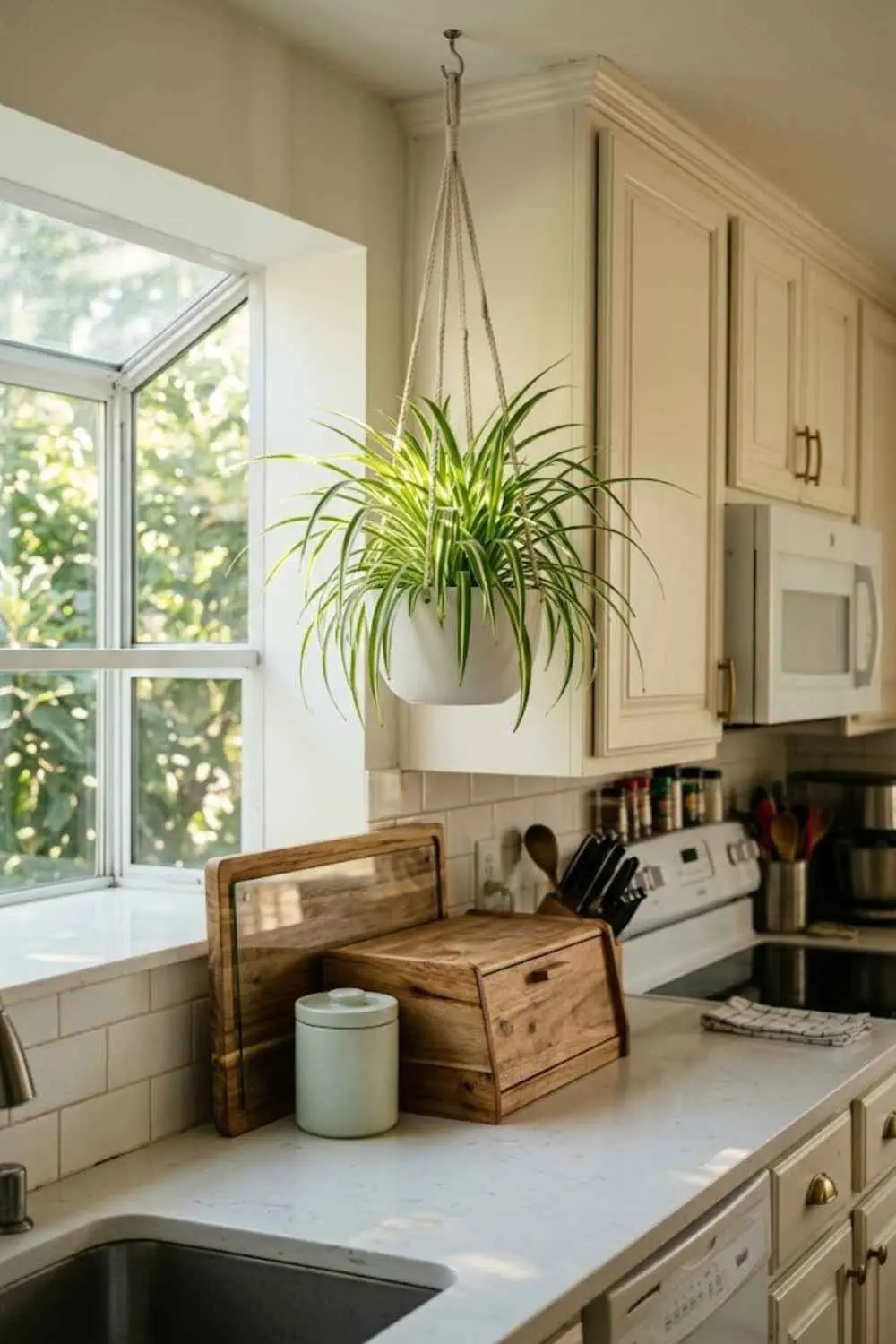
Hanging baskets or high shelf corners are the best placements here. Its arching, grassy leaves create a soft fountain effect that lightens up the heavy look of dark cabinetry.
It appreciates evenly moist soil but quickly perks back up after a thorough soak, making it highly forgiving of a busy lifestyle.
Light: Medium indirect light • Water: Moderate watering • Pets: Pet friendly • Habit: Arching, cascading grower
8. Cast Iron Plant (Aspidistra elatior)
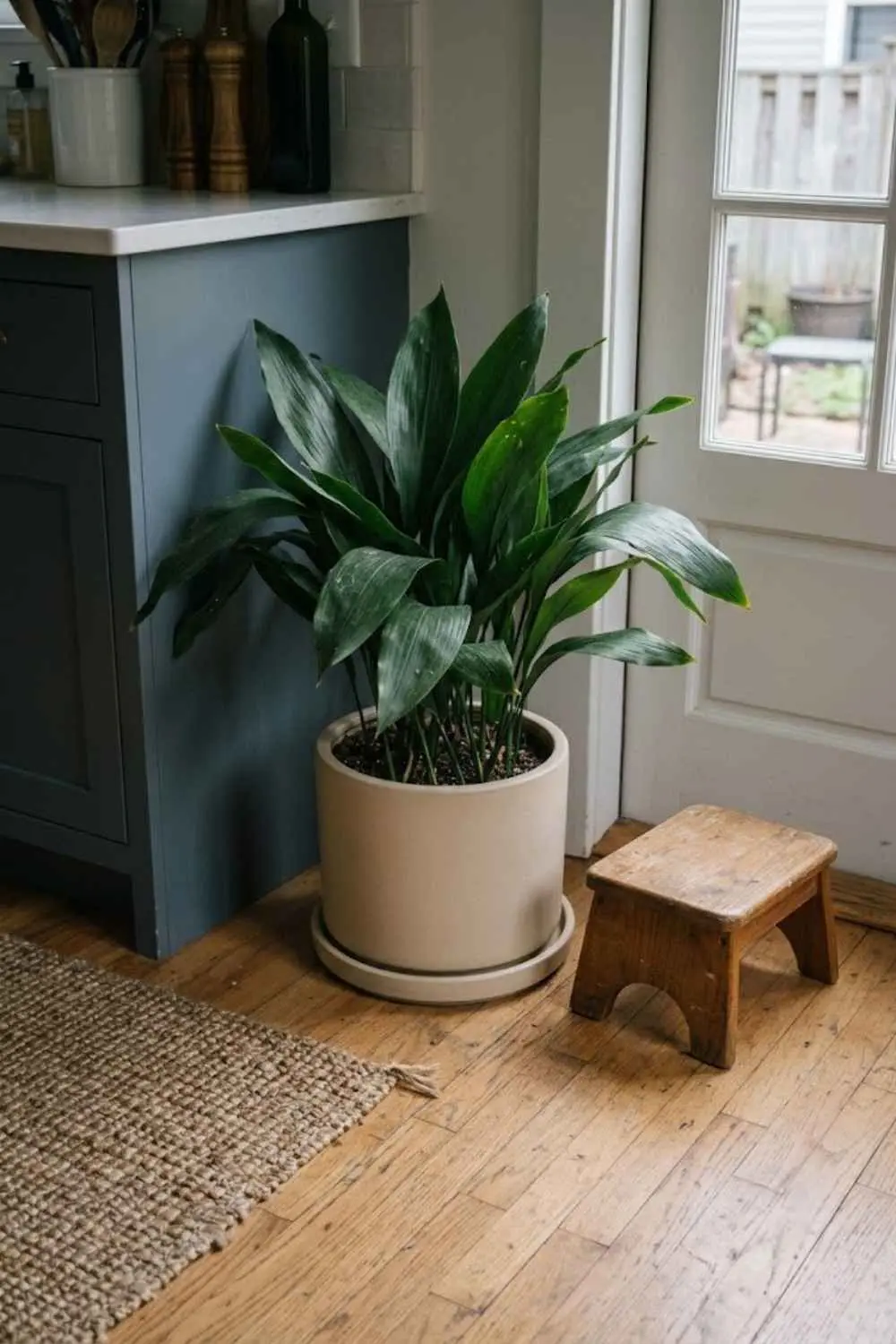
Heavy foot traffic and swinging cabinet doors mean floor-level plants need to be durable. The Cast Iron Plant earned its name by shrugging off the worst indoor conditions, including deep shadows, poor air circulation, and sudden drafts from a nearby backdoor.
Its broad leaves look great standing next to a kitchen island or shielding a trash bin enclave.
Because it grows at a slow pace, it holds its neat shape for years without outgrowing its corner.
Light: Low light tolerant • Water: Low watering • Pets: Pet friendly • Habit: Upright growth habit
9. Parlor Palm (Chamaedorea elegans)
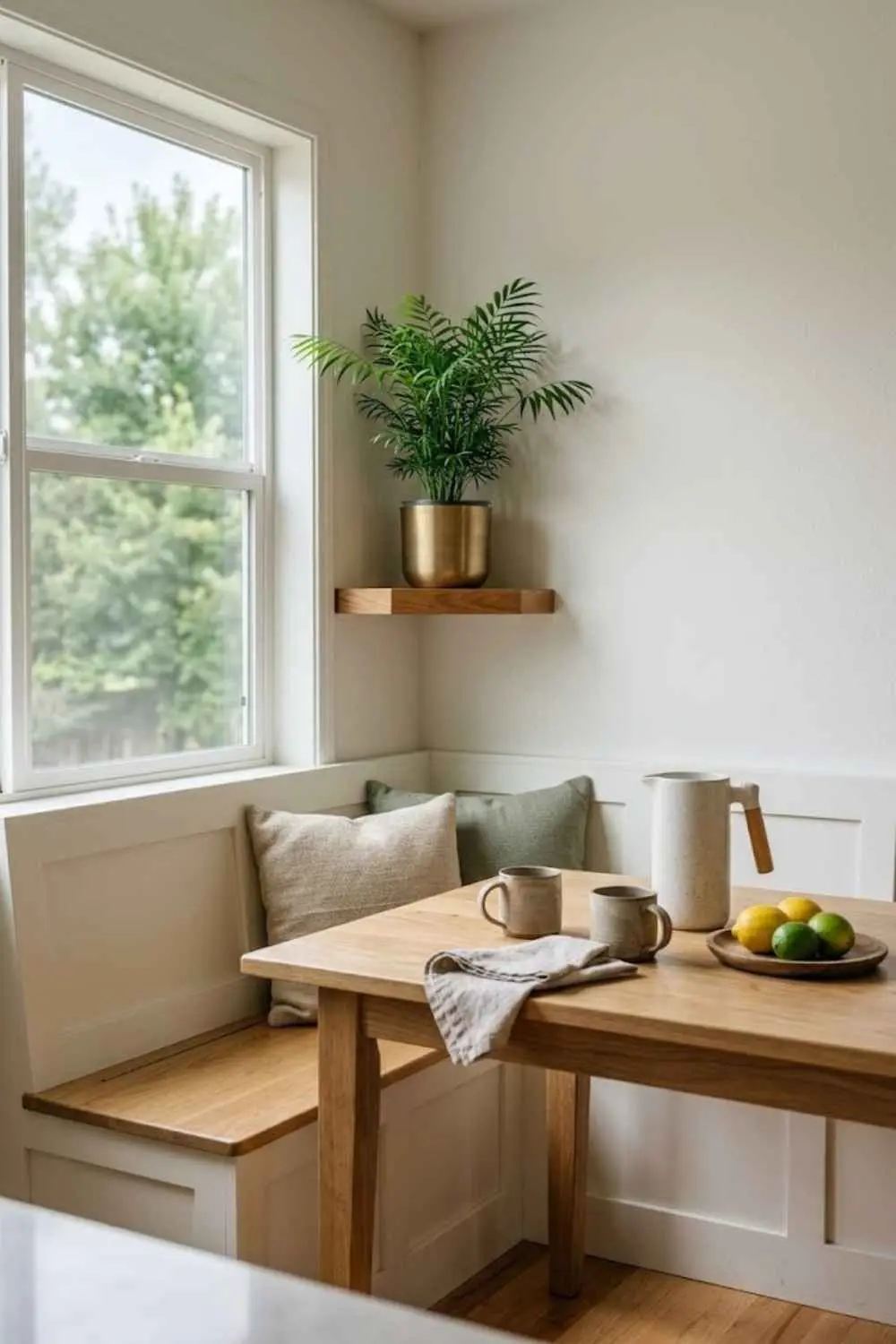
Breakfast nook tables and dining alcoves look much softer with a touch of feathered greenery. The Parlor Palm clumps together tightly into a neat bush, providing a splash of green without extending long branches into your eating space.
It is much more tolerant of low interior light than larger palm varieties.
Keep it clear of active oven vents during the winter, as dry, artificial air can cause the delicate leaf tips to turn brown and crispy.
Light: Low to medium indirect light • Water: Moderate watering • Pets: Pet friendly • Habit: Compact, bushy grower
10. Spearmint (Mentha spicata)
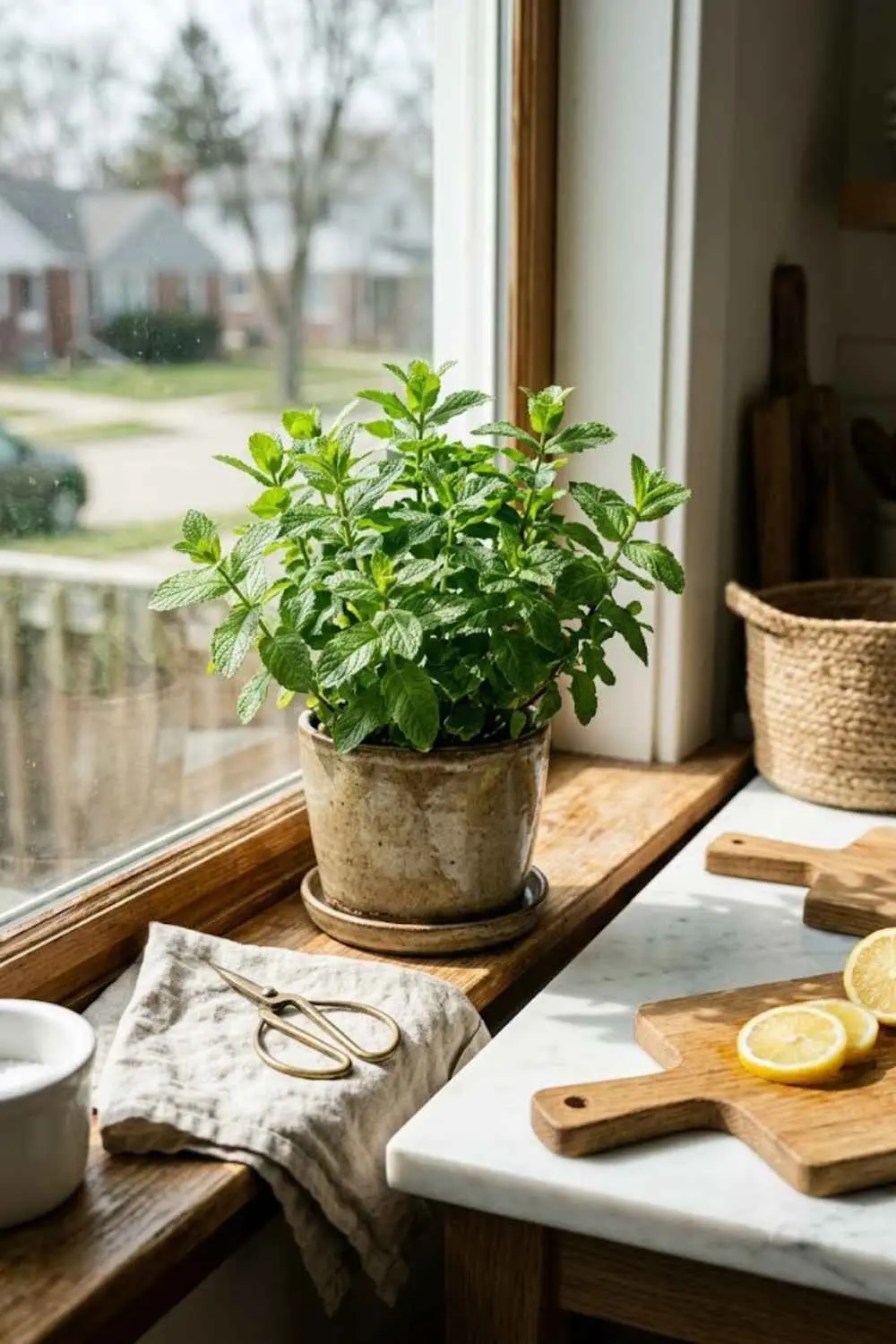
Unlike basil, which often struggles indoors without intense light and daily harvesting, spearmint is a much more forgiving herb for a bright kitchen sill.
It requires a sunny, south-facing windowsill to receive the direct daylight needed to stay full, growing vigorously in consistently moist soil to provide fresh culinary leaves right within arm’s reach of your cutting board.
Grow it in a dedicated pot to avoid crowding out other plants, and regularly pinch back the top leaves to encourage a bushier habit.
Light: Bright direct light required • Water: High watering • Pets: Pet toxic • Habit: Bushy, spreading herb
Quick Kitchen Picker
Best for zero counter space (Cabinets/Shelves)
Pothos (5) • Wax Plant (6) • Spider Plant (7)
Best for dark work surfaces or islands
Snake Plant (2) • ZZ Plant (3) • Chinese Evergreen (4)
Best for a bright windowsill
Aloe Vera (1) • Spearmint (10)
Best for heavy foot traffic floor areas
Cast Iron Plant (8)
Best for completely pet-friendly kitchens
Wax Plant (6) • Spider Plant (7) • Cast Iron Plant (8) • Parlor Palm (9)
FAQs
How do I clean sticky grease off my kitchen plant leaves?
Never use chemical leaf-shines, which clog pores and make grease buildup harder to remove. For standard dust, a damp microfiber cloth is enough. For stubborn, sticky cooking grease, use only a few drops of mild dish soap mixed into a spray bottle of warm water. Lightly spray the leaves down, wipe gently, and always finish by wiping a second time with clean water to remove any soapy residue that could dull the foliage.
Why do my kitchen herbs keep dying within a few weeks?
Most herbs require six to eight hours of intense, direct outdoor sunlight. Indoors, the light behind a window pane drops significantly, causing them to stretch and weaken. Stick to resilient herbs such as mint on a south-facing sill, or look into a small, dedicated LED grow light if you are determined to keep a full countertop herb garden.
Conclusion
A successful kitchen plant collection starts with understanding your kitchen’s microclimates.
Because cooking areas are subject to rapid environmental shifts—intense humidity near the dishwasher, high heat pockets above the refrigerator, and atomized oils over the range—placement determines your success.
Finding a safe, functional spot far from appliance exhaust and matching those light levels with a smooth, washable leaf variety turns your workspace into an inviting, low-maintenance indoor oasis.