Table of Contents
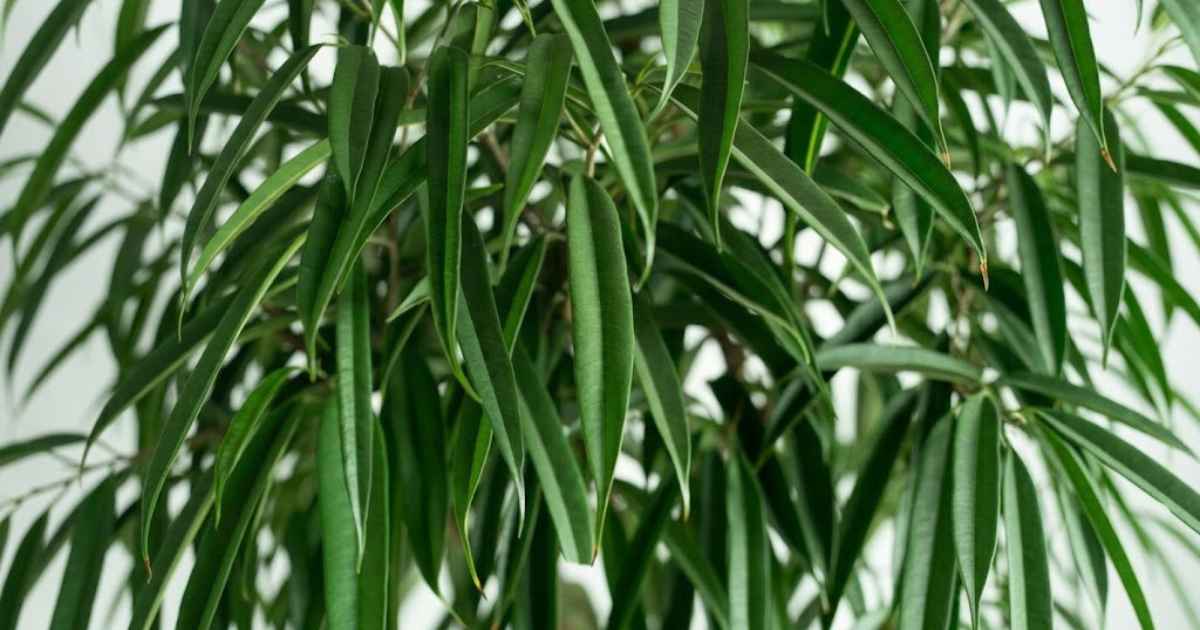
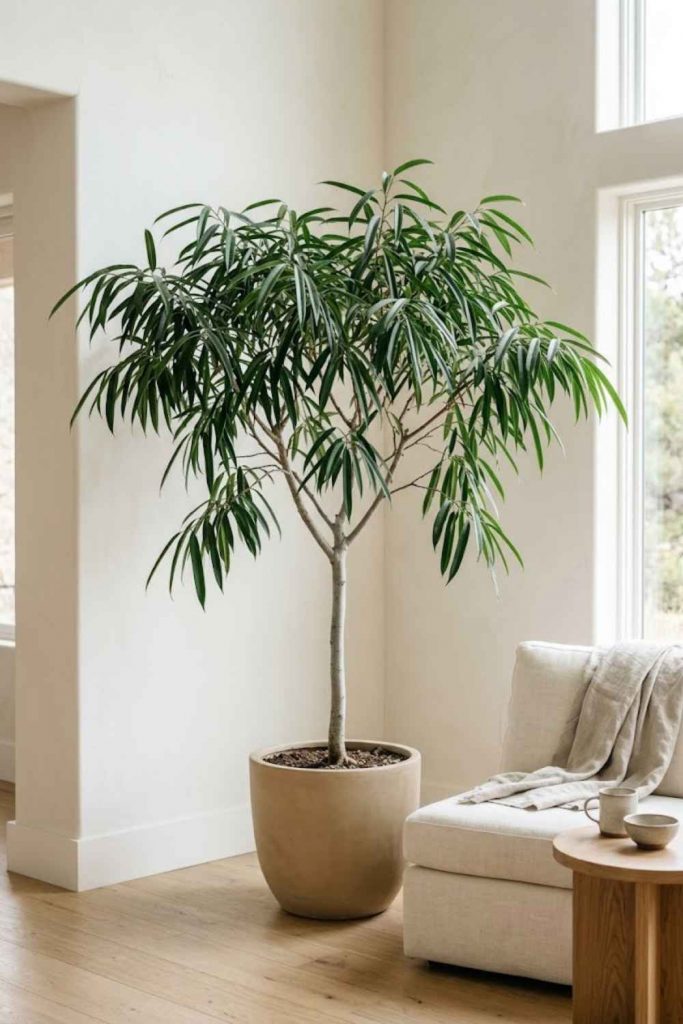
Ficus maclellandii ‘Alii’, commonly known as the Banana-Leaf Fig, is a graceful indoor tree with long, narrow leaves that give it a softer appearance than many other ficus species.
It tolerates average indoor conditions better than weeping figs while maintaining an elegant tree form with relatively little pruning.
It is a reliable choice for anyone who wants the look of a mature indoor tree.
Plant Snapshot
- Common Name: Ficus Alii, Banana-Leaf Fig, Narrow-Leaf Fig
- Botanical Name: Ficus maclellandii ‘Alii’
- Plant Type: Broadleaf evergreen indoor tree
- Mature Size: 6 to 10 feet tall indoors
- Light Needs: Bright, indirect sunlight; tolerates stable medium light
- Water Needs: Moderate; allow the top 2 inches of soil to dry before watering
- Soil Preference: Rich, well-draining indoor potting mix amended with perlite or orchid bark
- USDA Zones: 9–11 (strictly indoors in cooler climates)
- Toxicity: Toxic to pets and humans; the milky sap irritates skin and stomachs
What Matters Most for Success
Success with a Ficus Alii depends on keeping its surroundings consistent. While it is tougher than its relatives, it requires environmental stability to maintain its foliage.
- Avoid Unnecessary Movement: Once your plant adjusts to a bright location, avoid moving it unless necessary. Constant moving triggers stress and leaf drop.
- Use a Well-Draining Potting Mix: This tree needs a balanced potting mix that retains light moisture while allowing the roots to breathe.
- Let the Roots Breathe: The soil must dry out partially between deep soakings to prevent the roots from sitting in stagnant water.
Signs of a Healthy Ficus Alii
Watch the foliage for clues that your tree is thriving in its environment:
- Consistent New Growth: Fresh leaves emerge regularly during the growing season, starting with a warm bronze tint before maturing into a rich green.
- Firm Foliage: Leaves stay firm and retain their natural downward arch.
- Dense Canopy: The canopy remains full with little ongoing leaf drop.
Ficus Alii Care
Light Requirements
Ficus Alii needs bright, indirect sunlight to maintain its signature bushy shape.
The ideal indoor placement is near an east-facing window for morning sun, or a few feet back from a west- or south-facing window protected by a sheer curtain.
Avoid dim rooms and dark corners. While it survives in low light longer than a Weeping Fig, prolonged dim conditions force the tree to shed its inner foliage to conserve energy, resulting in a sparse, leggy profile.
Changes in the foliage are usually the first indication that light levels need adjustment. A healthy Ficus Alii shows a dense, arched canopy of rich green blades.
If the light is too low, you will notice wide gaps between new leaf nodes. If the spot is too bright, harsh afternoon sun can scorch the leaves, creating white, papery sunburn patches.
Watering
Water your Ficus Alii when the top two inches of soil feel dry and the pot feels light when lifted. Avoid watering on a rigid calendar schedule.
Soak the soil thoroughly until water drains from the base, then empty the catch tray once excess water has drained to keep the roots out of stagnant water.
Water more frequently during spring and summer when the tree is actively growing.
Water less frequently during winter as growth slows, allowing the soil to dry slightly deeper between waterings.
Yellowing interior leaves often indicate overwatering, especially when paired with soft, pliable stems.
Conversely, an underwatered tree will droop its branches, and the older leaves will curl inward and drop while still green.
Soil and Potting Mix
Standard heavy potting soils hold too much water for a Ficus Alii, quickly turning into a compacted mix that limits airflow around the roots. The ideal compromise is a sturdy, well-aerated blend.
Use a quality indoor potting mix amended with perlite or orchid bark to improve soil structure and maintain airflow around the roots.
Terracotta containers are an excellent choice for helping reduce overwatering and providing a solid base to anchor a top-heavy canopy, although plastic or glazed ceramic pots also work well if they feature good drainage.
Temperature and Humidity
Ficus Alii prefers temperatures between 65°F and 85°F, though stable conditions matter more than achieving an exact temperature.
Keep the tree away from drafty exterior doors in winter and from heating or air-conditioning vents year-round. Sudden exposure to temperatures below 55°F often triggers rapid leaf drop.
It adapts well to average indoor humidity.
If winter heating dries out your indoor air, help prevent crispy leaf tips by running a small humidifier nearby or grouping the tree with other houseplants to increase humidity.
Fertilizing
As a moderate grower, Ficus Alii only needs supplemental nutrients during the spring and summer.
From April through September, feed the tree once a month using a balanced liquid houseplant fertilizer diluted to half the recommended strength.
As growth slows in late autumn and winter, stop fertilizing to prevent fertilizer salts from building up and burning the roots.
Pruning and Maintenance
Pruning keeps your tree at a manageable size and shapes a bushy canopy. The ideal time to clip branches is early spring, using sharp bypass pruners sterilized with rubbing alcohol.
Focus your seasonal grooming on these key goals:
- Remove Damaged Wood: Cut back any dead, yellowing, or crossing inner branches to ensure light and air circulate freely through the center of the canopy.
- Shape and Branching: Trim or pinch the growing tips of young branches during late spring to stimulate a bushier look and control vertical height.
All Ficus species bleed a sticky, milky sap when cut. Protect your floors with a cloth and wear gloves to avoid skin irritation.
Wipe the long leaves down with a damp cloth every few weeks to remove dust and clear out hidden pests.
Repotting
Ficus Alii prefers snug quarters and settles in best when slightly root-bound. Plan on repotting every two to three years in the spring.
If the root ball slides out as a solid mass of roots with very little visible soil, it is time to upgrade.
Select a replacement pot that is only one size larger—ideally increasing the diameter by no more than two inches. An oversized pot holds too much water, increasing the risk of root rot.
After repotting, water thoroughly to settle the soil and return the container to its previous location.
Expect a light flush of leaf drop after repotting; this is normal as the tree adjusts to root disturbance.
Propagation
Propagating a Ficus Alii is a rewarding spring or early summer project using stem cuttings.
Because this species is woody, it takes longer to root than soft tropical vines. Semi-hardwood cuttings generally root more reliably than soft new shoots.
- Take the cutting: Select a healthy, semi-mature branch and cut a five- to seven-inch section just below a leaf node using sterilized bypass pruners.
- Prep the stem: Strip away the lower leaves, leaving only two or three at the very top of the cutting to minimize energy loss. Dip the raw base in rooting hormone powder.
- Plant: Insert the bottom end firmly into a moist propagation mix made primarily of coco coir and perlite.
- Seal: Enclose the pot in a clear plastic bag or propagation dome to lock in high humidity, and place it in a warm room with bright, indirect light.
- Maintain: Keep the environment humid and the rooting mix lightly moist. Roots typically anchor within four to six weeks, at which point you can remove the plastic cover.
Common Problems
Sparse Growth and Bare Branches
- Symptoms: Leggy branches with wide gaps between leaf nodes, a thinning interior canopy, and little or no new growth.
- Solution: Move the tree closer to a window that receives bright, filtered light. Prune leggy branches back in spring to encourage new, denser foliage.
Post-Purchase Leaf Drop
- Symptoms: Healthy, green leaves dropping in large numbers within two weeks of arrival.
- Solution: Avoid moving it again unless absolutely necessary. Give it several weeks to acclimate before making additional changes.
Root Rot
- Symptoms: Rapid yellowing of leaves across the entire tree, soft branch tips, and a foul odor coming from the pot.
- Solution: Unpot the tree, cut away black, mushy, damaged roots, and repot into fresh, aerated soil.
Common Pests
Scale Insects
- Symptoms: Tiny, hard, immobile brown bumps clustered along the twigs and a sticky, shiny film coating the lower foliage.
- Solution: Scrape away bumps with a toothbrush dipped in rubbing alcohol, then spray with neem oil.
Spider Mites
- Symptoms: Fine, dusty webbing wrapped around new leaf buds and the undersides of foliage, causing the blades to speckle and turn dull.
- Solution: Spray the tree down thoroughly in the shower to dislodge the mites, then treat the canopy with insecticidal soap every seven days.
Mealybugs
- Symptoms: Cottony white clusters tucked into the narrow leaf joints and petiole bases, accompanied by a sticky honeydew residue.
- Solution: Dab the insects directly with a cotton swab dipped in rubbing alcohol, and repeat weekly until no pests remain. Treat the entire canopy with neem oil.
Seasonal Care Checklist
Spring and Summer Care
- Test Soil: High heat means the pot dries faster; check moisture levels every few days.
- Provide Nutrients: Apply diluted organic fertilizer monthly to support healthy growth.
- Groom: Wipe leaves clean of winter dust build-up to maximize light absorption.
Autumn and Winter Care
- Stop Fertilizing: Suspend plant food completely during cooler months to prevent root burn.
- Water Less Often: Let the soil column dry a bit deeper before watering again.
- Defend Air: Keep the pot clear of hot air vents or drafty winter windows.
FAQs
My tree is growing tall but looks like a single thin stick. How do I make it branch out?
To encourage a bushier canopy, you need to cut the main vertical growth tip in early spring.
Trimming the top forces the tree to redirect its energy to dormant buds lower down the trunk, which will split and form new side branches.
Can I use artificial grow lights if my room doesn’t have enough windows?
Yes.
You will need a dedicated full-spectrum LED grow light placed 12 to 18 inches above the canopy, kept on a timer for 12 to 14 hours a day to simulate the bright, indirect sunlight the tree requires.
Why is my Ficus Alii dropping green leaves that aren’t yellow or dry?
Sudden dropping of completely green leaves is almost always caused by a cold draft or environmental shock.
Check if the tree is near an air conditioning vent, an open window, or an exterior door that lets in winter air.
Can I grow a Ficus Alii outdoors during the summer?
Yes, if you live in a climate with warm summers.
Place it in a sheltered location with bright shade where it gets no direct midday sun.
Bring it back indoors well before night temperatures drop toward 55°F.