Table of Contents
A great living room often needs one final element to tie the space together. You can invest in designer rugs, gallery walls, or high-end lighting, but nothing grounds a room quite like a large, structural indoor tree. A tall canopy draws the eye upward, softens sharp architectural angles, and brings organic scale to a seating arrangement.
Choosing a statement tree is less about standard houseplant care and more about selecting a living piece of furniture. To achieve a polished look, you must match the tree’s silhouette to your room’s physical layout and architecture.
These selections are based on mature size, light tolerance, and architectural impact in real residential interiors. We grouped these trees by the most common living room structural constraints: high-volume spaces, compact layouts, and recessed angles.
For High-Volume Spaces (Best for High Ceilings & Open Floor Plans)
If you have an open layout or ceilings over nine feet, you need maximum vertical scale to anchor the room. These varieties provide the heavy architectural presence required to balance large furniture arrangements.
1. Fiddle Leaf Fig (Ficus lyrata)
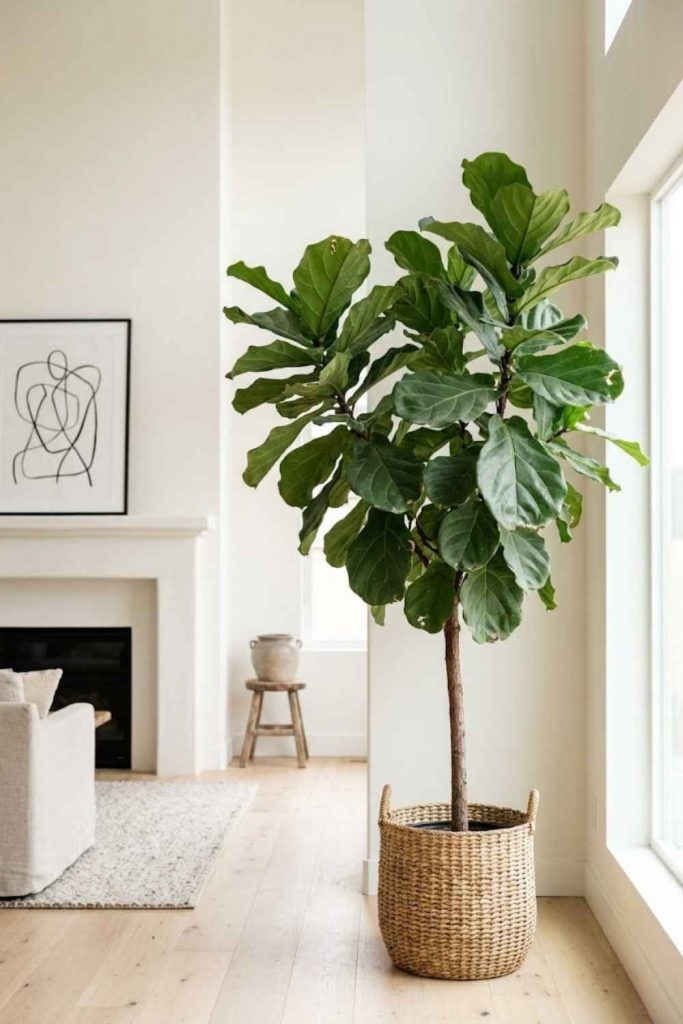
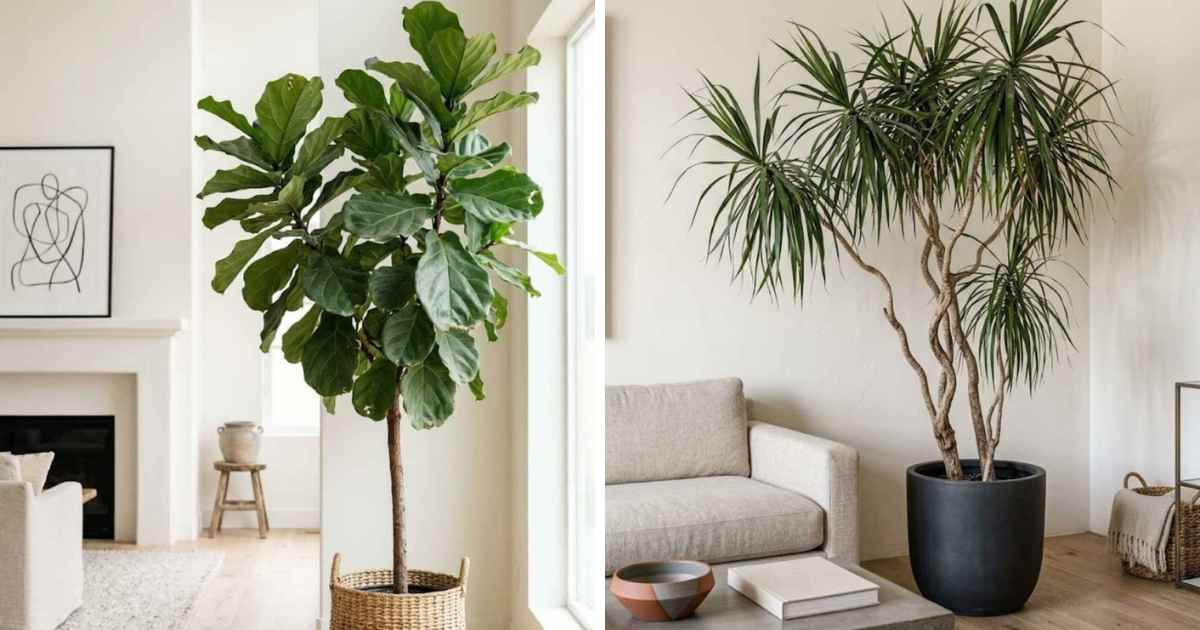
The Fiddle Leaf Fig remains a cornerstone of high-end interior design because of its dramatic, violin-shaped leaves and clean, upright structure. It works as a bold focal point flanking a fireplace mantle or centering a large blank wall.
This is a demanding tree that requires strict environmental stability. Bright, consistent indirect daylight is non-negotiable here. The tree will drop foliage rapidly if exposed to cold drafts, heating vents, or sudden location changes.
Like all members of the ficus family, its milky sap is a known irritant to curious pets, making it wise to sweep up any dry fallen leaves promptly.
Bright indirect light • Moderate, consistent watering • Pet toxic • Upright, structural canopy
2. Bird of Paradise (Strelitzia nicolai)
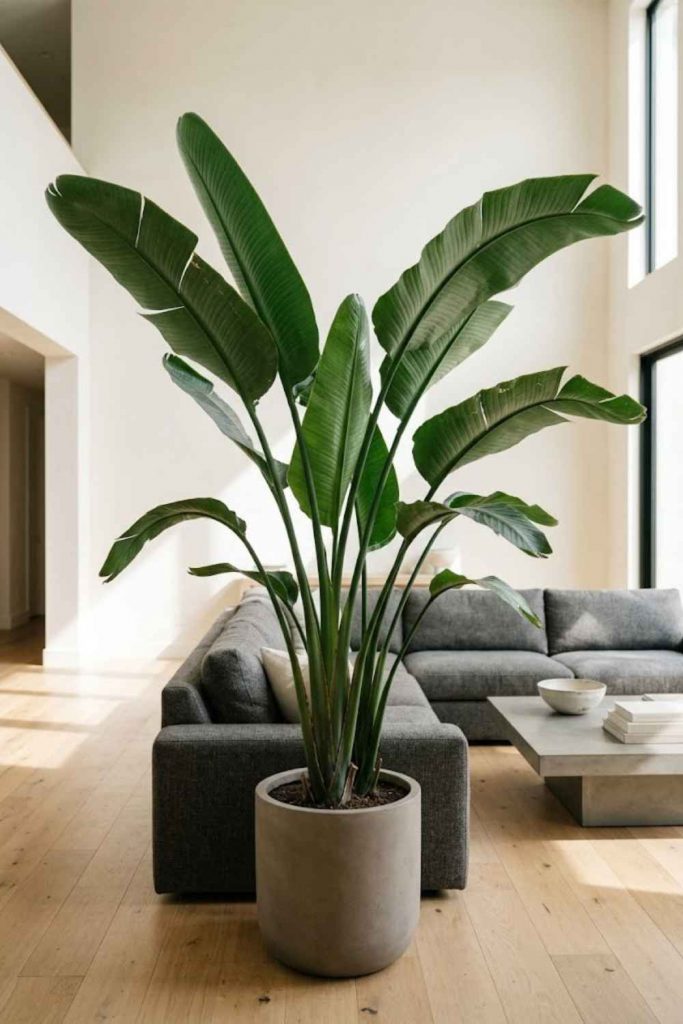
To fill a massive sun-drenched wall or balance a sprawling sectional sofa, the White Bird of Paradise is an unmatched design choice. Enormous, glossy, paddle-shaped leaves fan out vertically like a dramatic architectural screen, bringing a bold scale to contemporary living rooms.
This variety handles dry indoor air well and is highly resilient compared to the finicky ficus family. The massive fronds naturally split over time to handle wind, giving the plant a raw yet polished texture. Give it a wide corner where its expansive canopy can unfold without blocking walkways.
Bright indirect to direct sun • Moderate watering • Pet toxic • Broad, massive fan habit
3. Ficus Audrey (Ficus benghalensis)
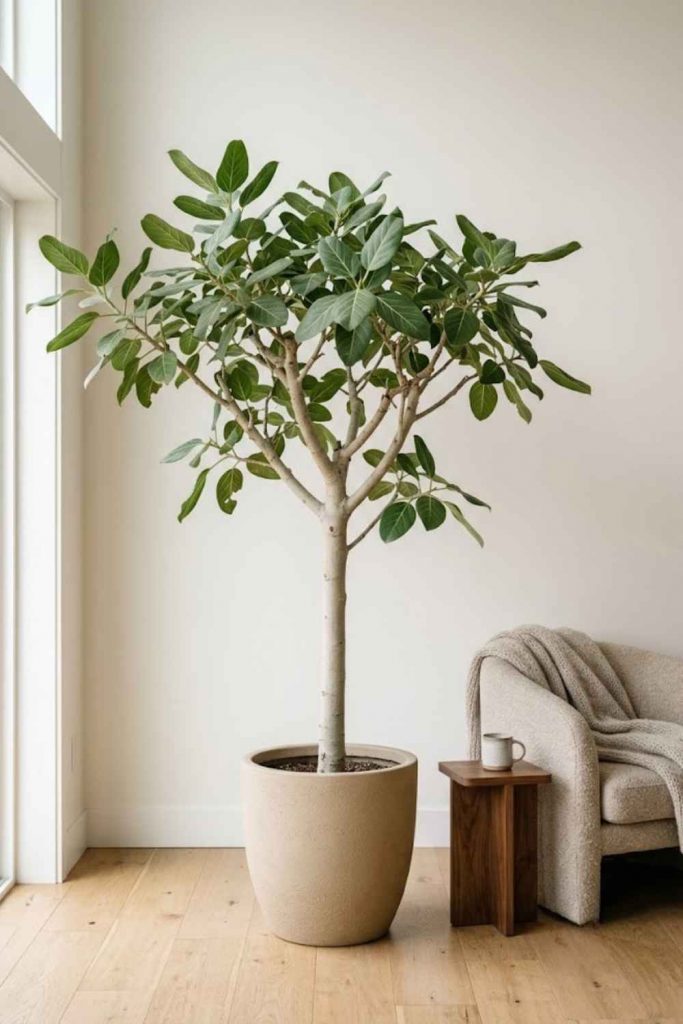
The Ficus Audrey is a relaxed, sophisticated alternative to the Fiddle Leaf Fig. Velvety, matte-green leaves with striking white veins sit along a pale, smooth, columnar trunk. It naturally develops a classic, branching tree canopy that makes a living room feel established and architecturally complete.
Minor watering delays won’t cause immediate leaf drop, but it still requires a prime window location to prevent its branches from stretching unevenly toward the light. Keep an eye on pets around this variety, as the leaves can cause oral discomfort if chewed.
Bright indirect light • Moderate watering • Pet toxic • Branching, classic tree form
For Compact Layouts (Best for Standard Ceilings & Tight Corners)
When square footage is limited or you need to tuck a tree behind an armchair, these options grow upward rather than outward, saving valuable floor space.
4. Corn Plant (Dracaena fragrans)
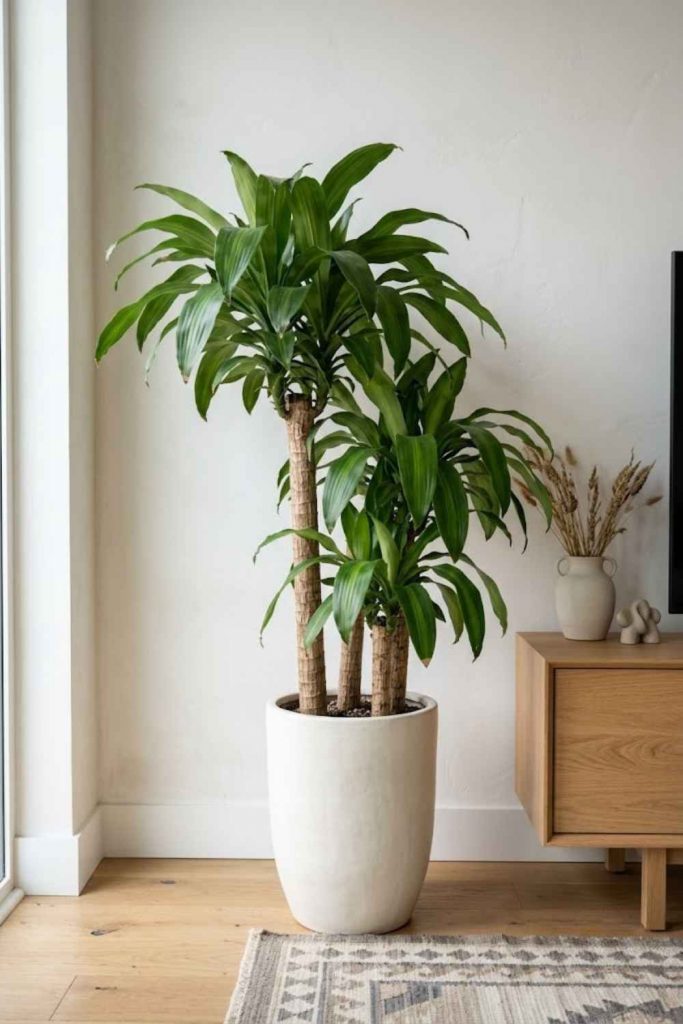
Floor space is at an premium in narrow layouts, which is where the upright Corn Plant excels. It grows strictly straight up, dropping deep green, glossy leaves downward like a compact fountain along thick, woody canes.
Its clean column fits effortlessly into tight spaces behind seating or alongside a television console. Highly efficient with moisture, this tree prefers its soil to dry out completely, making it a reliable option for frequent travelers.
Low to medium indirect light • Low watering • Pet toxic • Narrow, columnar silhouette
5. Rubber Tree (Ficus elastica)
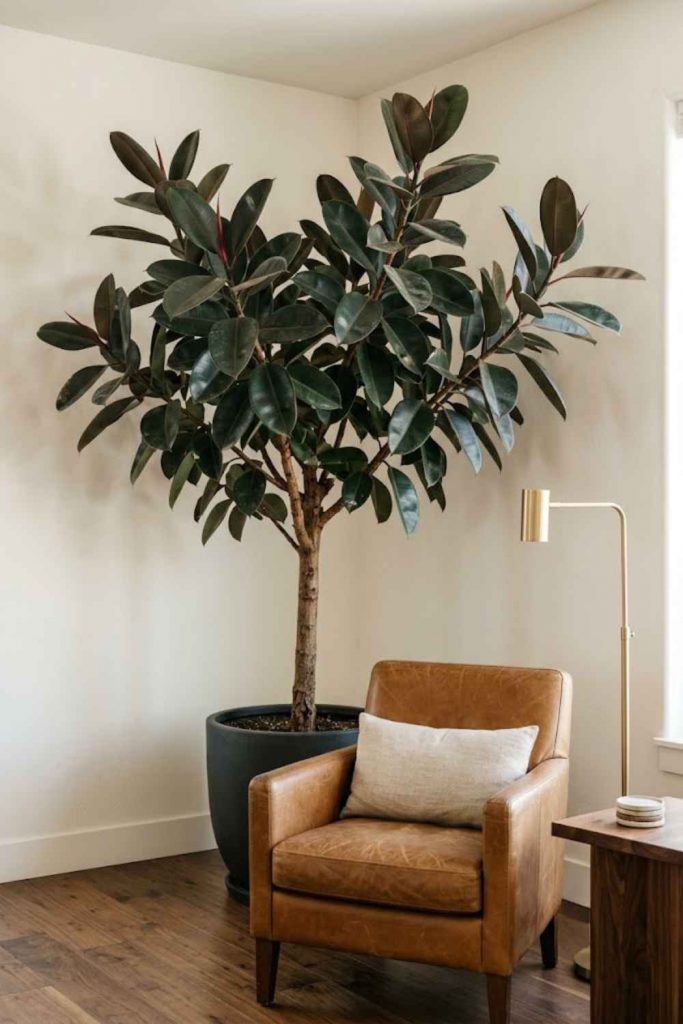
If your living room features light walls, neutral linen furniture, or a moody mid-century palette, the dark burgundy variation of the Rubber Tree provides incredible visual contrast. Thick, leather-like leaves feature a high-gloss sheen that catches the daylight like polished lacquer.
Because the stalks grow straight up in sturdy columns, this tree fits perfectly into tight vertical spaces. Just wipe the broad leaves down with a damp cloth monthly to prevent dust from dulling their natural shine and keep the toxic sap away from curious dogs or cats.
Bright to medium indirect light • Low to moderate watering • Pet toxic • Bold, upright columns
6. Triangle Ficus (Ficus triangularis)
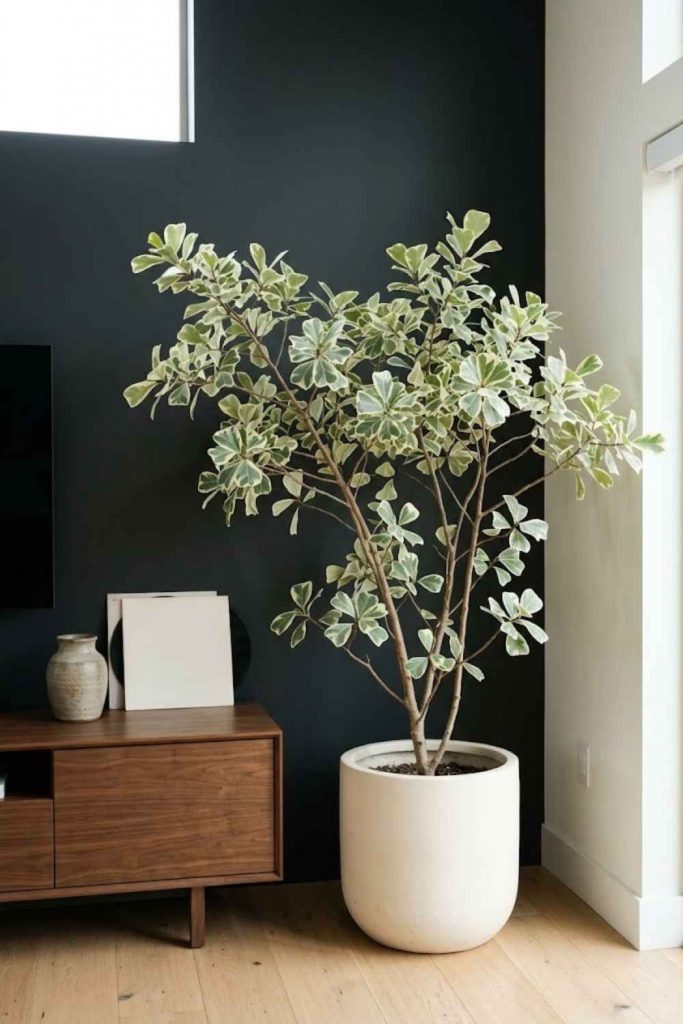
A brilliant choice for rooms that need a splash of brightness without relying on solid green tones. This unique tree features heart-shaped leaves heavily bordered in creamy white and soft sage green.
It brings a delicate, variegated texture to a room, functioning beautifully against dark accent walls or dark wood media consoles. Variegated foliage requires high-quality light to maintain its bright coloring; if placed in a dim corner, the white portions of the leaves turn brown and drop.
Bright indirect light • Moderate watering • Pet toxic • Branching, variegated habit
7. Weeping Fig (Ficus benjamina)
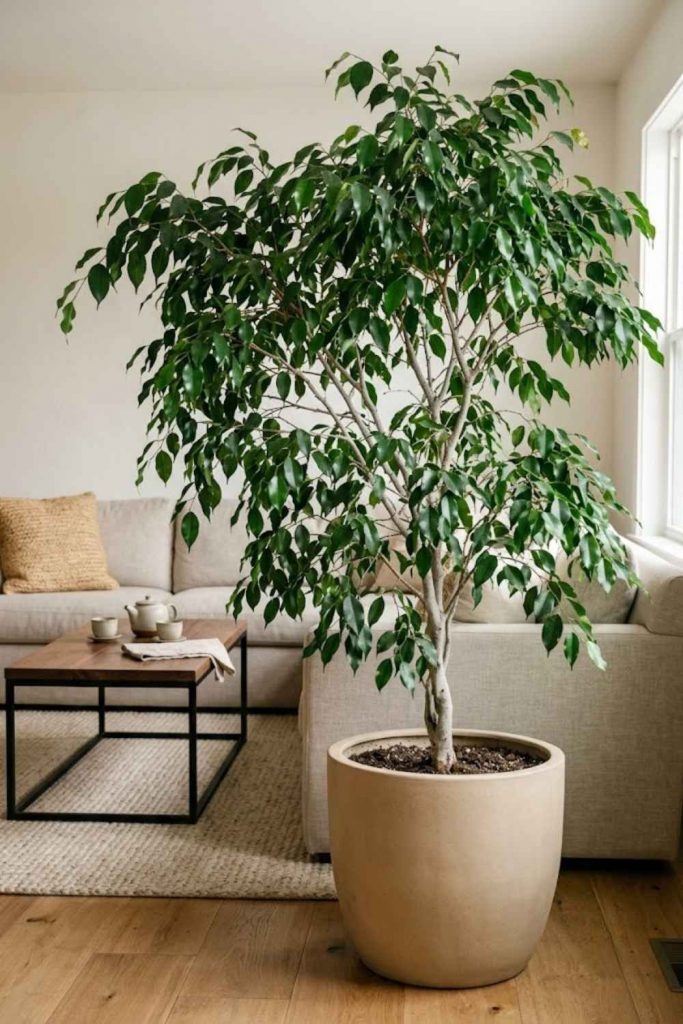
The Weeping Fig brings a traditional warmth indoors with its elegant, slender branches and hundreds of small, teardrop-shaped leaves. It offers a classic, leafy silhouette that breaks up the stark lines of minimalist furniture.
Success with this variety relies on absolute environmental stability. It is highly sensitive to change; exposing it to a sudden cold draft or shifting its position in the room triggers leaf drop.
Find a steady light space, leave it there, and let it adjust. Take extra care to clear away any fallen leaves if you share your home with pets.
Bright indirect light • Moderate watering • Pet toxic • Branching, bushy grower
For Recessed Angles (Best for Low-Light Walls & Deep Perimeters)
These varieties feature distinct, flowing lines and graphic structures that add life deeper inside a room’s floor plan, safely away from direct sun.
8. Kentia Palm (Howea forsteriana)
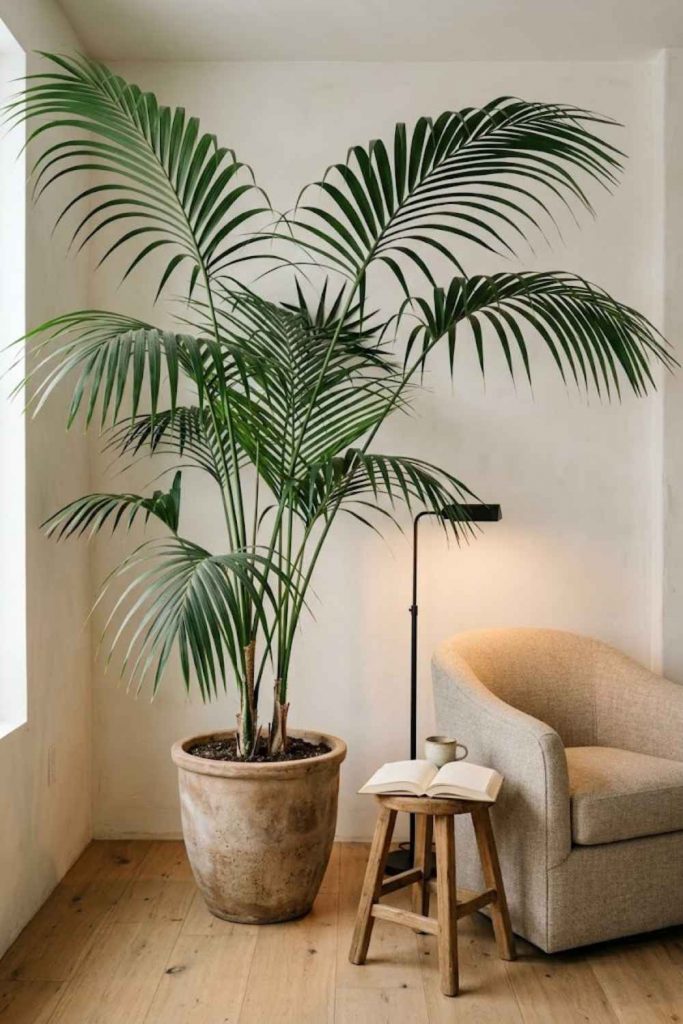
The Kentia palm is an upscale, architectural tree that needs room to spread from day one. Squeezing it tight against a corner wall bends and permanently damages the lower fronds.
If you can give it space, it treats lower light conditions significantly better than many popular indoor palms. Unlike finicky Majesty palms, the Kentia arches its slender fronds outward horizontally, giving you a green canopy that feels airy and editorial rather than dense or heavy. Best of all, it is entirely non-toxic to household pets.
Low to medium indirect light • Low to moderate watering • Pet safe • Arching, feathered habit
9. Dracaena Marginata (Dracaena marginata)
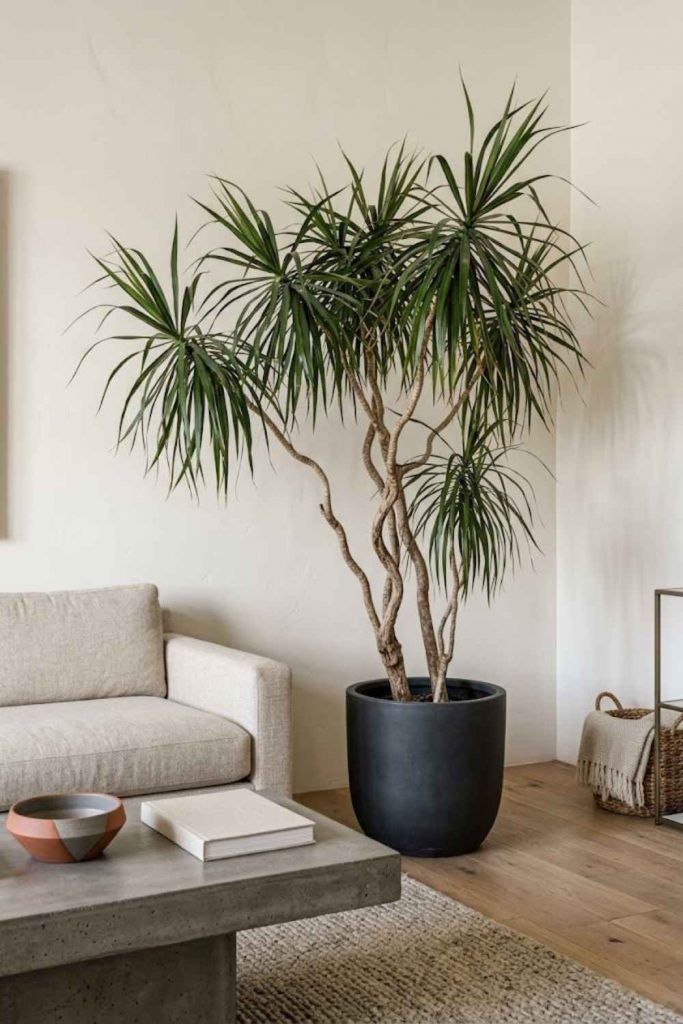
Look specifically for specimens with trained, winding, or braided trunks rather than straight canes. A character-trunk Dracaena Marginata functions less like a plant and more like a living piece of modern sculpture.
Thin, ribbon-like leaves burst from the ends of twisted stalks, adding a light, geometric presence that contrasts beautifully with heavy sofas or blocky coffee tables.
This variety is a notoriously slow drinker with high drought tolerance. It holds its geometric presence deep inside a room, but cut water by half if you push it into the shadows.
Low to medium indirect light • Low watering • Pet toxic • Sculptural, winding stems
10. Braided Money Tree (Pachira aquatica)
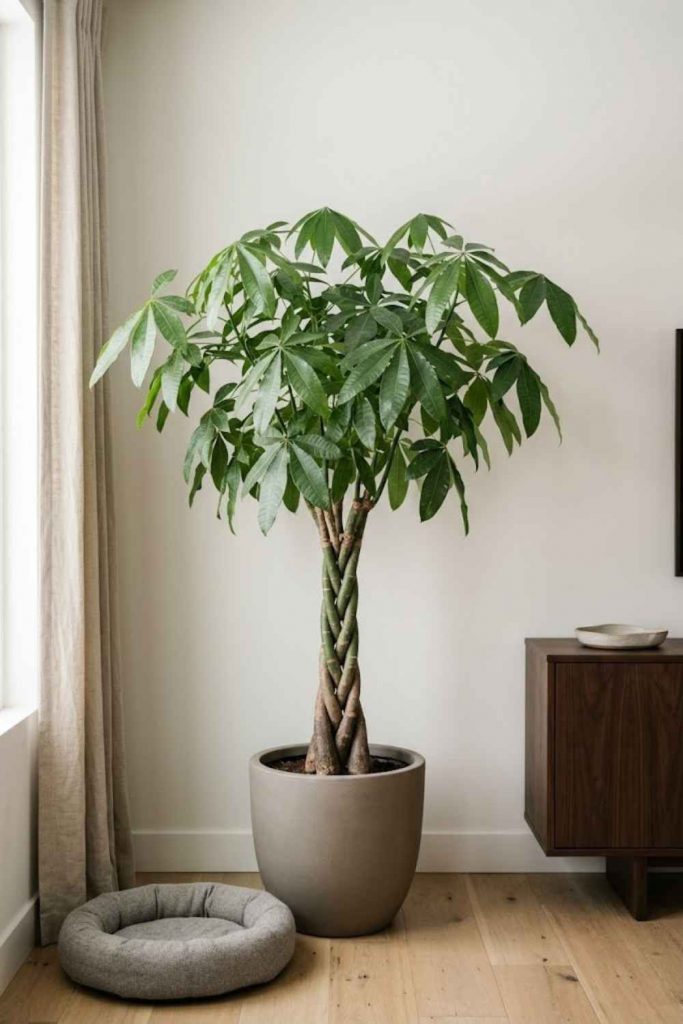
Because the thick, braided central trunk of the Money Tree stores moisture like a reservoir, the plant drinks water slowly. Watering on a strict calendar schedule causes root rot; always let the soil dry out deeply before watering again.
A mature, large-scale Money Tree delivers a heavy, architectural canopy that looks substantial and expensive without requiring bright, all-day light, making it a great sculptural choice for darker perimeters of the room and a perfectly safe choice for pet owners.
Low to medium indirect light • Low to moderate watering • Pet safe • Braided trunk, umbrella canopy
Quick Plant Picker
Find the perfect structural element for your specific living room setup:
- If your room has 10–12 ft ceilings & huge windows: Fiddle Leaf Fig or Bird of Paradise provide the scale you need.
- If you live in a dark apartment with north-facing windows: Money Tree handles the lower energy budget best.
- If you leave for weeks at a time on business: Corn Plant or a Rubber Tree can thrive entirely on a hands-off routine.
- If you have cats or dogs that chew on greenery: Stick to the Money Tree or Kentia Palm. The Ficus family is toxic to curious pets.
- If you want a sleek, narrow column to fit behind a modern accent chair: The Rubber Tree ‘Burgundy’ or Corn Plant saves floor space.
- If your furniture is mostly blocky, heavy, or mid-century: A character-trunk Dracaena Marginata uses its twisted trunks to soften the straight lines.
FAQs
Should I buy a small tree and let it grow, or purchase a mature one?
If you want the tree to function as a focal point right away, buy the mature size. Large indoor trees grow very slowly under standard residential light conditions. A small plant will take years to achieve the architectural scale required to elevate a living room layout.
How do I prevent my large tree from leaning toward the window?
Rotate the pot a quarter-turn every single time you water it. Because indoor trees naturally reach toward the nearest daylight source, consistent rotation ensures the main trunk stays straight and structurally balanced.
Can I place a statement tree directly next to my television console?
Yes, as long as that spot still receives adequate daylight from a nearby window. Just ensure the tree is kept a few feet away from the back of the television or media box. The ambient heat generated by electronics can dry out the surrounding air and crisp the foliage.
Conclusion
Elevating a living room with an indoor tree relies entirely on scale and lighting alignment. Before choosing a variety, measure your vertical space and observe how daylight moves across your seating area throughout the afternoon.
By selecting a trunk structure and leaf texture that complements your existing furniture lines—and matching it strictly to your room’s actual light levels—you can introduce a living anchor that makes your entire home layout feel complete.