Table of Contents
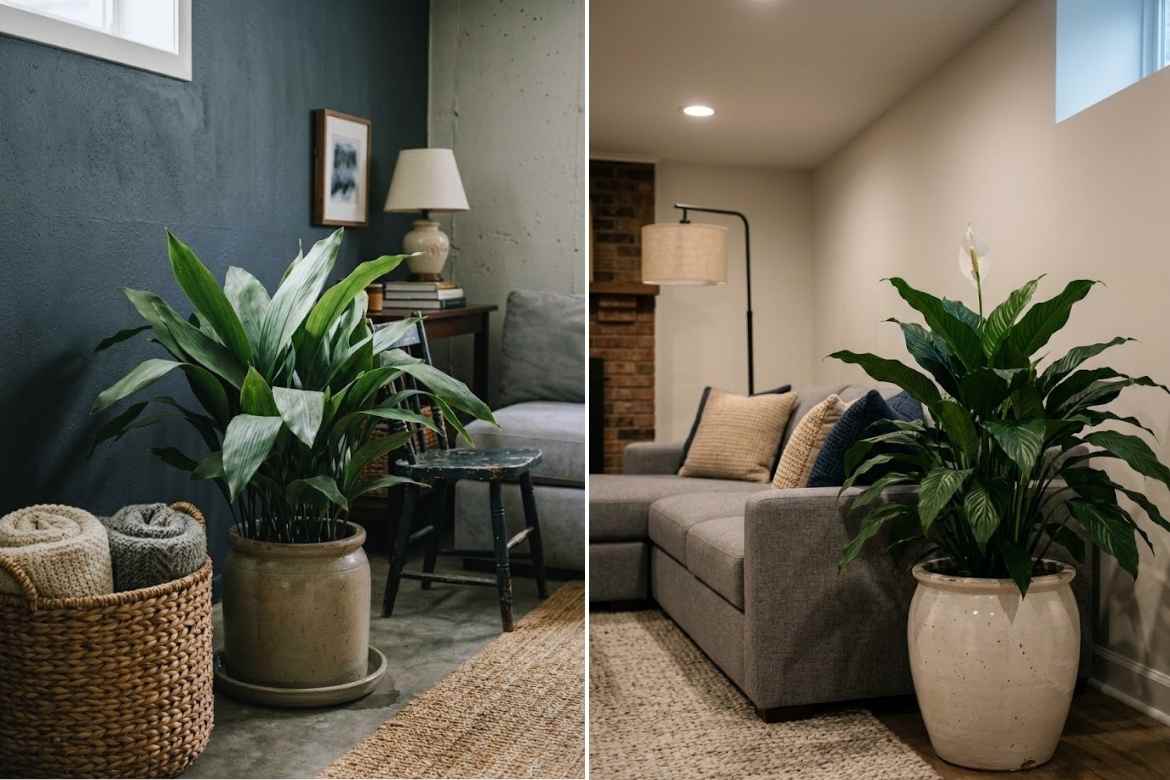
Basements often end up feeling a little disconnected from the rest of the house — darker, quieter, and more functional than inviting. Adding a few well-chosen plants instantly softens that atmosphere, bringing texture and life into spaces that can otherwise feel flat or overlooked.
The challenge is that most basements simply do not offer ideal growing conditions. Between tiny window wells, cooler temperatures, and limited natural light, many common houseplants struggle quickly. The key is choosing resilient varieties that tolerate dimmer conditions gracefully while still looking lush and intentional indoors.
1. ZZ Plant (Zamioculcas zamiifolia)
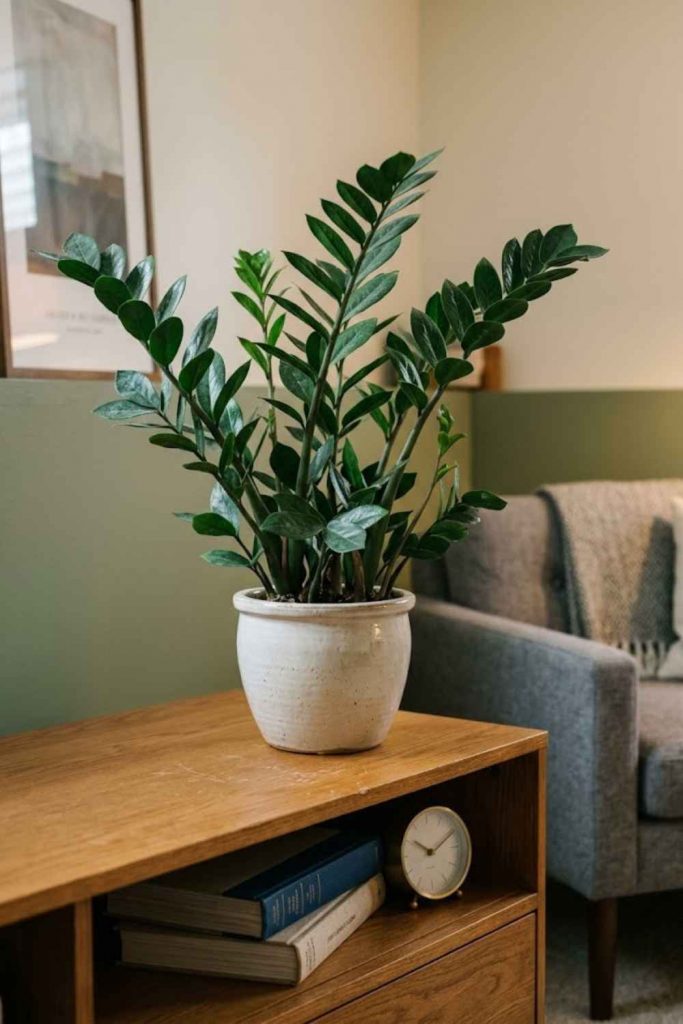
There is something almost architectural about a ZZ plant. The thick, glossy leaves reflect ambient light beautifully, helping darker basement corners feel cleaner and more finished without demanding constant attention.
Because the plant grows from underground rhizomes that store water efficiently, it can go surprisingly long between waterings. That makes it ideal for finished basements, guest spaces, or lower levels you do not walk through every day.
Just keep expectations realistic: in darker rooms, ZZ plants grow very slowly, so it is worth buying a fuller specimen upfront.
Low to fluorescent light • Sparse watering • Pet toxic • Upright arching grower
2. Cast Iron Plant (Aspidistra elatior)
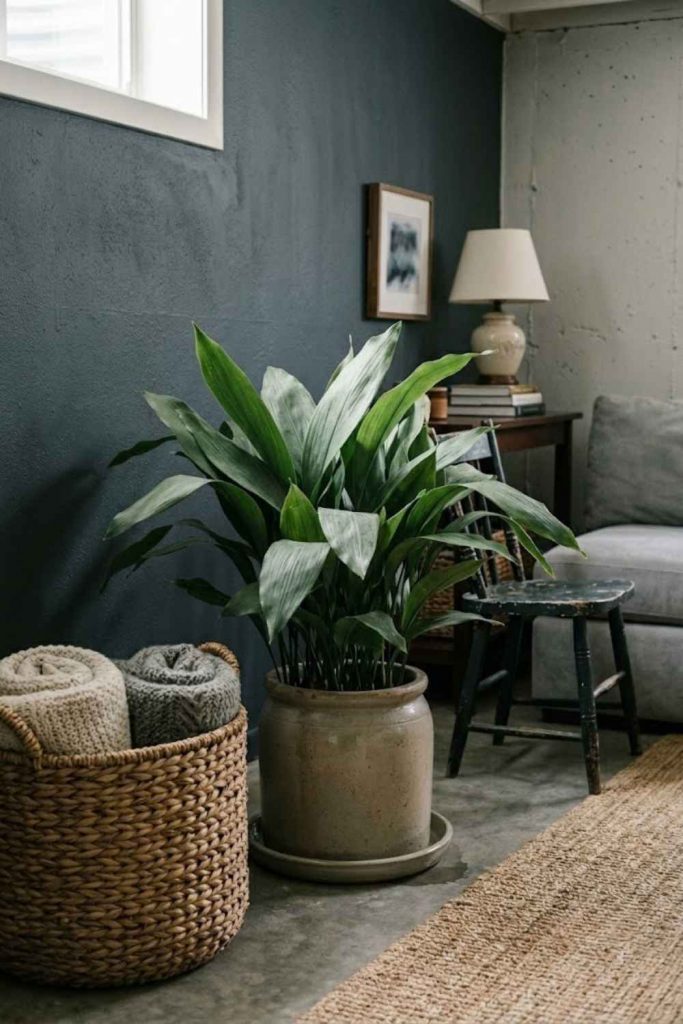
If your basement feels drafty, dim, or slightly neglected, this is one of the safest choices you can make. Cast Iron Plant earned its reputation by surviving conditions that would destroy fussier houseplants.
The broad matte-green leaves bring a calm, grounded look to darker rooms, especially next to concrete walls, media consoles, or basement office setups. It also handles inconsistent watering and fluctuating temperatures without much drama.
The only catch is patience — this plant grows slowly and prefers to settle in quietly over time.
Low light • Moderate to low watering • Pet safe • Bushy upright grower
3. Snake Plant (Sansevieria trifasciata)
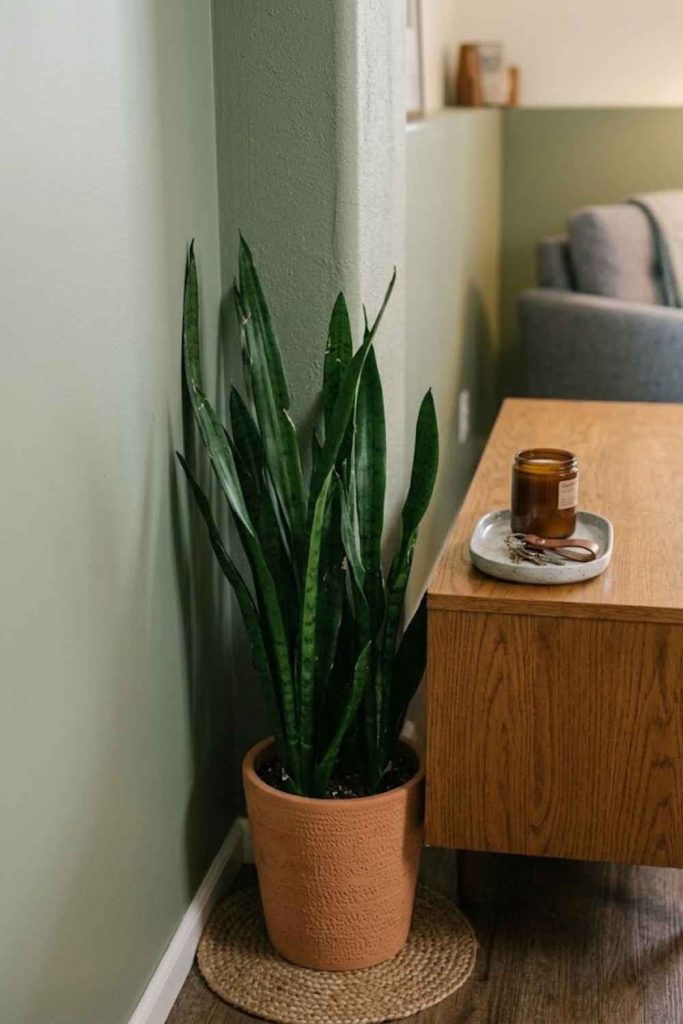
For narrow basement layouts or awkward corners between furniture, Snake Plant works almost like living architecture. The stiff upright leaves add height and structure without taking up much floor space.
It is also one of the easiest plants to overcare for. In darker conditions, the soil stays damp longer, so infrequent watering is essential.
While variegated varieties may lose some of their bright striping downstairs, the deep green color still looks sharp and modern against darker interiors.
Low to indirect light • Infrequent watering • Pet toxic • Vertical structural grower
4. Pothos (Epipremnum aureum)
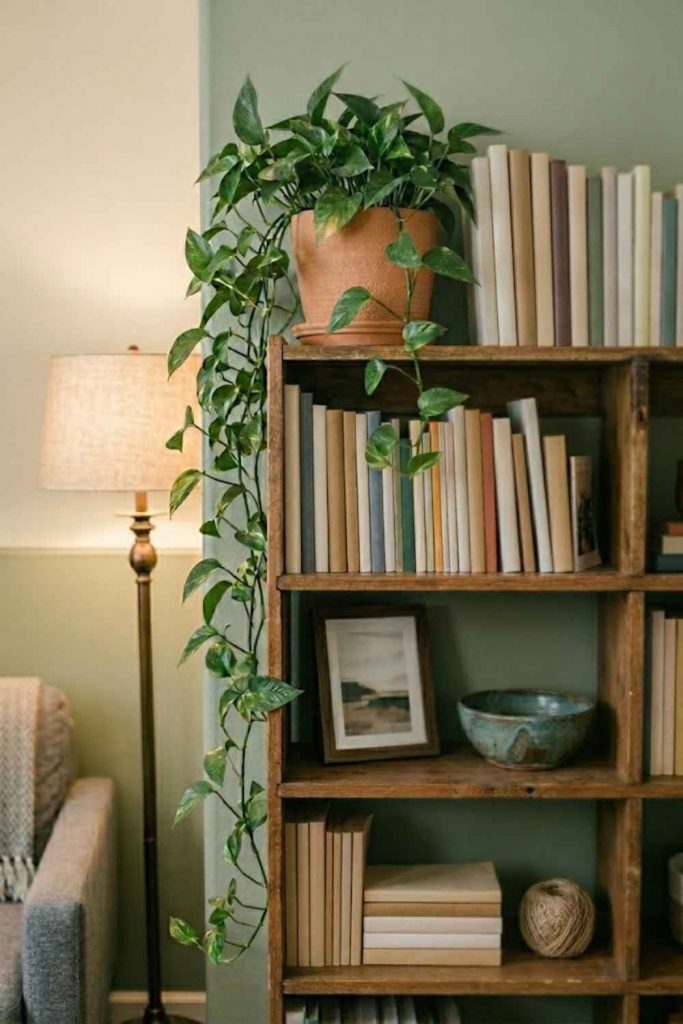
Few plants make a basement feel softer as quickly as pothos. The trailing vines break up flat shelving, media walls, and bulky furniture with an easy, relaxed look that instantly warms up the room.
Pothos is also refreshingly communicative. When the plant needs water, the leaves droop slightly, then perk back up within hours after a drink.
In lower light, the vines may stretch out more sparsely over time, but occasional trimming keeps the plant fuller and bushier.
Low to bright indirect light • Moderate watering • Pet toxic • Trailing vine
5. Parlor Palm (Chamaedorea elegans)
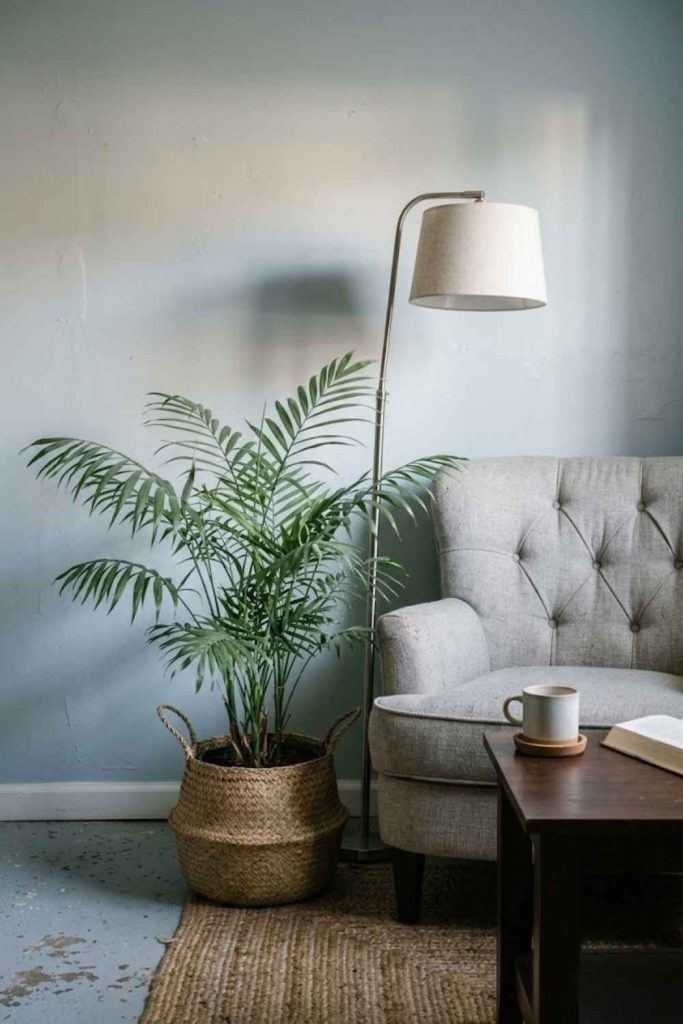
Basements can sometimes feel visually heavy, especially when filled with large furniture or darker finishes. Parlor Palm helps offset that with soft, feathery fronds that add movement without overwhelming the room.
Unlike many palms, it adapts surprisingly well to lower light and typical indoor humidity. It works especially well in reading corners, basement offices, or spaces that need a lighter, airier texture.
Keep it away from heating vents if possible, since consistently dry air can crisp the leaf tips.
Low to medium indirect light • Consistent moderate watering • Pet safe • Feathery clumping grower
6. Bird’s Nest Fern (Asplenium nidus)
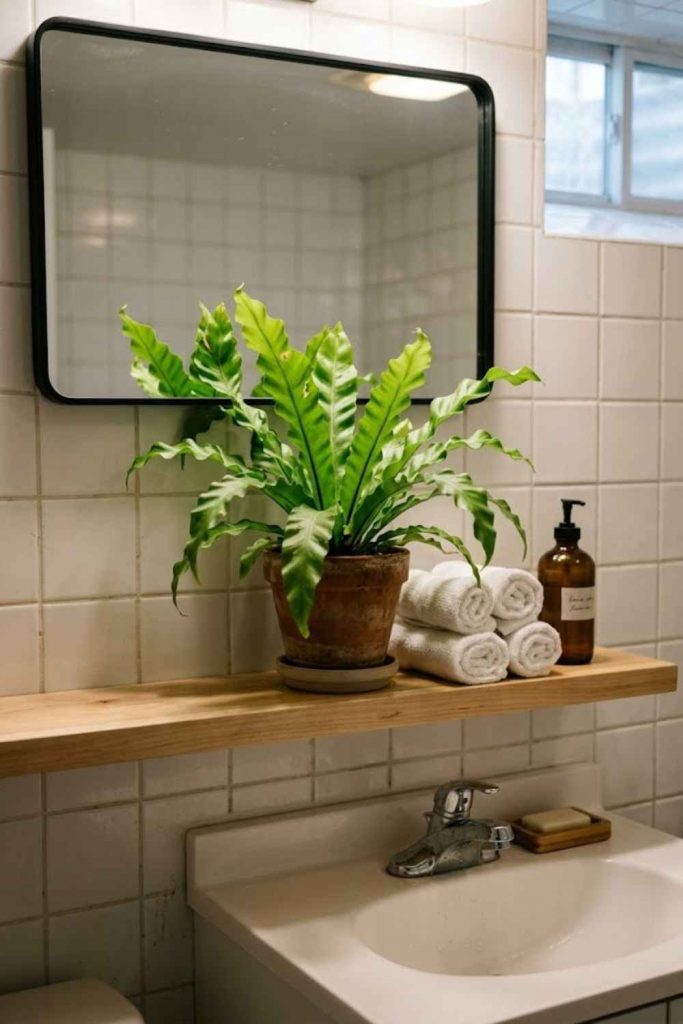
Most ferns struggle indoors, but Bird’s Nest Fern is far more forgiving than its delicate relatives. Instead of tiny fronds that shed constantly, it produces broad, rippled leaves that feel lush and sculptural at the same time.
It naturally enjoys humidity, making it an excellent choice for basement bathrooms or laundry rooms where the air stays slightly damp.
One important detail: avoid pouring water directly into the center rosette, since trapped moisture can cause rot.
Medium to low indirect light • Moderate watering • Pet safe • Rosette outward grower
7. Aglaonema (Chinese Evergreen)
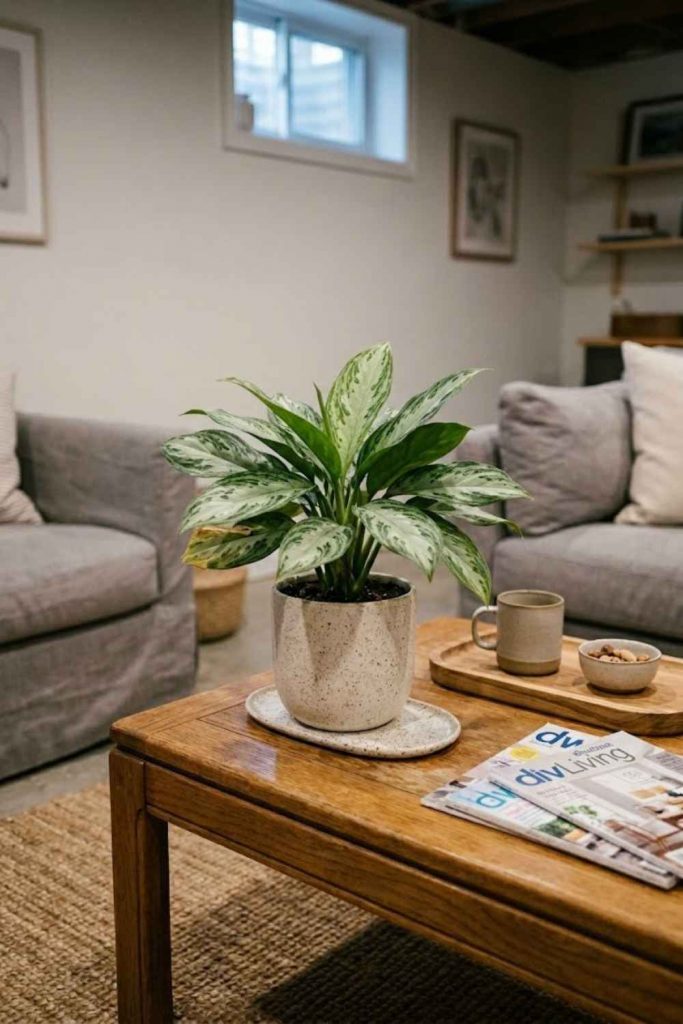
Many low-light plants stay within the same palette of deep greens, but Aglaonema adds muted silvers, creams, and soft pink tones that brighten darker rooms surprisingly well.
It maintains a naturally tidy, compact shape without becoming sparse or leggy over time, which makes it especially useful for desks, shelves, or basement coffee tables.
Cooler basement temperatures can slow water evaporation significantly, so letting the soil dry slightly between waterings helps prevent root problems.
Low to medium light • Moderate to low watering • Pet toxic • Compact mounding grower
8. Heartleaf Philodendron (Philodendron hederaceum)
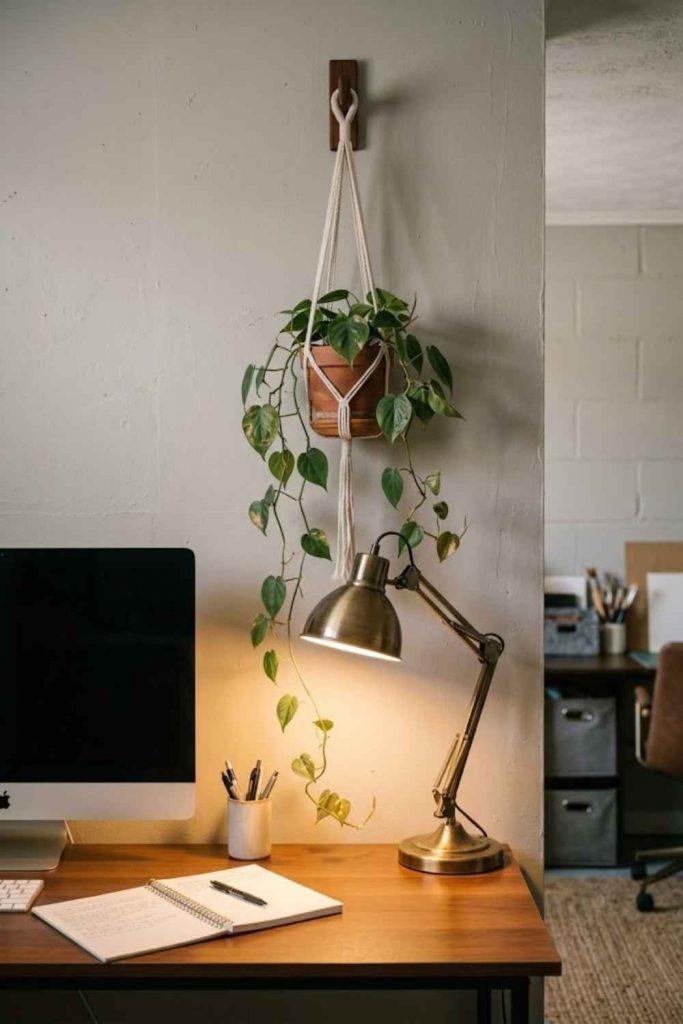
Heartleaf Philodendron has a softer, more romantic look than standard pothos. The deep green leaves and thinner vines create a relaxed, draping effect that works beautifully in hanging planters or along open shelving.
It adapts extremely well to darker interiors and tolerates occasional missed waterings without much fuss.
If the vines become too long or sparse, they are easy to trim and propagate in water, which helps the plant stay full over time.
Low to bright indirect light • Moderate watering • Pet toxic • Trailing or climbing vine
9. Spider Plant (Chlorophytum comosum)
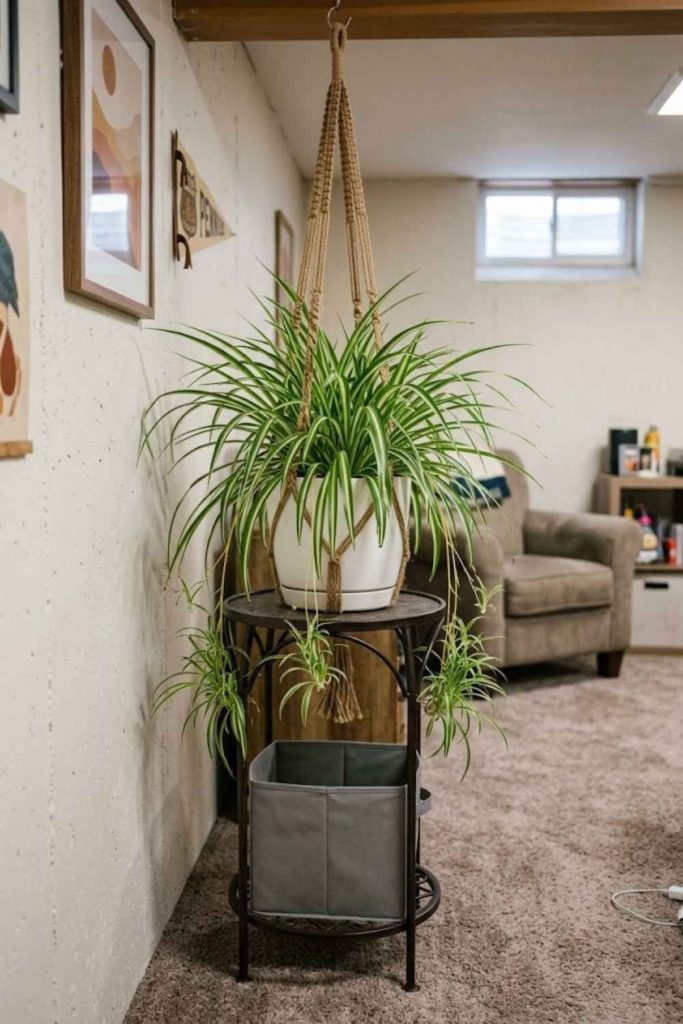
Spider plants bring an easygoing, slightly nostalgic feel that works especially well in basement offices, laundry rooms, or casual family spaces.
The narrow arching leaves create movement without visual heaviness, especially when displayed in hanging baskets or elevated planters.
In brighter conditions, mature plants produce dangling baby offshoots, though lower basement light may slow that process considerably.
Medium to low light • Moderate watering • Pet safe • Arching fountain grower
10. Peace Lily (Spathiphyllum)
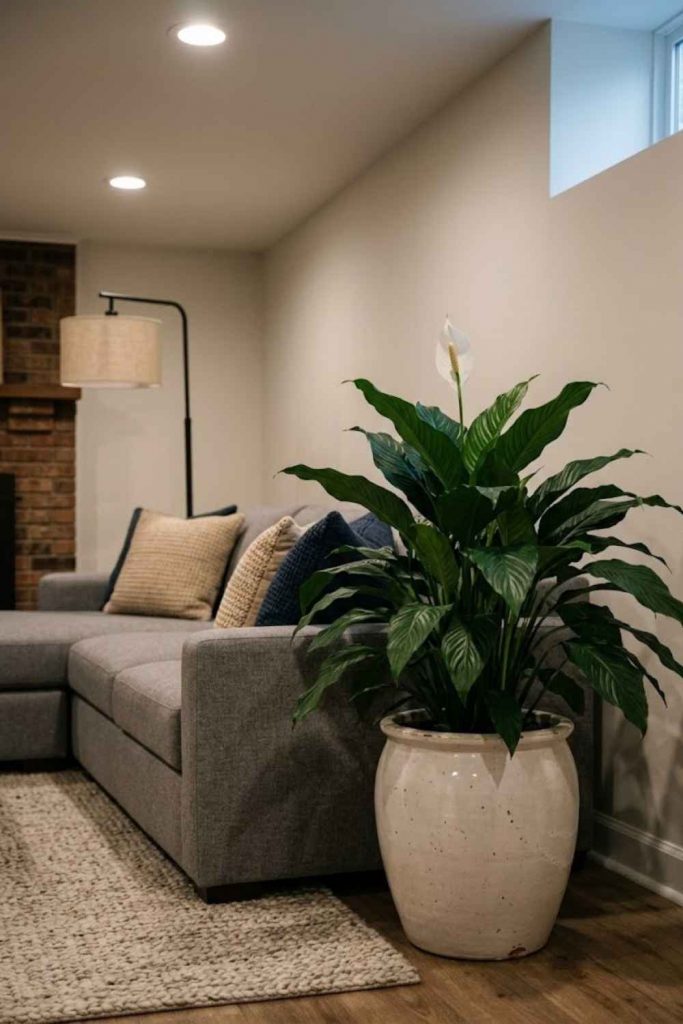
If you want a basement space to feel calmer and more finished, Peace Lily is one of the fastest ways to get there. The deep green leaves create a fuller, more luxurious presence than many other low-light houseplants.
Even in dimmer rooms, it can still reward you with occasional white blooms, though flowering will naturally slow compared to brighter spaces upstairs.
Peace Lily is famously dramatic when thirsty — the leaves collapse noticeably when dry, then recover quickly after watering.
Low to medium indirect light • Frequent to moderate watering • Pet toxic • Upright mounding grower
11. Satin Pothos (Scindapsus pictus)
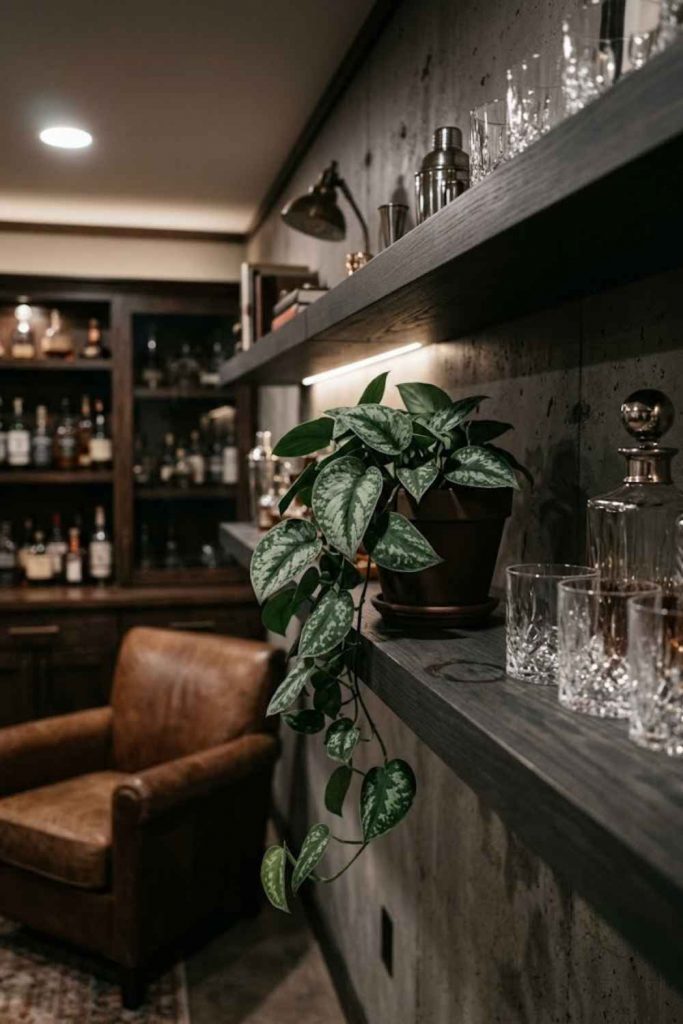
Satin Pothos offers the same trailing softness people love about traditional pothos, but with a moodier, more elevated look. The matte leaves are splashed with soft silver markings that catch and reflect even limited ambient light.
It handles typical basement conditions surprisingly well and tolerates stagnant indoor air better than many delicate trailing plants.
Letting the soil dry slightly between waterings helps maintain fuller growth and prevents overly damp roots.
Low to bright indirect light • Allow soil to partially dry • Pet toxic • Trailing or climbing vine
Quick Plant Picker
Best for absolute beginners
- ZZ Plant
- Snake Plant
Best for pet-friendly households
- Cast Iron Plant
- Parlor Palm
- Bird’s Nest Fern
Best for adding color to dark corners
- Aglaonema (Chinese Evergreen)
Best for trailing vines and shelves
- Pothos
- Heartleaf Philodendron
- Satin Pothos
Best for humid basement spaces
- Bird’s Nest Fern
- Peace Lily
Best for filling empty floor corners
- Cast Iron Plant
- Parlor Palm
Choosing the Right Basement Plant
Low-light plants are resilient, but they still perform best when matched to the actual conditions of your basement. A humid laundry room can support very different plants than a dry finished media room with almost no natural light at all.
Before buying anything, pay attention to how much ambient light your basement actually receives during the day and how quickly the soil dries in the space. Most plants downstairs need less water than they would upstairs simply because cooler temperatures and lower light slow their growth.
The right plant does more than survive in a basement. It softens the room, breaks up heavy surfaces, and makes the entire lower level feel more intentional and comfortable instead of forgotten.