Table of Contents
Having houseplants in a home with cats is not always harmless.
Many popular indoor plants are toxic to felines — and the risk often goes unnoticed until a curious cat starts chewing on leaves.
If you want greenery without worrying every time your cat jumps on a shelf, you need to choose carefully.
A successful setup demands varieties that are completely safe for felines, low-maintenance, and resilient enough to handle dark, dry bedroom environments.
1. The Design Statement: Parlor Palm (Chamaedorea elegans)
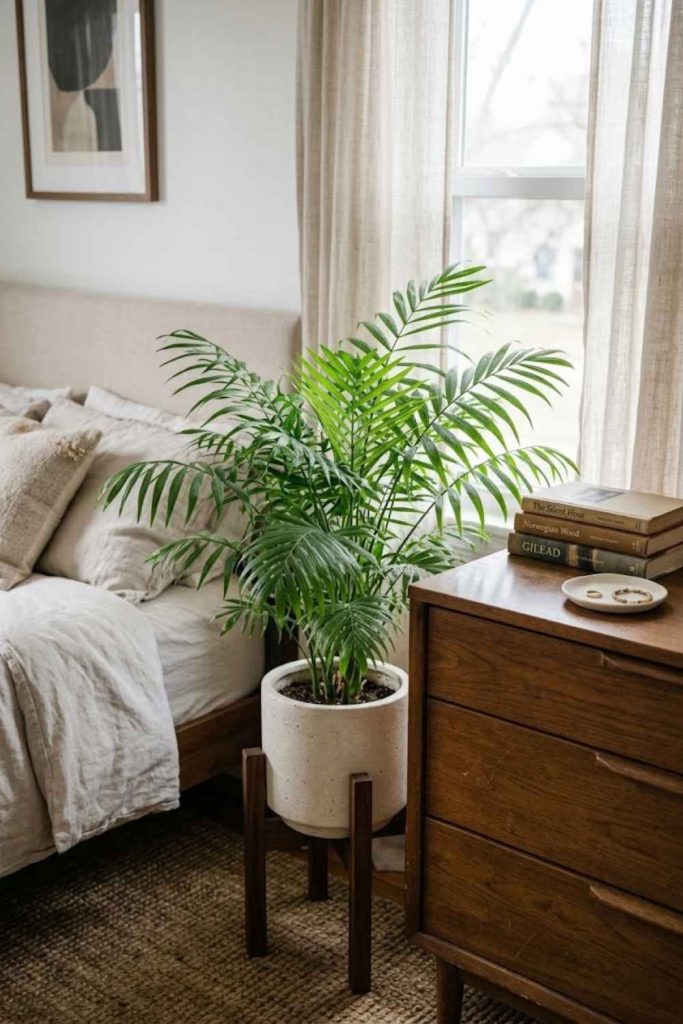
This slow-growing palm maxes out at four feet, making it an ideal choice to soften bare walls or flank a bedroom dresser without overtaking your floor space.
Unlike temperamental majesty palms, it handles low north-facing light surprisingly well. What happens if you forget to water it for a week? Usually not much. It prefers slightly drier soil and tends to recover well from occasional neglect.
Cats love swatting the feathery fronds, but the foliage is completely safe.
Styling Note: Elevate this palm on a sturdy plant stand. Keeping the lower leaves out of paw range helps prevent ragged, chewed tips over time.
If your bedroom corner has absolutely ZERO natural light, skip straight to #3.
2. The Cat-Attractor: Spider Plant (Chlorophytum comosum)
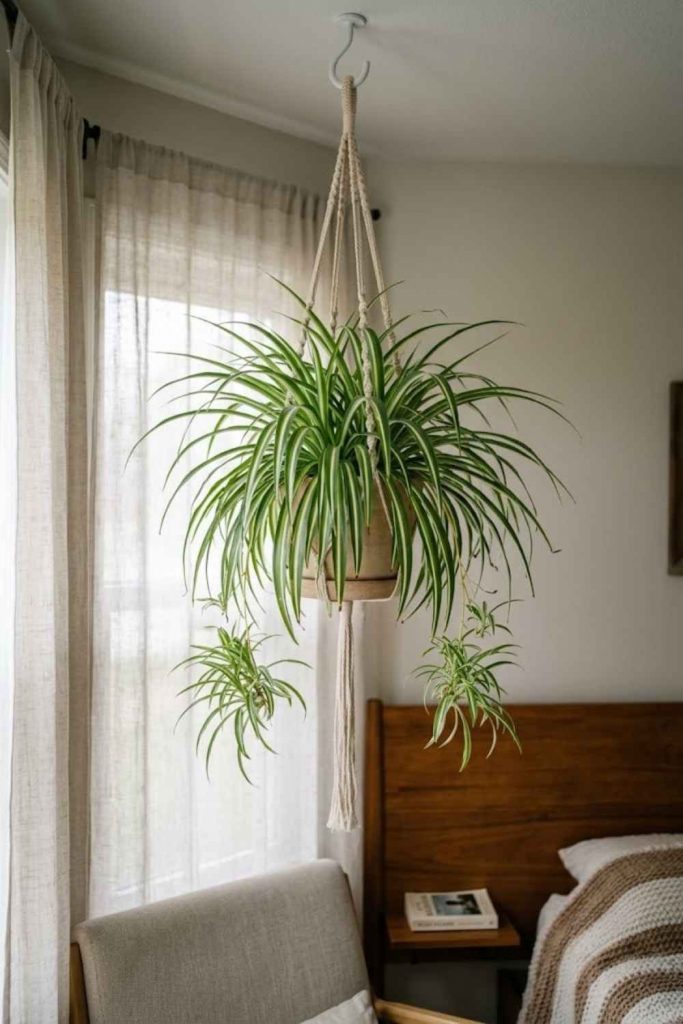
Long, arching leaves break up the harsh, straight lines of bedroom nightstands. It excels in hanging baskets, producing dangling plantlets that mimic green chandeliers.
This is the plant most likely to end up in your cat’s mouth — and survive it.
Spider plants are structurally built to tolerate occasional chewing surprisingly well. Their thick, tuberous roots store extra water and nutrients, helping the plant continue pushing out fresh growth even after some damage or neglect in darker rooms.
The cat trap: Spider plants contain mild, catnip-like compounds that actively attract felines. Because your cat will likely target the dangling babies, hang it securely from a ceiling hook rather than placing it on an open shelf.
3. The Ultra-Low Effort: Cast Iron Plant (Aspidistra elatior)
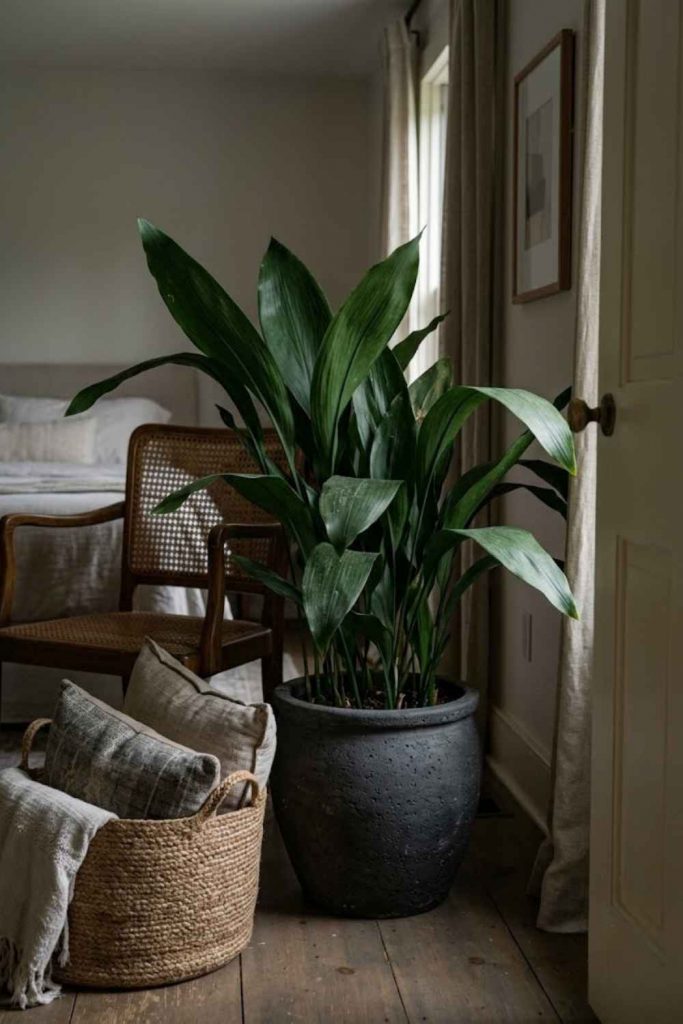
Upright, paddle-shaped leaves add clean architectural weight to the dimmest bedroom corners. True to its name, this plant easily survives heavy door drafts, winter heating vents, and long stretches of inconsistent watering.
You only need to water it when the top soil feels dry. The tough, leathery leaves also resist occasional chewing surprisingly well. Most cats take one exploratory sniff, realize it is not particularly interesting, and move on.
Not all bedroom plants are decorative. Some are functional anchors.
4. The Bedside Companion: Baby Rubber Plant (Peperomia obtusifolia)
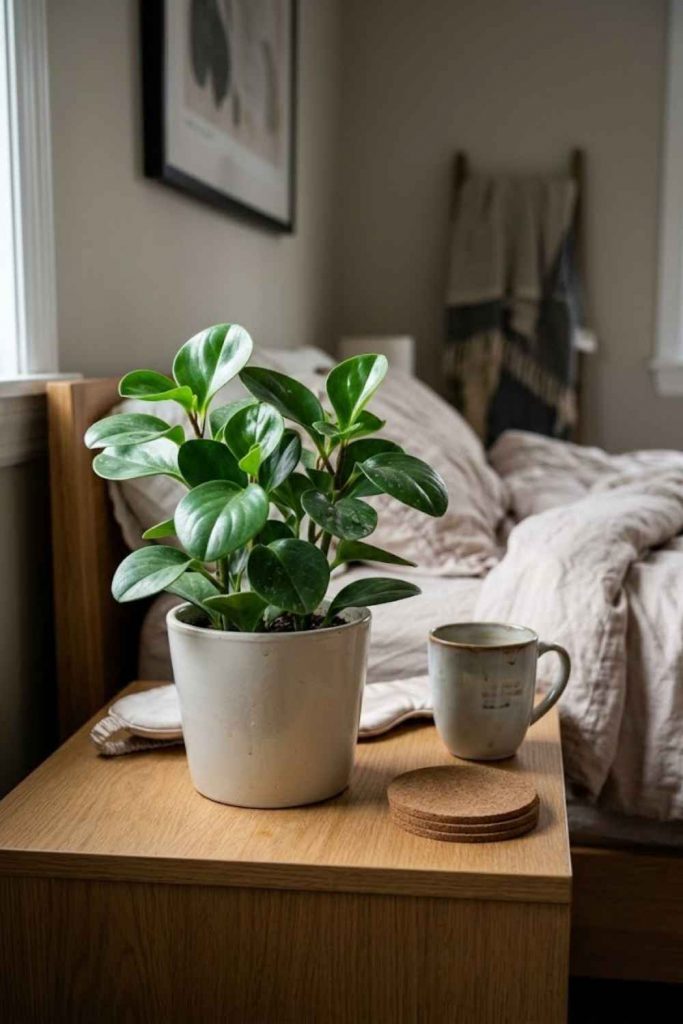
This compact plant looks like a miniature rubber tree under one foot tall, making it a perfect fit for tiny bedside tables. Glossy, spoon-shaped leaves bounce dim ambient light beautifully.
The leaves are thick and succulent-like, storing water so efficiently that overwatering is its only real enemy. Let the pot dry out completely before watering again. Because it lacks dangling vines or grassy textures, cats usually ignore it entirely.
5. The Aesthetic Pop: Watermelon Peperomia (Peperomia argyreia)
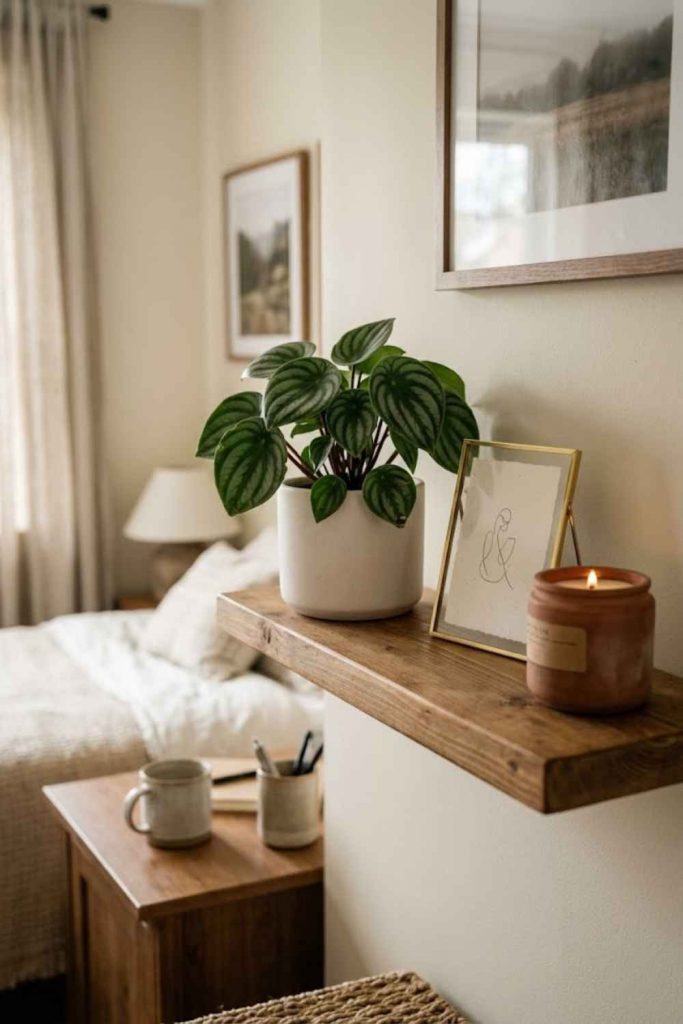
If your bedroom looks too flat with plain green foliage, you need this specific contrast. This plant features striking, fleshy leaves painted with dark green and silver stripes that mimic the rind of a watermelon.
It thrives under the softer light of bedroom curtains and stays under eight inches tall. It adds visual interest without requiring the high humidity setup many patterned tropical plants demand.
Greenery should fit your layout, not your schedule.
6. The Window Sill Anchor: Zebra Haworthia (Haworthia attenuata)
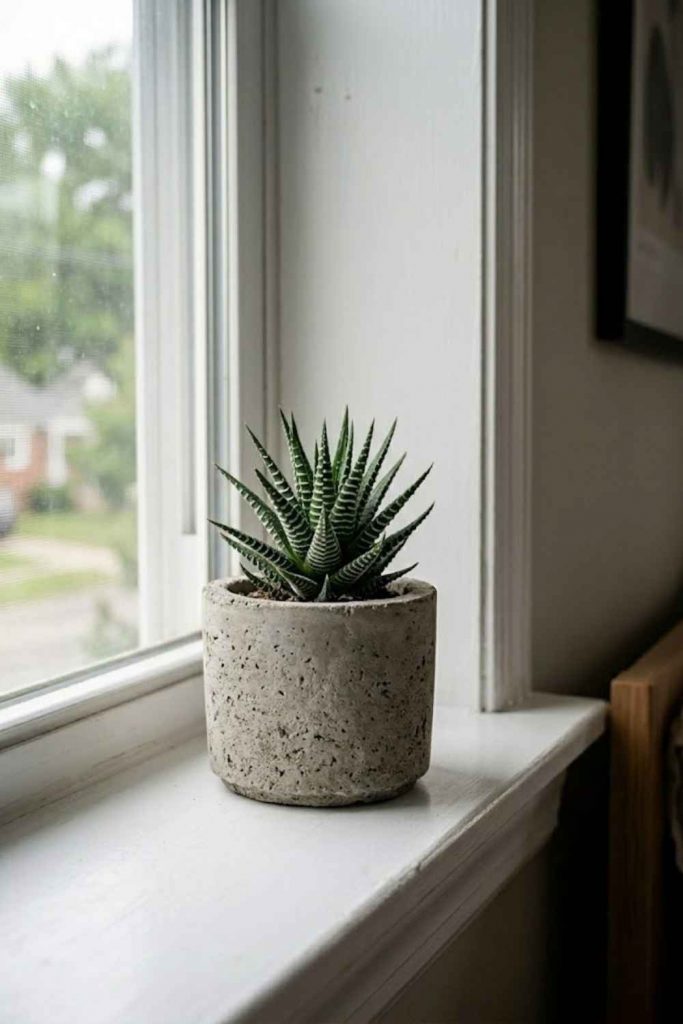
Rigid, dark leaves feature striking horizontal white stripes, providing a sharp, modern alternative to toxic aloe vera. It needs minimal care—simply soak it once a month and allow the soil to drain fully.
Unlike many succulents that quickly stretch toward weak indoor light, this variety tends to maintain a neater, more compact shape on dim windowsills.
Pro-Tip: Because these small succulent pots are incredibly lightweight, a single cat swat can tip them over. A heavier ceramic planter usually helps keep the plant stable.
7. The Shelf Trailer: Wax Plant (Hoya carnosa)
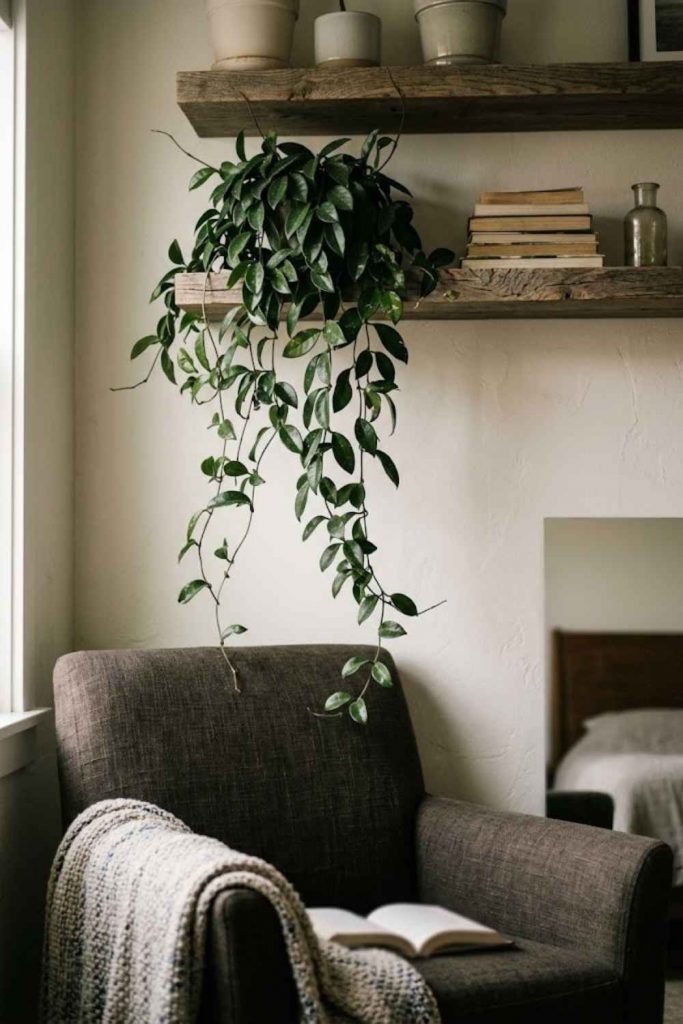
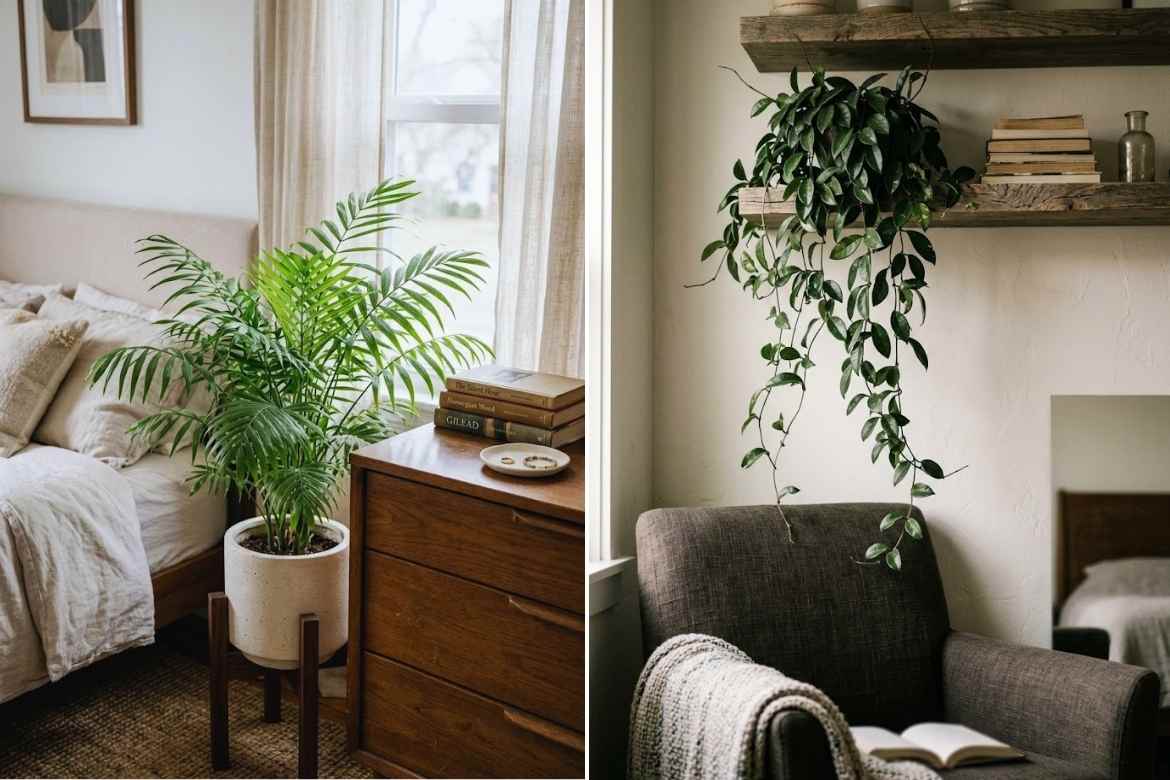
With its thick, leathery vines and glossy leaves, this plant acts as a beautiful trailing element to soften the sharp edges of floating shelves or high bed frames.
Because it stores water inside its foliage, it is one of the few vining plants that won’t crisp up quickly under dry indoor air conditioning. It is also completely safe for curious cats that love batting at hanging stems.
The Bloom Warning: This plant may not bloom reliably in a dark bedroom corner. It usually stays healthiest as a leafy trailing vine unless moved closer to brighter indirect light.
Conclusion
Your bedroom cheat sheet:
For dark, forgotten corners: Stick to the indestructible Cast Iron Plant.
For dry, air-conditioned air: Opt for thick-leaved Peperomia or trailing Hoya.
For restless cats: Use a ceiling hook to keep Spider Plants safely out of jumping range.
FAQs
1. My plant is labeled “cat-safe,” but what happens if my cat eats the whole thing?
Your cat will not be poisoned, but they still might throw up. Even pet-safe plants can cause mild stomach irritation if a cat eats a large amount of foliage.
2. Can these low-light plants survive in a bedroom with absolutely no windows?
No plant can survive in complete darkness. “Low-light” simply means the plant can tolerate dimmer areas near a window or filtered natural light. If your bedroom has no windows at all, you will need a small grow light for long-term survival.
3. Will running my bedroom AC or heater all night kill these plants?
Usually not — but extremely dry airflow can slowly damage foliage over time. Try to avoid placing plants directly beside heating vents or strong AC airflow, especially softer tropical varieties.