Table of Contents
The coffee table is the most contested real estate in the home. It is where you stage art books, rest your morning espresso, and occasionally park your feet after a long day.
Most houseplants fail in this specific spot. They either grow too tall, blocking the view of the person sitting across from you, or they drop messy debris onto your coasters.
A successful coffee table plant maintains a 360-degree profile and a height under 12 inches to keep sightlines open. These twelve selections are curated to live on the “stage” of your living room without causing a scene.
#1 — Whale Fin (Sansevieria ‘Whale Fin’)
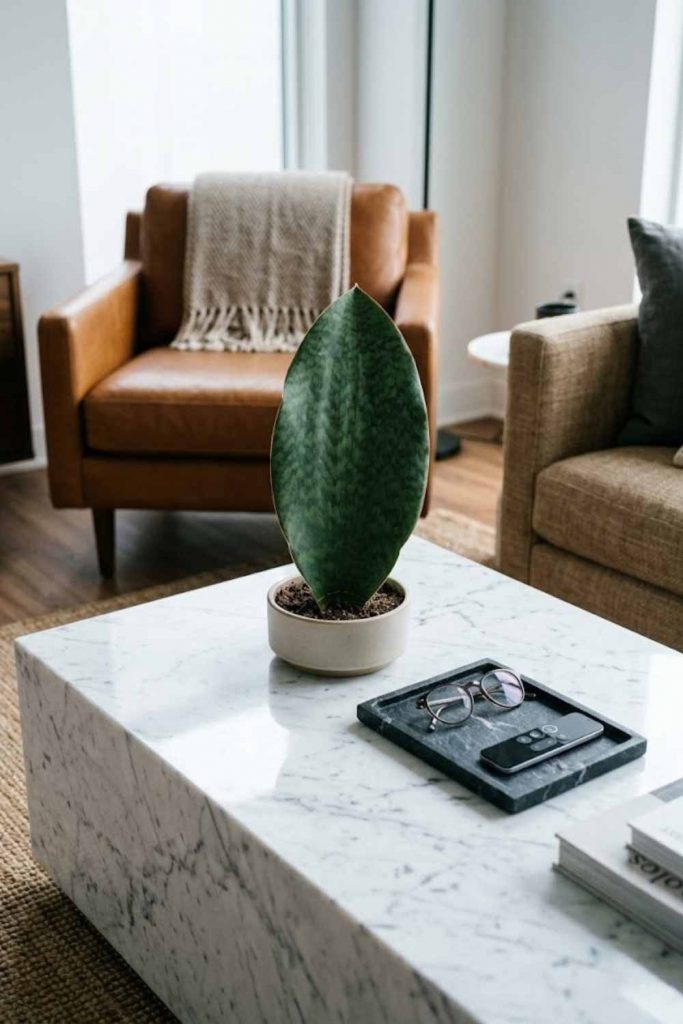
This single-leaf monolith provides a bold, sculptural anchor without the sprawling mess of a traditional plant. It preserves precious surface area for trays and remotes because the foliage grows upward rather than outward.
The Whale Fin is a slow-motion grower that thrives on a schedule of total neglect. Since the leaf is naturally top-heavy, a weighted stone or thick ceramic pot will keep it upright if a dog tail brushes past.
- Light: Low to bright indirect light
- Water: Monthly; allow soil to dry completely
#2 — ZZ Plant (Zamioculcas zamiifolia ‘Zenzi’)
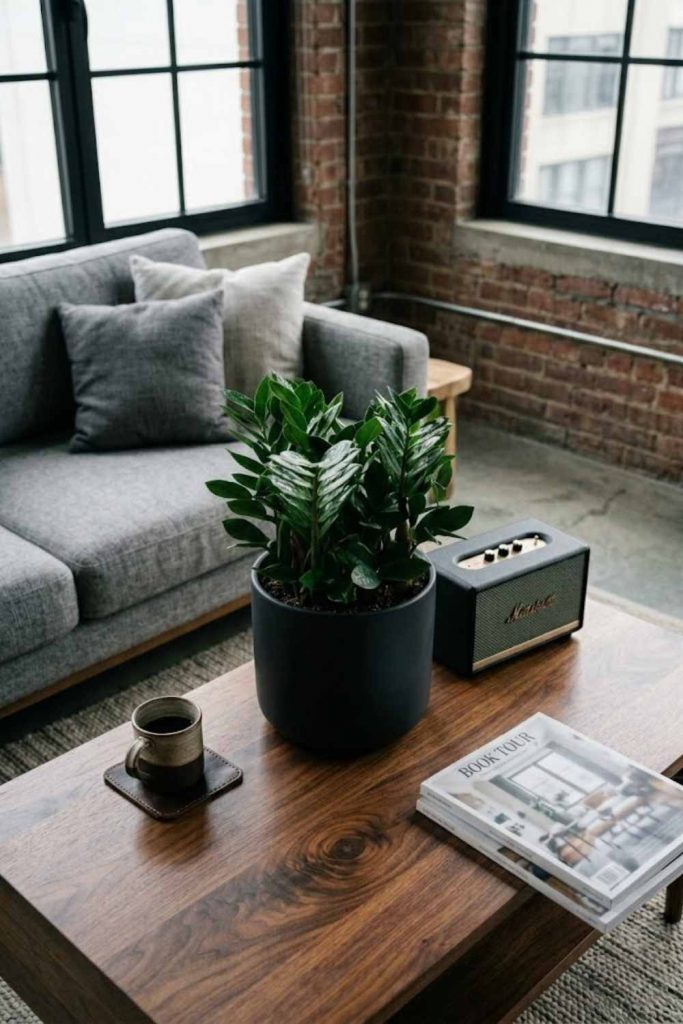
The Zenzi remains squat and dense regardless of the shadows, making it a hero for low-light rooms. Its leaves are so thick and glossy they look like they were cast in resin, adding a sharp finish to dark wood or industrial metal tables.
Underground tubers store weeks of hydration, providing a reliable partner for a frequent traveler’s lifestyle. It maintains a strict 8–12 inch height, ensuring it will never block the TV.
- Light: Low to medium indirect light
- Water: Every 3–4 weeks; allow soil to dry completely
#3 — Pilea (Pilea peperomioides)
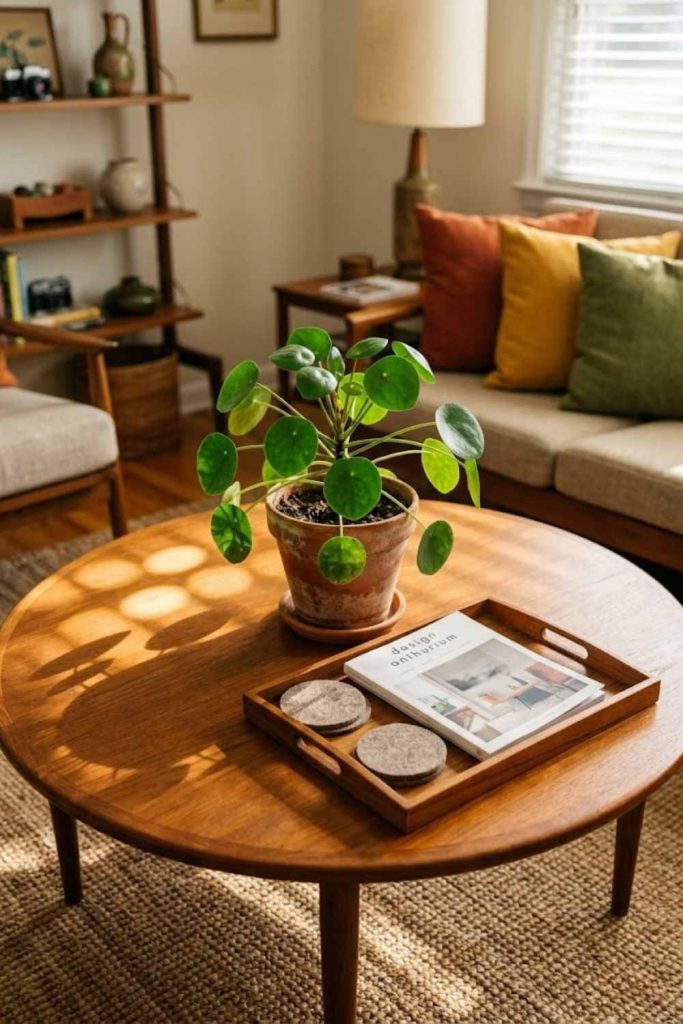
The Pilea offers a consistent view from every seat in the room. Its coin-shaped leaves radiate from a central stem like a green explosion, balancing the straight lines of modern furniture.
This is a notorious light-seeker; give the pot a quarter-turn every week to keep the stem from leaning toward the window. When the leaves start to droop slightly, the plant is signaling for a soak.
- Light: Bright indirect light
- Water: Weekly; when top 75% of soil is dry
#4 — String of Hearts (Ceropegia woodii)
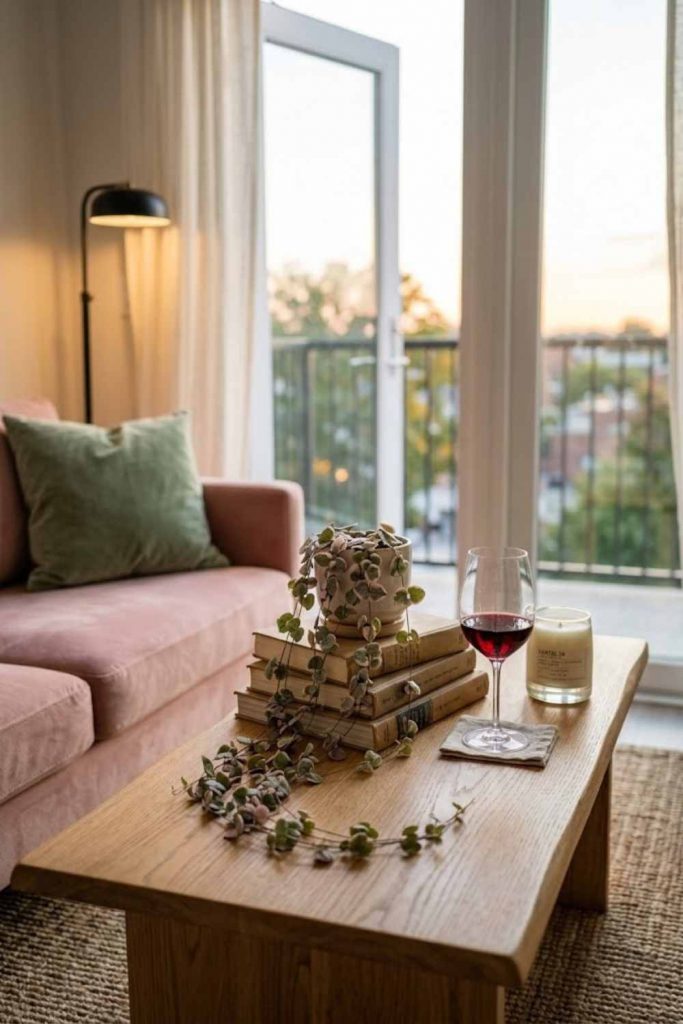
If your furniture feels a bit too “boxy,” the String of Hearts provides a necessary, soft counterpoint. The vines are thin and airy, featuring tiny heart-shaped leaves that can be wound around a stack of books or allowed to spill slightly over a tray.
It adds a romantic texture without the physical bulk of a traditional bush. If the leaves feel firm, the plant is hydrated; if they feel soft and thin, it’s time for water.
- Light: Bright indirect light
- Water: Every 2 weeks; allow soil to dry completely
#5 — Air Plants (Tillandsia)
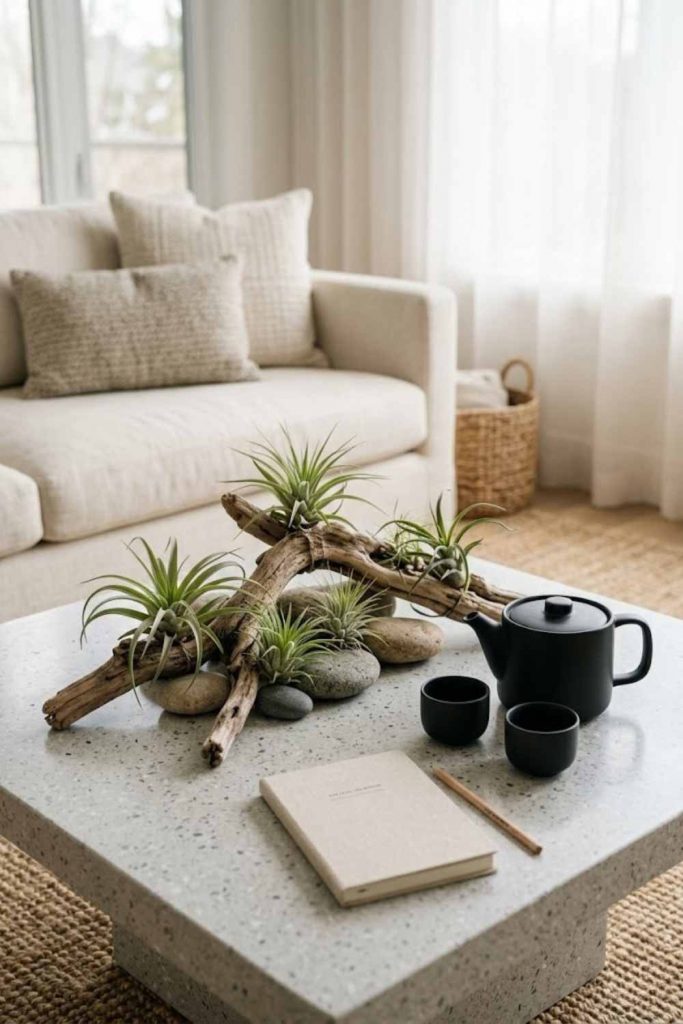
On high-end marble where water rings are a dealbreaker, air plants remove the risk entirely. They require no soil and no traditional watering, which eliminates the mess of dirt spills or mold on expensive finishes.
These sit comfortably directly on a decorative tray or nestled inside a shallow porcelain bowl. Provide a 20-minute soak in a bowl once a week, then dry them upside down on a towel to prevent moisture from trapping in the base.
- Light: Bright indirect light
- Water: Weekly 20-minute soak
#6 — Peperomia (Peperomia ‘Hope’)
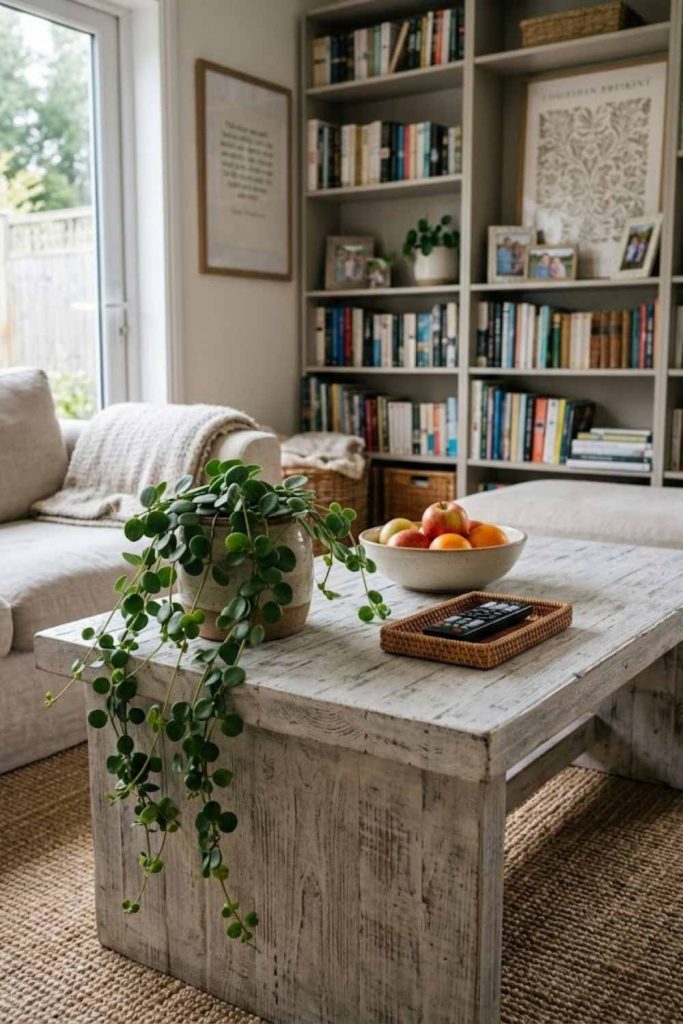
Hope provides a lush, trailing look without the constant cleanup of a Pothos. Its thick, succulent-like leaves hold their moisture and stay firmly attached to the vine, ensuring no debris sheds into your drink.
The stems are somewhat brittle, so find its permanent home and avoid moving it frequently during cleaning. It is an exceptionally clean choice for a modern glass table where every speck of dirt is visible.
- Light: Medium to bright indirect light
- Water: Every 1–2 weeks; allow soil to dry halfway
#7 — Lady Valentine (Aglaonema ‘Lady Valentine’)
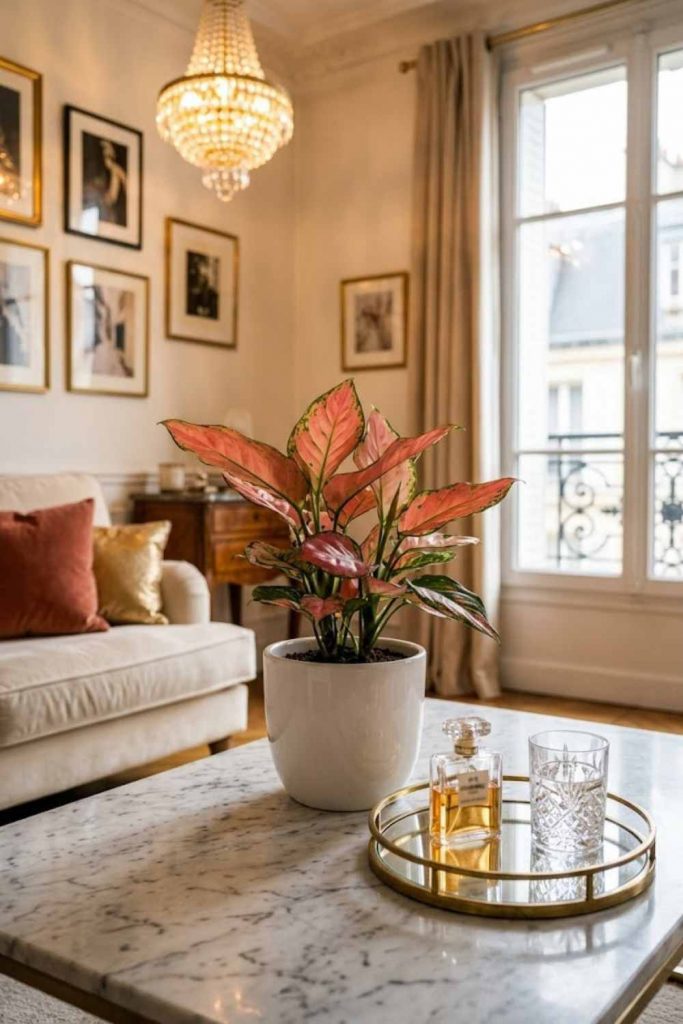
This variety serves as a permanent, living replacement for short-lived cut flowers. Saturated pink and emerald variegated foliage stays bright all year long without the need for a vase change or daily maintenance.
While it handles low light well, the pink hues remain most vivid in a spot with steady indirect sun. It adds a high-fashion, “chic” energy to an otherwise neutral-colored room.
- Light: Low to bright indirect light
- Water: Every 1–2 weeks; allow soil to dry halfway
#8 — Zebra Haworthia (Haworthia fasciata)
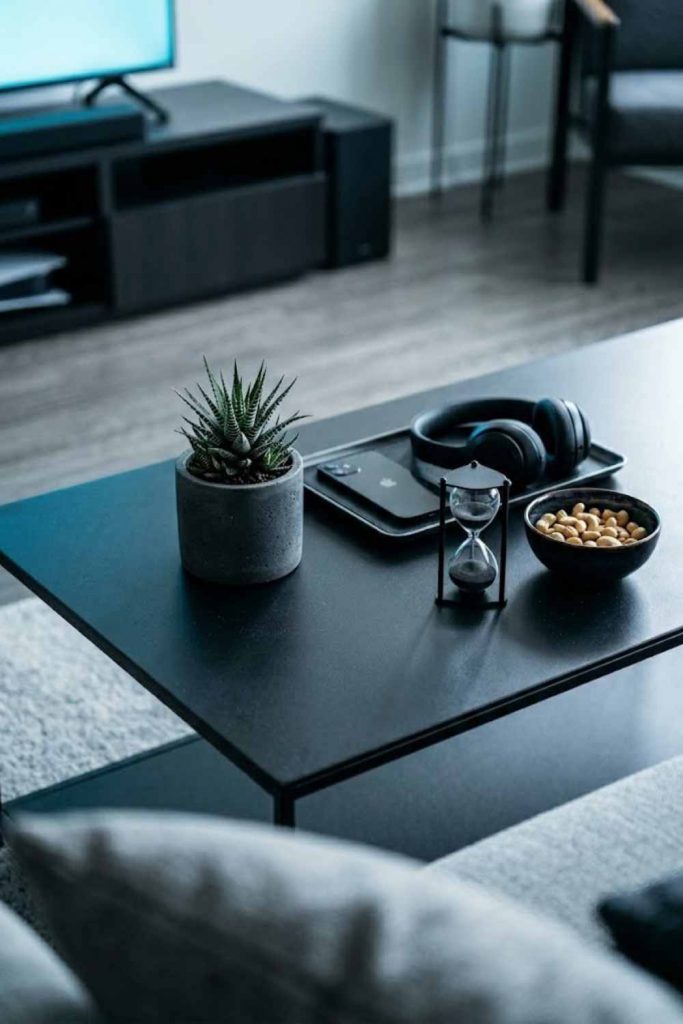
The Haworthia is a macro plant, best appreciated from the close range of a sofa. Its white, horizontal ridges are raised and tactile, making it a geometric conversation starter for guests sitting nearby.
It fits comfortably into tiny artisanal pots that take up no more room than a large candle. This is one of the few succulents that can handle the artificial light found deep in a room’s interior.
- Light: Medium to bright indirect light
- Water: Every 3 weeks; allow soil to dry completely
#9 — Miniature Anthurium (Anthurium)
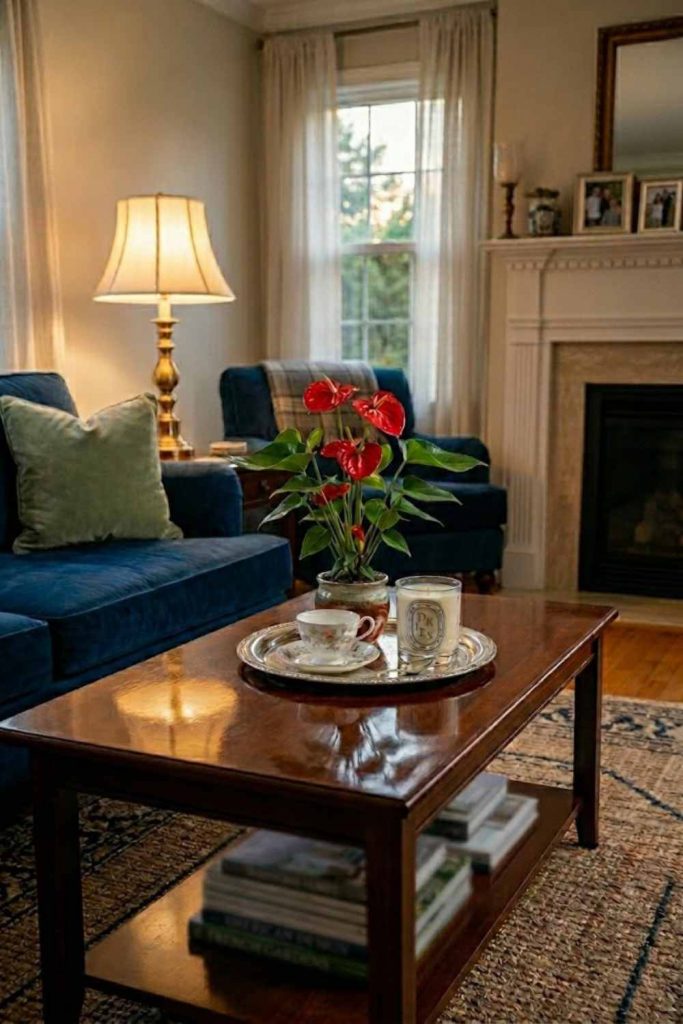
A Miniature Anthurium brings a formal, high-end hotel feel to the living room. Its waxy, heart-shaped “flowers” can stay in bloom for up to three months, offering a constant sense of hospitality.
To keep it looking fresh, snip off the older, fading blooms right at the base to encourage the next round of color. The high-gloss foliage adds an immediate “finished” look to traditional decor.
- Light: Bright indirect light
- Water: Weekly; when top inch of soil is dry
#10 — Bird’s Nest Fern (Asplenium nidus ‘Crispy Wave’)
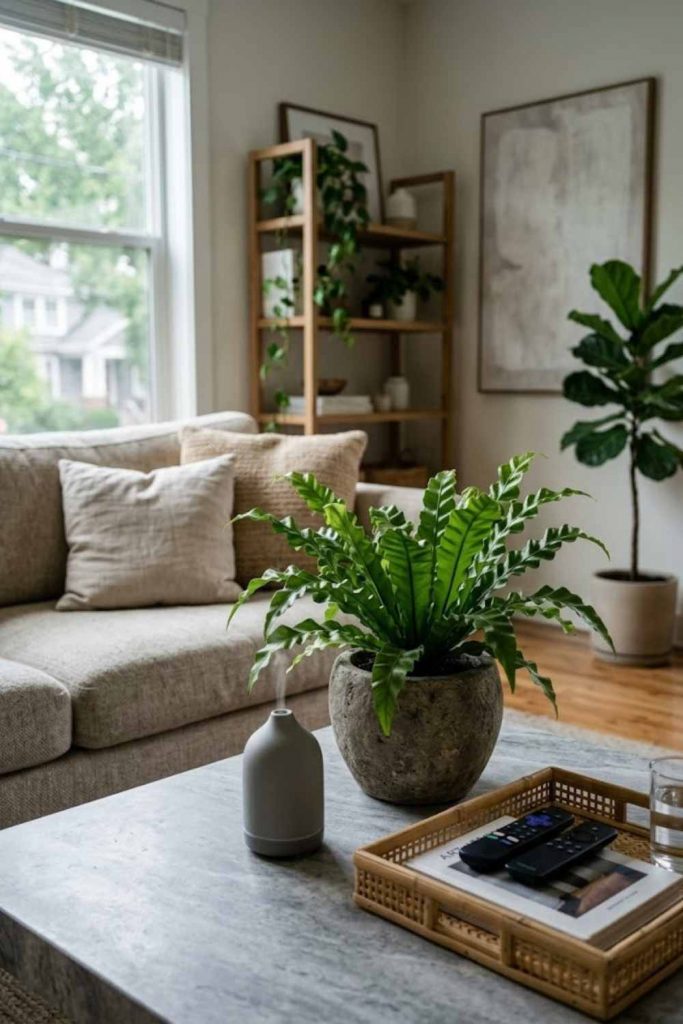
The Crispy Wave features thick, rigid fronds that stay put, solving the “messy fern” problem. The ruffled, undulating texture adds visual depth to a table tray without the typical leaflet-drop cleanup.
It is a hard-working air purifier that remains sturdy and modern. Avoid pouring water into the center “nest,” as moisture trapped there can lead to rot.
- Light: Medium indirect light
- Water: Weekly; keep soil lightly moist but not soggy
#11 — Hoya Kerrii (Hoya kerrii)
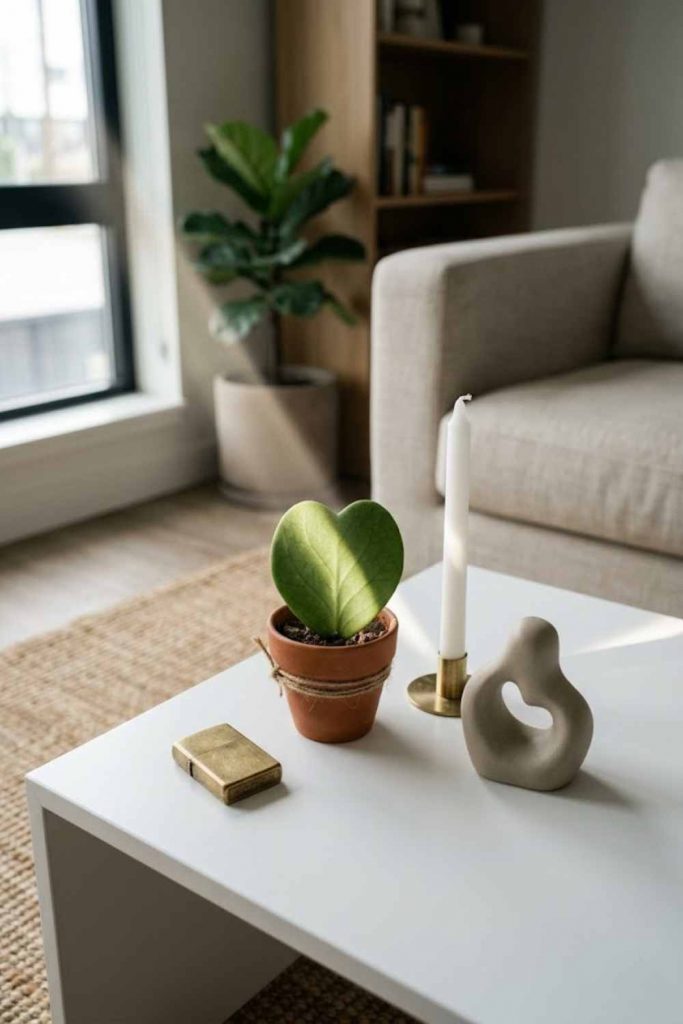
The heart-shaped Hoya kerrii is the ultimate minimalist accessory. Typically sold as a single, rooted leaf, it will stay exactly this size for years, acting as a stationary sculpture for a styled tray.
Without a stem to process water quickly, it asks for only a tiny splash once a month. It is the perfect “set it and forget it” piece for those who want green life without the growth.
- Light: Bright indirect light
- Water: Monthly; allow soil to dry completely
#12 — Miniature Jade Plant (Crassula ovata)
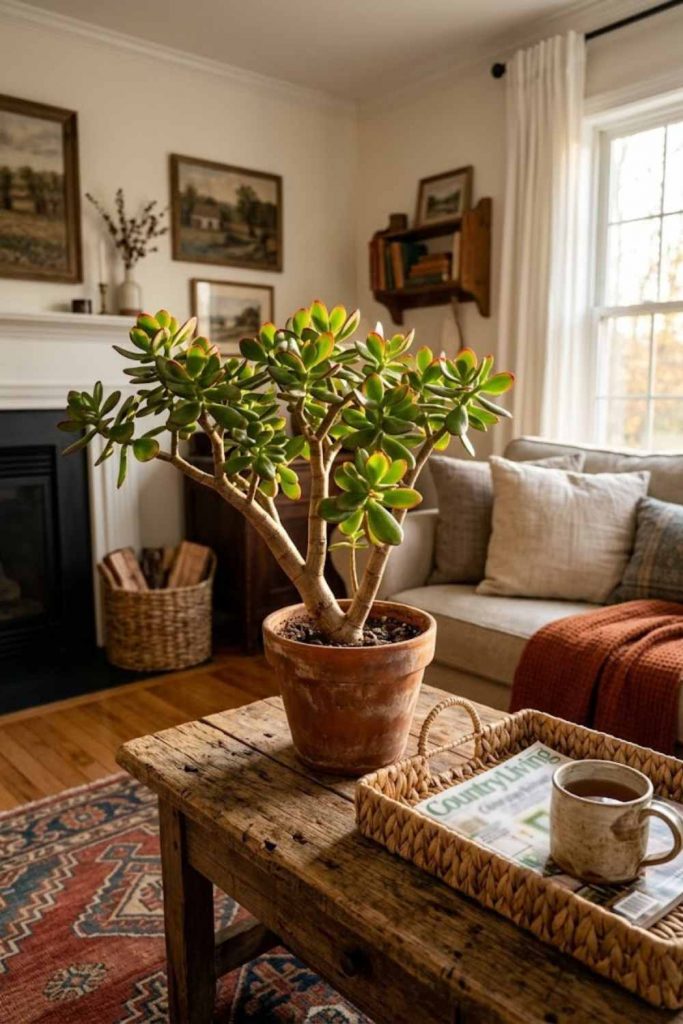
The Jade plant offers the woody look of a bonsai in a size that fits a small tray. Its plump leaves suggest a sense of permanence, making it a natural fit for farmhouse-style homes with heavy wooden furniture.
In a sunny room, the tips of the leaves will develop a beautiful reddish-pink tint. If the leaves appear wrinkled or “deflated,” the plant is communicating that it’s time for a drink.
- Light: Bright indirect light to full sun
- Water: Every 2–3 weeks; when leaves appear wrinkled
Conclusion
The secret to a successful coffee table plant is choosing one that respects the boundaries of your living space.
Air Plants or the Hoya kerrii preserve delicate marble surfaces from water damage, while the Pilea and Crispy Wave fern offer a lush, pet-safe look.
For rooms that rely on artificial light, the Zenzi ZZ remains the most reliable centerpiece for an effortless lifestyle.