Table of Contents
If you have to move a plant just to pass a plate, it doesn’t belong on your dining table.
The best table plants don’t compete with the meal — they stay low, clean, and quietly elevate the space without getting in the way.
These 10 indoor plants are chosen for real tables: easy to live with, easy to maintain, and always in the right proportion.
#1 — Moth Orchid (Phalaenopsis)
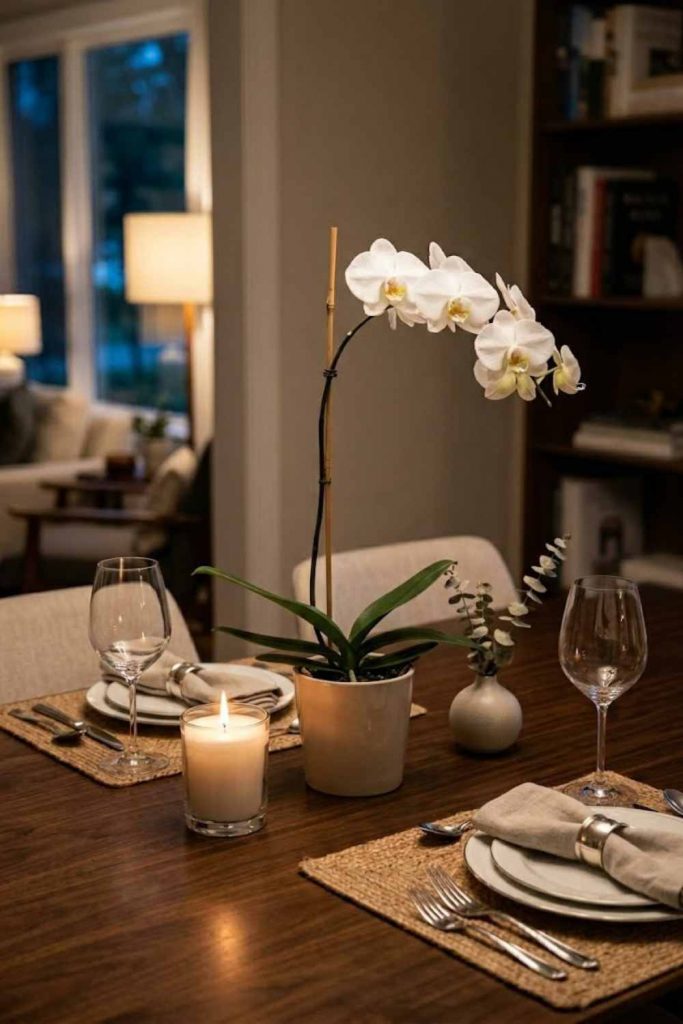
The Moth Orchid provides elegant verticality without the bulk of traditional bouquets. Its slender stems keep sightlines clear, while the low-set foliage never competes with serving dishes.
This is a remarkably “polite” guest on walnut or marble; it doesn’t shed leaves or leak sticky sap.
Proximity to ripening fruit is the only hazard. Natural ethylene gas from the fruit bowl will trigger premature bloom drop.
- Light: Bright, indirect light
- Water: Weekly; avoid overwatering
#2 — Watermelon Peperomia (Peperomia argyreia)
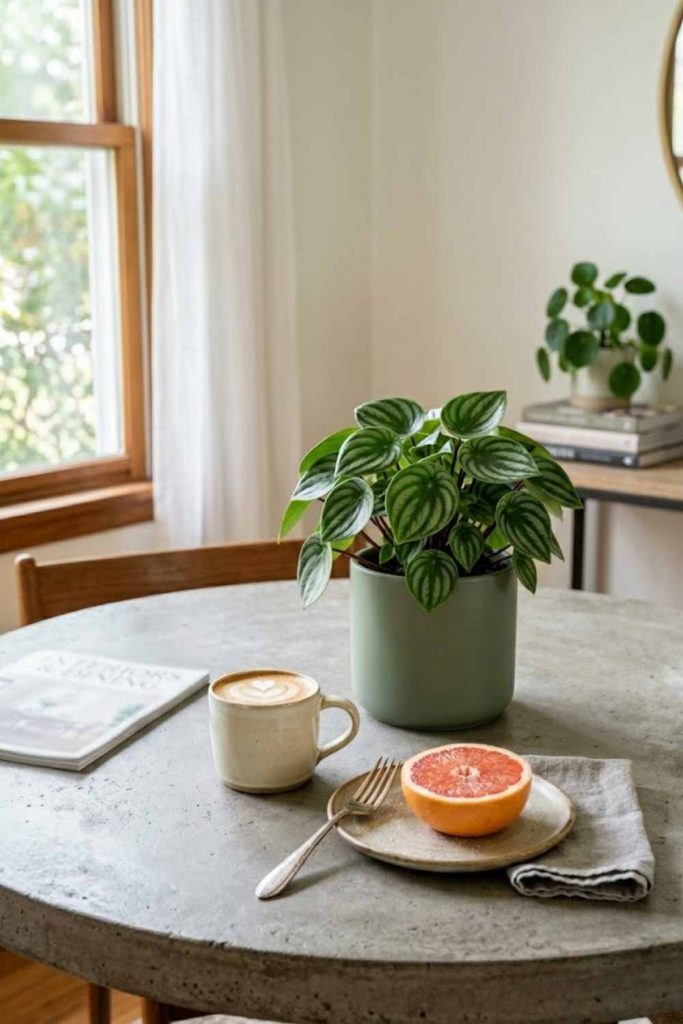
Leaf patterns mimicking miniature watermelons act as a visual appetizer and a natural icebreaker for dinner guests.
Its round, mounded habit fits perfectly in the center of a circular table, providing a lush look without sprawling into place settings.
A quick wipe with a damp cloth keeps the silver stripes shimmery under dining room lights, maintaining that high-end editorial sheen.
- Light: Medium to bright indirect light
- Water: When top 1-2 inches of soil are dry
#3 — ZZ Plant (Zamioculcas zamiifolia ‘Zenzi’)
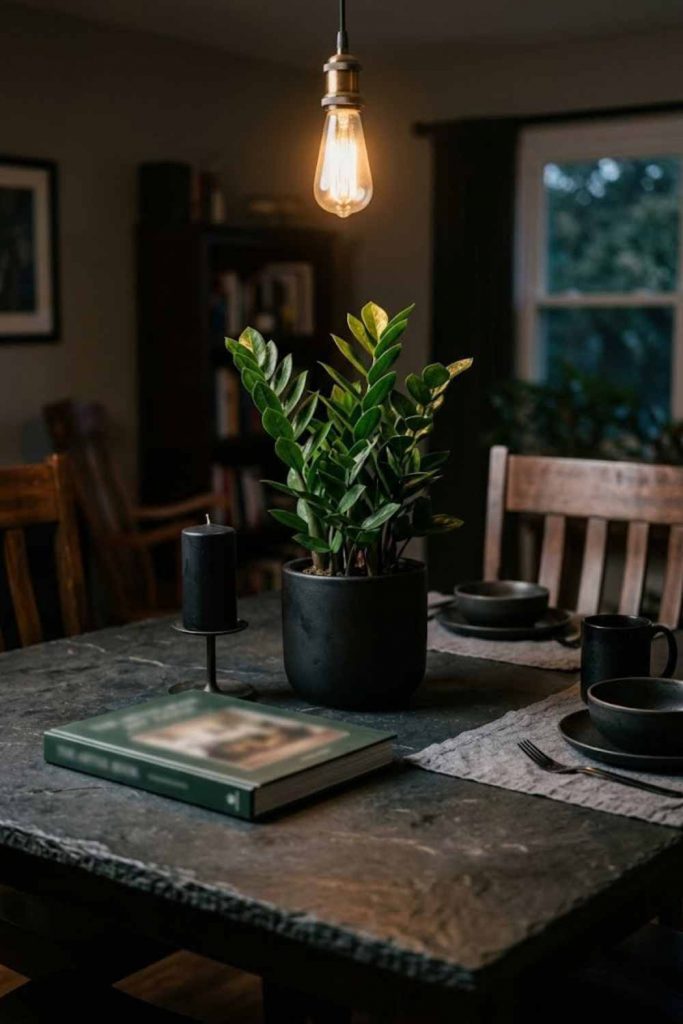
When the dining table sits in a windowless nook, ‘Zenzi’ is the only logical candidate.
Unlike its larger, floppier relatives, this dwarf variety maintains a stiff, upright structure with dark green leaves that look almost polished.
It is the lowest-maintenance choice for a busy household; a single watering once a month is plenty. Toxic if ingested, it belongs in the center of the table, safely out of reach of small children.
- Light: Low to bright indirect light
- Water: Every 3–4 weeks; allow soil to dry completely
#4 — Culinary Herbs (Ocimum basilicum / Mentha / Salvia rosmarinus)
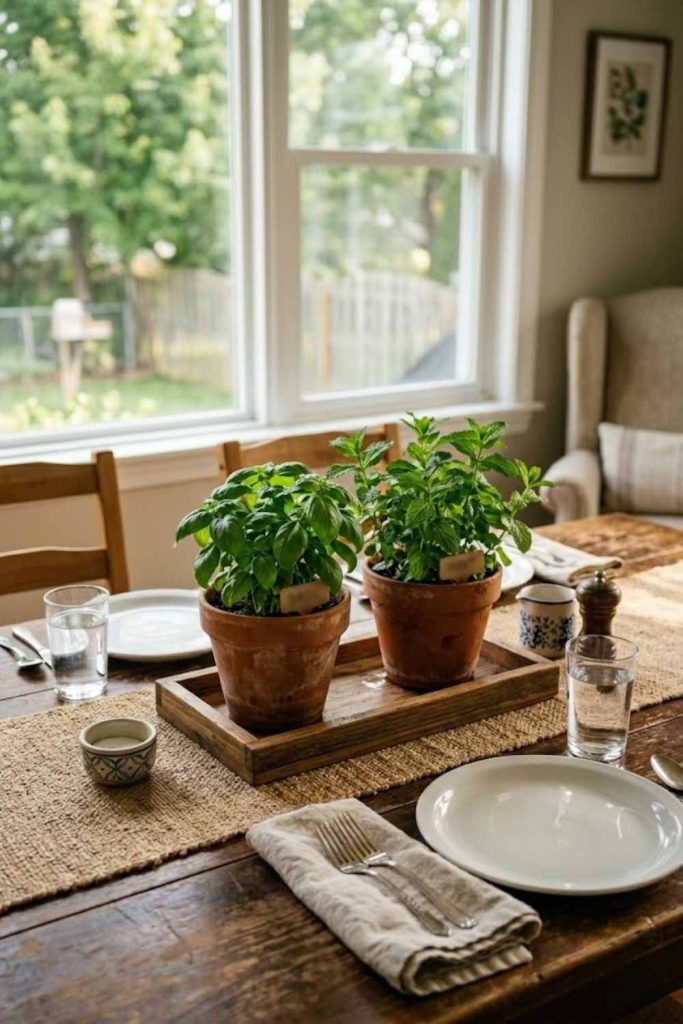
Snipping fresh mint for tea or basil for pasta directly at the table creates an interactive connection between guests and their meal.
These herbs offer a subtle fragrance that softens kitchen odors naturally. A terracotta pot on a wooden tray ensures water never reaches your linens.
High-light environments are essential; these only maintain their flavor and density when positioned near a sunny window.
- Light: Full sun to bright indirect light
- Water: Keep soil consistently moist but not soggy
#5 — Snake Plant (Dracaena trifasciata ‘Zeylanica’)
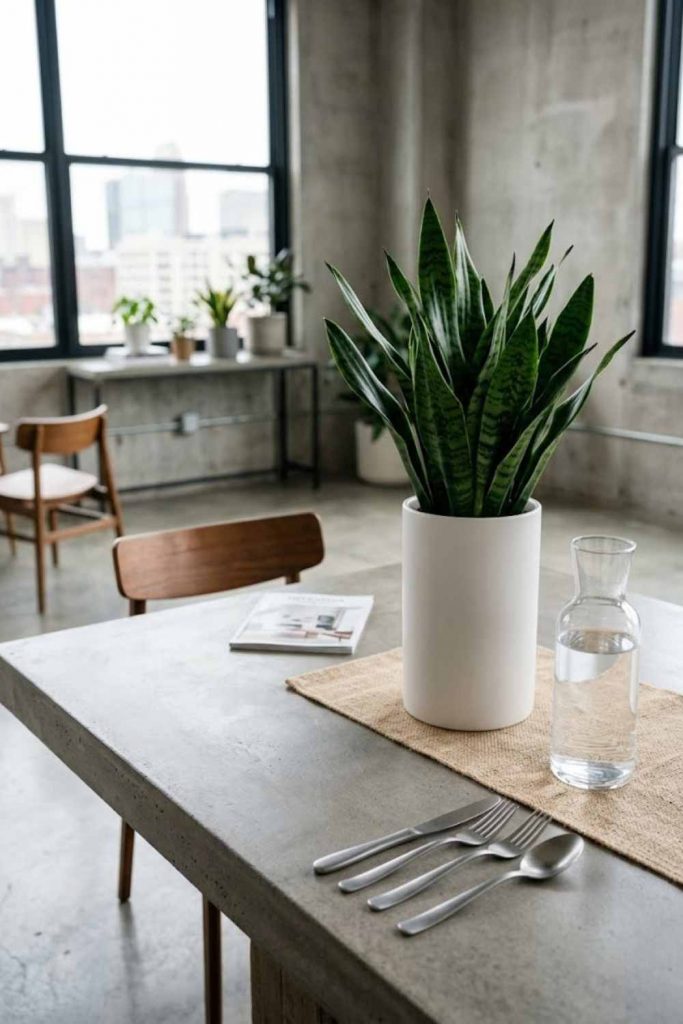
On long, Modern Farmhouse tables, ‘Zeylanica’ acts as a clean, architectural divider.
Its strictly vertical growth defines the dining area in open-concept homes without claiming horizontal real estate from dinnerware.
The plant never sheds, keeping your tabletop pristine. A pot with a built-in saucer protects expensive wood finishes from moisture rings.
- Light: Low to bright indirect light
- Water: Every 2–4 weeks; allow soil to dry completely
#6 — Pothos (Epipremnum aureum ‘N’Joy’)
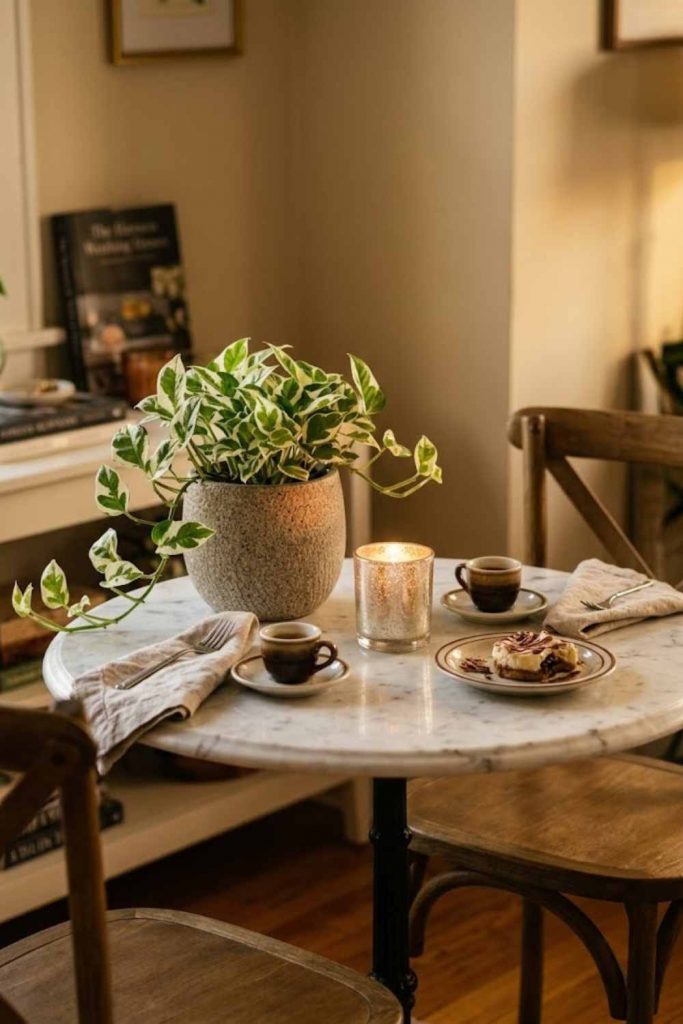
‘N’Joy’ is a slower, more compact grower than standard pothos, featuring crisp cream variegation that pairs beautifully with white porcelain settings.
Placing one at the corner of a rectangular table softens hard edges, creating a cozy, intimate vibe for private dinners.
Occasional pruning keeps the vines draping gently without trailing into the food or obstructing the salt and pepper shakers.
- Light: Low to medium indirect light
- Water: When top 2 inches of soil are dry
#7 — Zebra Haworthia (Haworthiopsis attenuata)
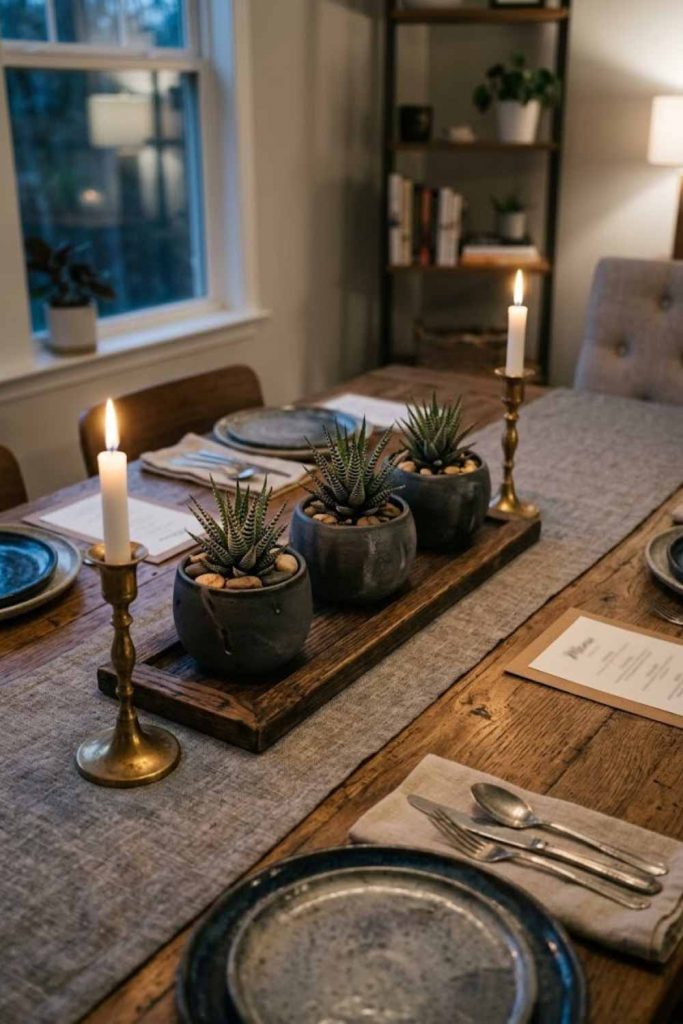
As rigid and sculptural as a piece of stoneware, this succulent is virtually mess-free.
Its tiny footprint achieves the best editorial look when styled in a trio along a table runner, adding rhythm and depth to a long table.
This is an absolutely pet-safe option for households with curious cats and works perfectly on narrow tables where space is a premium.
- Light: Bright indirect light
- Water: Every 3 weeks; avoid watering the center of the plant
#8 — African Violet (Streptocarpus sect. Saintpaulia)
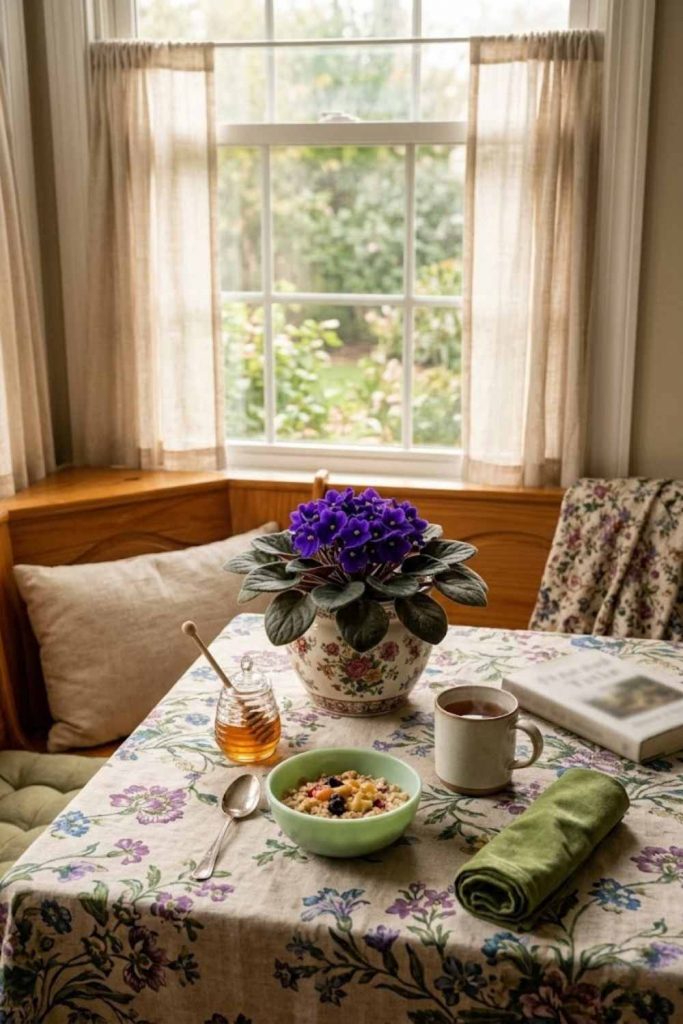
Breakfast nooks feel instantly more inviting with the constant pop of color from an African Violet.
Its miniature size allows it to nestle onto a tea tray or sit near a jam jar without obstructing movement.
These are pet-friendly and thrive with bottom-watering; this method protects the fuzzy leaves and delicate petals from unsightly water spots.
- Light: Bright indirect light
- Water: Keep soil moist; water from the bottom
#9 — Peace Lily (Spathiphyllum)
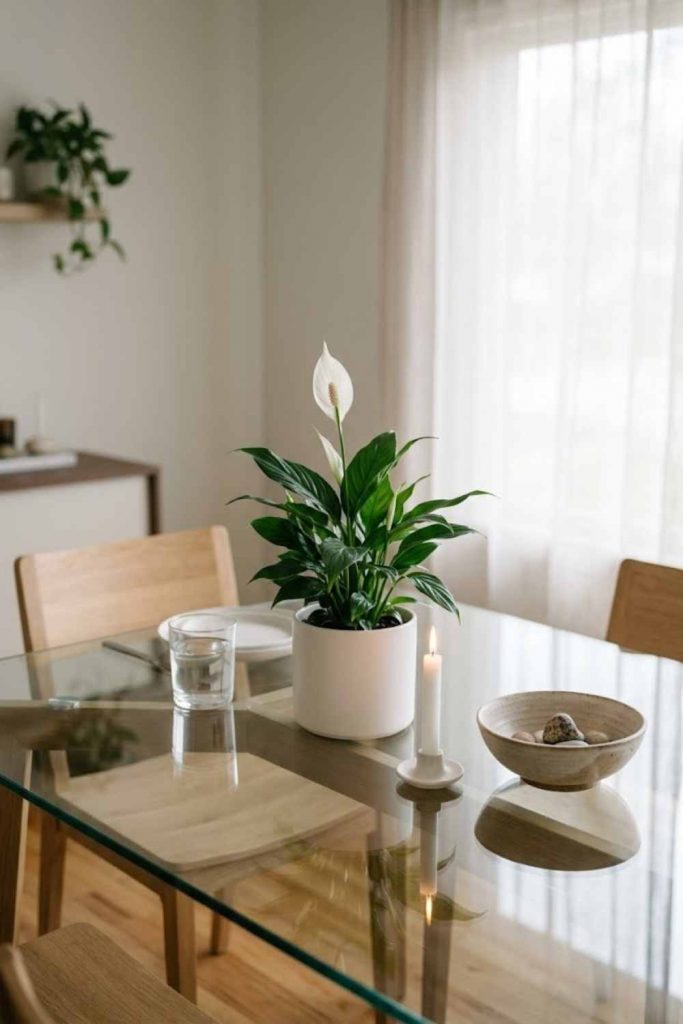
The Peace Lily brings a sense of calm to the table after a long day.
It is a highly communicative plant: when thirsty, the leaves droop slightly as a visual reminder to water.
Its white spathes provide a serene contrast to hard metal or glass furniture, while also improving air quality. Once flowers turn green, snipping the stem at the base redirects energy to new blooms.
- Light: Low to medium indirect light
- Water: Weekly; keep soil consistently moist
#10 — Spider Plant (Chlorophytum comosum ‘Bonnie’)
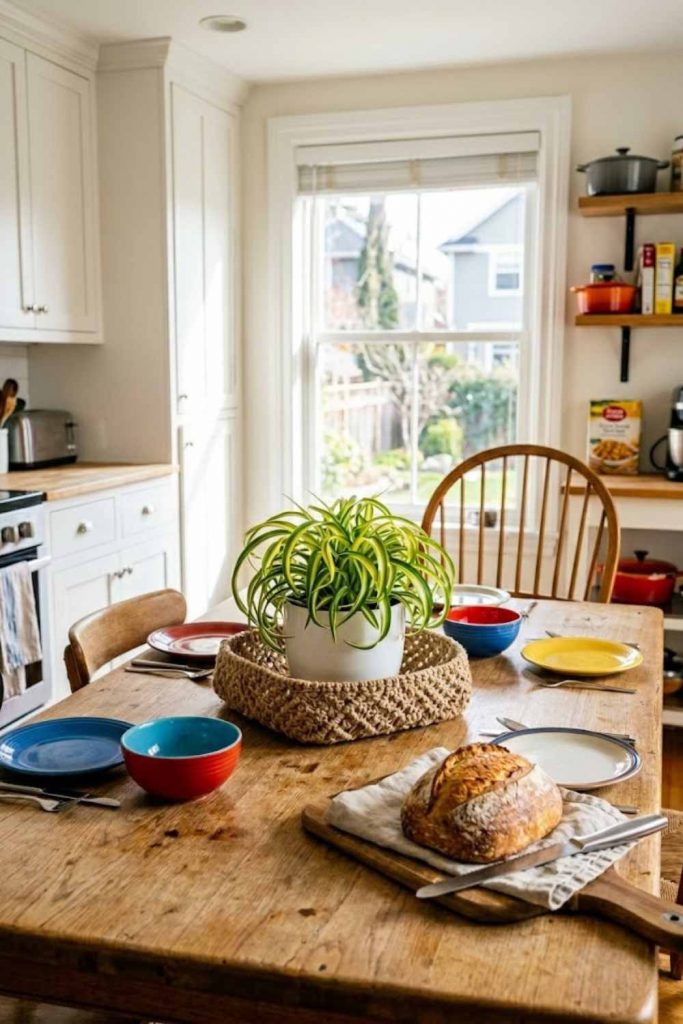
The curly, playful leaves of the ‘Bonnie’ variety add a sense of movement to casual family dinners.
It is the top choice for pet-parents as it is entirely non-toxic.
Using filtered water or letting tap water sit overnight prevents scorched tips, keeping the plant’s informal, “tousled” look healthy and bright.
- Light: Medium indirect light
- Water: When top inch of soil is dry
Conclusion
Selecting a dining table plant is an exercise in restraint. If the table is deep within a room with low light, the ZZ Plant ‘Zenzi’ is the champion of durability.
For a sophisticated atmosphere, the Moth Orchid provides the most visual impact without blocking the view. For households with pets, the Spider Plant ‘Bonnie’ or Watermelon Peperomia are the perfect additions to a worry-free mealtime.