Table of Contents
Most classroom plants don’t die overnight — they slowly fade out between weekends, holidays, and forgotten watering.
A classroom is a tough environment for any plant, with fluorescent lighting, dry air, and long stretches without care.
If you’ve tried adding greenery before and it didn’t last, the problem usually isn’t you — it’s choosing the wrong plants.
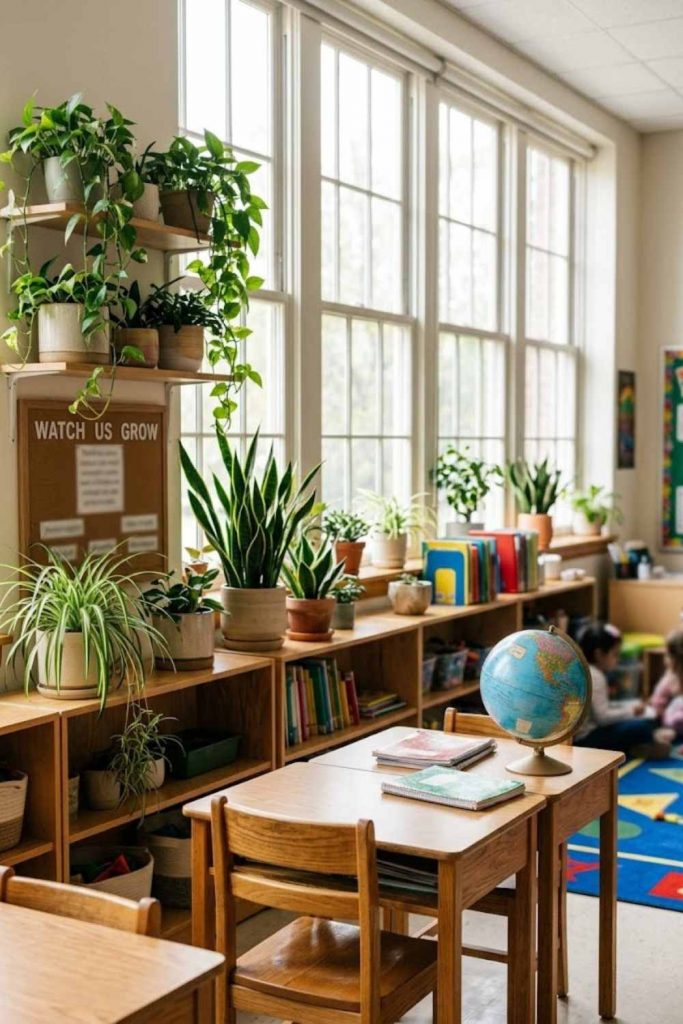
Here are 12 low-maintenance indoor plants that can actually survive real classroom conditions — while still being useful for learning.
#1 — Snake Plant (Sansevieria)
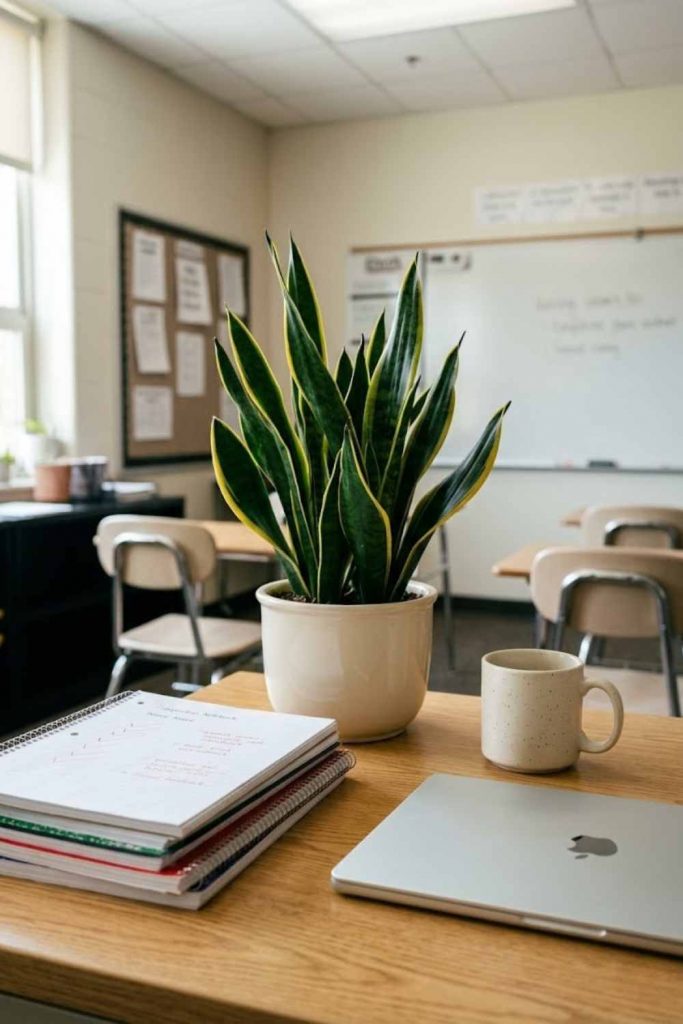
The Snake Plant is the undisputed champion of the Monday morning arrival.
While most plants rest at night, this one converts CO2 into oxygen after the lights go out. This ensures the air feels refreshed when the doors open after a long weekend.
Its upright, architectural leaves take up very little floor space. This makes it a natural fit for narrow corners or as a divider next to a teacher’s desk.
It is famously difficult to kill, providing a necessary durability for the high-traffic rhythm of a school. Keep it on a high shelf as it is toxic if ingested.
- Light: Low to bright, indirect
- Water: Every 3–4 weeks; allow soil to dry completely
#2 — ZZ Plant (Zamioculcas zamiifolia)
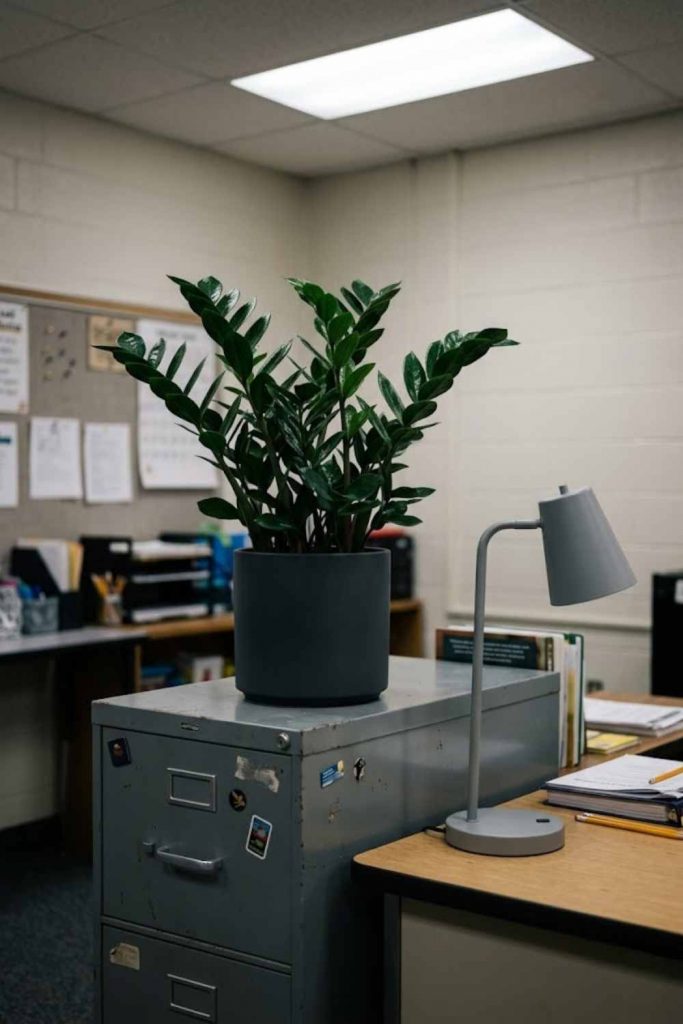
The ZZ plant is a powerhouse for windowless interior rooms or basement-level classrooms.
It stays lush and waxy even under nothing but overhead office lights. You won’t have to worry about a lack of natural sun.
It stores moisture in potato-like rhizomes under the soil. This allows it to survive a missed watering during a busy mid-term week without dropping a single leaf.
This is the indestructible desk-mate for a teacher with a packed schedule. Remind students to observe with their eyes, as the sap can be a skin irritant.
- Light: Low to medium, indirect; thrives under artificial light
- Water: Monthly; allow soil to dry completely
#3 — Golden Pothos
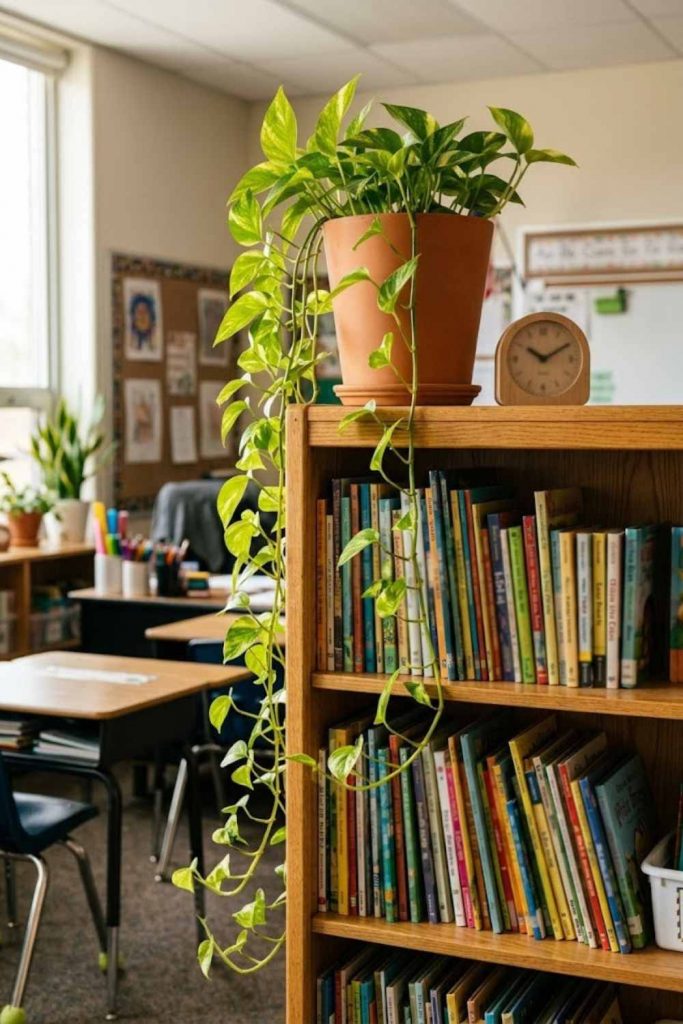
Pothos acts as a living measuring tape, growing at a speed students can actually track week-to-week.
These vines can be trained to frame a whiteboard or a window. They soften the industrial lines of metal and plastic that often dominate school rooms.
It is a highly effective tool for a quick propagation lesson. A simple stem snip placed in a glass of water allows students to watch roots sprout in real-time.
- Light: Low to medium, indirect
- Water: When the top inch of soil is dry
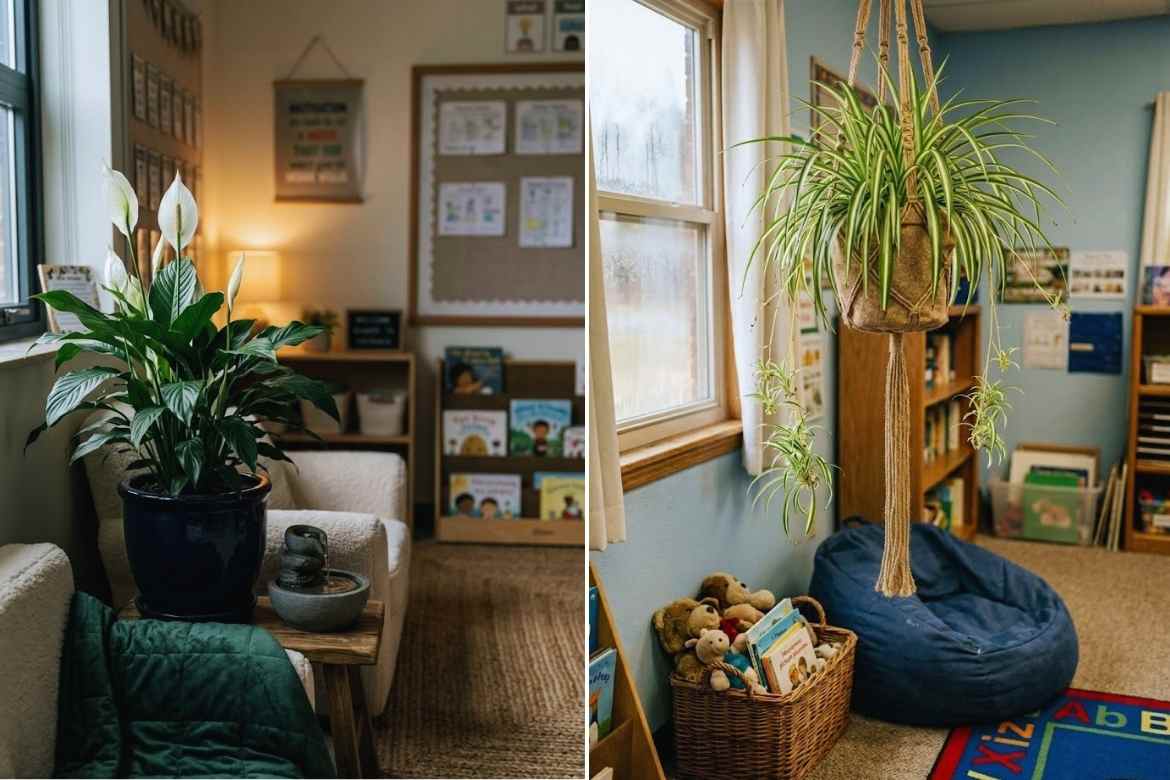
#4 — Spider Plant (Chlorophytum comosum)
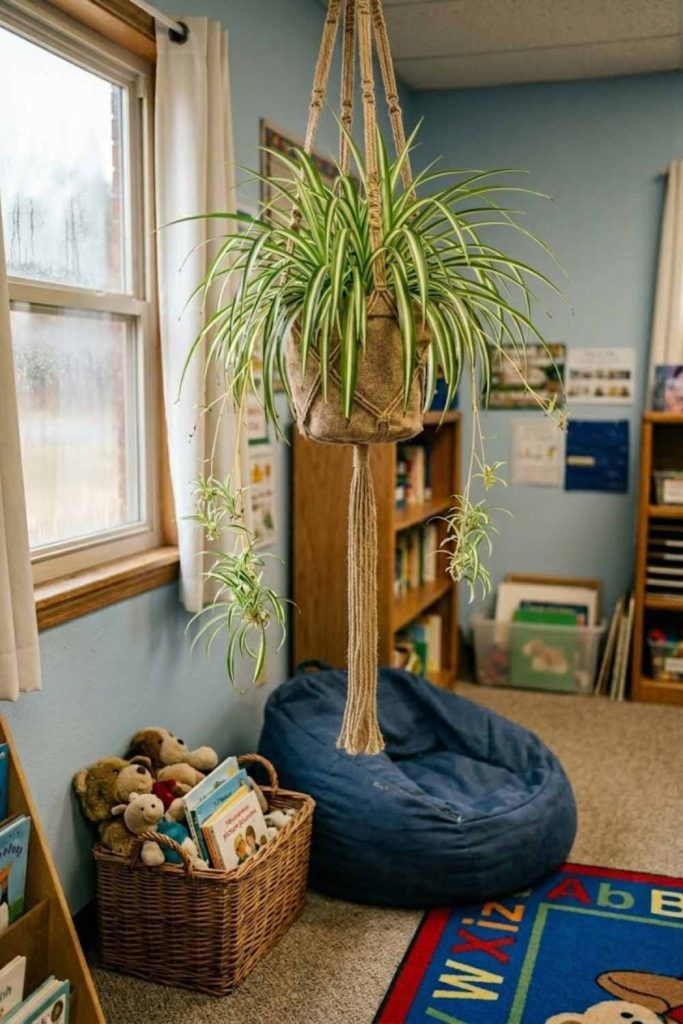
The Classroom Nursery earns its name from the tiny plantlets that dangle from the mother plant like little spiders.
Entirely non-toxic and hardy, it offers a perfect STEM opportunity for teaching students how a parent plant nurtures the next generation.
Once the “babies” grow small root nubs, they can be potted by students to take home. It is a generative part of the classroom ecosystem that students can share.
- Light: Bright, indirect sunlight
- Water: Weekly; prefers consistent moisture
#5 — Prayer Plant (Maranta leuconeura)
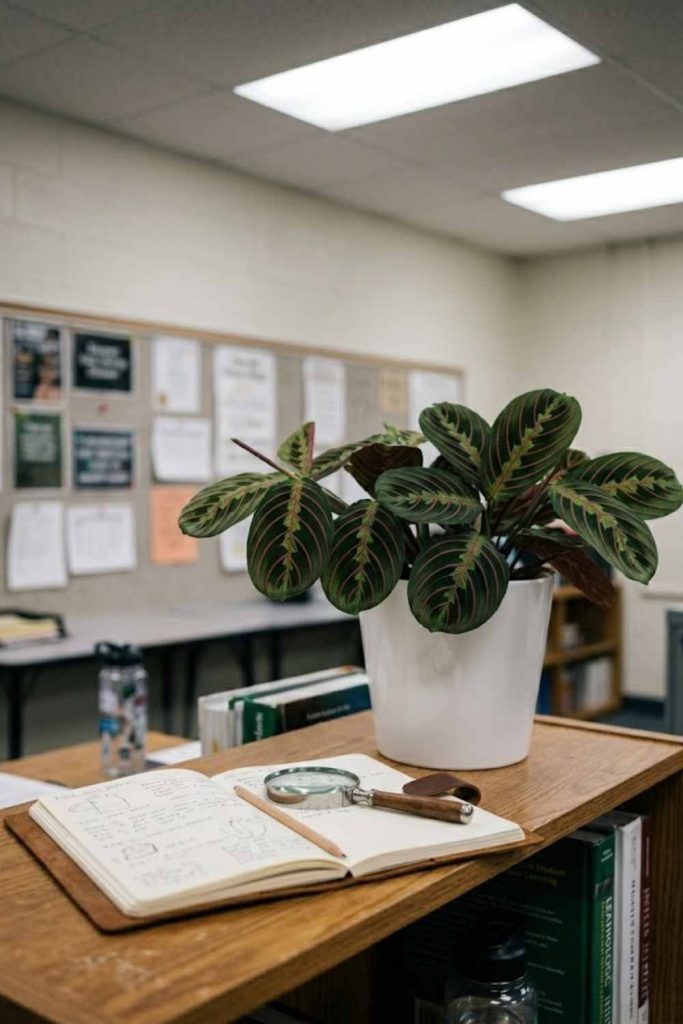
In a quiet reading nook, the Prayer Plant offers a small, daily miracle to observe.
Its leaves stay flat during the day to catch the light and fold upward at night. This movement, known as nyctinasty, is a captivating way to show students that plants have internal clocks.
With its intricate red veins, it serves as a piece of living art on a low bookshelf. It is safe and non-toxic, making it worry-free for younger grades.
- Light: Medium, indirect light
- Water: Keep soil consistently moist but not soggy
#6 — Peace Lily (Spathiphyllum)
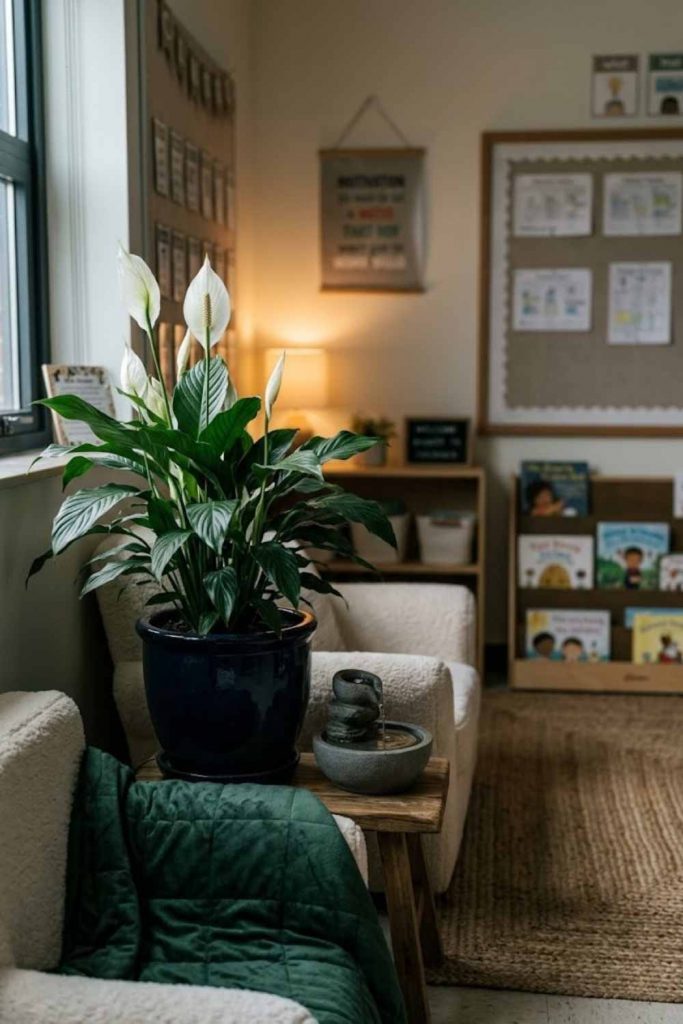
The Peace Lily is a master communicator of needs.
As a dramatic plant, it wilts visibly when thirsty and perks back up quickly once watered. This provides a clear visual cue for students to recognize the needs of another living thing.
Its elegant white flowers add a sense of calm to a dedicated testing area or “calm-down corner.” Note that the sap is an irritant; it is best suited for observation.
- Light: Medium, indirect light
- Water: Weekly; likes to stay slightly moist
#7 — Boston Fern (Nephrolepis exaltata)
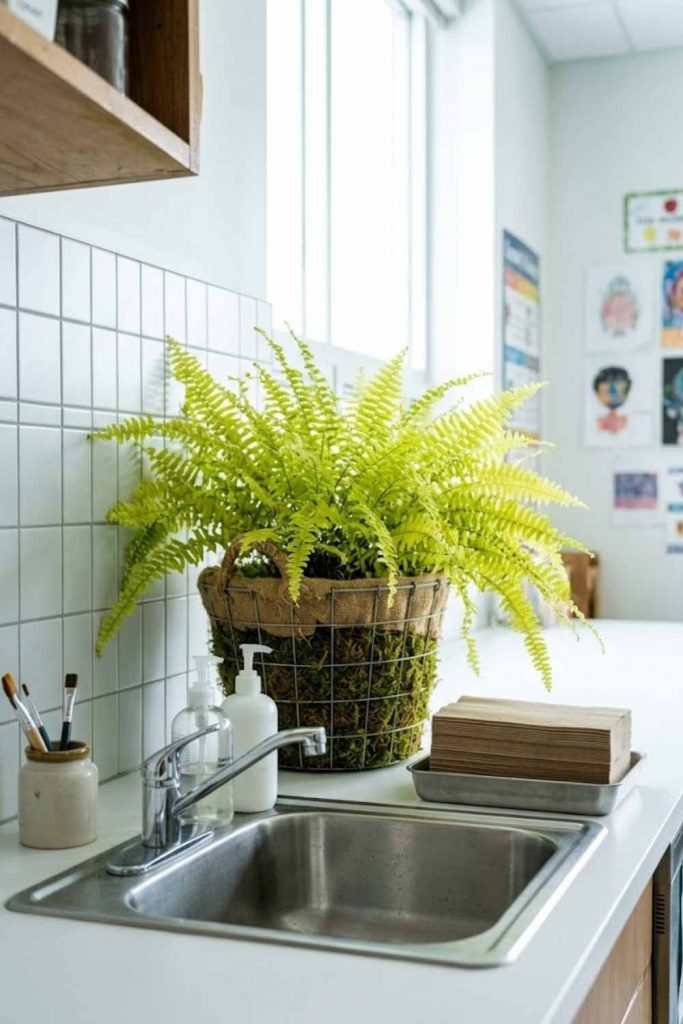
If the school’s heating system makes the air feel like a desert, the Boston Fern acts as a natural humidifier.
It breathes moisture back into the air through lush, feathery fronds. This can help soothe dry throats and itchy eyes during winter months.
Being non-toxic, it is safe for high-traffic areas where students might brush against it. It fits perfectly near a classroom sink where humidity is naturally higher.
- Light: Bright, indirect light
- Water: Frequently; do not let the soil dry out
#8 — Rubber Tree (Ficus elastica)
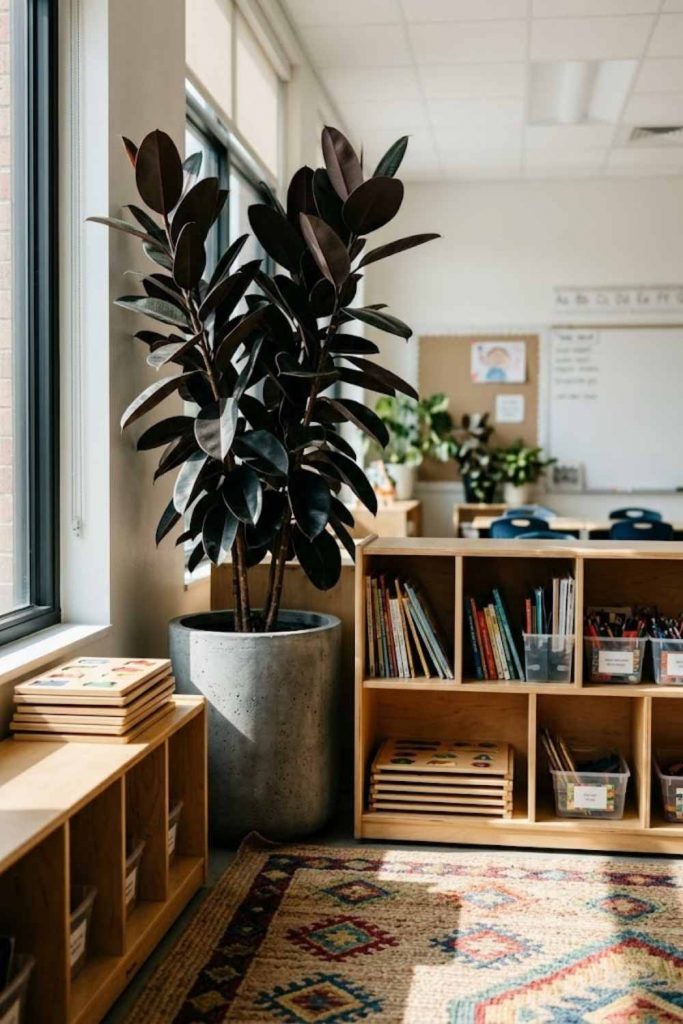
Newly renovated classrooms benefit from the Rubber Tree’s ability to filter out formaldehyde.
This chemical is often found in the glues of new classroom furniture or carpets. The tree’s thick, leathery leaves in deep burgundy provide a strong visual anchor for a large room.
Wiping the dust off its broad leaves can be a meditative “reset” task for a student who needs a quiet moment. Be aware of the milky sap, which can cause skin irritation.
- Light: Bright, indirect light
- Water: When the top 2 inches of soil feel dry
#9 — Aloe Vera
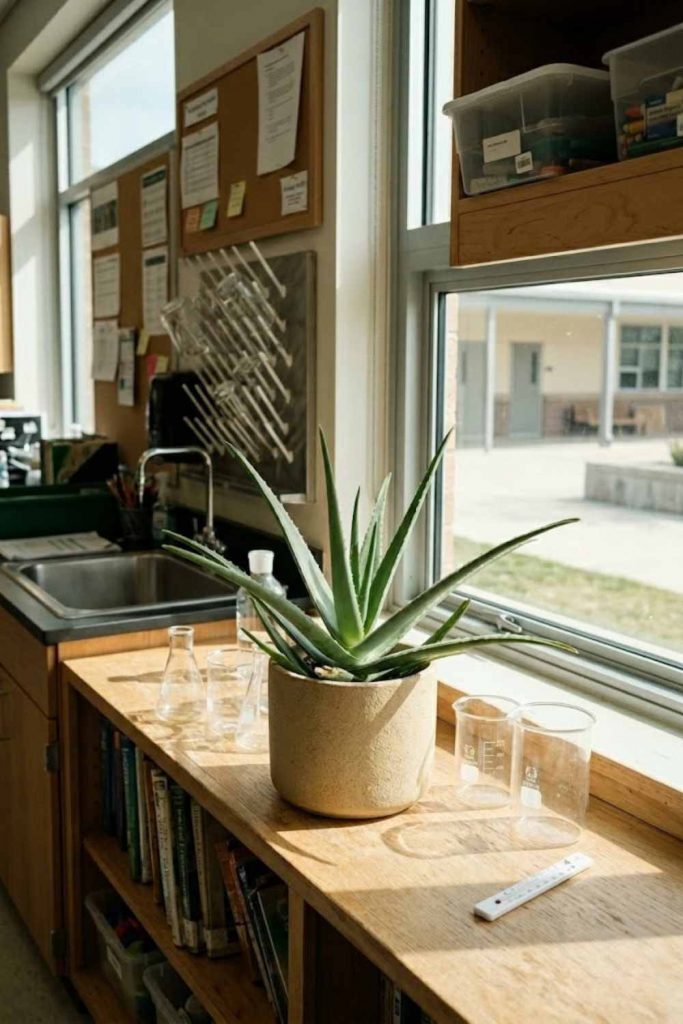
A sunny windowsill transforms Aloe Vera into a living first-aid kit.
It serves as an excellent lesson in desert adaptation, storing a cooling gel in its thick, spiked leaves.
Beyond biology, that gel can be used to soothe minor paper burns during science demonstrations. It requires very little water—about once every three weeks—making it a low-stress addition.
- Light: Direct sunlight
- Water: Every 3 weeks; allow to dry completely
#10 — Heartleaf Philodendron (Philodendron hederaceum)
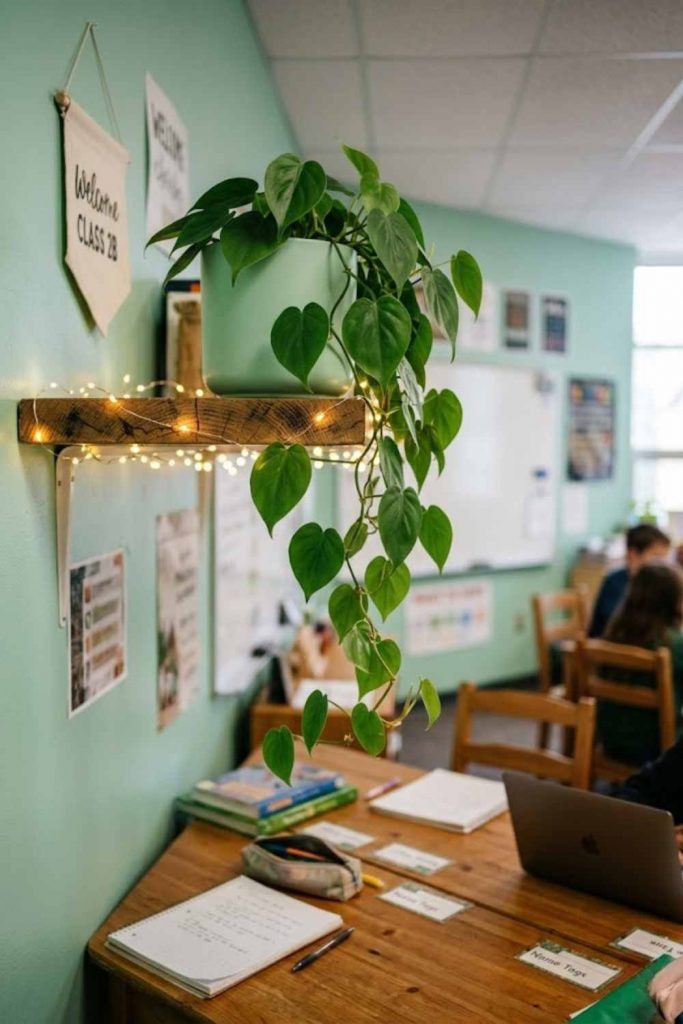
The Heartleaf Philodendron is known for its calming effect in a learning space.
Its soft leaves help lower the sterile feel of a classroom, potentially reducing student cortisol during high-pressure testing.
It handles low light with ease and only needs water when the soil is about halfway dry. Keep it on higher shelves where its trailing beauty is seen but its toxic leaves are out of reach.
- Light: Low to medium, indirect
- Water: When the top half of the soil is dry
#11 — Parlor Palm (Chamaedorea elegans)
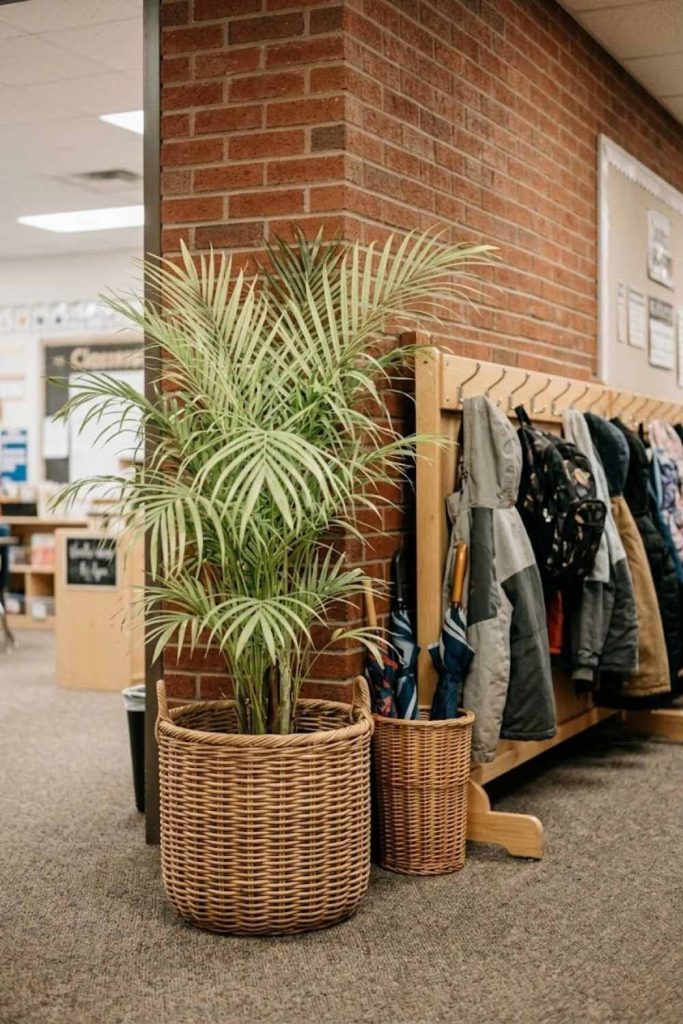
For a lush, tropical look that is 100% safe for all ages, the Parlor Palm is the gold standard.
It provides a soft, feathery texture while remaining entirely non-toxic. It is perfect for softening the sharp, industrial edges of metal filing cabinets or brick walls.
As a slow grower, it stays manageable and prefers the stable, indoor temperatures of a typical school building.
- Light: Medium, indirect light
- Water: Slightly moist; do not overwater
#12 — Jade Plant (Crassula ovata)
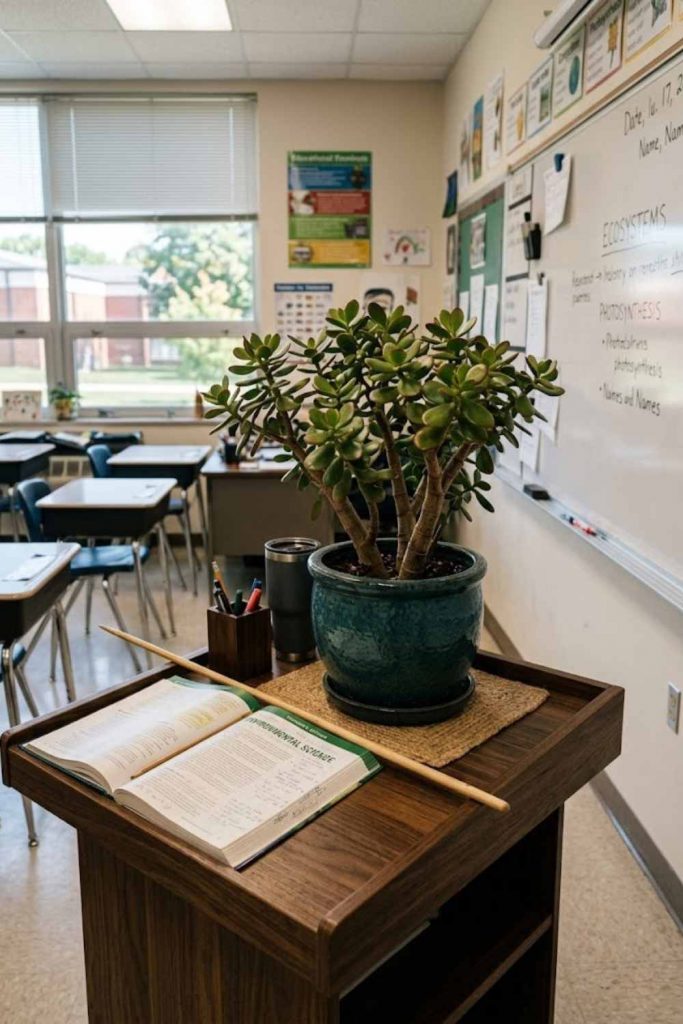
The Jade Plant is a classroom heirloom that can live for decades.
It develops a thick, woody trunk that resembles a miniature ancient tree. It’s a wonderful way to teach students about the reward of long-term care and patience.
A Jade plant can quite literally grow alongside a teacher’s career. It serves as a permanent, living witness to your years in the classroom.
- Light: Full sun to bright, indirect light
- Water: Sparse; only when the leaves feel slightly soft
Conclusion
The most successful classroom plants offer a balance of durability and educational value.
While the Spider Plant and Parlor Palm provide worry-free safety for younger children, the Snake Plant and ZZ Plant are the most reliable for surviving long holidays and low light.
Adding a touch of green to a learning environment does more than just clean the air; it creates a space where both the students and the greenery have the room to grow.
Found this helpful? Save it for later!