Table of Contents
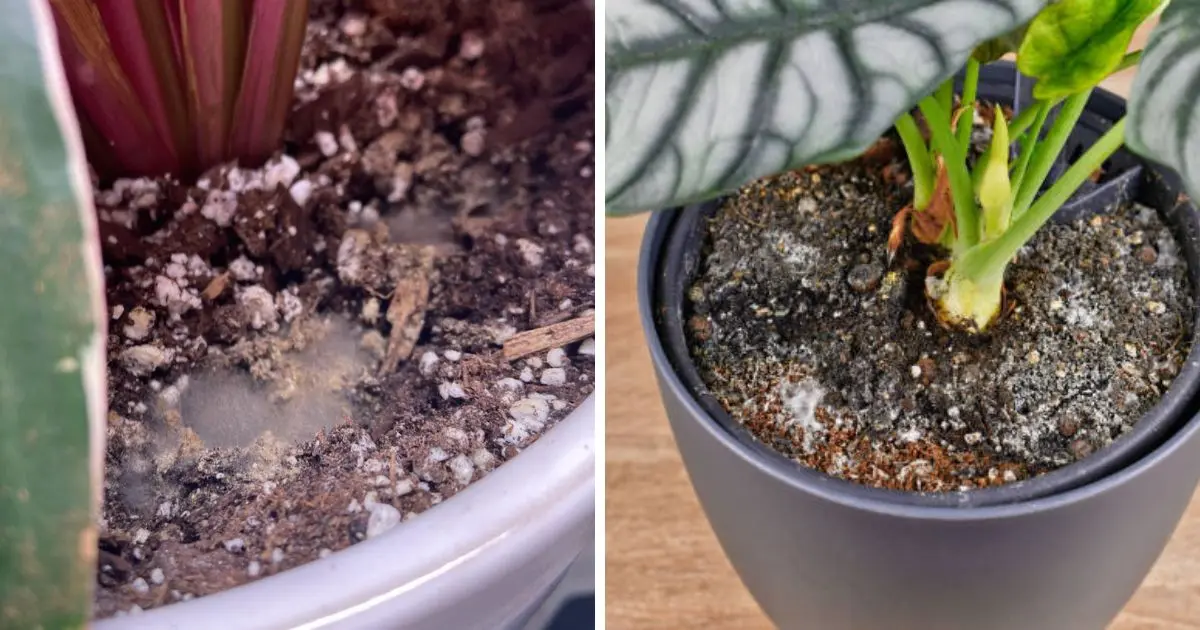
Finding a fuzzy patch on the surface of your houseplant soil can be unsettling, but it doesn’t necessarily mean your plant is in trouble.
Surface mold is often a sign that the potting mix is staying damp for too long.
Once you’ve confirmed you’re dealing with mold, the best approach is to remove the visible growth and correct the conditions that allowed it to develop in the first place.
1. Remove the Mold
Credit: Reddit
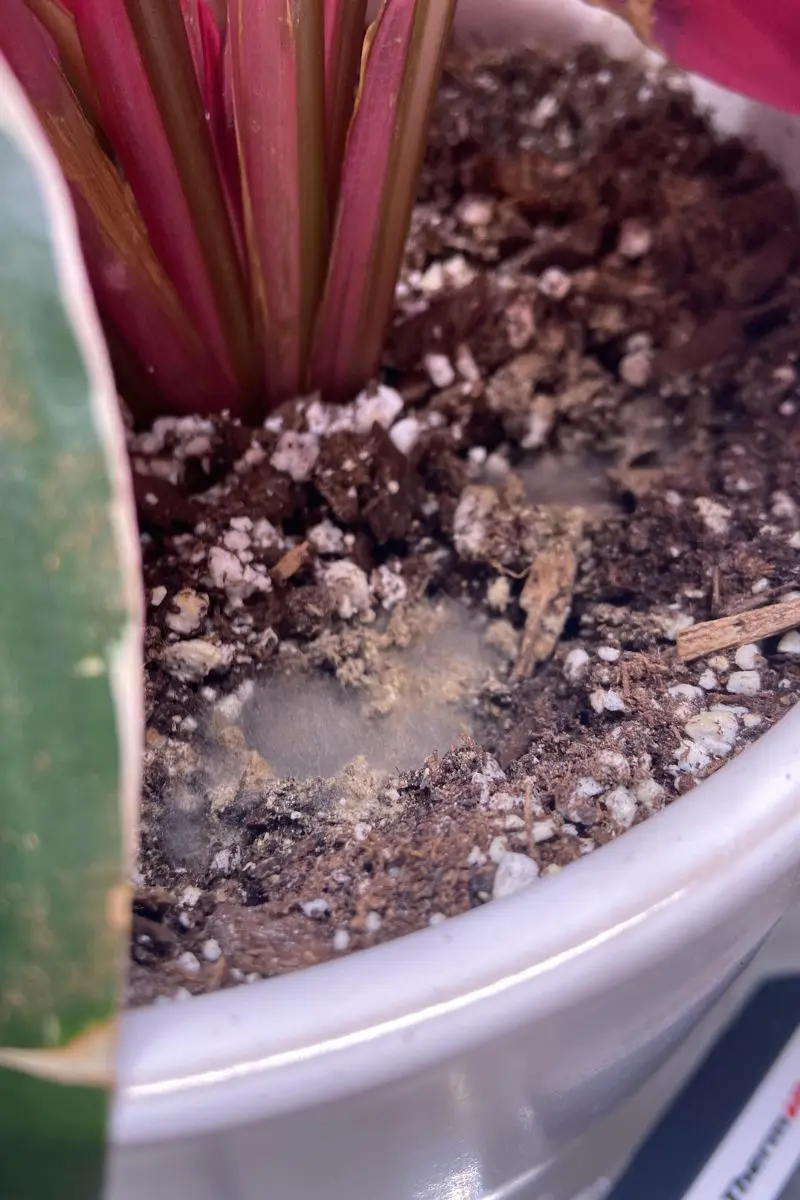
Start by gently scraping the mold from the surface of the potting mix and discarding it. Remove only the affected portion and avoid disturbing the plant’s roots.
This takes care of what’s visible, but it won’t prevent the mold from returning if the soil continues to stay overly damp. Think of it as the first step, not the entire solution.
2. Let the Soil Dry Before Watering
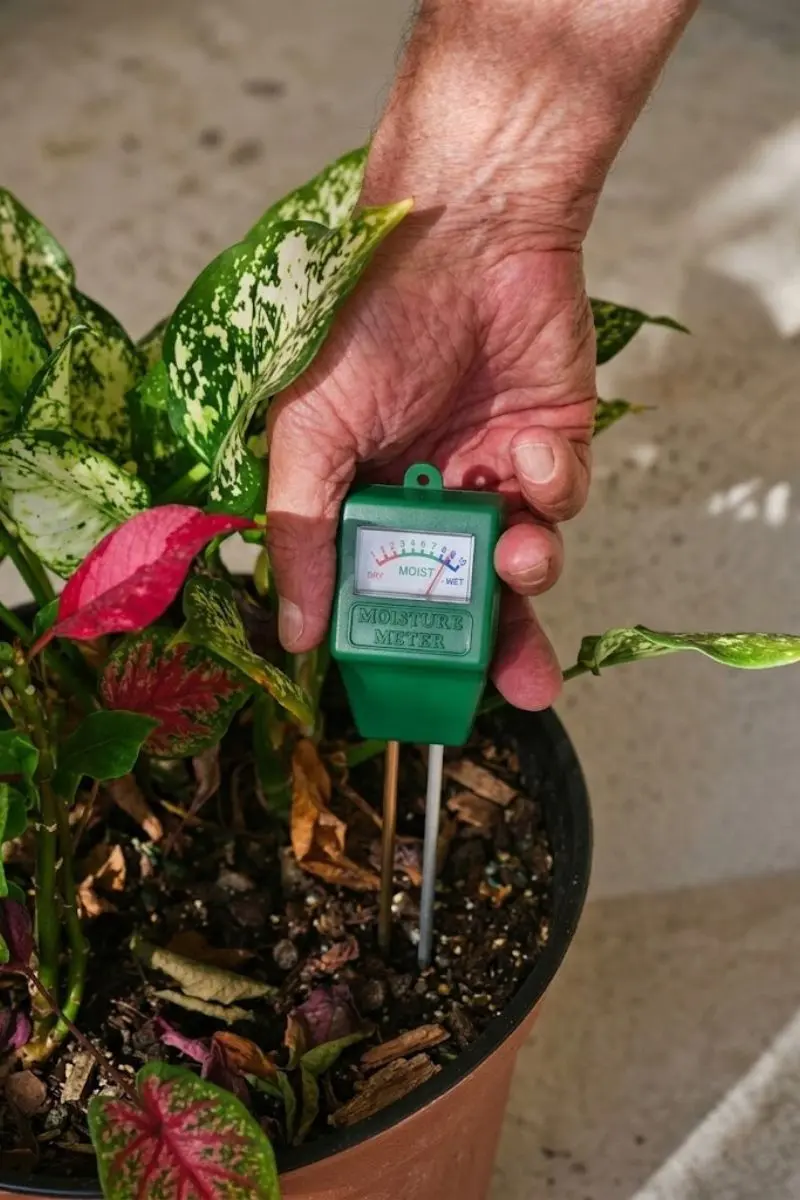
If the soil is staying wet for days at a time, give it a chance to dry before watering again. How much it should dry depends on the plant, so check the potting mix rather than watering on a set schedule.
For many houseplants, you can check the soil by pushing your finger about an inch or two into the potting mix. If it still feels moist, wait before watering.
3. Check the Drainage
Make sure your container has a drainage hole and that water can flow freely out of it. After watering, empty any water that collects in the saucer or outer pot rather than letting the container sit in it.
Also consider the size of the pot. A container that’s much larger than the plant’s root system can hold more potting mix than the roots can use, leaving the soil wet for too long.
4. Check Why the Soil Stays Wet
If you’re watering appropriately but the soil still takes a long time to dry, take a closer look at the potting mix. An old, compacted mix can hold more water and less air, while a mix that’s poorly suited to your plant may not provide the drainage it needs.
When the mix has broken down or become compacted, repotting with fresh, well-drained potting mix can help restore better growing conditions.
5. Clear Away Dead Leaves and Debris
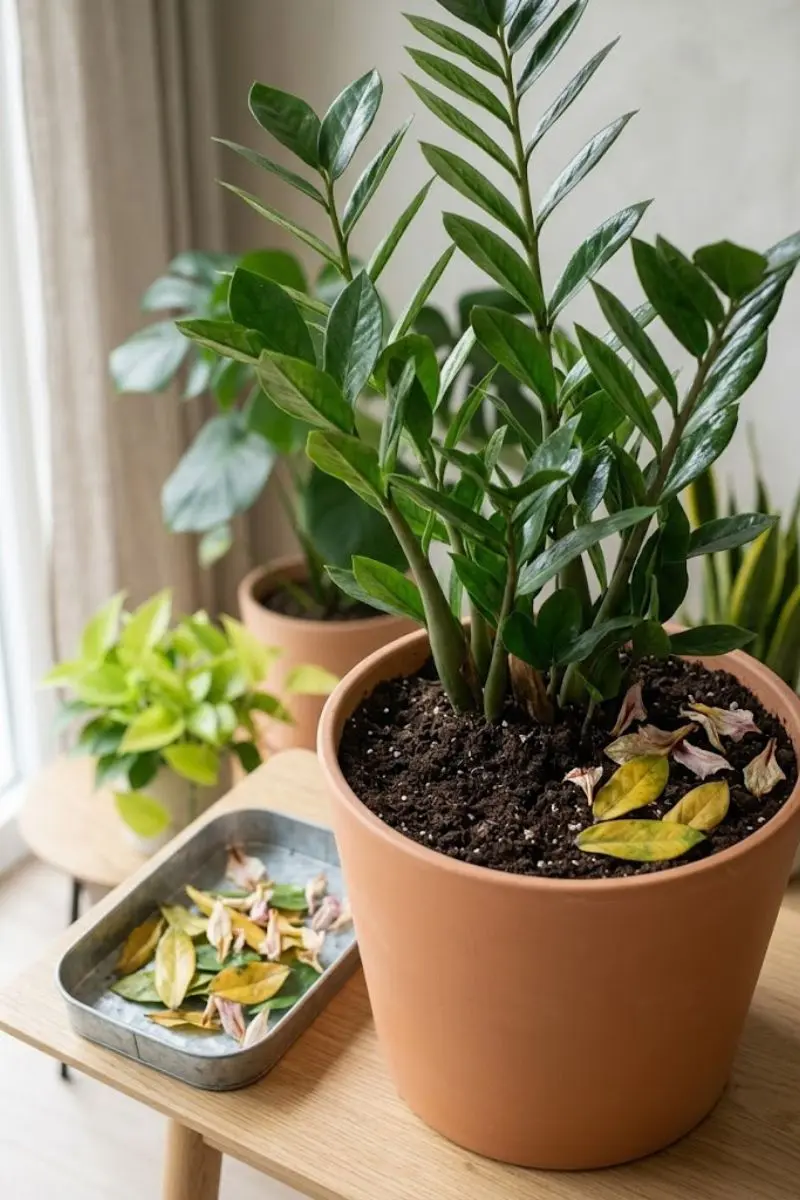
Remove fallen leaves, spent flowers, and other plant debris from the surface of the potting mix. As this material breaks down, it can contribute to the conditions that encourage fungal growth.
A quick cleanup whenever you notice debris is an easy habit, especially for plants that regularly shed leaves or spent flowers.
6. Improve Air Circulation
Give crowded houseplants a little more space so air can move around them. Better circulation can help damp conditions dry more readily, particularly in rooms that tend to be humid.
You don’t need strong airflow directed at the plant. The goal is simply to avoid keeping plants packed tightly together in stagnant conditions.
7. Consider Repotting if Mold Returns
If you’ve corrected your watering and drainage but the potting mix still stays wet for too long, or mold repeatedly returns, consider repotting the plant.
Use fresh potting mix appropriate for the plant and a clean container with adequate drainage. While you’re repotting, check the roots for signs of trouble, such as dark, mushy, or damaged roots.
FAQs
Is mold on houseplant soil harmful?
Surface mold doesn’t necessarily mean your plant is seriously ill.
However, it can be a sign that the growing conditions are too damp, so use it as a cue to check your watering, drainage, and potting mix.
Can I just scrape the mold off the soil?
Yes, scraping away visible mold is a good first step. But if the soil continues to stay wet, the mold may return.
Correcting the underlying moisture problem is more important than simply removing what’s on the surface.
Do I need to replace the potting soil if I see mold?
Not always. If the plant is healthy and the soil dries normally after you adjust your watering and drainage, removing the surface mold may be enough.
Consider replacing the mix if it stays wet for too long, has become compacted, or the mold keeps returning.
What else can look like mold on houseplant soil?
Not every white or crusty substance on potting mix is mold.
Mineral or fertilizer salts can leave a pale, crusty buildup on soil and containers, while fungal growth can have a softer or fuzzy appearance. If you’re unsure what you’re seeing, check the texture and appearance before deciding how to treat it.
A little mold on houseplant soil is usually a cue to take another look at your plant’s growing conditions, not a reason to panic.
Remove the visible growth, let the soil dry appropriately, and make sure the pot and potting mix are working for the plant. Those simple changes can help keep the problem from coming back.