Table of Contents
If your spider plant looks more sparse than lush, start with the conditions that encourage healthy growth. Then, use the baby plants it naturally produces to fill out the pot.
These five tricks can help your spider plant look fuller without trying to change its naturally arching shape.
1. Use Light to Fix Sparse Growth
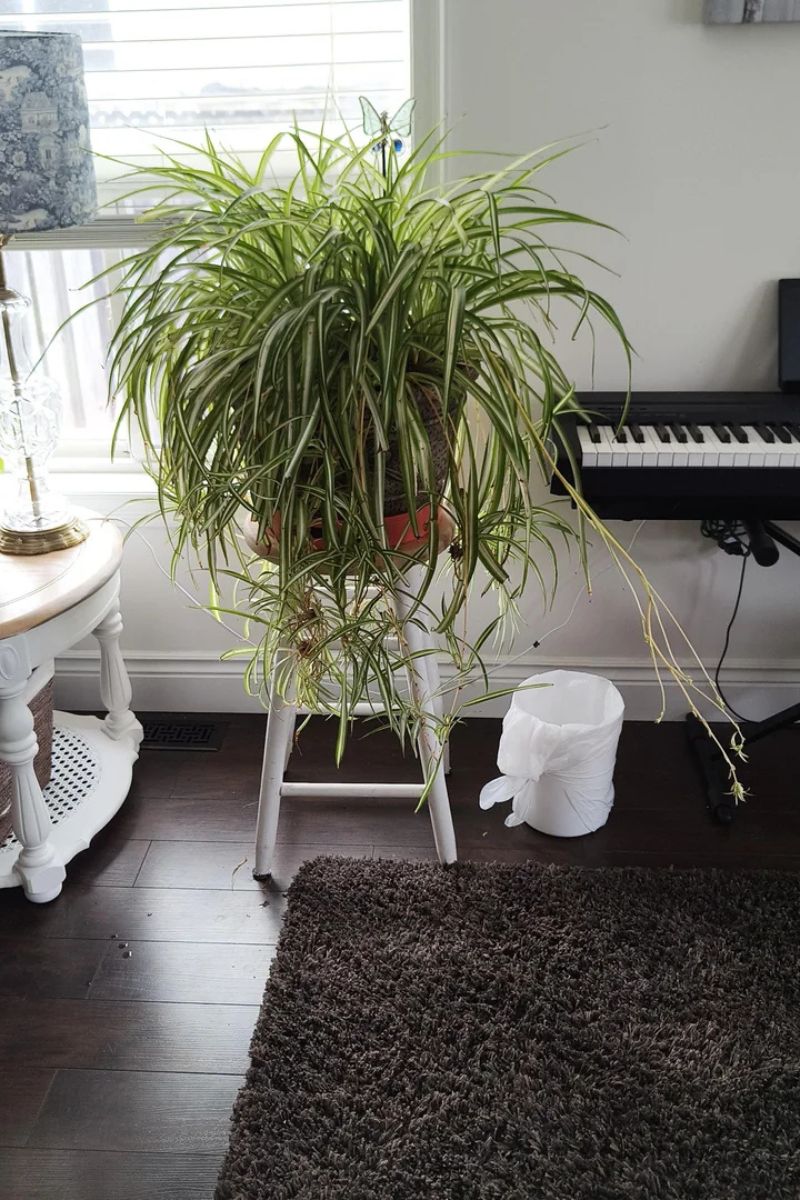
Credit: reddit – @canadianinnz
Spider plants tolerate lower light, but they grow best in bright, indirect light. In dimmer conditions, growth slows and variegated leaves may lose some of their contrast.
If your plant looks thin or isn’t producing much new growth, move it closer to a bright window. Keep it out of strong direct sun, especially during the hottest part of the day, which can scorch the leaves.
The right spot gives your spider plant enough light for healthy growth without exposing its foliage to harsh sun.
2. Don’t Keep the Soil Constantly Wet
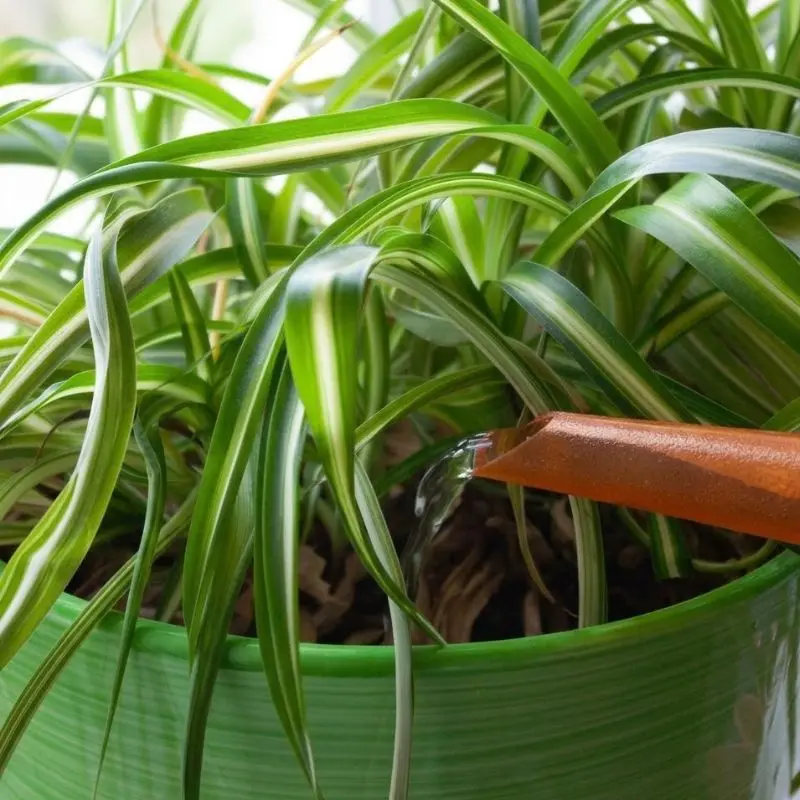
Spider plants like their soil to stay lightly moist, but they don’t want to sit in water. Check the soil before watering, then water thoroughly and let excess moisture drain away.
How often you’ll need to water depends on the light, temperature, pot size, and season. Rather than following a set schedule, check the soil and water when it starts to dry.
Keeping excess water away from the roots helps prevent root problems that can interfere with healthy growth.
3. Free Up Crowded Roots
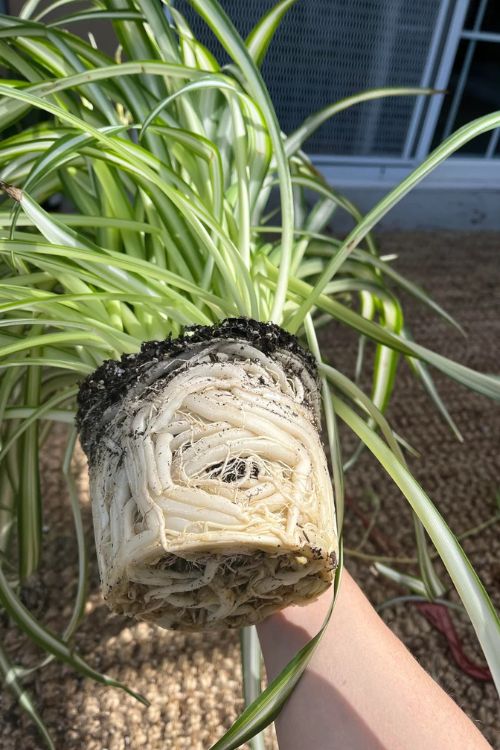
Credit: reddit
Spider plants develop thick, fleshy roots that can quickly fill a container. Once a plant becomes pot-bound, its growth can slow, so repotting can give the roots room to keep growing.
Check the roots before repotting. If they’re tightly packed around the rootball or growing through the drainage holes, it’s time to give them more room. Move the plant into a container only slightly larger than the current one, using fresh, well-draining potting mix.
You don’t need to wait until the roots have completely taken over the pot. The goal is to give crowded roots room before the plant’s growth loses vigor.
4. Root Spiderettes While They’re Still Attached
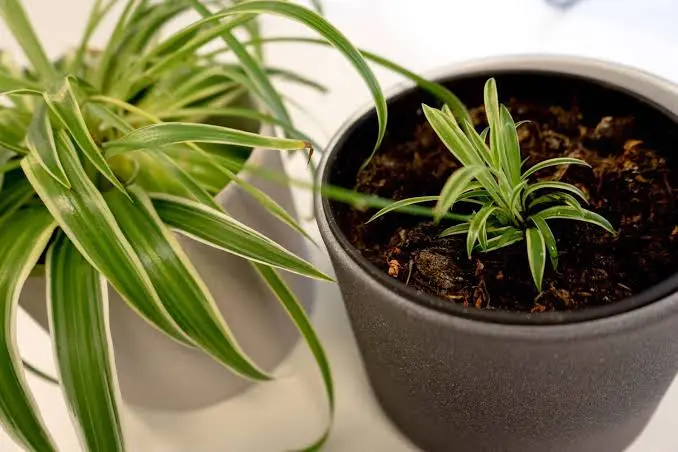
Spider plants make their own baby plants, called spiderettes, along long flowering stems.
Instead of cutting off an unrooted spiderette right away, set its base against moist potting mix while it’s still attached to the mother plant. Once it has developed roots, you can separate it and pot it up on its own.
You can also detach a spiderette once it already has roots and plant it directly. Rooting it while attached simply gives the young plant time to establish before you cut the connecting stem.
5. Tuck Rooted Spiderettes Into Bare Spots
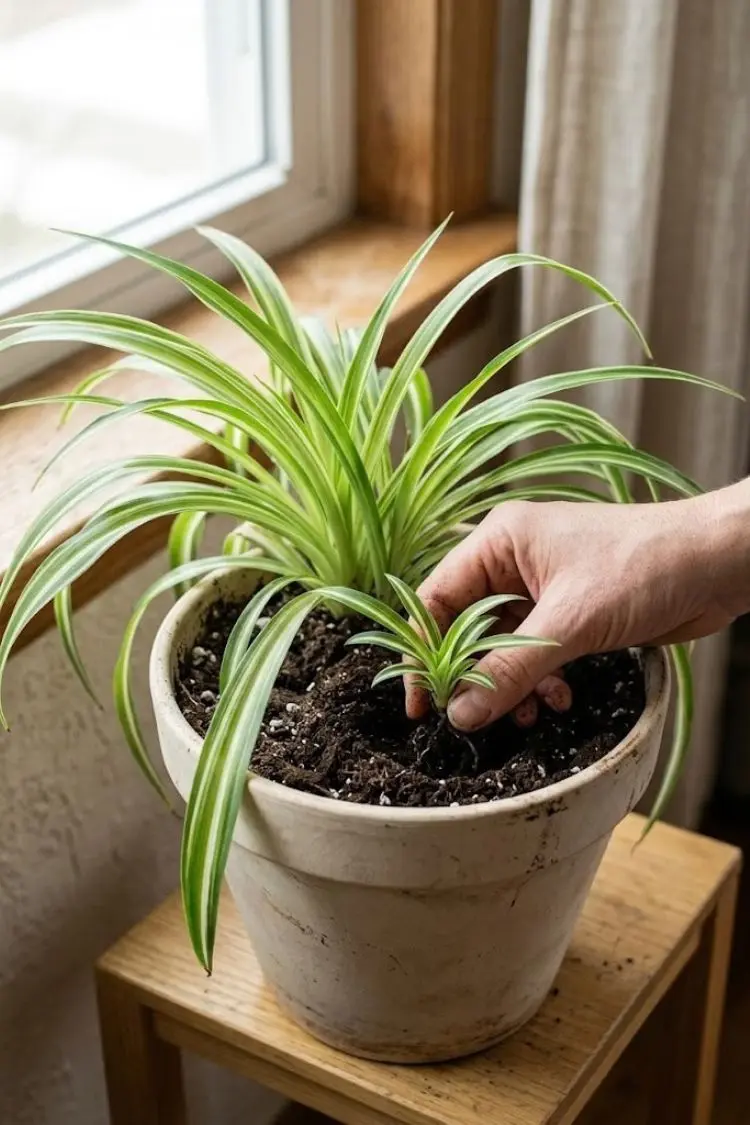
This is the trick that makes the biggest difference to the look of the whole pot.
Once the spiderettes have roots, plant them around the edge of the same container, filling open spaces between the existing foliage. Give the new plants the same bright, indirect light as the mother plant and water them as needed.
You’re adding more individual rosettes to the container, rather than waiting for one plant to produce enough new foliage to fill every gap. Spider plantlets root readily when they come into contact with soil, making them an easy way to add more plants to an existing pot.
As the mother plant produces more healthy spiderettes, you can repeat the process to gradually create a denser-looking container.
How Long Does It Take to Make a Spider Plant Fuller?
Improving the plant’s growing conditions can support healthier new growth, but a sparse spider plant won’t fill out overnight.
If you want the container to look fuller sooner, adding rooted spiderettes is the more direct approach. You’re increasing the number of rosettes in the pot instead of waiting for the original plant to produce enough new foliage to fill the space.
How quickly the pot fills out will depend on the size and health of the spiderettes and their growing conditions.
FAQs
Why is my spider plant not bushy?
Start by checking its light and growing conditions.
Spider plants grow best in bright, indirect light, and growth can slow when the roots become pot-bound. If the plant is healthy but the pot still looks sparse, adding rooted spiderettes can make it look fuller.
Will putting spiderettes in the same pot make a spider plant look fuller?
Yes. Adding rooted spiderettes increases the number of rosettes growing in the container, filling spaces that would otherwise be empty.
Spiderettes root readily when they come into contact with soil.
Should I cut off spider plant babies?
Not necessarily. You can leave healthy spiderettes attached for a cascading display. If you want a fuller-looking pot, root some of them and plant them around the mother plant instead.
If the spiderettes become heavy or unruly and you don’t plan to pot them up, you can trim them off to tidy the plant. This is mainly for appearance and isn’t necessary to make the mother plant fuller.
Does a bigger pot make a spider plant bushier?
Not by itself. Repot when the roots are becoming crowded rather than moving the plant into a much larger pot simply to encourage fuller growth.
Spider plants can lose vigor when they become pot-bound.
Can you prune a spider plant to make it bushier?
Removing dead or damaged leaves can tidy the plant, but pruning isn’t the main way to increase the number of rosettes. If you want a visibly fuller container, adding rooted spiderettes is a more direct approach.
If the plant has been badly neglected or has extensive damaged foliage, more substantial pruning can encourage a new flush of growth from the center, provided the plant’s growing conditions are corrected.