Table of Contents
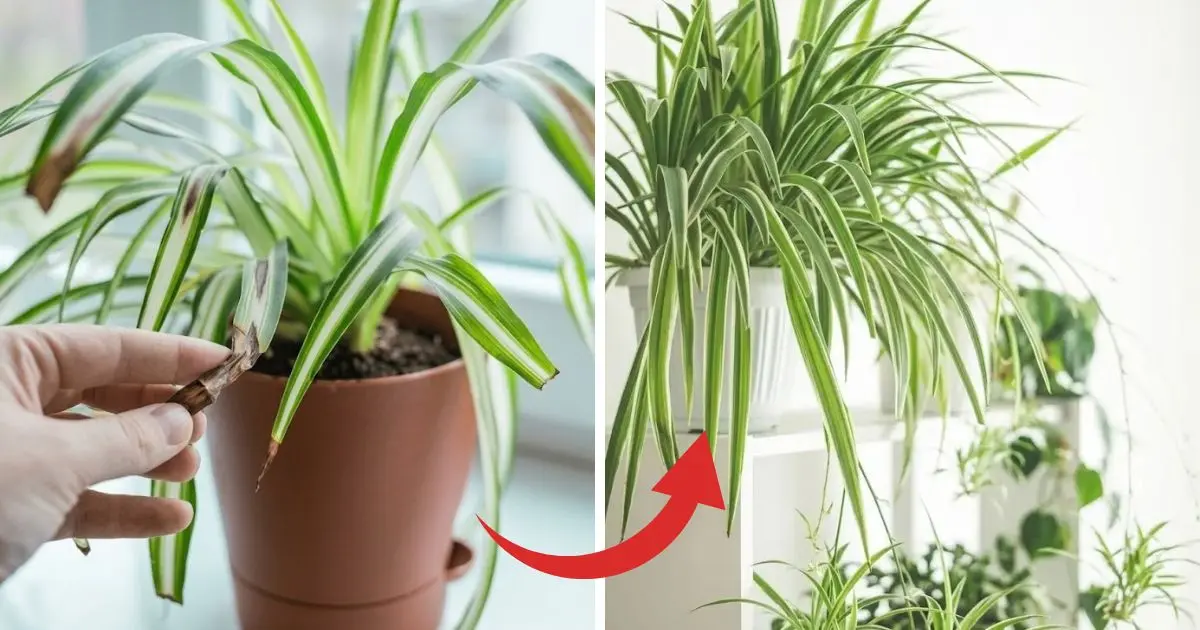
Brown tips on a spider plant can have several causes, from dry soil and low humidity to overfertilizing, drafts, water quality, and too much sun.
Start with these common causes to pinpoint the problem and fix it.
1. Your Spider Plant Is Too Dry
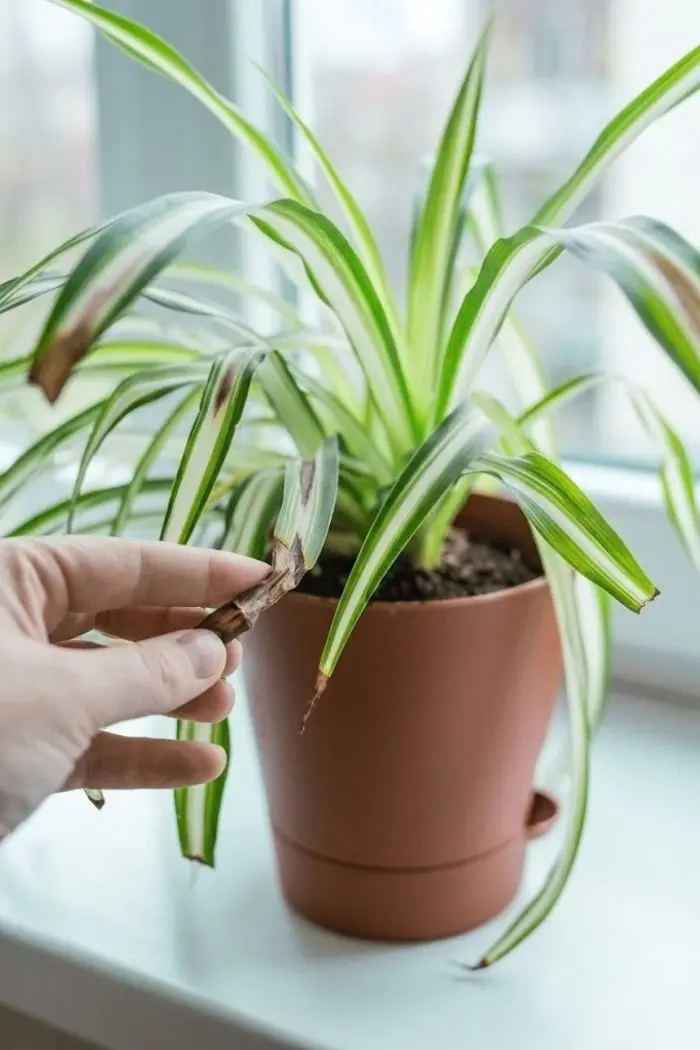
Dry soil is one of the most common causes of brown leaf tips on a spider plant. When the plant doesn’t get enough water, the leaf tips can turn brown and crispy.
Check the soil before you water. When the top inch or two feels dry, water thoroughly until excess water drains from the bottom of the pot. How often it needs water depends on light, temperature, humidity, and the potting mix, so check the soil instead of watering on a set schedule.
2. The Humidity Is Too Low
Dry indoor air can also cause brown, crispy leaf tips. Spider plants prefer moderate humidity, and brown tips can become more noticeable when indoor heating dries the air in winter.
If the air is dry, increase the humidity around your plant. A humidifier is one option, or move the plant to a more humid room, such as a bathroom or kitchen, if it still gets enough light.
3. You’ve Overfertilized Your Spider Plant
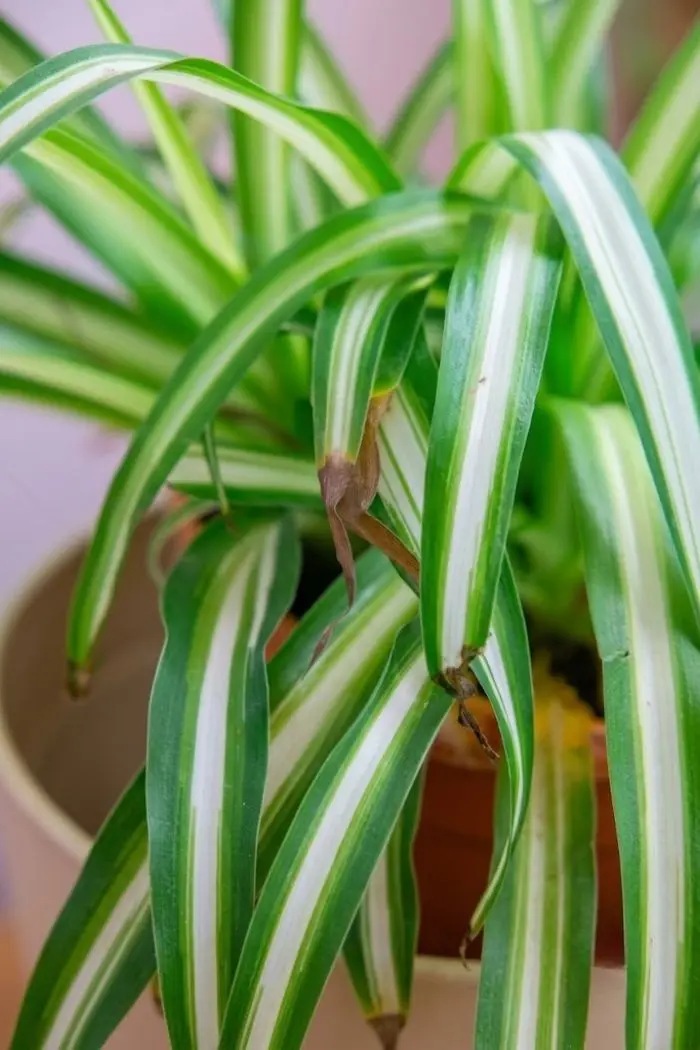
Overfertilizing can cause salts and minerals to build up in the potting mix, which can damage the roots and lead to brown leaf tips. A white crust on the soil can also be a sign of salt buildup.
If you suspect fertilizer buildup, flush the soil with water, letting it drain freely through the pot. Then cut back on feeding and follow the fertilizer label. Repotting into fresh potting mix can also help if the buildup is severe.
4. Your Plant Is Exposed to Drafts
A spider plant sitting near a drafty window, exterior door, air vent, or heating duct may develop brown, crispy tips. Sudden temperature changes can stress the plant and contribute to browning.
Check the area around your plant for sources of moving air. If it’s directly beside a vent or drafty window, move it to a spot with more consistent temperatures.
5. Your Water May Be Causing Brown Tips
Credit: Reddit
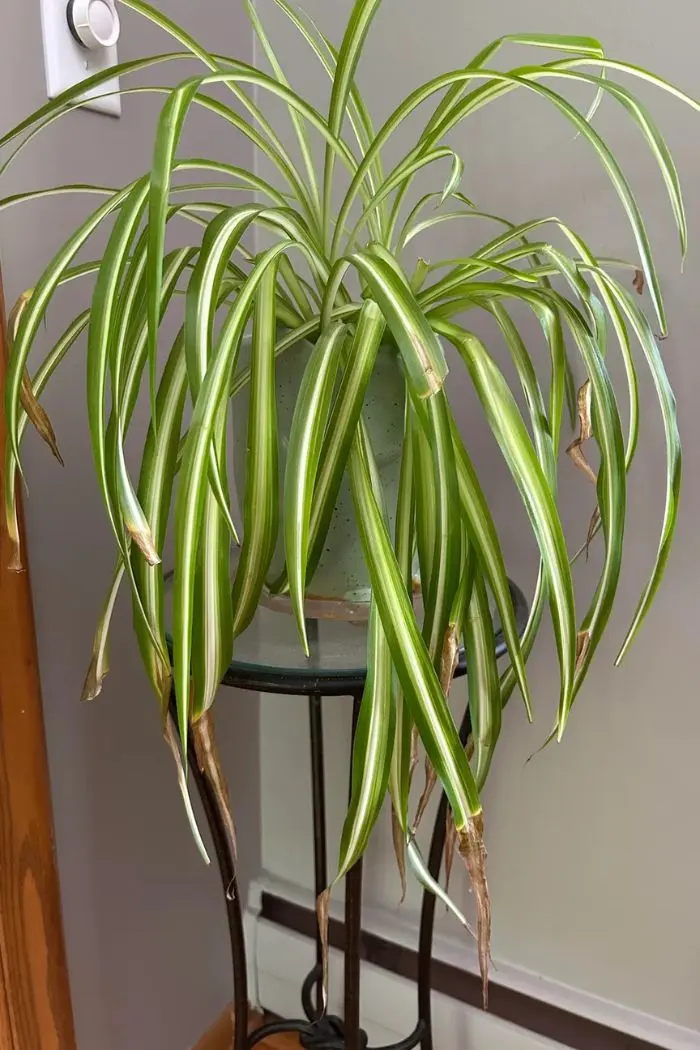
Spider plants can be sensitive to chemicals in tap water. Chlorine and other chemicals, including fluoride, can cause brown leaf tips, especially after prolonged exposure.
If the problem keeps coming back, take a look at the water you’re using. Switching to distilled or rainwater can help prevent further tip browning.
6. It’s Getting Too Much Direct Sun
Spider plants prefer bright, indirect light, and too much direct sun can scorch their leaves. If your plant sits in a hot, sunny window, the leaf tips may scorch and turn brown.
Move the plant farther from the window or filter the light with a sheer curtain. Aim for bright, indirect light instead.
FAQs
Should You Cut Off Brown Tips on a Spider Plant?
You don’t have to. Brown tissue won’t recover, but trimming it can improve the plant’s appearance. If you want to tidy up the leaves, trim the brown portions with clean scissors.
Keep in mind that recurring brown tips can signal an underlying problem with the plant’s growing conditions. Fixing the cause is the best way to prevent new browning.
Will Brown Spider Plant Tips Turn Green Again?
No. Once the leaf tissue has turned brown, it won’t turn green again.
Focus on correcting the growing conditions so new leaves don’t develop brown tips.
How Often Should You Water a Spider Plant?
There isn’t one watering schedule that works for every spider plant.
Check the soil instead, and water when the top couple of inches feel dry. Light, temperature, humidity, and potting mix all affect how quickly the soil dries.
Can Overwatering Cause Problems for a Spider Plant?
Yes. Overwatering and poorly drained soil can lead to root rot, so let the soil dry slightly between thorough waterings and make sure the pot drains freely.