Table of Contents
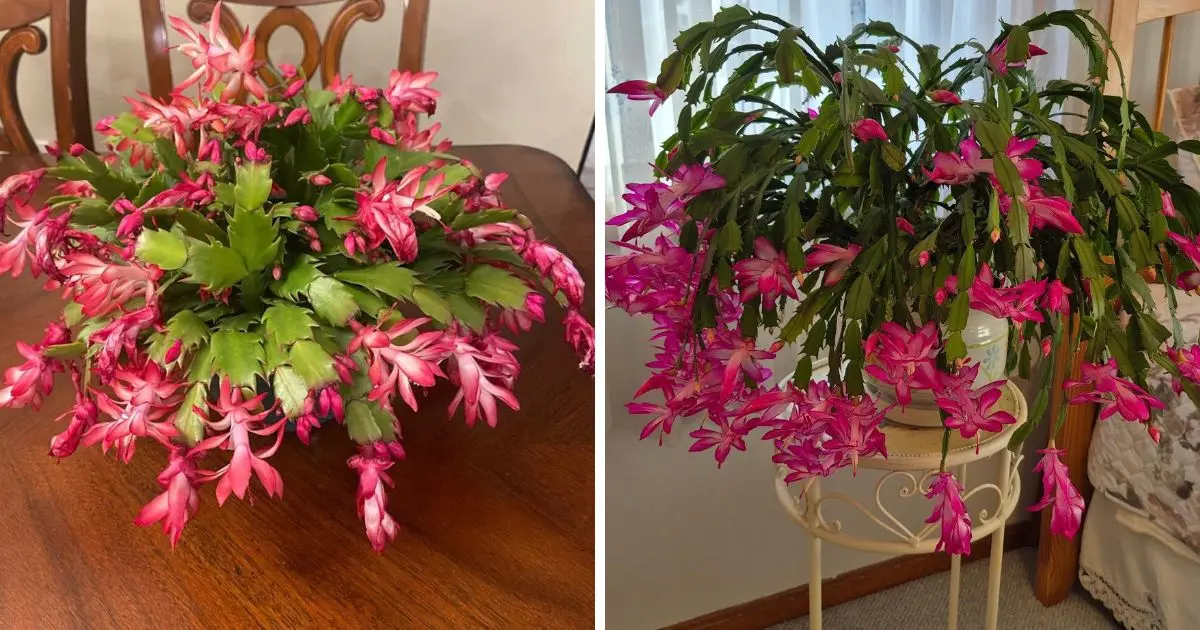
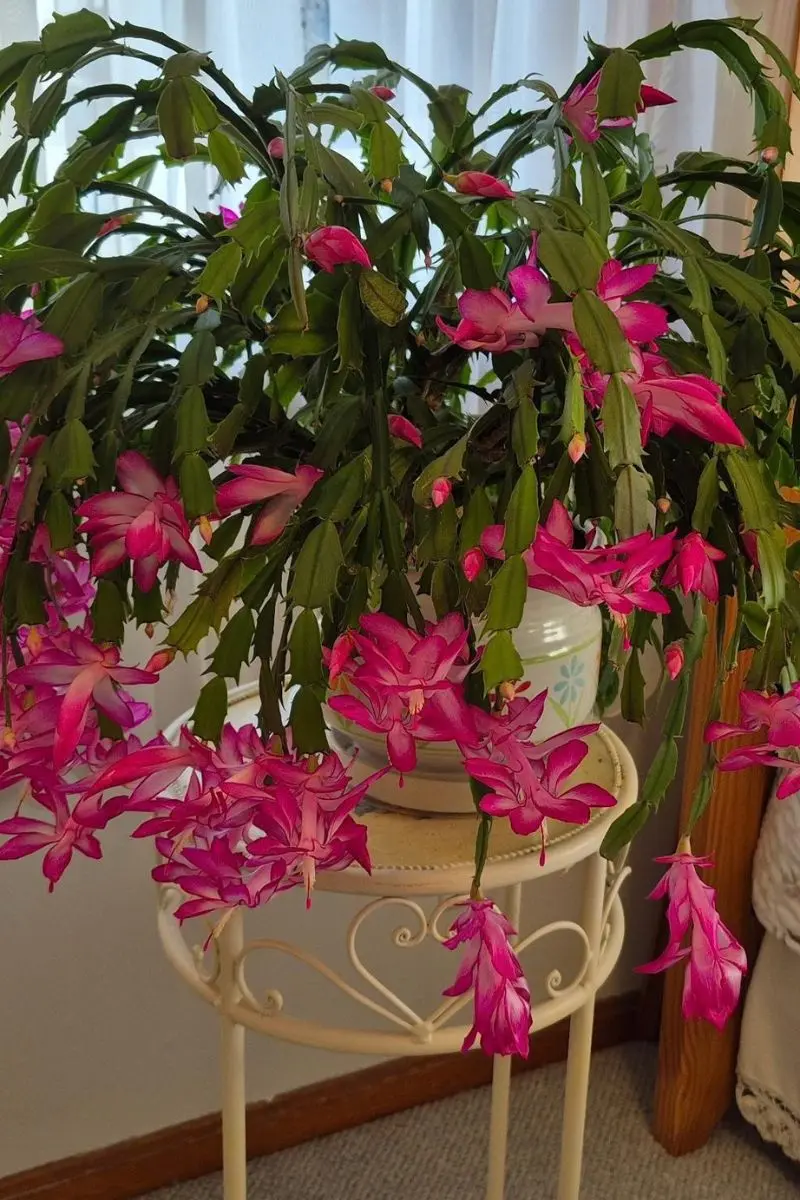
Thanksgiving cactus (Schlumbergera truncata) is a tropical cactus known for its colorful flowers, which typically appear in late fall.
Unlike desert cacti, it is native to the humid rainforests of southeastern Brazil, where it grows on trees and rocky surfaces. As a houseplant, it prefers bright, filtered light, well-draining soil, and more consistent moisture than desert cacti.
With proper care, Thanksgiving cactus can live for decades and bloom year after year. Its fall flowering is triggered by shorter days and cool nighttime temperatures.
Plant Snapshot
| Botanical Name | Schlumbergera truncata |
| Common Name | Thanksgiving cactus, crab cactus, holiday cactus |
| Plant Type | Epiphytic cactus, succulent, perennial |
| Mature Size | 9–12 inches tall, 1–2 feet wide |
| Light | Bright, filtered light; partial shade |
| Soil | Moist but well-draining, airy mix |
| Water | When the soil begins to dry |
| Temperature | 65–80°F; cooler nights in fall |
| Humidity | Moderate to high |
| Bloom Time | Late fall to winter |
| Flower Colors | Pink, red, orange, white, purple, and yellow |
| USDA Zones | 10–12 |
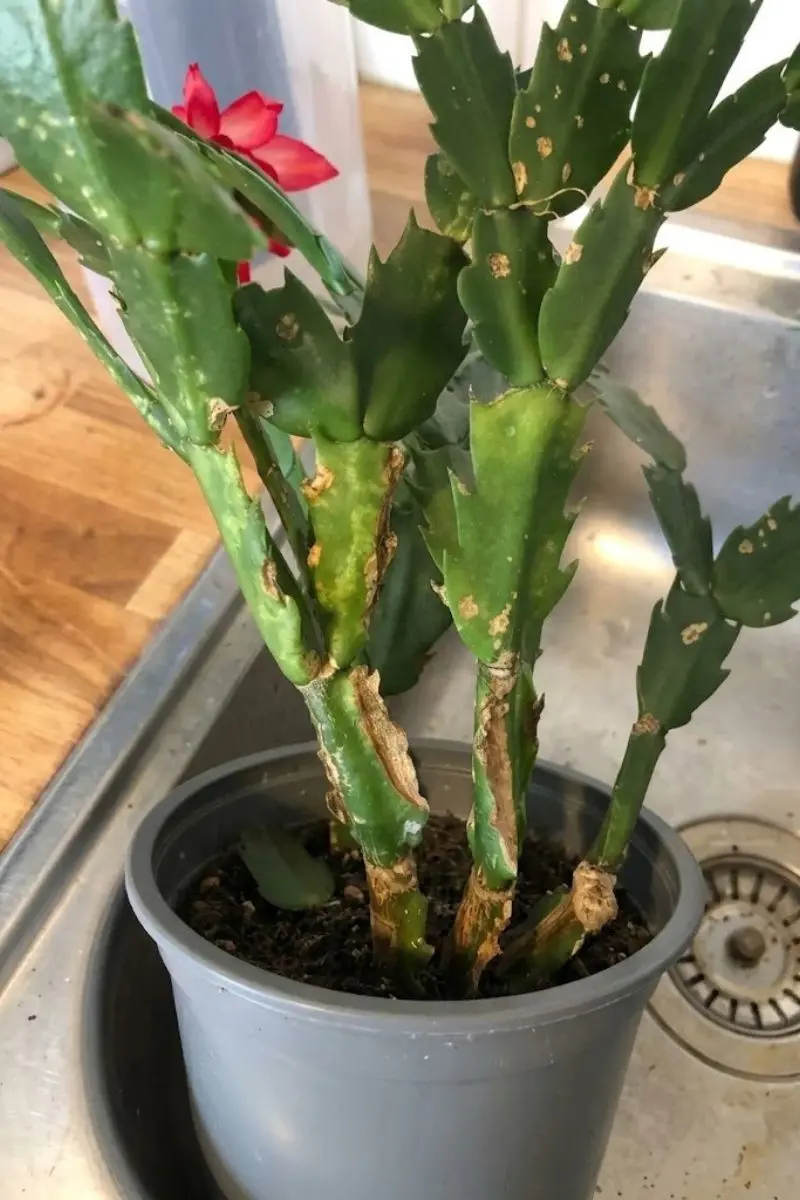
Thanksgiving cactus is often confused with Christmas cactus. The easiest way to tell them apart is by the edges of their flattened stem segments: Thanksgiving cactus has pointed, claw-like projections, while Christmas cactus has smoother, more rounded edges.
What Matters Most for Success
- Give it bright, filtered light: Protect it from strong, prolonged direct sun.
- Let the soil dry between waterings: Thanksgiving cactus needs more moisture than a desert cactus, but the soil should not stay soggy.
- Use an airy, well-draining potting mix: Good drainage helps prevent root rot.
- Provide moderate to high humidity: Especially important in dry indoor conditions.
- Give it cool nights and long periods of uninterrupted darkness in fall: These conditions help trigger flowering.
- Keep conditions consistent once buds appear: Sudden changes in temperature, humidity, or light can cause buds to drop.
Thanksgiving Cactus Plant Care
Light Requirements
Thanksgiving cactus grows best in bright, indirect or filtered light.
Give it filtered light or partial shade outdoors during spring and summer, then move it to a brighter spot in fall and winter. Protect it from strong, direct afternoon sun, which can scorch the stems or cause them to turn pale.
Watering
Water Thanksgiving cactus when the upper layer of soil begins to dry, then water thoroughly until excess water drains from the pot. Empty the saucer afterward, and don’t let the plant sit in standing water.
Water less often after flowering, then gradually return to a regular watering routine in spring as the plant starts growing again.
Soil and Potting Mix
Use a light, porous, well-draining potting mix that retains some moisture without becoming waterlogged. Holiday cacti need both moisture and good aeration around their roots, so avoid heavy soils that stay wet for long periods.
A houseplant or cactus-and-succulent mix amended with perlite is a good option. Always use a container with drainage holes.
Thanksgiving cactus also tends to flower well when slightly pot-bound, so there is no need to move it into a much larger container.
Temperature and Humidity
During active growth, keep Thanksgiving cactus around 65–80°F and provide moderate to high humidity.
Cooler nights are important in fall when the plant is preparing to flower. Night temperatures around 55–65°F can help initiate flower buds. Keep the plant away from cold drafts, heating vents, and sudden temperature changes, especially once buds appear.
Fertilizing
Feed Thanksgiving cactus monthly from June through August with a balanced houseplant fertilizer diluted to half strength.
Stop regular fertilizing as fall approaches and the plant begins preparing to bloom. Resume feeding when active growth starts again in spring.
How to Encourage a Thanksgiving Cactus to Bloom
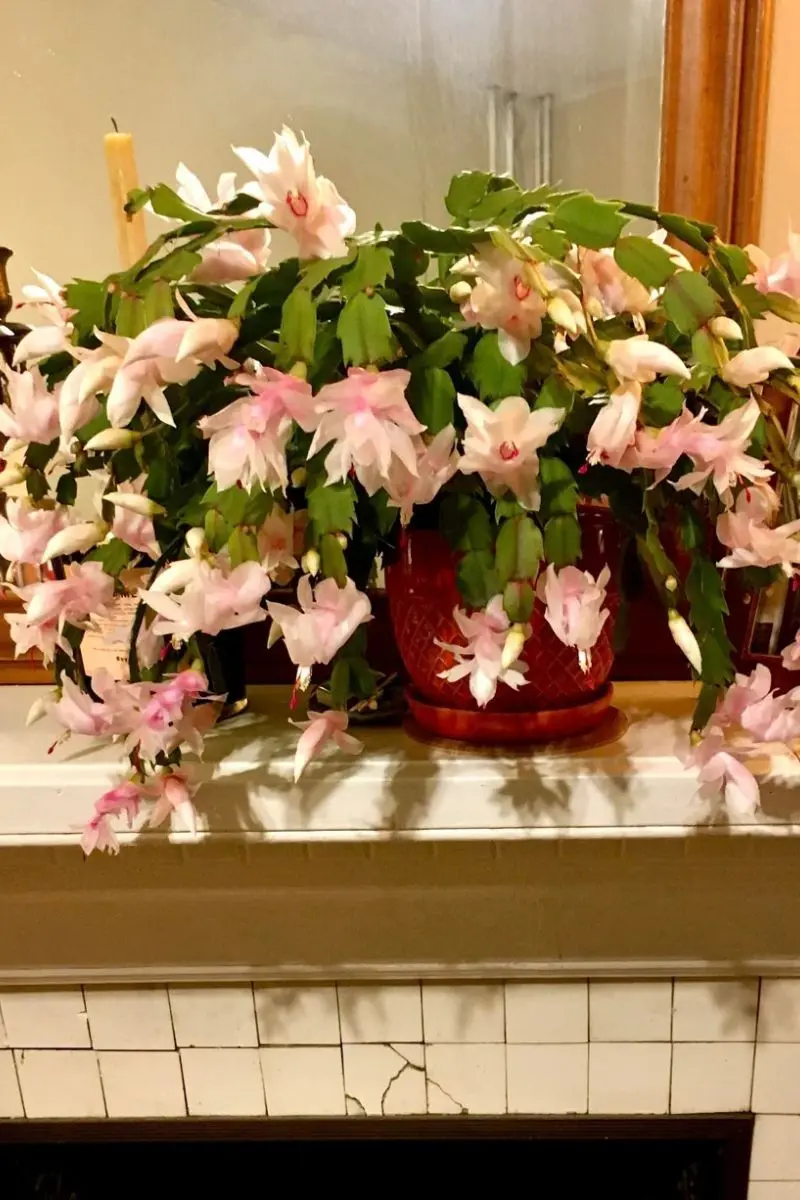
Thanksgiving cactus is a short-day plant. It typically needs several weeks of shorter days and cool nights to set flower buds.
To encourage fall blooms:
- Give it bright light during the day.
- Provide cool nights. Night temperatures around 55–65°F can encourage bud formation.
- If nights stay around 60–65°F, give the plant about 12–14 hours of uninterrupted darkness each night for about six weeks. Some cultivars can flower with less darkness, while others may need longer nights.
- Keep artificial light away at night. Lamps and other indoor lighting can interrupt the dark period.
- Keep conditions consistent once buds appear. Avoid moving the plant or exposing it to drafts and sudden changes in temperature, humidity, or light.
If natural fall conditions provide cool nights and shorter days, you may not need to do anything special. In a consistently warm home, place the plant somewhere that stays cool at night and dark after sunset.
Once buds form, leave the plant in place until flowering begins. Sudden environmental changes can cause flower buds to drop.
Pruning
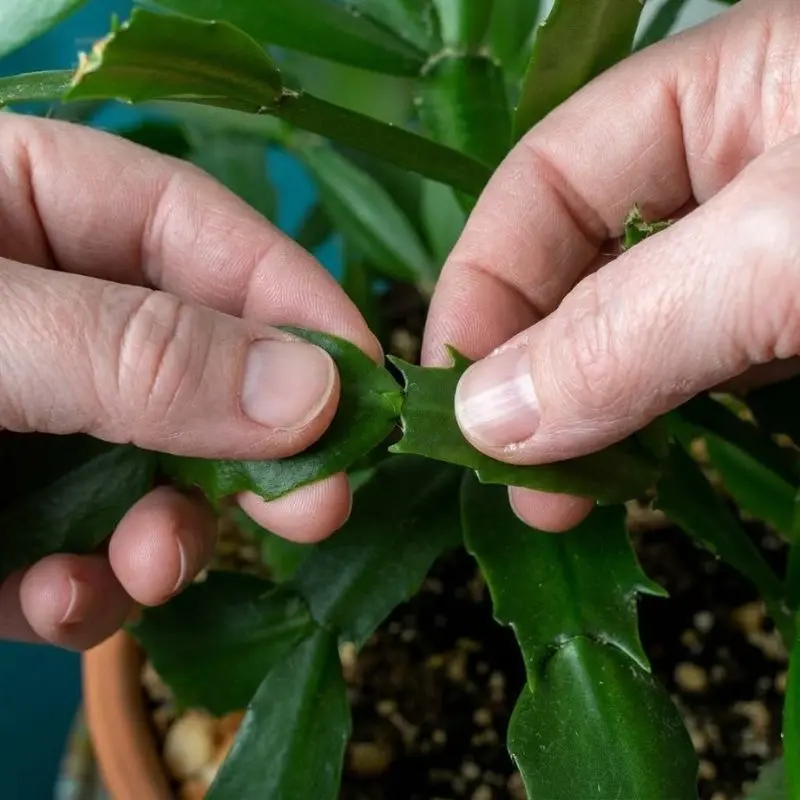
Prune Thanksgiving cactus after flowering, when the plant begins producing new growth. Pruning encourages branching and helps create a fuller, bushier plant.
Remove individual stem segments at the joints using clean pruners or by gently twisting them apart. Avoid heavy pruning; removing a few segments is usually enough to shape the plant.
Healthy cuttings can be used to propagate new plants.
Propagation
Thanksgiving cactus is easy to propagate from stem cuttings, and spring pruning is a good time to take them.
- Take a cutting with 3–5 stem segments: Gently pinch or twist the segments apart at a joint.
- Let the cut end callus: Allow it to dry for a day or two.
- Plant the cutting: Insert the bottom segment into a well-draining potting mix.
- Position the pot: Place it in bright, indirect light.
- Manage moisture: Keep the mix lightly moist, not wet.
- Wait for roots to develop: Roots usually develop within three to eight weeks.
Once the cutting has developed roots and begins producing new growth, care for it as you would an established Thanksgiving cactus.
Repotting
Thanksgiving cactus does not need frequent repotting and often flowers well when slightly pot-bound. Repot in spring, after flowering, if the roots have filled the container, the potting mix has broken down, or drainage has declined.
Choose a container only slightly larger than the current pot and use a fresh, porous, well-draining mix. Avoid moving the plant into a much larger container, which can leave excess wet soil around the roots.
A healthy plant may only need repotting about every three years.
Pests and Problems
Thanksgiving cactus is generally easy to grow, but watering and environmental changes can still cause problems.
Root rot: Constantly wet soil and poor drainage can damage the roots. Use a well-draining mix, a container with drainage holes, and allow the soil to dry between waterings.
Yellow or soft stems: Yellowing can result from excessive moisture or too much direct sunlight. Soft, mushy stems may indicate root or stem rot.
No flowers: If a healthy plant won’t bloom, it may need longer nights or cooler temperatures in fall. Artificial light at night can also interfere with flower-bud formation.
Flower buds dropping: Buds can drop after sudden changes in temperature, humidity, light, or watering. Keep the plant away from drafts, heating and cooling vents, and places where temperatures change quickly.
Pests: Aphids, spider mites, scale, and mealybugs can occasionally affect Thanksgiving cactus. Inspect plants for pests before bringing them indoors after spending summer outside.
Gray mold: High humidity combined with poor air circulation can encourage gray mold. Improve air circulation and avoid keeping the plant or soil excessively wet.
FAQs
Is Thanksgiving cactus a real cactus?
Yes. Thanksgiving cactus is a true member of the cactus family, but it is an epiphytic cactus native to the humid rainforests of southeastern Brazil.
How do I get my Thanksgiving cactus to bloom?
Give it bright daytime light, cool nights, and, when nighttime temperatures are around 60–65°F, about 12–14 hours of uninterrupted darkness each night for about six weeks.
Keep artificial light away from the plant after dark, and avoid moving it once flower buds begin forming.
How often should I water a Thanksgiving cactus?
Water when the upper layer of soil begins to dry, then water thoroughly and allow excess water to drain.
Water less often after flowering and return to more regular watering in spring as the plant starts growing again.
Why is my Thanksgiving cactus dropping flower buds?
Sudden changes in temperature, humidity, light, or watering can cause buds to drop.
Keep it away from drafts, heating and cooling vents, and places where temperatures change quickly while buds are developing.
What’s the difference between Thanksgiving cactus and Christmas cactus?
Thanksgiving cactus has pointed, claw-like projections along the edges of its flattened stem segments, while Christmas cactus has smoother, more rounded edges.
Thanksgiving cactus also generally blooms earlier, in late fall. Many plants sold as Christmas cactus are actually Thanksgiving cactus or hybrids, so some may show intermediate characteristics.