Table of Contents
Want your Christmas cactus to bloom in time for the holidays?
The trick is to give it the seasonal cues it needs to form flower buds, then keep its growing conditions steady while those buds develop.
Shorter days, cool temperatures, and consistent care all play a role in getting the timing right.
When Does a Christmas Cactus Usually Bloom?
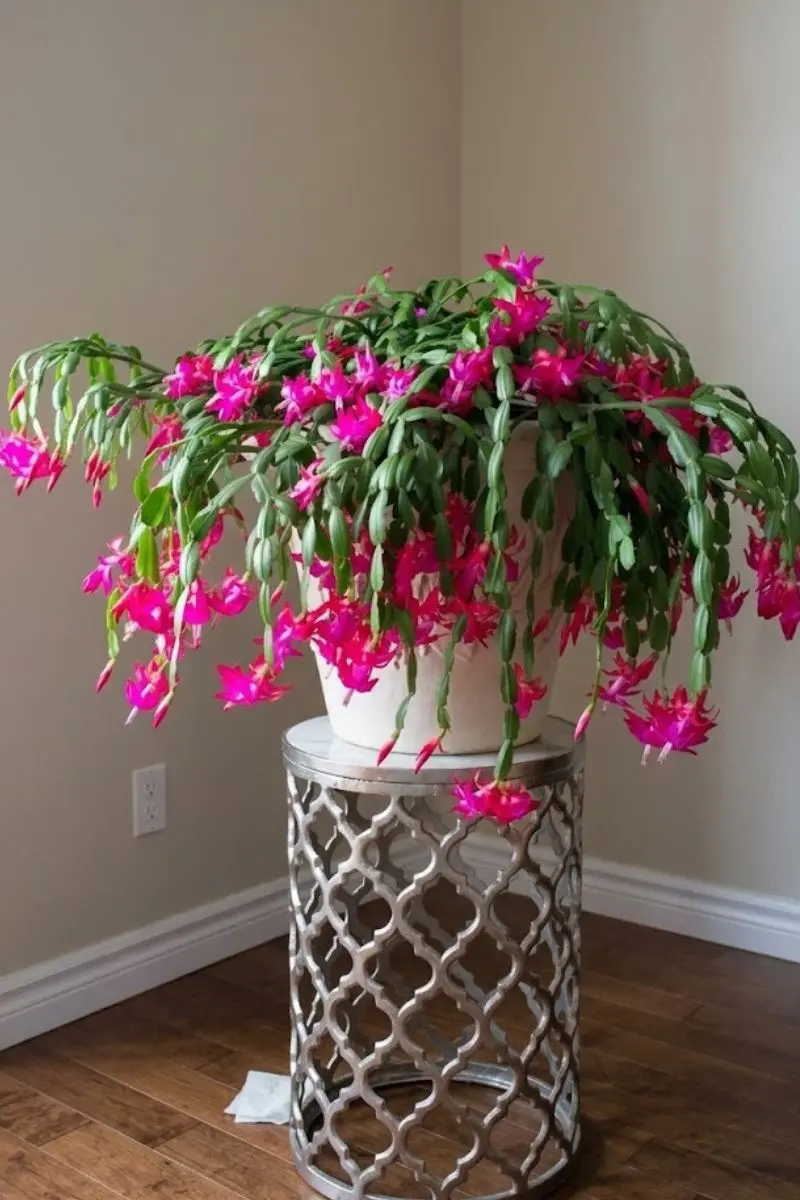
Despite its name, a Christmas cactus doesn’t always bloom exactly on Christmas.
True Christmas cactus generally flowers in late fall to winter, while Thanksgiving cactus typically blooms earlier.
Because Thanksgiving cactus is commonly sold as Christmas cactus, the plant you have may naturally bloom earlier than expected.
1. Start Six to Eight Weeks Before You Want Blooms
Christmas cactus needs several weeks of the right conditions to form flower buds. If you want it to bloom around Christmas, start preparing the plant in fall, about six to eight weeks before you want the flowers to open.
Starting too late may not give the plant enough time to develop buds before the holidays.
2. Give It Long, Uninterrupted Nights
Christmas cactus is a short-day plant, so longer nights help trigger flower-bud formation. For several weeks in fall, give the plant a consistent period of complete darkness every night.
Aim for about 12 hours of uninterrupted darkness each night, and keep the plant away from lamps and other sources of artificial light. Some plants may benefit from a longer dark period, particularly when temperatures aren’t as cool.
During the day, give the plant bright, indirect light so it has the energy needed for healthy growth and flowering.
3. Keep It Cool While Buds Form
Temperature is another important flowering cue. Keep your Christmas cactus in a cool spot while it is preparing to bloom, with daytime temperatures around 60 to 70°F and cooler nights.
Night temperatures around 60 to 65°F can encourage flower formation, while temperatures above 70°F can prevent flowering even when the plant receives long, dark nights.
Keep the plant away from radiators, fireplaces, heating vents, and other sources of heat. Avoid spots with large temperature swings, too.
4. Water According to Soil Moisture
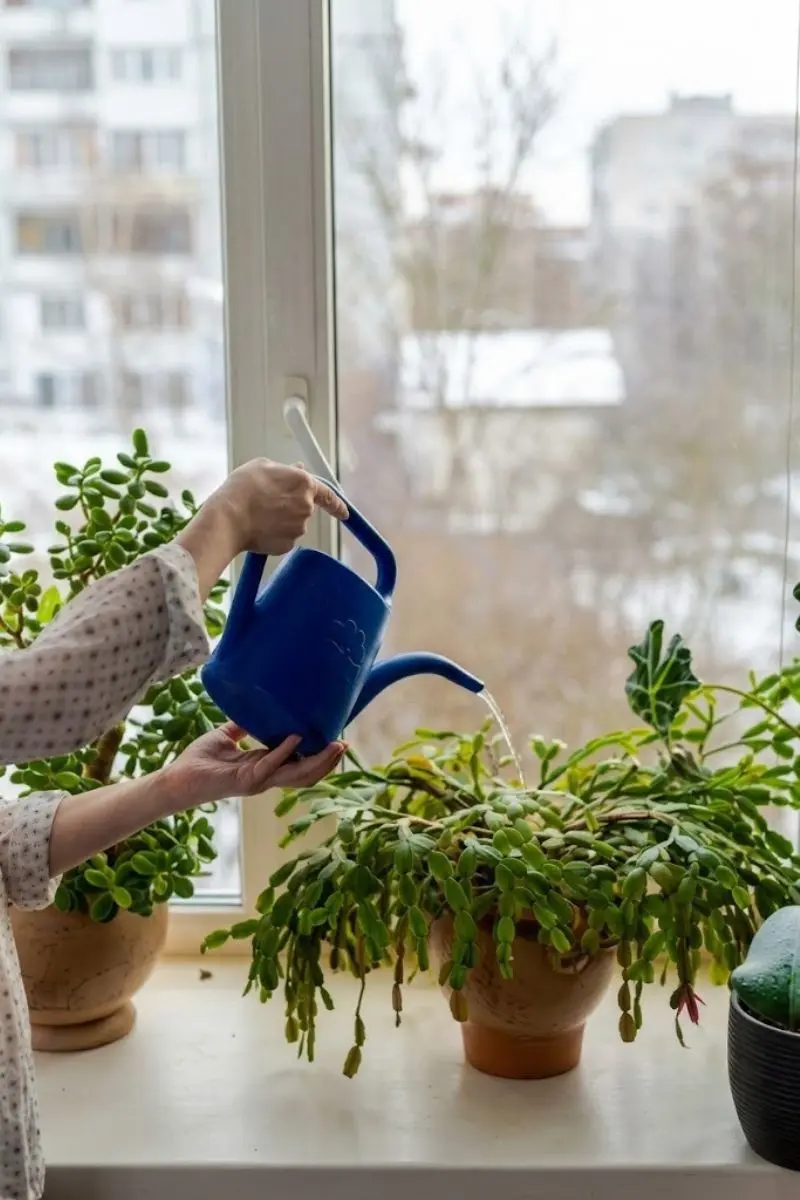
Don’t try to force flowers by letting your Christmas cactus become extremely dry. Instead, pay attention to the soil and water according to its moisture level.
While buds are forming and flowers are developing, don’t let the soil become completely dry, but don’t leave it soggy, either. Excessive dryness can cause buds or flowers to drop, while overly wet soil can lead to root problems. Always allow excess water to drain away.
The goal is consistent moisture without keeping the roots waterlogged.
5. Keep Conditions Steady Once Buds Appear
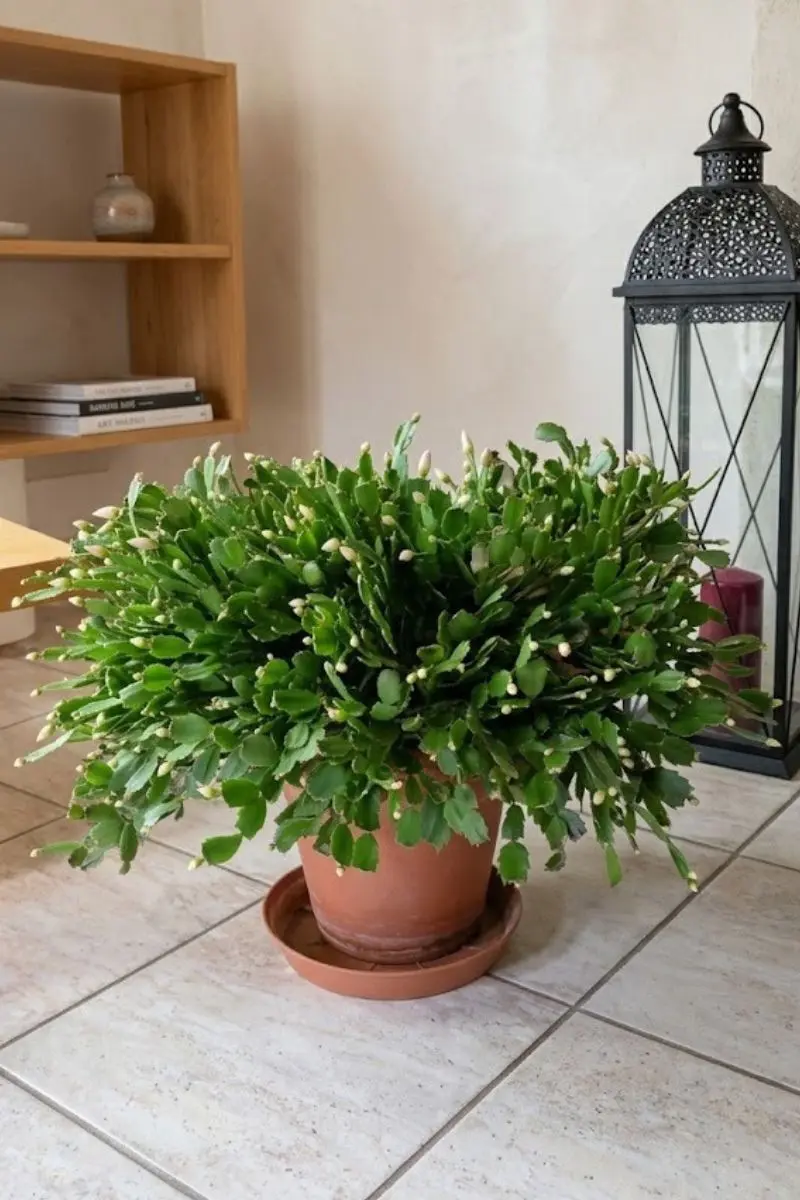
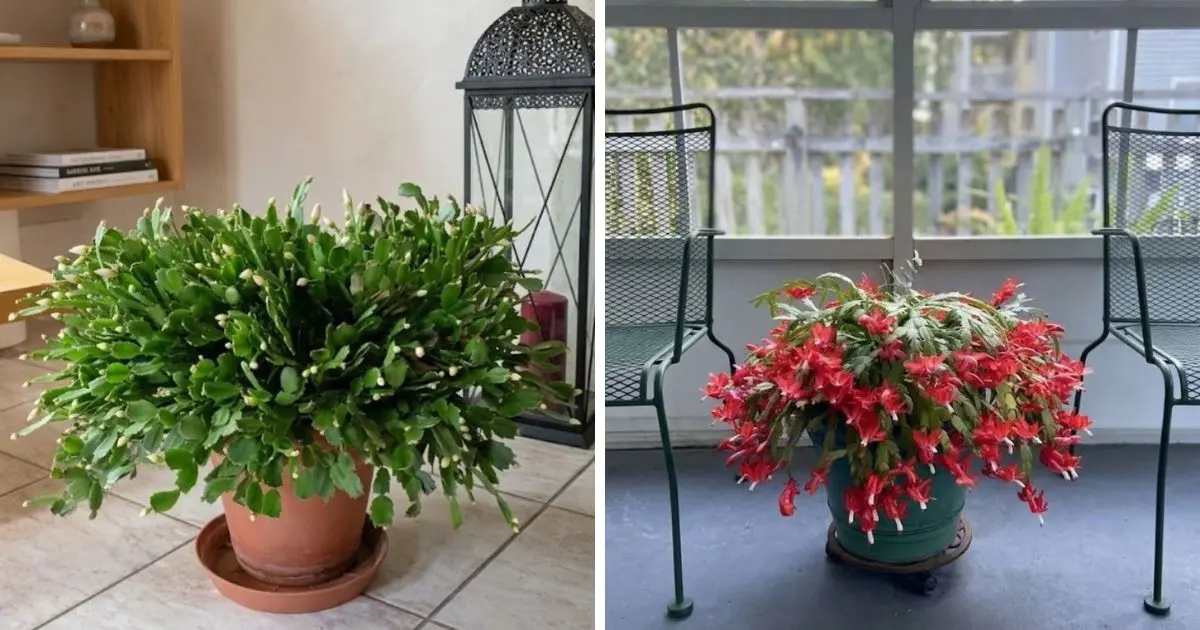
Once you see flower buds, resist the urge to move the plant. Sudden changes in temperature, humidity, light, or watering can cause developing buds to drop before they open.
Keep it away from drafts, heaters, and vents, and continue providing consistent care.
If you want to move the plant to a more prominent spot for the holidays, wait until the first flowers begin to open.
6. Prepare It for Next Year’s Blooms
Getting a Christmas cactus to bloom on time starts well before fall. During the growing season, give it bright, indirect light and regular care so it can build the growth needed for its next flowering cycle.
Feed monthly during the growing season, then stop fertilizing as fall approaches and the plant prepares to form flower buds.
There’s also no need to repot it on a yearly schedule. Holiday cacti generally grow well when slightly pot-bound and can go several years without repotting. If repotting is necessary, spring or early summer is the better time.
FAQs
Does a Christmas cactus need complete darkness to bloom?
Yes. A consistent period of uninterrupted darkness is an important flowering cue.
Artificial light at night can interfere with bud formation, so keep the plant away from lamps and other nighttime light sources during its bloom-induction period.
Why isn’t my Christmas cactus blooming?
The most common problems are insufficient darkness and temperatures that are too warm.
Artificial light at night can interrupt the dark period needed for bud formation, while temperatures above about 70°F can prevent flowering.
Why are the buds falling off my Christmas cactus?
Bud drop can result from sudden changes in growing conditions, drafts, moving the plant, excessive water, or excessive dryness.
Once buds appear, keep conditions as consistent as possible.
Can I move my Christmas cactus after it has buds?
It’s best to leave it where it is while the buds are developing. Moving the plant can trigger bud drop, particularly if the new location has different light or temperature conditions.
You can move it once the first flowers begin to open.
What’s the difference between a Christmas cactus and a Thanksgiving cactus?
Thanksgiving cactus has pointed projections along the edges of its stem segments and typically blooms earlier.
Christmas cactus has smoother, more rounded or scalloped stem edges and generally blooms later in the season. Many plants sold as Christmas cactus are actually Thanksgiving cactus or hybrids, so the plant’s label isn’t always reliable.