Table of Contents
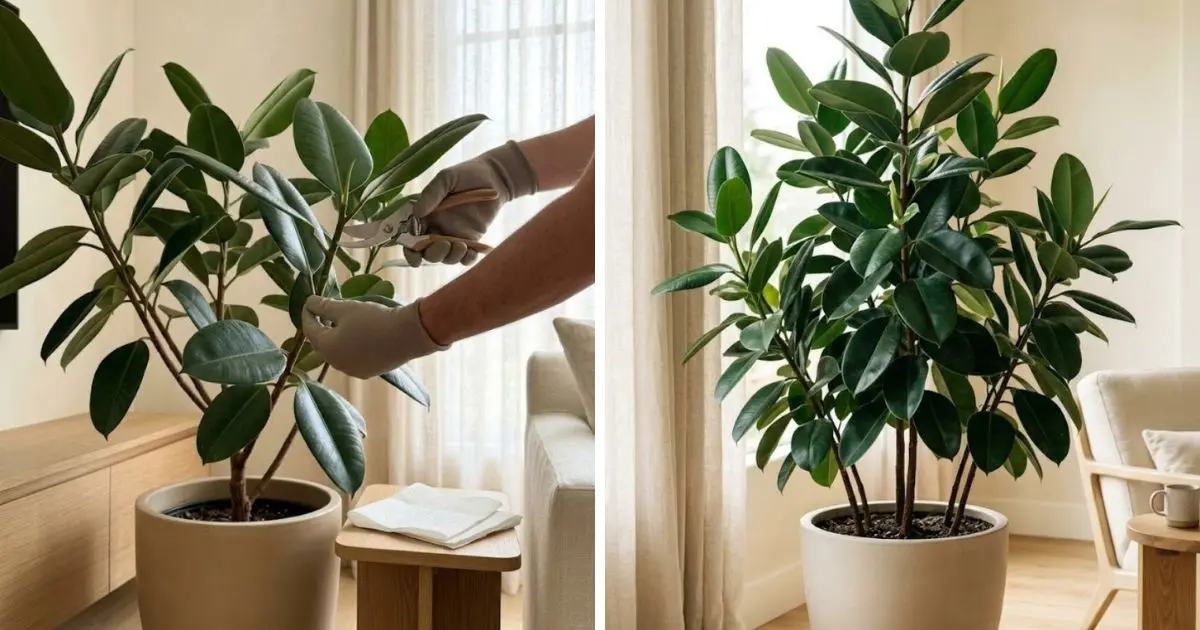
A rubber plant (Ficus elastica) can be perfectly healthy and still look a little sparse: one tall stem with a tuft of leaves at the top.
Left unpruned, it can develop a tall, narrow shape, but strategic pruning can encourage a bushier habit.
The first cut starts the branching process. From there, shaping new shoots and adding rooted cuttings can help create a fuller-looking plant. Keep these seven tips in mind as you shape yours.
1. Don’t Wait Until It Gets Leggy
If your rubber plant has already developed a long, bare stem, you can still prune it. But shaping it before it becomes severely leggy gives you more flexibility when deciding where you want the branches to develop.
Look at the plant as a whole before you cut. A well-placed cut can give you a better starting point for a balanced canopy than simply taking the very top off a tall plant.
If you’re pruning during the darker months, remember that rubber plants can slow their growth during dormancy. New growth may take longer to appear, so give the plant time to respond.
2. Look for the Nodes Before You Cut
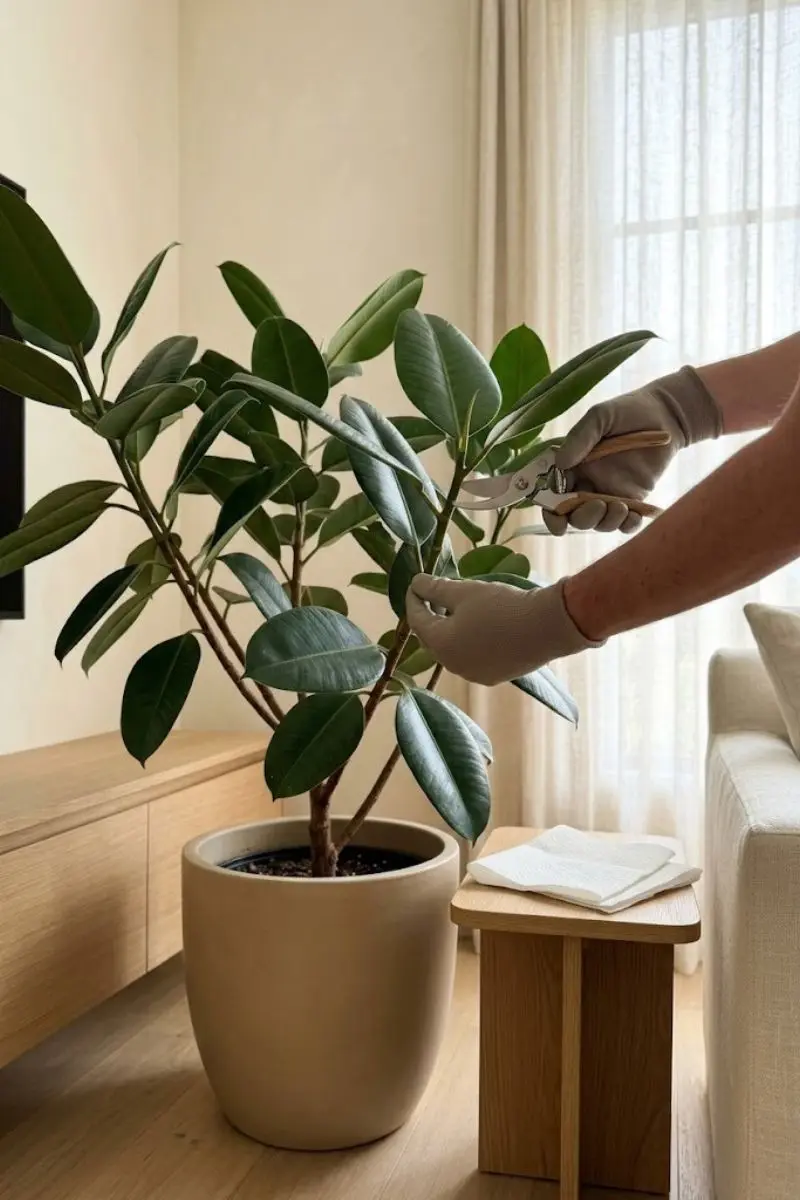
Before reaching for your pruners, examine the stem closely. Nodes are the points where leaves emerge, and new growth can develop around these areas.
Choose your cutting height with the plant’s final shape in mind, and avoid damaging the node you want to keep below the cut. The goal is to shorten the stem while leaving a viable growth point in place.
Have paper towels ready, too. A cut rubber plant releases sticky, milky sap that can drip onto nearby surfaces. Wear gloves if the sap irritates your skin.
3. Give New Growth Good Light
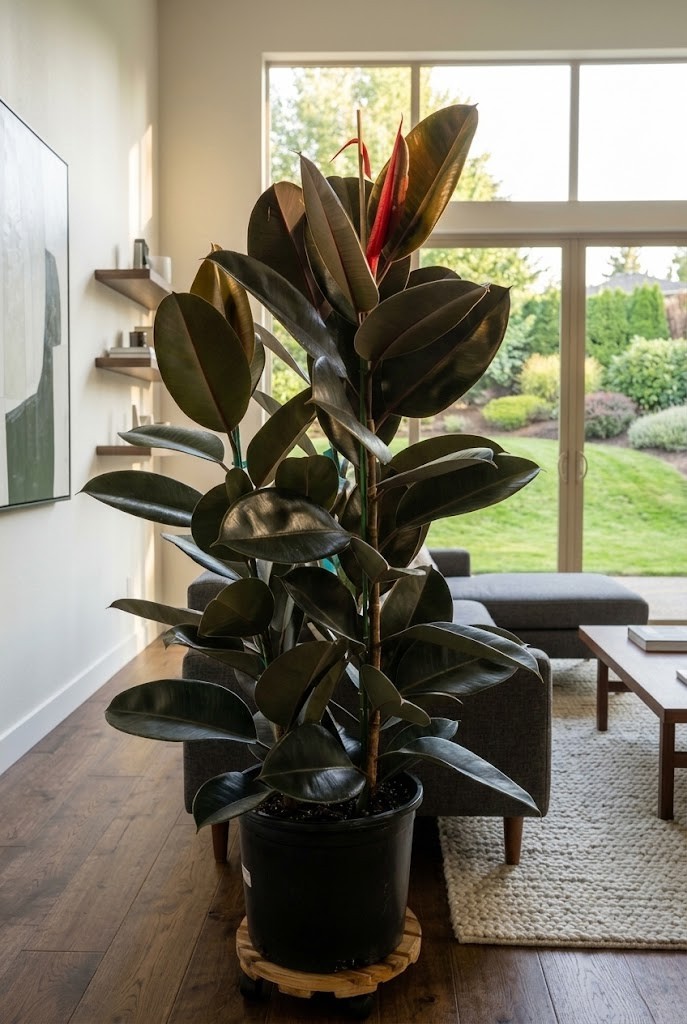
After pruning, give the plant good growing conditions so it can put out healthy new growth. Rubber plants adapt to a range of light levels, but indoors they do well in bright, indirect light or partial shade. Protect them from harsh afternoon sun, particularly if the plant has not been acclimated to stronger light.
Keep an eye on the plant’s shape, too. If one side consistently receives more light, growth may become uneven. Adjusting its position and pruning with the overall canopy in mind can help maintain a more balanced plant.
4. Don’t Water More Just Because You Pruned
Cutting back a rubber plant doesn’t mean it needs extra water. Allow the potting mix to become fairly dry between waterings, particularly when the plant is growing in a container, and avoid keeping the roots constantly wet. Overwatering can cause leaf loss and other problems.
There’s no need to increase fertilizer, either. Stick with the plant’s normal feeding routine rather than trying to force new branches with extra nutrients.
5. Prune the New Stems Again
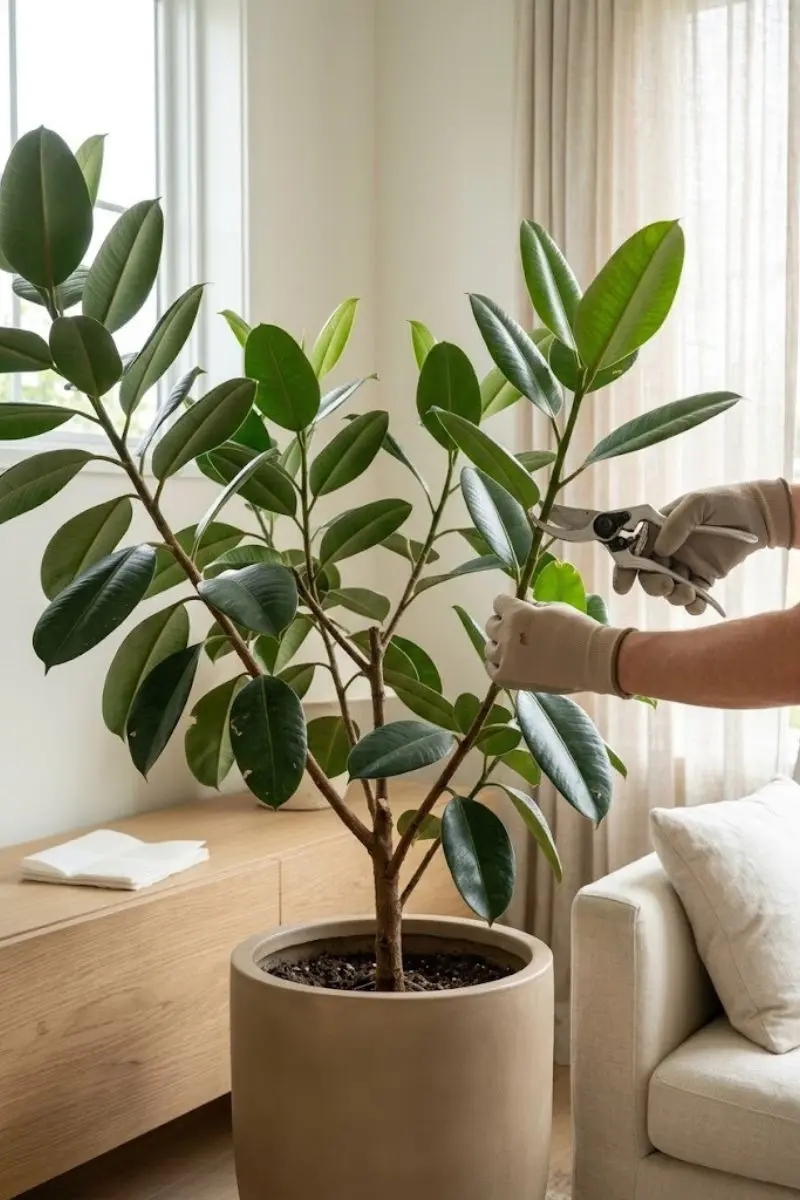
The first cut is only the beginning. Once new stems have developed several healthy leaves and enough length for another shaping cut, trim their growing tips again.
Repeated shaping lets you continue directing the plant’s form instead of allowing each new shoot to become another long stem. Let the plant put on some growth between cuts, then look at the overall shape before deciding where to trim next.
This is the part that makes the biggest difference over time: cut, grow, and prune again.
6. If Only One New Shoot Appears, Try Notching
Not every rubber plant responds to pruning in exactly the same way. Sometimes a carefully pruned stem produces one new shoot instead of several.
If the plant continues to grow from only one point, you can try notching to encourage growth from a specific dormant node. Make a small, shallow cut in the stem just above the node you want to encourage, using a clean, sharp blade. The goal is to interrupt the growing point’s dominance without cutting deeply into the stem.
Notching doesn’t guarantee a new branch, so give the plant time to respond before trying another spot. It’s best treated as an additional shaping technique rather than a substitute for regular pruning and good growing conditions.
7. Add Rooted Cuttings for a Fuller Pot
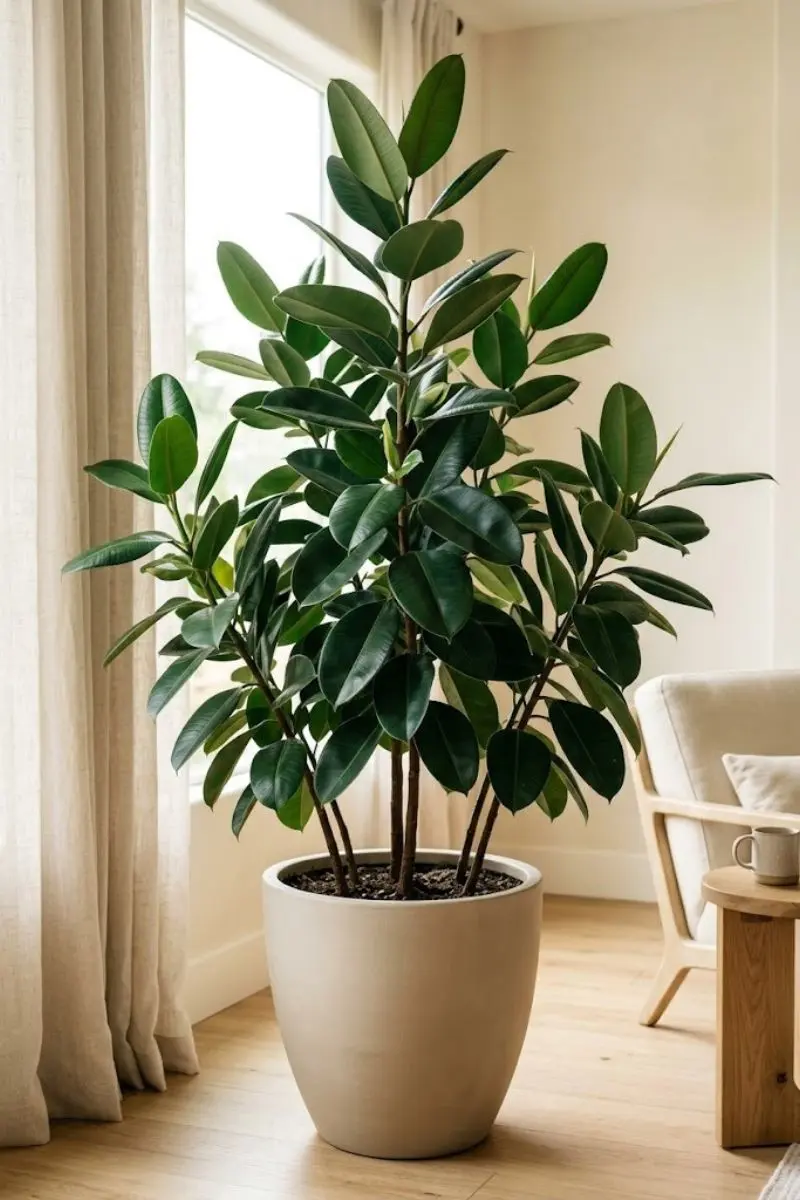
Healthy cuttings from pruning don’t have to go to waste. Once a cutting has developed roots, you can plant it in the same container as the parent plant to create a fuller, multi-stemmed display.
Adding rooted cuttings increases the number of stems growing in the pot, while pruning encourages the existing plant to develop a more branching shape. Together, the two approaches can give a sparse rubber plant a denser, fuller appearance over time.
FAQs
How do I make a rubber plant branch?
Prune the main stem or branches to encourage a bushier habit, then continue shaping new shoots as they develop.
If the plant continues producing only one shoot, notching above a dormant node is another technique you can try.
Where should I cut a rubber plant to encourage branching?
First identify the nodes along the stem, then choose a cutting height that suits the shape you want. Avoid damaging the node you want to keep below the cut.
Can I prune a rubber plant in winter?
Yes, but growth may be slower while the plant is dormant.
Don’t expect immediate new shoots, and give the plant time to respond when growing conditions improve.
Can I grow a new rubber plant from a cutting?
Yes. Ficus elastica can be propagated from cuttings, so healthy material removed during pruning can be rooted and grown into a new plant.