Table of Contents
A fully covered porch may receive little or no direct sun, but the amount of ambient light can vary dramatically from one spot to another.
The primary challenge for container gardening in these spaces isn’t managing drought; it is avoiding overly wet soil and root rot while matching each plant to the specific level of shade your entryway receives.
An ideal shaded porch plant must maintain a compact growth habit and perform well with limited direct sun and the indirect or filtered light common on covered porches.
The ten varieties below are selected for their reliable container performance, staying attractive without frequent pruning or deadheading.
1. Boston Fern (Nephrolepis exaltata)
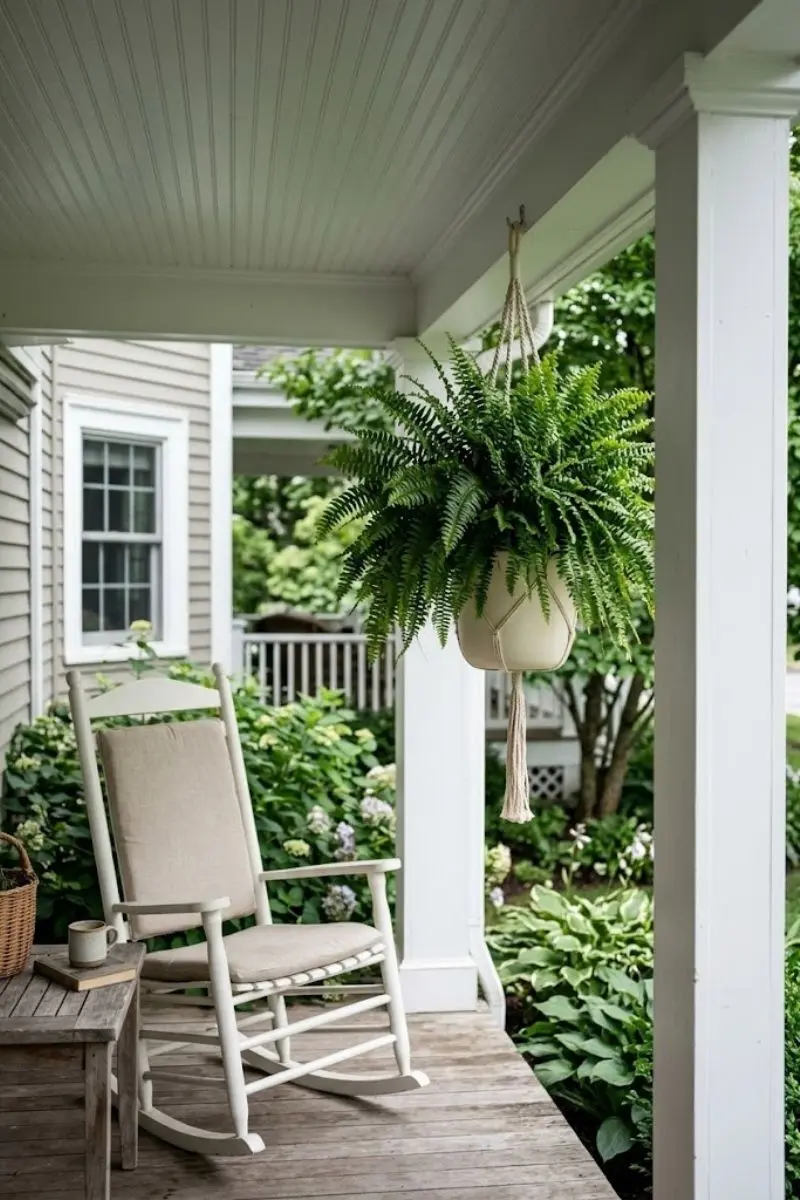
Boston Ferns are highly effective for covered porches because their cascading foliage fills out hanging or elevated containers with dense, lush greenery. They thrive in deep shade where direct sunlight would otherwise burn the fronds.
Because they are native to humid forest floors, they require consistently moist soil and should not be allowed to dry out completely. Dry air can cause the fronds to brown, so it performs best in a sheltered, humid spot.
Deep Shade to Partial Shade • Consistent Moisture • Hanging & Elevated Planters • Arching Silhouette
2. Plantain Lily (Hosta hybrids)
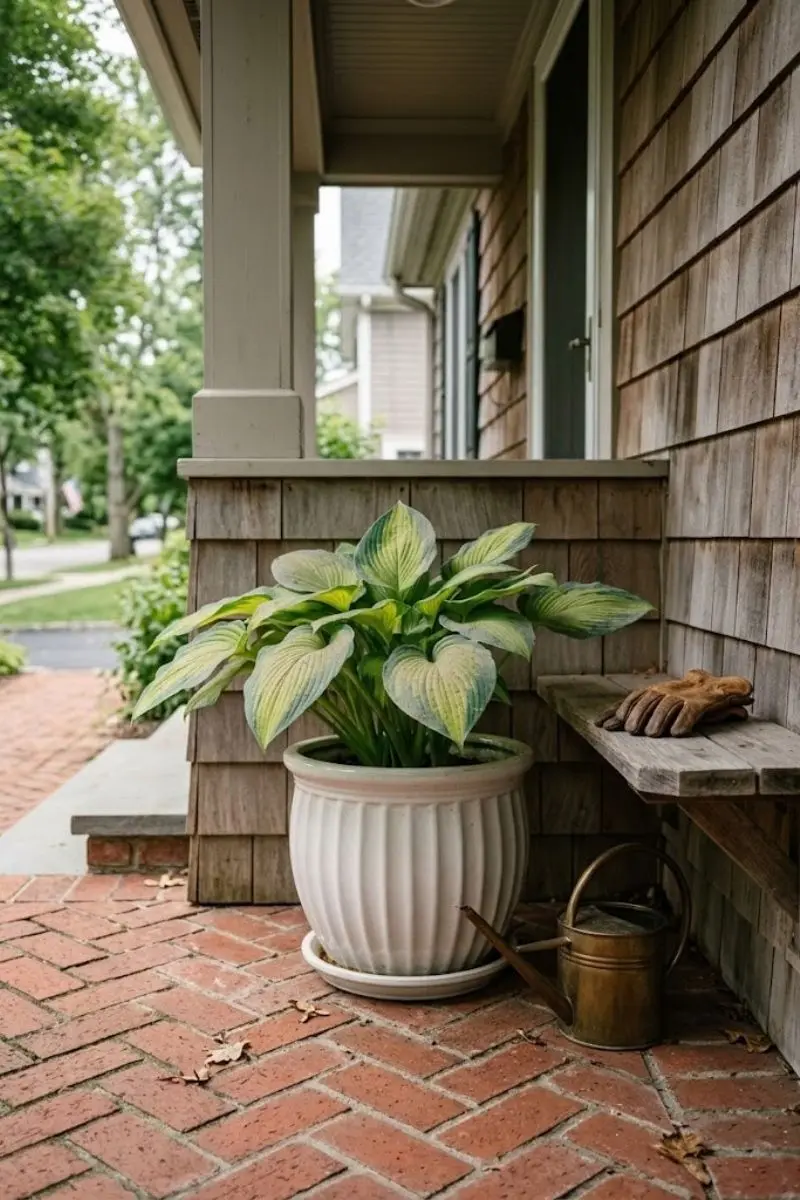
Hostas transition perfectly into porch pots because their large, ribbed leaves give a shady porch container plenty of visual weight, anchoring dark entryway corners. They grow slowly and require no regular pinch-backs to maintain their clean, mounding form.
Because they are long-lived perennials, they handle seasonal temperature drops well, though they will naturally die back to the soil in colder winter climates. Ensure they sit in heavy stoneware or ceramic planters to prevent the dense foliage from tipping the pot over.
Full Shade to Partial Shade • Consistent Moisture • Heavy Floor Containers • Wide Mounding Habit
3. Caladium (Caladium bicolor)
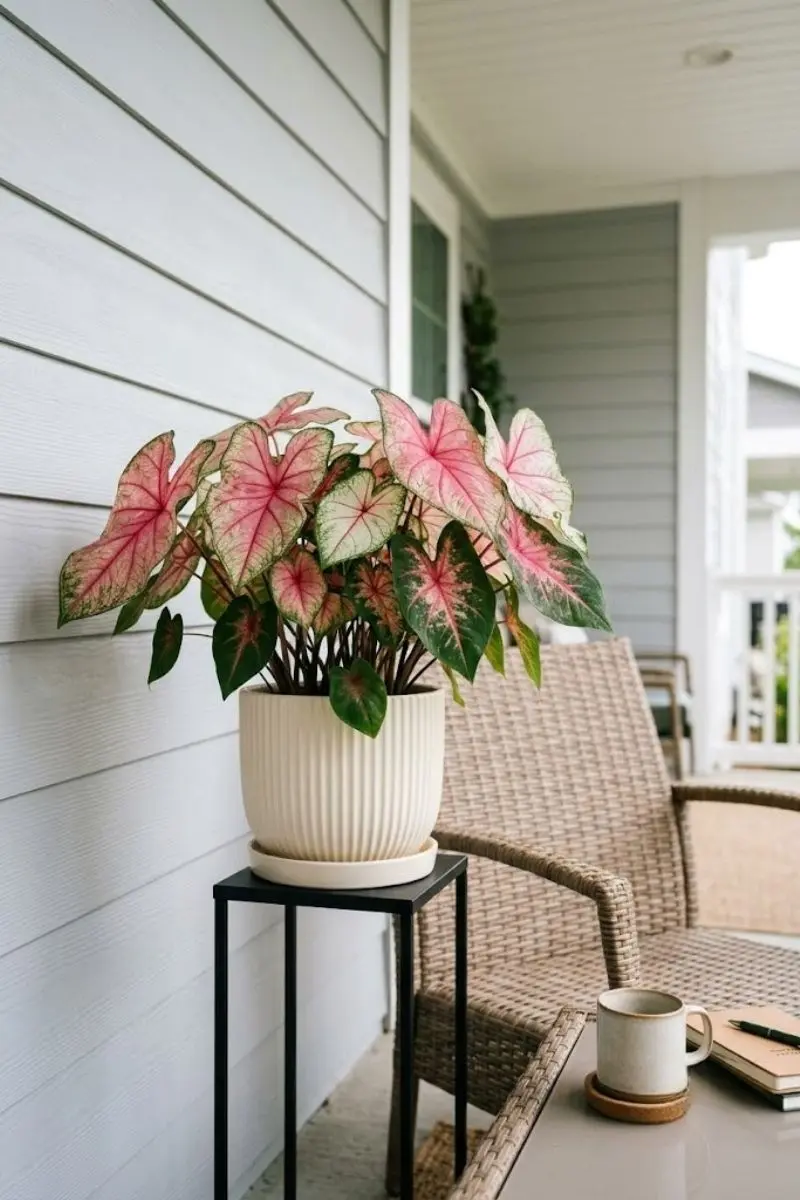
Caladiums bring strong foliage color to a shady porch without relying on flowers. Their heart-shaped leaves display striking combinations of cream white, hot pink, and dark green that hold up well in bright shade or filtered light.
They stay naturally compact in small to mid-sized containers. Keep the potting mix evenly moist; prolonged drying can cause the leaves and stems to wilt.
Full Shade to Bright Shade • Consistent Moisture • Mid-Sized Planters • Mounding Foliage
4. Common Coleus (Coleus scutellarioides)
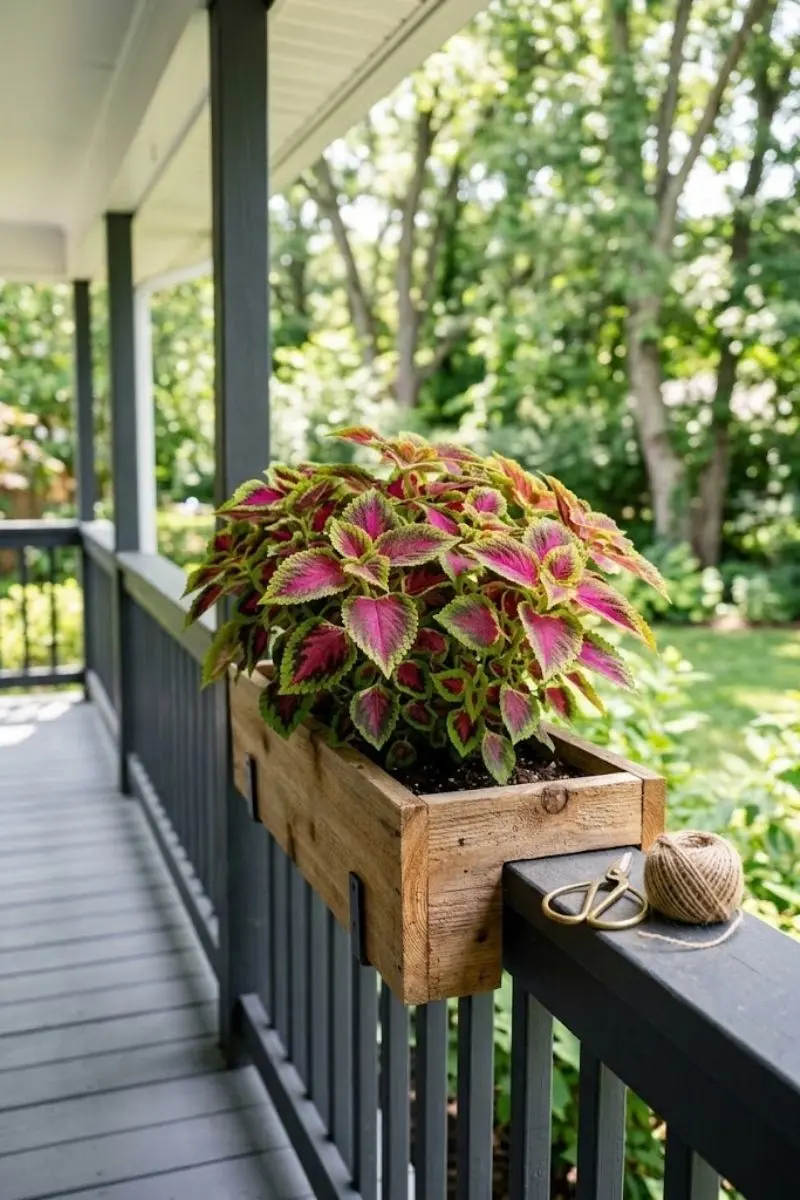
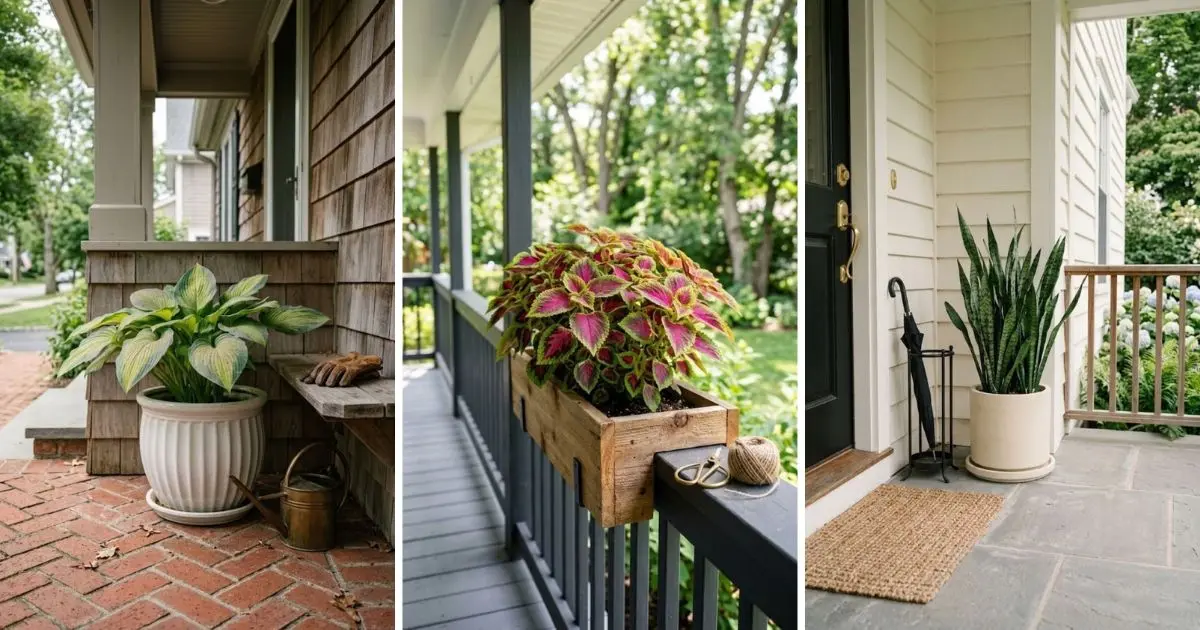
Coleus provides immediate contrast on a covered porch through its striking magenta, chartreuse, and burgundy leaf margins. It performs best in a brighter shaded spot under a roof overhang, keeping its intense coloration through indirect ambient light.
It adapts beautifully to pot culture; simply pinch off the small flower spikes that emerge in late summer to keep the plant dense, compact, and focused on foliage growth.
Bright Indirect Light to Partial Shade • Moderate Watering • Window Boxes & Pots • Dense Bushy Habit
5. Coral Bells (Heuchera hybrids)
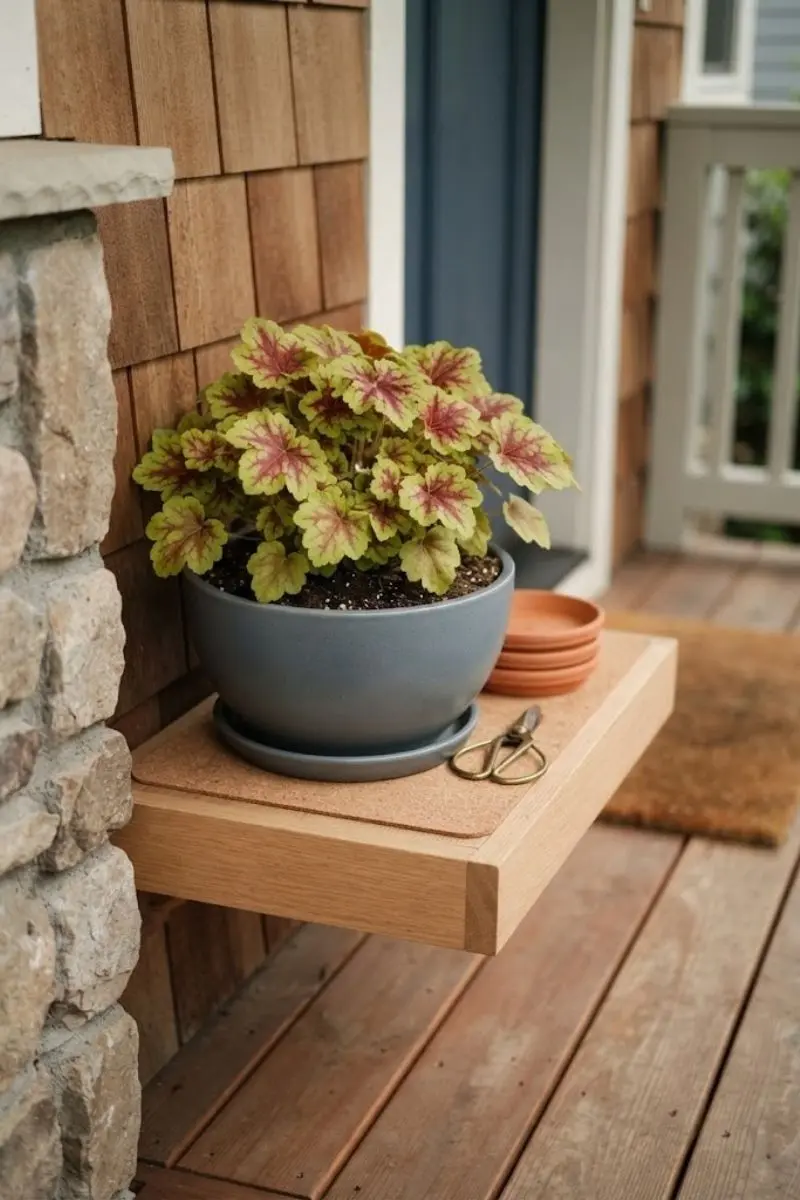
Coral Bells form compact mounds of textured foliage in colors ranging from silver and caramel to deep purple, adding contrast to shaded porch containers. Their tidy growth habit works well in mixed pots without taking up much space.
They perform best in partial or bright shade, with moist but well-drained soil. Avoid harsh afternoon sun and soggy potting mix, which can scorch foliage or contribute to root rot.
Partial Shade • Moderate Watering • Mixed Planters • Low Mounding Growth
6. Wishbone Flower (Torenia fournieri)
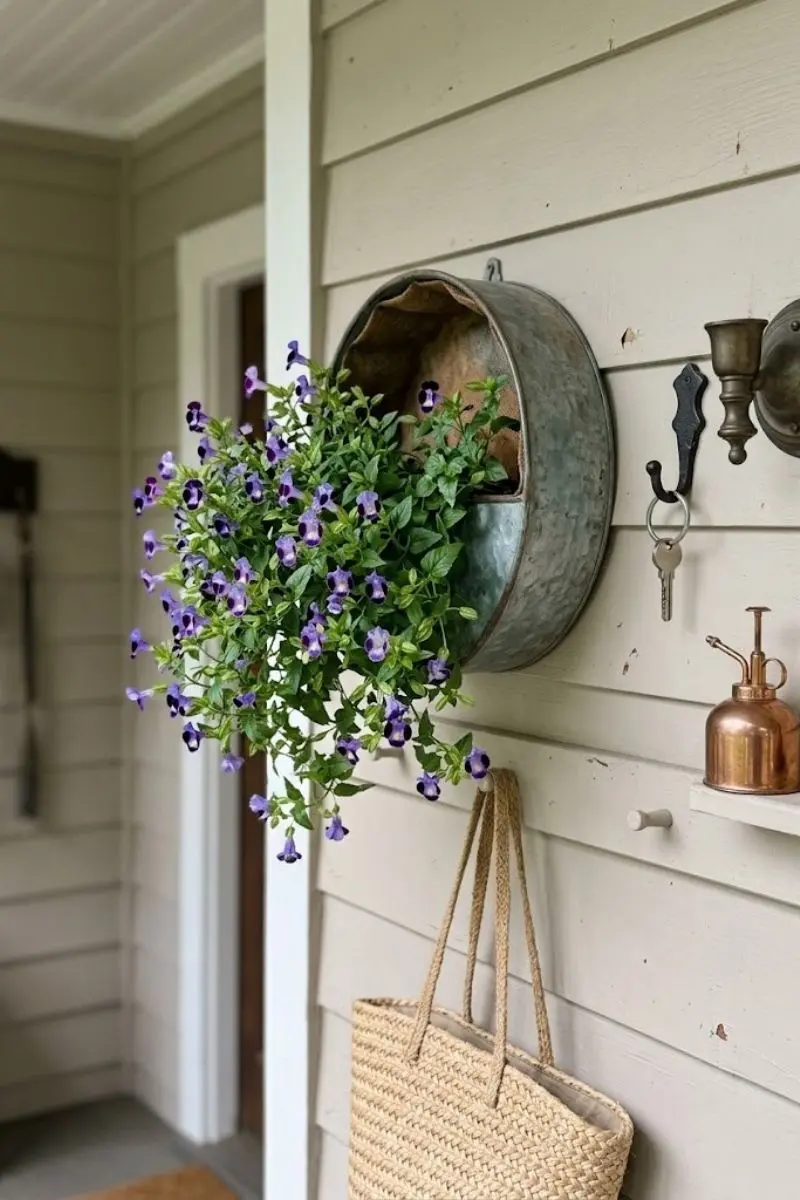
If you want consistent floral color in shaded environments, Torenia is a reliable option. It produces trumpet-shaped purple and blue blooms throughout the summer, functioning well as a compact container filler or spiller.
It handles ambient mid-summer humidity well but requires a lightly damp potting mix to keep its trailing stems from wilting during heat waves.
Partial Shade to Full Shade • Consistent Moisture • Hanging Baskets & Fillers • Compact Spiller
7. Impatiens (Impatiens walleriana)
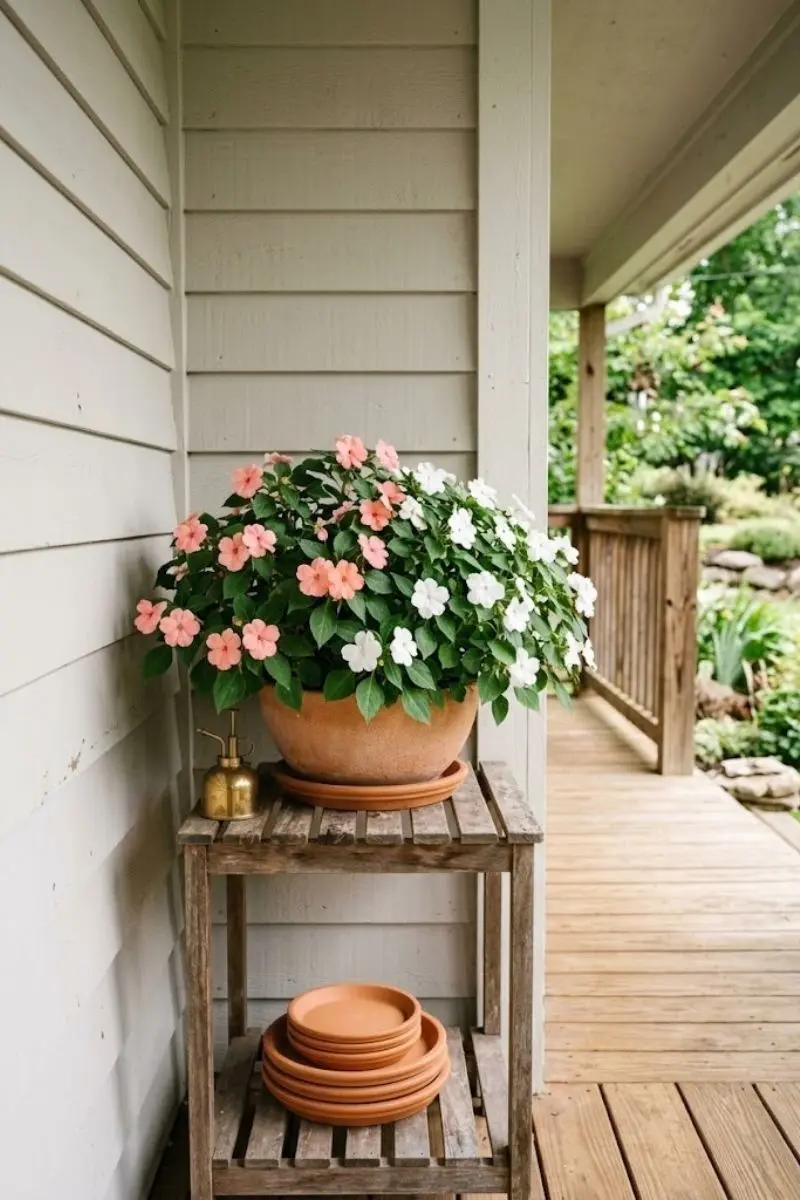
Impatiens are a reliable choice for shaded porches, producing compact mounds of white, pink, or red flowers throughout the season. They work well in small decorative pots and window boxes, and spent flowers drop naturally without routine deadheading.
Because they prefer consistently moist soil, they wilt quickly when the potting mix dries out but usually recover after watering.
Full Shade to Partial Shade • Consistent Moisture • Small Decorative Pots • Mounding Habit
8. Tuberous Begonia (Begonia × tuberhybrida)
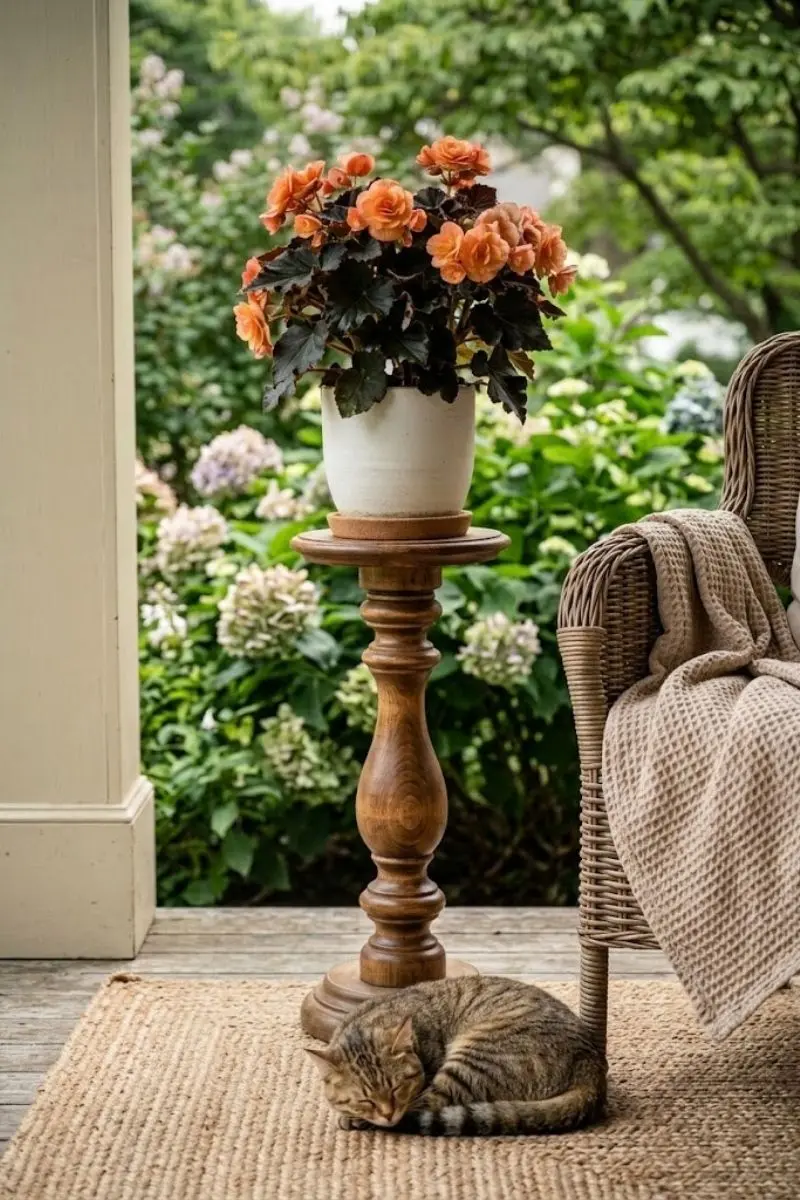
For porches that receive minimal direct sunlight but still need rich floral color, Tuberous Begonias are a strong container choice. They perform beautifully in container displays and hanging baskets, producing continuous blooms from late spring through autumn.
To keep them healthy, position them in bright, filtered light and water only when the top inch of soil feels dry. Letting the pots sit in stagnant drainage water can lead to root rot.
Partial Shade • Low to Moderate Watering • Continuous Blooms • Compact Flowering Habit
9. Heartleaf Philodendron (Philodendron hederaceum)
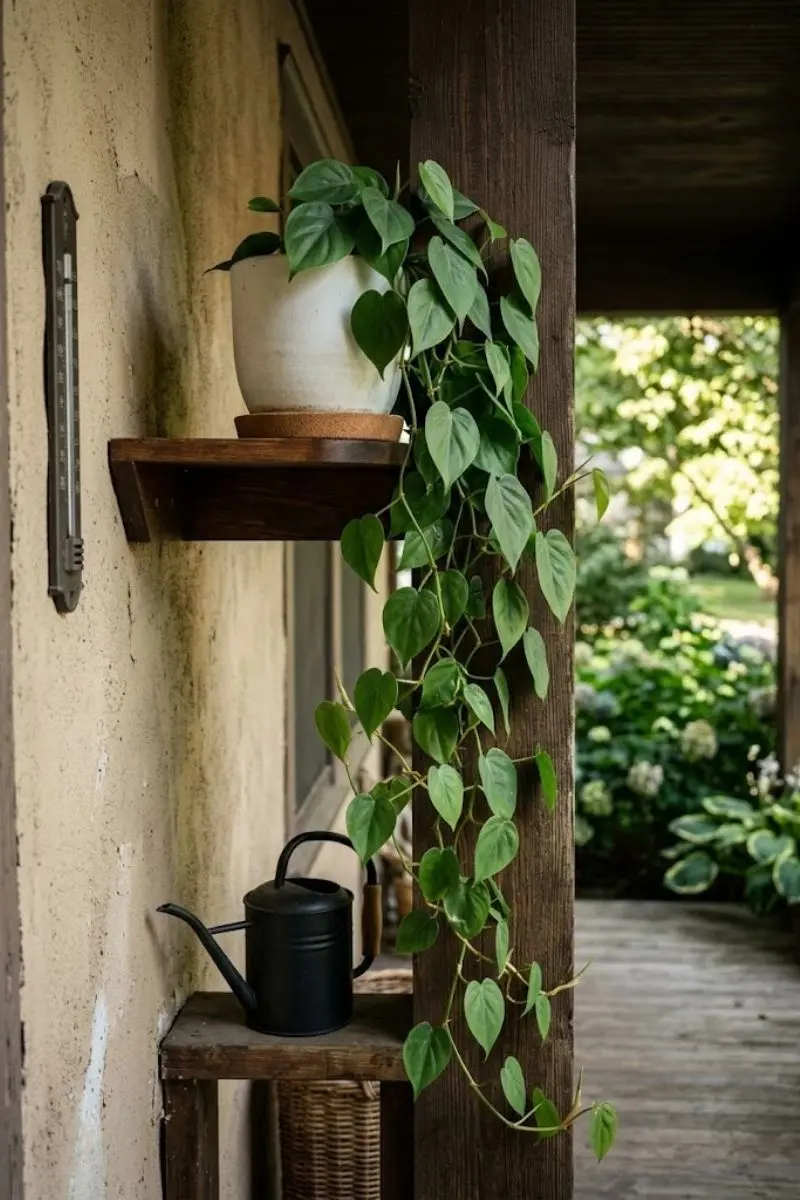
Native to the dense tropical rainforest understory, the trailing Philodendron handles low-light porch corners well. It functions as a clean spiller plant that cascades over container edges or wraps around porch columns.
It tolerates irregular watering, making it a practical option for outdoor pots. Bring it indoors before autumn temperatures drop in cool climates.
Bright Indirect Light to Low Light • Low to Moderate Watering • Pedestal Pots • Trailing Vine
10. Snake Plant (Dracaena trifasciata)
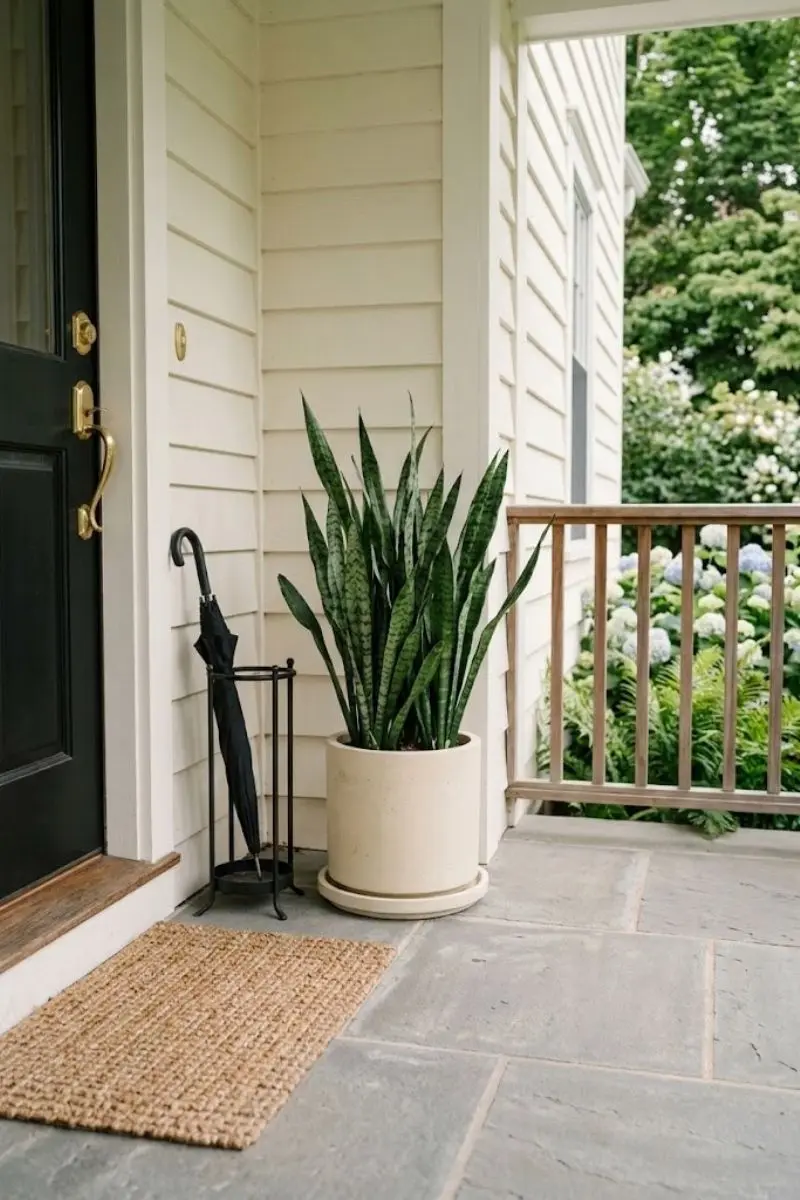
The clean, vertical lines of a Snake Plant work well outdoors to frame a doorway or fill a narrow corner. Its upright foliage gives a narrow porch corner height without requiring a large footprint.
Its biggest container risk is excess moisture, so use a pot with drainage and let the mix dry between waterings. Avoid lightweight plastic pots to prevent tipping from strong drafts.
Because it is frost-sensitive, bring the container indoors before nighttime temperatures approach 10°C.
Partial Shade to Heavy Shade • Low Watering • Ideal for Tight Corners • Strict Vertical Grower
Quick Plant Picker
- For deep-shade corners with limited light: Boston Fern, Plantain Lily, Snake Plant
- For colorful foliage without flower maintenance: Caladium, Common Coleus, Coral Bells
- For reliable floral blooms in bright shade: Torenia, Impatiens, Tuberous Begonia
- For cascading or trailing containers: Boston Fern, Wishbone Flower, Heartleaf Philodendron
- For the lowest-water option: Snake Plant
- For framing walkways with upright structure: Snake Plant, Plantain Lily
FAQs
Can shade-loving porch plants handle any direct afternoon sunlight?
No. Hot afternoon sun can scorch shade-loving foliage, especially when plants have not been acclimated to direct light.
Keep these containers positioned safely under the protection of your porch roof overhang.
How do I adjust my watering routine for pots sitting in deep shade?
Shaded containers often hold moisture longer than pots exposed to full sun because evaporation happens slowly under a roof cover. Instead of watering on a strict calendar schedule, check the soil depth with your finger.
Overwatering and poor drainage are common causes of failure in the shade.
Moisture-loving plants like Caladiums and Torenia require watering when the top inch of soil feels dry, while structural options like the Snake Plant can dry out more between waterings.
Why are my porch shade plants stretching and looking sparse?
This growth behavior is a response to insufficient ambient light, causing the plant to stretch its stems toward the outer edge of the porch in search of indirect sky exposure. Even shade plants require indirect light to photosynthesize efficiently.
If your entryway is deeply recessed, move the container closer to the brighter edge of the porch or choose a more shade-tolerant plant.
Conclusion
Transforming a shaded porch is a matter of shifting focus from sun-dependent blooms to durable foliage textures and varying visual heights.
By selecting container-friendly varieties that naturally thrive in ambient light, you can maintain a cool, green entrance right at your front door.
Choose two or three options that match your light levels, and enjoy a low-maintenance upgrade to your entryway.