Table of Contents
A south- or west-facing porch offers a wonderful opportunity for container gardening, but it comes with unique challenges. Intense afternoon light, warm air trapped by low roofs, and heat radiating off brick or siding mean that container soil dries out much faster than garden beds.
To create a welcoming, long-lasting entryway display, you need container-friendly plants that utilize this abundant sunlight to produce reliable structure and consistent seasonal color.
1. Mandevilla (Mandevilla spp.)
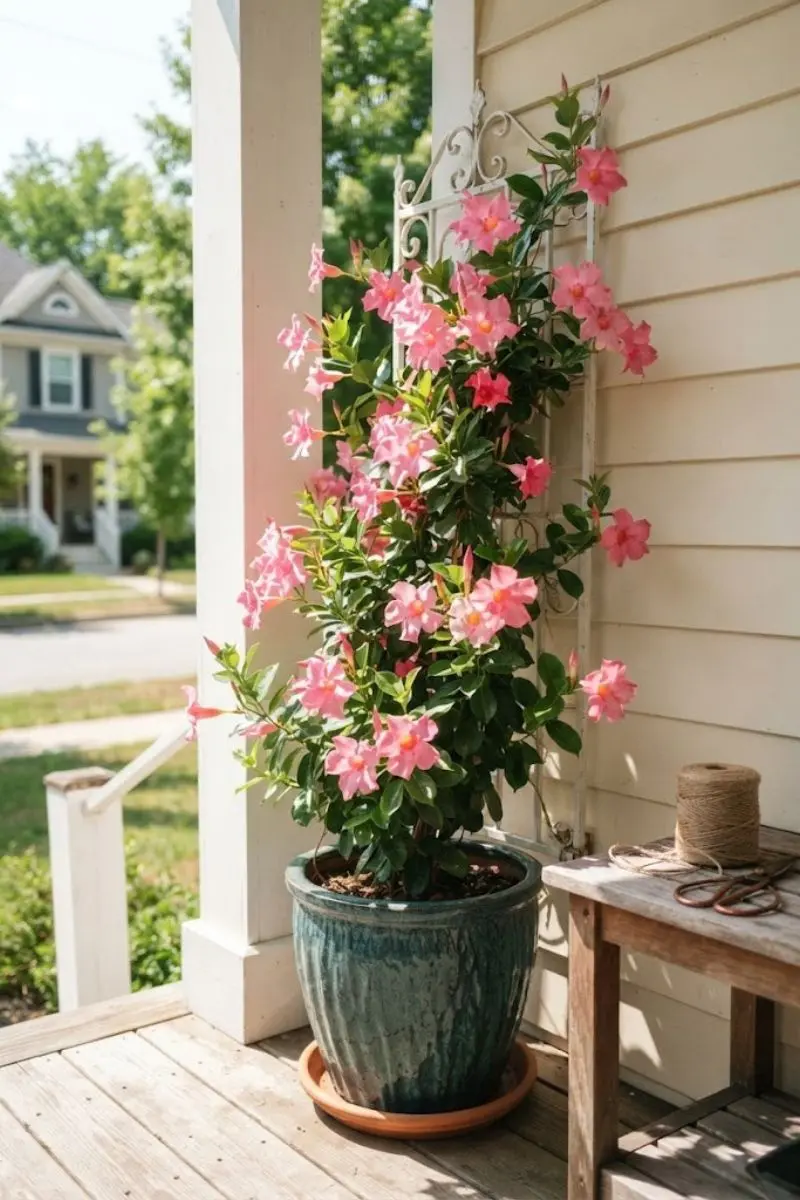
This vigorous climber is ideal for adding vertical impact to sun-drenched entryway pillars or decorative trellises. Mandevilla thrives in warm temperatures, framing your front door with large, trumpet-shaped blossoms from late spring until the first frost.
Because container soil evaporates quickly under direct exposure, check the moisture daily and water deeply whenever the top inch of soil feels dry to the touch.
- Zones: 10–11 (Annual elsewhere)
- Size: 4–10 ft tall (with support)
- Exposure: Full sun
- Type: Vining climber
2. Blue Arrows Rush (Juncus inflexus ‘Blue Arrows’)
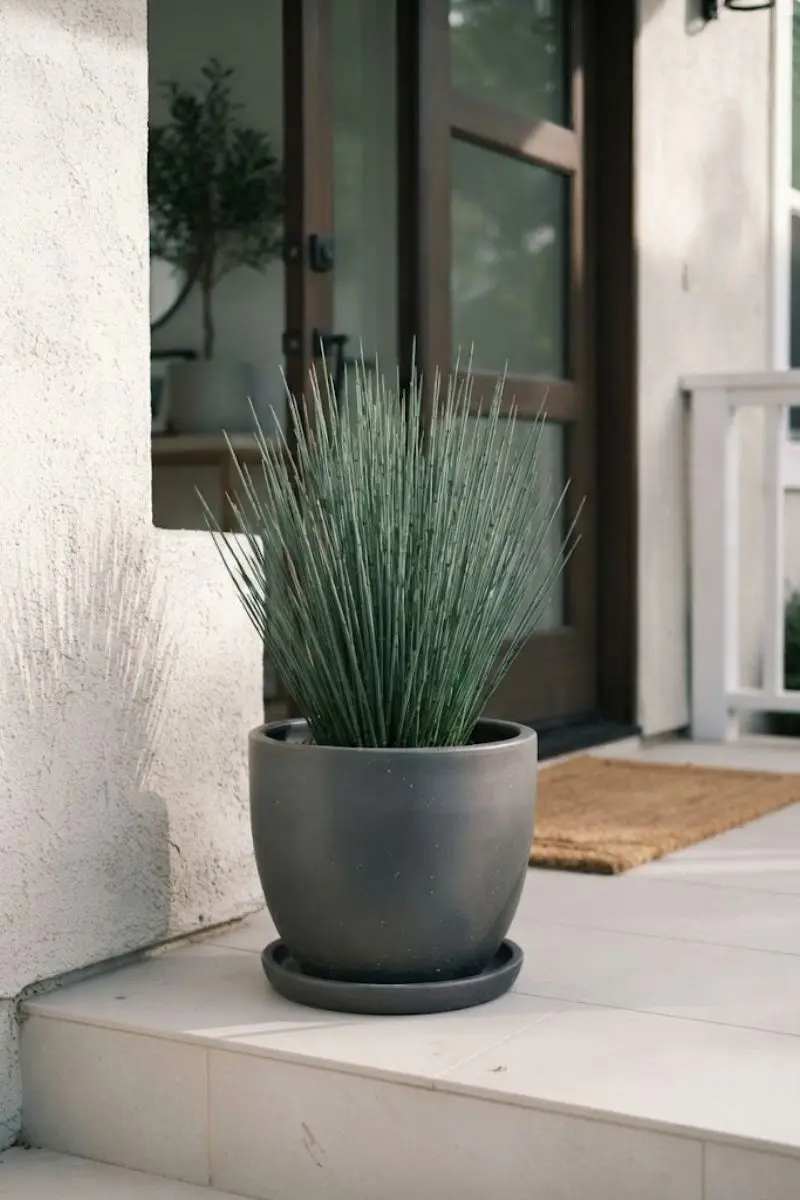
This ornamental rush offers a clean, architectural alternative to traditional flowering plants. Its stiff, blue-green needles rise in a neat, vase-shaped clump, providing a stable texture that holds up well in sun-exposed container displays.
Keep the potting mix consistently moist, especially during prolonged hot weather, to keep this moisture-loving plant looking its best.
- Zones: 5–9
- Size: 2–3 ft tall
- Exposure: Full sun to part shade
- Type: Upright architectural grass
3. Lantana (Lantana camara)
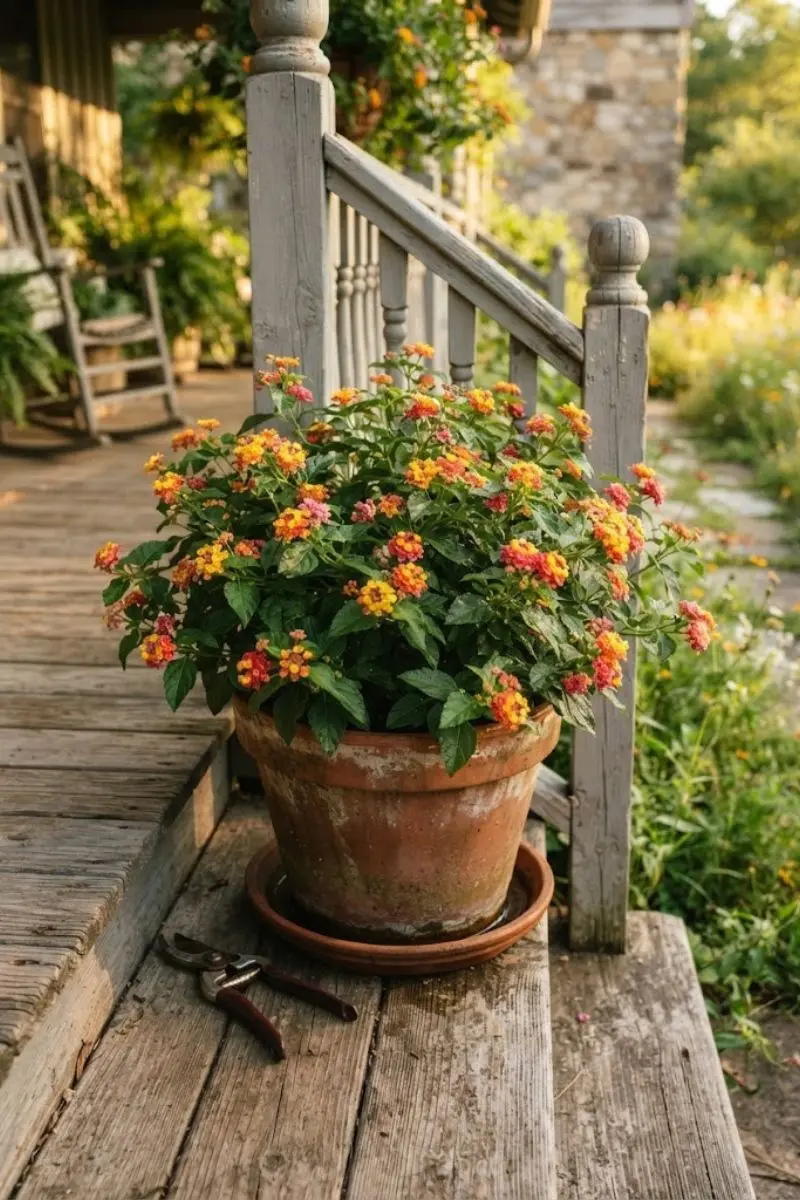
For homeowners seeking a low-maintenance option, Lantana tolerates heat and dry conditions once established. It produces dense clusters of brightly colored flowers that continuously attract pollinators through the summer heat.
Note that Lantana camara is considered invasive in certain warm regions like Florida; always opt for certified sterile cultivars and check local planting guidelines before introducing it to your zone.
- Zones: 9–11 (Annual elsewhere)
- Size: 2–3 ft tall/wide
- Exposure: Full sun
- Type: Mounding shrub
4. Elephant Ear (Colocasia esculenta ‘Black Magic’)
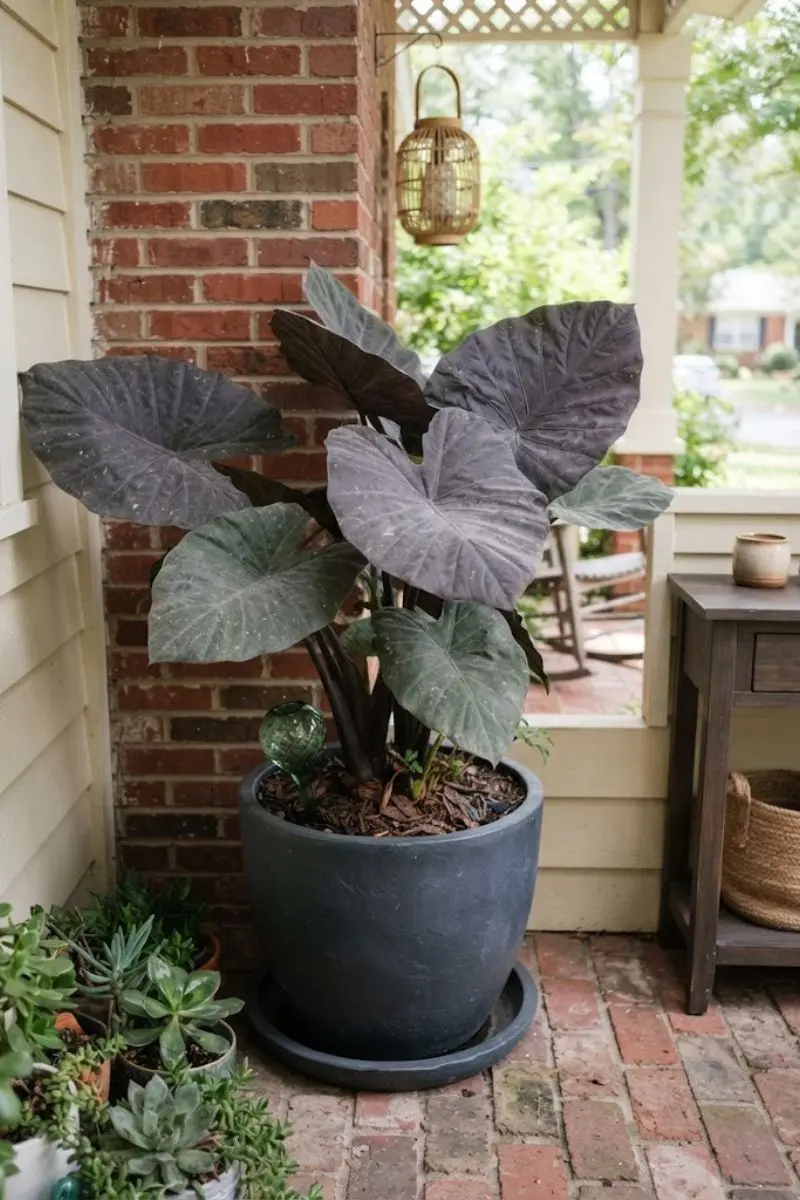
An excellent choice for porches that receive plenty of light but are tended by gardeners who love a daily watering routine. This dramatic, dark-foliage giant uses bright sun to deepen its massive leaves into a rich, dusty-purple hue.
It makes a bold tropical statement, provided you keep the potting soil consistently moist; unlike succulents, it will wilt rapidly if the container dries out completely.
- Zones: 8–11 (Annual elsewhere)
- Size: 3–5 ft tall/wide
- Exposure: Full sun to part shade
- Type: Upright foliage tuber
5. Million Bells (Calibrachoa spp.)
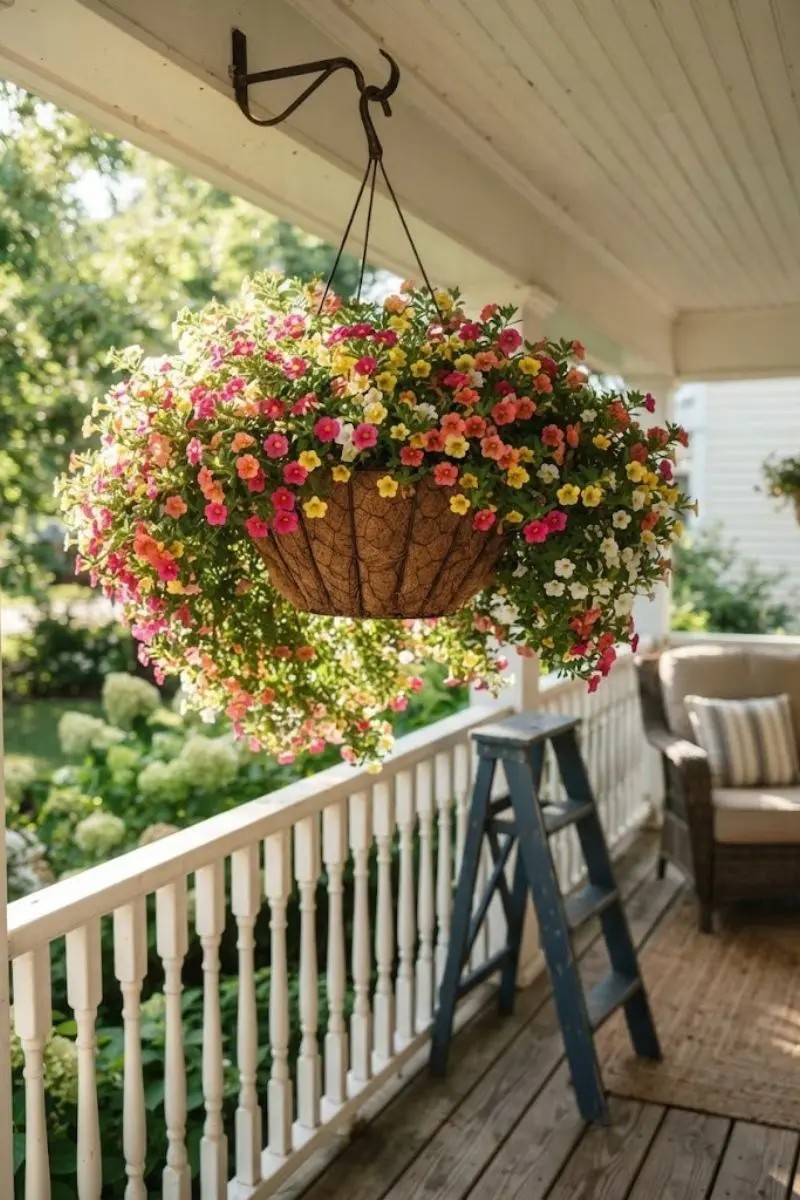
Well suited to sunny hanging baskets or trailing over the edges of tall entryway urns. Million Bells produce a dense, spilling waterfall of self-cleaning, miniature petunia-like blossoms that handle summer heat.
To ensure continuous blooming, use a well-draining potting mix and allow the soil to dry out slightly between waterings, as they dislike constantly soggy roots.
- Zones: 9–11 (Annual elsewhere)
- Size: 6–12 in. tall / 2 ft wide
- Exposure: Full sun
- Type: Trailing annual
6. Bougainvillea (Bougainvillea spp.)
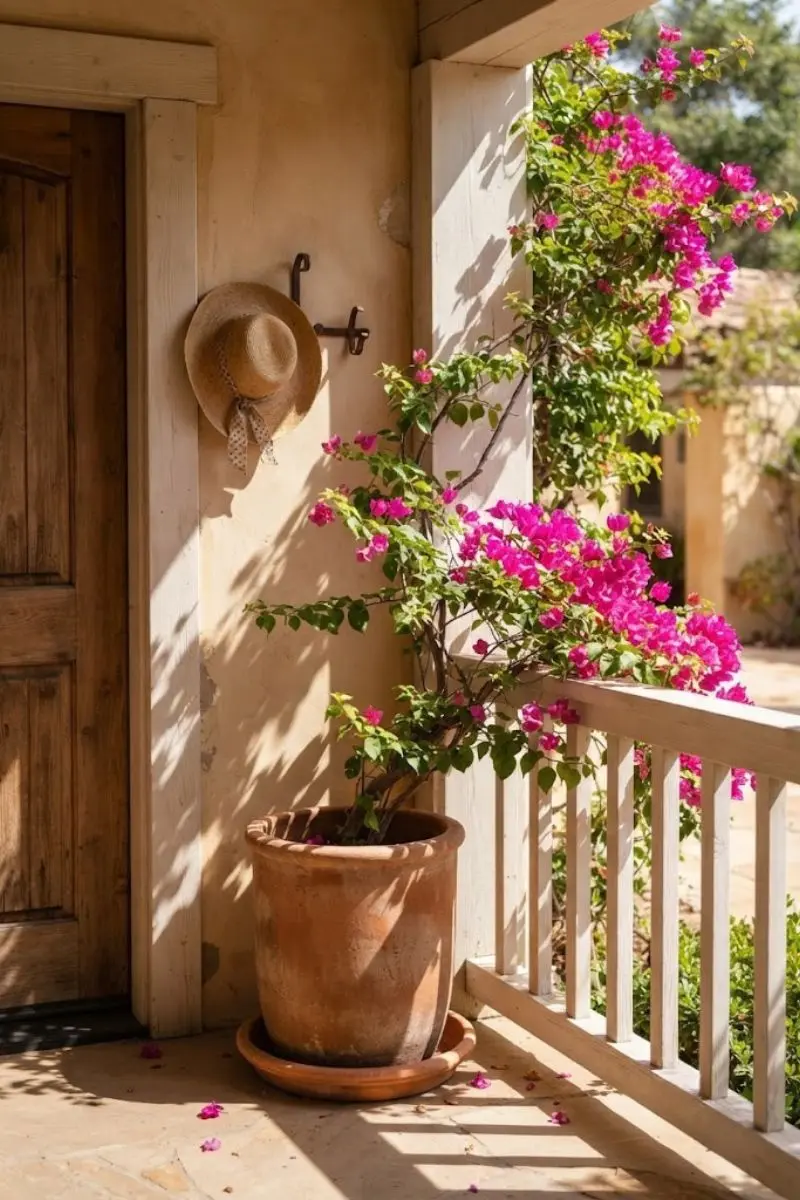
Bougainvillea brings vibrant, Mediterranean style to sunny porches with its cascading mounds of paper-thin colorful bracts. This woody vine thrives in hot sun and actually flowers more profusely when its root space is slightly restricted in a container.
Be mindful of its sharp thorns when placing pots near narrow walkways or tight seating areas, and ensure the container has excellent drainage holes.
- Zones: 9–11 (Annual elsewhere)
- Size: 3–8 ft tall in containers
- Exposure: Full sun
- Type: Vining woody shrub
7. Silver Falls Dichondra (Dichondra argentea ‘Silver Falls’)
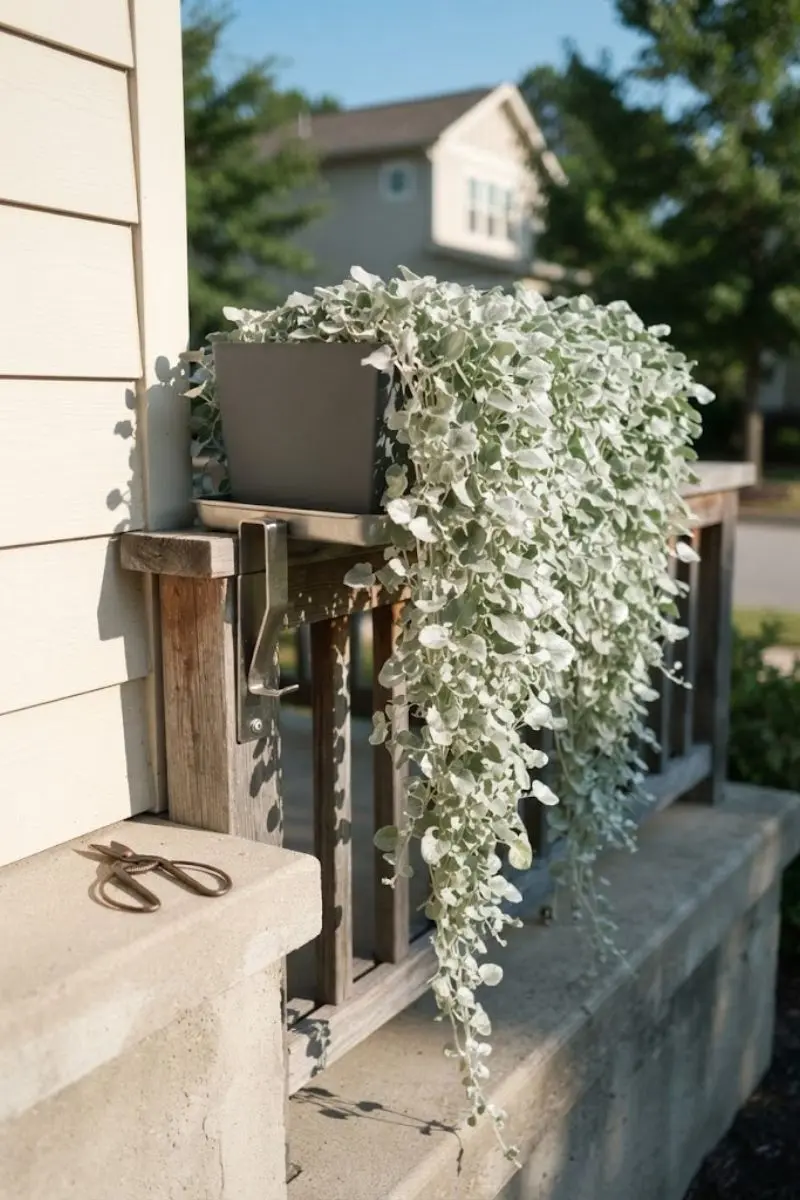
This low-growing accent plant acts as a beautiful visual contrast against warm container surfaces. It cascades down the sides of pots like a shimmering metallic curtain of soft, silver coins.
It is highly drought-tolerant once its root system establishes. It may take several weeks to fill out before producing its signature, dramatic cascading effect.
- Zones: 10–11
- Size: 2–4 in. tall / 3–4 ft trailing
- Exposure: Full sun
- Type: Trailing accent
8. Angelonia (Angelonia angustifolia)
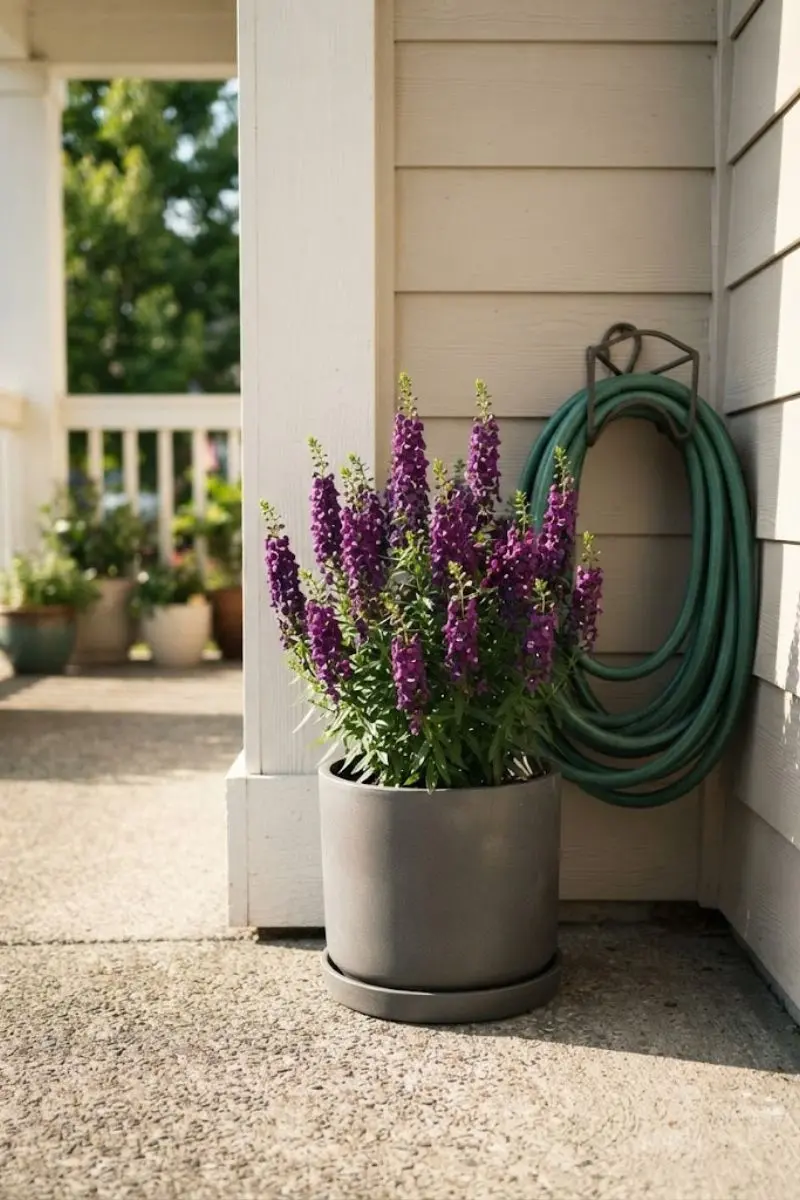
Often called the summer snapdragon, angelonia features rigid flower spikes that handle direct sun without drooping or fading.
It blooms reliably all summer without requiring deadheading to produce new flowers. Its upright flower spikes add height and structure to mixed container plantings throughout the season.
- Zones: 9–11 (Annual elsewhere)
- Size: 1–2 ft tall / 1 ft wide
- Exposure: Full sun
- Type: Upright perennial
9. Tropical Hibiscus (Hibiscus rosa-sinensis)
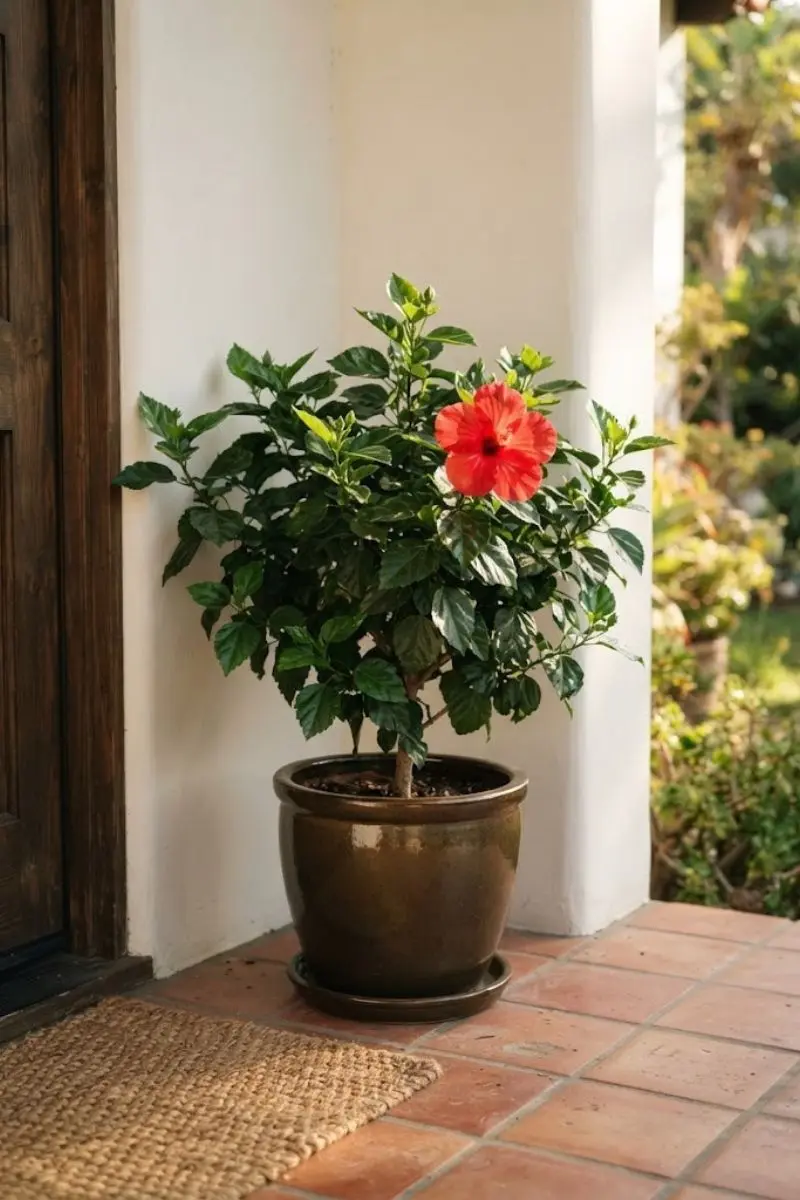
The classic choice for framing a front door with a welcoming, resort-like feel. Tropical hibiscus relies on bright afternoon sun to continuously fuel its massive, plate-sized blooms. They look best in matching, heavy containers flanking an entryway.
Bring containers indoors before nighttime temperatures regularly fall below 50°F to avoid cold stress.
- Zones: 10–11 (Annual elsewhere)
- Size: 4–6 ft tall in pots
- Exposure: Full sun
- Type: Upright tropical shrub
10. Ornamental Pepper (Capsicum annuum ‘Black Pearl’)
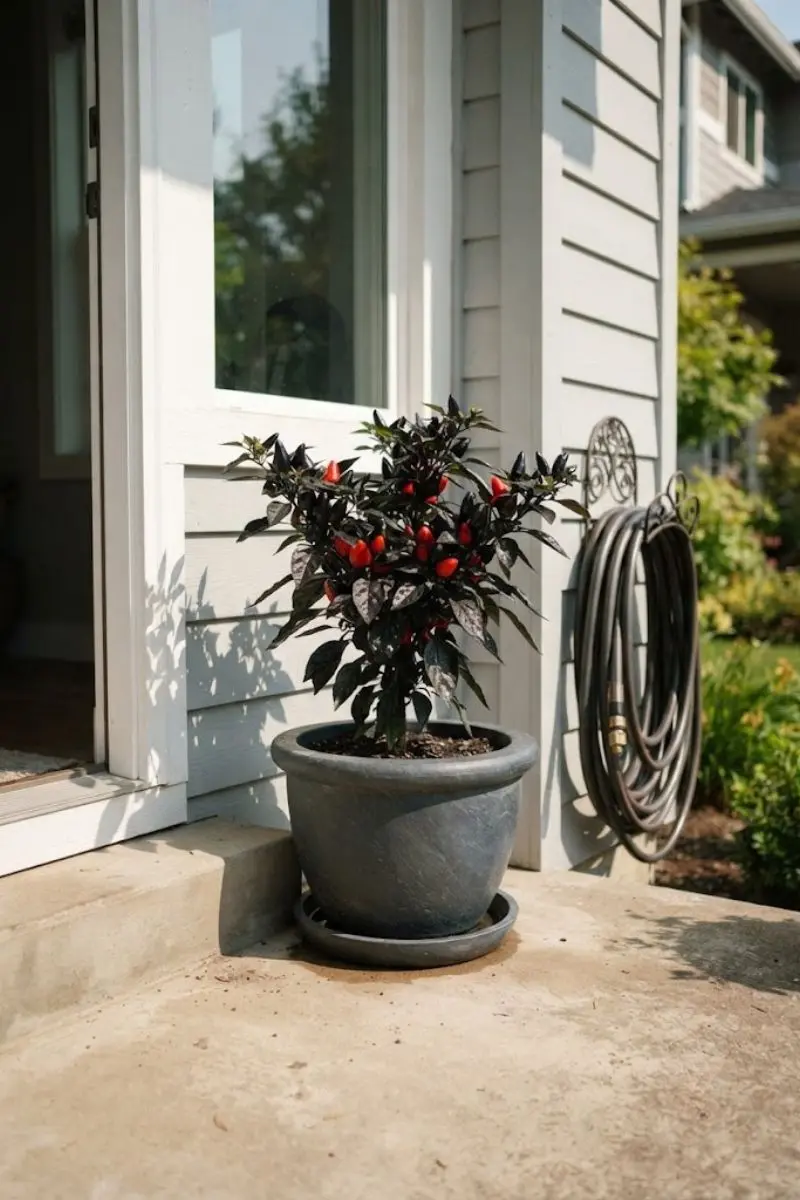
If you have a compact porch or a sunny outdoor side table, this award-winning cultivar delivers incredible color in a small footprint. It features glossy, near-black foliage and upright clusters of round peppers that mature from black to bright red. It performs well in heat and full sun.
Keep in mind that while the peppers are edible, they are intensely hot—keep them out of reach of small children.
- Zones: 9–11 (Annual elsewhere)
- Size: 1–1.5 ft tall/wide
- Exposure: Full sun
- Type: Compact upright annual
11. Purple Fountain Grass (Pennisetum setaceum ‘Rubrum’)
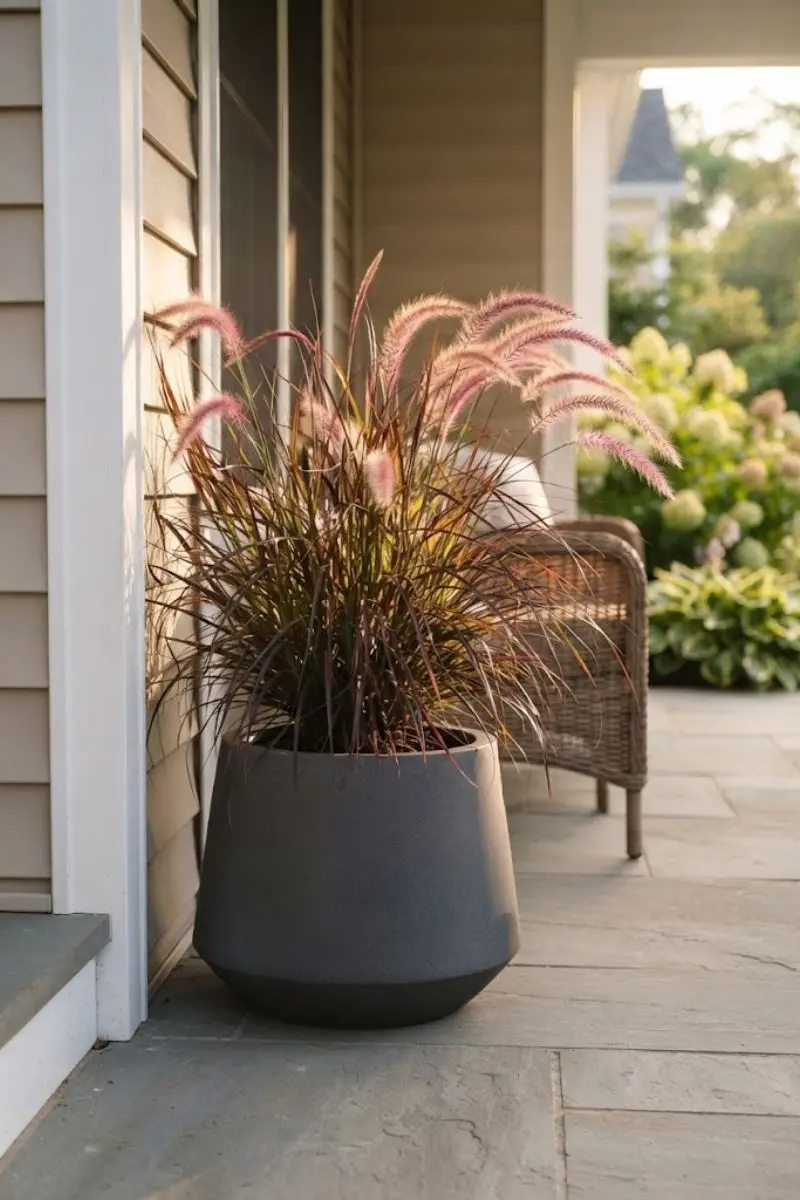
This ornamental grass injects graceful movement into an entryway, its burgundy blades and feathery plumes softening the rigid lines of porch railings.
While ‘Rubrum’ is less likely to reseed than the parent species, avoid allowing plant material to escape into nearby natural areas. Use a heavy pot to keep the tall blades from catching the wind and toppling over.
- Zones: 9–11 (Annual elsewhere)
- Size: 3–4 ft tall/wide
- Exposure: Full sun
- Type: Clumping ornamental grass
12. Moss Rose (Portulaca grandiflora)
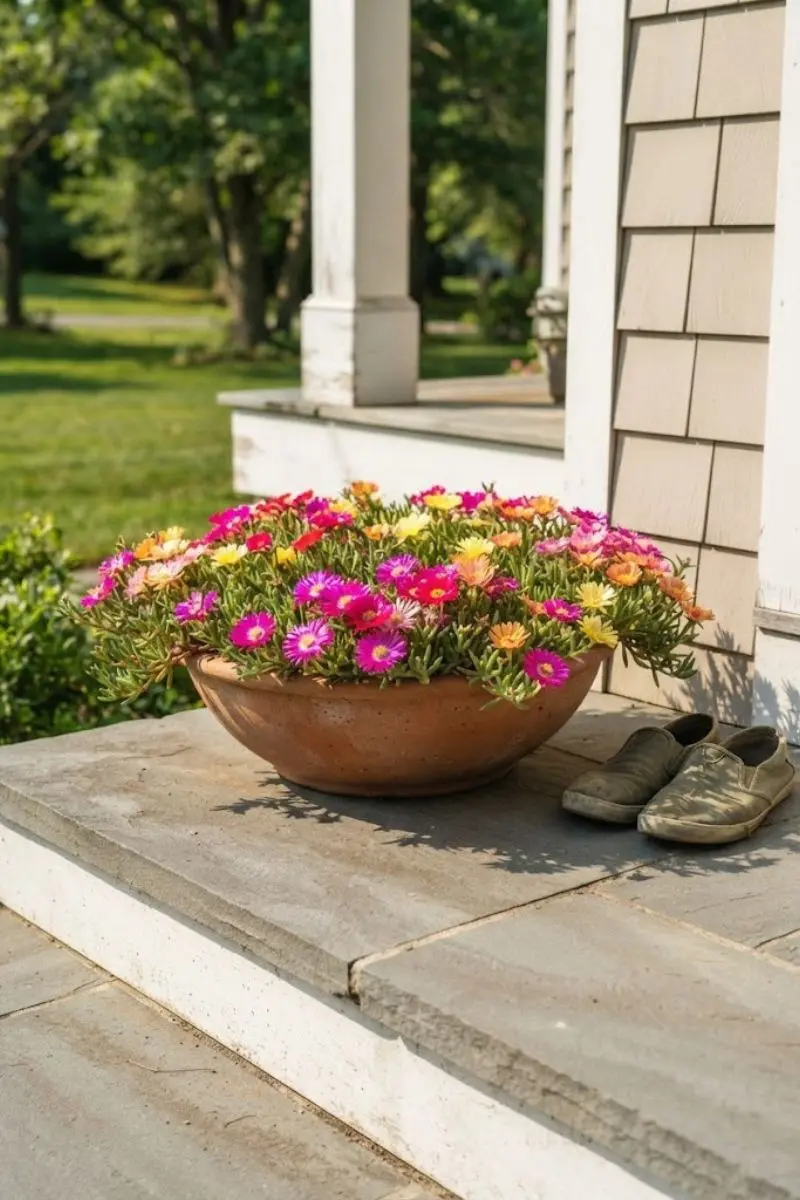
This low-growing succulent treats a hot, sunny porch step like a native rock garden. Moss rose features needle-like, water-storing leaves and satin-textured flowers that open wide in bright sunlight. It handles dry container conditions exceptionally well.
Just ensure it receives direct sun; if placed under a deep porch roof overhang where morning shadows linger, the flowers will remain closed.
- Zones: Tender perennial; commonly grown as an annual
- Size: 4–8 in. tall / 1–2 ft wide
- Exposure: Full sun
- Type: Trailing succulent
Quick Plant Picker
Narrow down your options based on your porch environment and care preferences:
- For Low-Water Routines: Lantana, Moss Rose, or Bougainvillea (They prefer drying out slightly between waterings).
- For Attentive Waterers: Elephant Ear or Blue Arrows Rush (Require consistent moisture to manage high heat).
- For High-Exposure Wind & Railings: Blue Arrows Rush or Angelonia (Stiff, upright stems that resist bending or snapping).
- For Framing the Front Door: Mandevilla or Tropical Hibiscus (High-visibility, show-stopping entryway color).
- For Hanging Baskets & Tall Rims: Million Bells or Silver Falls Dichondra (Excellent heat-tolerant draping options).
FAQs
Do plants on a sunny porch need bigger containers than usual?
Choose the largest container that comfortably suits the mature size of the plant.
Larger pots hold more soil, helping buffer roots from rapid drying and temperature swings on a sun-exposed afternoon. Thick-walled ceramic, stone, or resin containers help insulate roots from rapid temperature swings.
How often should I water porch containers in full sun?
There is no fixed schedule. Heavy flowering options like mandevilla may need daily watering during peak summer heat, while succulents can go several days.
Check the soil moisture manually by inserting your finger an inch into the potting mix before deciding to water.
Why are the leaves on my new sun-loving plant scorching?
If you recently brought the plant home from a shaded greenhouse or garden center, it likely suffered environmental shock.
Even sun-loving varieties need to be acclimated gradually over several days to a week in a partially shaded corner of the porch before being moved into harsh, all-day glare.
Conclusion
Transforming a bright, sun-exposed porch into an inviting entryway feature is a matter of selecting plants naturally suited to these conditions.
By matching your choices to the container size and your own watering availability, you can achieve a balanced mix of architectural foliage and continuous color. With the right plant choices and consistent watering, a sunny porch can stay colorful all season long.