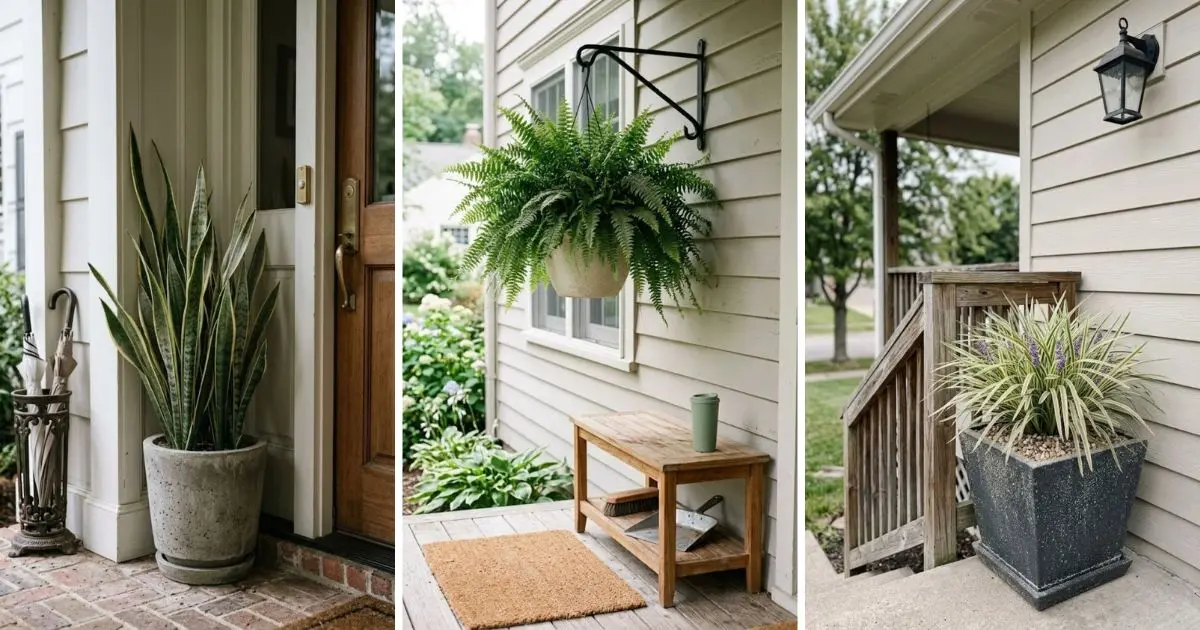
Table of Contents
Your porch is the first thing people see, but it shouldn’t become another source of weekend chores. Getting it right is just about matching your light and wind with the right variety so you can enjoy your outdoor space without constant monitoring.
The easiest porch plants aren’t just drought tolerant—they also stay attractive in containers, tolerate changing weather, and need very little pruning or seasonal upkeep.
The ten choices below deliver reliable curb appeal from the street without demanding daily watering or constant fussing.
1. Boston Fern (Nephrolepis exaltata)
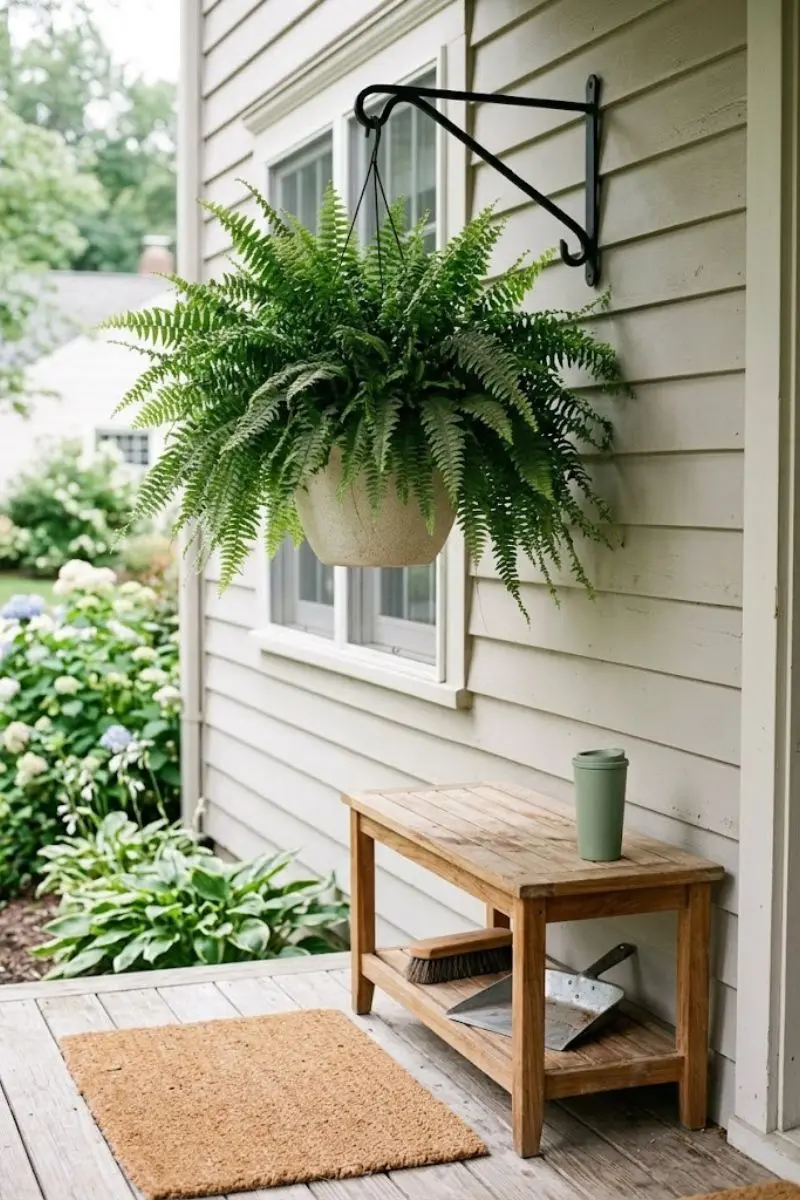
Boston Ferns are a front-porch classic because they fill out hanging baskets better than almost anything else. If you have a covered, shady entryway, they stay attractive with relatively little pruning or grooming.
The main rule is keeping them out of direct afternoon sun, which quickly burns the leaves.
Just know they drop tiny leaflets constantly, especially on windy days. If you hate sweeping your porch floor, they might not be the right choice for your main entrance.
Full Shade to Partial Shade • Consistent Moisture • Ideal for Hanging Baskets • Arching Habit
2. Sago Palm (Cycas revoluta)
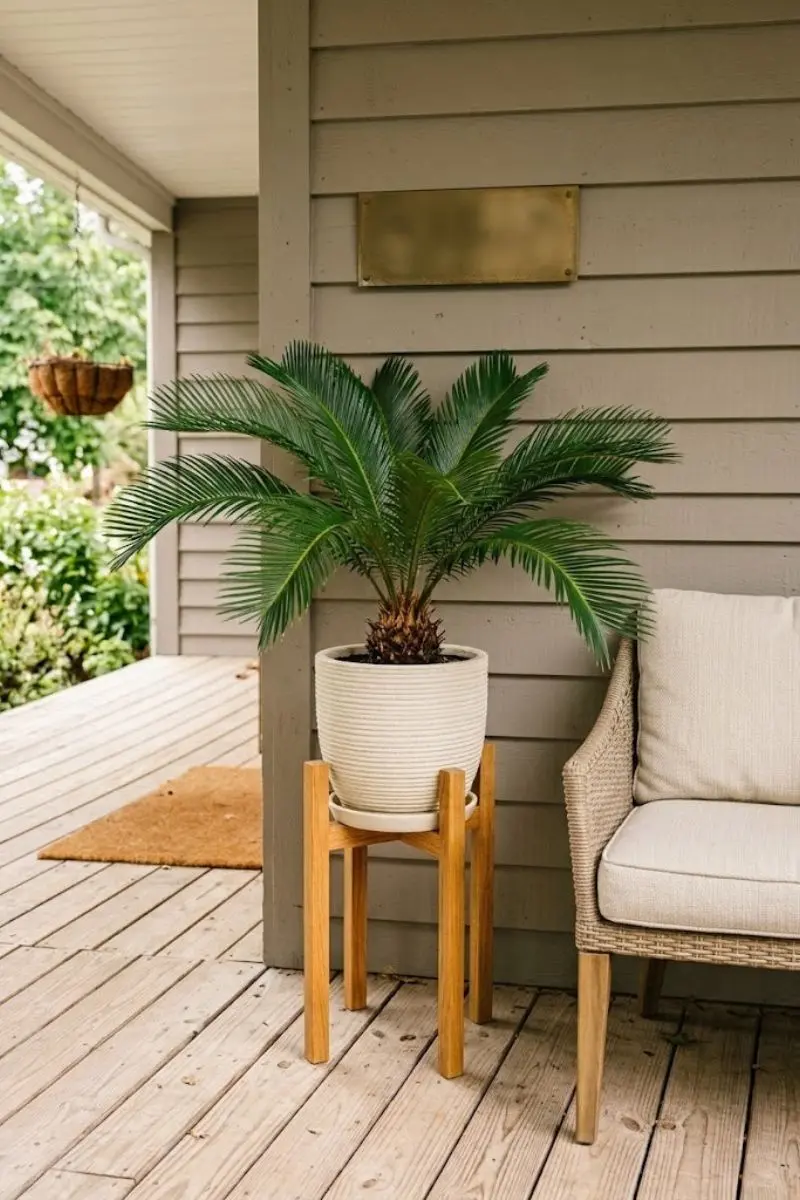
For bright porches that get some protection from the harshest afternoon sun, the Sago Palm is an excellent structural choice. Its thick, stiff foliage and drought tolerance make it forgiving when you miss a watering, and it looks sharp in any heavy ceramic pot.
Because they grow incredibly slowly, buy the size you actually want at the nursery.
Note that the leaf tips are sharp, and all parts of this plant contain cycasin and are highly toxic to dogs and cats. Keep it elevated or out of reach if you have pets.
Bright Indirect Light to Partial Shade • Low Watering • Severe Pet Toxicity • Upright & Structural
3. Golden Pothos (Epipremnum aureum)
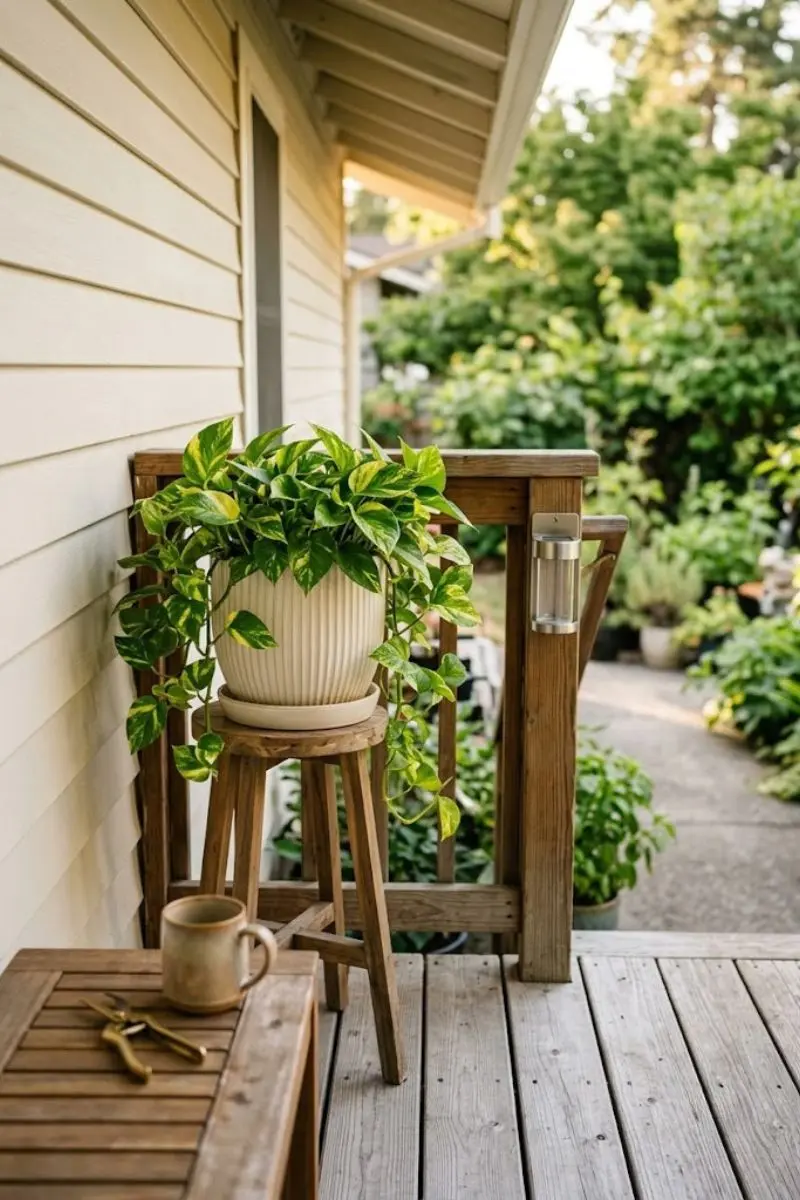
While usually grown indoors, Pothos does exceptionally well on a covered porch during the warmer months. Warm outdoor conditions can encourage vigorous growth and larger foliage. The vines trail nicely over railing boxes or plant stands.
Just remember that Pothos is a tender tropical and cannot survive a frost. You will need to bring the pot inside when autumn temperatures drop, or simply treat it as an affordable seasonal annual.
Partial Shade to Full Shade • Low to Moderate Watering • Great for Railing Boxes • Trailing Vine
4. Variegated Liriope (Liriope muscari ‘Variegata’)
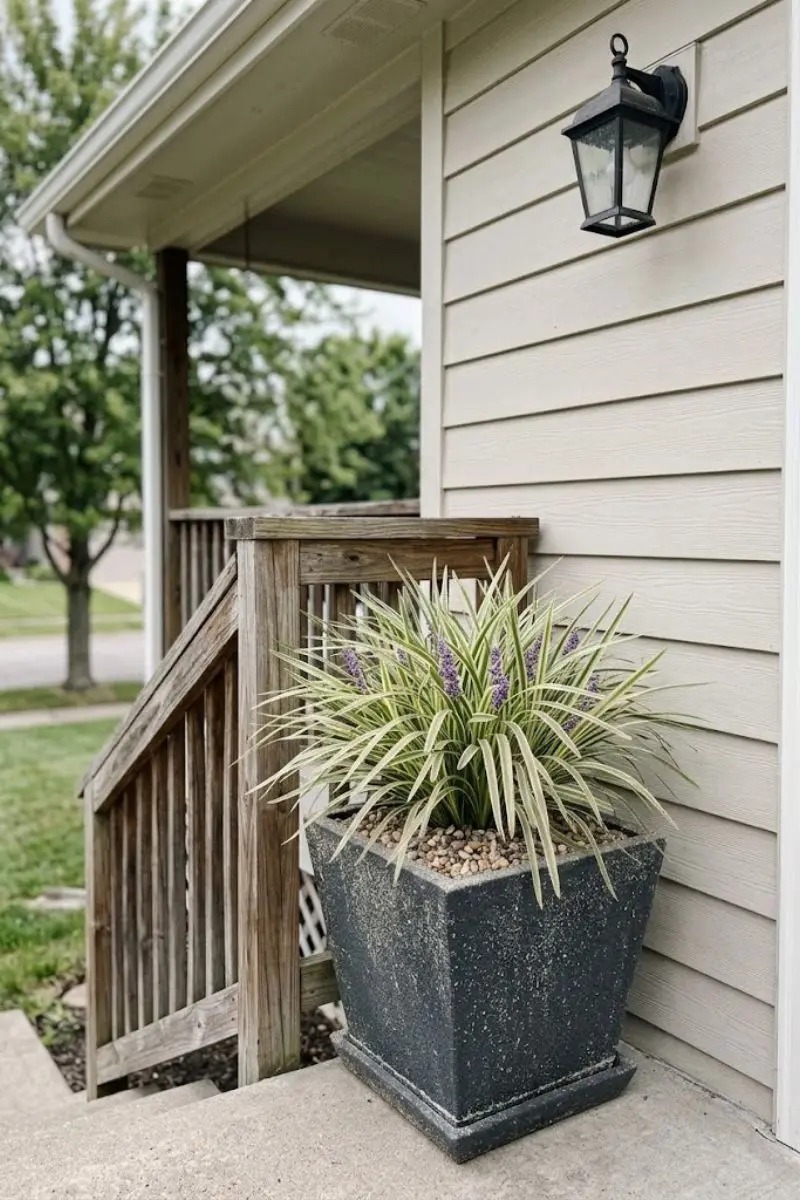
Usually stuck in garden borders, Liriope actually makes a great porch plant. Its striped, blade-like leaves offer the texture of an ornamental grass but stay compact and tidy in a pot.
It handles heat waves and dry soil well, though it benefits from protection from freezing winds.
In late summer, it produces small purple flower spikes; if you prefer a strictly clean look, these can be clipped off in a few seconds.
Full Sun to Partial Shade • Low Watering • Highly Adaptable • Tufted Grass-like Habit
5. Autumn Joy Sedum (Hylotelephium spectabile ‘Autumn Joy’)
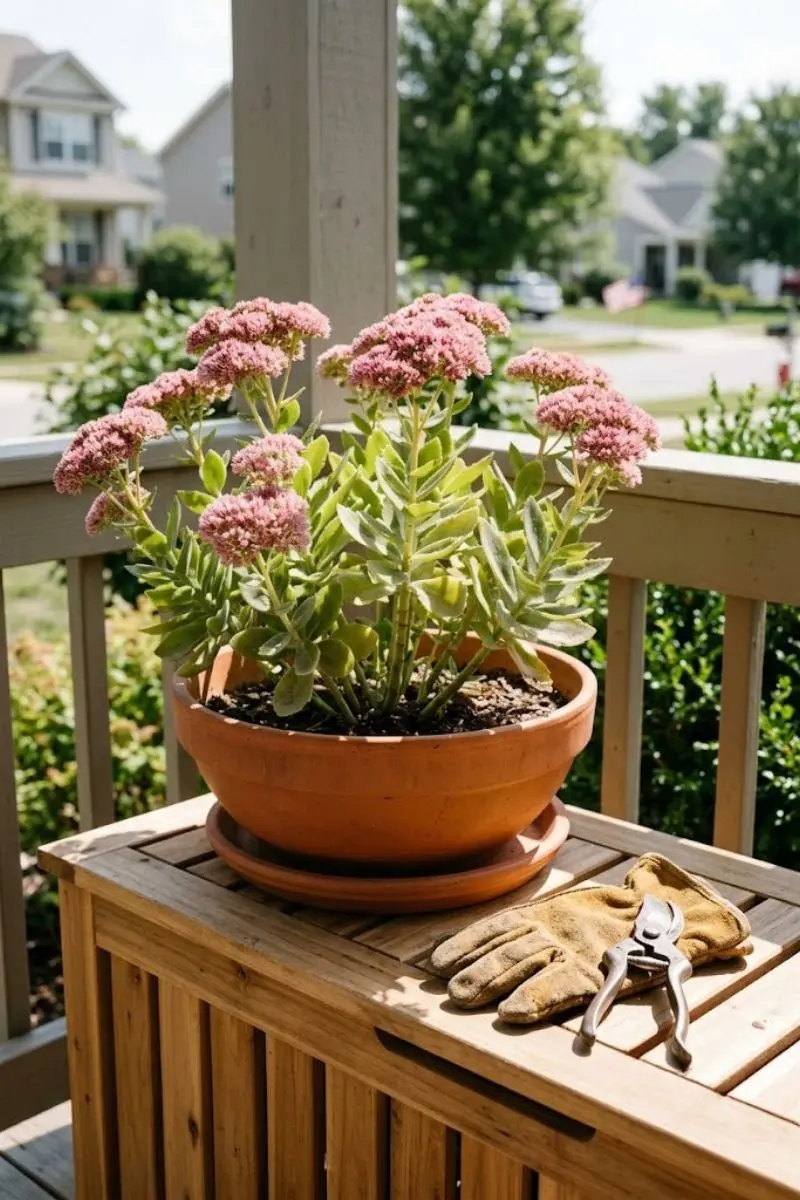
This hardy stonecrop is an absolute powerhouse for sunny containers. Its thick, fleshy stems store water, meaning it shrugs off severe heat waves and prolonged dry spells with zero drama. It stays compact and needs little pruning.
It shifts beautifully from soft green buds in summer to rich rust-pink flower heads in late autumn, and its dried flower heads can also add winter interest.
Full Sun • Low Watering • Cold Tolerant • Compact Mounding Habit
6. Sweet Potato Vine (Ipomoea batatas)
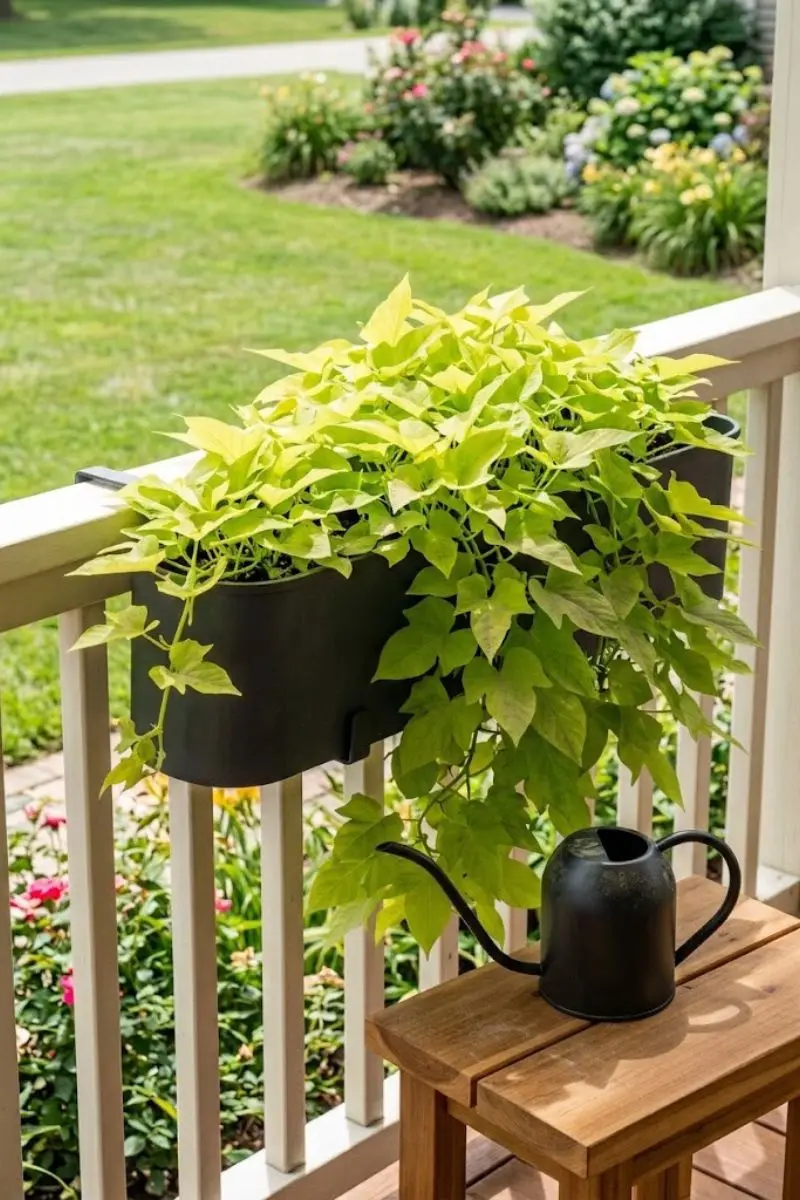
If you need something to spill over a window box quickly, Sweet Potato Vine is a great go-to. It quickly forms a dense wall of chartreuse or deep purple foliage.
While it can outgrow small containers quickly if given excessive water and fertilizer, it becomes more drought tolerant once established. It can handle some dry soil between waterings, making it a reliable option for busy homeowners.
Full Sun to Partial Shade • Moderate Watering • Fast Spiller • Cascading Growth
7. Snake Plant (Dracaena trifasciata)
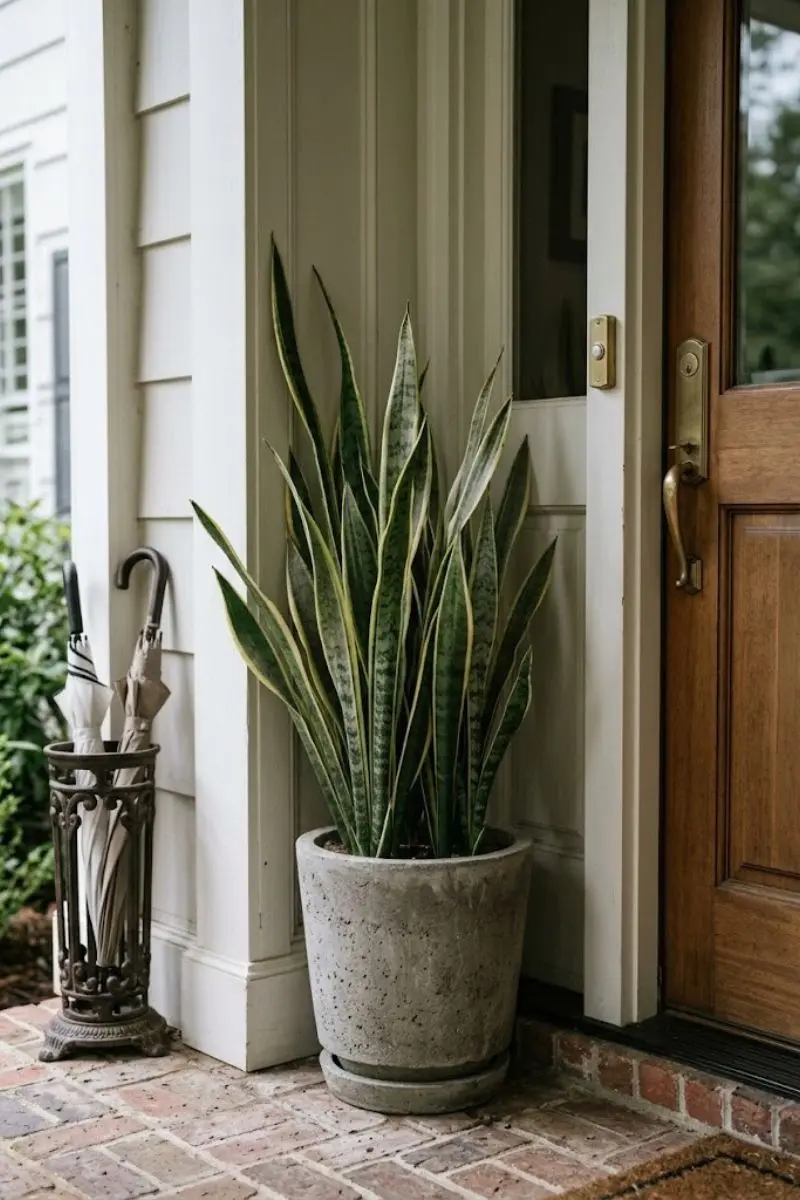
The clean, vertical lines of a Snake Plant work surprisingly well outdoors to frame a doorway or fill a narrow corner. It handles the changing light of a covered porch well.
However, outdoor wind and heat dry out pots faster than indoor air, so water thoroughly whenever the soil dries out completely, rather than relying on a fixed schedule.
Avoid lightweight plastic pots, as a strong gust can easily tip this top-heavy plant over.
Partial Shade to Deep Shade • Low Watering • Ideal for Tight Corners • Strict Vertical Grower
8. Asparagus Fern (Asparagus densiflorus)
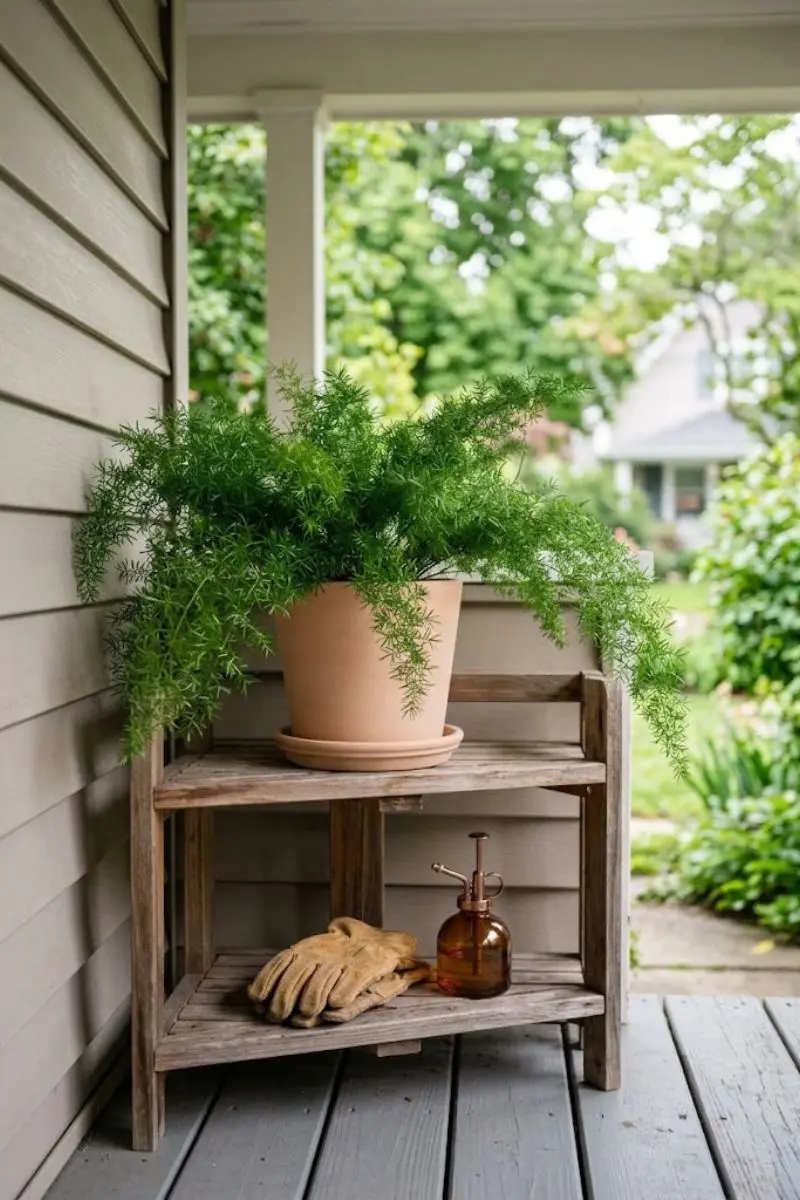
Asparagus Fern has a soft, feathery look that works well on plant stands or shelves where the sun can filter through. Unlike true ferns, it stores water in underground tubers, allowing it to tolerate occasional missed waterings.
Be aware that it sports tiny, sharp thorns along its stems, so it is wise to wear gardening gloves whenever you need to move or repot it.
Partial Sun to Partial Shade • Moderate Watering • Great for Tiered Stands • Arching Habit
9. Adam’s Needle Yucca (Yucca filamentosa)
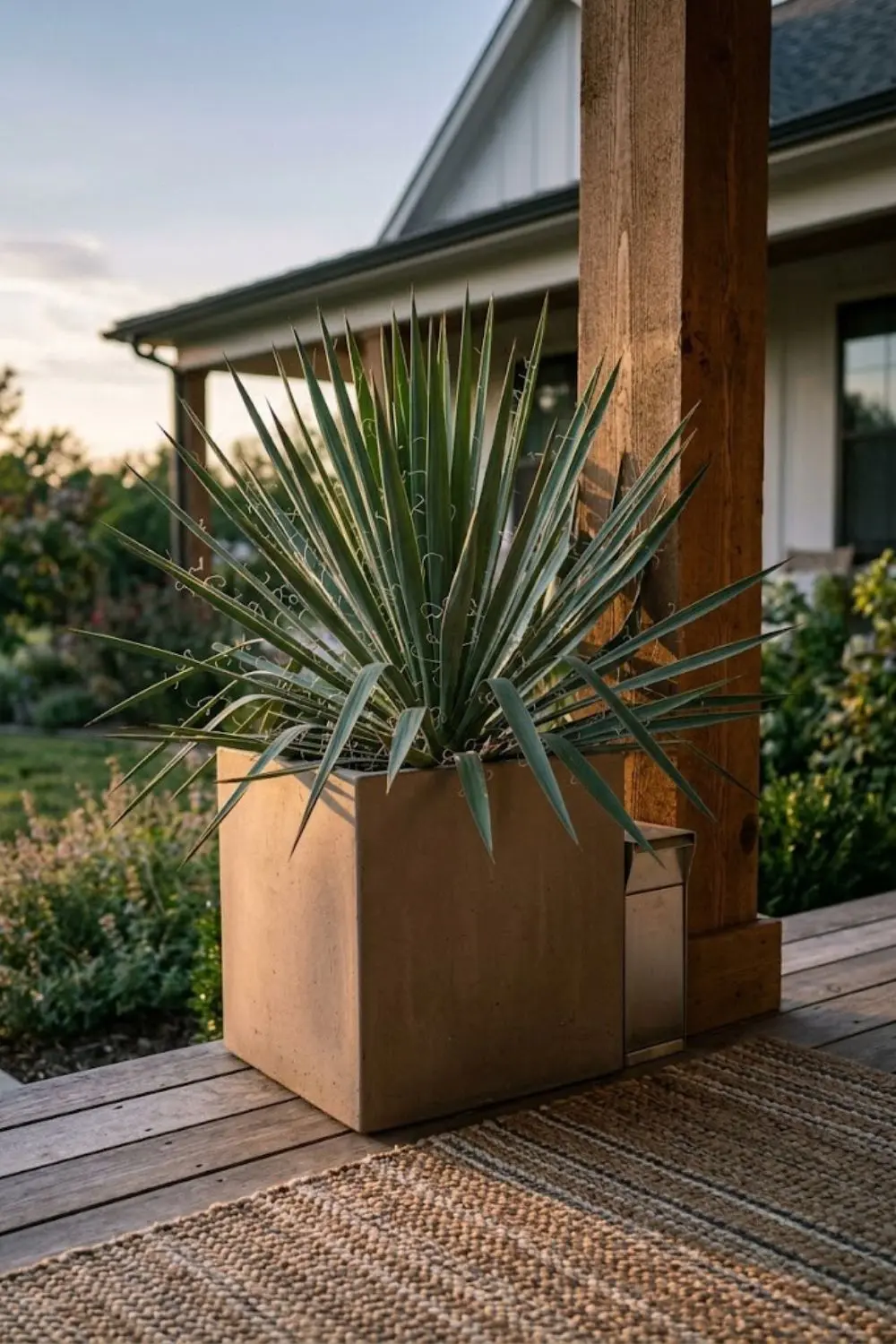
Unlike finicky tropical foliage varieties that fade without regular fertilization, this native evergreen yucca is built for the elements. It features rigid, sword-like leaves with unique curling filaments along the margins.
It shrugs off poor soil, blasting midday sun, and drought while keeping its architectural form. It makes a low-maintenance centerpiece for large, heavy containers.
Full Sun • Low Watering • Heat & Drought Tolerant • Bold Structural Rosette
10. Zonal Geranium (Pelargonium × hybridum)
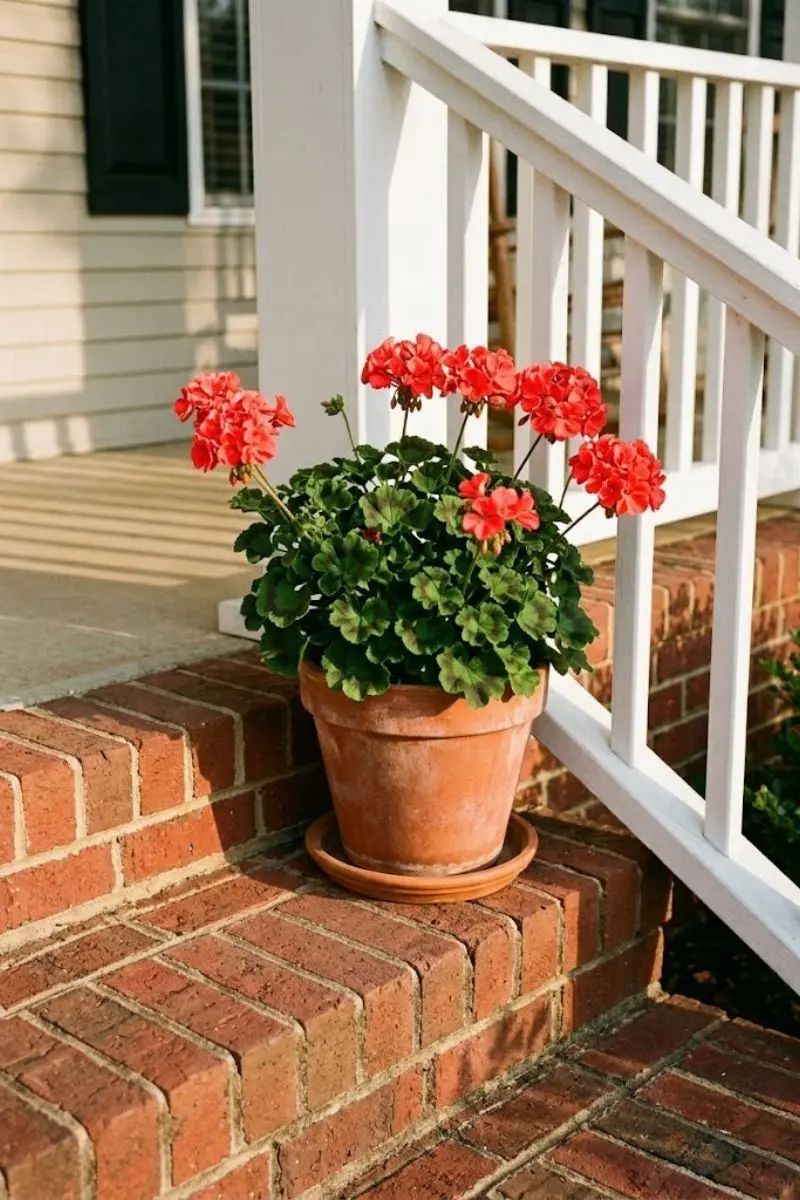
If you want bright flowers but refuse to spend your summer deadheading finicky annuals, classic Zonal Geraniums are your best option. Their thick stems hold up well in the wind, and they tolerate dry summer soil exceptionally well once established.
Just keep in mind that blooming takes energy; if you completely neglect water and fertilizer, flower production will slow down, leaving you with mostly green foliage.
Full Sun • Low to Moderate Watering • Best for Sunny Steps • Mounding & Flowering
Quick Plant Picker
- For sunny, south-facing porches: Autumn Joy Sedum, Yucca, Zonal Geranium
- For bright porches with partial afternoon shade: Sago Palm, Sweet Potato Vine
- For deep-shade, covered porches: Boston Fern, Golden Pothos, Snake Plant
- For exposed, breezy spaces: Yucca, Autumn Joy Sedum, Zonal Geranium
- For high-impact hanging baskets: Boston Fern, Sweet Potato Vine
- For narrow spaces and tight corners: Snake Plant, Variegated Liriope
- For busy owners who forget to water: Autumn Joy Sedum, Yucca, Snake Plant
FAQs
Can I leave these plants on my porch all year?
It depends entirely on the specific plant, your USDA hardiness zone, and how exposed the container is to freezing winds.
Cold-hardy options like Variegated Liriope, Autumn Joy Sedum, and Yucca can handle low winter temperatures when planted in the ground, but pots left on an open porch lose heat quickly and may still require protection in northern regions.
Tender tropicals like Pothos, Boston Ferns, and Snake Plants cannot survive a freeze and must be brought indoors before the autumn temperatures drop.
How often do porch containers need water compared to indoor pots?
Outdoor pots dry out significantly faster due to wind and sun exposure. Instead of watering on a strict, calendar-driven schedule, always check the soil with your finger.
Drought-tolerant choices like the Sedum and Snake Plant can dry out between waterings, while moisture-lovers like the Boston Fern need a drink when the top inch of soil feels dry.
Why are the leaves on my shaded porch plants turning yellow?
Overwatering and poor drainage are common causes.
Because shaded porches receive less direct sunlight, water evaporates very slowly from the potting mix. Ensure your planters have functioning drainage holes so the roots never sit in stagnant, soggy soil.