Table of Contents
If your houseplant has become leggy, sparse, or bare in spots, a few changes can help it look lusher.
Start by making sure the plant gets enough light for healthy new growth, then use pruning, feeding, or propagation techniques that suit the way it grows.
1. Move Your Plant to a Better-Lit Spot
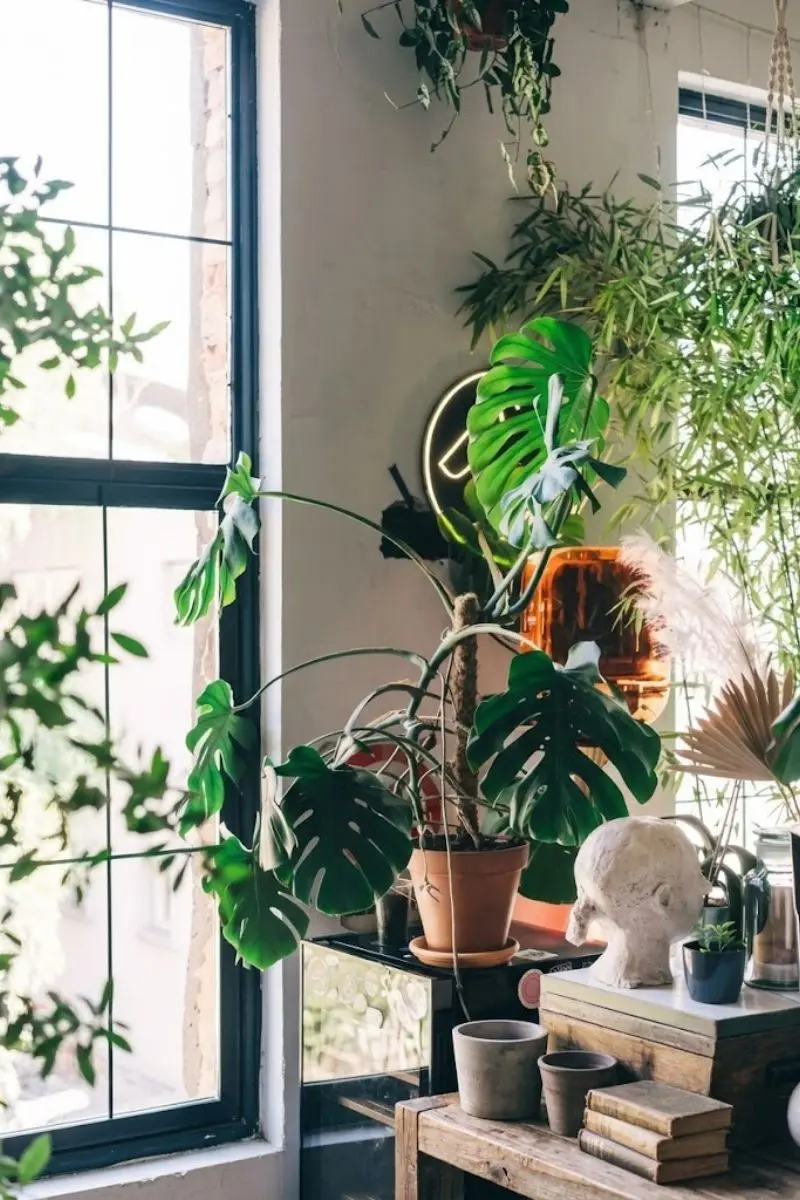
Insufficient light can cause houseplants to produce long, thin stems with more space between the leaves. Moving your plant to a brighter spot can help new growth stay more compact and vigorous.
The right amount of light depends on the plant. A houseplant that prefers bright, indirect light may do well near a bright window, while a lower-light plant may need less exposure. Avoid moving a plant accustomed to low light directly into intense sun, which can scorch its leaves.
If stems are already long and bare, better light won’t put leaves back on old growth. It can, however, give the plant better conditions for producing fuller growth over time.
2. Add a Grow Light When Natural Light Is Limited
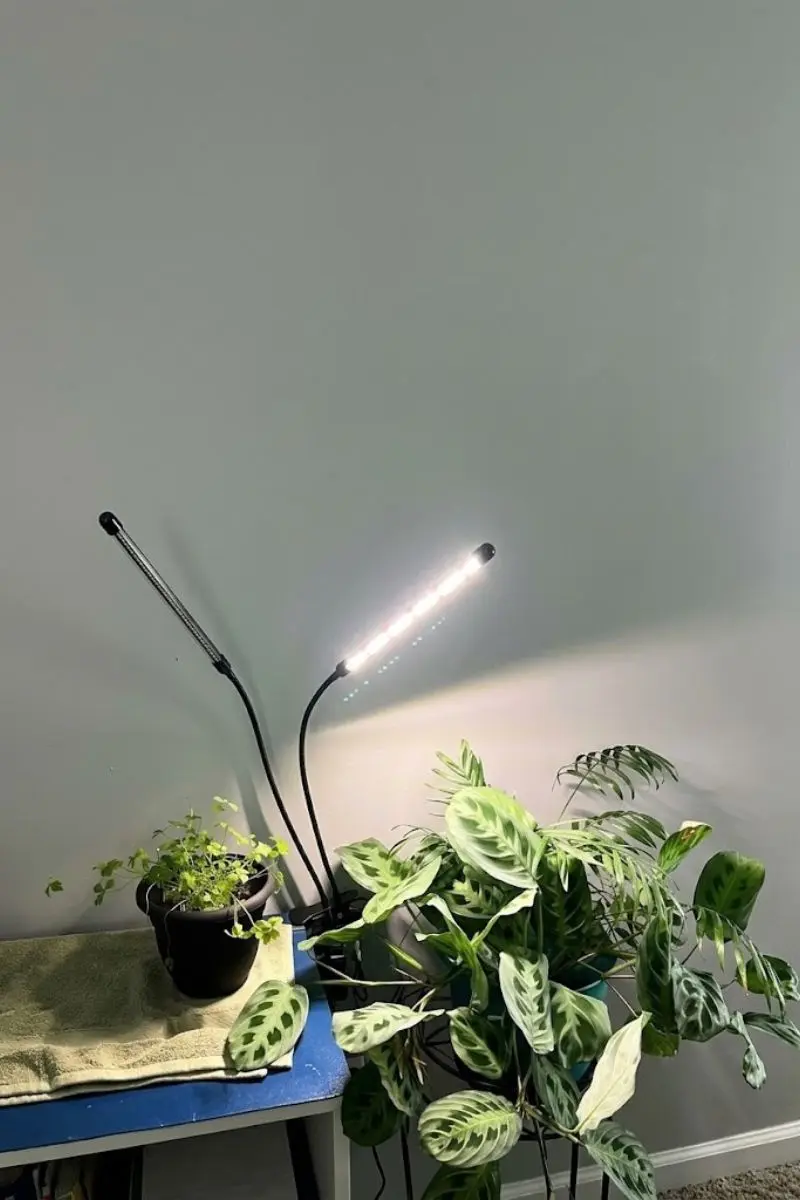
Sometimes the best available spot in your home still doesn’t provide enough light. A grow light can supplement the light your plant gets from a window and provide a more consistent daily routine.
Place the light according to the manufacturer’s instructions and keep the schedule consistent. This can be especially useful for plants growing in rooms with few windows.
Think of a grow light as a way to improve growing conditions, not as a quick fix for an already sparse plant. New growth still takes time.
3. Pinch or Prune to Encourage Fuller Growth
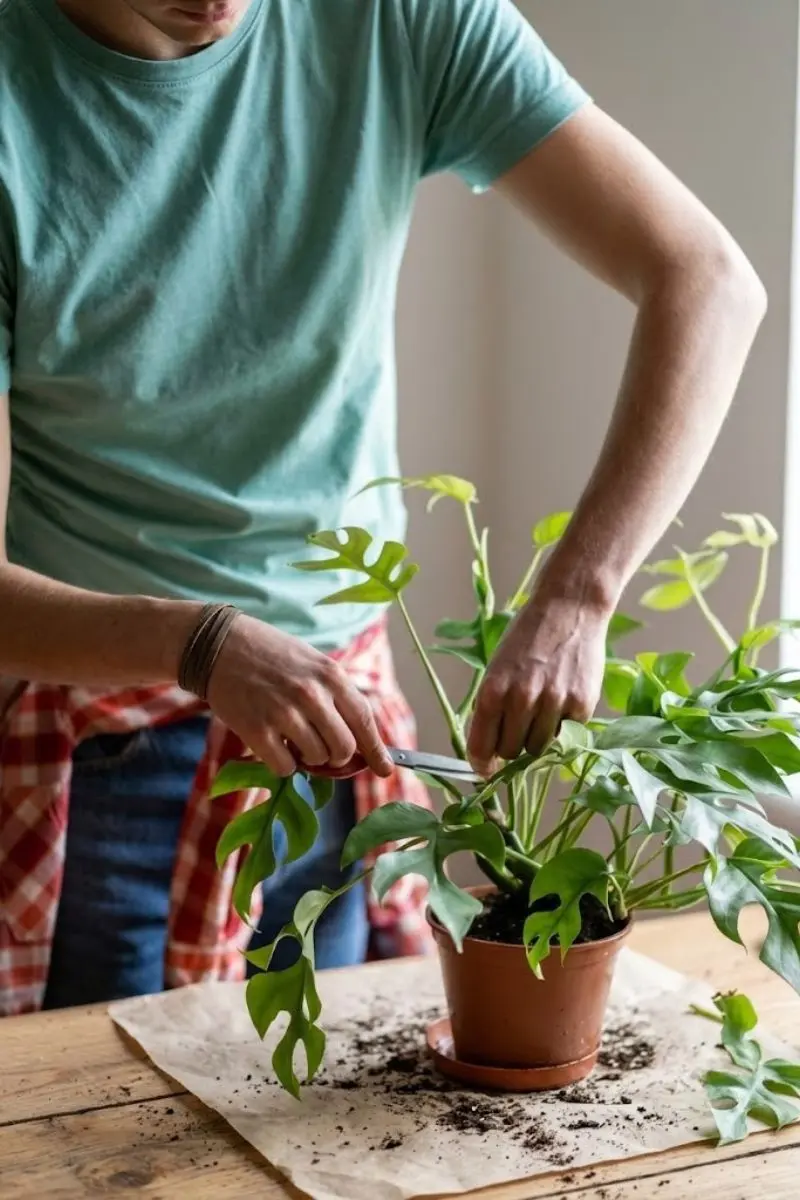
Some houseplants respond well to having their growing tips pinched back. Removing a small amount of new growth just above a node can encourage lateral shoots, helping the plant develop a fuller shape.
Use clean, sharp scissors or pruners, and make sure your particular plant responds well to pruning before you start cutting. This technique is especially useful for plants that naturally branch or produce multiple stems.
Pruning also lets you remove excessively long or awkward stems and shape the plant as it grows.
4. Feed During Active Growth
Fertilizer can support healthy new growth, but it isn’t a cure for a sparse plant. If poor light or another growing problem is holding the plant back, adding more fertilizer won’t solve the underlying issue.
When your plant is actively growing, use a fertilizer suited to your houseplant and follow the label directions. Avoid overfeeding in an effort to make the plant grow faster; too much fertilizer can cause its own problems.
Think of feeding as support for good growth rather than a shortcut to a bushier plant.
5. Repot When the Roots Need More Room
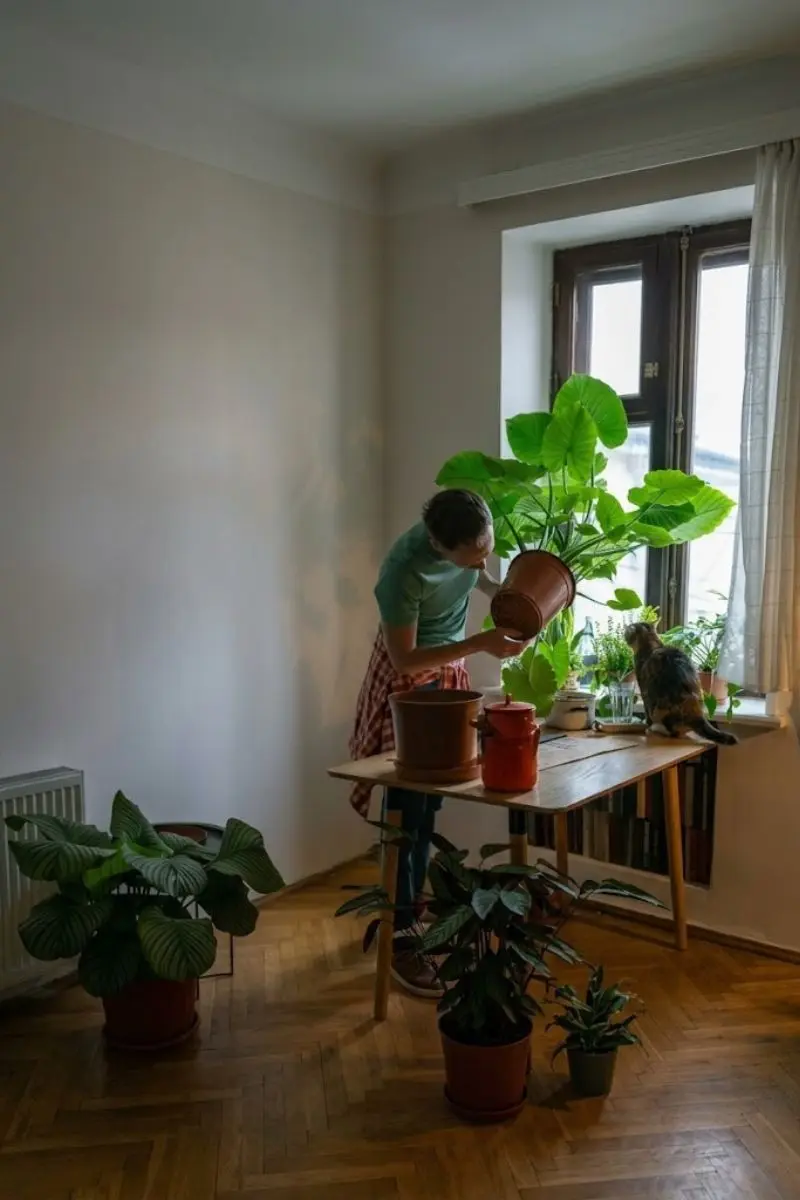
A crowded root system can eventually limit a plant’s growth, so repotting can help when the roots have filled the container and the plant needs more space.
Check the rootball rather than repotting simply because the plant looks sparse. If the roots are densely circling the container or growing through the drainage holes, it may be time to move the plant into a slightly larger pot.
Don’t jump to a much bigger container. A pot that’s too large can hold excess moisture around the roots. Choose a new container only modestly larger than the current one.
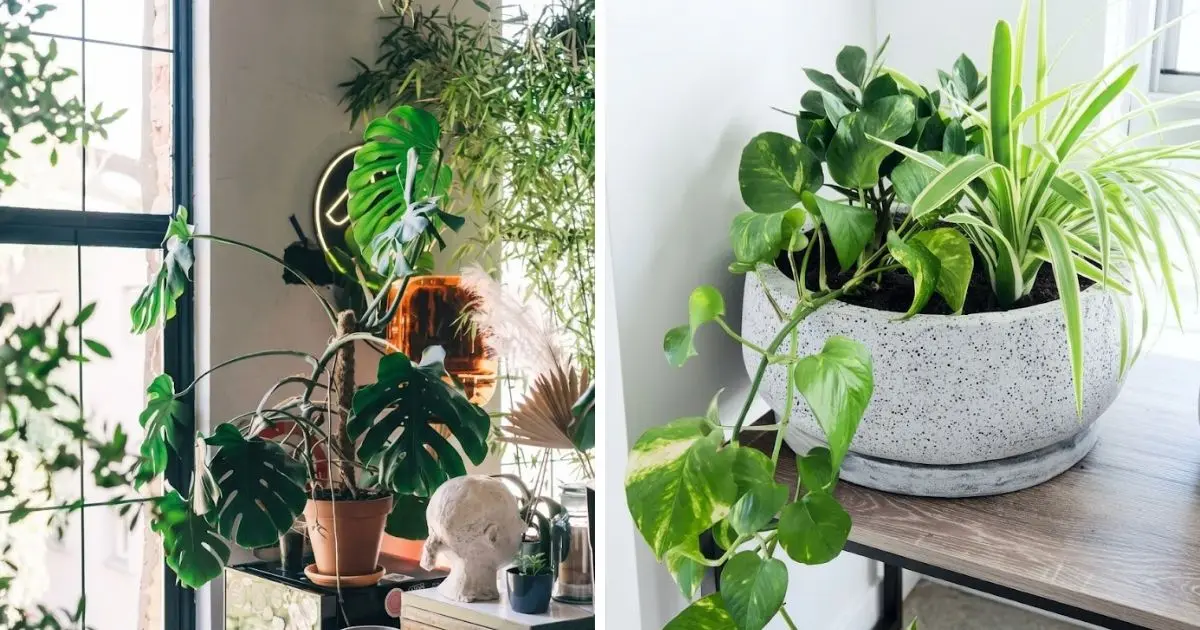
6. Combine Compatible Plants for a Fuller-Looking Pot
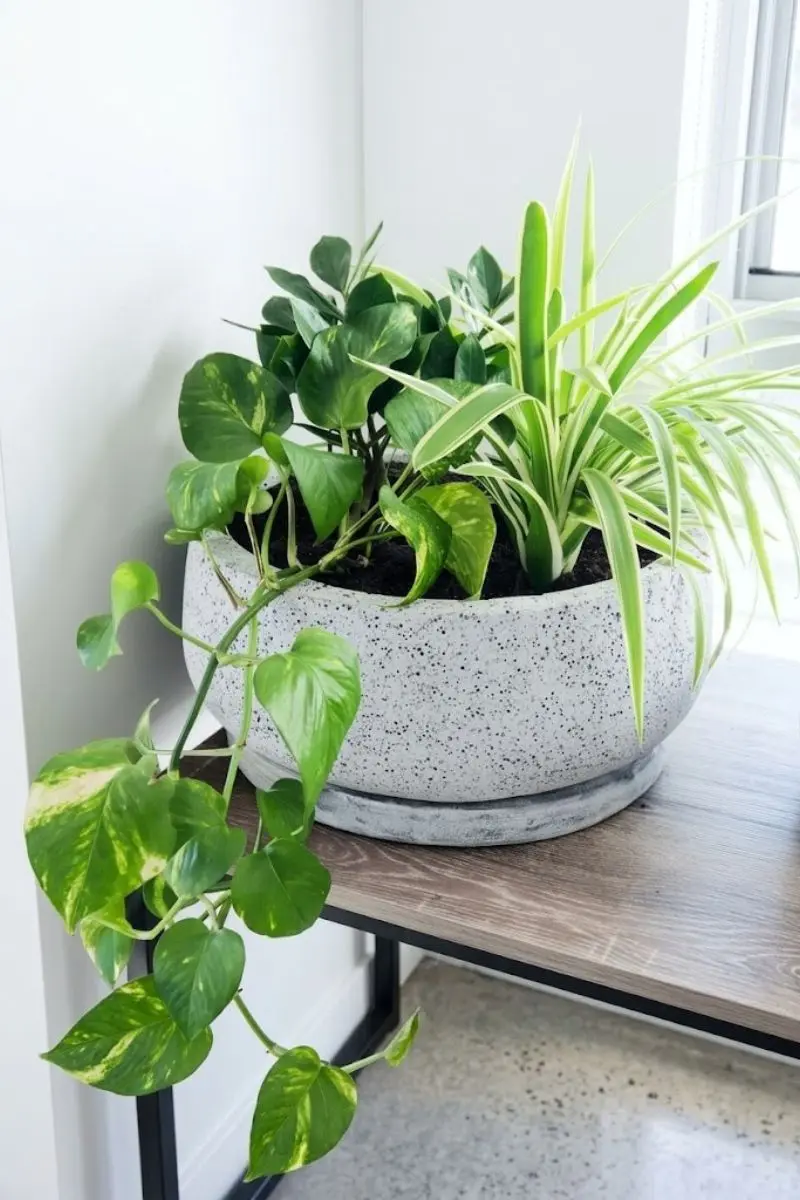
If you want a container to look fuller without waiting for one plant to branch out, consider combining compatible plants with different growth habits.
An upright plant paired with a mounding or trailing plant can fill empty space around the base and edges of a container. Choose plants with similar light, watering, and other care requirements so they can grow well together.
This approach makes the overall planting look fuller—it doesn’t make the original plant itself grow bushier.
7. Propagate Cuttings to Fill Out a Sparse Pot
For houseplants that root readily from stem cuttings, propagation can give you additional plants to grow alongside the original.
Pothos is especially well suited to this approach. Root healthy stem cuttings, then plant several rooted cuttings together in the same container to create a denser-looking display.
Once the new plants are established, they can help fill gaps much sooner than waiting for a single plant to spread.
Not every houseplant can be propagated this way, so use this method only for plants that are suitable for stem cuttings. For those that are, it’s a practical way to turn a few healthy stems into a fuller-looking pot.