Table of Contents
Creating a credible, immersive jungle ecosystem at home requires more than just accumulating large leaves. The most effective indoor layouts rely as much on negative space and humble understory layers as they do on dense, towering foliage.
By balancing massive architectural statement pieces with wild, trailing connective tissue, these twelve varieties transform ordinary rooms into breathing, multi-layered sanctuaries.
1. Swiss Cheese Plant (Monstera deliciosa)
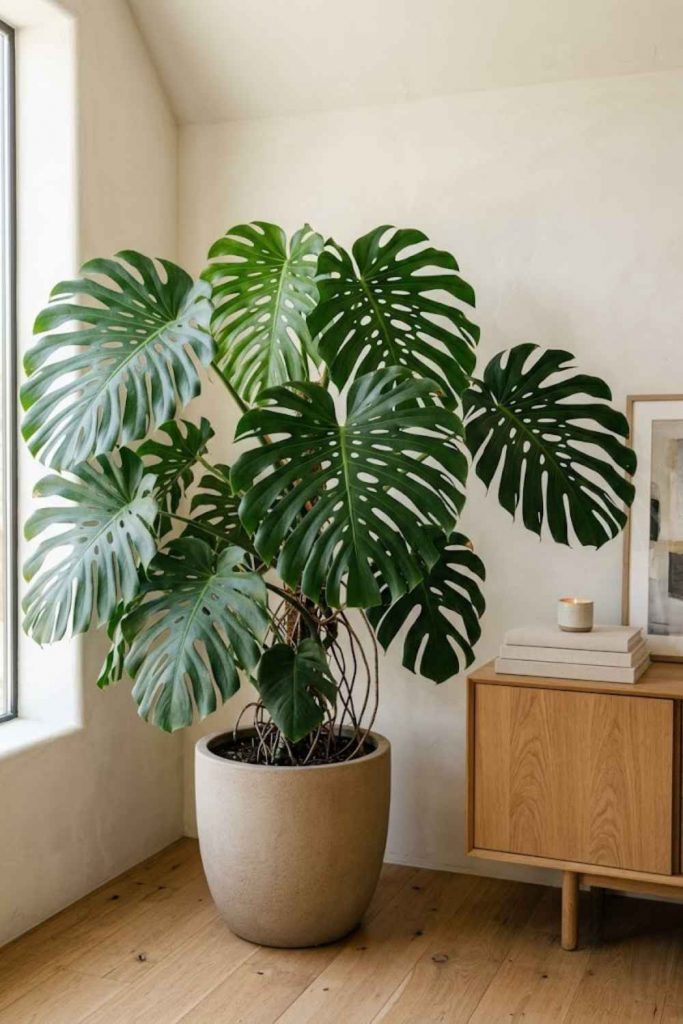
As a living anchor for tropical scale, this giant immediately sets the ecosystem’s upper boundary. The broad leaves radiate outward to claim expansive pockets of air, using natural, open slats that allow light to pass through to the lower canopy layers.
Light: Bright indirect light • Growth Habit: Sprawling climber • Mature Size: 6–9 feet tall • Pet Safe: No
2. Tree Philodendron (Philodendron thaumatophyllum)
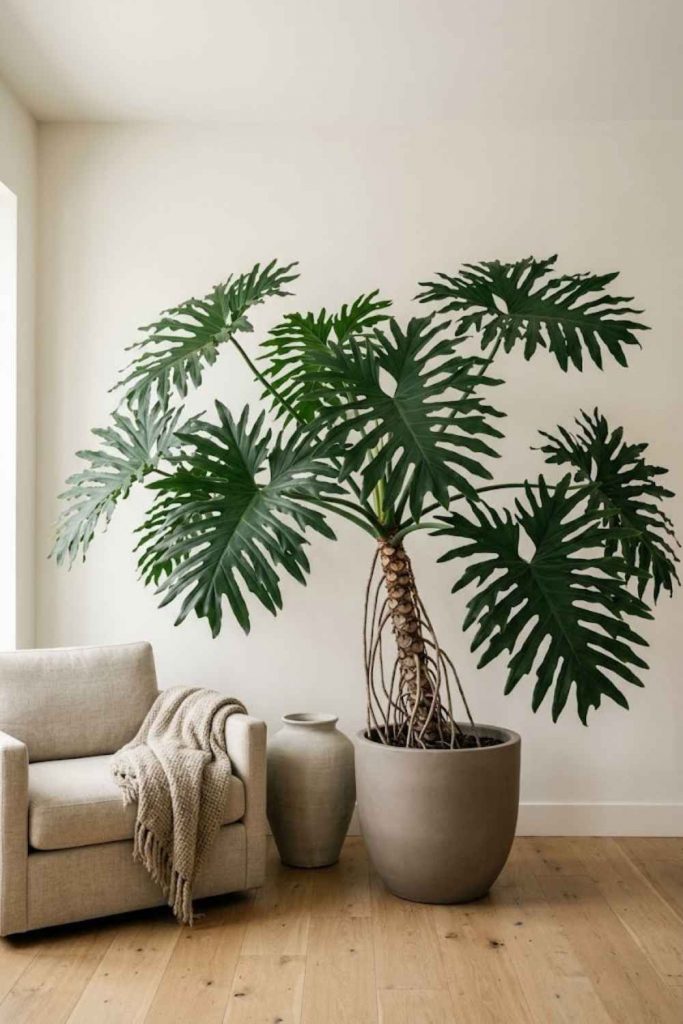
This species forms a thick, woody trunk over time, creating a woody mid-canopy structure rarely achieved by typical houseplants. It commands floor space through raw structural contrast, anchoring the mid-tier layout with its jagged, prehistoric silhouette.
Light: Medium to bright indirect light • Growth Habit: Upright/Arborescent • Mature Size: 5–8 feet tall and wide • Pet Safe: No
3. White Bird of Paradise (Strelitzia nicolai)
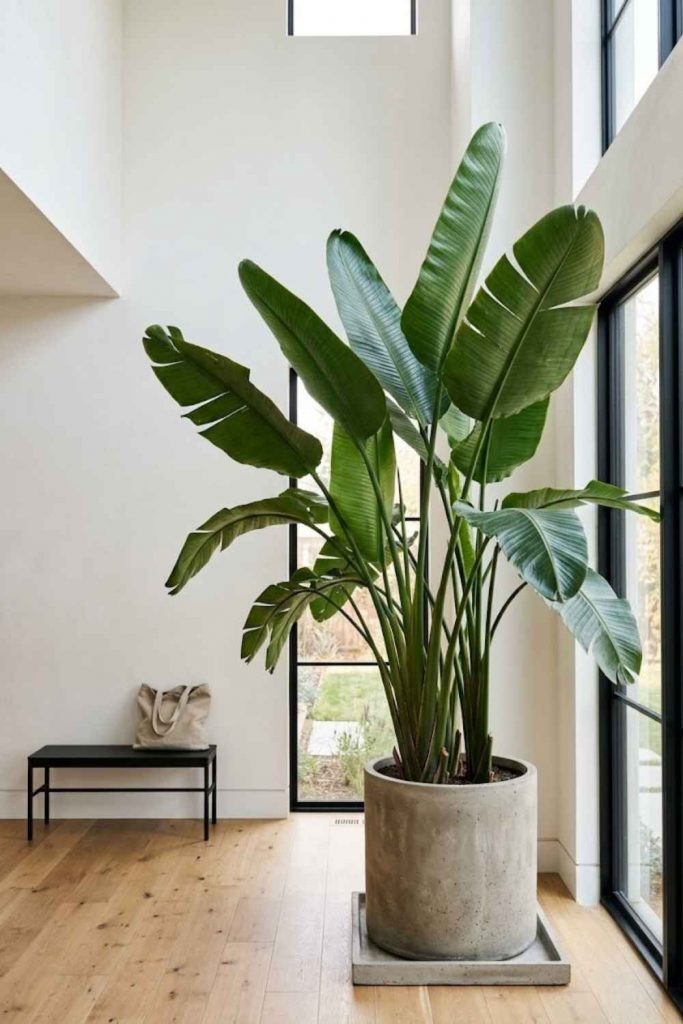
When a layout requires clean vertical height, this towering relative of the banana tree establishes the tallest canopy layer in the composition. The massive, paddle-shaped leaves shoot straight up before fanning out, forcing the eye upward and establishing a soaring green ceiling.
Light: Bright indirect to direct morning sun • Growth Habit: Tall/Upright • Mature Size: 8–10 feet tall • Pet Safe: No
4. Jade Pothos (Epipremnum aureum ‘Jade’)
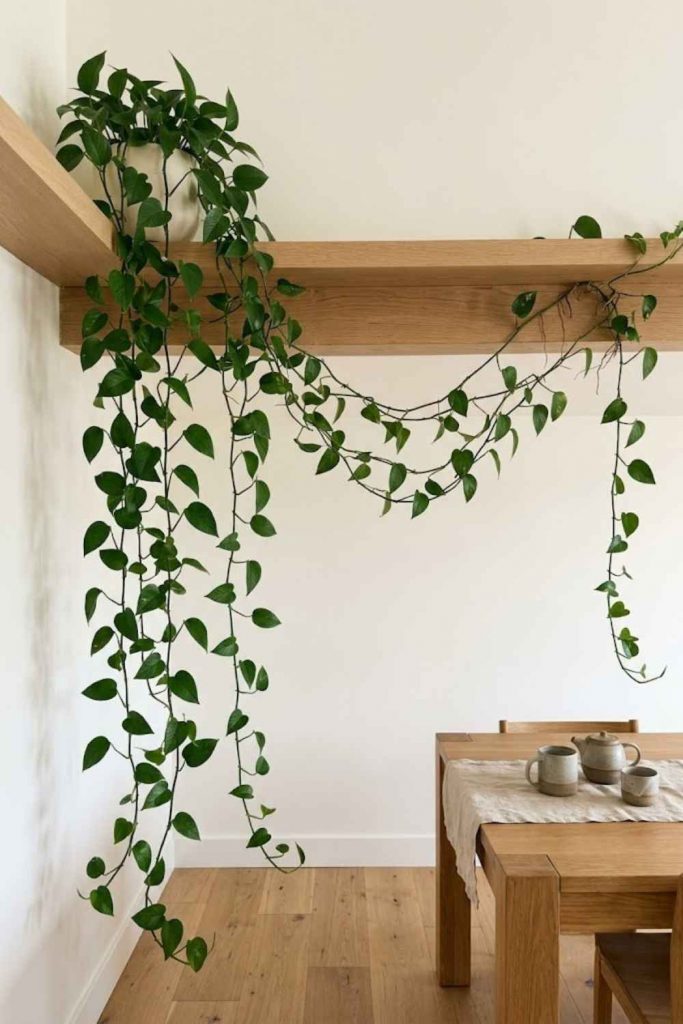
Few species weave a multi-layered habitat together as effortlessly as this solid jade vine. It acts as the wild connective tissue of the room, trailing loosely across beams and high ledges to soften hard lines with an unscripted, overlapping growth habit.
Light: Low to bright indoor light • Growth Habit: Trailing/Climbing • Mature Size: 10+ feet trailing • Pet Safe: No
5. Mini Monstera (Rhaphidophora tetrasperma)
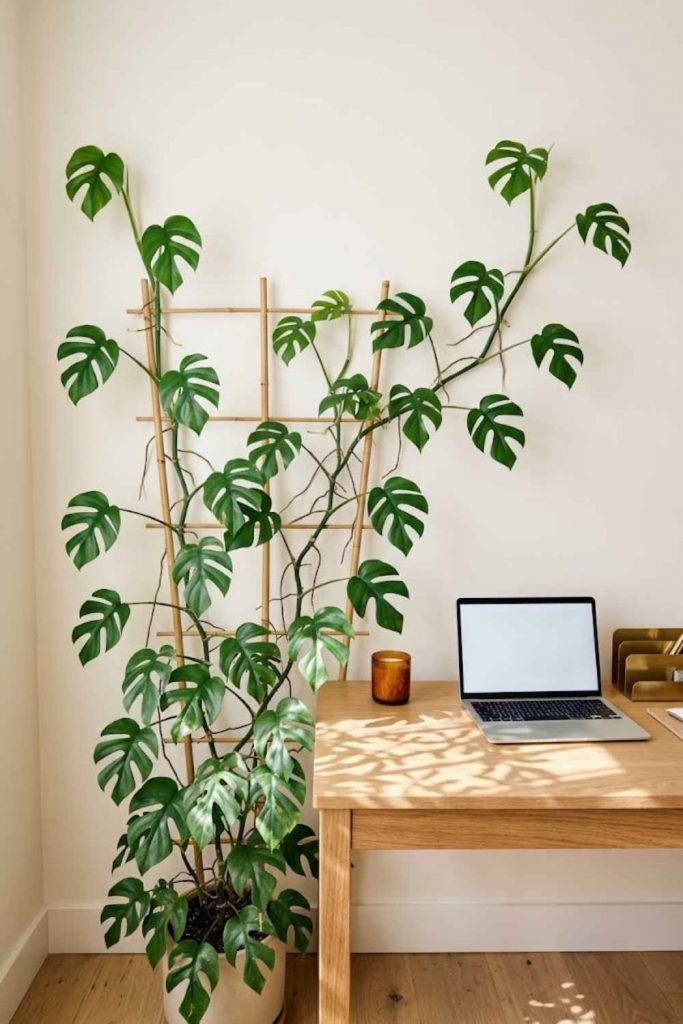
This fast-moving climber mimics the dense, uncontrolled scramble of an understory jungle vine. Its small, precisely split leaves overlap rapidly as it climbs, creating an intricate lattice of shadows that beautifully frames ambient light.
Light: Bright indirect light • Growth Habit: Vining/Climbing • Mature Size: 6–12 feet long • Pet Safe: No
6. Anthurium Clarinervium
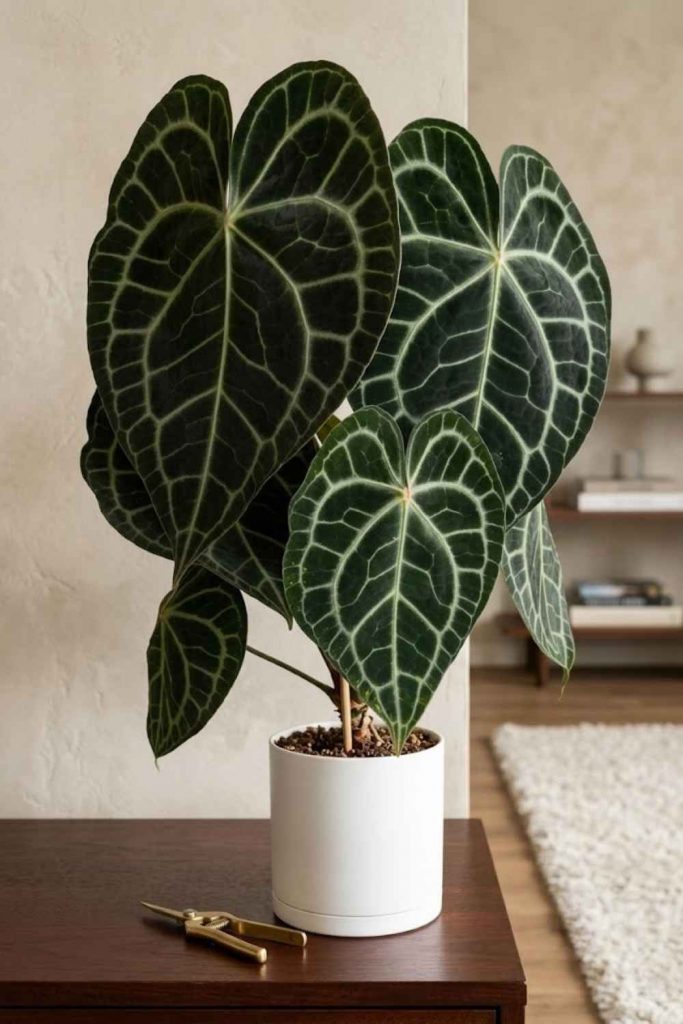
This ground-hugging species populates the deep jungle floor where daylight rarely penetrates. The thick leaves hold an absorbing dark velvet micro-texture, cleanly split by silver-white veins that capture the faint ambient light filtering down from the higher canopy layers.
Light: Medium to bright indirect light • Growth Habit: Upright/Clumping • Mature Size: 15–18 inches tall • Pet Safe: No
7. Fishtail Palm (Caryota mitis)
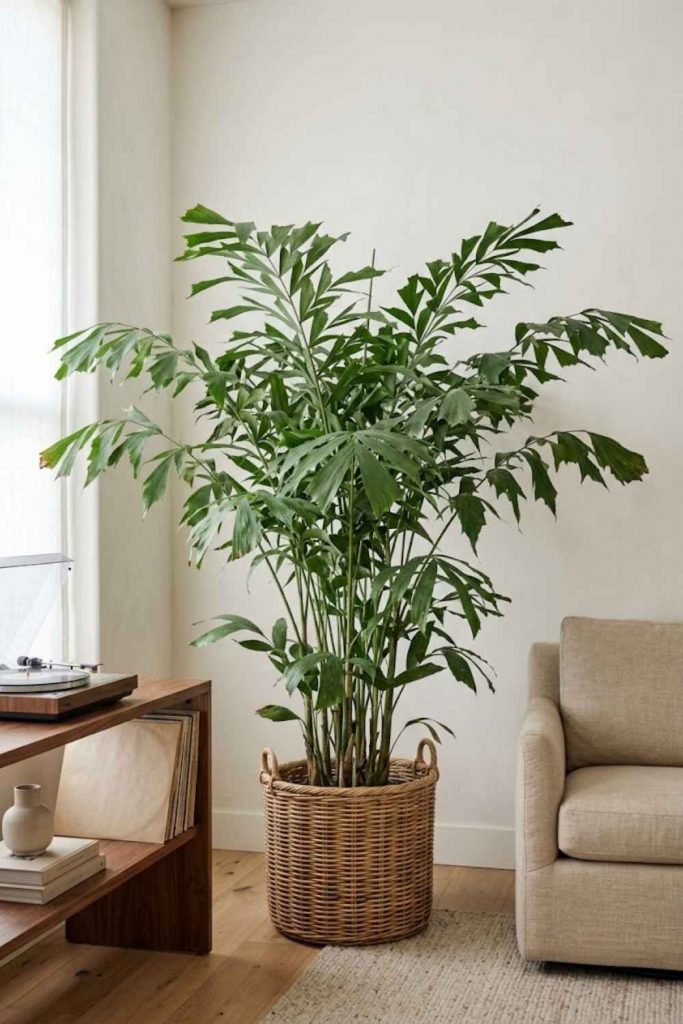
The jagged, triangular leaflets of this multi-stemmed palm look like torn fins rather than neat fronds. It introduces an uncultivated, wild mass of green into the mid-tier layout, successfully mimicking the chaotic, unedited density of a real tropical understory.
Light: Bright indirect light • Growth Habit: Multi-stemmed clump • Mature Size: 6–8 feet tall • Pet Safe: Yes
8. Crocodile Fern (Microsorum musifolium ‘Crocodyllus’)
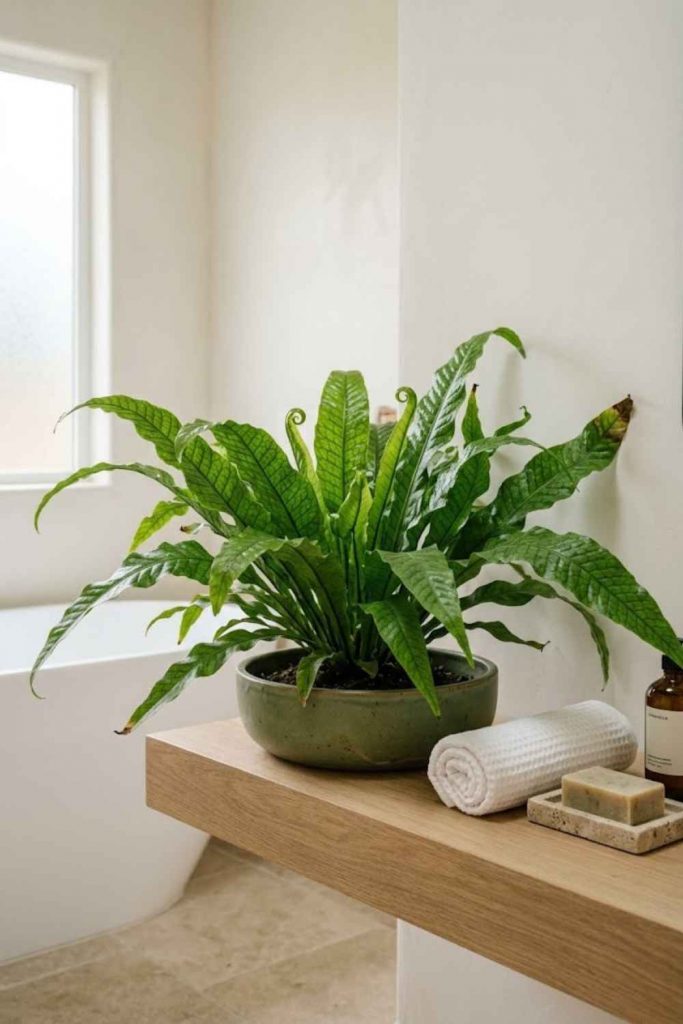
Thriving in the humid, damp pockets of the lower forest tiers, this fern stands out for its heavily textured fronds. The surface features an intricate puckered pattern that holds a wet-looking reflection, adding a rich layer of moisture-loving organic detail below eye level.
Light: Medium indirect light • Growth Habit: Tufted/Clumping • Mature Size: 2–3 feet tall • Pet Safe: Yes
9. Philodendron Gloriosum (Philodendron gloriosum)
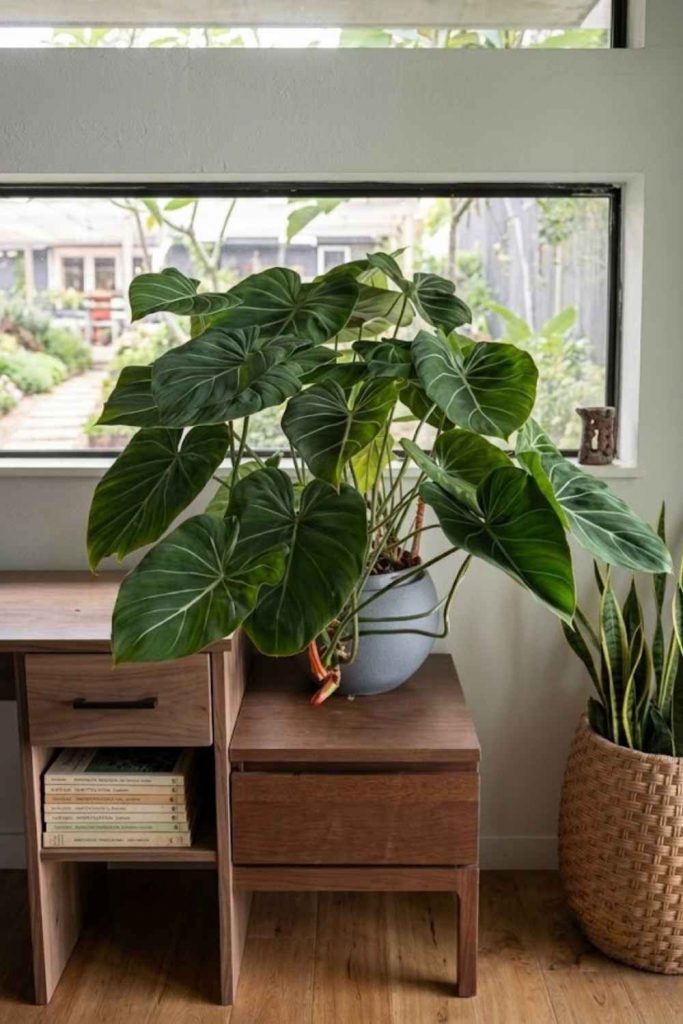
This terrestrial crawler moves horizontally across the forest floor rather than climbing toward the sky. Its oversized, velvety leaves spread outward along the soil line, casting heavy shadows that anchor the base of the display and ground the taller cane plants above it.
Light: Medium to bright indirect light • Growth Habit: Creeping/Prostrate • Mature Size: 1–2 feet tall, 3+ feet wide • Pet Safe: No
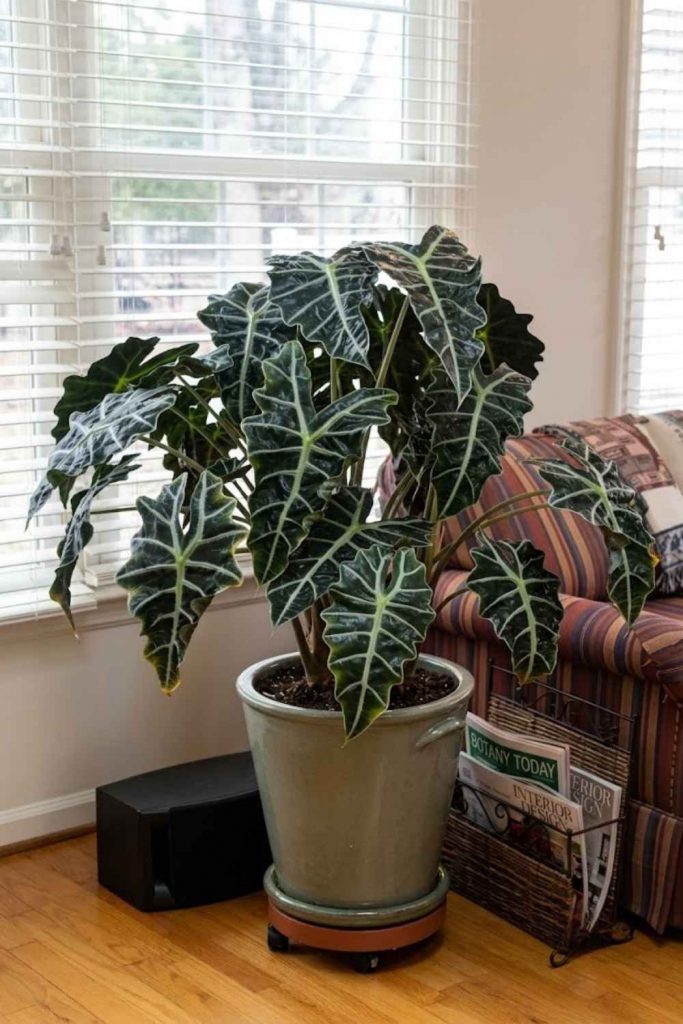
10. Alocasia Polly (Alocasia × amazonica ‘Polly’)
Credit: Reddit
Fierce, primeval angles define this low-growing forest specimen. The deeply saturated blades feature heavily wavy silver borders that frame a dark green surface, functioning as a sharp, highly textured transition layer between low creeping foliage and upright trunks.
Light: Bright indirect light • Growth Habit: Upright/Tuberous • Mature Size: 1–2 feet tall • Pet Safe: No
11. Giant Boston Fern (Nephrolepis exaltata ‘Bostoniensis’)
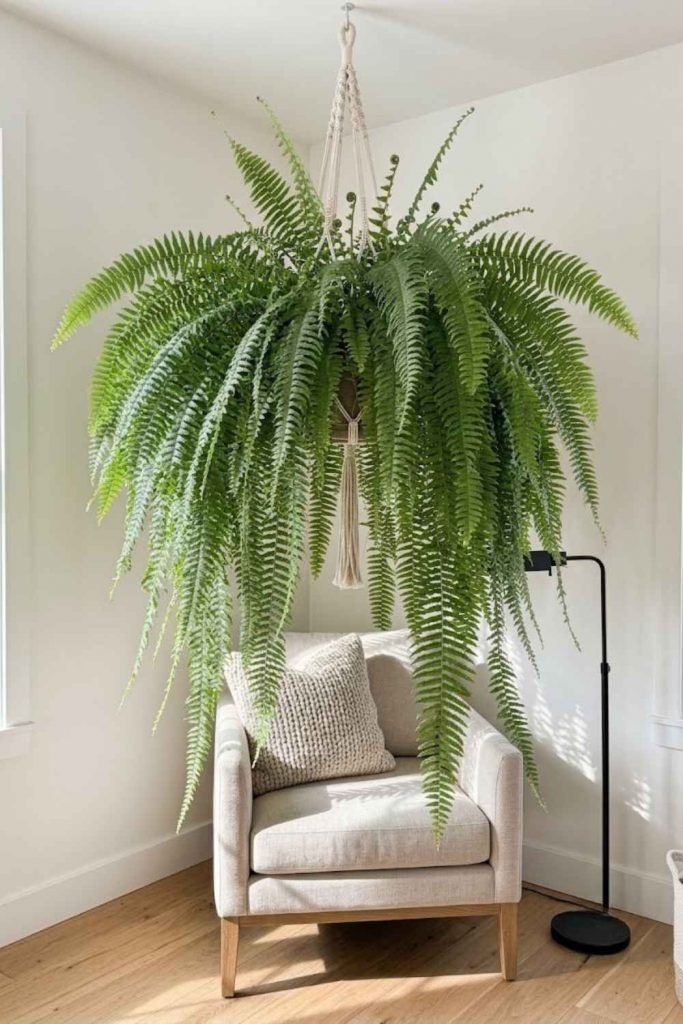
To introduce spontaneous movement, this classic fern delivers an exploding fountain of thousands of fine, weeping fronds. Suspended overhead, its multi-tiered habit filters the light into soft, dappled shadows that perfectly mimic a wild understory canopy.
Light: Bright filtered or medium indirect light • Growth Habit: Weeping/Arching • Mature Size: 2–3 feet tall and wide • Pet Safe: Yes
12. Staghorn Fern (Platycerium bifurcatum)
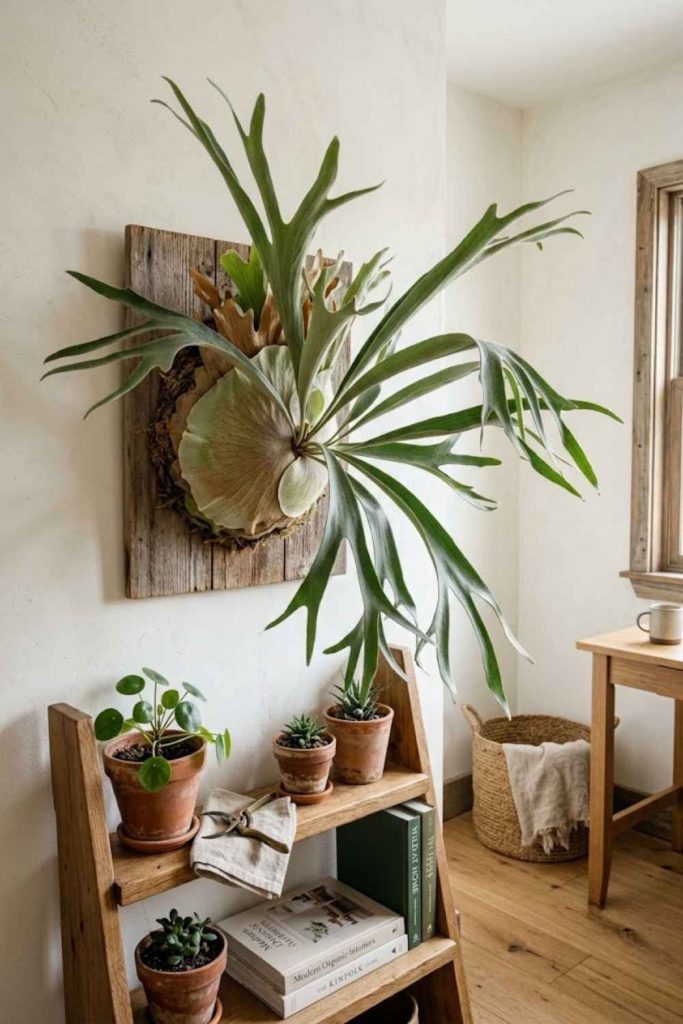
This true epiphyte completely abandons the soil, growing naturally anchored to tree trunks and vertical bark surfaces just as it would in the wild. Mounting its jagged, antler-shaped fronds to a wooden support introduces a genuine vertical ecosystem layer, making the indoor jungle feel remarkably authentic.
Light: Bright indirect light • Growth Habit: Epiphytic/Clumping • Mature Size: 2–3 feet wide • Pet Safe: Yes
Conclusion
These twelve varieties prove that a true indoor jungle is built on structural contrast rather than simple accumulation.
By intentionally pairing massive, architectural pillars with humble, trailing filler foliage, your layout ceases to look like a collection of isolated pots. It becomes a breathing, multi-layered habitat that feels completely alive.