Table of Contents
A good indoor bonsai does more than look pretty on a shelf. It adds shape, focus, and that finished feel a room can be missing — but only if you choose one that can actually handle life indoors.
That is where a lot of people get tripped up. Plenty of trees sold as “indoor bonsai” look promising at first, then struggle once they are living in a normal home.
This list narrows it down to bonsai trees that make more sense indoors, especially if you want something that fits your light, your space, and your routine.
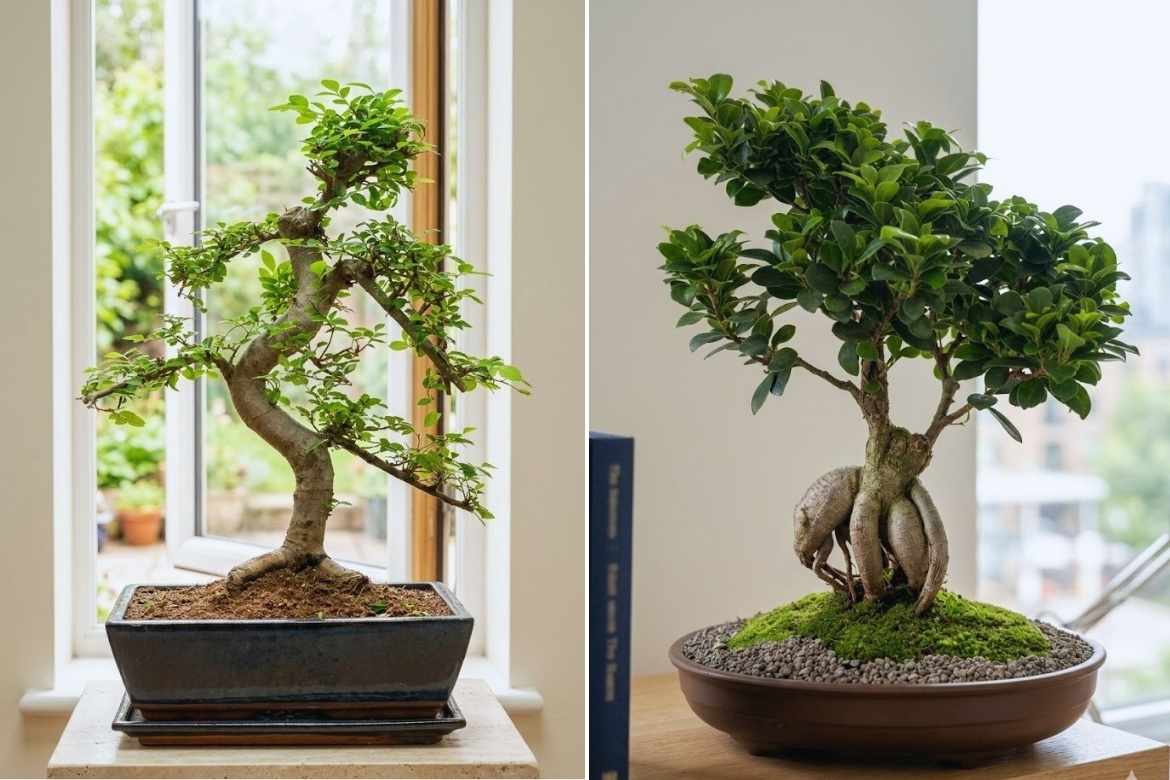
1. Tiger Bark Ficus Bonsai (Ficus microcarpa)
Tiger bark ficus is the one that usually matches the picture in your head when you think “indoor bonsai.” The sturdy trunk, tidy canopy, and glossy leaves give a room that finished look without much fuss.
It is also one of the most workable bonsai for everyday indoor life. Give it a bright window and a reasonably steady watering rhythm, and it stays a lot more easygoing than many bonsai that look charming in theory and grumpy by month two.
- Quick care: Bright light; water when the soil starts to feel slightly dry.
2. Ginseng Ficus Bonsai (Ficus microcarpa)
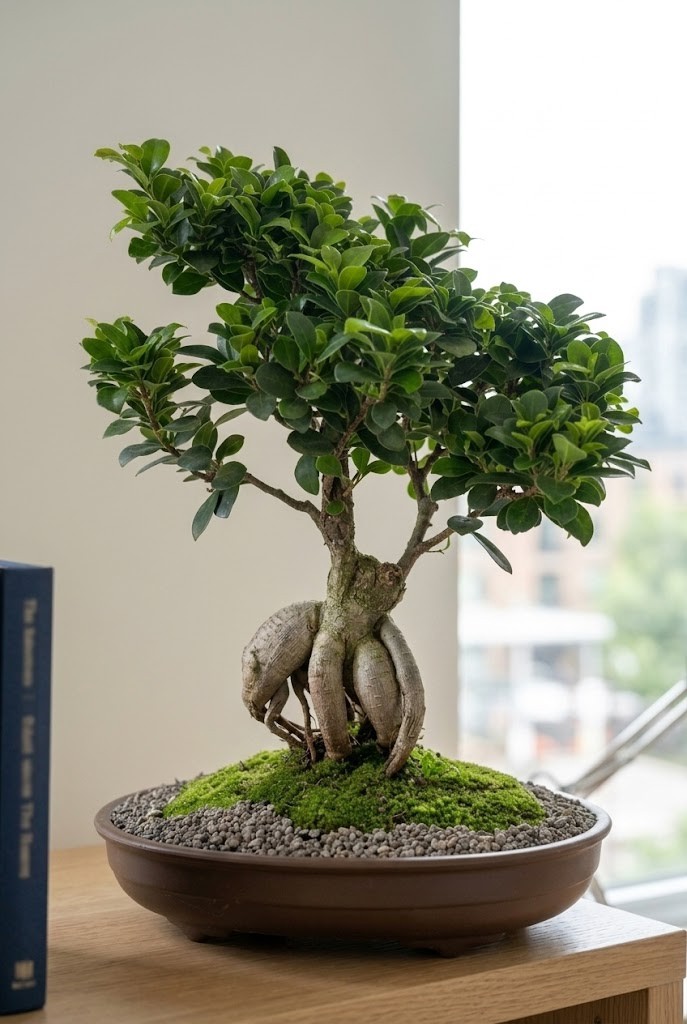
Ginseng ficus leans more sculptural than traditional, with swollen roots and a rounded crown that make it feel a little styled from the start. It looks especially good on a bookshelf, credenza, or home office shelf where the shape can do some of the decorating for you.
It still has the indoor tolerance ficus is known for, which is the real reason it works at home better than many bonsai with prettier reputations. Give it a bright window, and it is much easier to live with than the dramatic roots might suggest.
- Quick care: Bright light; water when the top soil starts to dry.
Related: How to Care for a Ficus Ginseng Bonsai
3. Dwarf Jade Bonsai (Portulacaria afra)
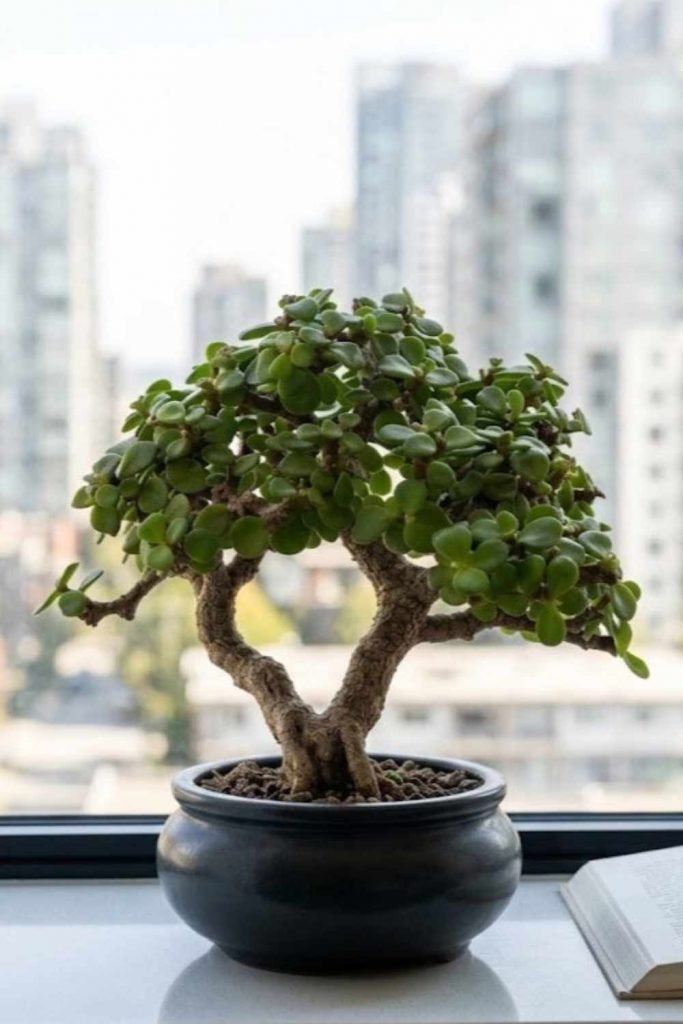
Dwarf jade has a compact, unfussy look that feels especially good in smaller spaces. The tiny succulent leaves and thicker stems keep it crisp and clean on a sunny windowsill or bright shelf, and it tends to look neat without asking for constant fussing.
It is less touchy about watering than many bonsai, which makes it easier to live with indoors. The tradeoff is simple: it wants real sun, not just a room that seems bright around noon.
- Quick care: Strong bright light; let the soil dry slightly between waterings.
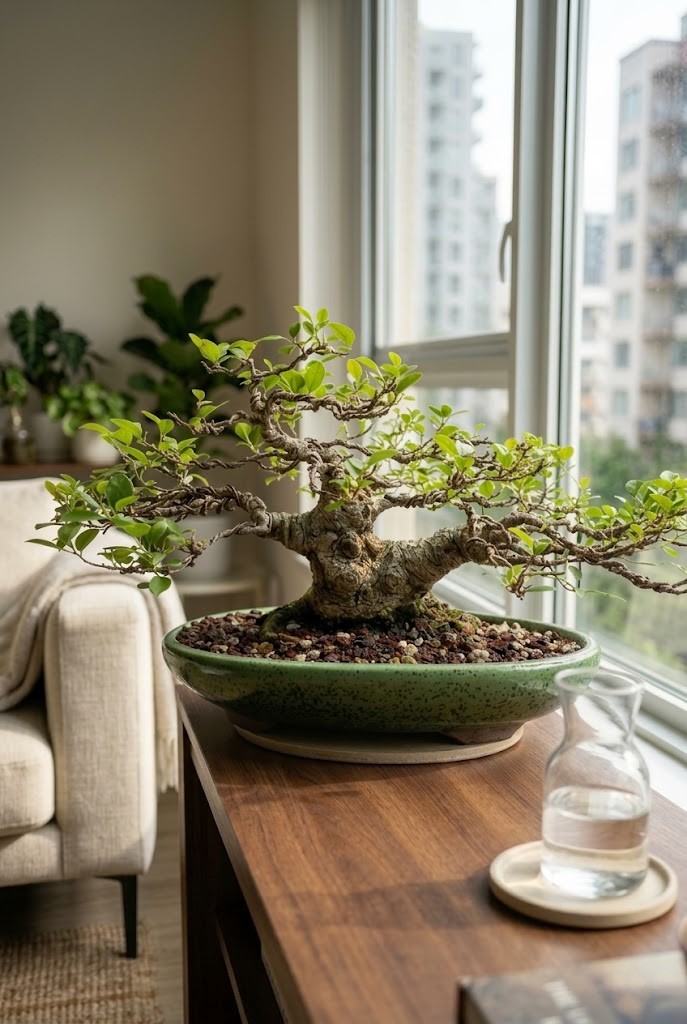
4. Fukien Tea Bonsai (Ehretia microphylla)
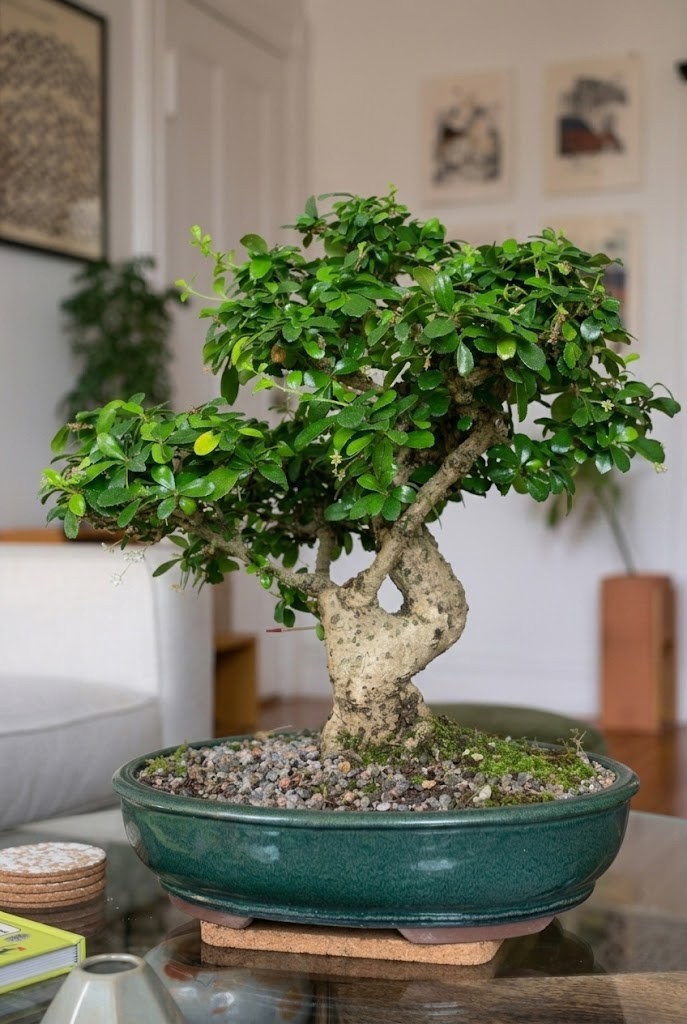
Fukien tea is beautiful, but it is not your easy indoor starter. It wants a genuinely bright window and a steadier routine than ficus or jade.
That is also why people keep wanting it. The fine branching, glossy leaves, and tiny flowers give it that unmistakable bonsai look, and it is the kind of tree you actually want to see up close.
- Quick care: Bright light; water when the surface starts to dry, but do not let it stay dry for long.
5. Hawaiian Umbrella Bonsai (Schefflera arboricola)
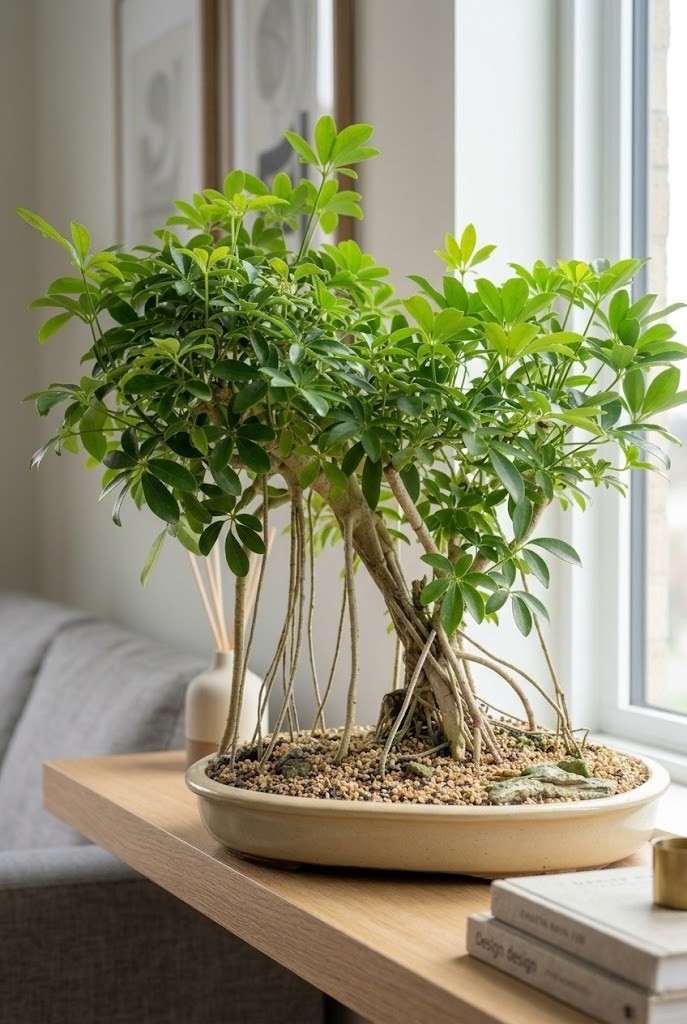
Hawaiian umbrella has a softer, looser shape than many bonsai, which is exactly why it feels easy to live with in an ordinary room. It has a relaxed, unprecious look that makes bonsai feel less intimidating from the start.
It is one of the more realistic picks for indoor growing because it handles normal home conditions better than many fussier bonsai. Bonsai energy, less bonsai drama.
- Quick care: Bright, indirect light; water when the top soil starts to dry.
6. Sweet Plum Bonsai (Sageretia theezans)
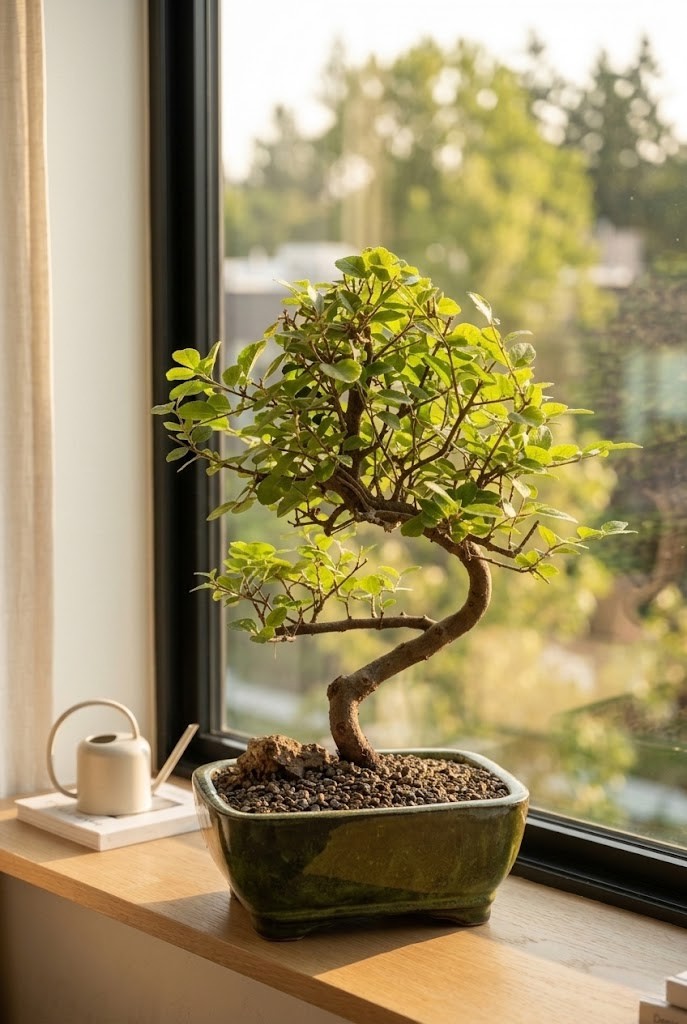
Sweet plum is not the bonsai to buy on a whim. It needs strong light and a bit more consistency than the easier indoor picks.
Get that part right, though, and it earns its keep fast. The tight branching and fine texture give it that graceful little-tree look that feels especially good on a narrow dresser or bright shelf.
- Quick care: Bright light; water when the surface starts to dry, but do not let it stay dry too long.
7. Brush Cherry Bonsai (Syzygium paniculatum)
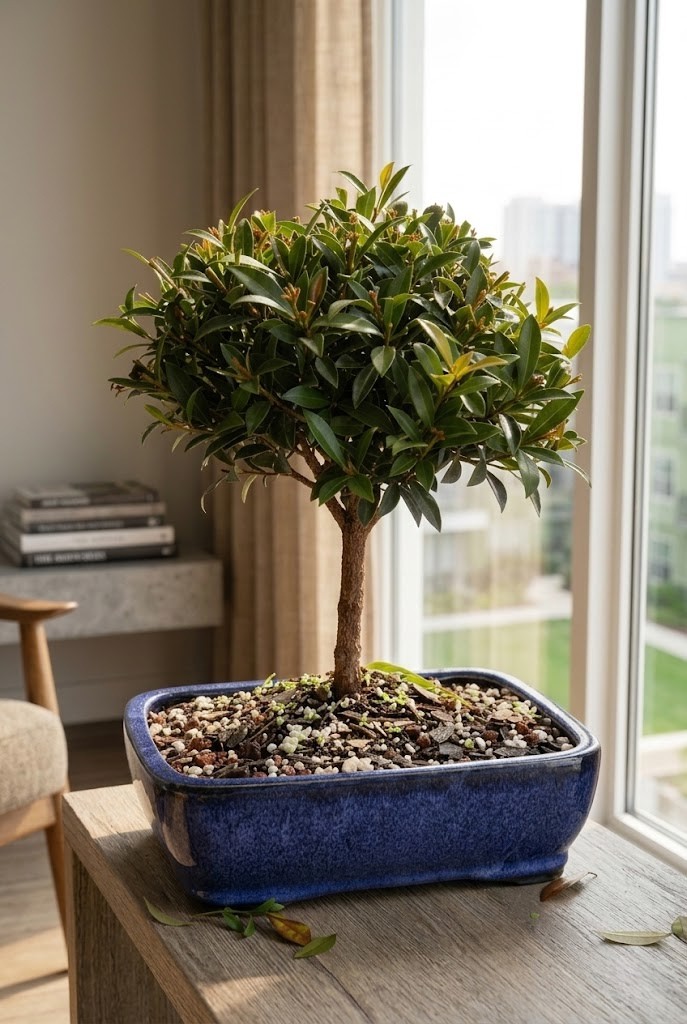
Brush cherry only really works indoors when the light is good. In the right bright spot, it stays crisp, polished, and much more put-together than softer tropical bonsai.
That cleaner, tidier look is the whole appeal. It suits a sunny office shelf, a dining-room sideboard, or an entry table in a room that already gets decent light.
- Quick care: Bright light; water when the top soil starts to dry.
8. Money Tree Bonsai (Pachira aquatica)
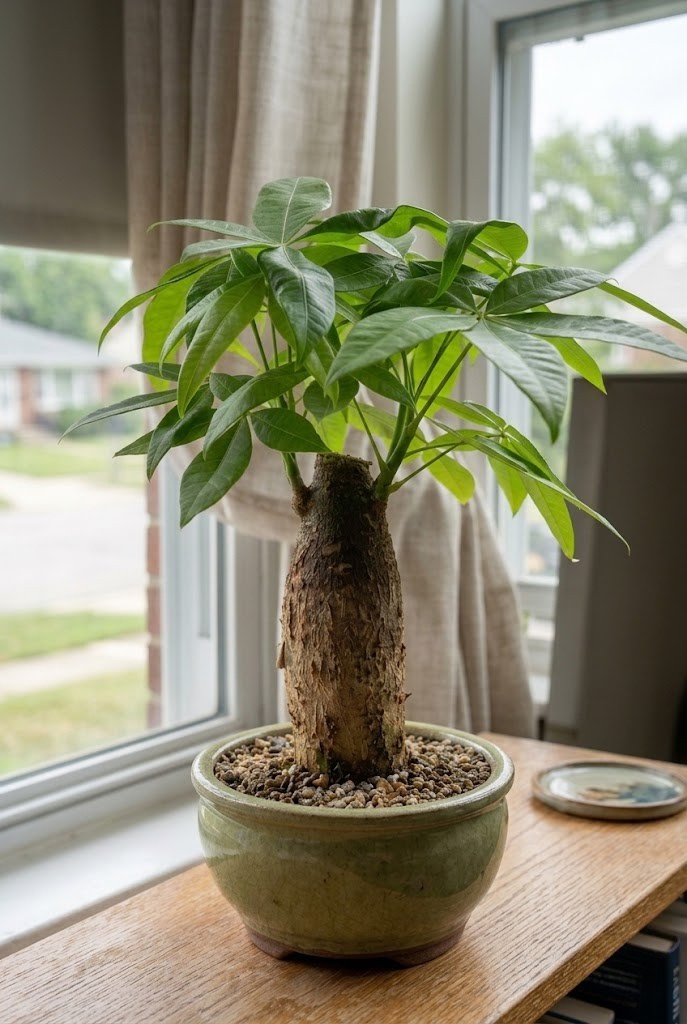
Money tree bonsai is easier to style than it is to neglect. The softer shape makes it feel relaxed and easygoing, but it still needs a bright window to stay full and healthy.
That softer look is exactly why it works in everyday rooms. It gives you a bonsai-like presence without the stricter silhouette that can feel too formal in a casual space.
- Quick care: Bright light; water when the top inch feels dry.
9. Weeping Fig Bonsai (Ficus benjamina)
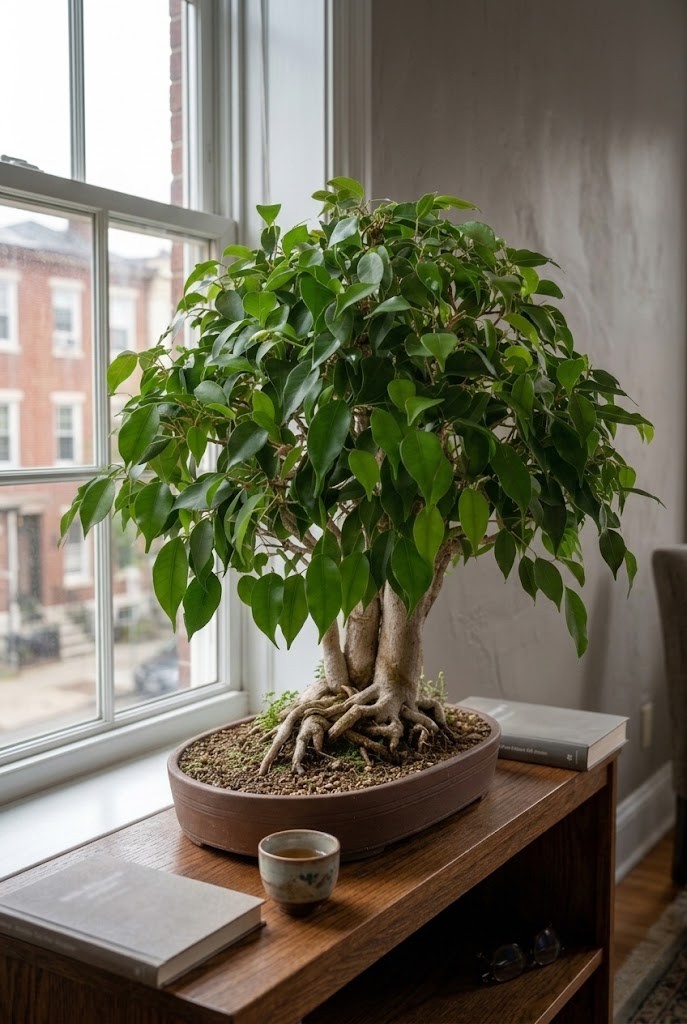
Weeping fig has a lighter, airier look than denser ficus bonsai, so it feels graceful rather than heavy. It works well on a bedroom dresser, a living room shelf, or a small plant stand near a bright window.
It still has ficus in its bones, but it is less forgiving about change than tiger bark or ginseng ficus. Pick a bright spot and leave it there.
- Quick care: Bright light; water when the top soil starts to dry.
10. Brazilian Rain Tree Bonsai (Chloroleucon tortum)
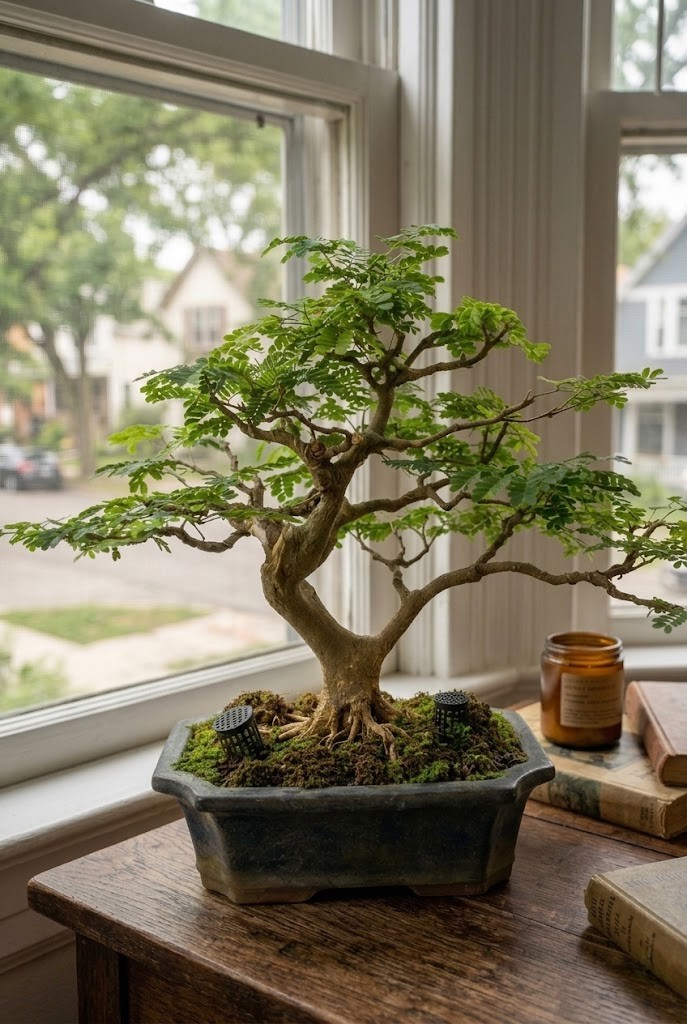
Brazilian rain tree looks finer, more intricate, and a little more collector-ish than the easier bonsai on this list. The detail is the point.
That look is the pull, but it is not the bonsai to learn on. Indoors, it makes the most sense if you already have better light and a steadier routine than the more forgiving options above.
- Quick care: Bright light; water when the soil starts to dry, but do not let it stay dry long.
11. Serissa Bonsai (Serissa japonica)
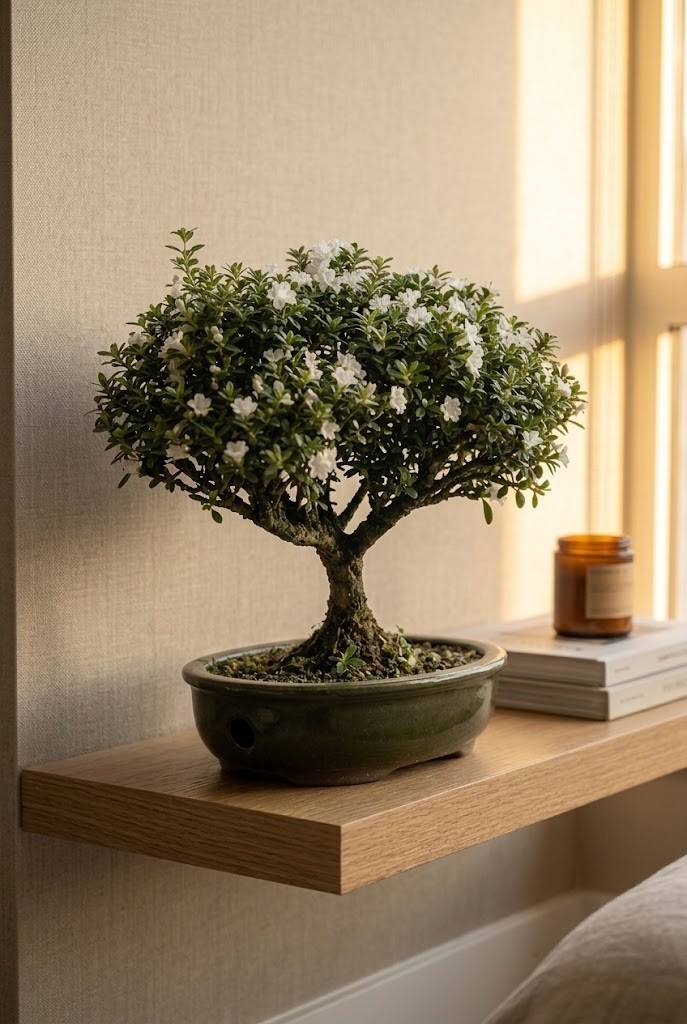
Serissa has a delicate, small-scale look and that tiny, storybook quality people often love in bonsai.
It can be lovely indoors, but it is not the easiest bonsai to settle into a normal routine. This one works best once you already have one bright, steady spot and do not tend to forget about your plants for long stretches.
- Quick care: Bright light; keep the soil lightly moist, not soggy.
12. Chinese Elm Bonsai (Ulmus parvifolia)
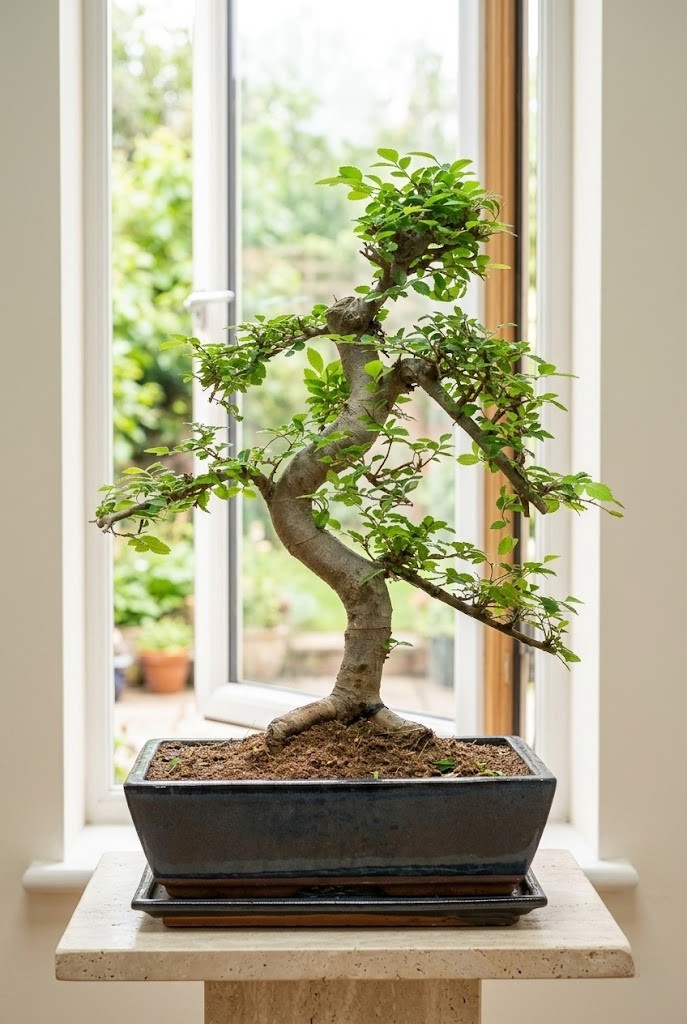
Chinese elm gives you the classic bonsai look people picture first, with fine branching and a more traditional silhouette than the softer tropical picks here.
If that traditional shape is what you want, this is one of the clearest ways to get it. It does best in a bright, flexible setup, not an ordinary room with just okay light.
- Quick care: Bright light; water when the surface starts to dry.
Conclusion
The best indoor bonsai is the one that fits your home as it really is, not the one that only looks good in a photo. If you want the easiest place to start, tiger bark ficus, ginseng ficus, dwarf jade, and Hawaiian umbrella are usually the most workable choices indoors. If you want a more classic bonsai feel, trees like Fukien tea, sweet plum, or Chinese elm can be worth it — but they usually ask for better light and a steadier routine.
FAQs
What is the easiest bonsai tree to grow indoors?
Tiger bark ficus is usually the easiest place to start because it is one of the most workable bonsai for ordinary indoor life. Ginseng ficus, dwarf jade, and Hawaiian umbrella are also friendlier than fussier choices like serissa or Fukien tea.
Can any bonsai tree live indoors year-round?
No. A lot of bonsai are better suited to outdoor growing, even if they are sold as indoor bonsai. For year-round indoor life, tropical and subtropical species usually make the most sense.
Where should you place an indoor bonsai tree?
Place it as close to a bright window as you can. In most homes, that means a windowsill, shelf, console, or dresser near the window rather than deeper in the room where the light only seems good.