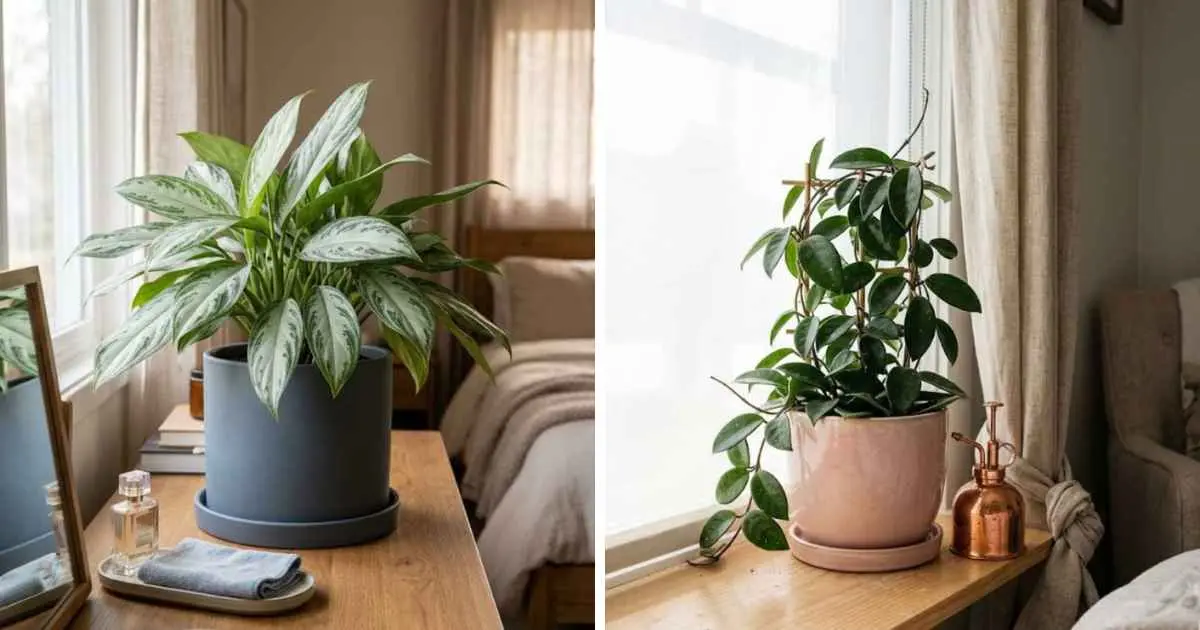
Table of Contents
Transforming your bedroom with greenery is a simple way to take the edge off sharp corners and heavy furniture.
However, bedrooms create a unique growing environment for living things. We tend to keep curtains or blinds drawn late into the morning to sleep better, creating a chronic low-light environment.
Furthermore, sleeping spaces accumulate high levels of microscopic dust from bedding and clothing, which quickly settles on leaves and blocks daylight.
To thrive here, a plant must tolerate long stretches of shade and quiet airflow, while growing neatly enough to stay out of your way. Here are the plants that actually handle the realities of a modern bedroom.
1. Parlor Palm (Chamaedorea elegans)
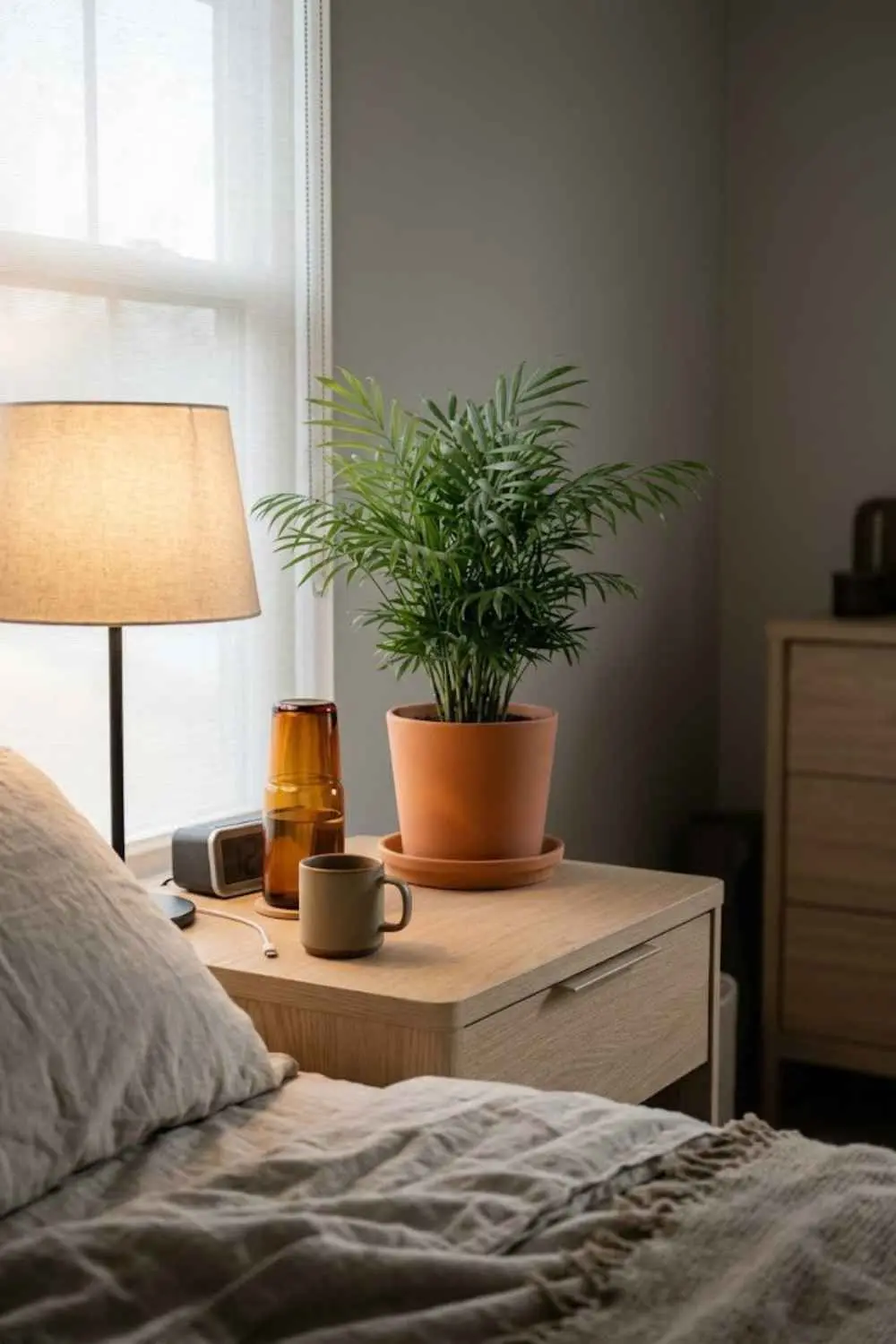
The Parlor Palm brings a soft, feathered texture exactly where you look when you first open your eyes. It stays compact and neat, clumping together in a dense little bush that won’t sprawl over your nightstand alarm clock or charging cables.
Because it is highly tolerant of lower light and quiet indoor air, it handles closed bedroom doors beautifully.
It grows at a very slow pace, meaning what you buy is generally what you get for several seasons. Keep it clear of active heating vents during the winter to avoid dry leaf tips.
Light: Low to medium indirect light • Water: Moderate watering • Pets: Pet friendly • Habit: Compact, bushy grower
2. Snake Plant (Sansevieria trifasciata)
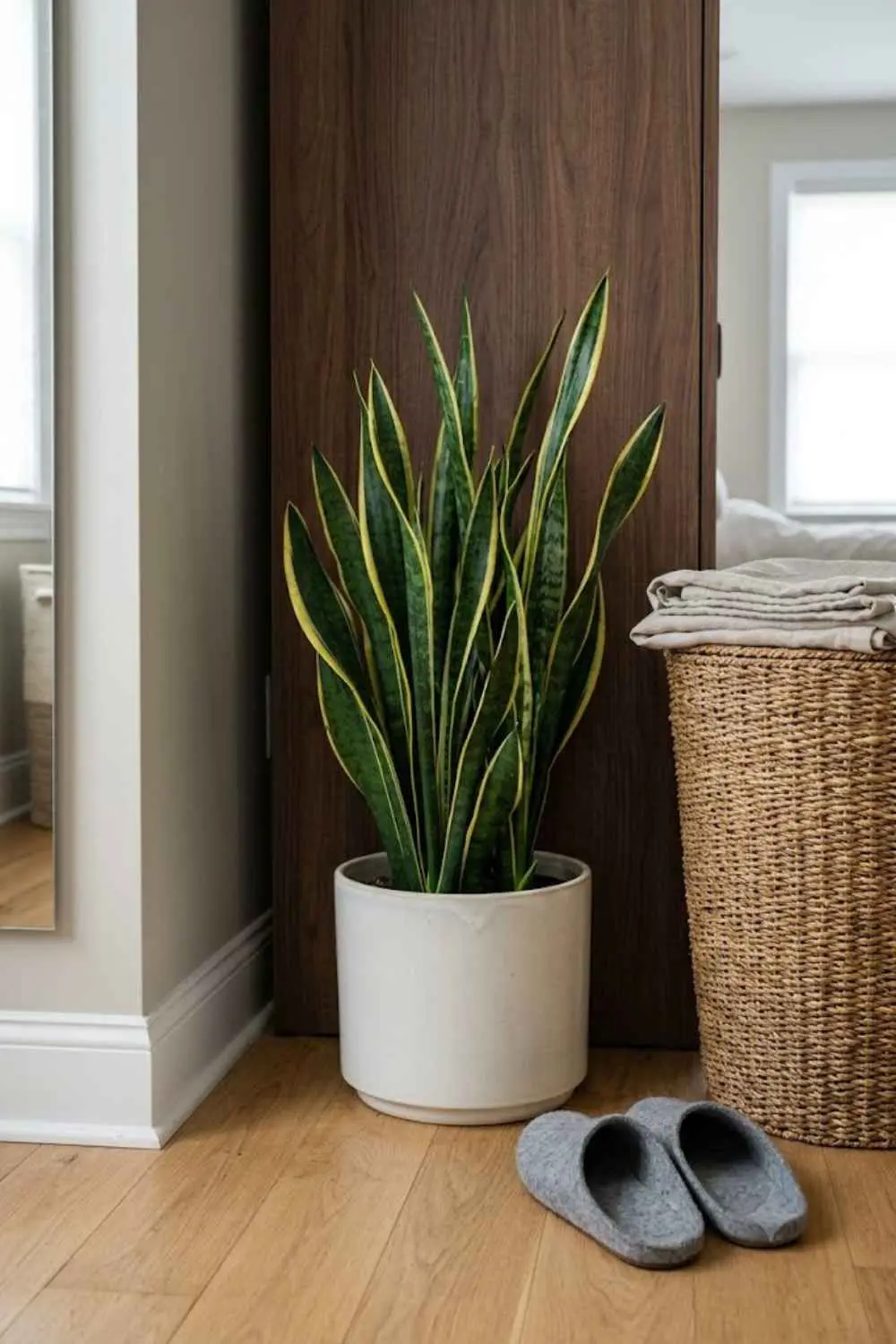
When bedroom floor space is limited, look for a plant that grows strictly straight up. The sharp, vertical leaves of the Snake Plant provide a distinct accent that slips easily into a tight gap next to a wardrobe or directly behind a laundry basket without blocking the walking path.
It handles low light easily and requires watering only once a month, making it an excellent low-maintenance choice for a room you mainly use at night.
Light: Low light tolerant • Water: Very low watering • Pets: Pet toxic • Habit: Strictly upright grower
3. ZZ Plant (Zamioculcas zamiifolia)
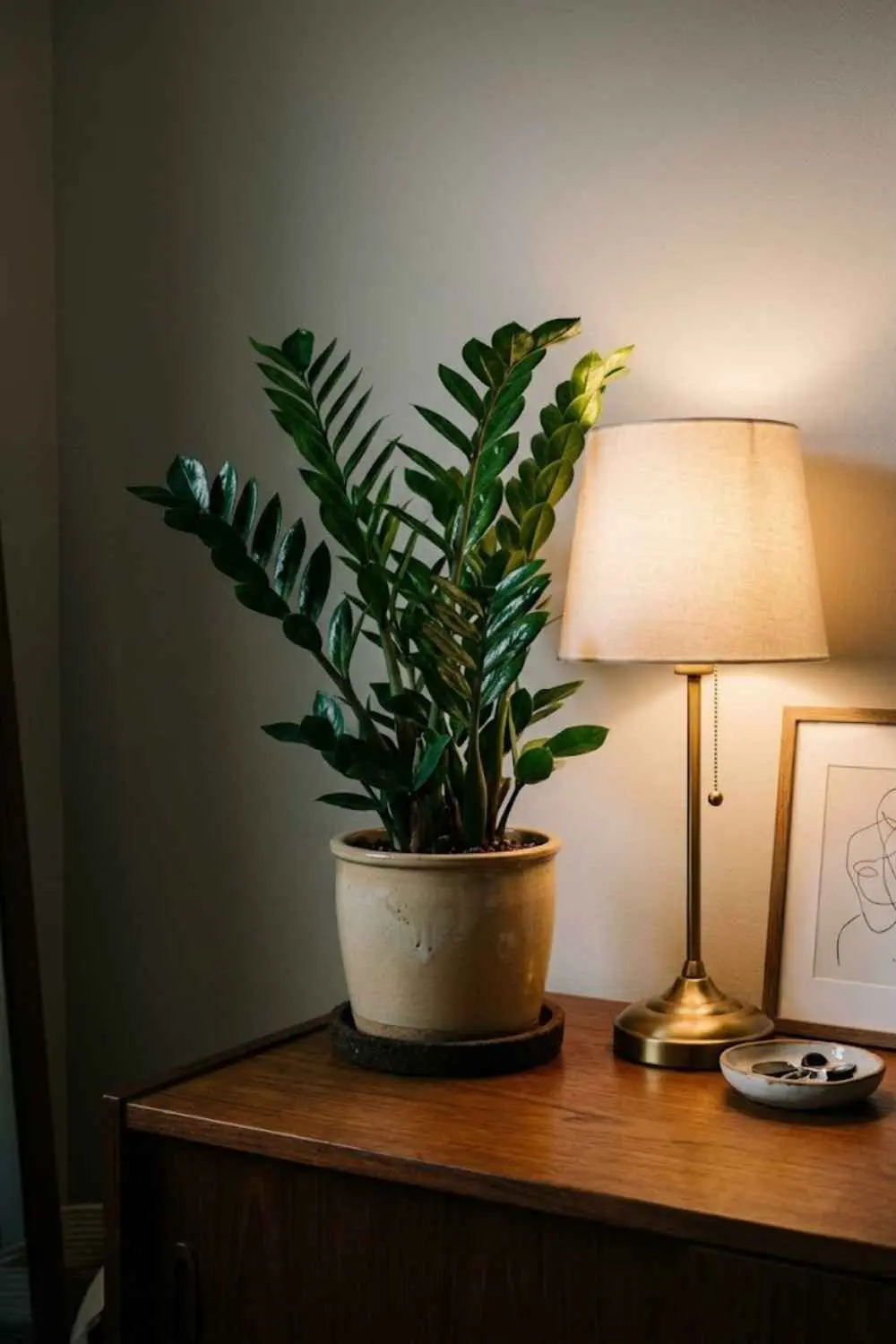
The ZZ Plant is an excellent choice for a dark chest of drawers or a corner shelf located far from windows. Its thick stems grow in an organized, vase-shaped cluster that stays close to the center of the pot rather than sprawling outward into nearby furniture.
The naturally glossy leaflets reflect ambient morning light, helping dim corners feel a little brighter.
It stores water beneath the soil efficiently, easily surviving long stretches of forgetfulness.
Light: Low light tolerant • Water: Very low watering • Pets: Pet toxic • Habit: Upright, vase-shaped grower
4. Chinese Evergreen (Aglaonema)
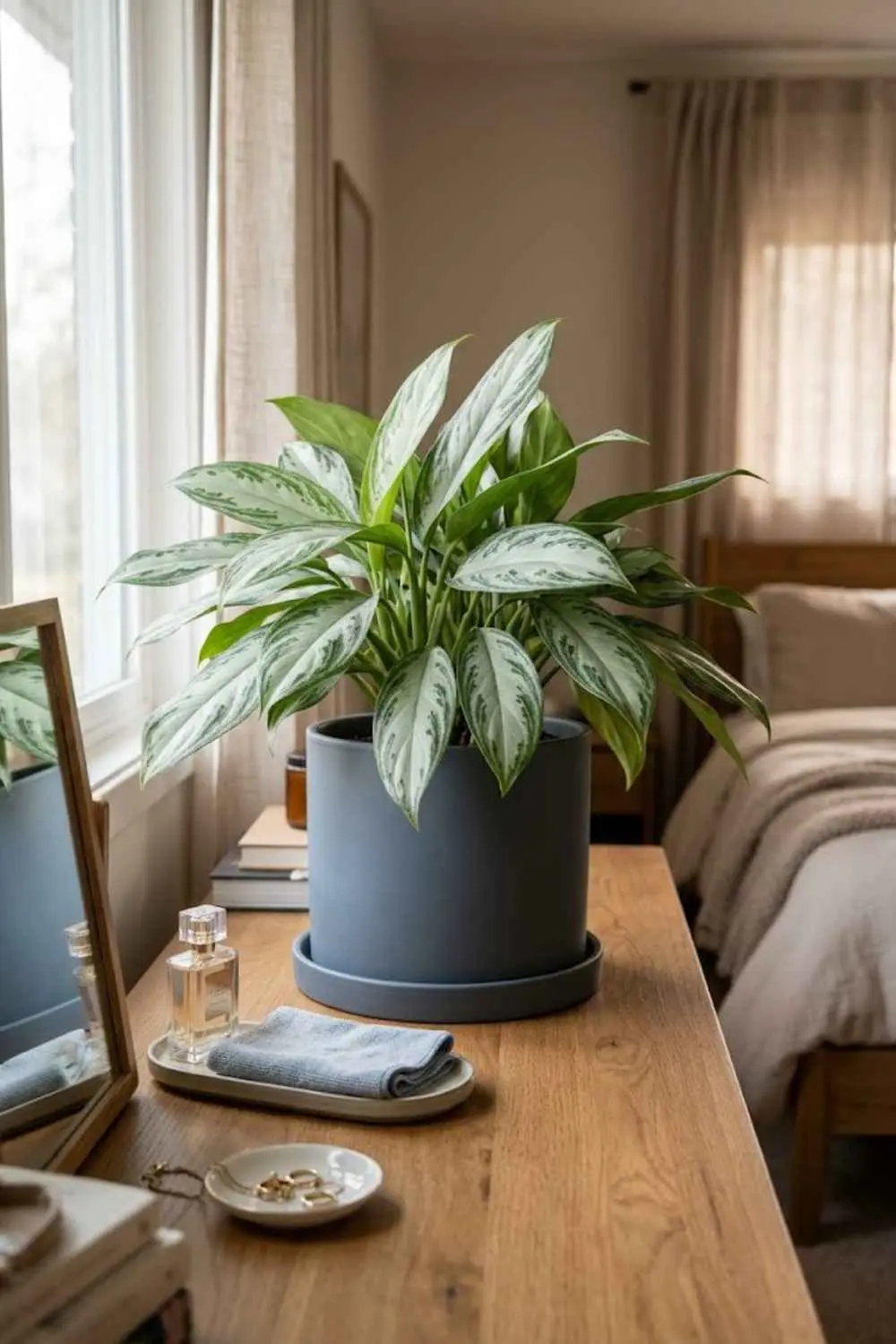
Muted color patterns make the Chinese Evergreen a reliable choice for softening the heavy look of wooden bedroom dressers. Available in shades ranging from silver-grey to pale cream, its large foliage handles low light with ease.
The smooth leaves are particularly simple to wipe free of floating dust with a damp cloth once a month, helping maximize light absorption.
Light: Low light tolerant • Water: Moderate watering • Pets: Pet toxic • Habit: Bushy, mounding grower
5. Heartleaf Philodendron (Philodendron hederaceum)
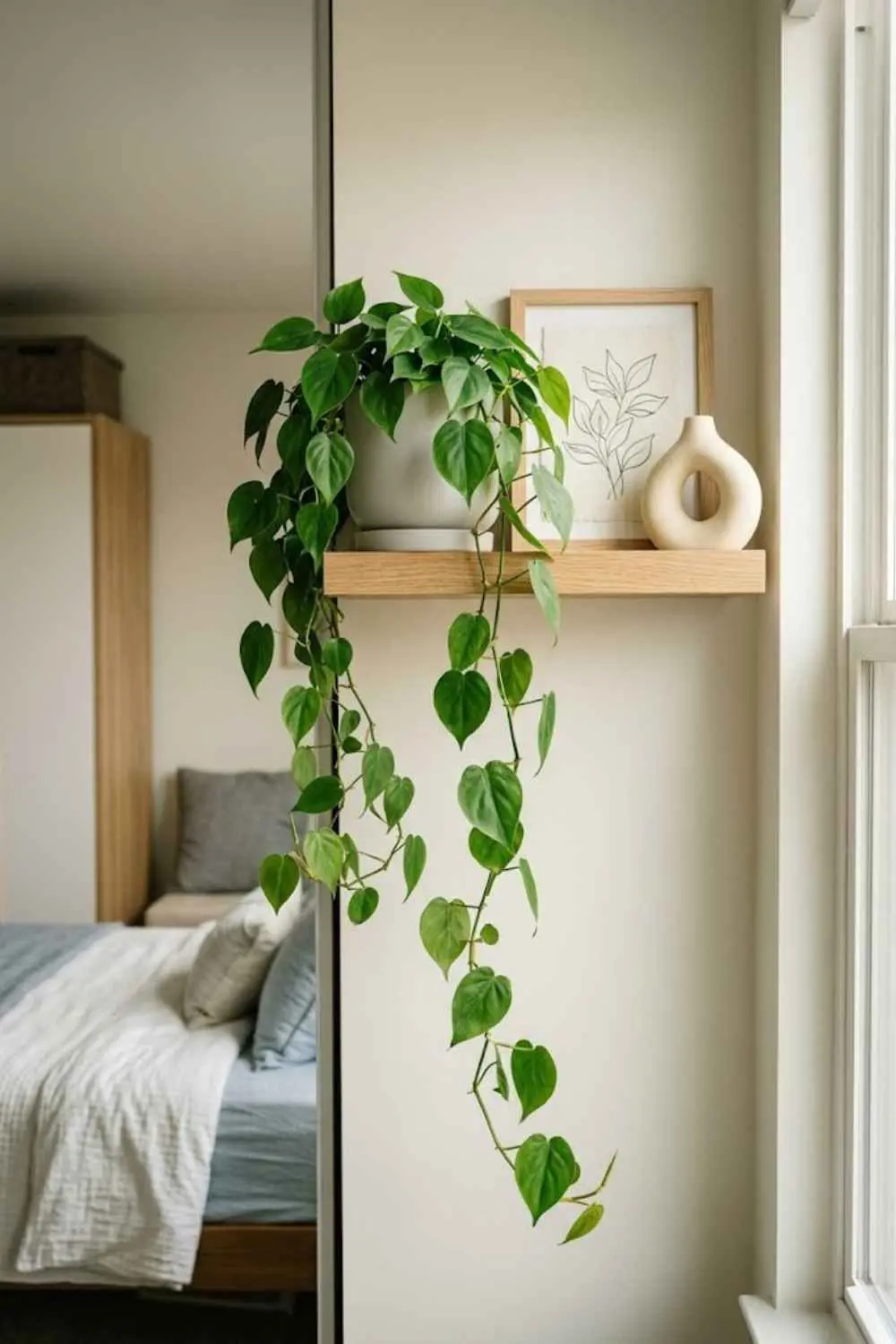
The Heartleaf Philodendron is an ideal vine for draping over a heavy armoire or a high floating shelf. Its small, heart-shaped leaves grow closely together along the stem, giving you a lush, cascading look without taking up valuable floor width.
It adapts beautifully to low light levels and handles quiet interior air well.
To keep the vines out of your way, simply pinch back the stems once a year to encourage thicker, more compact growth near the pot.
Light: Low to medium indirect light • Water: Moderate watering • Pets: Pet toxic • Habit: Trailing vine habit
6. Pothos (Epipremnum aureum)
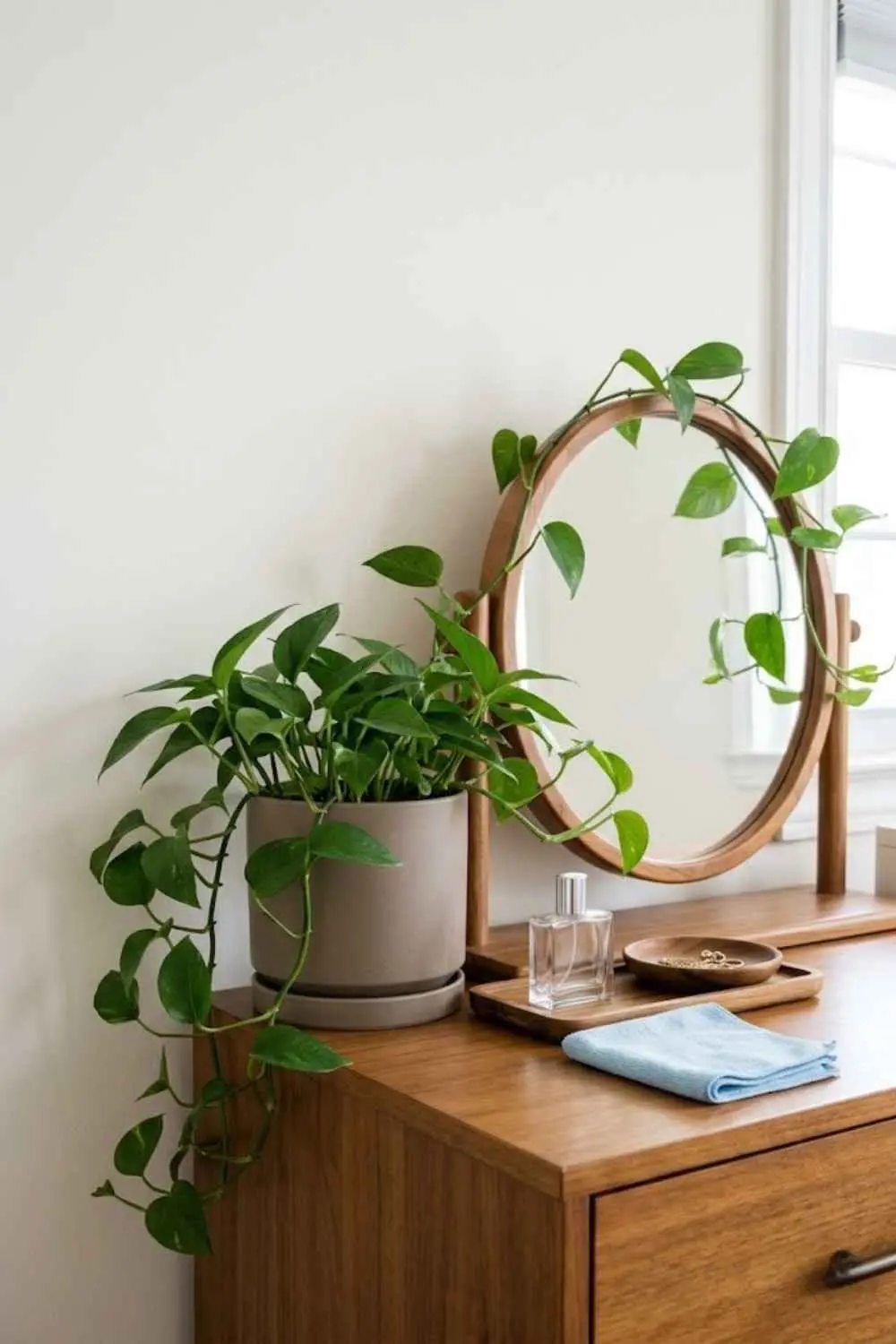
The Jade Pothos handles low light slightly better than its variegated relatives, making it a great addition to the top of a bedroom wardrobe or a floating wall ledge. It spills downward in soft strands that soften bare drywall corners.
Water when the top inch or two of soil feels dry; a slight droop is simply an extra reminder.
The smooth leaf surfaces make it simple to wipe clean whenever bedroom dust begins to accumulate.
Light: Low light tolerant • Water: Moderate watering • Pets: Pet toxic • Habit: Trailing vine habit
7. Wax Plant (Hoya carnosa)
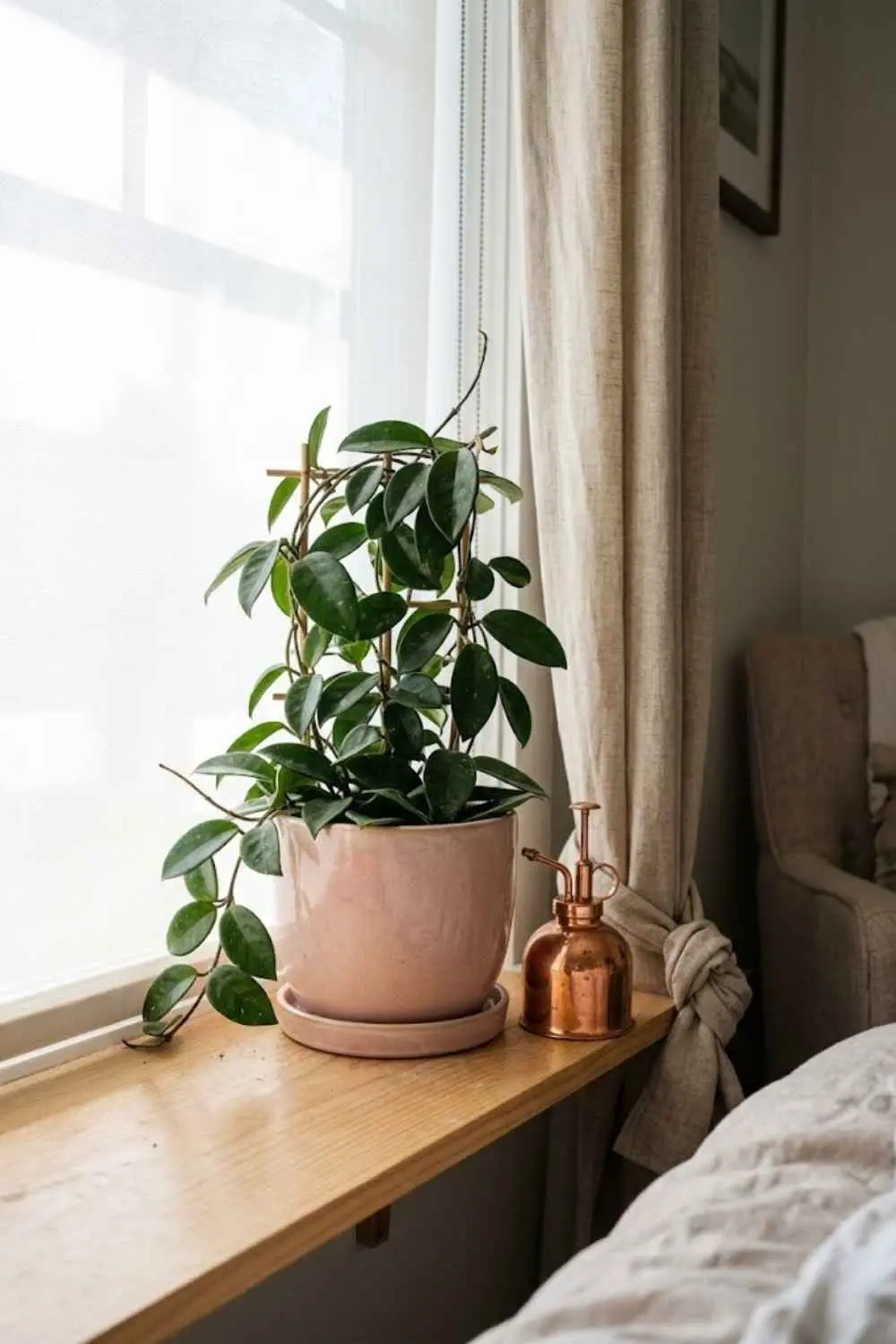
If your bedroom receives bright indirect light for much of the day, the Hoya Carnosa is a beautiful trailing choice for an open shelf. It showcases thick, leathery leaves that are unbothered by dry indoor warmth or long stretches of neglect.
Because the foliage has a slick, hard surface, floating dust cannot easily grip the leaves, making it simple to keep clean.
It requires minimal watering and rewards bright light with small clusters of pale flowers.
Light: Medium to bright indirect light • Water: Low watering • Pets: Pet friendly • Habit: Trailing / climbing vine
8. Cast Iron Plant (Aspidistra elatior)
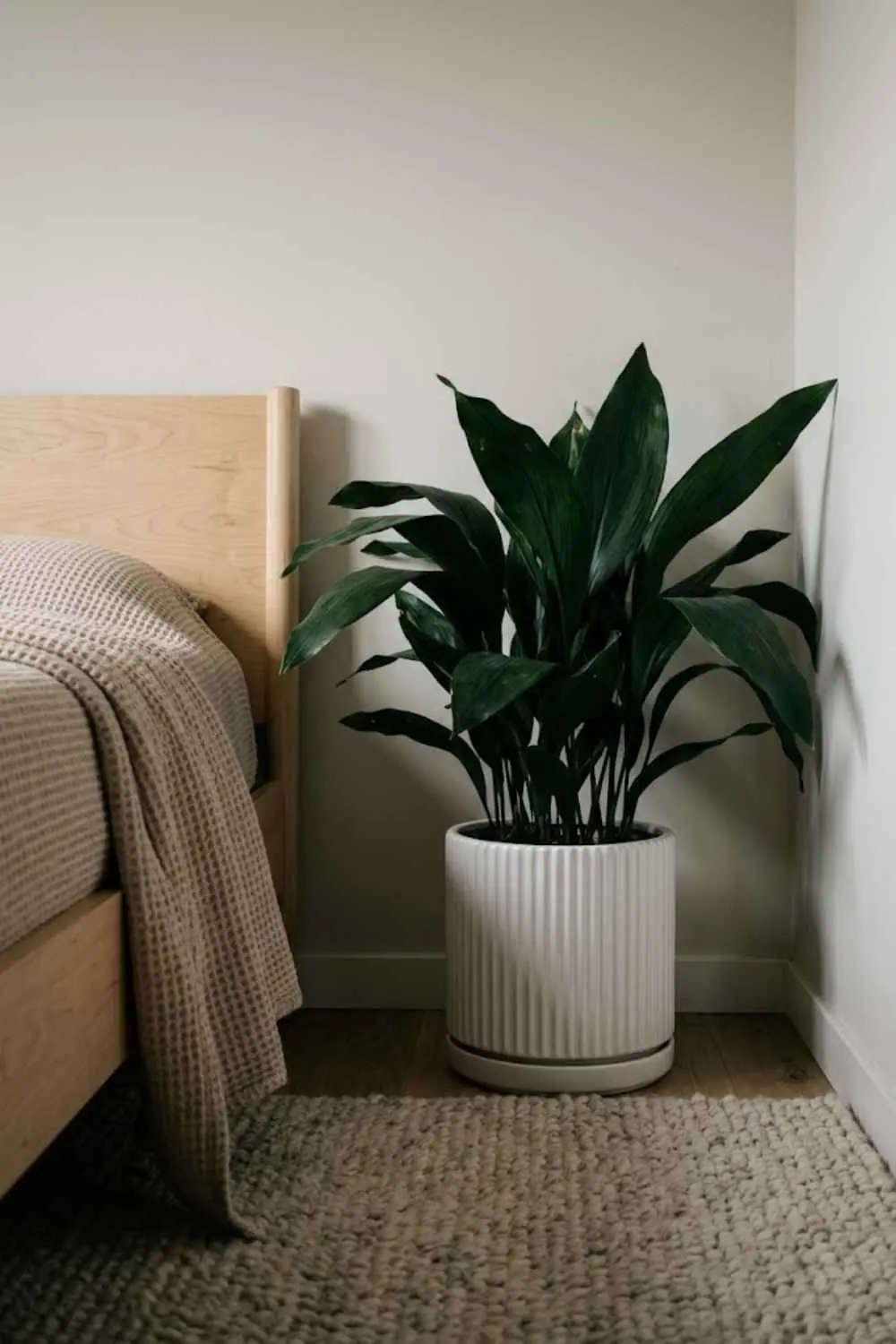
Not every empty bedroom corner has the natural light or the vertical clearance for an indoor tree. The Cast Iron Plant is an excellent mid-sized solution for darker corners next to a bed frame or nightstand chest.
Its broad, leathery leaves rise directly from the soil, creating a tidy profile that sits flush against the wall.
It easily shrugs off deep shadows and cold winter drafts from nearby windows.
Light: Low light tolerant • Water: Low watering • Pets: Pet friendly • Habit: Upright growth habit
9. Spider Plant (Chlorophytum comosum)
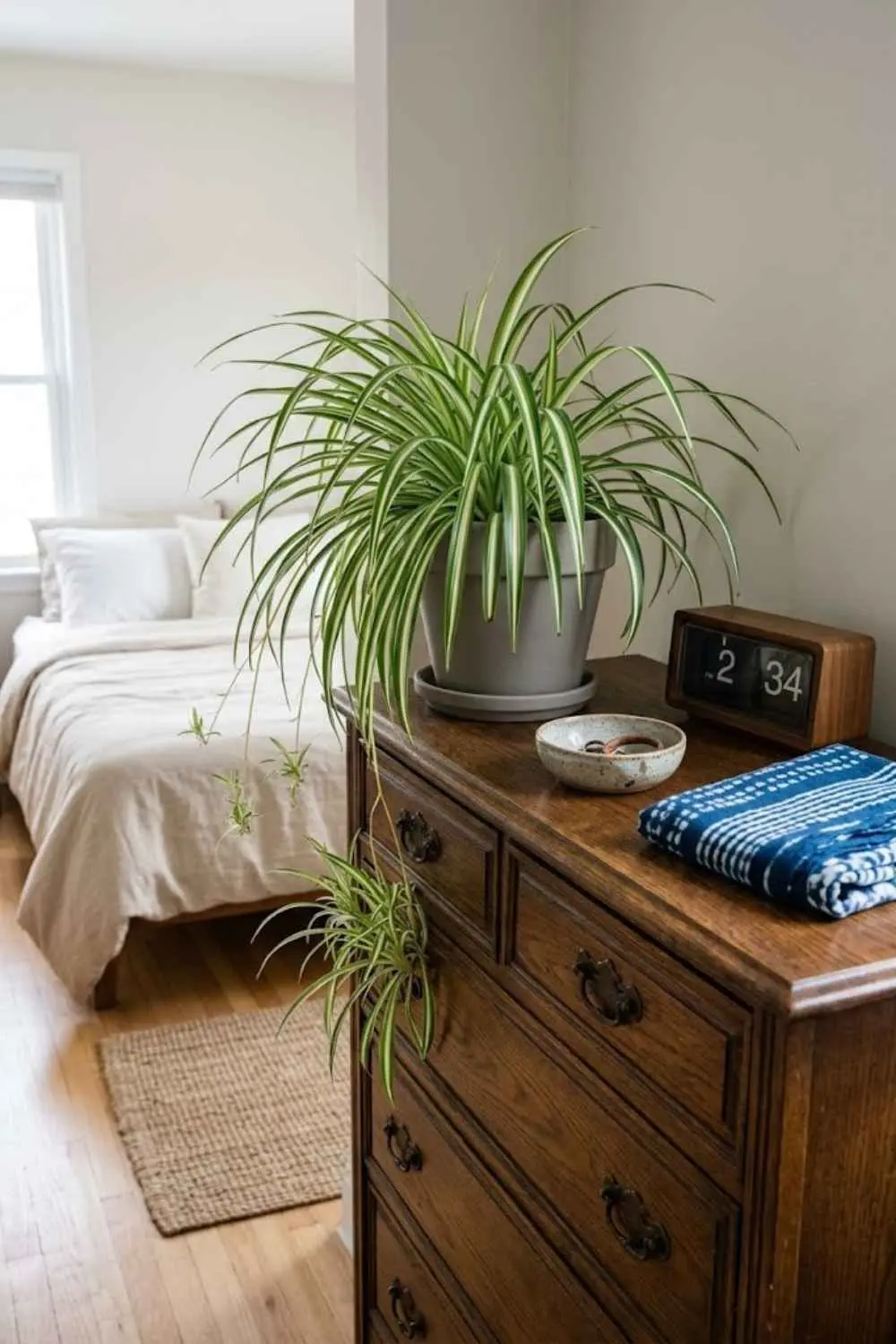
The Spider Plant adds a casual charm when displayed on a tiered corner stand or a high chest of drawers. Its long, arching, grassy leaves create a soft fountain effect that breaks up the rigid lines of square nightstands.
As it matures, it sends out slender runners with miniature plantlets that hang down naturally.
It handles medium light conditions with ease and appreciates evenly moist soil, quickly perking back up after a thorough watering.
Light: Medium indirect light • Water: Moderate watering • Pets: Pet friendly • Habit: Arching, cascading grower
10. Peace Lily (Spathiphyllum)
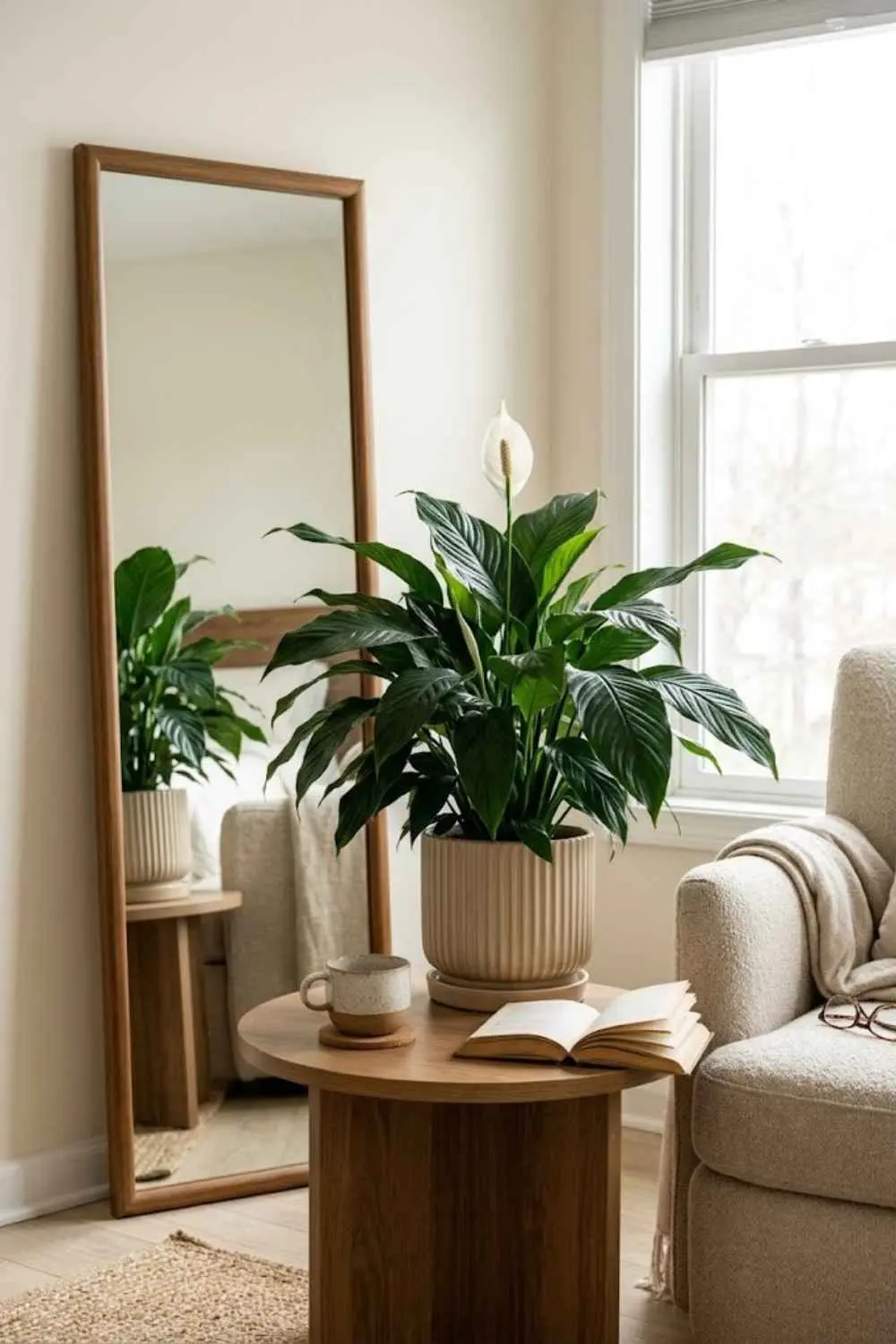
If you want a lush presence near a bedroom reading chair or dressing mirror, the standard Peace Lily is an excellent fit. It thrives in bright to medium indirect light but tolerates lower light with slower growth, filling empty spaces beautifully without crowding the traffic lane.
It alerts you to dryness by letting its entire canopy droop slightly, then snaps back to attention a few hours after a thorough soak.
Light: Medium indirect light preferred • Water: High watering • Pets: Pet toxic • Habit: Broad, arching mound
11. Dragon Tree (Dracaena marginata)
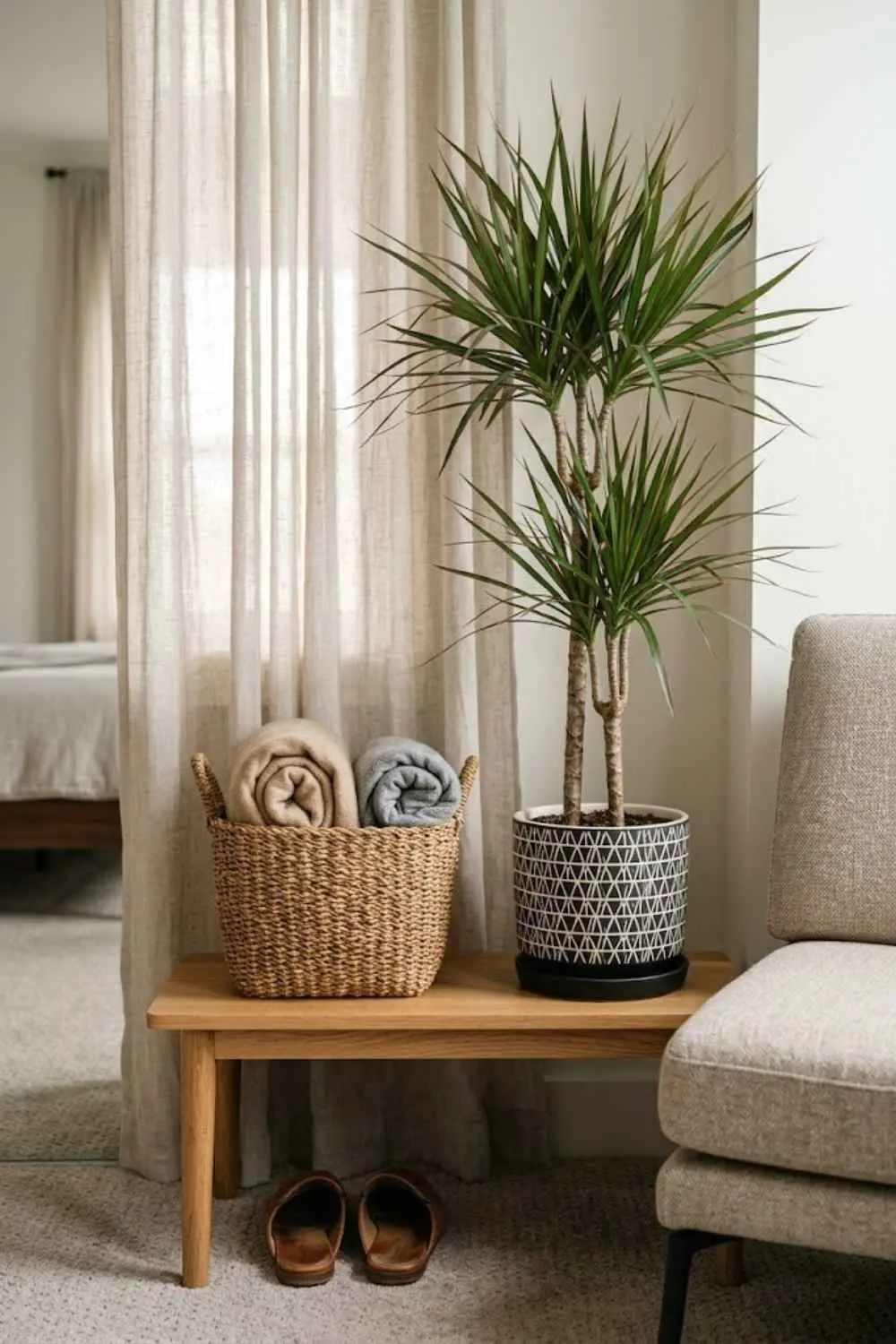
When you need vertical height next to a bedroom window but cannot spare the horizontal space for a bulky bush, the Dragon Tree fits the gap well. It features slender canes topped with clusters of narrow, ribbon-like leaves, offering a light and airy mid-century look.
The thin trunk allows the base to slide neatly behind a lounge chair or shoe bench without obstructing traffic lanes, dropping its lower leaves naturally as it grows, which gradually exposes an attractive cane.
Light: Medium indirect light • Water: Low watering • Pets: Pet toxic • Habit: Tall, cane grower
12. Ponytail Palm (Beaucarnea recurvata)
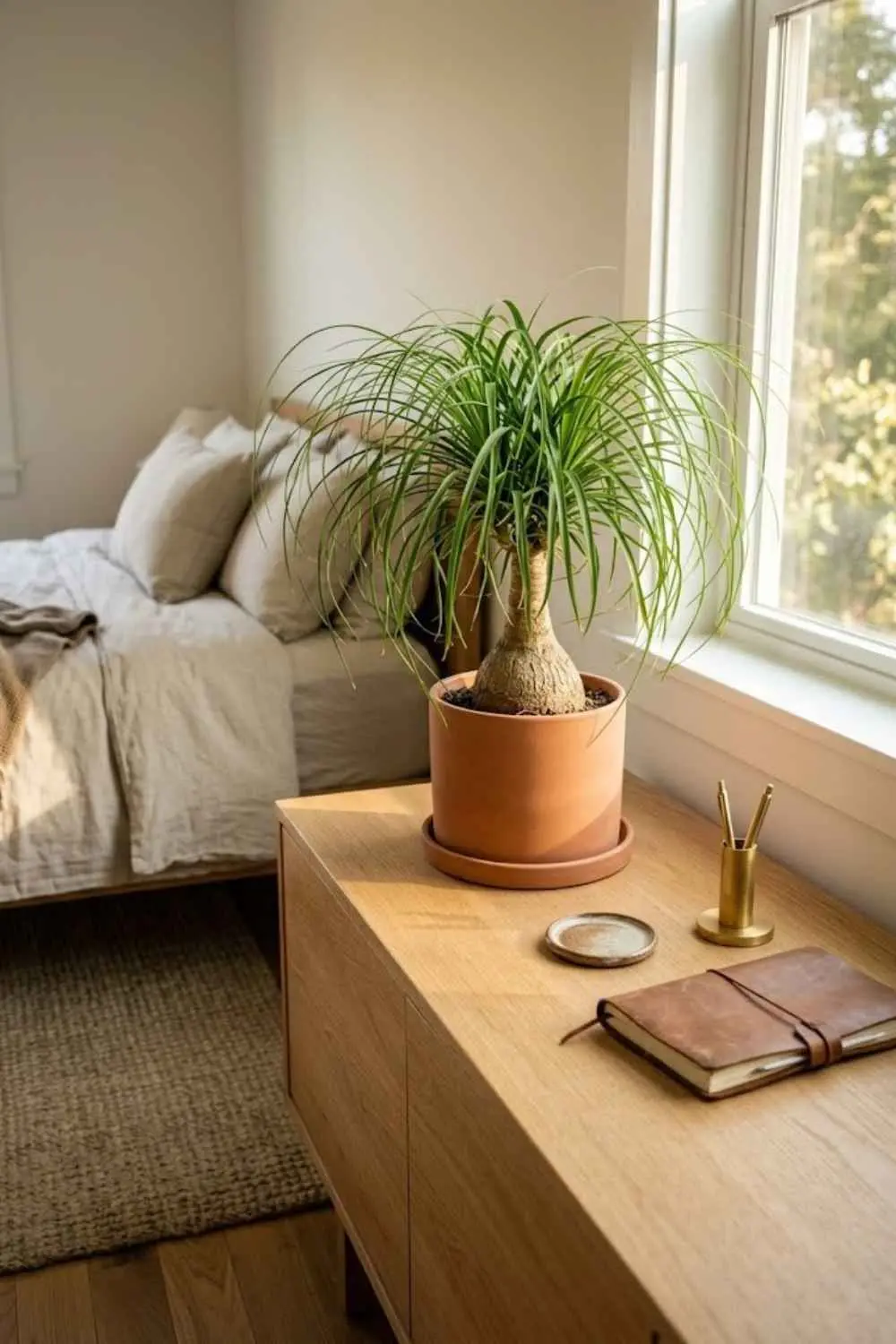
The Ponytail Palm adds an eccentric, sculpted silhouette to a bedroom desk or writing table. It features a bulbous trunk topped with a weeping canopy of narrow leaves that cascade downward like a green fountain.
Its true bedroom benefit is its extreme resilience; it stores water efficiently in its swollen base, allowing it to handle long stretches of forgetfulness while you travel.
It works best in bedrooms that receive at least some ambient indirect daylight.
Light: Medium to bright indirect light • Water: Low watering • Pets: Pet friendly • Habit: Upright, weeping canopy
Quick Bedroom Picker
Best for zero floor space (Shelves/Walls)
Heartleaf Philodendron (5) • Pothos (6) • Hoya Carnosa (7)
Best for low-light corners
Snake Plant (2) • ZZ Plant (3) • Cast Iron Plant (8)
Best for small bedside nightstands
Parlor Palm (1) • ZZ Plant (3)
Best for breaking up heavy wooden furniture
Pothos (6) • Spider Plant (9) • Peace Lily (10)
Best for completely pet-friendly bedrooms
Parlor Palm (1) • Hoya Carnosa (7) • Cast Iron Plant (8) • Spider Plant (9)
FAQs
Do bedroom plants actually purify the air or increase oxygen at night?
While plants do absorb gases through their leaves, legacy clean-air studies were conducted in airtight laboratory chambers. In a real home with normal ventilation, you would need hundreds of plants in a single room to make a measurable impact on your air quality. Enjoy your bedroom plants for their visual beauty and proven stress-relieving qualities instead.
How do I manage floating dust on my bedroom plant leaves?
Bedrooms accumulate fabric dust faster than most rooms due to sheets, blankets, and clothing. This dust acts as a physical barrier, blocking daylight and slowing plant growth. Once a month, wipe smooth leaves with a damp microfiber cloth, or carry trailing plants to the shower for a quick rinse with lukewarm water to keep them clean.
Conclusion
A successful bedroom plant collection starts with understanding your sleeping space’s microclimates.
Because we prioritize low light and quiet temperatures for better sleep, bedroom plants must be selected for endurance rather than rapid growth.
Matching the true daylight levels of your dressers and corners with a low-maintenance, vertical, or elevated variety ensures your green additions remain a calming part of your bedroom instead of becoming another maintenance task.